BioMed Central
Page 1 of 17
(page number not for citation purposes)
Retrovirology
Open Access
Research
Inhibition of HIV-1 gene expression by Ciclopirox and Deferiprone,
drugs that prevent hypusination of eukaryotic initiation factor 5A
Mainul Hoque1, Hartmut M Hanauske-Abel2,3, Paul Palumbo3,7,
Deepti Saxena3,7, Darlene D'Alliessi Gandolfi4, Myung Hee Park5,
Tsafi Pe'ery*1,6 and Michael B Mathews*1
Address: 1Department of Biochemistry & Molecular Biology, UMDNJ-New Jersey Medical School, NJ 07103, USA, 2Department of Obstetrics,
Gynecology & Women's Health, UMDNJ-New Jersey Medical School, NJ 07103, USA, 3Department of Pediatrics, UMDNJ-New Jersey Medical
School, NJ 07103, USA, 4Department of Chemistry, Manhattanville College, NY 10577, USA, 5National Institute for Dental and Craniofacial
Research, NIH, MD 20892, USA, 6Department of Medicine, UMDNJ-New Jersey Medical School, NJ 07103, USA and 7Current Address: Section of
Infectious Diseases and International Health, Dartmouth Medical Center, One Medical Center Drive, Lebanon, NH 03756, USA
Email: Mainul Hoque - hoquema@umdnj.edu; Hartmut M Hanauske-Abel - hanaushm@mac.com;
Paul Palumbo - Paul.E.Palumbo@Dartmouth.edu; Deepti Saxena - Deepti.Saxena@Dartmouth.edu; Darlene D'Alliessi
Gandolfi - gandolfid@mville.edu; Myung Hee Park - parkm@mail.nih.gov; Tsafi Pe'ery* - peeryts@umdnj.edu;
Michael B Mathews* - mathews@umdnj.edu
* Corresponding authors
Abstract
Background: Eukaryotic translation initiation factor eIF5A has been implicated in HIV-1
replication. This protein contains the apparently unique amino acid hypusine that is formed by the
post-translational modification of a lysine residue catalyzed by deoxyhypusine synthase and
deoxyhypusine hydroxylase (DOHH). DOHH activity is inhibited by two clinically used drugs, the
topical fungicide ciclopirox and the systemic medicinal iron chelator deferiprone. Deferiprone has
been reported to inhibit HIV-1 replication in tissue culture.
Results: Ciclopirox and deferiprone blocked HIV-1 replication in PBMCs. To examine the
underlying mechanisms, we investigated the action of the drugs on eIF5A modification and HIV-1
gene expression in model systems. At early times after drug exposure, both drugs inhibited
substrate binding to DOHH and prevented the formation of mature eIF5A. Viral gene expression
from HIV-1 molecular clones was suppressed at the RNA level independently of all viral genes. The
inhibition was specific for the viral promoter and occurred at the level of HIV-1 transcription
initiation. Partial knockdown of eIF5A-1 by siRNA led to inhibition of HIV-1 gene expression that
was non-additive with drug action. These data support the importance of eIF5A and hypusine
formation in HIV-1 gene expression.
Conclusion: At clinically relevant concentrations, two widely used drugs blocked HIV-1
replication ex vivo. They specifically inhibited expression from the HIV-1 promoter at the level of
transcription initiation. Both drugs interfered with the hydroxylation step in the hypusine
modification of eIF5A. These results have profound implications for the potential therapeutic use
of these drugs as antiretrovirals and for the development of optimized analogs.
Published: 13 October 2009
Retrovirology 2009, 6:90 doi:10.1186/1742-4690-6-90
Received: 6 March 2009
Accepted: 13 October 2009
This article is available from: http://www.retrovirology.com/content/6/1/90
© 2009 Hoque et al; licensee BioMed Central Ltd.
This is an Open Access article distributed under the terms of the Creative Commons Attribution License (http://creativecommons.org/licenses/by/2.0),
which permits unrestricted use, distribution, and reproduction in any medium, provided the original work is properly cited.

Retrovirology 2009, 6:90 http://www.retrovirology.com/content/6/1/90
Page 2 of 17
(page number not for citation purposes)
Background
Since its discovery in 1981, human immunodeficiency
virus type 1 (HIV-1) has led to the death of at least 25 mil-
lion people worldwide. Although there have been great
strides in behavioral prevention and medical treatment of
HIV/AIDS, for the last several years the pandemic has
claimed about 2.5 million lives annually http://
www.unaids.org and remains unchecked. It is predicted
that 20-60 million people will become infected over the
next two decades even if there is a 2.5% annual decrease
in HIV infections [1]. Studies of the HIV-1 life cycle led to
the development of drugs targeting viral proteins impor-
tant for viral infection, most notably reverse transcriptase
and protease inhibitors. Despite the success of combina-
tions of these drugs in highly active antiretroviral therapy
(HAART), the emergence of drug-resistant HIV-1 strains
that are facilitated by the high mutation and recombina-
tion rates of the virus in conjunction with its prolific rep-
lication poses a serious limitation to current treatments.
An attractive strategy to circumvent this problem entails
targeting host factors that are recruited by the virus to
complete its life cycle.
HIV-1 replication requires numerous cellular as well as
viral factors, creating a large set of novel potential targets
for drug therapy [2-4]. The premise is that compounds
directed against a cellular factor that is exploited during
HIV-1 gene expression may block viral replication without
adverse effects. One such cellular factor is eukaryotic initi-
ation factor 5A (eIF5A, formerly eIF-4D). eIF5A is the only
protein known to contain the amino acid hypusine. The
protein occurs in two isoforms, of which eIF5A-1 is usu-
ally the more abundant [5,6], and has been implicated in
HIV-1 replication [7]. Over-expression of mutant eIF5A,
or interference with hypusine formation, inhibits HIV-1
replication [8-11]. eIF5A has been implicated in Rev-
dependent nuclear export of HIV-1 RNA [7,8,10,12-15].
Originally characterized as a protein synthesis initiation
factor [16], the precise function(s) of eIF5A remain elu-
sive. It has been implicated in translation elongation [17-
19], the nucleo-cytoplasmic transport of mRNA [20],
mRNA stability [21], and nonsense-mediated decay
(NMD) [22]. It is tightly associated with actively translat-
ing ribosomes [17,18,21,23,24] and is an RNA-binding
protein [25,26]. Consequently, it has been suggested to
function as a specific initiation factor for a subset of
mRNAs encoding proteins that participate in cell cycle
control [27,28]. Its biological roles encompass cancer,
maintenance of the cytoskeletal architecture, neuronal
growth and survival, differentiation and regulation of
apoptosis [16,29-34]. The mature form of eIF5A-1 is asso-
ciated with intraepithelial neoplasia of the vulva [35]
while the eIF5A-2 gene is amplified and expressed at high
level in ovarian carcinoma and cancer cell lines
[30,36,37]. Reduction of eIF5A levels slowed proliferation
and led to cell cycle arrest in yeast [27,34,38,39]. In mam-
malian cells, inhibitors of hypusine formation arrest the
cell cycle at the G1/S boundary [40-43]; they also led to
reduced proliferation of leukemic cells and sensitized Bcr-
Abl positive cells to imatinib [44].
Maturation of eIF5A involves both acetylation and hypu-
sination and is necessary for most if not all of its biologi-
cal roles [45-48]. Hypusine is formed by the
posttranslational modification of a specific lysine residue
in both eIF5A isoforms throughout the archaea and
eukaryota [49]. Hypusine, the enzymes responsible for its
formation, and eIF5A itself, are highly conserved in
eukaryotes [31,50,51]. This modification of eIF5A entails
two consecutive steps (Fig. 1A). In the first step, deoxyhy-
pusine synthase (DHS) catalyzes the cleavage of the
polyamine spermidine and the transfer of its 4-ami-
nobutyl moiety to the ε-amino group of lysine-50 (in
human eIF5A-1) of the eIF5A precursor, yielding a deoxy-
hypusine-containing intermediate. In the second step,
deoxyhypusine hydroxylase (DOHH) hydroxylates the
deoxyhypusyl-eIF5A intermediate to hypusine-containing
mature eIF5A using molecular oxygen [49]. DOHH is
essential in C. elegans and D. melanogaster, but not in S.
cerevisiae [52,53], indicative of a requirement for fully
modified eIF5A at least in higher eukaryotes. The non-
heme iron in the catalytic center of DOHH renders the
enzyme susceptible to small molecule inhibitors that con-
form to the steric restrictions imposed by the active site
pocket and interact with the metal via bidentate coordina-
tion [54].
The pharmaceuticals ciclopirox (CPX) and deferiprone
(DEF) are drugs that block DOHH activity [11,41,55].
Both drugs are metal-binding hydroxypyridinones (Fig.
1B). CPX is a topical antifungal (e.g., Batrafen™) and DEF
is a medicinal chelator (e.g., Ferriprox™) taken orally for
systemic iron overload [56,57]. DEF has been shown to
inhibit HIV-1 replication in latently-infected ACH-2 cells
after phorbol ester induction [11], and in peripheral
blood lymphocytes but not in macrophages [58].
Here we report that clinically relevant concentrations of
CPX and DEF block HIV-1 infection of human peripheral
blood mononuclear cells (PBMCs). We investigated the
early effects of the drugs on gene expression from HIV-1
molecular clones in model systems. Both drugs disrupt
eIF5A maturation by blocking the binding of DOHH to its
substrate. We show that they inhibit gene expression from
HIV molecular clones at the RNA level. The drugs act spe-
cifically on the viral LTR, with no discernible requirement
for viral proteins, and reduce RNA synthesis from the HIV-
1 promoter at the level of transcription initiation. Consist-
ent with eIF5A being a target for these drugs, partial deple-
Retrovirology 2009, 6:90 http://www.retrovirology.com/content/6/1/90
Page 3 of 17
(page number not for citation purposes)
tion of eIF5A-1 by RNA interference also inhibits HIV-1
promoter-driven gene expression, and this inhibition is
non-additive with that caused by the drugs. We conclude
that the action of CPX and DEF is at least in part a result
of the inhibition of eIF5A hydroxylation, suggesting that
cellular DOHH could serve as an antiretroviral target
without incurring gross topical or systemic toxicity.
Results
Antiviral activity of ciclopirox and deferiprone
To examine the effect of CPX and DEF on HIV-1 propaga-
tion, uninfected PBMCs from healthy donors were co-cul-
tured with HIV-infected PBMCs, and virus production was
monitored by the p24 capture assay. In untreated cultures,
p24 was first detected at 96 hr and its levels increased until
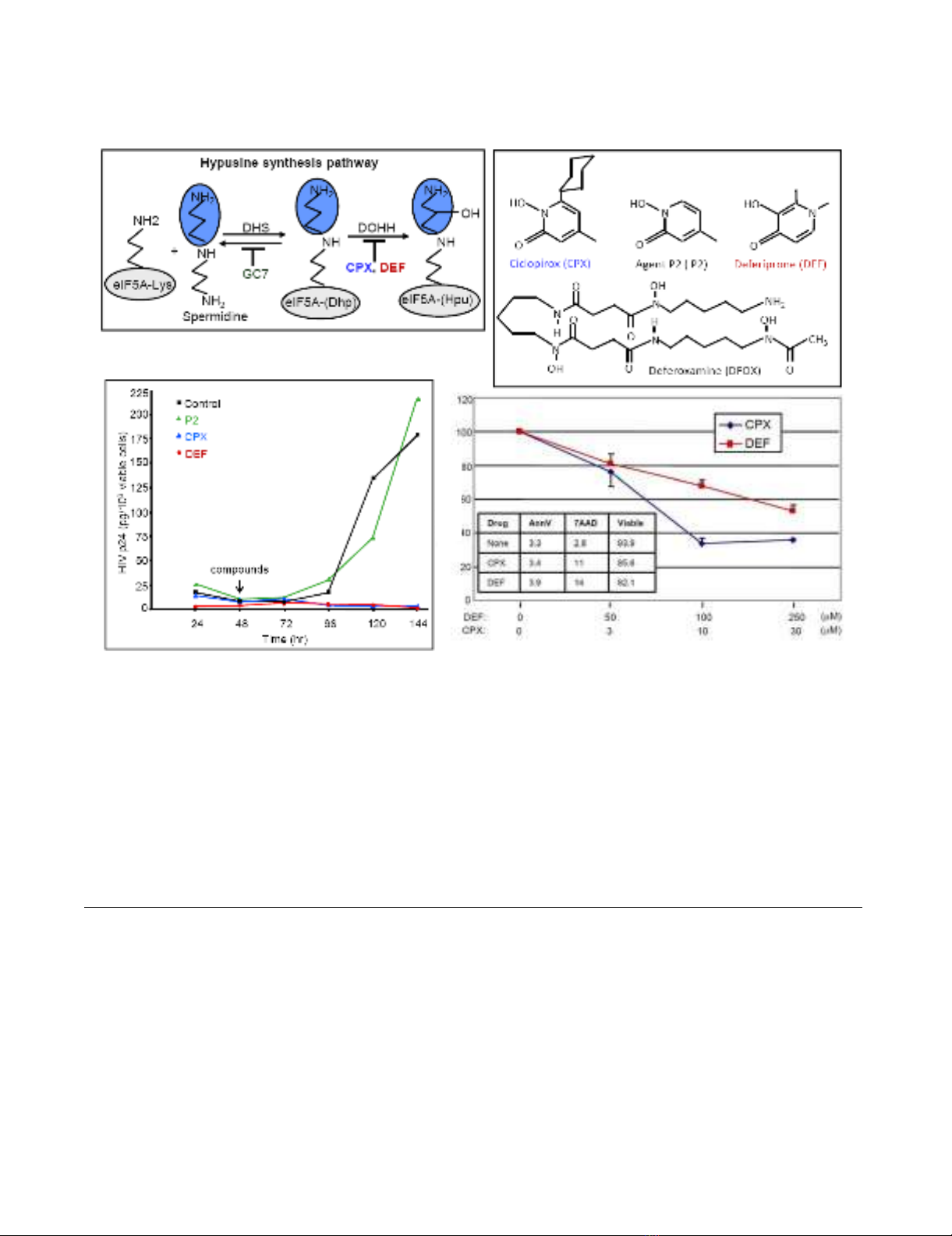
up to 144 hr (Fig. 1C; Control). Addition of CPX and DEF
at 48 hr, to 30 μM and 250 μM respectively, reduced p24
to baseline levels. This profound inhibition is due, at least
in part, to activation of apoptosis at later stages of infec-
Inhibition of HIV replication by drugs that block eIF5A modificationFigure 1
Inhibition of HIV replication by drugs that block eIF5A modification. A. Hypusination of eIF5A (gray) occurs in two
steps: the transfer, catalyzed by DHS, of an aminobutyl moiety (blue) from spermidine onto the side chain of eIF5A lysine-50,
yielding deoxyhypusine (Dhp); and its subsequent hydroxylation, catalyzed by DOHH, yielding hypusine (Hpu). DHS is inhibited
by GC7 and DOHH by CPX and DEF, as indicated. B. Structures of CPX, Agent P2, DEF and DFOX. C. CPX and DEF inhibit
HIV replication in infected PBMCs. Infected PBMCs that were isolated from a single donor were co-cultured with uninfected
PBMCs. CPX (30 μM), P2 (30 μM), or DEF (250 μM) were added 48 hr later. Amount of released p24 protein per million via-
ble cells was determined every 24 hr. D. CPX and DEF inhibit gene expression from an HIV molecular clone in a dose depend-
ant manner. The molecular clone pNL4-3-LucE- and pCMV-Ren were transfected into 293T cells and drugs were added to the
concentrations shown. Dual luciferase assays were conducted at 12 hr post-transfection. Firefly (FF) luciferase expression was
normalized to Renilla luciferase (Ren) from pCMV-Ren (mean of 2 experiments in duplicate, ± SD). Inset shows CPX and DEF
effects on apoptosis and cell viability in untransfected 293T cultures as measured by staining with annexin V (AnnV) and 7-
amino-actinomycin D (7AAD). Data are means of three time points (12, 18 and 24 hr) presented as percentages.
C
AB
FF/Ren(%)
D
B

Retrovirology 2009, 6:90 http://www.retrovirology.com/content/6/1/90
Page 4 of 17
(page number not for citation purposes)
tion ([11]; unpublished data). These concentrations are
within the clinically relevant range and are sufficient to
block DOHH activity and eIF5A modification (see
below). Agent P2, a chelation homolog of CPX (Fig. 1B),
did not impede p24 production (Fig. 1C). These findings
suggested that the inhibition of HIV replication by CPX
and DEF could be due to inhibition of DOHH and eIF5A
maturation.
We selected 293T cells as a model system to explore the
relationship between the drugs, eIF5A, and HIV gene
expression. These cells efficiently transcribe HIV-1 genes
from molecular clones as well as subviral constructs,
allowing for early detection of changes in HIV gene
expression. To establish the system, we examined the
effect of CPX and DEF on the expression of firefly luci-
ferase (FF) from the HIV-1 molecular clone pNL4-3-LucE-
that was engineered to carry the FF gene in place of the
viral nef gene. The molecular clone was transfected into
293T cells together with the pCMV-Ren vector that
expresses Renilla luciferase (Ren) from the cytomegalovi-
rus (CMV) immediate early promoter as a control for
transfection efficiency and non-specific effects of the com-
pounds. Dual luciferase assays were conducted at 12 hr
post-transfection. Results are expressed as relative luci-
ferase activity (FF:Ren). As shown in Figure 1D, the drugs
repressed expression from the HIV-1 molecular clone in a
dose dependent fashion. Long-term drug exposure leads
to pleiotropic effects including apoptosis ([11]; unpub-
lished data), but marginal 293T cell death was observed
within 24 hr using these concentrations of CPX and DEF
(Fig. 1D, inset). We therefore characterized the action of
CPX and DEF on eIF5A and HIV gene expression in 293T
cells during the first 12 to 24 hr of drug treatment.
Drug effects on eIF5A and DOHH
To examine the effect of the drugs on the synthesis of
modified eIF5A, 293T cells transfected with a FLAG-
tagged eIF5A expression vector were simultaneously
treated with CPX or DEF. FLAG-eIF5A was monitored
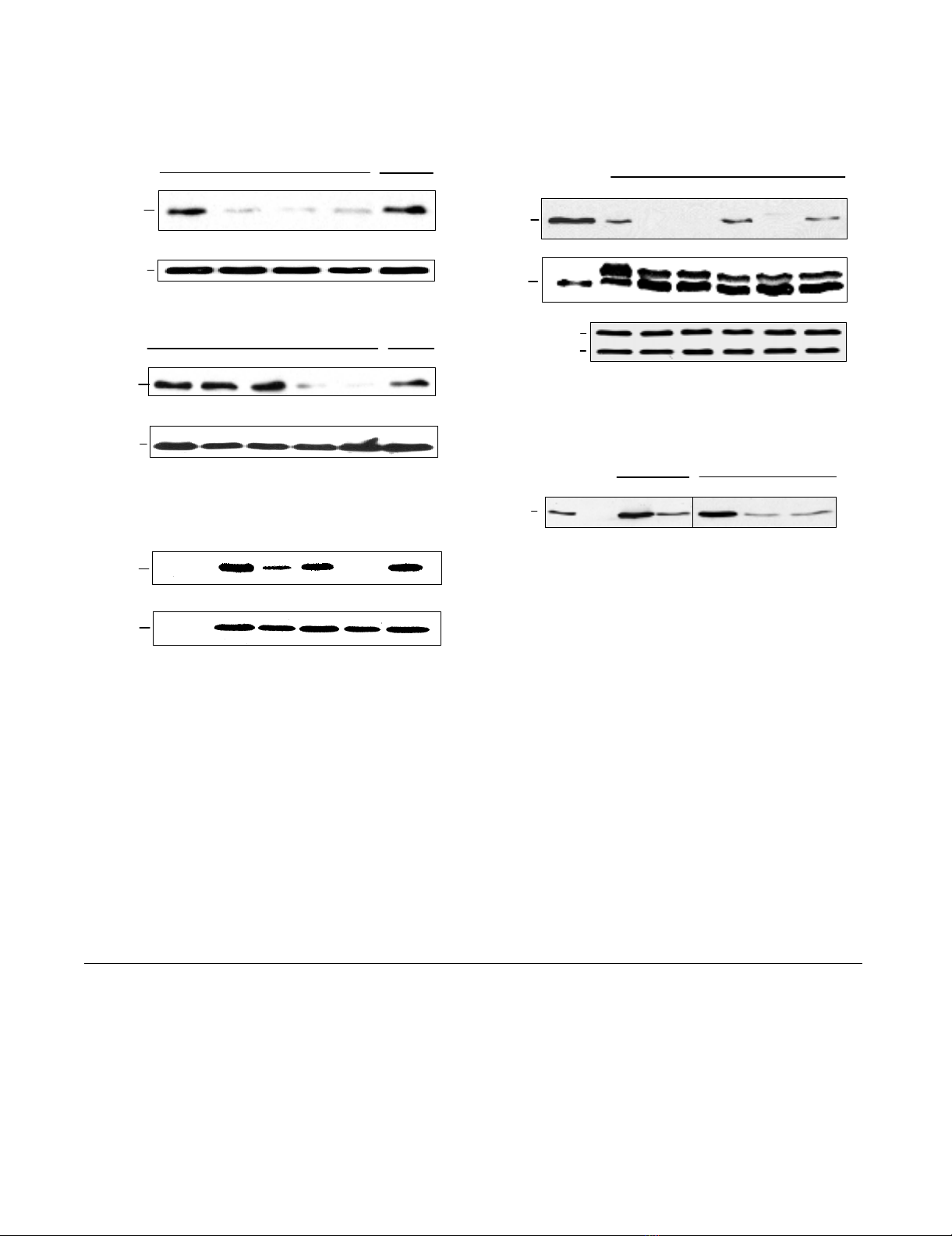
using NIH-353 and anti-FLAG antibodies (Fig. 2A,B). The
NIH-353 antibody reacts preferentially with post-transla-
tionally modified eIF5A [35]. CPX reduced the appear-
ance of mature eIF5A over the 3-30 μM concentration
range, while DEF was effective at 200-400 μM. The drugs
did not alter the expression of actin. Comparable results
have been obtained in other cell types by spermidine labe-
ling of eIF5A [41]. In addition to the CPX homolog Agent
P2, we used deferoxamine (DFOX; Desferal™) as a control
compound. DFOX, a metal-binding hydroxamate like
CPX and Agent P2 (Fig. 1B), is a globally used medicinal
iron chelator [59] that does not inhibit HIV-1 infection
[60]. In contrast to CPX and DEF, P2 and DFOX had little
or no effect on the appearance of mature FLAG-eIF5A (Fig.
2A,B), indicating that the ability to chelate iron is insuffi-
cient to inhibit DOHH and the maturation of eIF5A.
None of these compounds reduced the overall expression
of the FLAG-eIF5A protein detectably (Fig. 2C), ruling out
general inhibitory effects on gene expression. Based on
these results, we used 30 μM CPX and 250 μM DEF for
subsequent experiments.
eIF5A forms tight complexes with its modifying enzymes.
Unmodified eIF5A (lysine-50) immunoprecipitates with
DHS [61,62], and deoxyhypusyl-eIF5A interacts with
DOHH in vitro [63]. We discovered that the deoxyhypu-
syl-eIF5A:DOHH complex formed in vivo can be detected
by immunoprecipitation from cell extracts. Taking advan-
tage of this finding, we tested the effects of the drugs on
the enzyme-substrate interaction. FLAG-eIF5A was
expressed in 293T cells. Complexes that immunoprecipi-
tated with anti-FLAG antibody were immunoblotted and
probed with antibodies against DOHH. Endogenous
DOHH co-immunoprecipitated with FLAG-eIF5A, and
this association was largely prevented by treatment with
CPX or DEF (Fig. 2D, top panel). Consistent with their
inability to inhibit eIF5A maturation, neither P2 or DFOX
prevented the formation of the eIF5A:DOHH complex. As
a further control, we included the DHS inhibitor GC7
[64,65] in this assay. No DOHH was associated with
FLAG-eIF5A in the presence of GC7 because it prevents
the synthesis of deoxyhypusyl-eIF5A. As expected, none of
the compounds affected the immunoprecipitation of
FLAG-eIF5A (Fig. 2D, middle panel) or the expression of
endogenous eIF5A (Fig. 2D, bottom panel). Reciprocally,
the interaction between endogenous eIF5A and tagged
DOHH was inhibited by CPX and DEF (Fig. 2E, right).
Similarly, the interaction of endogenous eIF5A with
tagged DHS was inhibited by GC7 (Fig. 2E, left) but was
resistant to CPX and DEF (not shown). We conclude that
CPX and DEF, but not P2 or DFOX, target DOHH and
inhibit its interaction with its substrate, deoxyhypusyl-
eIF5A.
Inhibition of gene expression from HIV-1 molecular clones
To explore the mechanism whereby CPX and DEF inhibit
HIV gene expression, we first examined the specificity of
their effect on the expression from the pNL4-3-LucE-
molecular clone. Exposure to CPX and DEF repressed
expression from the HIV-1 molecular clone by ~50%, as
shown above (Fig. 1D), whereas P2 and DFOX were inef-
fective (Fig. 3A). The drugs had no effect on CMV-driven
Renilla luciferase expression. Similar results were obtained
in transfected Jurkat T cells (Fig. 3B). RNase protection
assays (RPA) showed that the inhibition of luciferase
activity by DEF (Fig. 3C) or CPX (not shown) was
reflected in decreased accumulation of FF mRNA, while
no change was observed in the accumulation of Ren
mRNA from the CMV promoter. Thus, the drugs specifi-
Retrovirology 2009, 6:90 http://www.retrovirology.com/content/6/1/90
Page 5 of 17
(page number not for citation purposes)
cally inhibited luciferase expression from the HIV-1
molecular clone at the RNA level.
Both CPX and DEF also inhibited HIV p24 expression
from the molecular clone by ~60%, whereas DFOX had
no effect (Fig. 3D). We next examined the effects of CPX
and DEF on viral mRNA expression. The sensitivity of FF
expression from pNL4-3-LucE- to these drugs suggested
that the inhibition of RNA accumulation is independent
of Rev since the FF sequences are substituted into the nef
gene which gives rise to spliced mRNA. To determine
whether the action of CPX and DEF is exerted at the level
of the accumulation, splicing or nucleo-cytoplasmic dis-
tribution of HIV RNA, we transfected pNL4-3-LucE- into
293T cells and monitored spliced and unspliced HIV RNA
after drug treatment. RNase protection assays were carried
Ciclopirox and deferiprone prevent the maturation of eIF5AFigure 2
Ciclopirox and deferiprone prevent the maturation of eIF5A. A. Drug inhibition of eIF5A modification in 293T cells.
Cells transfected with FLAG-tagged eIF5A were untreated or treated with increasing concentrations of CPX as indicated, or
with agent P2. At 24 hr post-transfection, whole cell extract (WCE) was analyzed by immunoblotting with the NIH-353 anti-
eIF5A antibody (upper panel) and anti-actin antibody (lower panel). B. Cells transfected with FLAG-tagged eIF5A were
untreated or treated with increasing concentrations of DEF as indicated, or with DFOX. Cells were processed as in A. C. Cells
transfected with FLAG-tagged eIF5A were treated with CPX (30 μM), P2 (30 μM), DEF (250 μM), DFOX (10 μM), or no drug
(-). At 24 hr post-transfection, WCE was analyzed by immunoblotting with the NIH-353 anti-eIF5A antibody (upper panel) and
anti-FLAG antibody (lower panel). The control culture was transfected with empty vector and no drug was added. D. Inhibi-
tion of enzyme-substrate binding. 293T cells transfected with FLAG-eIF5A were untreated (-) or treated with GC7 (10 μM) or
CPX (30 μM), P2 (30 μM), DEF (250 μM), or DFOX (10 μM). WCE prepared at 24 hr post-transfection was immunoprecipi-
tated with anti-FLAG antibody. Immunoprecipitates were immunoblotted with antibodies against DOHH (top panel) and FLAG
(bottom panel). (*)-IgG light chain. E. 293T cells transfected with FLAG-DHS, FLAG-DOHH or empty vector (Control) were
treated with GC7, CPX, or DEF, or no drug (-) at the same concentration as in panel D. Immunoprecipitates obtained with
anti-FLAG antibody were immunoblotted and probed with anti-eIF5A antibody (BD). Input: WCE equivalent to 5% of the input
was immunoblotted as a further control.
FLAG
-eIF5A
FLAG
-eIF5A
FLAG
-eIF5A
B
A
C
CPX
0310 30 30
P2
actin
IB:anti-eIF5A
IB:anti-actin
PM
IB:anti-eIF5A
IB:anti-actin
DEF
0 50 100 200 15
DFOX
400
PM
actin
IB:anti-eIF5A
IB:anti-FLAG
control CPX P2 DEF DFOX
_
FLAG
-eIF5A
eIF5A
IB:anti-eIF5A
FLAG
-eIF5A
IP: anti-FLAG, IB:anti-FLAG
Input (5%) GC7 CPX DEF
FLAG-eIF5A
P2 DFOX
DOHH
IP: anti-FLAG, IB:anti-DOHH
_
D
*
FLAG-eIF5A
Input (5%)
IP:anti-FLAG, IB:anti-eIF5A
Control
FLAG-DHS
_GC7
FLAG-DOHH
CPX DEF
_
eIF5A
E


![Vaccine và ứng dụng: Bài tiểu luận [chuẩn SEO]](https://cdn.tailieu.vn/images/document/thumbnail/2016/20160519/3008140018/135x160/652005293.jpg)