
PRIMARY RESEARCH Open Access
Expert consensus on hospitalization for
assessment: a survey in Japan for a new forensic
mental health system
Akihiro Shiina
1,2*†
, Mihisa Fujisaki
1,2†
, Takako Nagata
3†
, Yasunori Oda
4†
, Masatoshi Suzuki
5†
, Masahiro Yoshizawa
6†
,
Masaomi Iyo
7†
and Yoshito Igarashi
2†
Abstract
Background: In Japan, hospitalization for the assessment of mentally disordered offenders under the Act on
Medical Care and Treatment for the Persons Who Had Caused Serious Cases under the Condition of Insanity (the
Medical Treatment and Supervision Act, or the MTS Act) has yet to be standardized.
Methods: We conducted a written survey that included a questionnaire regarding hospitalization for assessment;
the questionnaire consisted of 335 options with 9 grades of validity for 60 clinical situations. The survey was mailed
to 50 Japanese forensic mental health experts, and 42 responses were received.
Results: An expert consensus was established for 299 of the options. Regarding subjects requiring hospitalization
for assessment, no consensus was reached on the indications for electroconvulsive therapy (ECT) or for confronting
the offenders regarding their offensive behaviors.
Conclusions: The consensus regarding hospitalization for assessment and its associated problems were clarified.
The consensus should be widely publicized among practitioners to ensure better management during the
hospitalization of mentally disordered offenders for assessment.
Background
The need to establish a sophisticated forensic mental
health system has increased as a result of the global trend
toward the deinstitutionalization of patients with mental
disorders [1]. However, for many years, Japan had no spe-
cific legal provisions for offenders with mental disorders
[2]. Once such offenders were entrusted into the mental
health system, they were treated under the Mental Health
and Welfare (MHW) Law and were completely detached
from the criminal justice system [3].
In 2005, the forensic mental health system in Japan
underwent reform along with the enforcement of the Act
on Medical Care and Treatment for the Persons Who
Had Caused Serious Cases under the Condition of Insan-
ity: the Medical Treatment and Supervision Act (MTS
Act) [4]. Under this new system, a person who commits a
serious criminal offense whileinastateofinsanityor
with diminished responsibility is be treated and super-
vised in a judicial administrative frame. The public prose-
cutor makes allegations to the District Court for the
purpose of judgment. The judgment panel consists of
one judge and one mental health reviewer (‘seishin-
hoken-shinpan-in’), with the latter being selected from a
group of psychiatrists who hold Judgment Physician
license (’seishin-hoken-hantei-i’a national license for for-
ensic mental health specialists). The panel can arrive at
three possible verdicts: an order to hospitalize the offen-
der for medical treatment, an order to care for the offen-
der as an outpatient in the community, or a no-treatment
order. The offender is then obligated to accept the special
psychiatric care supplied by the designated medical facil-
ities and to submit to continuous supervision by a Reha-
bilitation Coordinator (’shakai-fukki-chousei-kan’)
working in a probation office.
To return a correct verdict, the MTS Act requires a
psychiatric examination. The three essential factors that
* Correspondence: shiina-akihiro@faculty.chiba-u.jp
†Contributed equally
1
Department of Psychiatry, Chiba University Hospital, Chiba, Japan
Full list of author information is available at the end of the article
Shiina et al.Annals of General Psychiatry 2011, 10:11
http://www.annals-general-psychiatry.com/content/10/1/11
© 2011 Shiina et al; licensee BioMed Central Ltd. This is an Open Access article distributed under the terms of the Creative Commons
Attribution License (http://creativecommons.org/licenses/by/2.0), which permits unrestricted use, distribution, and reproduction in
any medium, provided the original work is properly cited.

must be examined when making a treatment order deci-
sion are the nature and severity of the mental disorder
and its relationship to the offense, the offender’s‘treat-
ability’or responsiveness to psychiatric treatment, and
the factors that could hinder the person’s rehabilitation
and the likelihood of a second offense. The offender
should be hospitalized for 2 to 3 months during the psy-
chiatric examination, while continuing an appropriate
course of psychiatric treatment; this hospitalization per-
iod for assessment is known as ‘kantei-nyuin’[5].
In 2008, the Japanese Government published a list of
239 Japanese mental hospitals (1.9 per 1,000,000 of the
population) for the purpose of hospitalization for assess-
ment of mentally disordered offenders [6]. However, the
criteria used to select these facilities are vague.
The MTS Act hardly regulates even the minimum
requirements for these facilities. Therefore, remarkable
variations exist in the hospitalization conditions for
these patients, such as in the availability of human
resources, the diagnostic and therapeutic strategies in
use, the attitudes regarding ethical issues, and the physi-
cal facilities themselves. It had been reported that about
60% to 80% of psychiatrists who treat offenders in desig-
nated inpatient facilities find problems with the written
reports of psychiatric examinations conducted and writ-
ten at the assessment stage [7]. In addition, while it is
recommended that offenders be treated by a multiple
disciplinary team (MDT) similar to that used for regular
acute psychiatric care [8], this recommendation was not
known at 14% of the facilities that were surveyed [9].
To minimize the variation, and to improve the quality
of the assessment, we conducted a written survey that
was delivered by mail to leading Japanese forensic men-
tal health experts, and clarified the expert consensus
regarding hospitalization for assessment.
Methods
Creating the surveys
To create the questionnaire, we formed a working team
comprised of judgment physicians, psychiatrists with
experience conducting psychiatric examinations, and
doctors belonging to facilities for hospitalizations and
assessment of mentally disordered offenders. Then, we
attempted to extract suitable questionnaire items, which
we classified as general introductory questions regarding
the characteristics of the facilities (including sections on
the ‘Structure’and ‘Staff’) or detailed questions regard-
ing management (including sections on ‘Items Before
the Start of Examination’,‘Diagnosis and Treatment’,
‘Issues Regarding Informed Consent and Forced Treat-
ment’,‘Judgment’, and ‘Hypothetical Clinical Situations’).
We also referred to reviews in the literature to extract
questions [7,10]. We then collected the opinions of sev-
eral experts in an exploratory committee examining
‘Research on the Improvement of the System of Hospi-
talization for Assessment’and revised the questionnaire.
Using the above-described procedure, we developed a
60-question survey with 335 options. A sample of the
questions is presented in Table 1.
Rating scale
For the 335 options in the survey, we asked the experts to
evaluate the appropriateness of the option using a 9-point
scale that was slightly modified from the format developed
by the RAND Corporation for ascertaining expert consen-
sus. To develop this rating scale, we referred to the expert
consensus guideline series developed by Expert Knowledge
Systems, LLC [10]. The anchors of the rating scale are
presented in Appendix 1.
Composition of the expert panel
We identified 50 leading Japanese experts on forensic
mental health, focusing on those individuals with exten-
sive experience managing hospitalizations for assessment
under the MTS Act. The experts were identified based
on their published research in this area and/or their par-
ticipation in the Japanese Society of Forensic Mental
Health or a related association.
Ethical issues
We reported the contents of this survey to the Ethical
Council of the Graduate School of Medicine at Chiba
University in advance, and the council declared that the
survey did not pose any ethical problems. All the
experts were given a written explanation of the purpose
of the survey. All respondents provided their informed
written consent to participate in the study.
Data analysis for options scored on the rating scale
For each option, we first defined the presence or
absence of a consensus as a distribution unlikely to
occurbychancebyperformingac
2
test (P<0.05)of
the distribution of the scores across three ranges of
appropriateness (7-9: appropriate; 4-6: unclear; 1-3:
inappropriate). Next, we calculated the mean and 95%
confidence interval (CI). A categorical rating of first-
line, second-line, or third-line options was designated
based on the lowest category in which the CI fell, with
boundaries of 6.5 or greater for first-line (preferred)
options, 3.5 or greater but less than 6.5 for second-line
(alternate) options, and less than 3.5 for third-line
(usually inappropriate) options. Among the first line
options, we defined an option as ‘best recommendation/
essential’if at least 50% of the experts rated it as 9. This
analysis method was adopted after reference to an
expert consensus guideline series [10].
Additionally, we extracted all the items included in the
present questionnaire that were also used in a previous
Shiina et al.Annals of General Psychiatry 2011, 10:11
http://www.annals-general-psychiatry.com/content/10/1/11
Page 2 of 11
questionnaire survey [7] to collect the general opinions
of forensic psychiatrists. We then compared the two sets
of results to justify the present survey by evaluating the
differences between the expert consensus and the gen-
eral opinion of forensic psychiatrists.
Results
Response rate
We received responses from 42 (84%) of the 50 experts
to whom the survey was sent. Two of the respondents
were female and the rest were male. Of the 42, 2 were
professors in the psychiatric department of a university,
14 belonged to a national hospital, 20 belonged to a pre-
fectural hospital, and 6 belonged to a private hospital.
All the respondents held a national license as a Desig-
nated Physician (’seishin-hoken-shitei-i’)underthe
MHW Law and Judgment Physician in the MTS Act.
Furthermore, all the respondents were over 35 years of
age and had at least 10 years of experience in psychiatric
practice.
All 42 responders answered all the questions ade-
quately. No doubts or criticisms regarding the question-
naire were noted by the experts.
Degree of consensus
Of the 335 options rated using the 9-point scale, a con-
sensus was reached for 299 (89.3%) options, as defined
by the presence of statistical significance using a c
2
test.
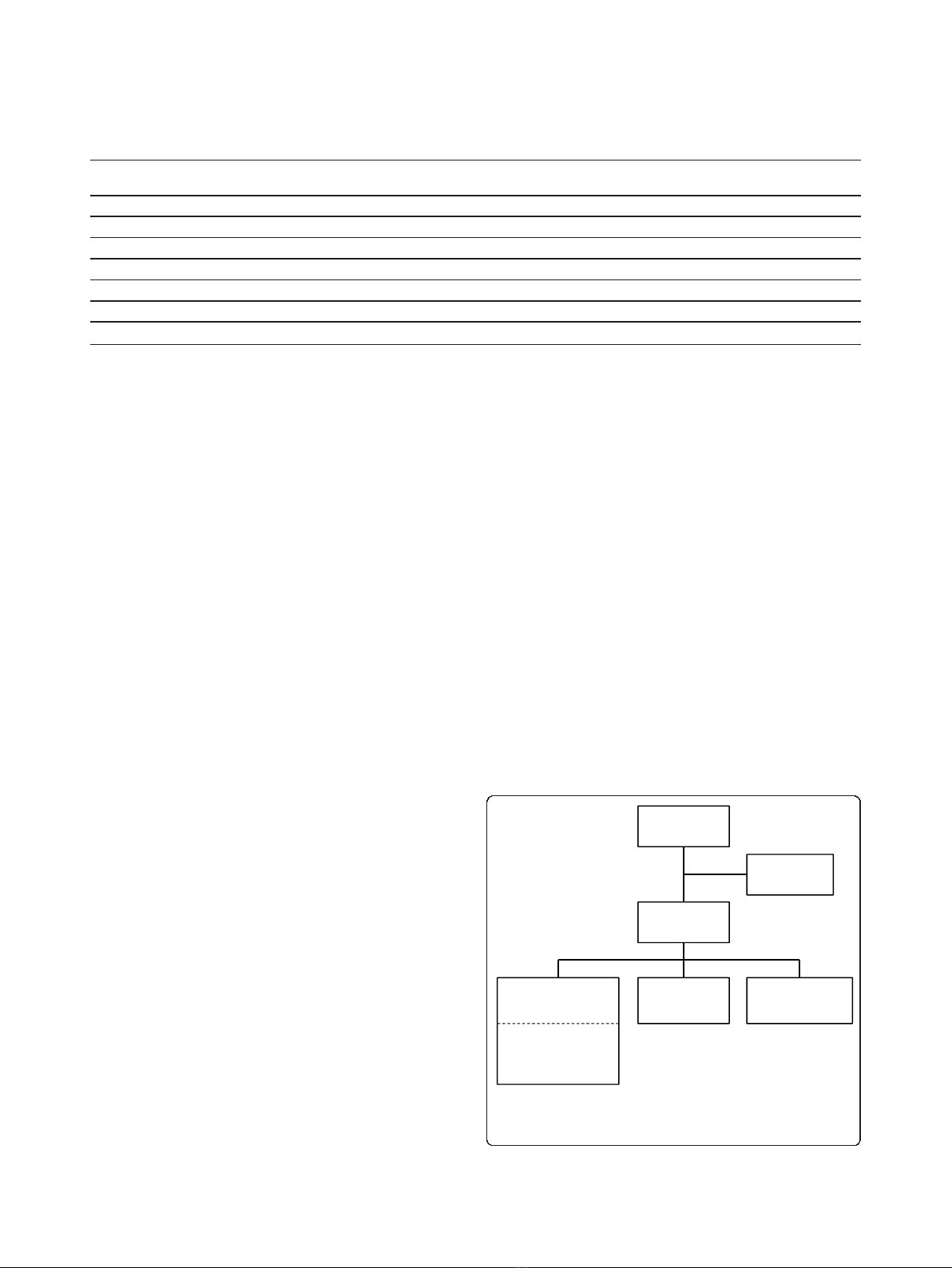
A total of 113 options were defined as first-line
options, of which 29 options were defined as ‘best
recommendation/essential’. In all, 109 options were
defined as second-line options. The remaining 77
options were defined as third-line or usually inappropri-
ate options (see Figure 1).
Structure
This section consisted of six questions aimed at deter-
mining the necessary resources for the appropriate
administration of hospitalizations for assessment.
As facilities for the hospitalized assessment of men-
tally disordered offenders, the best recommendation of
the experts was the National Center Hospital, National
Center for Neurology and Psychiatry (NCH-NCNP)
(mean 8.07; 95% CI 7.62 to 8.53) or an establishment
with a specialized facility for the exclusive use of psy-
chiatric examinations (mean 8.03; 95% CI 7.53 to 8.52).
For psychiatric examinations, a psychiatric emergency
ward (mean 7.61; 95% CI 7.1 to 8.12) or, as a minimum
requirement, a psychiatric acute-phase care unit (mean
7.45; 95% CI 6.77 to 7.58) were recommended as first-
line options. Medical examination rooms with multiple
exit doors (mean 7.64; 95% CI 7.19 to 8.1) were recom-
mended.Topreventself-hanging,ashowerwithouta
hose in each bedroom (mean 7.24; 95% CI 6.8 to 7.68)
was recommended. As for patient amenities, a television
(mean 7.07; 95% CI 6.57 to 7.58) and newspapers (mean
7.26; 95% CI 6.76 to 7.76) were recommended.
Staff
In this section, we addressed the need for human
resources using 16 questions. The participation of Judg-
ment Physicians (mean 8.29; 95% CI 7.93 to 8.54) and
Table 1 Sample of the survey questions
Please evaluate the following options for interventions with a subject who refuses to take medication because of a lack of insight into
his or her psychiatric disorder, but who is not seriously aggressive
(1) Explanation and persuasion 1 2 3 4 5 6 7 8 9
(2) Forced medication using liquid or oral disintegrating drugs 1 2 3 4 5 6 7 8 9
(3) Forced intravenous or intramuscular injection 1 2 3 4 5 6 7 8 9
(4) Forced depot injection 1 2 3 4 5 6 7 8 9
(5) Masked medication 1 2 3 4 5 6 7 8 9
(6) Electroconvulsive therapy 1 2 3 4 5 6 7 8 9
(7) Forced medication using a nasal tube 1 2 3 4 5 6 7 8 9
335options
N=299
Consensusreached
N=36
NOCONSENSUS
N=77
ThirdͲlineoptions
(usuallyinappropriate)
N=109
SecondͲlineoptions
(alternate)
N=113
FirstͲlineoptions
(preferred)
Including29options
regardedasbest
recommendation/
essential
Figure 1 Degree of consensus. Of the 335 options rated using the
9-point scale, a consensus was reached for 299 (89.3%) options as
defined using a statistically significant c
2
test result.
Shiina et al.Annals of General Psychiatry 2011, 10:11
http://www.annals-general-psychiatry.com/content/10/1/11
Page 3 of 11

Designated Physicians (mean 8.24; 95% CI 8.01 to 8.56)
in the hospitalization process was deemed essential. At
least 1 staff nurse per 10 inpatients in the assessment
ward (mean 7.10; 95% CI 6.56 to 7.64) was recom-
mended. The participation of psychiatric social workers
(mean 8.24; 95% CI 7.88 to 8.66) and psychotherapists
(mean 8.29; 95% CI 7.87 to 8.7) was also deemed essen-
tial. The participation of occupational therapists (mean
7.57; 95% CI 7.07 to 8.07) was recommended. However,
a consensus was not reached on whether psychiatric
social workers or occupational therapists should be
involved in the writing of the examination report.
The formation of an MDT for the psychiatric exami-
nation (mean 7.62; 95% CI 7.15 to 8.09) was recom-
mended. However, a consensus was not reached on
whether the team should include pharmacists and dieti-
tians or how often the team meetings should be held.
In cases of hospitalization for assessment, the court
appoints a case examiner. It was recommended that the
examiner not participate in the treatment of the subject
directly, but rather that the examiner discusses the
treatment strategy with the physician in charge of the
subject from time to time (mean 7.17; 95% CI 6.67 to
7.66). In cases where the examiner and the physician in
charge disagreed regarding the treatment strategy, the
experts did not agree on a first-line option but recom-
mended that the examiner and physician in charge con-
tinue their discussion (mean 6.61; 95% CI 5.95 to 7.27).
They also recommended that the final decision regard-
ing treatment should be made by the physician in
charge (mean 6.56; 95% CI 6.05 to 7.07).
Items before the start of examination
This section addressed the procedure for accepting
offenders to be examined, along with some other insti-
tutional issues, and consisted of six questions.
When consulted regarding the acceptance of an offen-
der requiring hospitalization for assessment, the experts
did not show any particular first-line options regarding
the provision of advance information about the offender.
Instead, they preferred to use the offender’s category of
offense (mean 6.48; 95% CI 5.69 to 7.27) when deciding
on either the acceptance or rejection of an offender.
The issue of whether or not medical students should
participate in the hospitalization for assessment process
did not reach consensus.
Diagnosis and medical treatment
This section contained questions regarding basic
approaches for managing subjects and consisted of six
questions.
An interview with the subject (mean 8.55; 95% CI 8.28
to 8.82) and the checking of vital signs (mean 8.74; 95%
CI 8.59 to 8.89) on the first day of admission were
deemed essential. A family interview (mean 8.55; 95%
CI 8.25 to 8.84), consultation with the rehabilitation
coordinator in the probation office (mean 8.50; 95% CI
8.22 to 8.78), blood exams (mean 8.81; 95% CI 8.67 to
8.95), intelligence tests (mean 8.43; 95% CI 8.19 to 8.67),
personality tests (mean 8.26; 95% CI 7.96 to 8.56) and
electroencephalograms (mean 8.21; 95% CI 7.9 to 8.52)
performed during the hospitalization period were all
deemed as essential. A brain magnetic resonance ima-
ging (MRI) examination (mean 7.40; 95% CI 6.93 to
7.88) was also recommended.
Regarding medication, the prescription of medications
to the offenders in the same manner as for other
patients with mental disorders (mean 8.24; 95% CI 7.95
to 8.53) was recommended. Regarding psychotherapy,
supportive psychotherapy (mean 7.85; 95% CI 7.43 to
8.27) consisting of rapport (mean 7.68; 95% CI 7.16 to
8.2) and psychoeducation (mean 7.22; 95% CI 6.69 to
7.75) were recommended as first-line options.
Issues regarding informed consent and forced treatment
This section contained eight questions regarding core
ethical problems and systematic issues associated with
involuntary hospitalization.
The experts recommended that every possible effort to
be made to obtain informed consent from the offenders
but that the necessary treatment should be enforced
upon the patient if consent was not obtained (mean
7.51; 95% CI 7.15 to 7.88). During hospitalization, the
need for seclusion or restrictions should be evaluated on
a flexible basis (mean 7.52; 95% CI 7 to 8.05), and even
if seclusion is decided upon, once the subject has
calmed down, the experts recommended that the day-
room be made available to the subjects for a limited
time (mean 7.93; 95% CI 7.66 to 8.2) and/or under the
observation of the medical staff (mean 7.93; 95% CI 7.62
to 8.24). Seclusion and restriction were to be considered
in situations where direct violence to other patients
(mean 8.31; 95% CI 8.03 to 8.59), violent behavior or
threats of violence towards the staff (mean 7.81; 95% CI
7.49 to 8.13), destroying equipment in the ward (mean
7.81; 95% CI 7.46 to 8.16), clear attempts at suicide
(mean 8.19; 95% CI 7.89 to 8.49), or impulsive self-
destructive behavior (mean 7.57; 95% CI 7.19 to 7.95)
were possibilities.
Judgment
A panel must judge the acts of the offender and deliver
a verdict. This section concerned the judgment process
and consisted of four questions.
The experts recommend that the offender’s own moti-
vation to recover over the course of hospitalization be
carefully evaluated (mean 7.69; 95% CI 7.26 to 8.13).
Even after the completion of the psychiatric
Shiina et al.Annals of General Psychiatry 2011, 10:11
http://www.annals-general-psychiatry.com/content/10/1/11
Page 4 of 11
examination, the continuation of maintenance therapy
(mean 8.12; 95% CI 7.69 to 8.55) or therapy to improve
his/her mental status (mean 7.05; 95% CI 6.56 to 7.54)
until the time of the final judgment was recommended.
If the status of the subject changed, leading to a reconsi-
deration of the diagnosis once the results of the psychia-
tric examination had been reported, a quick report to
the panel (mean 8.22; 95% CI 7.87 to 8.53) was essential.
Hypothetical clinical situations
This section covered several situations that have yet to
be adequately addressed in Japan and consisted of 14
questions.
When examining a subject who has committed a
homicide, who does not exhibit any obvious psychotic
symptoms, and whose past history is unknown, the
experts recommend careful observation without medica-
tion for a number of days (mean 7.07; 95% CI 6.58 to
7.57).
Regarding the treatment of a subject who refuses to
take medication because of a lack of insight into his or
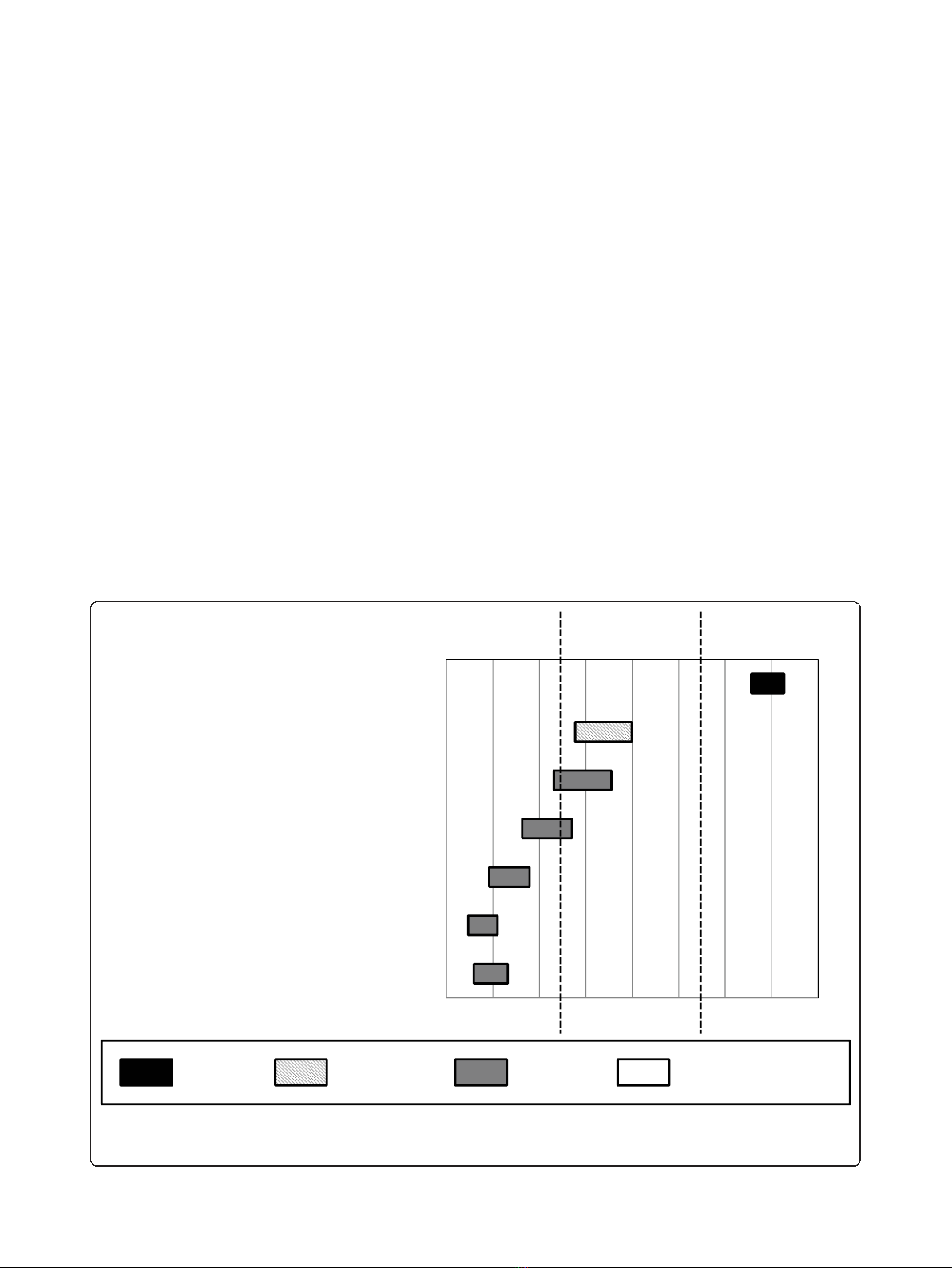
her psychiatric disorder, but who is not seriously
aggressive (see Figure 2), the experts recommended that
only explanation and persuasion be used as treatment
options (mean 7.93; 95% CI 7.56 to 8.27).
Regarding the topic of confronting the subject about
his or her offense, the experts did not reach a consensus
(see Figure 3); they did not recommend avoiding any
mention of the offense (mean 2.81; 95% CI 2.31 to 3.31).
The experts did not necessarily approve of the use of
electroconvulsive therapy (ECT) if the offender refused
to eat or take drugs because of suicidal thoughts (see
Figure 4) or after a neuroleptic malignant syndrome
caused by previous medications (see Figure 5).
Comparison of expert consensus and general opinions of
forensic psychiatrists
Five items were identified as having the same content as
questions included in a past questionnaire survey exam-
ining the general opinions of forensic psychiatrists.
In the staff section, regarding the relationship between
the case examiner and the physician in charge, 39 of the
105 respondents (37.1%) in the previous survey chose
the option ‘the case examiner should also be the
123456789
(7)Forcedmedicationusingnasaltube
(6)Electroconvulsivetherapy
(5)Maskedmedication
(4)Forceddepotinjection
(3)Forcedintravenousorintramuscularinjection
(2)Forcedmedicationusingliquidororal
disintegratingdrugs
(1)Explanationandpersuasion
First-line Second-line Third-line NO CONSENSUS
Figure 2 Options for interventions for subjects who refuse therapy. With regard to interventions for subjects who refuse to take medication
because of a lack of insight into their psychiatric disorder but who are not seriously aggressive, the experts recommend explanation and
persuasion.
Shiina et al.Annals of General Psychiatry 2011, 10:11
http://www.annals-general-psychiatry.com/content/10/1/11
Page 5 of 11