Hindawi Publishing Corporation
EURASIP Journal on Applied Signal Processing
Volume 2006, Article ID 67686, Pages 1–8
DOI 10.1155/ASP/2006/67686
ADSL Transceivers Applying DSM and Their Nonstationary
Noise Robustness
Etienne Van den Bogaert,1Tom Bostoen,2Jan Verlinden,2Raphael Cendrillon,3and Marc Moonen4
1Research & Innovation Department of Alcatel, Francis Wellesplein 1, 2018 Antwerpen, Belgium
2Access Networks Division of Alcatel, Francis Wellesplein 1, 2018 Antwerpen, Belgium
3School of Information Technology & Electrical Engineering, University of Queensland, Brisbane, QLD 4072, Australia
4Department of Electrical Engineering, Katholieke Universiteit Leuven, Kasteelpark Arenberg 10, 3001 Leuven-Heverlee, Belgium
Received 10 December 2004; Revised 10 May 2005; Accepted 18 May 2005
Dynamic spectrum management (DSM) comprises a new set of techniques for multiuser power allocation and/or detection in
digital subscriber line (DSL) networks. At the Alcatel Research and Innovation Labs, we have recently developed a DSM test
bed, which allows the performance of DSM algorithms to be evaluated in practice. With this test bed, we have evaluated the
performance of a DSM level-1 algorithm known as iterative water-filling in an ADSL scenario. This paper describes the results
of, on the one hand, the performance gains achieved with iterative water-filling, and, on the other hand, the nonstationary noise
robustness of DSM-enabled ADSL modems. It will be shown that DSM trades offnonstationary noise robustness for performance
improvements. A new bit swap procedure is then introduced to increase the noise robustness when applying DSM.
Copyright © 2006 Hindawi Publishing Corporation. All rights reserved.
1. INTRODUCTION
DSL deployment is evolving to, on the one hand, ever higher
bit rates enabling video services over DSL, and, on the other
hand, increased reach to enlarge the customer base. Higher
bit rates as well as increased reach can either be obtained
by deploying remote terminals (RTs) or by applying dy-
namic spectrum management (DSM) techniques [1,2]. The
latter technology can provide rate/reach improvements on
the shorter term, because it only requires software adapta-
tions, whereas RT deployment involves heavy investments,
and hence is rather suited for the longer term.
DSM is an adaptive form of spectrum management [3]
and is based on automatic detection of interference caused
by crosstalk. From this perspective, the entire twisted-pair
binder is considered as a shared resource and the overall bit
rate is optimized. This optimization can be done in differ-
ent ways, depending on the level of coordination between
the multiple DSL lines. We remark that the name “dynamic
spectrum management” originates from adaptive multiuser
power allocation techniques, but the meaning of the term
DSM has widened to include also multiuser detection tech-
niques.
A distinction is made between DSM at levels 0, 1, 2, and 3
according to the degree of coordination. Level-0 DSM means
there is no coordination between the lines. DSM at level 1
means that the bit rates are reported to and controlled by
a spectrum management centre (SMC). The actual transmit
PSDs are computed in each transceiver, hence the multiuser
power control is distributed. At level 2, the received signal
and noise power spectral densities (PSDs) are reported to the
SMC and the transmit PSDs are controlled by the SMC [4].
Both level 1 and 2 gains in rate and reach are originating from
adaptive multiuser power allocation techniques, resulting in
crosstalk avoidance. Finally, level 3 is the highest DSM level
at which all colocated transceivers jointly process the received
symbols for upstream transmission and the transmit symbols
for downstream transmission [5]. At this level, the gains are
originating from multiuser detection techniques based on ei-
ther crosstalk cancellation or crosstalk precompensation.
In this paper, we concentrate on DSM at level 1, and in
particular on a specific DSM algorithm called iterative water-
filling [2], as well as a simplified version thereof. In Sec-
tions 2and 3, we first review DSL channel properties and
distributed multiuser power allocation before detailing the
practical implementation of iterative water-filling on DSL
modems. In Section 4, the real-life performance of iterative
water-filling is demonstrated in an ADSL scenario, showing
data-rate gains of up to 500% in realistic settings. Finally, in
Section 5, some questions are raised about DSM trading off
nonstationary noise robustness for performance. The non-
stationary noise robustness is further investigated and a new

2 EURASIP Journal on Applied Signal Processing
bit swap procedure for enhanced noise robustness is pro-
posed showing substantial improvements.
2. THE DSL CHANNEL MODEL AND BIT LOADING
We focus on DSL modems using discrete multitone (DMT)
modulation, as for example, adopted in the ADSL standard
[6]. The bit loading is calculated on a per-tone basis, as given
by (1) for a two-user case, and depends on the signal-to-noise
ratio (SNR) at the receiver:
b1
k=log21+ SNR1(k)
Γ1
=log21+ S1(k)·h2
11(k)
Γ1N1(k)+S2(k)·h2
12(k).
(1)
In (1), krepresents the tone index, N1(k) denotes all the
noises other than self-crosstalk, and Γ1≈12 dB is equal to
the SNR gap including noise margin and coding gain. The
SNRgaptoachieveabiterrorrate(BER)of10
−7is approxi-
mately equal to 9.75 dB. Adding to this a noise margin of 6 dB
minus a coding gain of 3.75 dB, one obtains an overall value
of 12 dB for Γ1.Si(k) denotes the transmit PSD of user ion
tone k,h11(k) represents the direct channel transfer function
of user 1 and h12(k) denotes the crosstalk channel transfer
function from user 2 to user 1.
The bit loading given by (1) allows the modem to adapt
to the changing line conditions by dynamically varying the
constellation used on each tone. Moreover, (1) tells us that
the bit loading for user 1 depends on the crosstalk coming
from the other users. If the crosstalk increases on a partic-
ular carrier, fewer bits can be put on this carrier. The same
is true for the other users, where the crosstalk coming from
user 1 interferes with the signal of the other users. To illus-
trate the importance of crosstalk, an example of measured
channel transfer functions for a 1400m section of a 0.4 mm
4-quad France Telecom cable is shown in Figure 1.Thefar-
end crosstalk (FEXT) will be, in this case, on average equal
to −120 dBm/Hz, as the nominal transmit PSD of ADSL
modems is equal to −40 dBm/Hz.
3. MULTIUSER POWER ALLOCATION
The goal of multiuser power allocation is to optimize the
overall bit rate while all transceivers are also subject to a total
power constraint. This constrained optimization problem is
given by (2) for the two-user case:
max RS1(k),S2(k)s.t. ⎧
⎪
⎪
⎪
⎪
⎨
⎪
⎪
⎪
⎪
⎩
k
S1(k)≤P1,
k
S2(k)≤P2,
(2)
with R=kb1
k+kb2
k, the rate sum.
0.20.40.60.811.21.41.61.8
−100
−90
−80
−70
−60
−50
−40
−30
−20
−10
Frequency (MHz)
Gain (dB)
Direct Channel
FEXT form 2 to 1
FEXT form 3 to 1
FEXT form 4 to 1
Figure 1: Direct and FEXT channel transfer functions of a 1400 m
section of a 4-quad 0.4 mm France Telecom cable.
This constrained optimization problem can be solved by
means of the Lagrangian, which is equal to
JS1(k), S2(k)
=
k
log21+ S1(k)·h2
11(k)
Γ1N1(k)+S2(k)·h2
12(k)
+
k
log21+ S2(k)·h2
22(k)
Γ2N2(k)+S1(k)·h2
21(k)
+λ1·P1−
k
S1(k)+λ2·P2−
k
S2(k).
(3)
Equation (3) is the sum of the bit rates of both users to-
gether with the Lagrange multipliers taking into account the
total power constraint of both users. This is a non-convex
optimization problem. Hence, finding an optimum requires
an exponential complexity in K,withKthe total number of
tones. In recent work [7], numerically tractable ways of solv-
ing this problem through use of a dual decomposition have
been developed. Whereas this algorithm demonstrates large
performance gains, it is centralized and requires the exis-
tence of a spectrum management centre (SMC). In this work,
we focus on a distributed algorithm which does not require
an SMC. This algorithm is known as iterative water-filling
[2]. Iterative water-filling can be derived by first making the
assumption that the crosstalk noise is temporarily constant
and that it can be incorporated in the term representing the
background noise. This results in a simplified Lagrangian,
Etienne Van den Bogaert et al. 3
0123456789
0
0.2
0.4
0.6
0.8
1
1.2
1.4
Near-end (Mbps)
Far-end (Mbps)
Flat PSD approximation
Iterative water filling
Figure 2: Iterative water-filling and flat PSD rate regions.
equation (4), with the optimum given by (5):
JS1(k), S2(k)
=log21+ S1(k)·h2
11(k)
Γ1N1(k)
+log21+ S2(k)·h2
22(k)
Γ2N2(k)
+λ1·P1−
k
S1(k)+λ2·P2−
k
S2(k),
(4)
S1(k)=1
λ1ln 2 −
Γ1N1(k)
h2
11(k)+
,
S2(k)=1
λ2ln 2 −
Γ2N2(k)
h2
22(k)+
,
(5)
where [x]+=max(0, x).
The iterative water-filling solution is then obtained by re-
placing the background noise with the total noise in (5), lead-
ing to
S1(k)=1
λ1ln 2 −
Γ1N1(k)+S2(k)·h2
12(k)
h2
11(k)+
,
S2(k)=1
λ2ln 2 −
Γ2N2(k)+S1(k)·h2
21(k)
h2
22(k)+
.
(6)
Assuming the crosstalk noise to be constant is not valid
when considering a larger time window. So, each time the
crosstalk noise changes, the modems will adapt to this time-
varying noise environment and adapt their transmit PSD.
This means that there will be an iteration of modems ap-
plying water-filling, hence this explains the name “iterative
water-filling.” Applying these power allocation formulas iter-
atively is proved to converge to a so-called Nash equilibrium
[2].
From (1), it follows that, to have one bit on a carrier, the
SNR must be at least as large as Γ1. Combining this with (6),
the transmit PSD on tones loaded with 1 bit will be given by.
Smin
1(k)=
Γ1N1(k)+S2(k)·h2
12(k)
h2
11(k)=1
2λ1ln 2 .(7)
On the other hand, the transmit PSD on tones with very low
noise-to-channel ratio (NCR) will be approximated by (8).
As a conclusion, the transmit PSD is seen to vary only with
at most 3 dB:
S1(k)=1
λ1ln 2 .(8)
The water-filled transmit PSD can then be approximated by
one PSD level for all usable tones, equal to the total power
divided by the useful transmit bandwidth. The simplicity of
this water-filling approximation decreases the power allo-
cation complexity of DSM applied at level 1. Although the
complexity of water-filling as such is not that high, this ap-
proximation has one clear advantage: existing ADSL imple-
mentations (which all use flat PSD allocation) can be used
for DSM level 1 by just controlling their average PSD level.
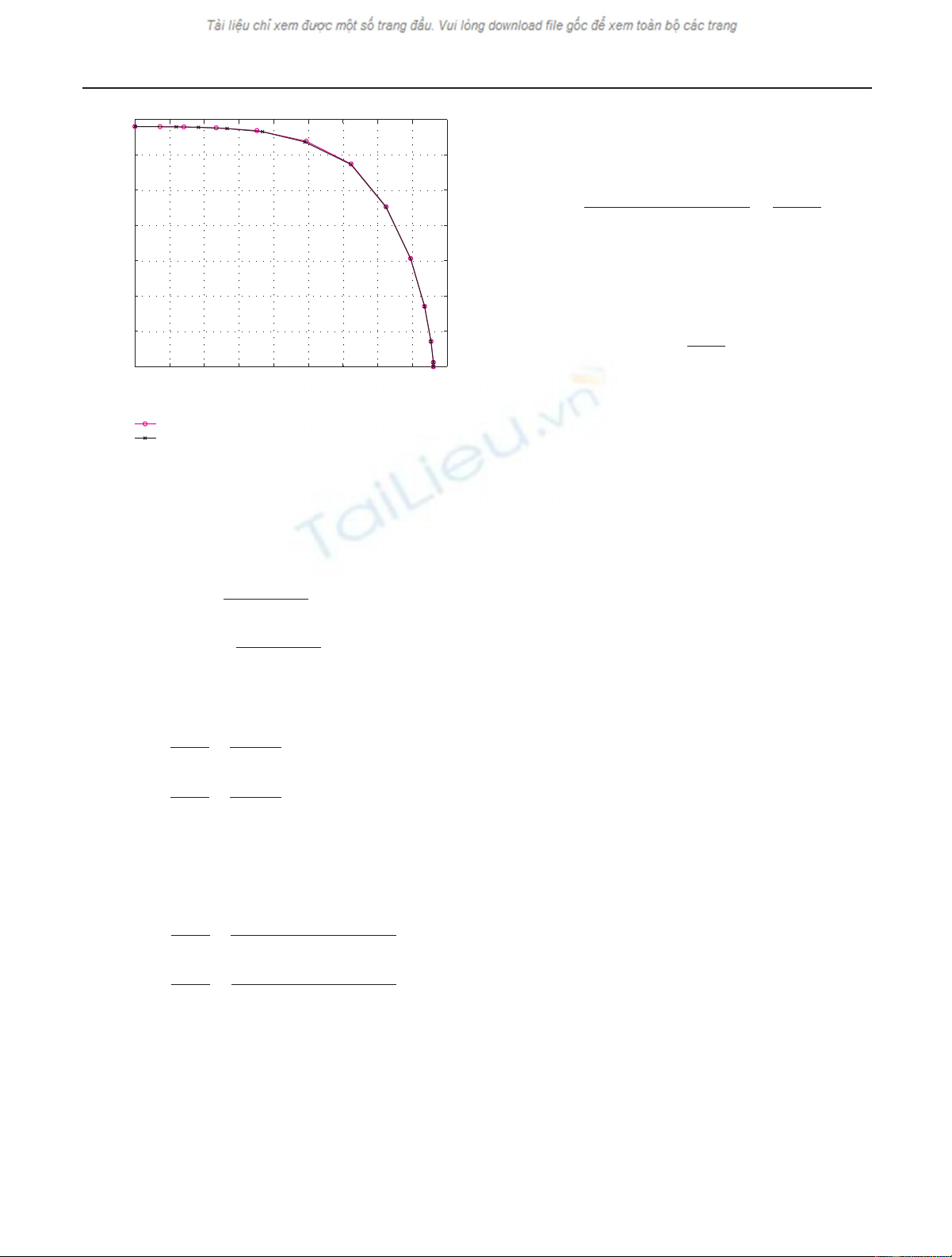
Figure 2 shows the rate regions of water-filling and the flat
PSD approximation, respectively. As can be seen from the
figure, the difference in performance is negligible. The simu-
lation scenario is the same as the scenario shown in Figure 3,
and which will be explained in the next section.
Note that the resulting iterative procedure is straightfor-
wardly generalized to the N-user case.
Finally, an important aspect is that a DSL transceiver
can be operated in 3 so-called adaptation modes. In rate-
adaptive (RA) mode, the transceiver uses all available power
to maximize the bit rate, while maintaining a fixed noise mar-
gin. Similarly, in margin-adaptive (MA) mode, the transceiver
uses all available power to maximize the noise margin, while
maintaining a fixed bit rate. Finally, in power-adaptive (PA)
mode, the transceiver minimizes the power consumption,
while maintaining a fixed bit rate and noise margin. Cur-
rently, most DSL lines are operated in MA mode, which
means that a lot of power is wasted on the short loops,
also generating unnecessary crosstalk on the longer loops.
DSM at level 1 proposes to switch all DSL transceivers to PA
mode, this means that a DSL transceiver connected to a short
loop will apply power back-off(PBO) in order to minimize
its power. Furthermore, it is also proposed to abandon the
idea of using spectral masks to ensure spectral compatibility
with other DSL services, but only to restrict the total power.
Hence, a DSL transceiver connected to a long loop would be
allowed to reallocate power from the higher tones, which are
then not used, to the lower tones, a technique called boosting.
4. DSM PERFORMANCE
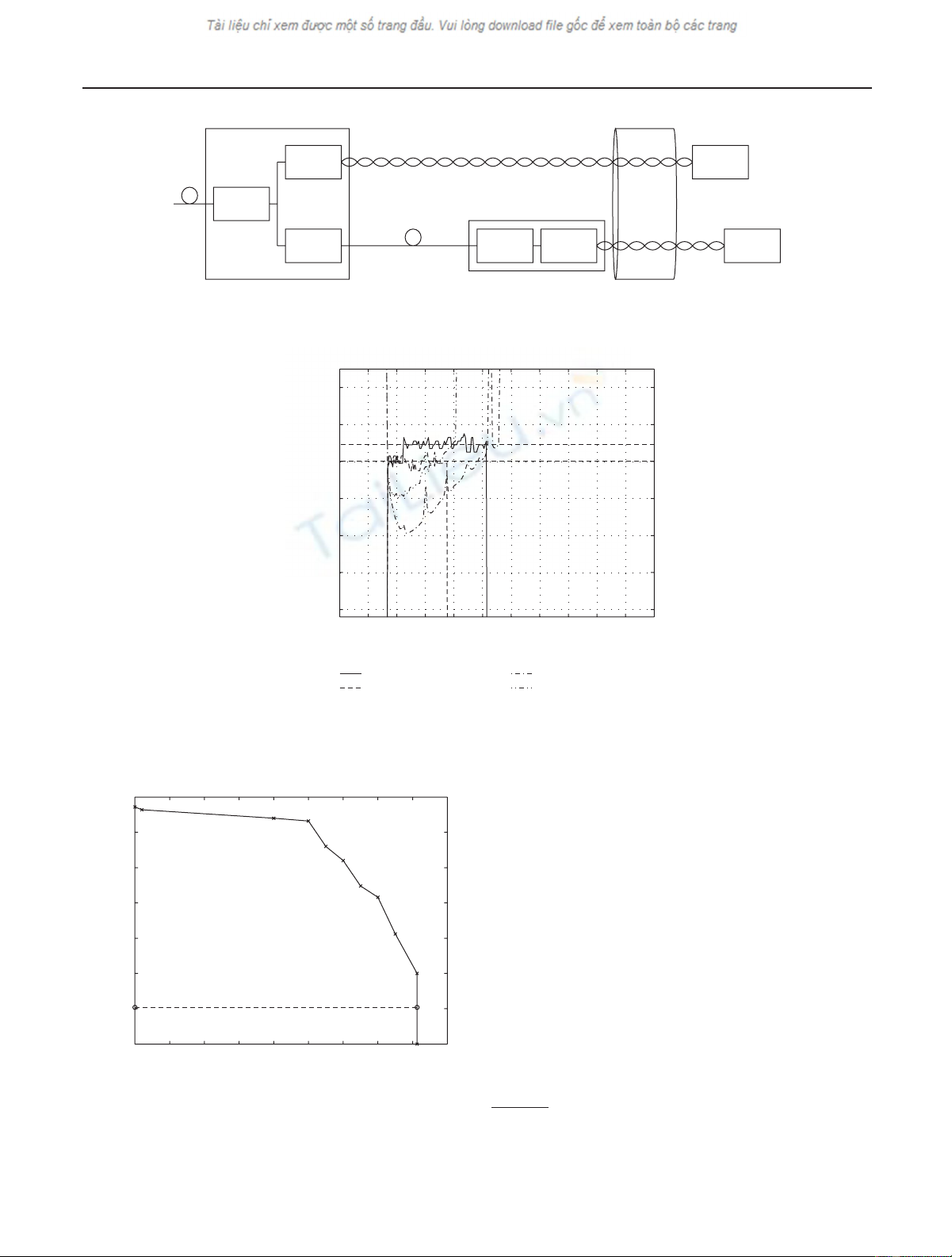
Figure 3 shows a block diagram of the DSM (level 1) demon-
strator at Alcatel Research and Innovation Labs, which has
provided the results shown in Figures 4and 5.Thedemon-
strator is based on ADSL modems and a mixed deployment
4 EURASIP Journal on Applied Signal Processing
oTU-R2
oTU-C1
xTU-C1
CO
5000 m, pair 1
oTU-R1xTU-C2
RT
2000 m, pair 3
xTU-R2
xTU-R1
Figure 3: DSM demonstrator at Alcatel Research & Innovation Labs implementing 1 long CO line of 5000 m, 1 short RT line of 2000 m, and
a distance CO-RT of 3000 m.
01234567891011
×105
−80
−70
−60
−50
−40
−30
−20
Frequency (Hz)
(dBm/Hz)
Tx PSD with DSM
Tx PSD without DSM
NCR with DSM
NCR without DSM
Figure 4: Downstream ADSL transmit power spectral density (PSD) (solid) of the ATU-C transmitting over the 5000 m loop, together with
the noise-to-channel ratio (dotted). Average PSD with DSM=−35.6 dBm/Hz and average PSD without DSM=−40 dBm/Hz.
0123456789
0
0.2
0.4
0.6
0.8
1
1.2
1.4
Short-loops bit rate (Mbps)
Long-loops bit rate (Mbps)
Figure 5: Rate region for the short- and long-loops scenario: with-
out DSM (dotted, circles) and with DSM (solid, plusses).
of central office (CO) distributed and remote terminal (RT)
distributed lines in the same cable binder.
The demonstrator allows switching from normal mode
to DSM mode for downstream only. DSM is only applied to
the downstream PSD as the upstream does not suffer signif-
icantly from crosstalk. In DSM mode, some modem param-
eters are switched to ensure PA operation, and in addition
the ADSL transceivers switch from a normal modem soft-
ware build to a DSM modem software build. Some changes
have been made to the modem software to allow DSM at level
1, where the water-filling is approximated by a flat PSD.
The changes in the software consist of, in the first place,
expanding the range of the average relative gain from initial-
ization to showtime1from (0,−12) dB to (6,−20,5) dB. This
means that a larger power back-offand boosting are made
possible. A second topic of software changes concerns the
1Showtime is the state in either ATU-C or ATU-R reached after all initial-
ization and training is completed, in which user data is transmitted [6].

Etienne Van den Bogaert et al. 5
sync symbols in showtime. Once in showtime, the modems
react to upcoming and disappearing noises coming from
neighbouring lines. A modem starts up with a high noise
level due to many disturbers, the transmit PSD will be cal-
culated to achieve the SNR necessary to attain the target bit
rate. If the noise then decreases due to neighbouring lines
becoming inactive, the modem will automatically decrease
its transmit PSD as the SNR is higher than needed. As the
transmit PSD of the sync symbols may not change during
showtime, it has to be low enough compared to the transmit
PSD of the data symbols to avoid intersymbol interference
(ISI) from the sync symbols into the data symbols. This can
be either achieved by ensuring a low transmit PSD of the sync
symbols or by adapting the transmit PSD of the sync symbols
according to the data symbol transmit PSD variation.
The demonstrator shows a significant bit rate increase on
the long CO loop. This results from, on the one hand, power
back-offon the short RT loop and, on the other hand, boost-
ing on the long CO loop. Figure 4 illustrates this boosting on
the long loop. The figure shows also the noise-to-channel ra-
tio (NCR), depicted with dotted lines.
Without DSM, only 256 kbps is achieved on the long CO
loop while the short RT loop operates at 4 Mps. With DSM,
not less than 1344 kbps is achieved on the long CO loop
with still 4 Mbps on the short RT loop. This is an increase
of over 400%. For a more general scenario with two long CO
loops together with two short RT loops, the bit rates increase
even more, namely from 208 kbps to 1280 kbps, an increase
of over 500%.
Figure 5 depicts the rate region for the short and long
lines with and without DSM. It is clear that DSM allows ex-
tending the rate region substantially. Remark that these re-
sults here merely indicate the potential of DSM. The results
achievable in the field will depend on the actual noise envi-
ronment and loop length distribution.
Although these results look very promising, iterative
water-filling also has a number of drawbacks. Firstly, as
shown in Figure 4, iterative water-filling results in boosting
on the long loops. Boosting implies breaking the spectral
mask constraints, hence spectral compatibility with other ser-
vices is not assured. Spectrally compatible DSM has been in-
vestigated by means of the American spectrum management
standard [3] method B compliancy [8]. Method B ensures
spectral compatibility of a new technology not by imposing a
spectral mask, but by ensuring that the new technology does
not harm the specified basis systems. This is verified by com-
puting the impact on, for example, the bit rate of these basis
systems.
A second important drawback of iterative water-filling is
the fact that DSM reduces the noise margin on the short line
significantly compared to the current deployment. The lines
are then operated in PA mode with 6 dB noise margin, which
means that, if, for example, a new DSL line is activated, the
short line could go out of sync due to the large noise level
change. We therefore implemented a new ADSL overhead
channel (AOC) message enabling the modem to request a
quick giboost (QB). This quick giboost message is a very
short message from the Rx modem to the Tx modem asking
for an increase in PSD on all active tones. It makes it possible
for the modems to react quickly to rapidly increasing noises
such as a new upcoming disturber. The short length of the
message decreases the probability of corrupt reception [9],
and as such enhances the stability. The nonstationary noise-
robustness results are detailed in the next section.
5. NONSTATIONARY NOISE ROBUSTNESS
Robustness of a DSL modem against nonstationary noise
translates to stability on the level of the DSL link and higher
protocol layer communication links. Hence, a good robust-
ness is a key to the development of a stable network and sat-
isfied customers.
In this section, nonstationary noise robustness is inves-
tigated by injecting time-varying noise on the line. To show
DSM gains, one typically needs multiple active DSL lines in
a binder, but for the sake of simplicity, only one DSL line is
taken into account here and the nonstationary noise is em-
ulated. As DSM is only applied to downstream transmission
in the case of ADSL, the noise injection happens only at the
customer premises equipment (CPE) side. Many parameters
play a role in the noise-robustness measurement: loop length,
bit rate, noise margin, injected noise level, noise level change,
and so forth, but, as can be seen in the next section, the
results show that the key parameters are the noise margin,
power back-off, changing noise level, and number of active
tones. Indeed, the nonstationary noise robustness is by defi-
nition the robustness against the changing noise level. How-
ever, the study will also show that the level of power back-off
influences the results. In this study, the spectral shape of the
noise has been kept flat over the entire bandwidth.
5.1. Noise-robustness measurements
DSM, that is, PA mode of operation, is achieved by provi-
sioning the modems with a target bit rate and a maximum
additional noise margin set to zero. The target noise mar-
gin is set to 6 dB and the only noise robustness the modems
have left beside this noise margin is the bit swap proce-
dure. Unfortunately, the bit swap protocol is limited to max-
imum 6 swaps per message [6]. Furthermore, the bit swap
is done over the ADSL overhead channel (AOC) with at
least 800 milliseconds between every two bit swap messages.
Both restrictions limit the achievable noise-increase recov-
ery. The measurement results for DSM, when all tones are
loaded with bits, are shown in Figure 6 and labelled as “DSM
without QB.” The label “DSM with QB” is explained further.
The modems are DSM-enabled prototypes and can apply
power back-offup to 20.5 dB, in comparison with conven-
tional ADSL1 modems, which are limited to a 12 dB power
back-off. The figure shows the maximum noise increase an
ADSL transceiver can handle without resynchronization ver-
sus the power back-offlevel.
Figure 6 shows us that conventional ADSL1 modems op-
erating at fixed margin (DSM without QB) can only recover
from a maximum noise increase of 7.5 dB. Indeed, the max-
imum power back-offfor a conventional ADSL1 modem is


![Báo cáo seminar chuyên ngành Công nghệ hóa học và thực phẩm [Mới nhất]](https://cdn.tailieu.vn/images/document/thumbnail/2025/20250711/hienkelvinzoi@gmail.com/135x160/47051752458701.jpg)