
_________________________________________________
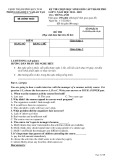
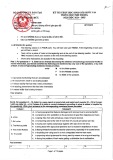
PART I: QUESTION 1 - LISTENING COMPREHENSION: (1 – 20) (2.0 pts)
(Thí sinh nghe 02 đoạn ghi âm mỗi đoạn 02 lần. Bắt đầu và kết thúc phần nghe đều có
nhạc. CD đã được ghi đủ số lần, giám thị mở cho máy chạy từ đầu tới cuối không cần trả
CD. Tổng thời lượng của CD là: khoảng 20 phút. Giữa các đoạn có khoảng im lặng để thí
sinh làm bài)
SECTION 1: Complete the notes below (1-10). Write NO MORE THAN THREE
WORDS AND/OR A NUMBER for each answer.
Example
Name of agent
Answer Flagstone
Areas dealt with (1.) ______
north suburbs
Rent (2.) from £ ______ to £ ______ a month
Depends on: the area
(3.) ______ availability of
garage
Properties available West Park Road
rent (4.) £ ______ a month
including (5.) ______.
Tithe Road
rent £ 380 a month
including (6.) ______ rental
Viewing arrangements meet at office on (7.) ______ at 5:00 pm
Need Letter from bank
reference from (8.) ______
Must Give (9.) ______ notice of moving in
give deposit of (10.) ______
pay for contract
SECTION 2: 11-20
Môn Tiếng Anh Ngày thi: 21/3/2023 Trang 1/10
SỞ GIÁO DỤC VÀ ĐÀO TẠO
TỈNH TIỀN GIANG
KỲ THI CHỌN HỌC SINH GIỎI CẤP TỈNH
TRUNG HỌC CƠ SỞ
Năm học 2022-2023
Môn: TIẾNG ANH
Thời gian: 150 phút (không kể thời gian giao
đề)
Ngày thi: 21/3/2023
(Đề thi có 10 trang, gồm 4 phần, 76 câu)
ĐỀ THI CHÍNH THỨC
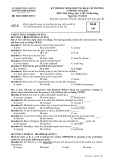
Choose the correct letter A, B, or C
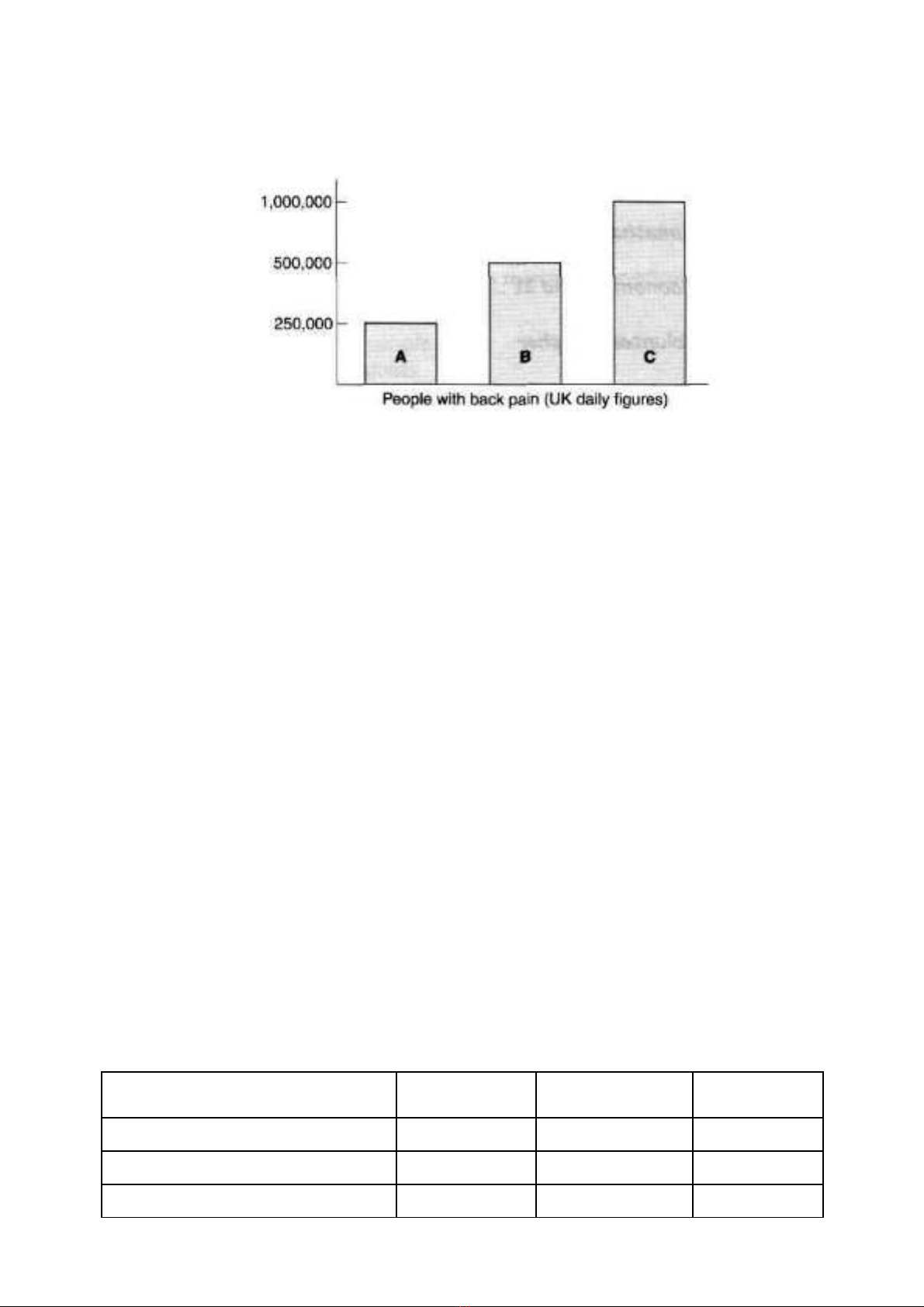
11. Which column of the bar chart represents the figures quoted?
12. According to the speaker, the main cause of back pain in women is
A. pregnancy
B. osteoporosis
C. lack of exercise
13. As treatment for back pain the Clinic mainly recommends
A. pain killers
B. relaxation therapy
C. exercise routines
14. The back is different from other parts of the body because
A. it is usually better at self-repair
B. a back injury is usually more painful
C. its response to injury often results in more damage
15. Bed rest is advised
A. for a maximum of 2 days
B. for extreme pain only
C. for pain lasting more than 2 days
16. Being overweight
A. is a major source of back pain
B. worsens existing back pain
C. reduces the effectiveness of exercise
Strongly
recommended
Recommended in
some circumstances
Not
recommended
Example: Diet is overweight Answer: /A/ B C
17. Buy special orthopaedic chair A B C
18. Buy shock-absorbing inserts A B C
Môn Tiếng Anh Ngày thi: 21/3/2023 Trang 2/10
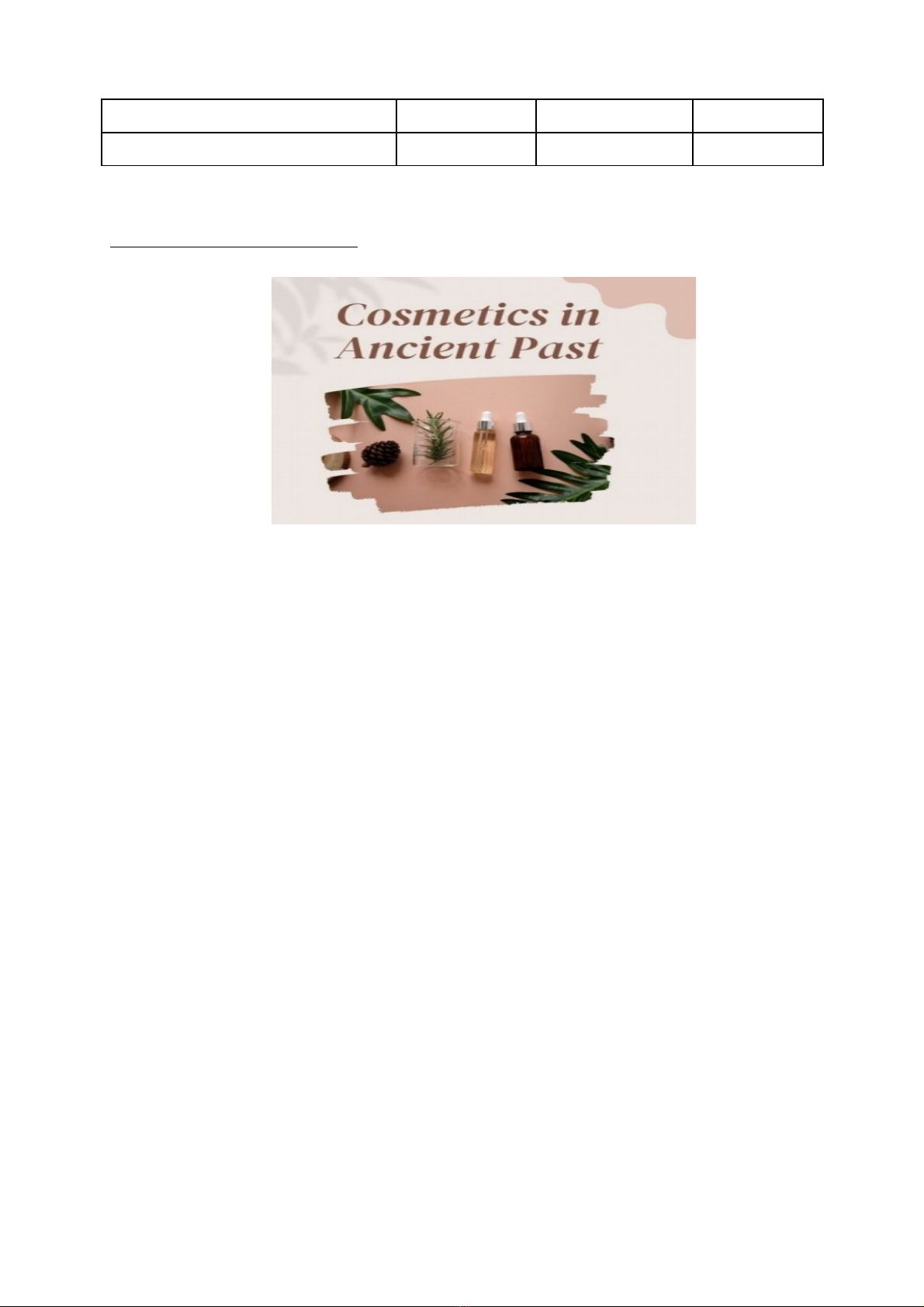
19. Wear flat shoes A B C
20. Buy TENS machine A B C
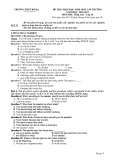
PART II: READING COMPREHENSION: (6.0 pts)
QUESTION 2. READING 1 : Read the passage below, then choose ONE option that best
answers or completes each of the questions 21-28:
Since cosmetics (also called make-ups) and perfumes are still in wide use today, it is
interesting to compare the attitudes, customs and beliefs related to them in ancient times to
those of our own day and age. Cosmetics and perfumes have been popular since the dawn of
civilization; it is shown by the discovery of a great deal of pertinent archaeological material,
dating from the third millennium BC. Mosaics, glass perfume flasks, stone vessels, ovens,
cooking-pots, clay jars, etc., some inscribed by the hand of the artisan. Evidence also
appears in the Bible and other classical writings, where it is written that spices and perfumes
were prestigious products known throughout the ancient world and coveted by kings and
princes. The written and pictorial descriptions, as well as archaeological findings, all show
how important body care and aesthetic appearance were in the lives of the ancient people.
The chain of evidence spans many centuries, detailing the usage of cosmetics in various
cultures from the earliest period of recorded history.
In antiquity, however, at least in the onset, cosmetics served in religious ceremonies and for
healing purposes. Cosmetics were also connected with cultic worship and witchcraft: to
appease the various gods, fragrant ointments were applied to the statuary images and even
to their attendants. From this, in the course of time, developed the custom of personal use, to
enhance the beauty of the face and the body, and to conceal defects.
Perfumes and fragrant spices were precious commodities in antiquity, very much in
demand, and at times even exceeded silver and gold in value. Therefore they were luxury
products, used mainly in the temples and in the homes of the noble and wealthy. The Judean
kings kept them in treasure houses (2 Kings 20:13). And the Queen of Sheba brought to
Solomon “camels laden with spices, gold in great quantity and precious stones.” (1 Kings
10:2, 10). However, within time, the use of cosmetics became the custom of that period. The
use of cosmetics became widespread among the lower classes as well as among the wealthy;
in the same way, they washed the body, so they used to care for the body with substances
that softened the skin and anoint it with fragrant oils and ointments.
Facial treatment was highly developed and women devoted many hours to it. They used to
spread various scented creams on the face and to apply makeup in vivid and contrasting
colors. An Egyptian papyrus from the 16th century BC contains detailed recipes to remove
Môn Tiếng Anh Ngày thi: 21/3/2023 Trang 3/10

blemishes, wrinkles, and other signs of age. Greek and Roman women would cover their
faces in the evening with a “beauty mask” to remove blemishes, which consisted mainly of
flour mixed with fragrant spices, leaving it on their face all night. The next morning they
would wash it off with asses’ milk. The very common creams used by women in the ancient
Far East, particularly important in the hot climate and prevalent in that area of the globe,
were made up of oils and aromatic scents. Sometimes the oil in these creams was extracted
from olives, almonds, gourds, sesame, or from trees and plants; but, for those of limited
means, scented animal and fish fats were commonly used.
Women in the ancient past commonly put colors around their eyes. Besides beautification,
its purpose was also medicinal as covering the sensitive skin of the lids with colored
ointments that prevented dryness and eye diseases: the eye-paint repelled the little flies that
transmitted eye inflammations. Egyptian women colored the upper eyelid black and the
lower one green and painted the space between the upper lid and the eyebrow gray and blue.
The women of Mesopotamia favored yellows and reds. The use of kohl for painting the eyes
is mentioned three times in the Bible, always with disapproval by the sages (2 Kings, 9:30;
Jeremiah 4:30; Ezekiel 23:40). In contrast, Job named one of his daughters “Keren
Happukh”- “horn of eye paint” (Job 42:14)
Great importance was attached to the care for hair in ancient times. Long hair was always
considered a symbol of beauty, and kings, nobles and dignitaries grew their hair long and
kept it well-groomed and cared for. Women devoted much time to the style of the hair;
while no cutting, they would apply much care to it by arranging it skillfully in plaits and
“building it up” sometimes with the help of wigs. Egyptian women generally wore their hair
flowing down to their shoulders or even longer. In Mesopotamia, women cherished long
hair as a part of their beauty, and hair flowing down their backs in a thick plait and tied with
a ribbon is seen in art. Assyrian women wore their hair shorter, braiding and binding it in a
bun at the back. In Ancient Israel, brides would wear their hair long on the wedding day as a
sign of their virginity. Ordinary people and slaves, however, usually wore their hair short,
mainly for hygienic reasons, since they could not afford to invest in the kind of treatment
that long hair required.
From the Bible and Egyptian and Assyrian sources, as well as the words of classical
authors, it appears that the centers of the trade-in aromatic resins and incense were located
in the kingdoms of southern Arabia, and even as far as India, where some of these precious
aromatic plants were grown. “Dealers from Sheba and Rammah dealt with you, offering the
choicest spices…” (Ezekiel 27:22). The Nabateans functioned as the important middlemen
in this trade; Palestine also served as a very important component, as the trade routes
crisscrossed the country. It is known that the Egyptian Queen Hatsheput (15th century BC)
sent a royal expedition to the Land of Punt (Somalia) in order to bring back myrrh seedlings
to plant in her temple. In Assyrian records of tribute and spoils of war, perfumes and resins
are mentioned; the text from the time of Tukulti-Ninurta II (890-884 BC) refers to balls of
myrrh as a part of the tribute brought to the Assyrian king by the Aramaean kings. The
trade-in spices and perfumes are also mentioned in the Bible as written in Genesis (37:25-
26), “Camels carrying gum tragacanth and balm and myrrh”.
(21-28)
Môn Tiếng Anh Ngày thi: 21/3/2023 Trang 4/10

Do the following statements agree with the information given in Reading Passage?
Write
YES if the statement agrees with the claims of the writer
NO If the statement contradicts the claims of the writer
NOT GIVEN If it is impossible to say what the writer thinks about this
21. Evidence showing cosmetics use in ancient times exists in abundance.
22. The story goes from magic powers to beautification.
23. The written record for cosmetics and perfumes dates back to the third millennium BC.
24. Since perfumes and spices were luxury products, their use was exclusive to the noble
and the wealthy.
25. In the ancient Far East, fish fats were used as a cream by a woman from poor
households.
26. The teachings in the Bible were repeatedly against the use of kohl for painting the eyes.
27. Long hair as a symbol of beauty was worn solely by women of ancient cultures.
28. The Egyptian Queen Hatsheput sent a royal expedition to Punt to establish a trade route
for myrrh.
QUESTION 3. READING 2 : (29-36) The reading passage has 7 paragraphs: (A-G).
A
With time, the record-keepers developed systematized symbols from their drawings. These
symbols represented words and sentences but were easier and faster to draw and universally
recognized for meaning. The discovery of clay made portable records possible (you can’t
carry a cave wall around with you). Early merchants used clay tokens with pictographs to
record the quantities of materials traded or shipped. These tokens date back to about 8,500
B.C. With the high volume and the repetition inherent in record keeping, pictographs
evolved and slowly lost their picture detail. They became abstract figures representing
sounds in spoken communication. The alphabet replaced pictographs between 1700 and
1500 B.C. in the Sinaitic world. The current Hebrew alphabet and writing became popular
around 600 B.C. About 400 B.C. the Greek alphabet was developed. Greek was the first
script written from left to right. From Greek followed the Byzantine and the Roman (later
Latin) writings. In the beginning, all writing systems had only uppercase letters, when the
writing instruments were refined enough for detailed faces, lowercase was used as well
(around 600 A.D.).
B
The earliest means of writing that approached pen and paper as we know them today was
developed by the Greeks. They employed a writing stylus, made of metal, bone, or ivory, to
placemarks upon wax-coated tablets. The tablets are made in hinged pairs, closed to protect
the scribe’s notes. The first examples of handwriting (purely text messages made by hand)
originated in Greece. The Grecian scholar, Cadmus invented the written letter – text
messages on paper sent from one individual to another.
C
Writing was advancing beyond chiselling pictures into stone or wedging pictographs into
wet clay. The Chinese invented and perfected ‘Indian Ink’. Originally designed for blacking
the surfaces of raised stone-carved hieroglyphics, the ink was a mixture of soot from pine
Môn Tiếng Anh Ngày thi: 21/3/2023 Trang 5/10




%20--%3e%3cdefs%3e%3cstyle%3e%20.st0%20{%20fill:%20%23fff;%20}%20.st1%20{%20fill:%20%237800fa;%20}%20%3c/style%3e%3c/defs%3e%3cpath%20class='st1'%20d='M117.78,12.18H43.11c2.9,3.47,4.65,7.94,4.65,12.82,0,5.6-2.3,10.66-6.01,14.29h76.02l7.22-13.56-7.22-13.56Z'/%3e%3cg%3e%3cpath%20class='st0'%20d='M53.58,26.17h-.59v-1.46h.59v-4.96h2.83c1.78,0,2.67.94,2.67,2.82v5.76c0,1.87-.89,2.81-2.67,2.81h-2.83v-4.96ZM55.36,21.37v3.34h1.1v1.46h-1.1v3.34h1.01c.61,0,.91-.37.91-1.1v-5.93c0-.74-.3-1.1-.91-1.1h-1.01Z'/%3e%3cpath%20class='st0'%20d='M65.99,31.14h-1.8l-.31-2.07h-2.19l-.31,2.07h-1.64l1.82-11.39h2.62l1.82,11.39ZM65.28,18.04c-.25.46-.51.77-.75.94-.21.15-.47.22-.79.22-.26,0-.57-.07-.92-.22l-.38-.15c-.14-.05-.26-.07-.37-.07-.3,0-.53.18-.71.54l-.91-.68c.25-.46.51-.77.75-.94.21-.14.48-.21.79-.21.26,0,.57.07.92.21l.38.15c.14.05.26.07.37.07.3,0,.53-.18.71-.54l.91.68ZM61.91,27.52h1.73l-.87-5.76-.87,5.76Z'/%3e%3cpath%20class='st0'%20d='M74.53,26.89v1.52c0,1.91-.89,2.86-2.67,2.86s-2.67-.95-2.67-2.86v-5.93c0-1.91.89-2.86,2.67-2.86s2.67.95,2.67,2.86v1.11h-1.69v-1.22c0-.75-.31-1.12-.93-1.12s-.93.37-.93,1.12v6.15c0,.74.31,1.11.93,1.11s.93-.37.93-1.11v-1.63h1.69Z'/%3e%3cpath%20class='st0'%20d='M81.4,31.14h-1.8l-.31-2.07h-2.19l-.31,2.07h-1.64l1.82-11.39h2.62l1.82,11.39ZM75.9,19.2l1.52-1.91h1.71l1.51,1.91h-1.61l-.76-.95-.75.95h-1.61ZM77.32,27.52h1.73l-.87-5.76-.87,5.76ZM83.1,15.99l-1.76,1.91h-1.26l1.17-1.91h1.86Z'/%3e%3cpath%20class='st0'%20d='M84.86,19.75c1.78,0,2.67.94,2.67,2.82v1.48c0,1.87-.89,2.81-2.67,2.81h-.85v4.28h-1.79v-11.39h2.64ZM84.01,21.37v3.86h.85c.58,0,.87-.36.87-1.08v-1.71c0-.71-.29-1.07-.87-1.07h-.85Z'/%3e%3cpath%20class='st0'%20d='M93.51,19.75c1.78,0,2.67.94,2.67,2.82v1.48c0,1.87-.89,2.81-2.67,2.81h-.85v4.28h-1.79v-11.39h2.64ZM92.66,21.37v3.86h.85c.58,0,.87-.36.87-1.08v-1.71c0-.71-.29-1.07-.87-1.07h-.85Z'/%3e%3cpath%20class='st0'%20d='M98.8,31.14h-1.79v-11.39h1.79v4.88h2.03v-4.88h1.83v11.39h-1.83v-4.88h-2.03v4.88Z'/%3e%3cpath%20class='st0'%20d='M105.36,24.55h2.46v1.62h-2.46v3.34h3.09v1.63h-4.88v-11.39h4.88v1.63h-3.09v3.18ZM108.17,17.29l-1.76,1.91h-1.26l1.17-1.91h1.86Z'/%3e%3cpath%20class='st0'%20d='M112.2,19.75c1.78,0,2.67.94,2.67,2.82v1.48c0,1.87-.89,2.81-2.67,2.81h-.85v4.28h-1.79v-11.39h2.64ZM111.35,21.37v3.86h.85c.58,0,.87-.36.87-1.08v-1.71c0-.71-.29-1.07-.87-1.07h-.85Z'/%3e%3c/g%3e%3ccircle%20class='st1'%20cx='25'%20cy='25'%20r='20'/%3e%3cpath%20class='st0'%20d='M32.78,19.27c2.92,0,4.43,2.55,5.28,5.33l.71,2.17c.14.38-.33.75-.71.75h-5.61c.19-.33.24-.71.09-1.08l-.75-2.45c-.43-1.32-.99-2.64-1.79-3.77.75-.57,1.65-.94,2.78-.94h0ZM25,18.38c3.25,0,4.9,2.78,5.89,5.89l.76,2.45c.14.42-.33.8-.8.8h-11.69c-.42,0-.94-.38-.8-.8l.75-2.45c.99-3.11,2.64-5.89,5.89-5.89h0ZM25,11.35c1.74,0,3.11,1.37,3.11,3.11s-1.37,3.11-3.11,3.11-3.11-1.41-3.11-3.11,1.41-3.11,3.11-3.11h0ZM17.27,19.27c1.08,0,1.98.38,2.73.94-.8,1.13-1.37,2.45-1.74,3.77l-.8,2.45c-.14.38-.05.75.09,1.08h-5.56c-.42,0-.9-.38-.75-.75l.71-2.17c.9-2.78,2.41-5.33,5.33-5.33h0ZM17.27,12.91c1.51,0,2.78,1.27,2.78,2.83s-1.27,2.83-2.78,2.83-2.83-1.27-2.83-2.83,1.27-2.83,2.83-2.83h0ZM32.78,12.91c1.56,0,2.78,1.27,2.78,2.83s-1.23,2.83-2.78,2.83-2.83-1.27-2.83-2.83,1.27-2.83,2.83-2.83h0ZM27.07,28.56v.09c0,.57-.24,1.08-.61,1.46h0v.05c-.38.33-.9.57-1.46.57s-1.08-.24-1.46-.61h0c-.38-.38-.61-.9-.61-1.46v-.09h1.41v.09c0,.19.05.38.19.47v.05c.09.09.28.19.47.19s.38-.09.47-.19v-.05c.14-.09.24-.28.24-.47t-.05-.09h1.41ZM30.99,28.56v.09c0,1.65-.66,3.16-1.74,4.24-1.08,1.08-2.59,1.79-4.24,1.79s-3.16-.71-4.24-1.79l-.05-.05c-1.04-1.08-1.7-2.55-1.7-4.2v-.09h1.41v.09c0,1.27.47,2.4,1.27,3.25h.05c.85.85,1.98,1.37,3.25,1.37s2.4-.52,3.25-1.37c.85-.8,1.37-1.98,1.37-3.25v-.09h1.37ZM34.99,28.56v.09c0,2.78-1.13,5.28-2.92,7.07-1.79,1.79-4.29,2.92-7.07,2.92s-5.23-1.13-7.07-2.92c-1.79-1.79-2.92-4.29-2.92-7.07v-.09h1.41v.09c0,2.4.94,4.53,2.5,6.08,1.56,1.56,3.72,2.5,6.08,2.5s4.52-.94,6.08-2.5c1.56-1.56,2.5-3.68,2.5-6.08v-.09h1.41Z'/%3e%3c/svg%3e)