

Hindawi Publishing Corporation
Fixed Point Theory and Applications
Volume 2011, Article ID 859032, 15 pages
doi:10.1155/2011/859032
Research Article
Strong Convergence Theorems for an Infinite
Family of Equilibrium Problems and Fixed Point
Problems for an Infinite Family of Asymptotically
Strict Pseudocontractions
Shenghua Wang,1Shin Min Kang,2and Young Chel Kwun3
1School of Applied Mathematics and Physics, North China Electric Power University,
Baoding 071003, China
2Department of Mathematics and RINS, Gyeongsang National University, Jinju 660-701, Republic of Korea
3Department of Mathematics, Dong-A University, Pusan 614-714, Republic of Korea
Correspondence should be addressed to Young Chel Kwun, yckwun@dau.ac.kr
Received 12 October 2010; Accepted 29 January 2011
Academic Editor: Jong Kim
Copyright q2011 Shenghua Wang et al. This is an open access article distributed under the
Creative Commons Attribution License, which permits unrestricted use, distribution, and
reproduction in any medium, provided the original work is properly cited.
We prove a strong convergence theorem for an infinite family of asymptotically strict pseudo-
contractions and an infinite family of equilibrium problems in a Hilbert space. Our proof is simple
and different from those of others, and the main results extend and improve those of many others.
1. Introduction
Let Cbe a closed convex subset of a Hilbert space H.LetS:C→Hbe a mapping and if
there exists an element x∈Csuch that xSx,thenxis called a fixed point of S.Thesetof
fixed points of Sis denoted by FS.Recallthat
1Sis called nonexpansive if
Sx −Sy
≤
x−y
,∀x, y ∈C, 1.1
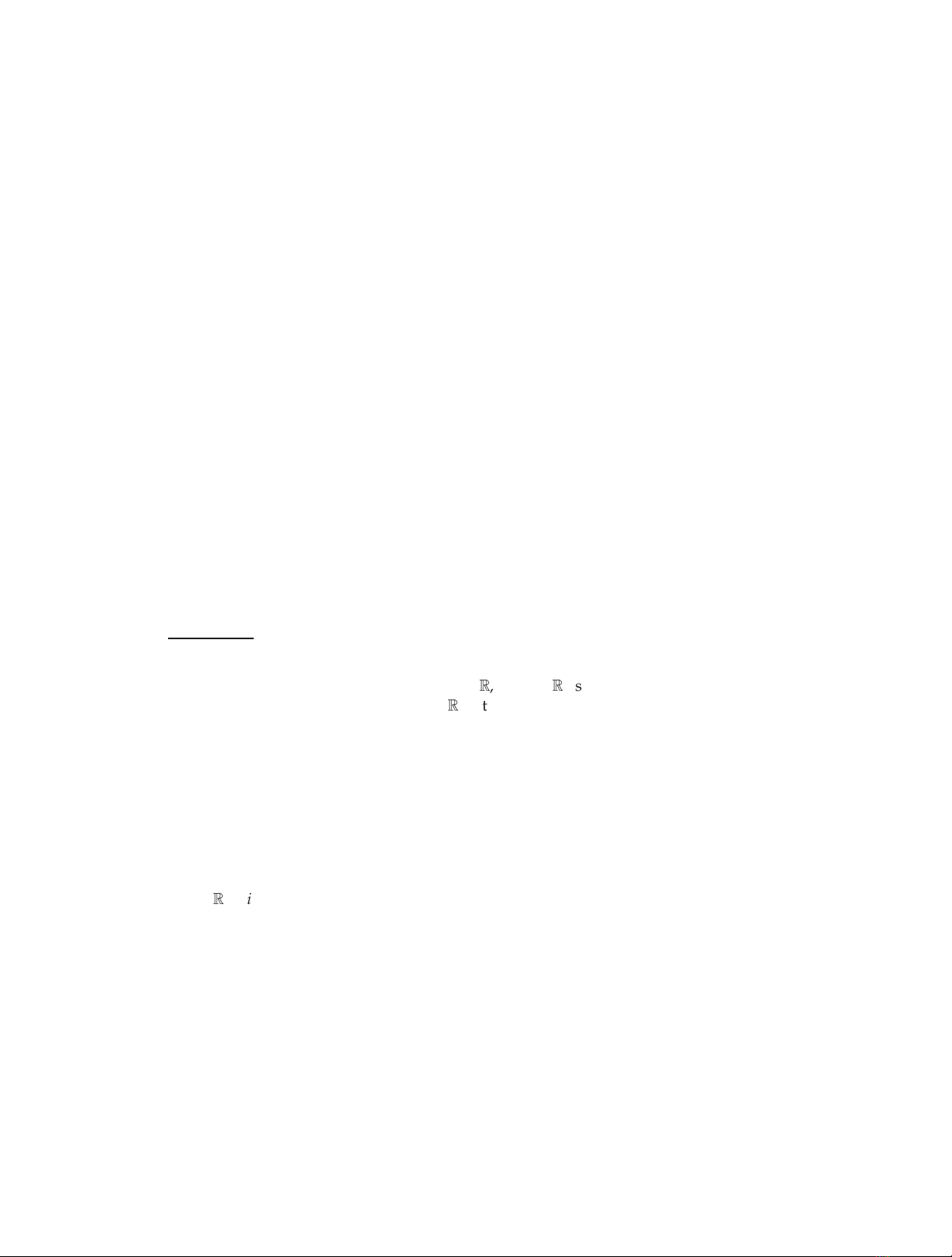
2Sis called asymptotically nonexpansive 1if there exists a sequence {kn}⊂1,∞
with kn→1suchthat
2 Fixed Point Theory and Applications
Snx−Sny
≤kn
x−y
,∀x, y ∈C, n ≥1,1.2
3Sis called to be a κ-strict pseudo-contraction 2if there exists a constant κwith
0≤κ<1suchthat
Sx −Sy
2≤
x−y
2κ
x−y−Sx −Sy
2,∀x, y ∈C, 1.3
4Sis called an asymptotically κ-strict pseudo-contraction 3,4if there exists a constant
κwith 0 ≤κ<1 and a sequence {γn}⊂0,∞with limn→∞γn0suchthat
Snx−Sny
2≤1γn
x−y
2κ
x−y−Snx−Sny
2,∀x, y ∈C, n ≥1.1.4
It is clear that every asymptotically nonexpansive mapping is an asymptotically 0-
strict pseudo-contraction and every κ-strict pseudo-contraction is an asymptotically κ-strict
pseudo-contraction with γn0foralln≥1. Moreover, every asymptotically κ-strict
pseudo-contraction with sequence {γn}is uniformly L-Lispchitzian, where Lsup{κ
1γn1−κ/1−κ:n≥1}and the fixed point set of asymptotically κ-strict pseudo-
contraction is closed and convex; see 3,Proposition2.6.
Let Φbe a bifunction from C×Cto
Ê
,where
Ê
is the set of real numbers. The
equilibrium problem for Φ:C×C→
Ê
is to find x∈Csuch that Φx, y≥0forall
y∈C. The set of such solutions is denoted by EPΦ.
In 2007, S. Takahashi and W. Takahashi 5first introduced an iterative scheme by
the viscosity approximation method for finding a common element of the set of solutions of
the equilibrium problem and the set of fixed points of a nonexpansive mapping in a Hilbert
space Hand proved a strong convergence theorem which is connected with Combettes and
Hirstoaga’s result 6and Wittmann’s result 7. More precisely, they gave the following
theorem.
Theorem 1.1 see 5.Let Cbe a nonempty closed convex subset of H.LetΦbe a bifunction from
C×Cto
Ê
satisfying the following assumptions:
A1Φx, x0for all x∈C;
A2Φis monotone, that is, Φx, yΦy, x≤0for all x, y ∈C;
A3for all x, y, z ∈C,
lim
t↓0Φtz 1−tx, y≤Φx, y;1.5
A4for all x∈C,y→ Φx, yis convex and lower semicontinuous.

Fixed Point Theory and Applications 3
Let S:C→Hbe a nonexpansive mapping such that FS∩EPΦ /
∅,f:H→Hbe a
contraction and {xn},{un}be the sequences generated by
x1∈H,
Φun,y
1
rn
y−un,u
n−xn≥0,∀y∈C,
xn1αnfxn1−αnSun,∀n≥1,
1.6
where {αn}⊂0,1and {rn}⊂0,∞satisfy the following conditions:
lim
n→∞
αn0,
∞
n1
αn∞,
∞
n1
|αn1−αn|<∞,
lim inf
n→∞ rn>0,
∞
n1
|rn1−rn|<∞.
1.7
Then, the sequences {xn}and {un}converge strongly to z∈FS∩EPΦ,wherez
PFS∩EPΦfz.
In 8, Tada and Takahashi proposed a hybrid algorithm to find a common element of
the set of fixed points of a nonexpansive mapping and the set of solutions of an equilibrium
problem and proved the following strong convergence theorem.
Theorem 1.2 see 8.Let Cbe a nonempty closed convex subset of a Hilbert space H.LetΦbe a
bifunction from C×C→
Ê
satisfying A1–A4and let Sbe a nonexpansive mapping of Cinto H
such that FS∩EPΦ /
∅.Let{xn}and {un}be sequences generated by x1x∈Hand
un∈CsuchthatΦun,y
1
rny−un,u
n−xn≥0,∀y∈C,
wn1−αnxnαnSun,
Cn{z∈H:wn−z≤xn−z},
Dn{z∈H:xn−z, x −xn≥0},
xn1PCn∩Dnx, ∀n≥1,
1.8
where {αn}⊂a, 1for some a∈0,1and {rn}⊂0,∞satisfies lim infn→∞rn>0.Then{xn}
converges strongly to PFS∩EPΦx.
Many methods have been proposed to solve the equilibrium problems and fixed point
problems; see 9–13.
Recently, Kim and Xu 3proposed a hybrid algorithm for finding a fixed point of
an asymptotically κ-strict pseudo-contraction and proved a strong convergence theorem in a
Hilbert space.

4 Fixed Point Theory and Applications
Theorem 1.3 see 3.Let Cbe a closed convex subset of a Hilbert space H.LetT:C→Cbe an
asymptotically κ-strict pseudo-contraction for some 0≤κ<1. Assume that FTis nonempty and
bounded. Let {xn}be the sequence generated by the following algorithm:
x0∈C chosen arbitrarily,
ynαnxn1−αnTnxn,
Cnz∈H:
yn−z
≤xn−z2κ−αn1−αnxn−Tnxn2θn,
Dn{z∈H:xn−z, x0−xn≥0},
xn1PCn∩Dnx0,∀n≥1,
1.9
where
θnΔ
2
n1−αnγn−→ 0n−→ ∞ ,Δnsup{xn−z:z∈FT}<∞.1.10
Assume that the control sequence {αn}is chosen such that lim supn→∞αn<1−κ.Then{xn}
converges strongly to PFTx0.
In this paper, motivated by 3,8, we propose a new algorithm for finding a common
element of the set of fixed points of an infinite family of asymptotically strict pseudo-
contractions and the set of solutions of an infinite family of equilibrium problems and prove
a strong convergence theorem. Our proof is simple and different from those of others, and the
main results extend and improve those Kim and Xu 3, Tada and Takahashi 8, and many
others.
2. Preliminaries
Let Hbe a Hilbert space, and let Cbe a nonempty closed convex subset of H.Itiswellknown
that, for all x, y ∈Cand t∈0,1,
tx 1−ty
2tx21−t
y
2−t1−t
x−y
,2.1
and hence
tx 1−ty
2≤tx21−t
y
2,2.2
which implies that
n
i1
tixi
2
≤
n
i1
tixi22.3
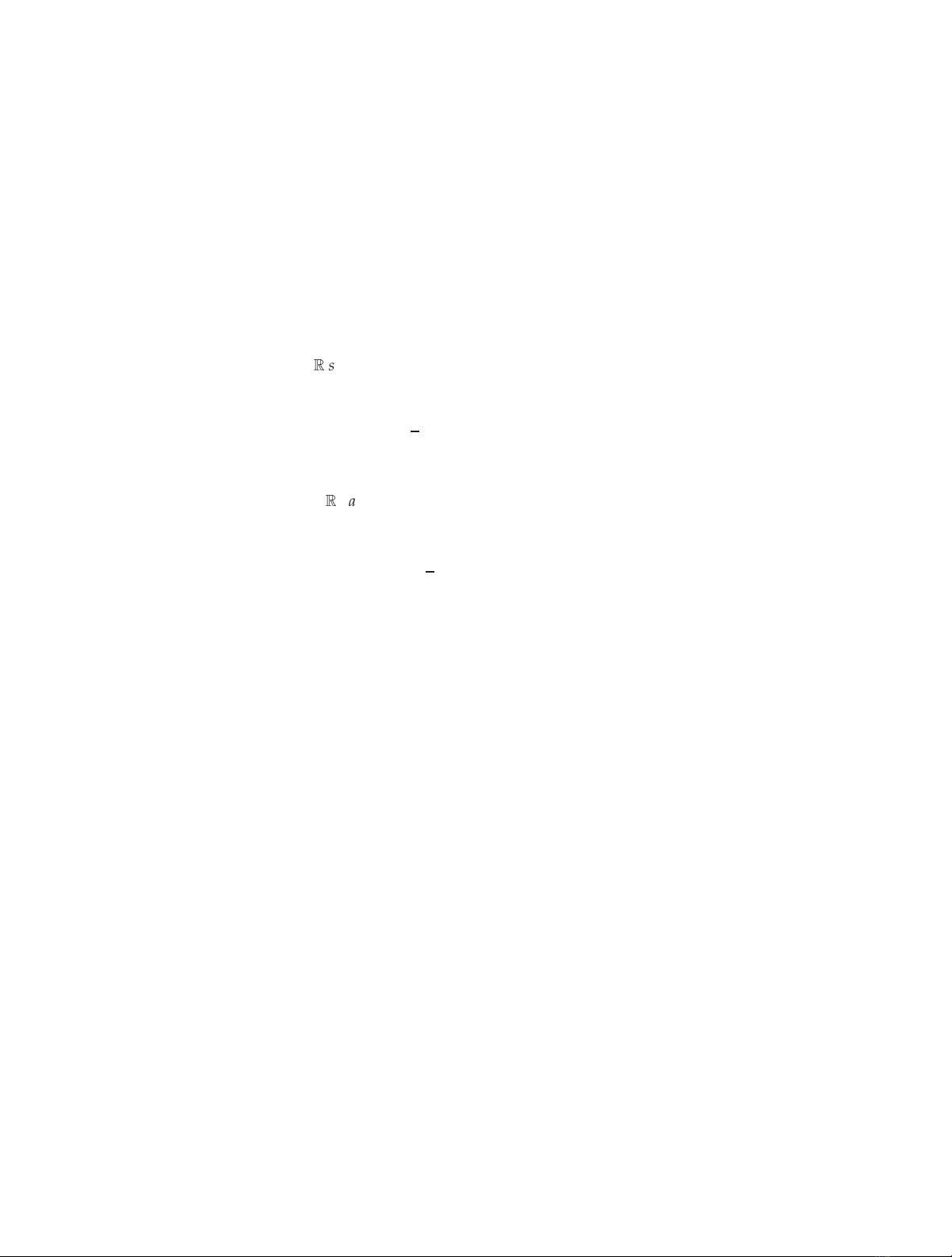
for all {xi}⊂Hand {ti}⊂0,1with n
i1ti1.
Fixed Point Theory and Applications 5
For any x∈H, there exists a unique nearest point in C, denoted by PCx,suchthat
zPCx⇐⇒ x−z, z −y≥0,∀y∈C. 2.4
Let Idenote the identity operator of H,andlet{xn}be a sequence in a Hilbert space
Hand x∈H. Throughout the rest of the paper, xn→xdenotes the strong convergence of
{xn}to x.
We need the following lemmas for our main results in this paper.
Lemma 2.1 see 14.Let C be a nonempty closed convex subset of a Hilbert space H.LetΦbe a
bifunction from C×Cto
Ê
satisfying A1–A4.Letr>0and x∈H. Then there exists z∈Csuch
that
Φz, y1
ry−z, z −x≥0,∀y∈C. 2.5
Lemma 2.2 see 6.Let C be a nonempty closed convex subset of a Hilbert space H.LetΦbe a
bifunction from C×Cto
Ê
satisfying A1–A4. For any r>0and x∈H, define a mapping
Tr:H→Cas follows:
Trxz∈C:Φz, y1
ry−z, z −x≥0,∀y∈C,∀x∈H. 2.6
Then the following hold:
1Tris single-valued,
2Tris firmly nonexpansive, that is, for any x, y ∈H,
Trx−Try
2≤Trx−Try, x −y,2.7
3FTrEPΦ,and
4EPΦ is closed and convex.
3. Main Results
Now, we are ready to give our main results.
Lemma 3.1. Let Cbe a nonempty closed convex subset of a Hilbert space H.LetT:C→Cbe an
asymptotically κ-strict pseudo-contraction with sequence {γn}⊂0,∞such that FT/
∅. Assume
that {βn}⊂κ, 1and define a mapping SnβnI1−βnTnfor each n≥1. Then the following
hold:
Snx−Sny
2≤1γn
x−y
2,∀x, y ∈C,
Snx−x2≤γnx−x∗22x−Snx, x −x∗,∀x∈C, x∗∈FT.
3.1


%20--%3e%3cdefs%3e%3cstyle%3e%20.st0%20{%20fill:%20%23fff;%20}%20.st1%20{%20fill:%20%237800fa;%20}%20%3c/style%3e%3c/defs%3e%3cpath%20class='st1'%20d='M117.78,12.18H43.11c2.9,3.47,4.65,7.94,4.65,12.82,0,5.6-2.3,10.66-6.01,14.29h76.02l7.22-13.56-7.22-13.56Z'/%3e%3cg%3e%3cpath%20class='st0'%20d='M53.58,26.17h-.59v-1.46h.59v-4.96h2.83c1.78,0,2.67.94,2.67,2.82v5.76c0,1.87-.89,2.81-2.67,2.81h-2.83v-4.96ZM55.36,21.37v3.34h1.1v1.46h-1.1v3.34h1.01c.61,0,.91-.37.91-1.1v-5.93c0-.74-.3-1.1-.91-1.1h-1.01Z'/%3e%3cpath%20class='st0'%20d='M65.99,31.14h-1.8l-.31-2.07h-2.19l-.31,2.07h-1.64l1.82-11.39h2.62l1.82,11.39ZM65.28,18.04c-.25.46-.51.77-.75.94-.21.15-.47.22-.79.22-.26,0-.57-.07-.92-.22l-.38-.15c-.14-.05-.26-.07-.37-.07-.3,0-.53.18-.71.54l-.91-.68c.25-.46.51-.77.75-.94.21-.14.48-.21.79-.21.26,0,.57.07.92.21l.38.15c.14.05.26.07.37.07.3,0,.53-.18.71-.54l.91.68ZM61.91,27.52h1.73l-.87-5.76-.87,5.76Z'/%3e%3cpath%20class='st0'%20d='M74.53,26.89v1.52c0,1.91-.89,2.86-2.67,2.86s-2.67-.95-2.67-2.86v-5.93c0-1.91.89-2.86,2.67-2.86s2.67.95,2.67,2.86v1.11h-1.69v-1.22c0-.75-.31-1.12-.93-1.12s-.93.37-.93,1.12v6.15c0,.74.31,1.11.93,1.11s.93-.37.93-1.11v-1.63h1.69Z'/%3e%3cpath%20class='st0'%20d='M81.4,31.14h-1.8l-.31-2.07h-2.19l-.31,2.07h-1.64l1.82-11.39h2.62l1.82,11.39ZM75.9,19.2l1.52-1.91h1.71l1.51,1.91h-1.61l-.76-.95-.75.95h-1.61ZM77.32,27.52h1.73l-.87-5.76-.87,5.76ZM83.1,15.99l-1.76,1.91h-1.26l1.17-1.91h1.86Z'/%3e%3cpath%20class='st0'%20d='M84.86,19.75c1.78,0,2.67.94,2.67,2.82v1.48c0,1.87-.89,2.81-2.67,2.81h-.85v4.28h-1.79v-11.39h2.64ZM84.01,21.37v3.86h.85c.58,0,.87-.36.87-1.08v-1.71c0-.71-.29-1.07-.87-1.07h-.85Z'/%3e%3cpath%20class='st0'%20d='M93.51,19.75c1.78,0,2.67.94,2.67,2.82v1.48c0,1.87-.89,2.81-2.67,2.81h-.85v4.28h-1.79v-11.39h2.64ZM92.66,21.37v3.86h.85c.58,0,.87-.36.87-1.08v-1.71c0-.71-.29-1.07-.87-1.07h-.85Z'/%3e%3cpath%20class='st0'%20d='M98.8,31.14h-1.79v-11.39h1.79v4.88h2.03v-4.88h1.83v11.39h-1.83v-4.88h-2.03v4.88Z'/%3e%3cpath%20class='st0'%20d='M105.36,24.55h2.46v1.62h-2.46v3.34h3.09v1.63h-4.88v-11.39h4.88v1.63h-3.09v3.18ZM108.17,17.29l-1.76,1.91h-1.26l1.17-1.91h1.86Z'/%3e%3cpath%20class='st0'%20d='M112.2,19.75c1.78,0,2.67.94,2.67,2.82v1.48c0,1.87-.89,2.81-2.67,2.81h-.85v4.28h-1.79v-11.39h2.64ZM111.35,21.37v3.86h.85c.58,0,.87-.36.87-1.08v-1.71c0-.71-.29-1.07-.87-1.07h-.85Z'/%3e%3c/g%3e%3ccircle%20class='st1'%20cx='25'%20cy='25'%20r='20'/%3e%3cpath%20class='st0'%20d='M32.78,19.27c2.92,0,4.43,2.55,5.28,5.33l.71,2.17c.14.38-.33.75-.71.75h-5.61c.19-.33.24-.71.09-1.08l-.75-2.45c-.43-1.32-.99-2.64-1.79-3.77.75-.57,1.65-.94,2.78-.94h0ZM25,18.38c3.25,0,4.9,2.78,5.89,5.89l.76,2.45c.14.42-.33.8-.8.8h-11.69c-.42,0-.94-.38-.8-.8l.75-2.45c.99-3.11,2.64-5.89,5.89-5.89h0ZM25,11.35c1.74,0,3.11,1.37,3.11,3.11s-1.37,3.11-3.11,3.11-3.11-1.41-3.11-3.11,1.41-3.11,3.11-3.11h0ZM17.27,19.27c1.08,0,1.98.38,2.73.94-.8,1.13-1.37,2.45-1.74,3.77l-.8,2.45c-.14.38-.05.75.09,1.08h-5.56c-.42,0-.9-.38-.75-.75l.71-2.17c.9-2.78,2.41-5.33,5.33-5.33h0ZM17.27,12.91c1.51,0,2.78,1.27,2.78,2.83s-1.27,2.83-2.78,2.83-2.83-1.27-2.83-2.83,1.27-2.83,2.83-2.83h0ZM32.78,12.91c1.56,0,2.78,1.27,2.78,2.83s-1.23,2.83-2.78,2.83-2.83-1.27-2.83-2.83,1.27-2.83,2.83-2.83h0ZM27.07,28.56v.09c0,.57-.24,1.08-.61,1.46h0v.05c-.38.33-.9.57-1.46.57s-1.08-.24-1.46-.61h0c-.38-.38-.61-.9-.61-1.46v-.09h1.41v.09c0,.19.05.38.19.47v.05c.09.09.28.19.47.19s.38-.09.47-.19v-.05c.14-.09.24-.28.24-.47t-.05-.09h1.41ZM30.99,28.56v.09c0,1.65-.66,3.16-1.74,4.24-1.08,1.08-2.59,1.79-4.24,1.79s-3.16-.71-4.24-1.79l-.05-.05c-1.04-1.08-1.7-2.55-1.7-4.2v-.09h1.41v.09c0,1.27.47,2.4,1.27,3.25h.05c.85.85,1.98,1.37,3.25,1.37s2.4-.52,3.25-1.37c.85-.8,1.37-1.98,1.37-3.25v-.09h1.37ZM34.99,28.56v.09c0,2.78-1.13,5.28-2.92,7.07-1.79,1.79-4.29,2.92-7.07,2.92s-5.23-1.13-7.07-2.92c-1.79-1.79-2.92-4.29-2.92-7.07v-.09h1.41v.09c0,2.4.94,4.53,2.5,6.08,1.56,1.56,3.72,2.5,6.08,2.5s4.52-.94,6.08-2.5c1.56-1.56,2.5-3.68,2.5-6.08v-.09h1.41Z'/%3e%3c/svg%3e)