

* Corresponding author.
E-mail addresses: honghs501@yahoo.com (H.-S. Hong)
© 2018 Growing Science Ltd. All rights reserved.
doi: 10.5267/j.esm.2018.1.001
Engineering Solid Mechanics (2018) 187-200
Contents lists available at GrowingScience
Engineering Solid Mechanics
homepage: www.GrowingScience.com/esm
Limit analysis of cracked structure by combination of extended finite element
method with linear matching method
Jun-Hyok Ria and Hyon-Sik Honga*
aInstitute of Mechanics, State Academy of Sciences, Pyongyang, DPR of Korea
A R T I C L EI N F O A B S T R A C T
Article history:
Received 26 October, 2017
Accepted 9 January 2018
Available online
9 January 2018
Linear matching method (LMM) is one of the effective numerical methods for the limit and
shakedown analysis, which computes the converging upper series by solving iteratively linear
elastic analysis with Young’s modulus varying in space. LMM, which is capable of
implementing by using the commercial finite element packages such as ABAQUS and ANSYS
has been widely used in the practical applications including fatigue, creep and composite
analysis. Nevertheless, LMM could not ensure numerical accuracy for discontinuous problems
such as crack analysis since it computes the mechanical quantities including stress, strain and
displacement on the base of conventional finite element method, likewise other numerical
methods for the limit and shakedown analysis. Meanwhile, extended finite element method
(XFEM), recently proposed, is an attractive numerical method for the analysis of discontinuous
problems which enriches finite element approximate space by some special functions. In this
paper, authors proposed a very straightforward method for the limit analysis by the
combination of XFEM with LMM. Numerical validation is done for two types of typical
fracture specimens. Numerical examples show that the limit analysis by combining XFEM with
LMM gives more accurate result compared with the one by combining of conventional finite
element method with LMM. Furthermore, we demonstrated that the choice of enrichment
region plays an important role in the improvement of numerical accuracy of our proposed
method.
© 2018 Growin
g
Science Ltd. All ri
g
hts reserved.
Keywords:
Limit analysis
Linear matching method (LMM)
Extended finite element method
(XFEM)
Linear elastic fracture mechanics
(LEFM)
Finite element analysis (FEA)
1. Introduction
The mathematical modeling of limit analysis reduces to the nonlinear optimization problem with
infinite constraints, in which finite element method is used for replacing infinite constraints by finite
constraints (Casciaro & Garcea, 2002). Numerical methods for solving the optimization problem of limit
analysis can be classified into direct method and indirect method. The sequential programming and the
second cone programming is one of typical mathematical programming used for solving the

188
optimization problem, respectively. These methods are usually combined with the base reduction
method in order to reduce the computational cost. By using only the finite element code, it could be
impossible to implement the limit analysis due to the necessity of combination of FEA with
mathematical programming in spite that some studies did limit analysis by using the general finite
element package PERMAS (Staat & Heitzer, 2003). LMM is one of the indirect methods, which does
not solve the optimization problem of limit analysis directly as demonstrated (Chen & Ponter, 2001).
LMM has been widely used for engineering applications including shakedown and limit analysis of the
cracked bodies subjected to cyclic load and temperature (Habibullah & Ponter, 2005; Chen et al., 2011),
integrity assessment of 3D tube plate (Chen & Ponter, 2005 a,b), shakedown and limit analyses applied
to rolling contact problem (Chen & Ponter, 2005c), evaluation of fatigue-creep and plastic collapse of
notched bars (Ponter et al., 2004), evaluation of plastic and creep behaviors for bodies subjected to
cyclic thermal and mechanical loading (Chen & Ponter, 2001), structural integrity assessment of super
heater outlet penetration tube plate (Chen & Ponter, 2009), shakedown and limit analysis of particulate
metal matrix composite (Barrera et al., 2011), limit analysis of orthotropic laminates (Fuschi et al.,
2009) and creep–fatigue strength of welded joints (Gorash & Chen, 2013).
LMM has an advantage of being of extracting the converged upper series of linear elastic solutions
iteratively, leading to simple implementation by using UMAT of ABAQUS (Chen & Ponter, 2009).
Even though LMM is one of the effective numerical methods for the shakedown and limit analysis, its
numerical accuracy depends on conventional finite element method since the mechanical quantities like
stress and strain should be evaluated by FEM itself. Thus, LMM has the same limitations as in the
conventional FEM for discontinuous problems such as crack problem. In order to overcome such a
difficulty, some authors raised the mesh adaptive strategies of upper and lower bounds in limit analysis,
where assess the convergence based on results of simultaneous upper and lower analysis, leading to the
re-meshing for iterative computation (Ciria et al., 2008; Munoz et al., 2009). Some authors suggested
the lower-bound limit analysis by using meshless element-free Galerkin (EFG) and non-linear
programming that is unlike standard FEM (Chen et al., 2008; Le et al., 2009, 2010). Nevertheless, it is
widely accepted that XFEM is more effective for crack problem as compared with EFG.
XFEM enriches the approximation space of standard finite element method by adding specific
functions reflecting characteristics of given problems into the standard finite element approximation
based on the partition unity (PU), keeping well-known standard framework of conventional FEM (Fries
& Belytschko, 2010; Belytschko & Black, 1999; Moës et al., 1999). In such a way, the property of
specific problem can be reflected on finite element solution. XFEM has been applied successfully for
2D and 3D crack analysis (Sukumar & Prévost, 2003; Huang et al., 2003; Moës et al., 2002; Gravouil
et al., 2002).
Authors think that the numerical accuracy of limit analysis for cracked structures may be improved
significantly by combining XFEM with LMM due to advantages of XFEM and LMM for accessing
crack tip singularity. Thus, attention will be paid to the combination of XFEM with LMM for the limit
analysis of cracked bodies and the validation of its numerical accuracy for plane problem in this paper.
The proposed method is very straightforward and XFEM and LMM will be implemented by using
ANSYS subroutine UserElem for definition of user-element as well as ANSYS subroutine UserMat for
definition of user-material. Numerical validation is done for two types of typical fracture specimens.
Numerical examples show that the limit analysis by combining XFEM with LMM gives more accurate
result compared with the one by combining of conventional FEM with LMM. Furthermore, we
demonstrated that the choice of enrichment region plays an important role in the improvement of
numerical accuracy in the proposed method of this paper.
The contents of this paper are as follows. Section 2 gives a main idea of the LMM and its iterative
algorithm. Section 3 describes a brief description of how XFEM is formulated for modeling cracks.
Section 4 explains the implementation of limit analysis by the combination of LMM with XFEM.

J.-H. Ri and H.-S. Hong / Engineering Solid Mechanics 6 (2018)
189
Numerical results for some crack specimens are presented in section 5. A few concluding remarks are
mentioned in section 6.
2. Linear matching method for limit analysis
2.1. Lower and upper bound theorem of limit analysis
Let us consider the limit analysis of perfectly-plastic material which follows von Mises yielding
rule. It is assumed that a body occupies volume V with surface S where a traction is given as zero or
x
i
pP on T
S and displacement 0
i
u is specified on u
S ( S=T
S+u
S). Here,
P
is a scalar parameter
defining relative magnitude of applied load as compared with a reference load i
p. The lower and upper
bound theorem of limit load can be postulated as follows, respectively (Staat & Heitzer, 2003).
Lower bound theorem:
If, for the external load LB
PP , there exists a statically possible stress field *
ij
such that
yij
f
* (1)
at every point within V, then LBL PP . Here, f is a von Mises yield function and y
is an uniaxial
yield stress. Thus, one can know that a maximum value of LB
P becomes lower bound of limit load.
Upper bound theorem:
If, for the external load UB
PP , there exists a kinetically possible displacement rate field *
i
u
and
its corresponding strain rate field *
ij
such that
dVupP ij
SV
p
ijiiUB
T
***
, (2)
where *p
ij
is a stress point at yield associated with *
ij
, then satisfies UBL PP
. Hence, one can know
that a minimum value of UB
P becomes upper bound of limit load.
According to above theorems, lower and upper bound of the limit load could be evaluated by
solving the optimization problem. The direct method employs the optimization approach based on the
admissible space as the statically possible stress filed or the kinetically possible strain field, while the
indirect method obtains the statically possible stress filed or the kinetically possible strain field by using
FEA with a certain special material property, leading to the improvement of solution of limit load.
LMM takes the kinetically possible strain field as the FEA solution obtained adjusting spatially varying
material properties.
2.2. LMM algorithm for limit analysis
As mentioned above, LMM is based on the linear elastic FEA with spatially varying material
properties. The Young’s modulus is changed spatially such that stress field corresponding to a certain
kinetically possible strain field is placed on the yielding surface at every point of material. The Poisson
ratio is taken as 0.4999999 since material is considered to have plastic incompressibility. LMM
algorithm could be formulated as follows (Chen & Ponter, 2001).
- Initialization: Set 1
0
UB
P,
EE x
1.
- kth iteration:

190
The linear elastic analysis with the Young’s modulus of
x
k
E is performed under a load pPk
UB
1
and k
ij
, k
ij
and k
i
u is obtained, respectively. Lower and upper bound of the limit load at kth iteration
is evaluated as
k
ijeq
y
k
UB
k
LB PP
1
, (3)
T
S
k
ii
k
UB
V
k
ijeqy
k
UB
k
UB upP
PP 1
1
,
(4)
where, eq
and eq
denote equivalent stress and equivalent strain, respectively.
1k
E
at 1kth iteration is updated as follows,
1
k
ijeq
y
k
E
(5)
Eq. (5) gives 1k
E
at 1kth iteration such that stress field corresponding to strain field k
ij
obtained at
kth iteration lies on the yielding surface. Nevertheless, for high gradient of stress, Young’s modulus
evaluated by Eq. (5) may not give stable solution, sometimes. In order to overcome this numerical
difficulty without any affection on LMM solution, we do the normalization using initial Young’s
modulus ref
E of material.
We denote a minimum value of Young’s modulus
x
k
E on whole region obtained at 1kth iteration
by
x
x
kk EE min
min . Then, after performing kth iteration, 1k
E
at 1
kth iteration will be evaluated
by
min
1
k
ijeq
y
k
ref
k
E
E
E
, (6)
instead of using Eq. (5). Even though Eq. (6) shows a theoretical equivalence with Eq. (5), our
computational experiences ensure that Eq. (6) can improve the numerical stability much more as
compared with Eq. (5).
3. XFEM for linear elastic crack
Two types of functions, namely, Heaviside function considering displacement discontinuity on crack
faces and functions taking account for characteristics of crack tip displacement fields are enriched into
standard finite element approximation for modeling cracks in XFEM approach. By using the partition
of unity method (PUM), displacement fields are interpolated as
k
IiJjMk
kjj
i
i
hFNHNNx bxxaxxuxu 0, (7)
where I is a set containing all nodes in finite element model, J a subset involving nodes enriched by
Heaviside function and M a subset having nodes enriched by crack tip enrichment functions
(Belytschko & Black, 1999; Moës et al., 1999). A component Ni is the shape function of standard finite
element method concerning with a node i and i
0
u is a corresponding degree of freedom. Factors j
a
and
k
b is a degree of freedom related to Heaviside function and crack tip enrichment functions,
J.-H. Ri and H.-S. Hong / Engineering Solid Mechanics 6 (2018)
191
respectively. Heaviside function
xH is defined as
0 1
0 1
x
x
x
H (8)
where
x
denotes the signed distance function from a crack (usually determined by means of the
level set method, LSM). Crack tip enrichment function
x
F is usually chosen as
sin
2
cos,sin
2
sin,
2
sin,
2
cos
4
1rrrrF x, (9)
where
r
and
are local crack tip polar coordinates, taking account for the first term concerning with
the SIF in crack tip asymptotic displacement fields (Le et al., 2010; Fries & Belytschko, 2010).
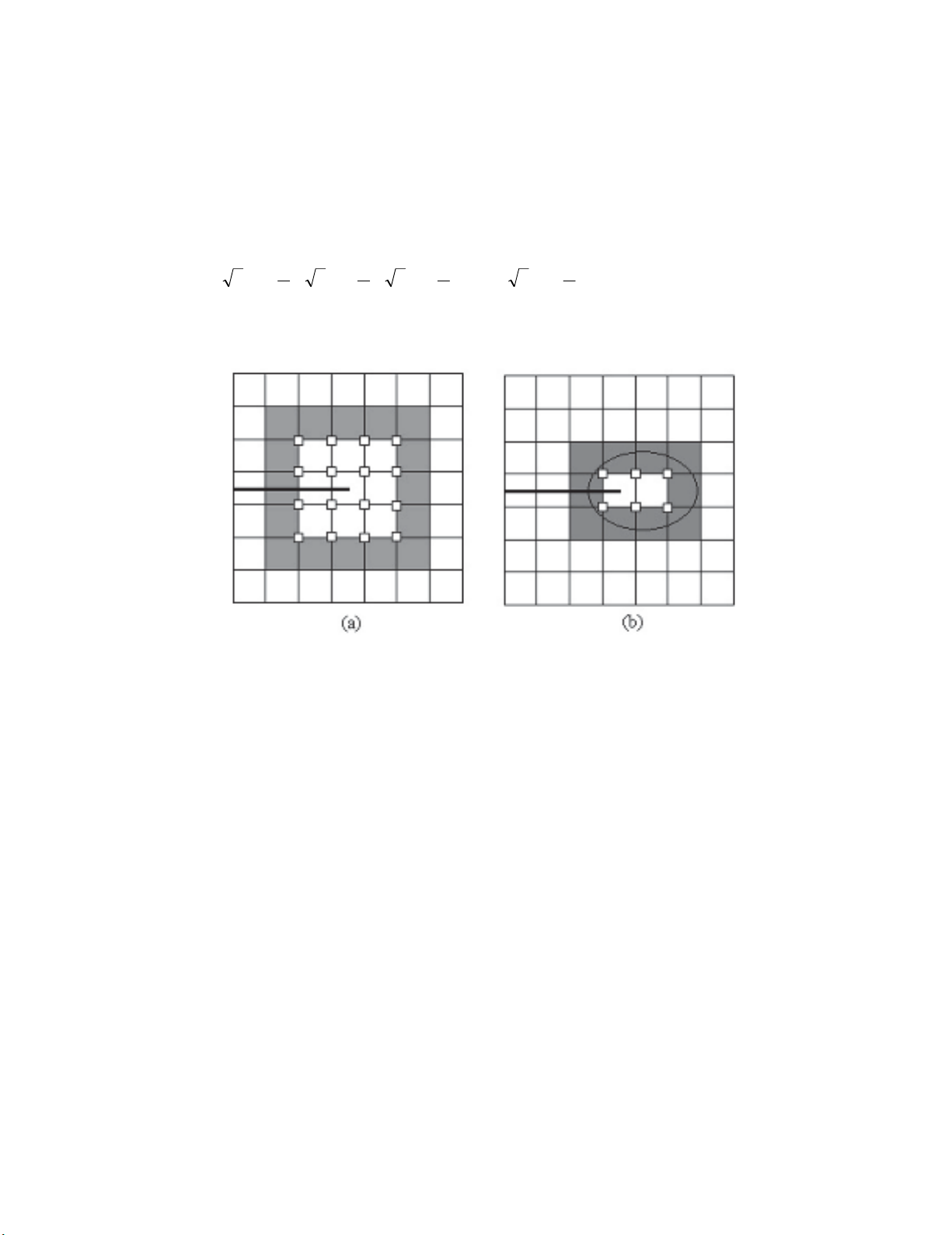
Fig. 1. (a) Topological enrichment of two layers. (b) Geometrical enrichment
Enriched nodes near a crack tip could be chosen by various ways. First, only elements containing a
crack tip are completely enriched with singular functions (Le et al., 2010). With this technique, one or
more layers of neighboring elements are added to the enriched region, so that its size is increased. The
size of the enriched region is proportional to the size of element. This type of enrichment is called a
topological enrichment. By using alternative enrichment scheme, called geometrical enrichment, the
size of enriched region can be made independent of element size (Tarancón et al., 2009). The method
consists in taking nodes in a specific geometric region, usually a circle of predetermined radius
R
with
its center at a crack tip. Fig. 1 depicts two types of enrichments mentioned above, respectively. In Fig.
1, nodes marked by a square indicate crack tip enrichment nodes. This Figure also shows the blending
elements with dark color around the enriched zone, i.e. elements with only some of their nodes being
enriched with singular functions associated with a crack tip asymptotic field. It is generally agreed that
choice of enriched nodes could affect significantly on XFEM error. For the topological enrichment, it
has been shown that the enrichment by two or three layers give more accurate result as compared with
the enrichment by one layer (Liu et al., 2004). In the meantime, the geometrical enrichment can make
it to achieve the optimal rate of convergence than the topological one since the smaller the size of
element, the more the number of enriched nodes (Tarancón et al., 2009).
4. Combination of XFEM with LMM for limit analysis
The general purpose FEA software ANSYS was used to combine XFEM with LMM for limit
analysis of cracked structure in this paper. XFEM was implemented by using UserElem in ANSYS for
the user-defined element. The 49-point Gauss quadrature was employed for elements containing any





![Giáo trình Cấu trúc dữ liệu và giải thuật - Trường CĐ Cơ điện Hà Nội [Mới nhất]](https://cdn.tailieu.vn/images/document/thumbnail/2026/20260323/lionelmessi01/135x160/58171774381670.jpg)


![Giáo trình Tiện nâng cao (Nghề Cắt gọt kim loại, Trình độ Cao đẳng) - Trường Cao đẳng Cơ điện Hà Nội [Mới nhất]](https://cdn.tailieu.vn/images/document/thumbnail/2026/20260323/lionelmessi01/135x160/48101774403543.jpg)


