

* Corresponding author.
E-mail address: hitarth_buch_020@gtu.edu.in (H. Buch)
© 2020 by the authors; licensee Growing Science, Canada.
doi: 10.5267/j.dsl.2019.8.001
Decision Science Letters 9 (2020) 59–76
Contents lists available at GrowingScience
Decision Science Letters
ho
mepage: www.GrowingScience.com/d
sl
A new non-dominated sorting ions motion algorithm: Development and applications
Hitarth Bucha,b* and Indrajit N Trivedic
aGujarat Technological University, Visat Gandhinagar Road, Ahmedabad, 382424, India
bGovernment Engineering College, Mavdi Kankot Road, Rajkot, 360005, India
cGovernment Engineering College, 382028, Gandhinagar, 382028, India
C H R O N I C L E A B S T R A C T
Article history:
Received March 23, 2019
Received in revised format:
August 12, 2019
Accepted August 12, 2019
Available online
August
12
,
201
9
This paper aims a novel and a useful multi-objective optimization approach named Non-
Dominated Sorting Ions Motion Algorithm (NSIMO) built on the search procedure of Ions
Motion Algorithm (IMO). NSIMO uses selective crowding distance and non-dominated sorting
method to obtain various non-domination levels and preserve diversity amongst the best set of
solutions. The suggested technique is employed to various multi-objective benchmark functions
having different characteristics like convex, concave, multimodal, and discontinuous Pareto
fronts. The recommended method is analyzed on different engineering problems having distinct
features. The results of the proposed approach are compared with other well-regarded and novel
algorithms. Furthermore, we present that the projected method is easy to implement, capable of
producing a nearly true Pareto front and algorithmically inexpensive.
.
by the authors; licensee Growing Science, Canada 2020©
Keywords:
Multi-objective Optimization
Non-dominated Sorting
Ions Motion algorithm
1. Introduction
Optimization process helps us find the best value or optimum solution. The optimization process looks
for finding the minimum or maximum value for single or multiple objectives. Multi-objective
optimization (MOO) refers to optimizing various objectives which are often conflicting in nature. Every
day we see such problems in engineering, mathematics, economics, agriculture, politics, information
technology, etc. Also sometimes, indeed, the optimum solution may not be available at all. In such
cases, compromise and estimates are frequently required. Multi-objective optimization is much more
complicated than single-objective optimization because of the existence of multiple optimum solutions.
At large, all solutions are conflicting, and hence, a group of non-dominated solutions is required to be
found out to approximate the true pareto front.
Heuristic algorithms are derivative-free solution approaches. This is because heuristic approaches do
not use gradient descent to determine the global optimal. Metaheuristic approaches treat the problem
as a black box for given inputs and outputs. Problem variables are inputs, while objectives are outputs.
Many competent metaheuristic approaches were proposed in the past to solve the multi-objective
optimization problem. A heuristic approach starts problem optimization by creating an arbitrary group
of initial solutions. Every candidate solution is evaluated, objective values are observed, and based on
the outputs, the candidate solutions are modified/changed/combined/evolved. This process is sustained
until the end criteria are met.

60
There are various difficulties associated while solving the problem using the heuristics. Even
optimization problems have diverse characteristics. Some of the challenges are constraints, uncertainty,
multiple and many objectives, dynamicity. Over a while, global optimum value changes in dynamic
problems. Hence, the heuristic approach should be furnished with a suitable operator to keep track of
such changes so that global optimum is not lost. Heuristic approaches should also be fault-tolerant to
deal with uncertainty effectively. Constraints restrict the search space leading to viable and unviable
solutions. The heuristic approach should be able to discard the unsustainable solution and ultimately
discover the best optimum solution. Researchers have also proposed surrogate models to reduce
computational efforts for computationally expensive functions. The idea of Pareto dominance operator
is introduced to compare more than one objectives. The heuristic approach should be able to find all
the best Pareto solutions. The proper mechanism should be incorporated with heuristic approaches to
deal with multi-objective problems. Storage of non-dominated solutions is necessary through the
optimization process. Another desired characteristics of multi-objective heuristic approach are to
determine several solutions. In other words, the Pareto solutions should binge uniformly across all the
objectives.
Majority of the novel single-objective algorithms have been furnished with appropriate mechanisms to
deal with multi-objective problems (MOP) also. Few of them are Non-sorting Genetic Algorithm (Deb
et al., 2000), Strength Pareto Evolutionary Algorithm (SPEA-II) (Zitzler et al., 2001), Multi-objective
Particle Swarm Optimization (MOPSO) (Coello & Lechuga, 2002), Dragonfly Algorithm (Mirjalili,
2016), Multi-objective Jaya Algorithm (Rao et al., 2017), Multi-objective improved Teaching-Learning
based Algorithm (MO-iTLBO) (Rao & Patel, 2014), Multi-objective Bat Algorithm (MOBA) (Yang,
2011), Multi-objective Ant Lion Optimizer (MOALO) (Mirjalili et al., 2017), Multi-objective Bee
Algorithm (Akbari et al., 2012), Non-dominated sorting MFO (NSMFO) (Savsani & Tawhid, 2017),
Multi-objective Grey Wolf Optimizer (MOGWO) (Mirjalili et al., 2016), Multi-objective Sine Cosine
Algorithm (MOSCA) (Tawhid & Savsani, 2017), Multi-objective water evaporation algorithm
(MOWCA) (Sadollah & Kim, 2015) and so forth.
The No Free Lunch (Wolpert & Macready, 1997) theorem (NFL) motivates to offer novel algorithms
or advance the present ones since it rationally demonstrates that there is no optimization procedure
which solves all problems at its best. This concept applies equally to single as well as multi-objective
optimization approaches. In an exertion to solve the multi-objective optimization problem, this article
suggests a multi-objective variant of the newly proposed Ions Motion Algorithm (IMO). Though the
existing approaches can solve a diversity of problems, conferring to the No Free Lunch theory, current
procedures may not be capable of addressing an entire range of optimization problems. This theory
motivated us to offer the multi-objective IMO with the optimism to solve same or novel problems with
improved efficiency.
The remaining paper is organized as follows: Section 2 discusses the existing literature. Section 3
presents the concepts of NSIMO. Section 4 discusses the current single-objective Ions Motion
Algorithm (IMO) and its proposed non-sorted version. Section 5 presents deliberates and examines the
results of the benchmark functions and engineering design problems. Section 6 shows a brief
discussion, and finally, Section 7 accomplishes the work and offers future direction.
2. Review of Literature
In the single-objective optimization, there is a global optimum unique solution. This fact is owing to
the only objective in single-objective optimization problems and the presence of the most excellent
unique solution. Evaluation of solutions is simple when seeing one goal and can be completed by the
relational operators: ≥, >, ≤, <, or =. Such problems permit optimization issues to suitably relate the
aspirant solutions and ultimately determine the finest one. While in multi-objective issues, though,

H. Buch and I. N. Trivedi / Decision Science Letters 9 (2020)
61
solutions should be equated with multiple criteria. Multi-objective minimization problem can be
expressed as follows:
Optimize (Minimize/maximize):
1 2
( ) ( ), ( ),..., ( )
n
F x f x f x f x
(1)
subject to:
( ) 0 1, 2,3,....,
i
a x i m
(2)
( ) 0 1,2,3,....,
i
b x i p
(3)
1, 2,3,...,
ib i ib
L x U i q
(4)
Here,
q
presents some variables, 1 2
( ), ( ),..., ( )
n
f x f x f x
introduces some objective functions,
m
and
p
shows some inequality and equality constraints.
ib
L
and
ib
U
, give lower and upper limits of the variable.
The kind of such problems foils us from equating results using the relational operators as there are
multiple criteria to evaluate solutions. In a single objective optimization problem, we can indeed say
which solution is better using a relational operator, but with various objectives, we need some other
operator(s). The primary operator to equate two solutions bearing in mind multiple goals is called
Pareto optimal dominance and is described as:
The definition I: Pareto Dominance:
Assuming two vectors 1 2 1 2
( , ,..., ) and ( , ,..., )
k k
a a a a b b b b
Vector
a
dominates
b
(
a b
) if and only if:
1 1 1 1
1, 2,..., : ( ) ( ) 1, 2,..., : ( ) ( )
i k f a f b i k f a f b
(5)
By inspecting Eq. (5) it may be concluded that a solution is improved than another solution if it has
equal and nonetheless, one improved value in the objectives. Under such a situation, it is said that a
solution dominates another solution. If this situation does not stand good for two solutions, then they
are called Pareto optimal or non-dominated solutions. The solutions to the multi-objective problem are
Pareto optimal solutions. Hence, the Pareto optimality is defined as follows.
Definition II: Pareto efficiency
Assuming
' '
,
a A a
is Pareto optimal solution if and only if:
b A b a
(6)
Pareto optimality or Pareto efficiency is a state of distribution of solutions from which it is not possible
to budge to achieve any one single or preference criterion improved without forming nonetheless one
specific or preference criterion worse off. Such a solution set is known as the Pareto optimal set. The
prognosis of the Pareto optimal solutions in the objective search space is called Pareto optimal front.
The definition III: Pareto optimal set
The Pareto optimal set comprises a set of Pareto optimal solutions.
: ,
PS a b A b a
(7)
The definition IV: Pareto optimal front
This set comprises objective values for the solutions in the Pareto solutions set:
62
1,2,3,..., , : ( )
i
i n PF f a a PS
(8)
Quick and easy comparison of solutions of multi-objective optimization can be made with above four
equations. The group of variables, constraints, and objectives create a search landscape. Considering
difficulties associated with the representation of search space for problems with more than goals,
researchers consider two search space: goal and parameter space. Similarly, to single-objective
optimization, the range of variables regulate the limits of the search space in each dimension while
restraints divulge them. The overall outlines of all population-based multi-objective algorithms
(MOAs) are nearly matching (Mirjalili et al., 2017). They begin the optimization procedure with several
random candidate solutions. Such random solutions are equated utilizing the Pareto dominance
operator. The algorithm attempts to enhance non-dominated solutions in the subsequent iteration(s).
Different search approaches distinct one algorithm from another to augment the non-dominated
solutions. Two perspectives are essential for enhancing the non-dominated solutions using stochastic
algorithms: coverage (distribution) and convergence (accuracy) (Kaußler & Schmeck, 2001). The
convergence denotes the procedure of refining the exactness of the non-dominated solutions. The
eventual aim is to bargain estimations very near to the actual Pareto optimum solutions. Coverage
presents that MOAs should attempt to increase the uniform distribution of the non-dominated solutions
over the complete range of true Pareto front. For appropriate decision making, a wide range of solutions
is desirable, and hence, higher coverage is a critical feature in posteriori methods. The main challenge
in the stochastic multi-objective approach is the conflict between the coverage and the convergence. If
an approach only focuses on enhancing the correctness of non-dominated solutions, then the resulting
coverage will be weak. Or a little importance to the coverage adversely affects the efficiency of the
non-dominated solutions. Majority of the existing approaches continually balance coverage and
convergence to identify an exact estimate of the true solutions with a uniform spread of solutions across
all objectives. The coverage can be improved by employing an archive and leader selection-based
method, non-dominated sorting and niching as proposed in (Nafpliotis & Goldberg, 1994; Horn &
Nafpliotis, 1993; Mahfoud, 1995).
3. Ions Motion Algorithm
This section first introduces the single-objective IMO algorithm. The next section presents the multi-
objective form of single objective IMO.
3.1 Ions Motion Algorithm
In 1834, Michael Faraday coined the Greek term “ion.” Typically, the charged particles are known as
ions and can be separated into two categories: cations: ions with positive charge and anions: ions with
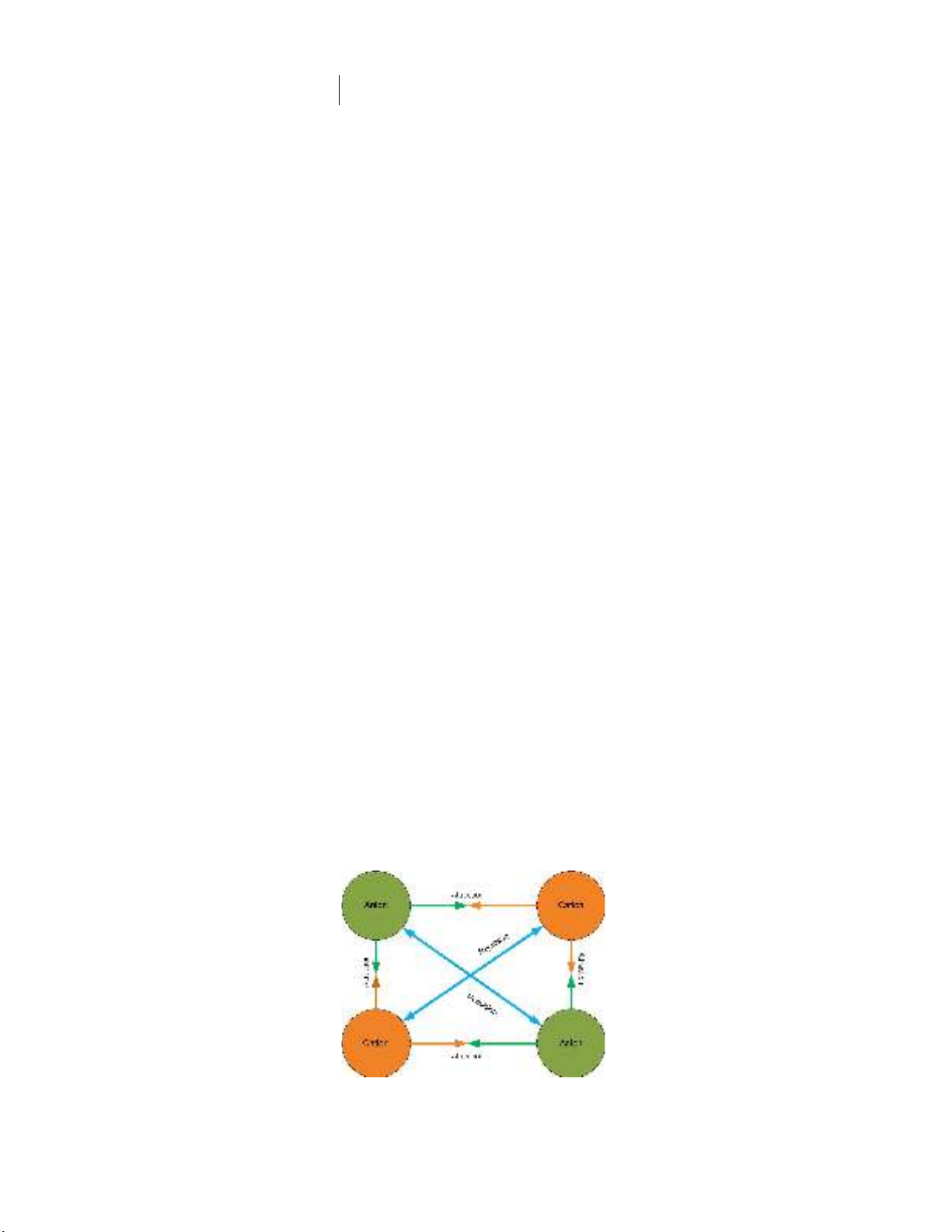
a negative charge. Fig. 1 presents a conceptual model of force between cations and anions. The primary
stimulus of Ions Motion Algorithm is a force of attraction and repulsion between unlike and like
charges, respectively. Javidy et al. (Javidy et al., 2015) proposed the population-based IMO approach
stimulated from these characteristics of ions in nature.
Fig. 1. Conceptual model of the force of attraction and repulsion

H. Buch and I. N. Trivedi / Decision Science Letters 9 (2020)
63
In IMO algorithm, anions and cations form the candidate solutions for a given optimization problem.
The force of attraction/repulsion move the ions (i.e., candidate solutions) around the search space. The
ions are assessed based on the fitness value of the objective function. Anions tend to move towards best
cations, while cations tend to move towards best anions. This movement depends upon the force of
attraction/repulsion between them. Such an approach guarantees improvement over iterations but does
not guarantee the required exploration and exploitation of search space. Two different phases of ions,
i.e., liquid, and crystal phase, are assumed to ensure necessary exploitation and exploration of search
space.
3.1.1 Liquid phase
Liquid phase provides more freedom to the movement of ions, and hence, in the liquid stage, the ions
can pass quickly. Also, the force of attraction is much more than the force of repulsion. Thus, the force
of repulsion can be neglected to explore the search space. The distance between two ions is the only
key factor considered to compute the force of attraction. So the resulting mathematical model can be
proposed as:
,
,0.1
1
1
i j
i j Pd
Pf
e
(9)
,
,0.1
1
1
i j
i j Qd
Qf
e
(10)
where, , ,
i j i j j
Pd P Qbest
and , ,
i j i j j
Qd Q Pbest
,
i
and
j
presents ion index and dimension
respectively,
,
i j
Pd
is the distance between
ith
anion from the best cation in
jth
dimension,
,
i j
Qd
calculates the distance between
ith
the cation from the best anion in
jth
dimension. As presented in
Eq. (9) and Eq. (10), force is inversely proportional to distances among ions. Larger the distance, lesser
is the force of attraction. In other words, the force of attraction becomes less when the distance grows
higher from the best ion with the opposite charge.
According to Eq. (9) and Eq. (10), the value of force varies between 0.5 to 1.
,
i j
Pf
and
,
i j
Qf
are the
resultant attraction force of anions and cations respectively. After force calculation, the position of
positive and negative ions is updated as per the following equations:
, , , ,
i j i j i j j i j
P P Pf Qbest P
(11)
, , , ,
i j i j i j j i j
Q Q Qf Pbest Q
(12)
,
i j
Pf
and
,
i j
Qf
are the resulting attraction forces between opposite ions while
j
Qbest
and
j
Pbest
present best cations and anions respectively. The attraction force between ions guarantees exploration.
Referring to Eq. (9)-(12), we can conclude that in the liquid phase, there is no involvement of the
random component. Fig. 2 presents an abstract model of the movement of ions in the liquid stage. With
an increasing number of iterations, more and more ions start interacting, converging towards best ion
with opposite charge and hence, exploration gradually decreases. This phenomenon is precisely like
the conversion from liquid to crystal state observed in nature. The search agents, i.e., ions also enter
crystal state, finally converging towards the best solution in search space.

![Định mức kinh tế - kỹ thuật nghề Cơ khí hàn [chuẩn nhất]](https://cdn.tailieu.vn/images/document/thumbnail/2025/20251225/tangtuy08/135x160/695_dinh-muc-kinh-te-ky-thuat-nghe-co-khi-han.jpg)
![Tài liệu huấn luyện An toàn lao động ngành Hàn điện, Hàn hơi [chuẩn nhất]](https://cdn.tailieu.vn/images/document/thumbnail/2025/20250925/kimphuong1001/135x160/93631758785751.jpg)



![Giáo trình Cấu trúc dữ liệu và giải thuật - Trường CĐ Cơ điện Hà Nội [Mới nhất]](https://cdn.tailieu.vn/images/document/thumbnail/2026/20260323/lionelmessi01/135x160/58171774381670.jpg)


![Giáo trình Tiện nâng cao (Nghề Cắt gọt kim loại, Trình độ Cao đẳng) - Trường Cao đẳng Cơ điện Hà Nội [Mới nhất]](https://cdn.tailieu.vn/images/document/thumbnail/2026/20260323/lionelmessi01/135x160/48101774403543.jpg)


