

REVIEW ARTICLE
Nuclear cogeneration with high temperature reactors
Grzegorz Wrochna
1,*
, Michael Fütterer
2
, and Dominique Hittner
3
1
National Centre for Nuclear Research NCBJ, Pasteura 7, 02-093 Warsaw, Poland
2
Directorate for Nuclear Safety and Security, JRC, PO Box 2, 1755ZG Petten, The Netherlands
3
LGI Consulting, 6, cité de l’Ameublement, 75011 Paris, France
Received: 5 April 2019 / Accepted: 4 June 2019
Abstract. Clean energy production is a challenge, which was so far addressed mainly in the electric power
sector. More energy is needed in the form of heat for both district heating and industry. Nuclear power is the only
technology fulfilling all 3 sustainability dimensions, namely economy, security of supply and environment. In
this context, the European Nuclear Cogeneration Industrial Initiative (NC2I) has launched the projects NC2I-R
and GEMINI+ aiming to prepare the deployment of High Temperature Gas-cooled Reactors (HTGR) for this
purpose.
1 Clean energy needs beyond electricity
1.1 Current and future energy production
Clean energy production is a high European priority and it
is widely recognized as a growing need in the world. So far,
most of the effort was concentrated on electric power
because the solution is rather straightforward. Electricity,
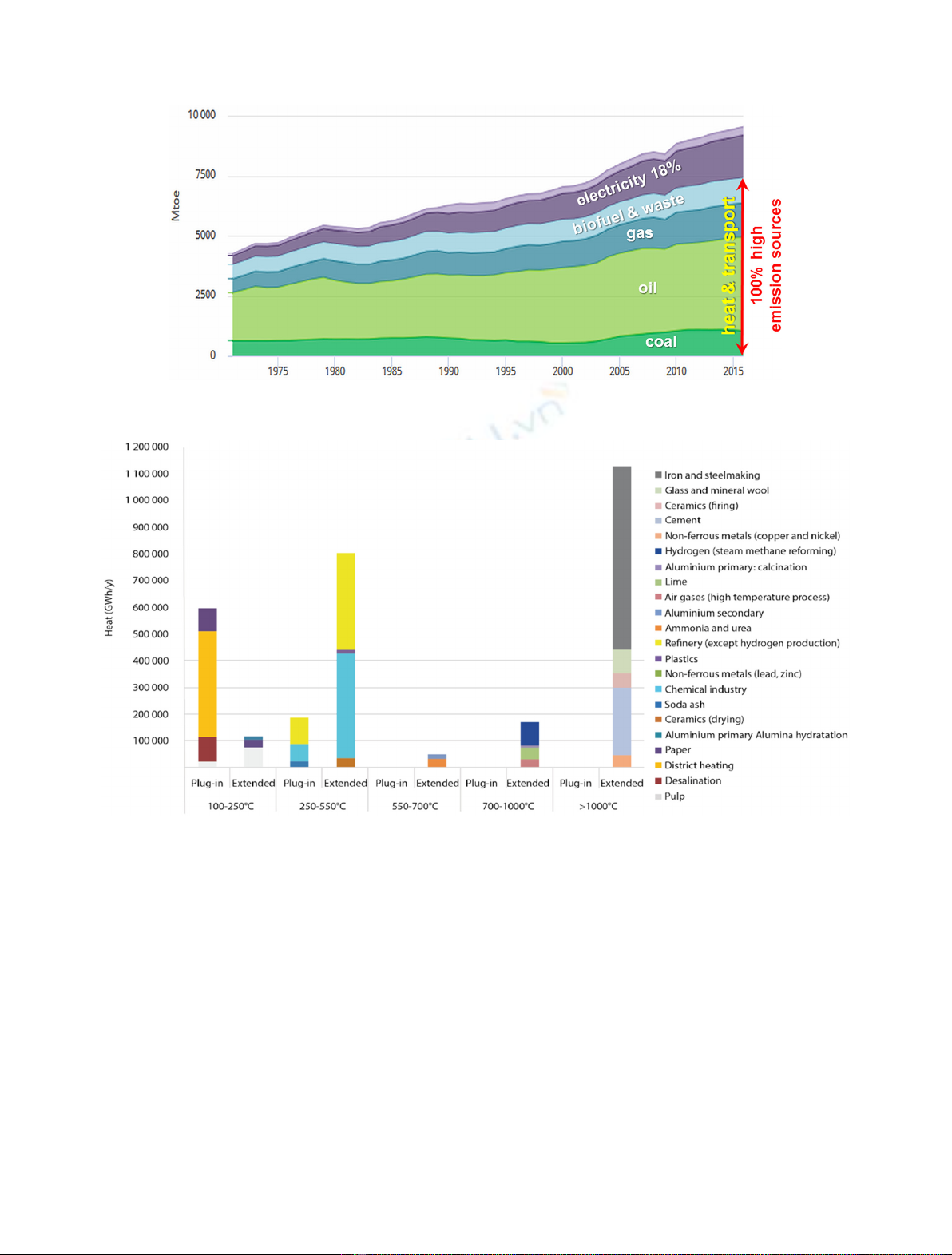
however, accounts for 18% of the total energy consumption
only (Fig. 1). Other applications, namely heat and
transport, are today based almost 100% on fossil fuel with
high emissions, mainly natural gas, oil and coal.
In Europe, electricity represents 24% of the energy
consumption, while heating and cooling for residential and
industrial uses accounts for 50% [2]. Almost 100% of
derived heat is obtained from combustion. This implies
that an effective European energy policy has to address this
sector with high priority, although it is merely invisible to
the general public. The expected political and socio-
economic benefit is very significant.
So called “renewable energy sources”cannot provide
sufficient solution for heat production. Wind turbines and
solar panels produce electricity and using it to generate
heat would be a waste of energy and would be very
expensive, especially for industrial purposes. The only
exceptions are solar thermal power stations, focusing solar
radiation by mirrors, but they can be effectively used only
in regions with high insolation and a high fraction of direct
(as opposed to diffuse) sunlight.
The only option able to address all three virtues of the
“sustainability triangle”, namely economy, security of
supply and environment, is nuclear energy. It is widely
used today for electricity production. In Europe, industrial
nuclear power plants produce currently 26% of all
electricity and 52% of electric energy from non-combustible
sources. However, out of all industrial and district heat
only 0.2% comes from nuclear reactors.
1.2 High temperature industrial heat
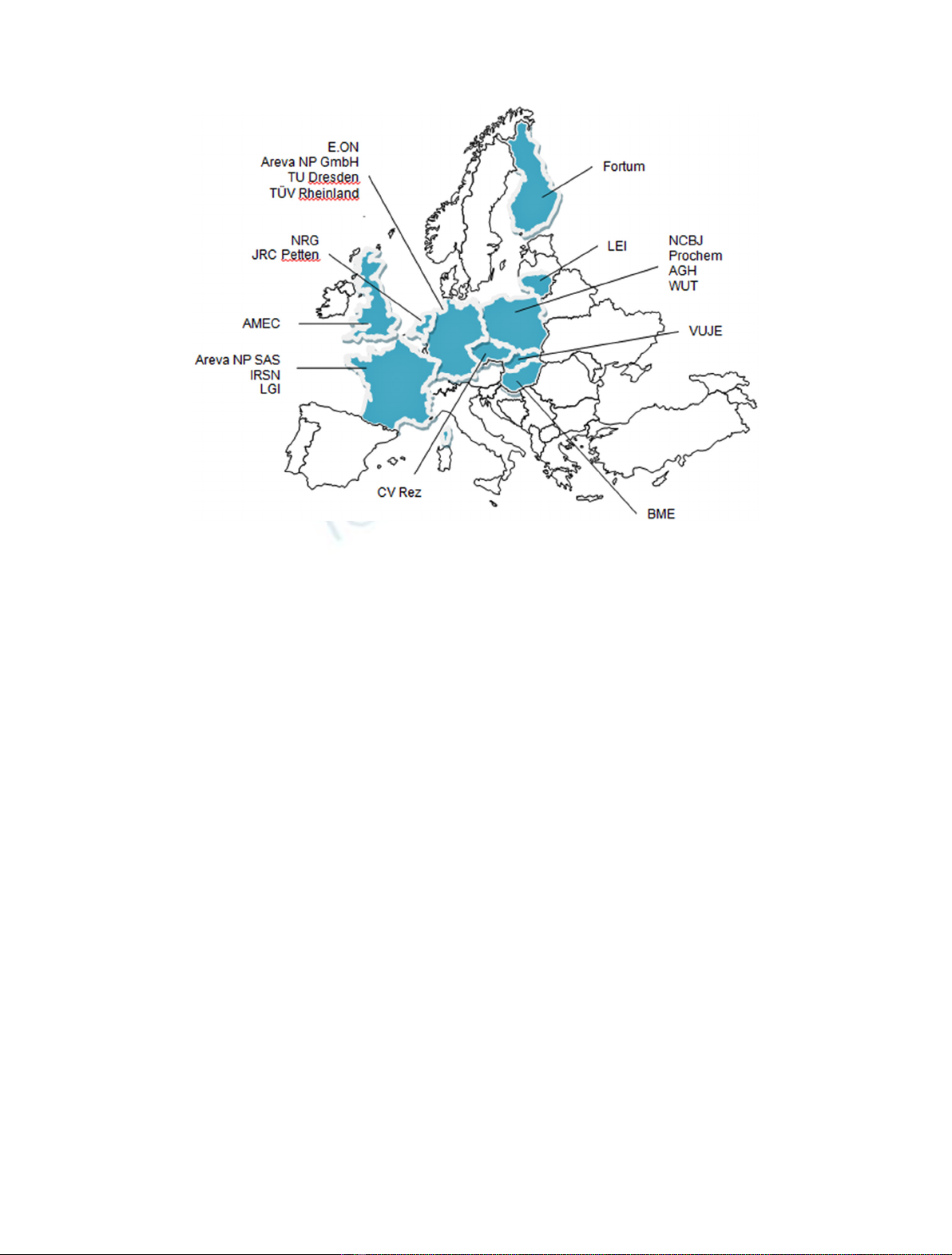
About 95% of the process heat market in most industrial-
ized countries is characterized by high energy intensity and
high temperature (Fig. 2). This fact, coupled with the
strong dominance of fossil fuels in heat production, results
in high emissions, not only of CO
2
, but also of fine dust,
heavy metals, NO
x
,SO
3
and others. Consequently, many
issues concerning public health, environment, energy
security, geopolitics, socio-economics etc. are at stake.
As long as no commercially viable alternative exists, fossil
fuels remain the sole option for the many high temperature
processes that power our industry.
In Europe, about 89 GW
th
, i.e. 50% of the process heat
market is found in the temperature range up to 550 °C
(today mainly in the chemical industry, in the future
possibly in steelmaking, hydrogen production, etc.) [3,4].
Therefore, to advance broader applications of nuclear
cogeneration in the industrial processes that require heat
supply at high temperature, international technology
developments are focusing on nuclear reactor types
designed to deliver this high temperature heat.
Various reactor concepts can be considered, e.g. the
well-known Generation IV International Forum concepts,
including modular High Temperature Reactors (HTR) and
their long-term evolution towards very high temperatures
(VHTR), Super-Critical Water Reactors (SCWR), Molten
Salt Reactors (MSR) and different Fast neutron Reactor
*e-mail: grzegorz.wrochna@ncbj.gov.pl
EPJ Nuclear Sci. Technol. 6, 31 (2020)
©G. Wrochna et al., published by EDP Sciences, 2020
https://doi.org/10.1051/epjn/2019023
Nuclear
Sciences
& Technologies
Available online at:
https://www.epj-n.org
This is an Open Access article distributed under the terms of the Creative Commons Attribution License (http://creativecommons.org/licenses/by/4.0),
which permits unrestricted use, distribution, and reproduction in any medium, provided the original work is properly cited.
concepts cooled by either Sodium (SFR), Lead (LFR) or
Gas (GFR). However, for near-term solutions delivering
process steam up to 550 °C, the HTR is currently the only
option [5] and the only one that covers the largest range of
temperature. Moreover, modular HTR designs feature
unique simplicity owing to their intrinsic passive safety
concept which makes expensive redundant and active
engineered safety systems superfluous. This is a clear
advantage for siting in proximity to industrial end users
and for competitiveness, which are prerequisites for any
industrial deployment.
1.3 Nuclear cogeneration industrial initiative
The challenges described above are in the focus of the
European Nuclear Cogeneration Industrial Initiative
(NC2I) [6]. The organisation has been created as one of
three pillars of the Sustainable Nuclear Energy Technology
Platform (SNETP) [7]. In line with the objectives and
timing foreseen by the Strategic Energy Technology Plan
(SET-Plan) issued by the European Commission, NC2I
proposes an effective nuclear technology for reaching the
SET Plan targets. Its mission stems from the assessment of
energy needs of European economy and is focusing on
realizing its mission: “Contribute to clean and competitive
energy beyond electricity by facilitating deployment of
nuclear cogeneration plants”.
NC2I thus strives to provide a non-electricity nuclear
contribution to the de-carbonisation of industrial energy,
which is required, as mentioned before, mainly as high
temperature process heat. Considering the relatively short-
term deployment objectives, among the different nuclear
Fig. 1. World energy consumption by source (Adapted from [1]).
Fig. 2. Distribution of the heat market by temperature class and sector [3].
2 G. Wrochna et al.: EPJ Nuclear Sci. Technol. 6, 31 (2020)
technologies that can be used to operate reactors at higher
temperatures than present LWRs, NC2I gives highest
priority to HTGR, because:
–It is the most mature technology (750 reactor-years
operational experience), capable to be deployed before
2050.
–It can fully address, without further development, the
needs of a large class of processes receiving heat or steam
as a reactant from steam networks (typically around
550 °C); these are mainly the processes of chemical and
petrochemical industries. Plugging into existing infra-
structure of steam networks, HTGR plants could
substitute present fossil fuel fired boilers and cogenera-
tion plants which may then serve as back-ups for the case
of outages.
–It has the potential for addressing in the longer-term
other types of applications presently not connected to
steam networks, in particular bulk hydrogen production
and other applications at temperatures higher than
550 °C.
NC2I proposes, therefore, as a first step, a deployment
of HTGR systems of these “plug-in”applications on existing
steam networks.
Although, HTGR technology is mature for such
applications, the economic competitiveness of nuclear
steam production, as well as its flexibility and reliability to
adapt to industrial needs is yet to be demonstrated.
Moreover, even if modern modular HTGR technology,
which offers a very high safety level, has already been
licensed (HTTR in Japan, HTR-10 and HTR-PM in China,
not to speak of the preliminary safety reviews of MHTGR
in the US and the HTR-Modul in Germany), a nuclear
reactor has not been licensed yet for coupling with high
temperature industrial processes. Any large deployment of
HTGR for industrial process heat supply calls for prior
demonstration at industrial scale of such a coupled system.
NC2I is paving the way to this demonstration in Europe.
In order to realise this goal, NC2I has launched two EU
projects “NC2I-R”and “GEMINI+”. These projects are co-
financed by the Euratom FP7 and Horizon 2020 Frame-
work Programs, respectively.
2 The project NC2I-R
2.1 Overview
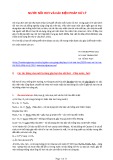
The NC2I-R project was run from 2013 to 2015 by a
consortium of 20 partners (Fig. 3). Building on an earlier
project called EUROPAIRS [8], NC2I-R has drawn an
inventory of all infrastructures and competences consid-
ered crucial for the establishment of new nuclear
cogeneration, both at the scale of demonstration and of
industrial deployment. This stock-taking spanned in
particular the EU, but also reached out to selected
countries overseas where use of nuclear cogeneration
was/is industrial practice or planned for the future.
A second large activity investigated the requirements
regarding the licensing process, safety demonstration and
R&D needs of a nuclear co-generation system. Technology
state-of-the-art and previous experience gained from
licensing of existing and past nuclear cogeneration facilities
in Europe and overseas were gathered and reviewed which
led to a roadmap for licensing a new installation in Europe.
Demonstration and deployment options for nuclear
cogeneration were identified and modeled to evaluate and
rank them according to industrial and/or policy-driven
interests. More detailed economics analyses were per-
formed including sensitivity studies. These included factors
Fig. 3. NC2I-R partners. NorthWest University from South Africa also participated.
G. Wrochna et al.: EPJ Nuclear Sci. Technol. 6, 31 (2020) 3

influencing the economics & financing, and conditions of
economic viability. General specifications for a demonstra-
tor program including siting were defined, and the most
promising chemical industry sites in Europe were mapped.
2.2 Feedback from past and planned nuclear
cogeneration installations
A total of 36 projects could be identified and contact
persons be found using the international network of the
NC2I-R consortium. From those, 23 from 10 countries have
provided feedback on a variety of applications. The most
common were:
–district heating (HU, CH, CZ, SK, S, ROC, FIN, RU);
–seawater desalination (KZ, JA);
–process steam for paper and pulp (N, CH);
–salt refining (D);
–process steam for reforming of gas and coal (D);
–(petro-)chemical (D, CAN);
–nuclear processes (UK, CAN).
Five main reasons were found to trigger plans for
nuclear cogeneration installations:
–security of supply;
–conducting R&D on industrial nuclear cogeneration;
–reducing carbon and other emissions;
–economic benefit;
–increasing the efficiency of an existing NPP.
While each nuclear cogeneration project is different, the
following stakeholders, or at least some of them were
involved from the beginning of the project:
–manufacturer of the plant;
–operator;
–utility;
–end-user (industry, municipality);
–plant owner;
–political representatives at different levels.
Concerning technical aspects, in most of the projects,
the cogeneration installation was included in the original
design and did not require a revamp/upgrade of the NPP.
The great majority of the commissioned projects did not
encounter unexpected difficulties. However, the NPP
A
gesta in Sweden had to face problems related to the
FOAK character of the heat source. Paks in Hungary had
technical problems related to the conventional heat
transport system. All projects require back-up power to
cover O&M outages. Fossil fuel boilers are used for back-
up, and the back-up capacity is minimized by planning
outages during summer when no domestic heating is
required.
Reliable financial information on the nuclear projects
was very difficult to obtain. The CAPEX ranges from a few
dozens of million €for a capacity of several 100 MW to
more than 1000 million €for the Loviisa 3 project, using a
reactor with a planned electric capacity between 1200 MW
e
and 1700 MW
e
and a thermal capacity between 2800 MW
th
and 4600 MW
th
.
The investment was either made by the government
(Halden in Norway, Paks in Hungary), or absorbed within
a utility budget most of the time owned partly by the
government (Slovenske Elektrarne for Bohunice in
Slovakia, Refuna AG for Beznau in Switzerland; Refuna is
an 80-20 public-private partnership).
The levelized cost of energy (LCOE) was also difficult to
obtain. The Loviisa 3 project in Finland, estimated that the
energy produced by the NPP would have been 7 €/MWh
cheaper than in a biofuel-fired scenario, and 18–26 €/MWh
cheaper than in a scenario where the primary fuel was coal,
a statement which obviously depends on the cost assump-
tions made for biofuel and coal. For Paks in Hungary,
the initial levelized cost of delivered electricity was
(11 HUF1985/kWh) in 1985, at today’s exchange rate
equivalent to 0.0358 €
2013
/kWh, a little useful value 30 years
later. The initial levelized cost ofdelivered heat was2.9 €/GJ
(894 HUF/GJ).
2.3 Safety and licensing
Safety oriented work in NC2I-R aimed at providing input
to both designers and regulators about the licensing, safety
requirements and R&D needed to establish the safety
demonstration of a nuclear co-generation system. The
experience gained through the licensing of existing and past
nuclear facilities with co-generation capabilities was
collected and reviewed. Based on this feedback and taking
into account recent trends for safety assessment of new
installations, we proposed specific safety requirements
associated with co-generation.
To effectively support the licensing of an HTR-
based co-generation demonstrator and prototype, work
in NC2I-R led to the recommendation that the following
activities be conducted in addition to the standard
licensing procedure:
–in the pre-application phase, early discussion of the safety
features specific for HTR (e.g. passive decay heat
removal, use of “vented containment”) with the regulator
of the host country with the aim to ensure their
recognition in the licensing process;
–demonstration that co-generation or process heat
application issues are covered by the licensing procedure;
–gap analysis for further R&D needs.
Specific requirements have been outlined which need
some more attention for an HTR co-generation application
in the areas of:
–safety distances between reactor (possibly reduced
Emergency Planning Zone) and heat consuming processes;
–radionuclide release limits;
–thermal hydraulic feedback/transients.
2.4 Deployment scenarios
In Europe, the economically most attractive near-term
opportunities lie in the integration of HTR for powering a
large chemical site where process steam is an almost
ubiquitous commodity. The integration of a nuclear energy
supplier as an Integrated Energy Manager would mean
that the number of interfaces on the supplier site of a
chemical park would be reduced thus enabling the end-
users to concentrate on their core business.
4 G. Wrochna et al.: EPJ Nuclear Sci. Technol. 6, 31 (2020)

Following this economic assessment, the next task was
to localize and characterize chemical and petrochemical
sites in Europe which could represent a potential market
for deployment of nuclear cogeneration with HTR. The
main processes compatible with HTR capabilities are:
–refinery: steam for fractional distillation;
–petrochemicals: reaction enthalpy;
–industrial sites: steam as commodity;
–paper and pulp: steam for boiling and drying.
Mapping of industrial sites was conducted in a manner
allowing to describe the heat market and to characterize
industrial sites across Europe. In total, 132 sites were
located, 57 of them provided data related to their needs.
The majority of sites (20) from where we could collect
information use less than 100 MW
th
. In the category
100–500 MW
th
, 8 sites were located. There were 9 sites with
a heat demand of about 500 MW
th
and one above
1000 MW
th
. The electrical power demand is distributed
in a somewhat more uniform manner. The smallest demand
up to 50 MW
e
was reported by 20 sites. Each of the next
categories, respectively 51–100 MW
e
, 101–200 MW
e
and
201–400 MW
e
, reported between 4 and 6 sites each.
The analyses performed as part of the NC2I-R project
allowed to clearly understand the market, possible
deployment sites and the expected energy policy and
sustainability impact for near-term steam applications.
3 The GEMINI + project
3.1 Overview
Based on earlier work in Europe and internationally, the
GEMINI+ project (2017–2020) is supporting the demon-
stration of nuclear cogeneration and is focusing on a
particular technology and application of nuclear high
temperature cogeneration. GEMINI+ is currently working
on a conceptual design for a high temperature nuclear
cogeneration system for supply of process steam to
industry, a framework for the licensing of such system,
and a business plan for a full-scale demonstration.
Among 24 EU partners representing 9 countries one can
find 7 research organisation, 2 universities, 2 TSO’s, 9
nuclear industries and 3 end-user industries. In the US, the
NGNP Industry Alliance (NIA) has a similar objective and
approach as NC2I.
1
In 2014, the twin organisations NC2I
and NIA decided to join their efforts for demonstration of
industrial high temperature nuclear cogeneration and
launched the GEMINI initiative meant at coordinating
technical development, endeavouring to converge as much
as possible in the choice of technologies and design options,
as well as actions towards European and US stakeholders
for strengthening political support and funding. This
GEMINI initiative was soon joined by JAEA (Japan) and
KAERI (South Korea) in the GEMINI+ project consor-
tium.
Since about the same time, the Polish government has
shown interest to develop HTGR technology for providing
heat to its industry. Therefore, this country appears to be
presently the best candidate for hosting a nuclear
cogeneration demonstration in Europe. NC2I therefore
decided to focus its efforts on the support of Polish
initiatives in this matter. As a first step, NC2I proposed
the project GEMINI+ in the frame of the Euratom
Framework Programme Horizon 2020 with the objectives
of defining:
–the main design options of a demonstration plant
addressing the needs of Polish industry;
–a licensing framework adapted to the specific aspects of
industrial nuclear cogeneration with modular HTGR
systems.
3.2 Project description
GEMINI+ is structured in Work Packages.
WP1 is developing a basis for the licensing framework
for a modular HTGR
–coupled with industrial process heat applications
through a steam network;
–with a safety design fully relying on the intrinsic safety
features of modular HTGR.
WP2 is elaborating the main design options of a HTGR
system complying with the requirements of WP1 and of
end user applications. It is supported by studies on
economic optimisation including an assessment of the
benefit that can be drawn from the use of modular
construction methods presently developed for Small
Modular Reactors, on integration into the energy market,
and on decommissioning and waste management con-
straints on the design. Strong interactions between WP1
and WP2 are ensuring the compliance of the design with
the safety requirements formulated in WP1.
Though WP2 will essentially select proven design
options for getting a demonstration of industrial cogenera-
tion as soon as possible, the project should not miss
innovations that appeared in different sectors of technology
after the basis of modular HTGR designs been established.
It will be checked that integrating such innovations in the
design would result in benefits in terms of safety, economic
competitiveness and/or flexibility for various end-user
applications, without bringing about significant additional
risk and delay in the demonstration project. This is the task
of WP3, which scrutinizes innovation in different fields
(materials, instrumentation, industrial processes, integra-
tion in energy networks, etc.) and assess their suitability for
the specific GEMINI+ design.
The project is also addressing the conditions of
implementation for a demonstration project in Poland.
This will be done in WP4 based on a selected industrial site
in this country. The siting of the nuclear cogeneration plant
and its compliance with the requirements for the consid-
ered applications on this site is being assessed. Three other
prerequisites are being addressed:
–the availability of a reliable supply chain for the
components;
–possibilities to bridge in due time the residual technology
gaps that will be identified by the project, in order to be
able to guarantee the performance of the system, to
justify its safety and to manufacture its components;
1
www.ngnpalliance.org
G. Wrochna et al.: EPJ Nuclear Sci. Technol. 6, 31 (2020) 5







![Đề ôn tập cuối kỳ môn Kỹ thuật nhiệt - Nhiệt động học [mới nhất]](https://cdn.tailieu.vn/images/document/thumbnail/2026/20260310/hoaphuong0906/135x160/60681773197823.jpg)

![Bài giảng thang máy và thang cuốn: Tổng hợp kiến thức [chuẩn nhất]](https://cdn.tailieu.vn/images/document/thumbnail/2026/20260310/hoaphuong0906/135x160/41471773283876.jpg)
