

* Corresponding author Tel. +849537282
E-mail address: lethitam@tlu.edu.vn (T.T. Le)
© 2020 by the authors; licensee Growing Science.
doi: 10.5267/j.uscm.2019.8.003
Uncertain Supply Chain Management 8 (2020) 93–104
Contents lists available at GrowingScience
Uncertain Supply Chain Management
homepage:
www.GrowingScience.com/uscm
Performance measures and metrics in a supply chain environment
Thi Tam Lea*
aThuyloi University, 175 Tay Son, Dong Da, Ha Noi, Vietnam
C H R O N I C L E A B S T R A C T
Article history:
Received July 14, 2019
Received in revised format July
28, 2019
Accepted August 5 2019
Available online
August
5
2019
This paper investigates the role of environmental management accounting on sustainable
supply chain management and the link between sustainable supply chain management and
efficiency including financial and environmental factors using questionnaire-based survey.
The study designed and sent questionnaires to 600 construction material manufacturing
enterprises in Vietnam and managed to collect 418 valid ones which was processed by SPSS
20.0 software. The results show that environmental management accounting had a significantly
positive impact on sustainable supply chain management. Therefore, if enterprises adopt
environmental management accounting, they will more likely implement sustainable supply
chain management more efficiently. On the other hand, the findings point out that sustainable
supply chain management positively affect to both financial and environmental efficiency.
Finally, the study provides some sound suggestions to Vietnamese construction materials
manufacturing industry.
.
licensee Growing Science, Canada
by the authors;
20
20
©
Keywords:
Environmental Management
Accounting
Environmental Efficiency
Financial Efficiency
Sustainable Supply Chain
Management
1. Introduction
Sustainable development is always the top priority of countries in general and of businesses in
particular. This target is strongly promoted from governments, customers and stakeholders. Many
studies have affirmed that environmental and social affairs have appeared in the supply chain (Burritt,
2002; Burritt et al. 2011). As environmental pressures increase, companies in supply chain must be
transparent about the environmental impacts on the products and production processes as well as assess
and improve the effectiveness of those impacts. The best solution for the problems is to set up
accounting standards and accounting information systems appropriately and effectively in supply chain.
Construction material manufacturing industry is one of the strong economic sectors of the national
economy, playing an important role in the socio-economic development and investment in
infrastructure construction. For Vietnam, a country that is implementing the process of industrializing
the economy from a backward agricultural country, the role of the construction materials industry is
even more important. Infrastructure construction is a top priority and is a prerequisite for
industrialization. Sustainable supply chain management (SSCM) brings significant potentials for
industry in general and construction materials industry in particularly such as credibility of customers,
market dominance, ability to reach out of businesses; the competitiveness of enterprises, economic
efficiency improvement. SSCM has been applied during the past two decades (Seuring và Muller,

94
2008). In Vietnam, there is sadly lack of understanding about SSCM in manufacturing firms. Although
documents on SSCM have been strongly growing over the years, the accounting aspect is not the central
issue of these documents. Very few authors mentioned the role of environmental management
accounting (EMA) in sustainable supply chain management as well as the impact of SSCM on
environmental and financial performance. According to Burritt (2011), EMA has been contributing to
accounting and management literature for 20 years. Yet EMA’s contributions to supply chain
management are missing from prior literatures. Therefore, the research on the relationship between
EMA, SSCM and eco-efficiency has filled the research gap. The two main subjects in the study are to
examine the role of EMA in SSCM and the relationship between SSCM and enterprises’ performance
including environmental and financial sectors.
2. Research Overview
2.1. EMA and Sustainable supply chain management
The term “sustainable” indicates a more comprehensive view of environmental, social and economic
impacts. SSCM is an emerging concept that is fueled by environmental concerns from many
stakeholders. Customer demand and government pressure continue motivating companies more and
more sustainable (Guide Jr & Srivastava, 1998). As a result, government requirements and community
expectations for environmental accountability put pressure on companies in supply chain to develop
strategic planning bringing several green concepts. The studies of SSCM increased significantly last
15 years (Seuring và Muller, 2008). Different possible reasons are examined which explain why SSCM
appears to be of growing importance to companies including: globalization; cost-effective logistics
processes; market-pull; information systems (Burritt, 2011).
The tools of EMA applied in the supply chain are expressed in voluntary international standards such
as ISO 14051 and ISO 14052. While ISO 14051 extends material flow cost accounting method (MFCA)
in managing both upstream and downstream supply chain collaborations, ISO 14052 provides more
specific guidelines for practicing in broader supply chain settings (Christ, 2017). Kokubu and
Tachikawa (2011) introduced MFCA into 50 supply chains between 2008 and 2011 in Japan aimed at
illustrating how significant material wastes in supplier operations are often transferred to purchasers.
MFCA highlights numerous benefits to supply chain settings such as building waste management and
control system along supply chain.
Thanks to sustainable supply chain, successful management requires not only high quality
environmental and financial performance, but also their integration (Boyd et al., 2007). However, it is
significantly restrict the relationship between supply chain management and the economic and
environmental dimensions (Linton et al., 2007; Vlachos et al., 2007). The characteristics of
sustainability which is sadly lacking from much of the earlier literatures (Burritt, 2011). According to
Seuring and Muller (2008), one of the incentives to achieve SSCM is to encourage focal companies to
push their suppliers in take-up of and compliance with standards of environmental management.
Therefore, it is necessary to understand the managerial requirements for EMA to support SSCM. As a
result, supply chain management make pressures to hold companies responsible for their
environmental, social and financial performance, not just in their own but along the whole supply chain
and in the light of expectations from customers, regulators and other stakeholders (Seuring & Muller,
2008). Focal companies need to have environmental responsibility and help other companies in supply
chain to comply environmental standards. It is realized that a company, a part from supply chain lacks
environmental responsibility that impacts on sustainable products. Reputation of the focal companies
can collapse and others in supply chain suffer high risks requiring that environmental strategy
safeguards against high risks (Burritt et al., 2011). The strategy will be interaction EMA with SSCM
and performance. EMA is an important tool to provide complete information for establishing
sustainable supply chain decisions. Because if companies aimed at improving sustainable supply chain,
not only economic information but also environmental information about the supply chain are required
(Burritt et al., 2002; Viere et al., 2011). According to Schaltegger (2013), with accounting for eco-
efficiency, EMA supplies the methods to support for sustainable supply chain goal. EMA can help to

T.T. Le /Uncertain Supply Chain Management 8 (2020)
95
gain more efficient design, production or logistical operations between partners in supply chain (Burritt
et al., 2011). Viere et al. (2011) apply EMA methods to determine the stages in the coffee supply chain
that have the highest environmental impacts and the most optimal solutions selected for environmental
improvement. Cultivation and consumption are the two most important stages from an environmental
concept. Environmental concerns will directly affect financial performance. For example, using
inefficient energy or using too much fertilizers will reduce the profitability of the overall supply chain
or less competitive market prices.
Table 1
The role of EMA in sustainable supply chain management
Monetary EMA
Physical EMA
Short
-
term
Long
-
term
Short
-
term
Long
-
term
Sustainable Purchase
Risk analysis process
Social impact
measurement
Carbon Accounting
Macro-Micro link
Stakeholder engagement
Sustainable management
control
Supply chain
Environmental benefits
Sustainable Purchase
Risk analysis process
Social impact measurement
Carbon Accounting
Macro-Micro link
Stakeholder engagement
Sustainable management
control
Supply chain
International assessments
CRS competitiveness
Environmental capital
investment
Cost – benefit analysis
Sustainable Purchase
Risk analysis process
Social impact
measurement
Carbon Accounting
Macro-Micro link
Stakeholder engagement
Sustainable management
control
Supply chain
International assessments
Environmental capital
investment
Environmental benefits
Sustainable Purchase
Risk analysis process
Social impact
measurement
Carbon Accounting
Macro-Micro link
Stakeholder engagement
Sustainable management
control
Supply chain
International
Assessments
CRS competitiveness
Environmental capital
investment
Cost
–
benefit analysis
Source: Burritt et al. (2011)
Supply chain management by large companies such as IBM, Otto Group and Wal-Mart is stimulated
towards the development of EMA (Schaltegger & Burritt, 2000). EMA is the useful tool to gather,
classify, record and exchange environmental information so that companies in supply chain can show
their sustainability credentials in order to maintain and build their businesses. As a result,
environmental and financial performance in companies are improved.
The relationship between EMA and SSCM can be manifested in many ways (Burritt, 2011) including:
firstly, application of the EMA support sustainable supply chain management requiring the interaction
between partners along the supply chain to agree on the goals and the sharing benefits and costs.
Secondly, EMA should be viewed as a supported tool to strengthen partnerships in its network as well
as compete with other supply chains. Finally, EMA in supply chain management can help to increase
eco-efficiency through cost savings and revenue improvement throughout the value chain. EMA
encourages carbon emission reduction, cleaner production processes, sustainable movement and
logistics transportation, termination of product life waste reduction, recycling and reuse as highlighted
by Kreuze and Newell (1994) using life cycle accounting (LCA). LCA is an attempt to identify all
environmental costs (internal and external) related to products, processes and operations through life
cycle stages. The life cycle stages of the product includes material selection, production, use, reuse,
maintenance, recycling and waste management (Kreuze & Newell, 1994; Parker, 2000). LCA helps
decision makers prioritize options for environmental improvements of the supply chain (Salomone,
2003).
From the above explanations, it is argued that:
H1: EMA has a significant impact on sustainable supply chain management (SSCM).
2.2 Sustainable supply chain management and Eco- efficiency
Eco-efficiency is to minimize environmental impacts while maximizing production efficiency
(Mutingi, 2013). Companies realize that it is necessary to upgrade supply chain management in a

96
sustainable way to comply with current environmental laws and maintain a long-term competitive
advantage through technology innovation and eco-efficiency improvements (Baines et al., 2012). The
central goals of SSCM are primarily focused on those process operations that impacts on environmental
efficiency such as minimization of waste, optimize resource usage (Mutingi, 2013). As a result,
companies in supply chain save costs and improve profits.
According to Viere (2011), SSCM is applied to increase eco-efficiency by using efficient quantity of
fertilizers. Eco-efficiency is shared with three members in coffee supply chain who do coffee faming,
coffee processing and coffee refinement. With constant revenue, the profit of three members will
increase sustainably by reducing environmental impacts through the effective use of fertilizers.
SSCM practices are increasingly recognized as systematic and comprehensive mechanisms to achieve
environmental efficiency (Green et al., 2012; Lai & Wong, 2012; Zhu et al., 2010). SSCM helps reduce
environmental impacts because members in supply chain identify environmental issues and share
together. The positive relationship between SSCM and environmental efficiency is initially pointed out
by Zailani et al. (2012). They realize that the implementation of sustainable packaging had a significant
positive effect on environmental performance, especially due to environmental cooperation with
customers. Therefore, the next hypothesis is developed:
H2: SSCM has a significant impact on financial efficiency.
The implementation of SSCM can reduce production costs, improve product value, increase image for
organizations and achieve competitive advantage (Porter & Van der Linde, 1995; Hart & Ahuja, 1996;
Hart, 1997). SSCM practices also have the ability to reduce costs in the long run due to efficient use of
materials and energy. Reducing costs and increasing revenue is the result of improved financial
performance. Many studies conclude that SSCM practice leads to expand organizational performance
including financial sector (Lee et al., 2012; Green et al., 2012, Ochieng, 2016). Therefore,
manufacturing firms should implement sound environmental practices in all stages of the supply chain
which is likely to perform better financially. Thus, the following hypothesis is proposed:
H3: SSCM has a significant impact on environmental efficiency.
3. Research methodology and model
The study was conducted to investigate the role of EMA in SSCM and the connection of SSCM to
environmental and financial efficiency. Therefore, quantitative research method through survey is used
to solve the above research objectives. Material production enterprises with medium and large scale in
Vietnam are selected in the scope of research. Because medium and large sized enterprises are able to
implement of EMA while small sized enterprises do not fully adopt and have no understanding of the
EMA. Furthermore, with complex supply chains need to secure the consistency of data they receive by
their suppliers, and need instruments for a meaningful interpretation of this data. Construction materials
industry is considered as one of the sectors that contribute greatly to the economic development of
Vietnam at the same time cause negative impacts on the environment. Every year the construction
materials industry generates emissions and toxic dust affecting the living environment and people.
Therefore, it is necessary to manage and control environmental issues in construction materials supply
chain. The author sent survey forms to 600 construction material enterprises in the period of June 2018
– January 2019. The survey results obtained 435 votes, in which, 17 questionnaires were removed from
research due to incomplete, biased issues, 418 valid questionnaires were retained . Valid votes will be
numbered, entered and processed by SPSS 20.0 software. Based on the above literature discussions,
the research model is developed.
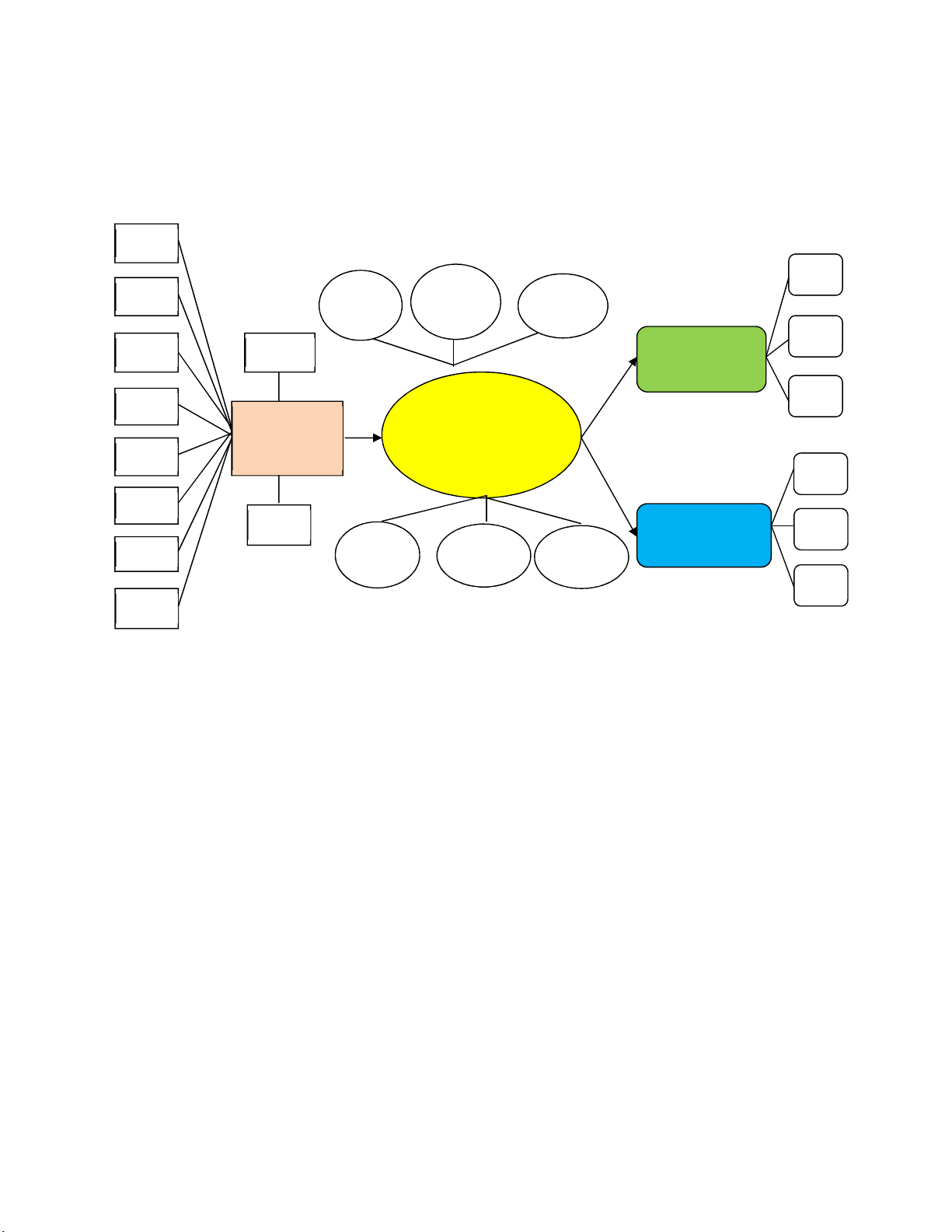
EMA application (EMA): There are ten (10) scales of EMA application. Ten scales is modified and
adapted from many previous studies such as Hyršlová and Hájek (2005); Ramli and Ismail (2013);
Jamil et al. (2015); Jinadu et al. (2015), Kokubu and Nashioka (2005); Jalaludin et al. (2011), Le &
Nguyen (2018). A five point scale (where 1 = no application, 5 = full application) is used for EMA
variable.
T.T. Le /Uncertain Supply Chain Management
8 (2020)
97
Sustainable supply chain management (SSCM): The six scales of SSCM are measured by Seuring &
Muller (2008), Vachon & Klassen (2008), Zhu et al. (2010) including: Legal requirements and
command-and-control regulations; Compliance with codes of environmental management and social
responsibility; Internal risk management; cross-functional cooperation for environmental
improvement; building environmental collaboration with upstream suppliers and downstream
customers; and sending environmental requirement to suppliers. SSCM uses a five point Likert scale
with 1 = no implement and 5 = full implement.
Fig. 1. Research model
Financial efficiency (FE): The study uses three scales to measure financial efficiency consisting of
Return on Assets (ROA), Return on Equities (ROE) and Return on Sales (ROS) supported by Hart &
Ahuja (1996), Konar & Cohen (2001) and Iwata and Okada (2010). In which, ROA is the most popular
scale. According to Qian (2012), ROA is considered a suitable scale reflecting financial efficiency in
many previous studies (Russo & Fouts, 1997; King & Lenox, 2002; Nakao et al., 2007; Ong et al.,
2014). ROA is a common measure used in many studies and a representative indicator of financial
efficiency (Ten, 2005). In addition, Wagner et al. (2002) confirm that two criteria of ROE and ROS
used measure financial activities in the paper manufacturing industry in Europe. Some people used
ROA and ROS to examine the relationship between how environmental activities affect financial
performance (cited in Iwata & Okada, 2010).
Environmental efficiency (EE): The study inherits the scales of Qian (2012), Tuwaijri et al. (2003);
Earnhart & Lizal (2010); Ong et al. (2014), Itawa & Okada (2010). They used three scales including
the amount of wastes generated, environmentally friendly products, image and reputation. The scale
“the amount of wastes generated” is most commonly used. Tuwaijri et al. (2003) point out that this
scale relates to the first three principles of environmental performance issued by CERES: minimizing
environmental impacts, using efficient resources and reducing wastes. Qian (2012) concur that amount
of wastes generated, environmentally friendly products, image and reputation are indicators of
environmental performance that is supported by the studies such as Konar & Cohen (1997), Konar &
Cohen (2001), Earnhart & Lizal (2006), Khanna & Damon (1999), Khanna et al. (1998), Arora & Cason
(1995), Itawa & Okada (2010). Respondents are asked to evaluate financial and environmental
efficiency relative to the main competitors over the last 3 years. The efficiency indicators are measured
(H2)
(H1)
(H3)
Sustainable
supply chain
management
SSCM1
SSCM2
SSCM3
SSCM4
SSCM5 SSCM6
EMA
application
EMA3
EMA4
EMA5
EMA6
EMA7
EMA9
EMA2
EMA8
EMA10
EMA1
Financial
efficiency
Environmental
efficiency
FE1
FE2
FE3
EE1
EE2
EE3






![240 câu hỏi trắc nghiệm Kinh tế vĩ mô [chuẩn nhất]](https://cdn.tailieu.vn/images/document/thumbnail/2026/20260126/hoaphuong0906/135x160/51471769415801.jpg)

![Câu hỏi ôn tập Kinh tế môi trường: Tổng hợp [mới nhất/chuẩn nhất]](https://cdn.tailieu.vn/images/document/thumbnail/2025/20251223/hoaphuong0906/135x160/56451769158974.jpg)


![Giáo trình Kinh tế quản lý [Chuẩn Nhất/Tốt Nhất/Chi Tiết]](https://cdn.tailieu.vn/images/document/thumbnail/2026/20260122/lionelmessi01/135x160/91721769078167.jpg)


