
REVIEW ARTICLE
Thermal treatment for radioactive waste minimisation
Matti Nieminen
1,*
, Markus Olin
1
, Jaana Laatikainen-Luntama
1
, Stephen M. Wickham
2
, Slimane Doudou
2
,
Adam J. Fuller
2
, Jenny Kent
2
, Maxime Fournier
3
, Sean Clarke
4
, Charlie Scales
4
, Neil C. Hyatt
5
,
Sam A. Walling
5
, Laura J. Gardner
5
, Stephane Catherin
6
, and Benjamin Frasca
6
1
VTT Technical Research Centre of Finland Ltd, Tietotie 4C, 02044 VTT, Espoo, Finland
2
Galson Sciences Ltd, 5, Grosvenor House, Melton Road, Oakham, Rutland LE15 6AX, UK
3
CEA, DEN, DE2D, SEVT, 30207 Bagnols-sur-Cèze, France
4
National Nuclear Laboratory, Sellafield, Seascale CA20 1PG, UK
5
Department of Materials Science & Engineering, The University of Sheffield, Mappin Street, Sheffield S1 3JD, UK
6
Waste Packages and Material Department, R&D Division, Andra, 1-7 rue Jean Monnet, 92298 Châtenay-Malabry cedex,
France
Received: 12 March 2019 / Accepted: 18 September 2019
Abstract. Safe management of radioactive waste is challenging to waste producers and waste management
organisations. Deployment of thermal treatment technologies can provide significant improvements: volume
reduction, waste passivation, organics destruction, safety demonstration facilitation, etc. The EC-funded
THERAMIN project enables an EU-wide strategic review and assessment of the value of thermal treatment
technologies applicable to Low and Intermediate Level waste streams (ion exchange media, soft operational
waste, sludges, organic waste, and liquids). THERAMIN compiles an EU-wide database of wastes, which could
be treated by thermal technologies and documents available thermal technologies. Applicability and benefits of
technologies to the identified waste streams will be evaluated through full-scale demonstration tests by project
partners. Safety case implications will also be assessed through the study of the disposability of thermally treated
waste products. This paper will communicate the strategic aims of the ongoing project and highlight some key
findings and results achieved to date.
1 Introduction
The waste hierarchy sets out guidelines for waste managing
in order to minimise environmental impact. Priority is on
waste prevention and the lowest priority is on disposal.
Disposal should be applied when no other alternatives are
available and, in this case, the amount of waste to be
disposed should be minimised. The principles of the waste
hierarchy should also be applied for radioactive waste,
though with due regard to safety standards and regulation.
Especially in the case of Low and Intermediate Level Waste
(LILW), materials are typically contaminated by a very
small amount of radioactive isotopes, while the majority of
the waste material is not radioactive. For example, in the
case of typical operational Low Level Waste (LLW) the
actual volume of radioactive isotopes is very low but the
total volume of waste is usually large; this is also true for
many LILW fractions. The guidelines of the waste
hierarchy could be followed to minimise the waste volume
to be disposed of by thermal treatment of these LILW
fractions.
Numerous technologies for thermal treatment of
radioactive waste are available or in development world-
wide, and more especially in the European Union. These
technologies may be applied to a wide range of different
radioactive waste streams, including non-standard waste
types that present specific waste management challenges.
Thermal treatment can result in significant volume and
hazard reduction, both of which are beneficial for safe
storage and disposal. Thermal treatment also removes
organic material, which can form complexing agents and
make radionuclides more mobile in a repository.
The European Commission funded THERAMIN proj-
ect was established to improve awareness and understand-
ing of capability of thermal treatment technologies to
treat radioactive waste prior to disposal. The overall
objective of the project is to provide improved long-term
safe storage and disposal of such LILW streams, which
are suitable for thermal treatment. The project enables
a coordinated EU-wide research and technology
*e-mail: matti.nieminen@vtt.fi
EPJ Nuclear Sci. Technol. 6, 25 (2020)
©M. Nieminen et al., published by EDP Sciences, 2020
https://doi.org/10.1051/epjn/2019040
Nuclear
Sciences
& Technologies
Available online at:
https://www.epj-n.org
This is an Open Access article distributed under the terms of the Creative Commons Attribution License (https://creativecommons.org/licenses/by/4.0),
which permits unrestricted use, distribution, and reproduction in any medium, provided the original work is properly cited.

demonstration, which are targeted to improve understand-
ing and optimisation of the implementation and use of
thermal treatment in radioactive waste management. It
is also expected that the project will improve the
Technology Readiness Level (TRL) of thermal treatment
technologies. The project also enables establishment of a
European-wide community of experts on thermal treat-
ment technologies and radioactive waste management and
disposal in order to identify efficiencies in national waste
management and decommissioning programmes across
Europe
2 THERAMIN project
The THERAMIN project will make an EU-wide strategic
review of the thermal treatment technologies and assess-
ment of the value of technologies applicable for the thermal
treatment of a wide range of waste streams like ion
exchange resins, soft operational wastes, sludge, organics
and liquids. The project also compiles an EU-wide database
of such wastes, which would benefit from thermal treatment,
and identifies the opportunities, synergies, challenges,
timescales and cost implications to improve radioactive
waste management. The key activity of the project is an
evaluation of the applicability of the technologies and
achievable volume reduction of waste through an active and
non-active full-scale demonstration trials. Finally, the
treated wastes will be characterised and disposability of
the product materials and residues will be assessed.
Asignificant benefit for the project is that the project
partners have made large financial and resource investments
in thermal treatment R&D facilities already before the
THERAMIN project. The project also benefits from close
engagement with an End User Group (EUG) representing
waste producers and waste management organisations.
The THERAMIN project comprises the following core
strands of research: (1) strategic review of radioactive waste
streams, (2) demonstration of selected thermal treatment
technologies in order to evaluate feasibility of treatment
routes for specified waste stream/technology combinations
and (3) assessment of disposability of treated wastes by
characterising theproducts andresidues from demonstration
trials against various Waste Acceptance Criteria (WAC),
which are not harmonised in EU. In addition to these technical
topics the project is also actively disseminating the results
including a training program in order to enhance knowledge
of thermal treatment technologies and their benefits.
The project was started in June 2017 and has just
passed the halfway point thus a substantial fraction of
experimental demonstration program has not yet been
completed and thus the final results of the project are not
yet available.
2.1 Strategic review of radioactive waste streams
and potential thermal technologies
One of the first activities of the project was to identify
wastes that could potentially be treated using thermal
techniques, or where thermal techniques could offer
strategic benefits. As a result of this evaluation the
following waste categories were identified:
–ion exchange resins, both organic and inorganic, where
there is significant volume and organics reduction potential;
–soft operational waste including plutonium contaminat-
ed material (PCM), where there is also significant volume
reduction potential;
–wet wastes such as sludges and liquid wastes;
–wastes with a significant organic content (could include
bituminised waste in some countries such as Belgium or
Lithuania) with the potential to be chemically reactive
and/or give rise to significant gas generation, and which
may contribute uncertainty to the post-closure safety
case for geological disposal;
–certain types of metallic wastes (e.g. reactor internals,
cladding) that are known to cause significant gas
generation by corrosion and may contribute uncertainty
to the post-closure safety case for geological disposal;
–some types of packaged waste that may have become
unacceptable for geological disposal owing to package
degradation.
In addition to suitability for thermal treatment, the
volume of waste has an essential impact on the assessment
of the potential and importance of thermal treatment
techniques. The review and assessment of waste volumes
turned out more challenging than was expected. Data on
low and intermediate radioactive wastes is not easily
available in all EU countries and thus the results from the
survey are not fully comprehensive. Nevertheless, the
survey demonstrated that the need and market potential
for thermal treatment technologies is already significant in
those countries from which the data were available.
Once the wastes of interest had been identified, an
assessment on the thermal facilities available across Europe
that could potentially treat these wastes was done. Following
a thorough survey, the identified European thermal
technologies were grouped into three high level processes:
thermal treatment for volume reduction and passivation,
conditioning by immobilisation in glass, and conditioning by
immobilisation in ceramic or glass-ceramic matrices. For
each facility, information on its technical capabilities and
availability to treat waste streams were summarised.
–Treatment for volume reduction and passivation included
incineration (with burner and refractory walls), rotary
kiln incineration, pyrolysis, gasification, calcination,
underwater plasma incineration, hydrothermal oxidation
and induction metal melter.
–Conditioning by immobilisation in glass included Joule-
Heated In-Can Vitrification, Joule-Heated Ceramic
Melter (JHCM), Cold crucible induction melter (CCIM),
Advanced CCIM (A-CCIM), Indirect induction melter
(metallic wall hot metal pot), coupled cold wall direct
metal induction melting and plasma burner, coupled cold
wall direct glass induction melting and plasma burner
and refractory wall plasma burning and melting.
–Conditioning by immobilisation in ceramic, glass or
glass-ceramic included Hot Isostatic Pressing (HIP).
Once the technologies and facilities were identified, and
the technical details of the thermal processes were assessed,
this information was utilised to establish the advantages
and limitations of each of the treatment facilities. From
2 M. Nieminen et al.: EPJ Nuclear Sci. Technol. 6, 25 (2020)
this it was possible to map the identified waste groups to
the most suitable or promising technologies. During this
mapping exercise each technology was assessed as either
being a viable method for treating the given waste, having
some potential (either untested, or only with modification)
or not being applicable. From this exercise it was clear that
there are a wide range of facilities spread across Europe
that could potentially treat the identified wastes.
2.2 Viability of treatment routes for selected waste
stream/technology combinations
The most essential and largest activity of the THERAMIN
project is the assessment of the viability of different thermal
treatment routes for selected waste stream/technology
combinations. This activity is based on experimental
demonstrations with six different technologies. The waste
materials to be used in the demonstration trials were
selected based on the results from strategic review of
radioactive waste streams (presented above) and assessment
of suitability of the technologies for certain wastes. In
addition, one selection criterion was to cover several different
waste streams,which are suitable for thermal treatment.The
selected waste streams and demonstration technologies are
presented in Table 1.
Until now the first test trials have been completed. All
thermal treatment facilities to be used in the project have
been installed already before the THERAMIN project and
financed by other sources but made accessible for the
project. The first demonstrations in the autumn 2018 were
carried out using following technologies:
–The SHIVA process: cold wall direct glass induction
melting and plasma burner (CEA/Orano).
–In-Can Melting process: metallic crucible melter heated
in a simple refractory furnace using electrical resistors
(CEA/Orano).
–GeoMelt: In Container Vitrification (NNL).
–Thermal treatment process based on thermal gasification
(VTT).
–HIP: Hot Isostatic Pressing (NNL and USFD).
3 The SHIVA process (CEA/Orano)
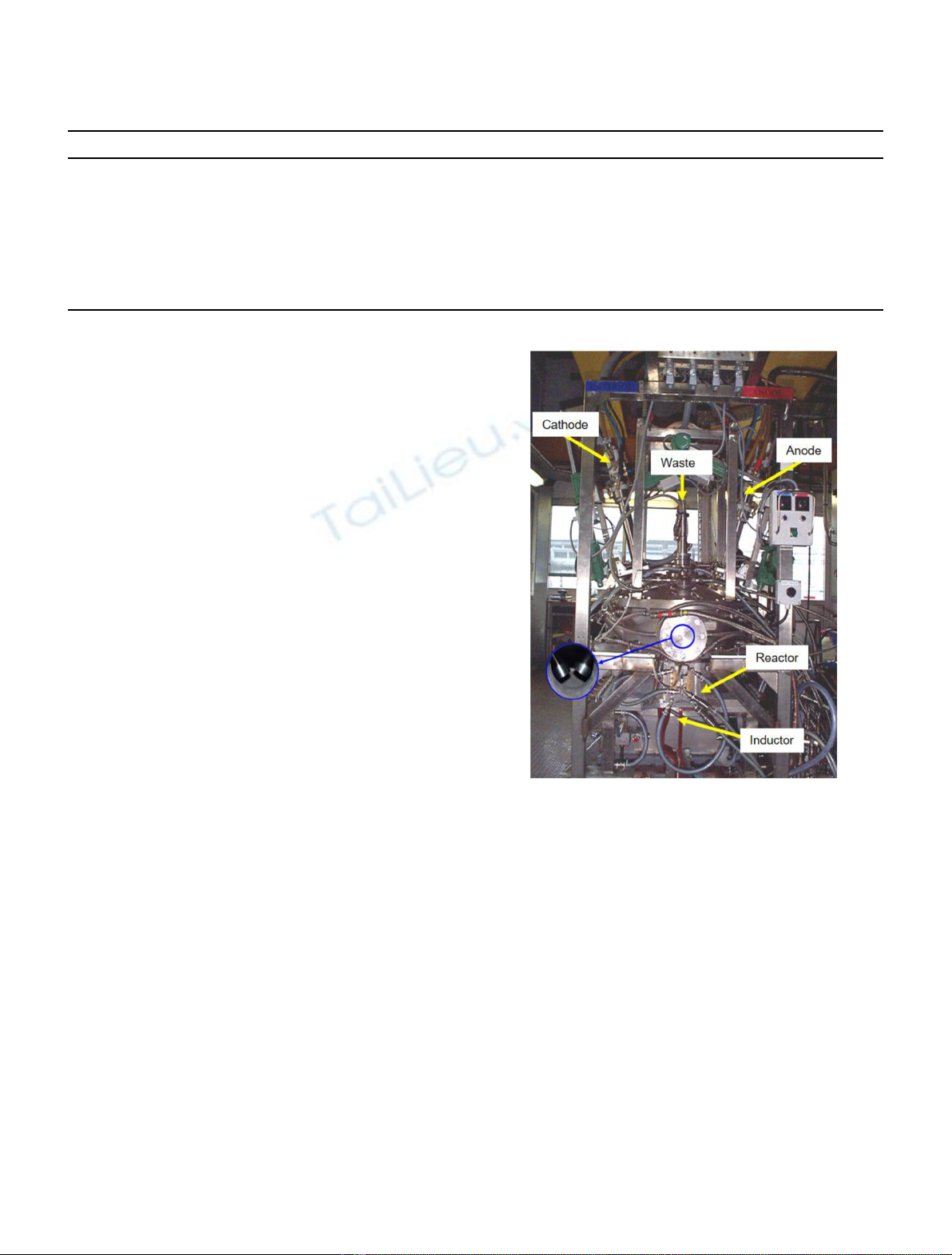
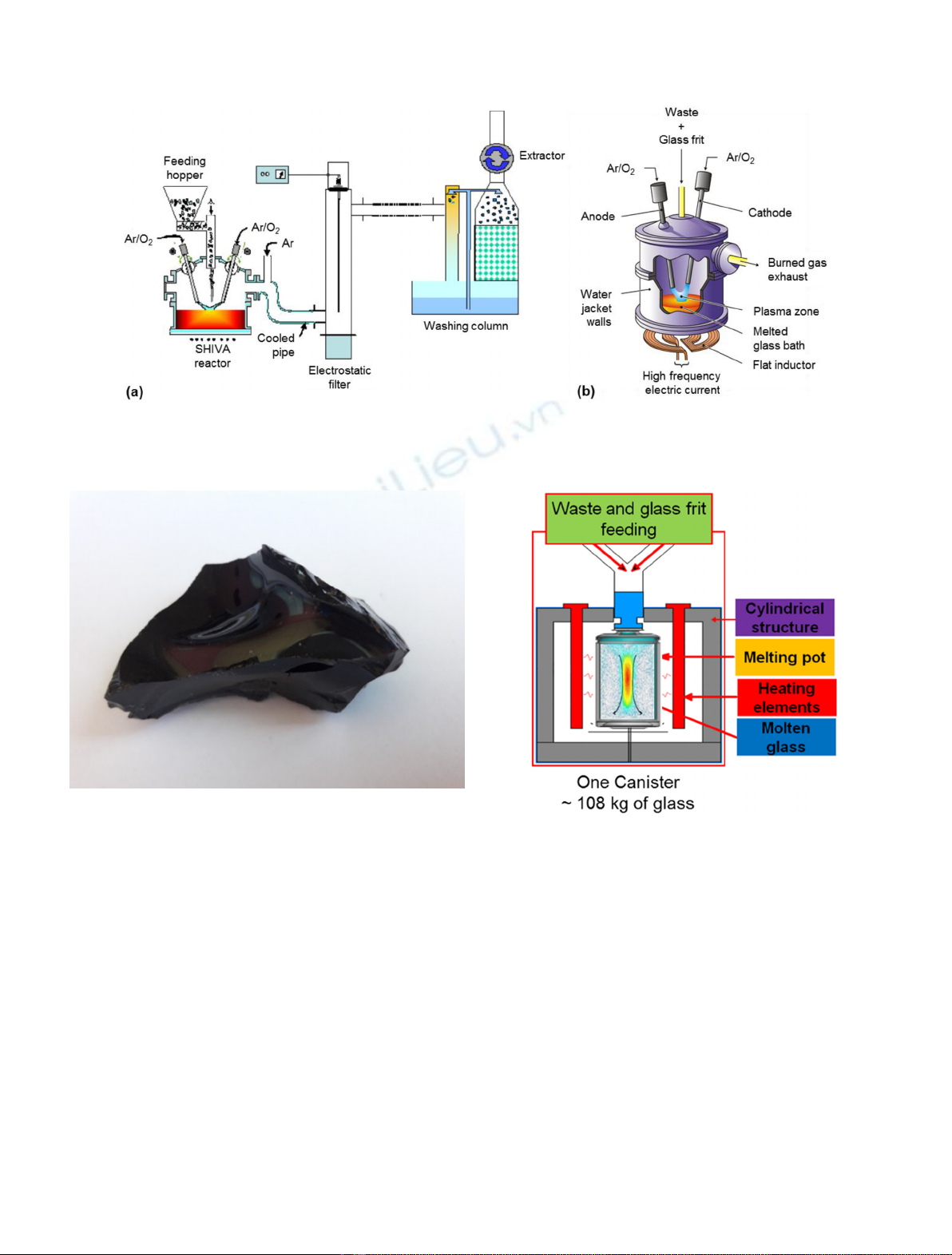
SHIVA is an incineration-vitrification process (Fig. 1) well
suited for the treatment of organic and mineral waste with
high alpha contamination and potentially high chloride or
sulphur content. This technology is specifically designed
to operate in a hot cell for high or intermediate level waste.
It allows, in a single reactor, waste incineration by plasma
burner and ashes vitrification. SHIVA consists of a water-
cooled, stainless steel cylindrical reactor, equipped with a
flat inductor at the bottom and a transferred arc plasma
system in the reactor chamber (Fig. 2). The gas treatment
consists of an electrostatic tubular filter and a gas scrubber.
The waste can be in solid or liquid form but must not contain
metals. The SHIVA process has a technology readiness level
(TRL) of 5-6 as a full-scale inactive pilot which has been
tested by the CEA since 1998 for various wastes. TRL 5-6
means a technology validated/demonstrated in relevant
environment (industrially relevant environment in the case
of key enabling technologies).
The waste selected for the THERAMIN trial is a 25 kg
mixture of inorganic and organic ion exchange media
composed of zeolites, diatoms, strong acid IXR (ion
Table 1. Demonstration technologies and waste materials of the THERAMIN project.
Technology Demonstrator Waste stream Waste category Product
Shiva CEA/Orano, France Organic ion exchange resin Unconditioned wastes Vitrified
In Can CEA/Orano, France Ashes Unconditioned wastes Vitrified
GeoMelt 1 NNL,United Kingdom Cementitous wastes Conditioned wastes Vitrified
GeoMelt 2 NNL, United Kingdom Heterogeneous sludges Unconditioned wastes Vitrified
Thermal gasification VTT, Finland Organic ion exchange resin Unconditioned wastes Solid residue
Vitrification Vuje/Javys, Slovakia Chrompik Liquid wastes Vitrified
HIP USFD, United Kingdom Uranium containing sludges Unconditioned wastes Vitrified/Ceramics
Fig. 1. SHIVA process.
M. Nieminen et al.: EPJ Nuclear Sci. Technol. 6, 25 (2020) 3
exchange resin), and strong base IXR. Inputs of SHIVA
process are composed of 38.5 wt.% of waste and 61.5 wt.%
of glass frit.
The end-product of the process is an alumino-borosili-
cate glass which is macroscopically (millimetre scale: visual
inspection) homogeneous (Fig. 3).
Thus, the SHIVA trial conducted in the framework of
the THERAMIN project proved the capability of the
process for the thermal treatment of a mixture of organic
and mineral waste composed of zeolites, diatoms and ion
exchange resins. The waste load of 38.5% is high and can
be expected that it could be increased in the future.
Indeed, during this feasibility trial, it was not sought to
maximise the waste load and the processing capacity.
The waste product is an alumino-borosilicate glass,
macroscopically homogeneous and its long term behav-
iour can be characterised according to proven methodol-
ogies in order to enable consideration with confidence in
its disposability.
4 In Can (CEA/Orano)
The In-Can Melter process can support liquid or solid waste
feeds. With the current gas treatment process used in
THERAMIN trials, it can only tolerate limited amounts of
organic matter. Small amount of metal can also be accepted
in the waste to be treated. The design ensures that the
process can operate remotely for high-activity waste. The
design can also be adapted for dealing with plutonium
containing material in gloveboxes. The final product of the
process can be glass, glass ceramic or simply a high-density
waste product.
In-Can Melter is a metallic crucible melter heated in a
simple refractory furnace using electrical resistors (Fig. 4).
The can is renewed after each filling.
Fig. 2. (a) Simplified diagram of the SHIVA process and (b) artist’s view of the reactor.
Fig. 3. Waste glass sample from the SHIVA trial.
Fig. 4. Simplified diagram of the In-Can Melter process.
4 M. Nieminen et al.: EPJ Nuclear Sci. Technol. 6, 25 (2020)
To prepare the THERAMIN trial, preliminary tests
were conducted at the laboratory scale to select the best
operating conditions and thus obtain an optimised waste
load and a high quality end-product. These tests aim to
demonstrate the feasibility of the confinement in a vitreous
matrix of by-products coming from existing incineration
processes. In the preliminary tests, different amounts of
ashes and glass frit are brought into contact (1100 °C, 2 h),
with or without an adjuvant (e.g. sugar or bentonite).
Tests are carried out at a few gram scale. At the end of the
tests, the crucibles are cut after immobilisation in epoxy
resin and the products obtained are observed under a
binocular magnifier. The criteria for the choice of the
optimum conditions are the obtaining of a homogeneous
glass and the limitation of the expansion during the
elaboration.
The preliminary laboratory tests proved the feasibility
of ashes vitrification with a high load of 50 wt.% in the end-
product. Tests also proved the benefits of adding a sugar-
based or a bentonite-based adjuvant up to 10 wt.% to
eliminate volatile dust and ensure the best reactivity.
5 Thermal treatment process based
on thermal gasification (VTT)
Thermal gasification is a process converting solid or liquid
organic matter to gaseous products and thus this
technology responds very well to the need to reduce the
volume of organic radioactive waste. VTT has developed
thermal gasification for demanding applications from 1980s
and the experience and knowhow has also been applied for
treatment of LILW containing organic matter (IXR or
operational waste, etc.). The developed process is compact
and thus it can be operated at the nuclear power plant site.
Thermal treatment by gasification results in fine dust,
which is collected by high temperature filter. In addition to
filter dust, larger inorganic particles are removed from the
process together with bed material. This mass stream
consists primarily of bed material. In most cases filter dust
and bottom ash have to be immobilised after waste
treatment before final disposal.
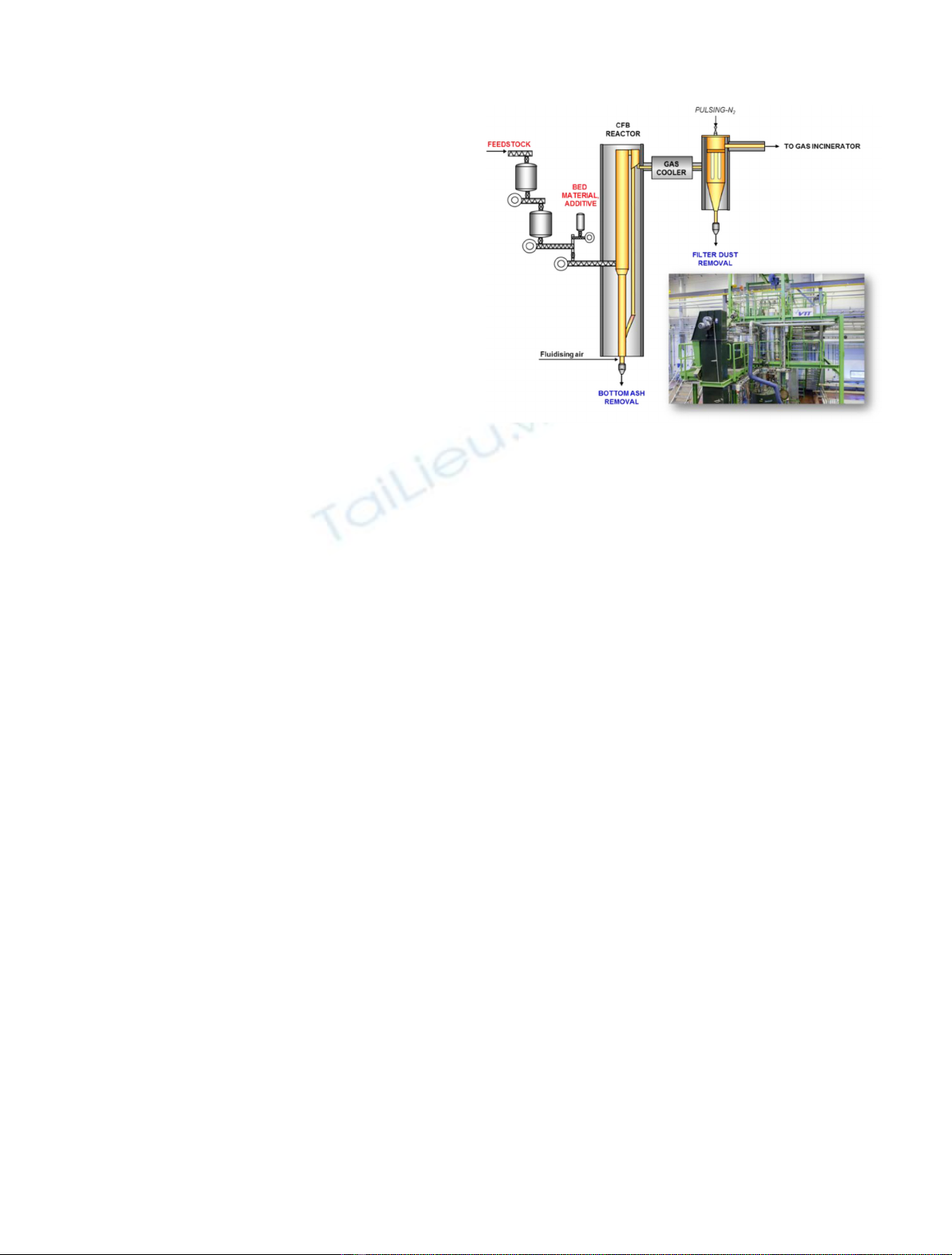
The thermal gasification process developed by VTT is
based on fluidised-bed (FB) gasification. In FB gasification
bed material is fluidised by blowing gasification air or
other gasification agent from the bottom of the reactor.
Fluidised-bed gasifier can be as a bubbling bed or
circulating fluidised-bed type reactor. Both of them can
be applied for thermal treatment of LILW and are also used
in THERAMIN demonstration test trials.
The test treating a total of 325 kg of organic IXR was
carried out using the pilot scale CFB gasification test
facility (Fig. 5). Total duration of the trial was 26.5 h.
The success of test is assessed by determining the
conversion of carbon in feedstock to gaseous form i.e.
calculating the carbon mass balance for the test. In
TERAMIN test the carbon conversion to gas and tars was
92–96 wt.%, which means that the removal of the organic
material from the IXR was good.
The gasification treatment demonstration verified very
efficient removal of organic matter from ion exchange resin
and very significant volume reduction of the treated waste.
The advantages of CFB type gasifier compared to bubbling
fluidised-bed (BFB) reactor are related to capacity per
cross-sectional area of the reactor, which is much higher in
CFB. CFB enables also better heat and mass transfer in the
reactor.
6 GeoMelt (NNL)
NNL and Veolia Nuclear Solutions in collaboration have
established an active GeoMelt In-Container Vitrification
(ICV) system at Sellafield. This ICV is used to demonstrate
the treatment of a wide range of UK based waste streams.
The ICV system installed at the NNL Central Laboratory
is presented in Figure 6.
In the THERAMIN framework two waste streams were
selected for thermal treatment demonstration tests using
the GeoMelt system. The waste streams selected were:
–TH01- A cementitious waste stream representing sea
dump drums or failing cement wastes packages;
–TH02- A sludge waste made up of a naturally occurring
zeolite (clinoptilolite), sand, Magnox storage pond sludge
and miscellaneous contaminants known to arise in a
range of UK feed streams.
The GeoMelt ICV system was successfully used for
thermal treatment demonstration of 279 kg of representa-
tive cementitious waste (TH-01) with a pre-treatment
waste loading of 49%.
Macroscopic observation of the product indicated
that the product was a glassy monolith with broad
homogeneity. Based on visual inspection it can be expected
that the product should be disposable against all key
disposability criteria. When the product was sampled it
was observed that at least some of the original metallic
objects present in the simulated waste remained on
completion of processing. All plant operating parameters
during this melt were as expected (Fig. 7).
Fig. 5. Pilot-scale Circulating Fluidised-Bed (CFB) gasification
test rig.
M. Nieminen et al.: EPJ Nuclear Sci. Technol. 6, 25 (2020) 5



![Đề ôn tập cuối kỳ môn Kỹ thuật nhiệt - Nhiệt động học [mới nhất]](https://cdn.tailieu.vn/images/document/thumbnail/2026/20260310/hoaphuong0906/135x160/60681773197823.jpg)

![Bài giảng thang máy và thang cuốn: Tổng hợp kiến thức [chuẩn nhất]](https://cdn.tailieu.vn/images/document/thumbnail/2026/20260310/hoaphuong0906/135x160/41471773283876.jpg)
