

REVIE W Open Access
Biomedical informatics and translational medicine
Indra Neil Sarkar
Abstract
Biomedical informatics involves a core set of methodologies that can provide a foundation for crossing the “trans-
lational barriers”associated with translational medicine. To this end, the fundamental aspects of biomedical infor-
matics (e.g., bioinformatics, imaging informatics, clinical informatics, and public health informatics) may be essential
in helping improve the ability to bring basic research findings to the bedside, evaluate the efficacy of interventions
across communities, and enable the assessment of the eventual impact of translational medicine innovations on
health policies. Here, a brief description is provided for a selection of key biomedical informatics topics (Decision
Support, Natural Language Processing, Standards, Information Retrieval, and Electronic Health Records) and their
relevance to translational medicine. Based on contributions and advancements in each of these topic areas, the
article proposes that biomedical informatics practitioners ("biomedical informaticians”) can be essential members of
translational medicine teams.
Introduction
Biomedical informatics, by definition[1-8], incorporates
a core set of methodologies that are applicable for
managing data, information, and knowledge across the
translational medicine continuum, from bench biology
to clinical care and research to public health. To this
end, biomedical informatics encompasses a wide range
of domain specific methodologies. In the present dis-
course, the specific aspects of biomedical informatics
that are of direct relevance to translational medicine are:
(1) bioinformatics; (2) imaging informatics; (3) clinical
informatics; and, (4) public health informatics. These
support the transfer and integration of knowledge across
the major realms of translational medicine, from mole-
cules to populations. A partnership between biomedical
informatics and translational medicine promises the bet-
terment of patient care[9,10] through development of
new and better understood interventions used effectively
in clinics as well as development of more informed poli-
cies and clinical guidelines.
The ultimate goal of translational medicine is the
development of new treatments and insights towards
the improvement of health across populations[11]. The
first step in this process is the identification of what
interventions might be worthy to consider[12]. Next,
directed evaluations (e.g., randomized controlled trials)
are used to identify the efficacy of the intervention and
to provide further insights into why aproposedinter-
vention works[12]. Finally, the ultimate success of an
intervention is the identification of how it can be appro-
priately scaled and applied to an entire population[12].
The various contexts presented across the translational
medicine spectrum enable a “grounding”of biomedical
informatics approaches by providing specific scenarios
where knowledge management and integration
approaches are needed. Between each of these steps,
translational barriers are comprised of the challenges
associated with the translation of innovations developed
through bench-based experiments to their clinical vali-
dation in bedside clinical trials, ultimately leading to
their adoption by communities and potentially leading
to the establishment of policies. The crossing of each
translational barrier ("T1,”“T2,”and “T3,”respectively
corresponding to translational barriers at the bench-to-
bedside, bedside-to-community, and community-to-pol-
icy interfaces; as shown in Figure 1) may be greatly
enabled through the use of a combination of existing
and emerging biomedical informatics approaches[9]. It
is particularly important to emphasize that, while the
major thrust is in the forward direction, accomplish-
ments, and setbacks can be used to valuably inform
both sides of each translational barrier (as depicted by
the arrows in Figure 1). An important enabling step to
neil.sarkar@uvm.edu
Center for Clinical and Translational Science, Department of Microbiology
and Molecular Genetics, & Department of Computer Science, University of
Vermont, College of Medicine, 89 Beaumont Ave, Given Courtyard N309,
Burlington, VT 05405 USA
Sarkar Journal of Translational Medicine 2010, 8:22
http://www.translational-medicine.com/content/8/1/22
© 2010 Sarkar; licensee BioMed Central Ltd. This is an Open Access article distributed under the terms of the Creative Commons
Attribution License (http://creativecommons.org/licenses/by/2.0), which permits unrestricted use, distribution, and reproduction in
any medium, provided the original work is properly cited.
cross the translational barriers is the development of
trans-disciplinary teams that are able to integrate rele-
vant findings towards the identification of potential
breakthroughs in research and clinical intervention[13].
To this end, biomedical informatics professionals ("bio-
medical informaticians”) may be an essential addition to
a translational medicine team to enable effective transla-
tion of concepts between team members with heteroge-
neous areas of expertise.
Translational medicine teams will need to address
many of the challenges that have been the focus of bio-
medical informatics since the inception of the field.
What follows is a brief description of biomedical infor-
matics, followed by a discussion of selected key topics
that are of relevance for translational medicine: (1) Deci-
sion Support; (2) Natural Language Processing; (3) Stan-
dards; (4) Information Retrieval; and, (5) Electronic
Health Records. For each topic, progress and activities
in bio-, imaging, clinical and public health informatics
are described. The article then concludes with a consid-
eration of the role of biomedical informaticians in trans-
lational medicine teams.
Biomedical Informatics
Biomedical informatics is an over-arching discipline that
includes sub-disciplines such as bioinformatics, imaging
informatics, clinical informatics, and public health infor-
matics; the relationships between the sub-disciplines
have been previously well characterized[7,14,15], and are
still tenable in the context of translational medicine.
Much of the identified synergy between biomedical
informatics and translational medicine can be organized
into two major categories that build upon the sub-disci-
plines of biomedical informatics (as shown in Figure 1):
(1) translational bioinformatics (which primarily consists
of biomedical informatics methodologies aimed at cross-
ing the T1 translational barrier) and (2) clinical research
informatics (which predominantly consists of biomedical
informatics techniques from the T1 translational barrier
across the T2 and T3 barriers). It is important to
emphasize that the role of biomedical informatics in the
context of translational medicine is not to necessarily
create “new”informatics techniques[16]. Instead, it is to
apply and advance the rich cadre of biomedical infor-
matics approaches within the context of the fundamen-
tal goal of translational medicine: facilitate the
application of basic research discoveries towards the bet-
terment of human health or treatment of disease[17].
Clinical informatics has historically been described as a
field that meets two related, but distinct needs[18]:
patient-centric and knowledge-centric. This notion can be
generalized for all of biomedical informatics within the
context of translational medicine to suggest that the goals
are either to meet the needs of user-centric stakeholders
(e.g., biologists, clinicians, epidemiologists, and health ser-
vices researchers) or knowledge-centric stakeholders (e.g.,
researchers or practitioners at the bench, bedside, com-
munity, and population level). Bioinformatics approaches
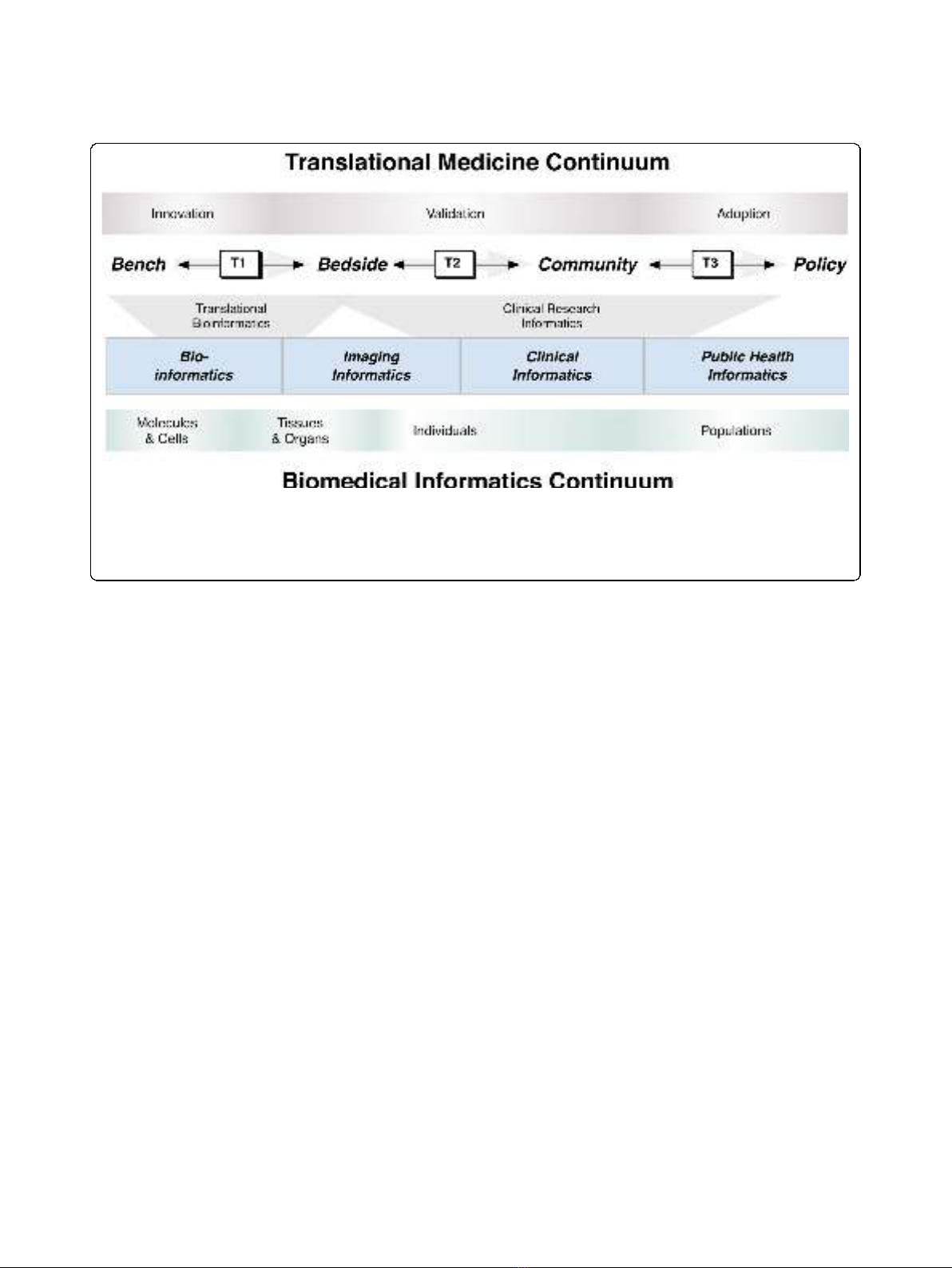
Figure 1 The synergistic relationship across the biomedical informatics and translational medicine continua. Major areas of translational
medicine (along the top; innovation, validation, and adoption) are depicted relative to core focus areas of biomedical informatics (along the
bottom; molecules and cells, tissues and organs, individuals, and populations). The crossing of translational barriers (T1, T2, and T3) can be
enabled using translational bioinformatics and clinical research informatics approaches, which are comprised of methodologies from across the
sub-disciplines of biomedical informatics (e.g., bioinformatics, imaging informatics, clinical informatics, and public health informatics).
Sarkar Journal of Translational Medicine 2010, 8:22
http://www.translational-medicine.com/content/8/1/22
Page 2 of 12

are needed to identify molecular and cellular regions that
can be targeted with specific clinical interventions or
studied to provide better insights to the molecular and
cellular basis of disease[19-25]. Imaging informatics tech-
niques are needed for the development and analysis of
visualization approaches for understanding pathogenesis
and identification of putative treatments from the mole-
cular, cellular, tissue or organ level[26-29]. Clinical infor-
matics innovations are needed to improve patient care
through the availability and integration of relevant infor-
mation at the point of care[30-35]. Finally, public health
informatics solutions are required to meet population
based needs, whether focused on the tracking of emergent
infectious diseases[36-39], the development of resources
to relate complex clinical topics to the general population
[40-44] or the assessment of how the latest clinical inter-
ventions are impacting the overall health of a given popu-
lation[45-47].
At the T1 translational barrier crossing, translational
bioinformatics is rapidly evolving with the enhancement
and specialization of existing bioinformatics techniques
and biological databases to enable identification of spe-
cific bench-based insights[16]. Similarly, clinical research
informatics[48] emphasizes the use of biomedical infor-
matics approaches to enable the assessment and moving
of basic science innovations from the T1 translational
barrier and across the T2 and T3 translational barriers
(as depicted in Figure 1). These approaches may involve
the enhancement and specialization of existing and new
clinical and public health informatics techniques within
the context of implementation and controlled assess-
ment of novel interventions, development of practice
guidelines, and outcomes assessment.
Translational bioinformatics and clinical research
informatics are built on foundational knowledge-centric
(i.e., “hypothesis-driven”) approaches that are designed
to meet the myriad of research and information needs
of basic science, clinical, and public health researchers.
The future of biomedical informatics depends on the
ability to leverage common frameworks that enable the
translation of research hypotheses into practical and
proven treatments [49]. Progress has already been seen
in the development of knowledge management infra-
structures and standards to enable biomedical research
to facilitate general research inquiry in specific domains
(e.g., cancer[50] and neuroimaging[51]). It is also
imperative for such advancements to be done in the
context of improving user-centric needs, thereby
improving patient care. To this end, the ability to man-
age and enable exploration of information associated
with the biomedical research enterprise suggests that
human medicine may be considered as the ultimate
model organism [52]. Towards this aspiration, biomedi-
cal informaticians are uniquely equipped to facilitate the
necessary communication and translation of concepts
between members of trans-disciplinary translational
medicine teams.
Decision Support
Decision support systems are information management
systems that facilitate the making of decisions by biome-
dical stakeholders through the intelligent filtering of
possible decisions based on a given set of criteria [53].
A decision support system can be any computer applica-
tion that facilitates a decision making process, involving
at least the following core activities [54]: (1) knowledge
acquisition - the gathering of relevant information from
knowledge sources (e.g., research databases, textbooks,
or experts); (2) knowledge representation -representing
the gathered knowledge in a systematic and computable
way (e.g., using structured syntax[55-57] or semantic
structures[58,59]); (3) inferencing -analyzingthepro-
vided criteria towards the postulation of a set of deci-
sions (e.g., using either rule based[60] or probabilistic
approaches[61]); and, (4) explanation - describing the
possible decisions and the decision making process.
The leveraging of computational techniques to aide in
decision-making has been well established in the clinical
arena for more than forty years[62]. In bioinformatics, a
range of systems have been developed to support bench
biologist decisions, including sequence similarity[63], ab
initio gene discovery[64], and gene regulation[65]. There
has been discussion of decision support systems that
can incorporate genetic information in the providing of
clinical decision support recommendations [66,67].
Decision support systems have been developed within
imaging informatics for enabling better (both in terms
of sensitivity and specificity) diagnoses of a range of dis-
eases[68,69]. Clinical informatics research has given con-
sideration to both positive and negative aspects of
computer facilitated decision support [70-78]. Recent
attention to bioterrorism planning and syndromic sur-
veillance has also given rise to public health informatics
solutions that involve significant decision support
[79-81].
Decision support systems in the context of transla-
tional medicine will require a new paradigm of trans-
disciplinary inferencing approaches to cross each of the
translational barriers. Inherent in the design of such
decision support systems that span multiple disciplines
will be the need for collaboration and cross-communica-
tion between key stakeholders at the bench, bedside,
community,andpopulationlevels.Tothisend,there
may be utility in decision support systems incorporating
“Web 2.0”technologies[82], which enable Web-mediated
communication between experts across disciplines. Such
technologies have begun to emerge in scenarios where
expertise and beneficiaries are inherently distributed,
Sarkar Journal of Translational Medicine 2010, 8:22
http://www.translational-medicine.com/content/8/1/22
Page 3 of 12

such as rare genetic diseases[83]. Regardless of the
approach chosen, the fundamental tasks of knowledge
acquisition, representation, and inferencing and explana-
tion will be required to be done with members of the
translational medicine team. The successful design of
translational medicine decision support systems could
become an essential tool to bridge researchers and find-
ings across biological, clinical, and public health data.
Natural Language Processing
Natural Language Processing (NLP) systems fall into
two general categories: (1) natural language understand-
ing systems that extract information or knowledge from
human language forms (either text or speech), often
resulting in encoded and structured forms that can be
incorporated into subsequent applications[84,85]; and,
(2) natural language generation systems that generate
human understandable language from machine repre-
sentations (e.g., from within a knowledge bases or sys-
tems of logical rules)[86]. NLP has a strong relationship
to the field of computational linguistics, which derives
computational models for phenomena associated with
natural language (encapsulated as either sets of hand-
crafted rules or statistically derived models)[87].
The development and application of NLP approaches
has been a significant focus of research across the entire
spectrum of biomedical informatics. Biological knowl-
edge extraction has also been a major area of focus in
NLP systems[88,89], including the use of NLP methods
to facilitate the prediction of molecular pathways[90].
Within imaging informatics, there has been a range of
applications that involve processing and generating
information associated with clinical images that are
oftenusedtohelpsummarizeandorganizeradiology
images[91-94]. In clinical informatics, there have been
great advances in the extraction of information from
semi-structured or unstructured narratives associated
with patient care [95], as well as the development of
applications for generating summaries or reports auto-
matically[96-98]. In the realm of public health, NLP
approaches have been demonstrated to facilitate the
encoding and summarization of significant information
at the population level, such as for describing functional
status[99] and outbreak detection[100].
Peer-reviewed literature, such as indexed by MED-
LINE, has been shown to be a source of previously
unknown inferences across domains[101,102] as well as
linkages between the bioinformatics and clinical infor-
matics communities[103]. In addition to MEDLINE,
which grows by approximately 1 million citations per
year[104], the increasing adoption of Electronic Health
Records will lead to increased volumes of natural lan-
guage text[105]. To this end, NLP approaches will
increasingly be needed to wade through and
systematically extract and summarize the growing
volumes of textual data that will be generated across the
entire translational spectrum[106]. There has also been
some work in NLP that directly strives to develop lin-
kages across disparate text sources (e.g., bridging e-mail
communications to relevant literature[107]). Within the
realm of translational medicine, NLP approaches will be
increasingly poised to facilitate the development of lin-
kages between unstructured and structured knowledge
sources across the realms of biology, medicine, and pub-
lic health.
Standards
The task of transmitting or linking data across multiple
biomedical data sources is often difficult because of the
multitude of different formats and systems that are
available for storing data. Standard methods are thus
needed for both representing and exchanging informa-
tion across disparate data sources to link potentially
related data across the spectrum of translational medi-
cine [108]- from laboratory data at the bench to patient
charts at the bedside to linkage and availability of clini-
cal data across a community to the development of
aggregate statistics of populations. These standards need
to accommodate the range of heterogeneous data sto-
rage systems that may be required for clinical or
research purposes, while enabling the data to be accessi-
ble for subsequent linkage and retrieval. Standards are
thus an essential element in the representation of data
in a form that can be readily exchanged with other
systems.
The development of standards to represent and
exchange data has been a major area of emphasis in bio-
medical informatics since the 1980’s[108-113]. Much
energy has been placed in the development of knowl-
edge representation constructs[109,114,115] (e.g., ontol-
ogies and controlled vocabularies), as well as
establishment of standards for their use and incorpora-
tion in biological[116], clinical[117,118], and public
health[119] contexts. For example, the voluminous data
associated with gene expression arrays gave rise to the
Minimum Information About Microarray Experiment
(MIAME) standard by the bioinformatics community
[120]. Within the imaging informatics community, the
Digital Imaging and COmmunications in Medicine
(DICOM) defines the international standards for repre-
senting and exchanging data associated with medical
images[121]. Within the clinical realm, Health Level 7
(HL7) standards are commonplace for describing mes-
sages associated with a wide range of health care activ-
ities[122,123]. Specific clinical terminologies, such as the
Systematized Nomenclature of Medicine-Clinical Terms
(SNOMED CT) can be used to represent, with appropri-
ate considerations[124,125], clinical information
Sarkar Journal of Translational Medicine 2010, 8:22
http://www.translational-medicine.com/content/8/1/22
Page 4 of 12

associated with patient care. Data standards have been
developed for systematically organizing and sharing data
associated with clinical research[112,126], including
those from HL7 and the Clinical Data Standards Inter-
change Consortium (CDISC). Within public health, the
International Statistical Classification of Diseases and
Related Health Problems (ICD) is a standard established
by the World Health Organization (WHO) and used in
the determination of morbidity and mortality statistics
[127]. The rapid emergence of regional health informa-
tion exchange networks has also necessitated that a
range of standards be used to ensure the interoperability
of clinical data[128-133]. The Comité Européen de Nor-
malisation in collaboration with the International Orga-
nization for Standardization (ISO) is coordinating the
common representation and exchange standards across
the clinical and public health realms (through ISO/TC
215[134]).
There-useofdatainthedevelopment and testing of
research hypotheses is a regular area of interest in bio-
medical informatics[126,135]. However, disparities
between coding schemes pose potential barriers in the
ability for systematic representation across biomedical
resources[136]. Furthermore, the development of new
representation structures is becoming increasingly easier
[137], resulting in many possible contextual meanings
for a given concept. The Unified Medical Language Sys-
tem (UMLS) [138] has demonstrated how it may be
possible to develop conceptual linkages across terminol-
ogies that span the entire translational spectrum[139],
from molecules to populations[114]. Additional centra-
lized resources have been developed that facilitate the
development and dissemination of knowledge represen-
tation structures that may not necessarily be part of the
UMLS (e.g., the National Center for Biomedical Ontol-
ogy[140] and its BioPortal[141]).
Standards that have been developed and are imple-
mented by the biomedical informatics community will
be an essential component towards the goal of integrat-
ing relevant data across the translational barriers (e.g.,
to answer questions like what is the comparative effec-
tiveness of a particular pharmacogenetic treatment ver-
sus conventional pharmaceutical treatments in the
general population?). Additionally, standards can facili-
tate the access and integration of information associated
with a particular individual in light of available biologi-
cal, imaging, clinical, and public health data (including
improved access to these data from within medical
records), ultimately enabling the development and test-
ing the utility of “personalized medicine.”Consequently,
translational medicine will depend on biomedical infor-
matics approaches to leverage existing standards (e.g.,
MIAME, HL7, and DICOM) and resources like the
UMLS, in addition to developing new standards for
specialized domains (e.g., cancer[142] and neuroimaging
[143]).
Information Retrieval
Information retrieval systems are designed for the orga-
nization and retrieval of relevant information from data-
bases. The basic premise is that a query is presented to
a system that then attempts to retrieve the most rele-
vant items from within database(s) that satisfy the
request[144]. The quality of the results is then measured
using statistics such as precision (the number of relevant
results retrieved relative to the total number of retrieved
results) and recall (the number of relevant results
retrieved relative to the total number of relevant items
in the database).
Across the field of biomedical informatics, various
efforts have focused on the need to bring together infor-
mation across a range of data sources to enable infor-
mation retrieval queries[145,146]. Perhaps the most
popular information retrieval tool is the PubMed inter-
face to the MEDLINE citation database that contains
information across much of biomedicine[147]. In addi-
tion to MEDLINE, the growth of publicly available
resources has been especially remarkable in bioinfor-
matics[148], which generally focus on the retrieval of
relevant biological data (e.g., molecular sequences from
GenBank given a nucleotide or protein sequence). Infor-
mation retrieval systems have also been developed in
bioinformatics that are able to retrieve relevant data
from across multiple resources simultaneously (e.g., for
generating putative annotations for unknown gene
sequences[149]). Imaging information retrieval systems
have been a rich research area where relevant images
are retrieved based on image similarity[150] (e.g., to
identify pathological images that might be related to a
particular anatomical shape and related clinical context
[151]). Within clinical environments, information retrie-
val systems have been developed that can link users to
relevant clinical reference resources based on using the
particular clinical context as part of the query (e.g., to
identify relevant articles based on a specific abnormal
laboratory result)[152,153]. Information retrieval systems
have been developed in public health to identify relevant
information for consumers, epidemiologists, and health
service researchers given varying types of queries
[47,154,155]. The procedural tasks involved with infor-
mation retrieval often involve natural language proces-
sing and knowledge representation techniques, such as
highlighted previously. The integration of natural lan-
guage processing, knowledge representation, and infor-
mation retrieval systems has led to the development of
“question-answer”systems that have the potential to
provide more user-friendly interfaces to information
retrieval systems[156].
Sarkar Journal of Translational Medicine 2010, 8:22
http://www.translational-medicine.com/content/8/1/22
Page 5 of 12


![Báo cáo seminar chuyên ngành Công nghệ hóa học và thực phẩm [Mới nhất]](https://cdn.tailieu.vn/images/document/thumbnail/2025/20250711/hienkelvinzoi@gmail.com/135x160/47051752458701.jpg)





%20--%3e%3cdefs%3e%3cstyle%3e%20.st0%20{%20fill:%20%23fff;%20}%20.st1%20{%20fill:%20%237800fa;%20}%20%3c/style%3e%3c/defs%3e%3cpath%20class='st1'%20d='M117.78,12.18H43.11c2.9,3.47,4.65,7.94,4.65,12.82,0,5.6-2.3,10.66-6.01,14.29h76.02l7.22-13.56-7.22-13.56Z'/%3e%3cg%3e%3cpath%20class='st0'%20d='M53.58,26.17h-.59v-1.46h.59v-4.96h2.83c1.78,0,2.67.94,2.67,2.82v5.76c0,1.87-.89,2.81-2.67,2.81h-2.83v-4.96ZM55.36,21.37v3.34h1.1v1.46h-1.1v3.34h1.01c.61,0,.91-.37.91-1.1v-5.93c0-.74-.3-1.1-.91-1.1h-1.01Z'/%3e%3cpath%20class='st0'%20d='M65.99,31.14h-1.8l-.31-2.07h-2.19l-.31,2.07h-1.64l1.82-11.39h2.62l1.82,11.39ZM65.28,18.04c-.25.46-.51.77-.75.94-.21.15-.47.22-.79.22-.26,0-.57-.07-.92-.22l-.38-.15c-.14-.05-.26-.07-.37-.07-.3,0-.53.18-.71.54l-.91-.68c.25-.46.51-.77.75-.94.21-.14.48-.21.79-.21.26,0,.57.07.92.21l.38.15c.14.05.26.07.37.07.3,0,.53-.18.71-.54l.91.68ZM61.91,27.52h1.73l-.87-5.76-.87,5.76Z'/%3e%3cpath%20class='st0'%20d='M74.53,26.89v1.52c0,1.91-.89,2.86-2.67,2.86s-2.67-.95-2.67-2.86v-5.93c0-1.91.89-2.86,2.67-2.86s2.67.95,2.67,2.86v1.11h-1.69v-1.22c0-.75-.31-1.12-.93-1.12s-.93.37-.93,1.12v6.15c0,.74.31,1.11.93,1.11s.93-.37.93-1.11v-1.63h1.69Z'/%3e%3cpath%20class='st0'%20d='M81.4,31.14h-1.8l-.31-2.07h-2.19l-.31,2.07h-1.64l1.82-11.39h2.62l1.82,11.39ZM75.9,19.2l1.52-1.91h1.71l1.51,1.91h-1.61l-.76-.95-.75.95h-1.61ZM77.32,27.52h1.73l-.87-5.76-.87,5.76ZM83.1,15.99l-1.76,1.91h-1.26l1.17-1.91h1.86Z'/%3e%3cpath%20class='st0'%20d='M84.86,19.75c1.78,0,2.67.94,2.67,2.82v1.48c0,1.87-.89,2.81-2.67,2.81h-.85v4.28h-1.79v-11.39h2.64ZM84.01,21.37v3.86h.85c.58,0,.87-.36.87-1.08v-1.71c0-.71-.29-1.07-.87-1.07h-.85Z'/%3e%3cpath%20class='st0'%20d='M93.51,19.75c1.78,0,2.67.94,2.67,2.82v1.48c0,1.87-.89,2.81-2.67,2.81h-.85v4.28h-1.79v-11.39h2.64ZM92.66,21.37v3.86h.85c.58,0,.87-.36.87-1.08v-1.71c0-.71-.29-1.07-.87-1.07h-.85Z'/%3e%3cpath%20class='st0'%20d='M98.8,31.14h-1.79v-11.39h1.79v4.88h2.03v-4.88h1.83v11.39h-1.83v-4.88h-2.03v4.88Z'/%3e%3cpath%20class='st0'%20d='M105.36,24.55h2.46v1.62h-2.46v3.34h3.09v1.63h-4.88v-11.39h4.88v1.63h-3.09v3.18ZM108.17,17.29l-1.76,1.91h-1.26l1.17-1.91h1.86Z'/%3e%3cpath%20class='st0'%20d='M112.2,19.75c1.78,0,2.67.94,2.67,2.82v1.48c0,1.87-.89,2.81-2.67,2.81h-.85v4.28h-1.79v-11.39h2.64ZM111.35,21.37v3.86h.85c.58,0,.87-.36.87-1.08v-1.71c0-.71-.29-1.07-.87-1.07h-.85Z'/%3e%3c/g%3e%3ccircle%20class='st1'%20cx='25'%20cy='25'%20r='20'/%3e%3cpath%20class='st0'%20d='M32.78,19.27c2.92,0,4.43,2.55,5.28,5.33l.71,2.17c.14.38-.33.75-.71.75h-5.61c.19-.33.24-.71.09-1.08l-.75-2.45c-.43-1.32-.99-2.64-1.79-3.77.75-.57,1.65-.94,2.78-.94h0ZM25,18.38c3.25,0,4.9,2.78,5.89,5.89l.76,2.45c.14.42-.33.8-.8.8h-11.69c-.42,0-.94-.38-.8-.8l.75-2.45c.99-3.11,2.64-5.89,5.89-5.89h0ZM25,11.35c1.74,0,3.11,1.37,3.11,3.11s-1.37,3.11-3.11,3.11-3.11-1.41-3.11-3.11,1.41-3.11,3.11-3.11h0ZM17.27,19.27c1.08,0,1.98.38,2.73.94-.8,1.13-1.37,2.45-1.74,3.77l-.8,2.45c-.14.38-.05.75.09,1.08h-5.56c-.42,0-.9-.38-.75-.75l.71-2.17c.9-2.78,2.41-5.33,5.33-5.33h0ZM17.27,12.91c1.51,0,2.78,1.27,2.78,2.83s-1.27,2.83-2.78,2.83-2.83-1.27-2.83-2.83,1.27-2.83,2.83-2.83h0ZM32.78,12.91c1.56,0,2.78,1.27,2.78,2.83s-1.23,2.83-2.78,2.83-2.83-1.27-2.83-2.83,1.27-2.83,2.83-2.83h0ZM27.07,28.56v.09c0,.57-.24,1.08-.61,1.46h0v.05c-.38.33-.9.57-1.46.57s-1.08-.24-1.46-.61h0c-.38-.38-.61-.9-.61-1.46v-.09h1.41v.09c0,.19.05.38.19.47v.05c.09.09.28.19.47.19s.38-.09.47-.19v-.05c.14-.09.24-.28.24-.47t-.05-.09h1.41ZM30.99,28.56v.09c0,1.65-.66,3.16-1.74,4.24-1.08,1.08-2.59,1.79-4.24,1.79s-3.16-.71-4.24-1.79l-.05-.05c-1.04-1.08-1.7-2.55-1.7-4.2v-.09h1.41v.09c0,1.27.47,2.4,1.27,3.25h.05c.85.85,1.98,1.37,3.25,1.37s2.4-.52,3.25-1.37c.85-.8,1.37-1.98,1.37-3.25v-.09h1.37ZM34.99,28.56v.09c0,2.78-1.13,5.28-2.92,7.07-1.79,1.79-4.29,2.92-7.07,2.92s-5.23-1.13-7.07-2.92c-1.79-1.79-2.92-4.29-2.92-7.07v-.09h1.41v.09c0,2.4.94,4.53,2.5,6.08,1.56,1.56,3.72,2.5,6.08,2.5s4.52-.94,6.08-2.5c1.56-1.56,2.5-3.68,2.5-6.08v-.09h1.41Z'/%3e%3c/svg%3e)