

EURASIP Journal on Applied Signal Processing 2003:12, 1257–1264
c
2003 Hindawi Publishing Corporation
The Fractional Fourier Transform and Its Application
to Energy Localization Problems
Patrick J. Oonincx
Department of Nautical Sciences, Royal Netherlands Naval College (KIM), P.O. Box 10000, 1780 CA Den Helder, The Netherlands
Email: p.j.oonincx@kim.nl
Hennie G. ter Morsche
Department of Mathematics and Computer Science, Eindhoven University of Technology, P.O. Box 513,
5600 MB Eindhoven, The Netherlands
Email: morscheh@win.tue.nl
Received 20 March 2002 and in revised form 4 April 2003
Applying the fractional Fourier transform (FRFT) and the Wigner distribution on a signal in a cascade fashion is equivalent to a
rotation of the time and frequency parameters of the Wigner distribution. We presented in ter Morsche and Oonincx, 2002, an
integral representation formula that yields affine transformations on the spatial and frequency parameters of the n-dimensional
Wigner distribution if it is applied on a signal with the Wigner distribution as for the FRFT. In this paper, we show how this
representation formula can be used to solve certain energy localization problems in phase space. Examples of such problems are
given by means of some classical results. Although the results on localization problems are classical, the application of generalized
Fourier transform enlarges the class of problems that can be solved with traditional techniques.
Keywords and phrases: fractional Fourier transform, Wigner distribution, symplectic transformation, energy localization.
1. INTRODUCTION
In this paper, we generalize the concept of the fractional
Fourier transform (FRFT) as introduced by Kober [1]and
show its application for solving certain energy localization
problems in phase space. In the sequential sections, we will
deal with the FRFT; however, here we briefly recall the defi-
nition and some properties of the Wigner distribution. This
time-frequency representation is the most commonly used
tool to analyse the FRFT, see, for example, [2]. Relations be-
tween fractional operators and other time-frequency distri-
butions were studied in a general fashion in [3]. As is prob-
ably well known, the Wigner distribution for a signal fwith
finite energy, that is, f∈L2(R), is given by
ᐃᐂ[f](x, ω)=1
2πRfx+t
2fx−t
2e−itω dt. (1)
Throughout this paper, we use the multidimensional mixed
Wigner distribution that reads
ᐃᐂ[f,g](x, ω)=(2π)−nRnfx+t
2gx−t
2e−i(t,ω)dt,
(2)
for all n-dimensional functions fand gwith finite energy,
that is, f,g ∈L2(Rn), and with (·,·) representing the inner
product in Rn. In the case g=f, we will use the short nota-
tion of the Wigner distribution ᐃᐂ[f]. Here we briefly re-
call some properties of the mixed Wigner distribution, which
are used throughout this paper.
The Wigner distribution is invariant under the action of
both translation ᐀band frequency modulation ᏹω0,given
by ᐀b[f](x)=f(x−b)andᏹω0[f](x)=eiω0xf(x), for
b, ω0∈Rnand facting on Rn. A straightforward calculation
shows that
ᐃᐂ᐀bf(x, ω)=ᐃᐂ[f](x−b, ω),
ᐃᐂᏹω0f(x, ω)=ᐃᐂ[f]x, ω −ω0.(3)
This means that a translation over (x0,ω
0) in the Wigner
plane, the phase space related to the Wigner distribution,
corresponds to the operator
ᏺ(x0,ω0)[f](x)=Tx0Mω0[f](x)=ei(ω0,x)fx−x0.(4)
In relation to the FRFT, the following property is of impor-
tance. A rotation over π/2 in all dimensions of the Wigner
plane is achieved by the action of the Fourier transform Ᏺn

1258 EURASIP Journal on Applied Signal Processing
on the signal f∈L2(Rn), that is,
ᐃᐂ[Ᏺf](x, ω)=ᐃᐂ[f](−ω, x).(5)
For a comprehensive list of other properties of the
Wigner distribution, we refer to [4,5]. One last property we
want to mention here is the property of satisfying the time
and frequency marginals, that is,
f(x)
2=Rn
ᐃᐂ[f](x, ω)dω, (6)
ˆ
f(ω)
2=Rn
ᐃᐂ[f](x, ω)dx. (7)
The sequel of this paper focuses on energy conserving
(unitary) operators that correspond to classes of affine trans-
formations in the Wigner plane. In Section 2, the FRFT is
discussed as an operator that corresponds to rotation action
in the Wigner plane. In Section 3, the whole class of affine
transformations in the n-dimensional Wigner plane is pre-
sented and studied extensively. Also an integral representa-
tion for this class is presented. In Section 4, this representa-
tion is used in a mathematical framework for analyzing and
solving energy localization problems in the Wigner plane.
This framework is based on the Weyl correspondence. Fi-
nally, some examples of energy localization problems are dis-
cussed in Section 5. The framework of the latter section is
used for solving two well-known energy localization prob-
lems.
2. FRACTIONAL FOURIER TRANSFORM
The FRFT on L2(R) was originally described by Kober [1]
and was later introduced for signal processing by Namias [6]
as a Fourier transform (Ᏺ) of fractional order, that is,
Ᏺαf=Ᏺ2α/π f, ∀f∈L2(R),(8)
for α∈[−π, π]. From this formal definition, an integral rep-
resentation for Ᏺαhas been derived in a heuristic manner.
Later this representation has been formalized in [7,8]. The
integral representation for functions f∈L2(R)reads
Ᏺα[f](x)=Cα
2π|sin α|Rf(u)ei((u2+x2)·(cot α)/2−ux csc α)du,
(9)
for 0 <|α|<π,withCα=ei((π/4) sgn α−α/2).For α=0and
α=π, an expression for the FRFT follows directly from (8),
namely, Ᏺ0[f](x)=f(x)andᏲπ[f](x)=f(−x). For α∈
(−π, π], the FRFT is defined by periodicity Ᏺα+2π=Ᏺα.
For time-frequency analysis, it is of interest to consider
the relation of the FRFT with time-frequency operators like
the Wigner distribution. In [2], Almeida showed that the
FRFT Ᏺαgives raise to a rotation in the Wigner plane by an
angle α, that is,
ᐃᐂᏲαf(x, ω)=ᐃᐂ[f]Rα(x, ω),(10)
where Rα(x, ω) represents the matrix vector product with
matrix
Rα=cos α−sin α
sin αcos α.(11)
In particular, we have a rotation by π/2 in the Wigner plane
for Ᏺπ/2, which is a result that coincides with (5).
The action of the FRFT in the Wigner plane leads us in
a natural way to the question, which operators on L2(R)act
like a linear transformation in the Wigner plane? The follow-
ing section is devoted to this question. However, instead of
operators on L2(R), we consider operators acting on L2(Rn),
since finding a solution for the n-dimensional problem also
yields a solution for the one-dimensional problem, but it
does not follow straightforwardly from the solution of the
one-dimensional case.
3. AFFINE TRANSFORMATIONS IN THE
WIGNER PLANE
Inspired by the FRFT and its action in the Wigner plane, we
search for linear operators ᐂon L2(Rn) such that there exist
amatrixA∈Rn×nand a vector b∈Rnfor which
ᐃᐂ[ᐂf](x, ω)=ᐃᐂ[f]A(x, ω)+b(12)
holds for all f∈L2(Rn). Since the translation vector bis
the result of the unitary operator ᏺ−b(see (4)), it suffices to
search for linear operators ᐂon L2(Rn) such that there exists
amatrixA∈R2n×2nfor which
ᐃᐂ[ᐂf](x, ω)=ᐃᐂ[f]A(x, ω).(13)
Furthermore, we restrict ourselves to matrices Afor which
det A=±1. Operators that yield such transformations Ain
phase space preserve energy which follows straightforwardly
from (6)and(13) by substitution of variables.
In a previous paper [9], we dealt with the problem of clas-
sifying all unitary operators on L2(Rn) that correspond to a
matrix A∈R2n×2nin the sense of (13). Moreover, by polar-
ization, this class of unitary operators will also satisfy
ᐃᐂ[ᐂf,ᐂg](x, ω)=ᐃᐂ[f,g]A(x, ω),(14)
for all f,g ∈L2(Rn).
In [10], it has been shown that a necessary and sufficient
condition on the matrix A, such that a unitary operator ᐂ
exists, is that A∈R2n×2nis symplectic. This means that given
the 2 ×2 block decomposition
A=A11 A12
A21 A22,(15)
the following relations should hold:
AT
22A11 −AT
12A21 =In,
AT
11A21 =AT
21A11,
AT
22A12 =AT
12A22.
(16)

Applying The FRFT to Localization Problems 1259
It can also be shown [11] that for symplectic matrices, we
have det A=1. In the sequel of this paper, we use the nota-
tion Sp(n) for all real-valued symplectic 2n×2nsymplectic
matrices.
Starting with a symplectic matrix A∈R2n×2n,wederived
in [9] an integral representation for a unitary operator ᏲAon
L2(Rn) that satisfies (14). This operator is defined as follows.
Definition 1. Let A∈Sp(n) with block decomposition (15).
Then for A12 =0, the linear operator ᏲAon L2(Rn)isgiven
by
ᏲA[f](x)=
det A11
e−i(AT
11A21 x,x)/2fA11x.(17)
Furthermore, if A12 = 0, then
ᏲA[f](x)=CAe−i(AT
11A21 x,x)/2
×Ran(AT
12)fA12t+A11xe−i(AT
12A22 t,t)/2−i(t,AT
12A21 x)dt,
(18)
for all f∈L2(Rn)andwith
CA=
sA12
(2π)dvolKer(A12)A22.(19)
Here s(A12) denotes the product of the nonzero singular val-
ues of A12,andvol
Ker(A12)(A22) denotes the volume of the
simplex spanned by A22e1,...,A
22en,withe1,...,e
nany or-
thonormal basis in the null space of A12.
In the particular case for which A12 is nonsingular, we
have volKer(A12)(A22)=1ands(A12)=det(A12). Further-
more, using the substitution u=A12t+A11xand conditions
(16), formula (18) is simplified to
ᏲA[f](x)=e−i(A22A−1
12 x,x)/2
(2π)n/2
det A12
×Rnf(u)e−i((A−1
12 A11u,u)/2−(x,A−1
12 u)) du
(20)
which corresponds to the metaplectic representation of
Sp(n), as given in [11].
The multidimensional FRFT is a special case of (20),
namely, it follows from (20) by taking
A11 =A22 =diag cos α1,...,cos αn,
A12 =diag −sin α1,...,−sin αn(21)
if αi= 2kπ,foralli=1,...,n. Moreover, the FRFT can also
be seen as a special case of the operator
ᏲΓ,∆[f](x)=ei(Γx,x)/2
(2π)n/2|det ∆|Rnf(u)ei((Γu,u)/2−(x,∆−1u)) du,
(22)
with Γ∈Rn×nsymmetric and ∆∈Rn×nwith det ∆= 0. For
simplicity, we also assume ∆to be symmetric. Of course this
operator is also a special case of (18). A generalization of the
FRFT in this way was already suggested in [12].
4. LOCALIZATION PROBLEMS AND THE
METAPLECTIC REPRESENTATION
In this section, we consider the celebrated problem in signal
processing of maximizing energy in both time and frequency,
or space and frequency in more dimensions. This problem
has already received much attention in the literature, see, for
example, [13,14,15,16].
We will show how the representation formula (18)can
be used to solve a whole class of localization problems if
only one problem of this class has already been solved. In
the problems we consider here, the goal is to find a function
f∈L2(Rn) that maximizes
RnRnσ(x, ω)ᐃᐂ[f](x, ω)dx dω (23)
for some bounded weight function σ, called the symbol.
Consequently, if
σ(x, ω)=1Ω(x, ω)=
1,(x, ω)∈Ω,
0,otherwise,(24)
with Ω⊂R2n, then (23) represents the energy of fin the
Wigner plane within the region Ω.
For solving this maximum energy problem, we introduce
the localization operator ᏸ(σ)by
ᏸ(σ)f,g=RnRnσ(x, ω)ᐃᐂ[f,g](x, ω)dx dω, (25)
for all f,g ∈L2(Rn). Note that by introducing this opera-
tor ᏸ(σ), the problem comes down to search for such func-
tions fthat maximize (ᏸ(σ)f, f). The association of a sym-
bol σwith the localization operator ᏸ(σ) is called the Weyl
correspondence, see, for example, [11,17]. In [14], Flandrin
showed that ᏸ(σ) is self-adjoint for real-valued σ.More-
over, it was shown in [18] that if σis real valued and of fi-
nite energy, absolutely integrable, or just bounded, then the
eigenvectors of ᏸ(σ) can be chosen to form an orthonor-
mal basis for L2(Rn), the set of real-valued eigenvalues is
countable, and the possible accumulation point is 0. The
function fmax that maximizes (23) is given by the eigenvec-
tor φ0of ᏸ(σ) corresponding to the largest eigenvalue λ0
of ᏸ(σ).
We now assume that for a certain symbol σ∈L∞(R2n),
the function that maximizes (23), fmax, and its corresponding
fraction of energy λ0are known. Then the following lemma
gives us the solutions for a whole class of localization prob-
lems.
Lemma 1. Let σ∈L∞(R2n),ᏸ(σ)the localization operator
as defined in (25),andA∈Sp(n). Then ᏲAφk,k∈N,and
λk,k∈N, are, respectively, the eigenvectors and eigenvalues of
ᏸ(σ◦A).Hereφk,k∈Nand λk,k∈Ndenote, respectively,
the eigenvectors and eigenvalues of ᏸ(σ).

1260 EURASIP Journal on Applied Signal Processing
Proof. The proof follows straightforwardly from definition
(25)andproperty(14). We have
ᏲAᏸ(σ)Ᏺ∗
Af,g
=ᏸ(σ)Ᏺ∗
Af,Ᏺ∗
Ag
=RnRnσ(x, ω)ᐃᐂᏲ∗
Af,Ᏺ∗
Ag(x, ω)dx dω
=RnRnσ(x, ω)ᐃᐂ[f,g]A−1(x, ω)dx dω
=RnRnσA(x, ω)ᐃᐂ[f,g](x, ω)dx dω
=ᏸ(σ◦A)f,g.
(26)
Now, assume that {φk|k∈N}is the set of eigenvectors of
ᏸ(σ)and{λk|k∈N}the set of corresponding eigenvectors.
Then
ᏸσAᏲAφk=ᏲAᏸ(σ)Ᏺ∗
AᏲAφk
=ᏲAᏸ(σ)φk=λkᏲAφk,(27)
which completes the proof.
For one-dimensional problems, the following corollary
applies.
Corollary 1. Let Ω⊂R2be an arbitrary bounded region in
the Wigner plane and let fmax ∈L2(R)be the signal that has
maximal energy Emax in Ω. Then the signal that has maximal
energy Emax in Ω=A(Ω)−bis given by ᏺbᏲAfmax with ᏺb,
b∈Ras in (4)and A∈R2×2with det A=1.
To il l u s t r a te Corollary 1, the previous result is now ap-
plied to two well-known energy localization problems.
5. EXAMPLES
The two examples we discuss in this section are the maxi-
mization of energy on ellipsoidal areas in the Wigner plane
and on parallelograms in the time-frequency plane that is re-
lated to the Rihaczek distribution. Both problems have al-
ready been studied in the literature [14,19] using tradi-
tional results on the Wigner distribution. Here we present
a way of solving these problems using a generalization of the
FRFT. For simplicity, we restrict ourselves to the case of one-
dimensional signals, where the idea of using the fractional
transform for solving such problems can also be visualized
in a better way.
5.1. Energy concentration on ellipsoidals
in the Wigner plane
The problem we consider first is the concentration of energy
in a circular region in the Wigner plane. So we consider a
region
CR=(x, ω)∈R2|x2+ω2≤R(28)
and search for functions f∈L2(R), with normalized energy
fL2,forwhich
Ef(R)=CR
ᐃᐂ[f](x, ω)dx dω
f2(29)
is maximized. For solving this localization problem, we ob-
serve that
Ef(R)=ᏸ1CRf, f,(30)
with ᏸthe localization operator ᏸ(σ)asin(25).
We observe that 1CRis a bounded real-valued symbol,
and so we have an orthonormal basis of eigenfunctions with
the operator ᏸ(1CR) and corresponding positive eigenvalues.
The function fmax, that maximizes Ef(R), is then given by the
eigenvector φ0of ᏸ(1CR) corresponding to the largest eigen-
value λ0of ᏸ(1CR). Moreover, Emax(R)isgivenbyλ0.
The eigenvectors of ᏸ(1CR) are given by the Hermite
functions Hk,k∈N, which is a result by Janssen in [20].
Furthermore, it can be shown [19] that the corresponding
eigenvalues satisfy
λ0=1−e−R2,
λk+1 =λk−(−1)ke−R2(Lk(2R2)−Lk+1(2R2)),
where k∈N\{0}with Lkbeing the Laguerre polynomial of
degree k. It can be shown that λ0≥λk,k∈N,see[20].
Consequently, Emax(R)=1−e−R2and fmax(x)=H0(x)=
e−x2/2.
The circular region can also be translated over a vector
(x0,ω
0). As a result of (4), the eigenfunctions of ᏸ(σ)are
then given by ᏺ(x0,ω0)Hk. The eigenvalues remain the same.
Dilating circular regions in either the time or frequency
direction will yield ellipsoidal regions that are orientated
along one of these axes. The total class of ellipsoidal regions
that are obtained from a circle by means of an area preserving
affine transformation is given by A(CR)−b,withA∈R2×2,
det A=±1, and b∈R2n. We restrict ourselves to the case
det A=1 since a function that maximizes energy in the re-
gions A(CR)−b,withdetA=−1, is the complex conju-
gate of the function that maximizes energy in the regions
MA(CR)−b,with
M=10
0−1.(31)
Furthermore, since symplectic matrices in R2×2are matrices
with det A=1, Corollary 1 applies to this situation, which
means that the eigenfunctions of ᏸ(1A(CR)−b)aregivenby
ᏺbᏲAHkand that its eigenvalues satisfy the recursive rela-
tions for the eignvalues as presented above. Particularly, we
solved the following energy localization problem. Let ˜
CRbe
the ellipsoidal region given by
˜
CR=ACR−b, (32)
with A∈R2×2and b∈R, then ᏺbᏲAH0is the signal that
has maximal energy Emax(R)=1−e−R2in this region of the
Wigner plane.
Applying The FRFT to Localization Problems 1261
1
0.8
0.6
0.4
0.2
0
−0.2
−0.4
−0.6
−0.8
−1
Frequency
−1−0.500.51
Time
(a)
1.5
1
0.5
0
−0.5
−1
−1.5
Frequency
−4−20 2 4
Time
(b)
6
4
2
0
−2
−4
−6
Frequency
−2−10 1 2
Time
(c)
1
0.8
0.6
0.4
0.2
0
−0.2
−0.4
−0.6
−0.8
−1
Frequency
−4−20 2 4
Time
(d)
Figure 1: Localization on a circle/ellipse: (a) the circular region and (b), (c), (d) ellipsoidal regions A(Ω)fordifferent A∈R2×2,where
det A=1.
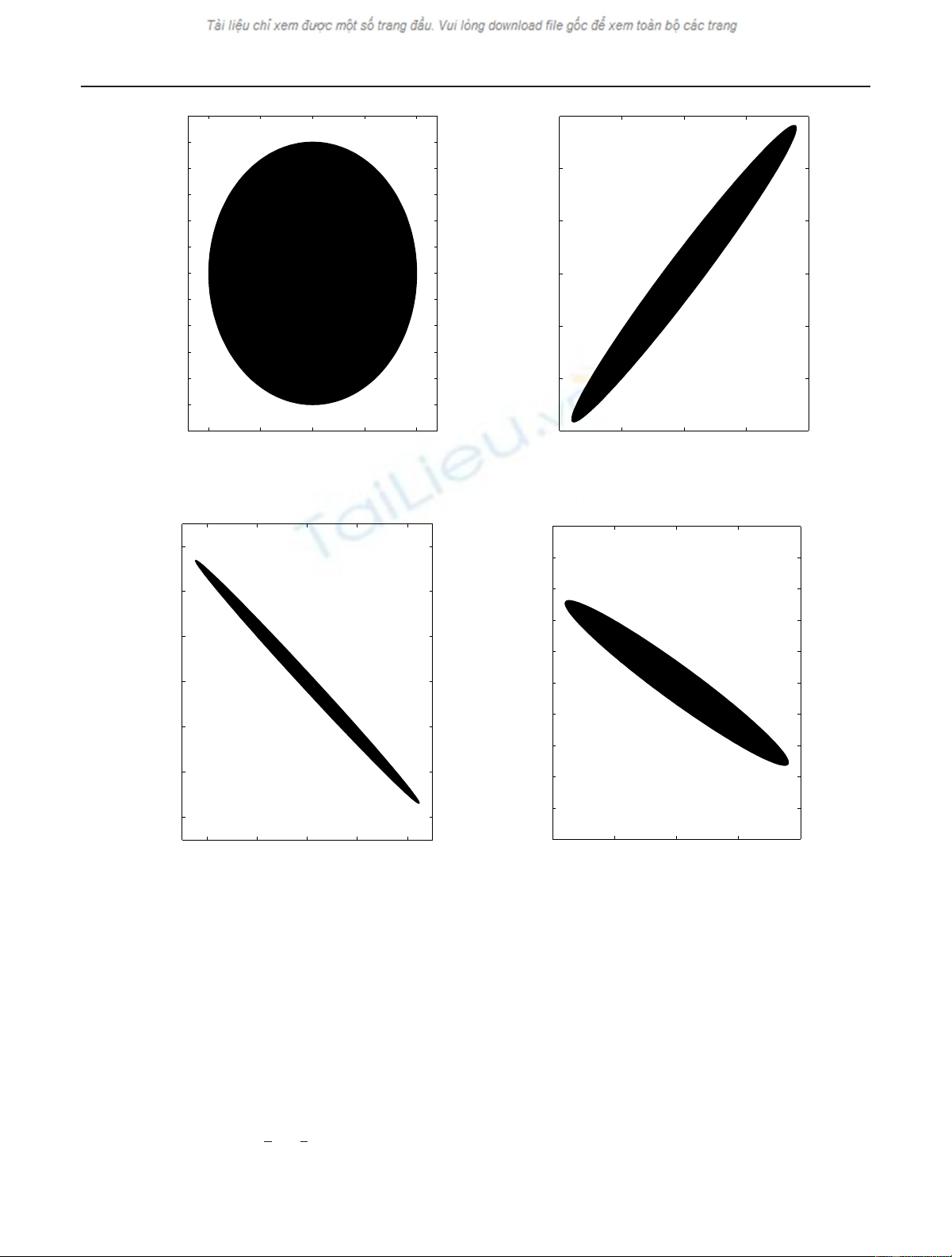
Figure 1 illustrates the type of regions one can obtain by
starting with the circle C1and then transforming it by a sym-
plectic matrix A. In this example, we have chosen
A=32
11
,A=21
−5−2,
A=
−32
1
2−1
6
,
(33)
for the domains (b), (c), and (d), respectively. Note that the
maximal amount of energy a signal can have in each of these
regions is (e−1)/e.
5.2. Energy concentration on parallelograms
in the Rihaczek plane
The second problem we consider is the maximization of a
signal f∈L2(R), normalized to energy equal to 1, within a
rectangular plane in phase space, with respect to the Rihaczek


![Báo cáo seminar chuyên ngành Công nghệ hóa học và thực phẩm [Mới nhất]](https://cdn.tailieu.vn/images/document/thumbnail/2025/20250711/hienkelvinzoi@gmail.com/135x160/47051752458701.jpg)






%20--%3e%3cdefs%3e%3cstyle%3e%20.st0%20{%20fill:%20%23fff;%20}%20.st1%20{%20fill:%20%237800fa;%20}%20%3c/style%3e%3c/defs%3e%3cpath%20class='st1'%20d='M117.78,12.18H43.11c2.9,3.47,4.65,7.94,4.65,12.82,0,5.6-2.3,10.66-6.01,14.29h76.02l7.22-13.56-7.22-13.56Z'/%3e%3cg%3e%3cpath%20class='st0'%20d='M53.58,26.17h-.59v-1.46h.59v-4.96h2.83c1.78,0,2.67.94,2.67,2.82v5.76c0,1.87-.89,2.81-2.67,2.81h-2.83v-4.96ZM55.36,21.37v3.34h1.1v1.46h-1.1v3.34h1.01c.61,0,.91-.37.91-1.1v-5.93c0-.74-.3-1.1-.91-1.1h-1.01Z'/%3e%3cpath%20class='st0'%20d='M65.99,31.14h-1.8l-.31-2.07h-2.19l-.31,2.07h-1.64l1.82-11.39h2.62l1.82,11.39ZM65.28,18.04c-.25.46-.51.77-.75.94-.21.15-.47.22-.79.22-.26,0-.57-.07-.92-.22l-.38-.15c-.14-.05-.26-.07-.37-.07-.3,0-.53.18-.71.54l-.91-.68c.25-.46.51-.77.75-.94.21-.14.48-.21.79-.21.26,0,.57.07.92.21l.38.15c.14.05.26.07.37.07.3,0,.53-.18.71-.54l.91.68ZM61.91,27.52h1.73l-.87-5.76-.87,5.76Z'/%3e%3cpath%20class='st0'%20d='M74.53,26.89v1.52c0,1.91-.89,2.86-2.67,2.86s-2.67-.95-2.67-2.86v-5.93c0-1.91.89-2.86,2.67-2.86s2.67.95,2.67,2.86v1.11h-1.69v-1.22c0-.75-.31-1.12-.93-1.12s-.93.37-.93,1.12v6.15c0,.74.31,1.11.93,1.11s.93-.37.93-1.11v-1.63h1.69Z'/%3e%3cpath%20class='st0'%20d='M81.4,31.14h-1.8l-.31-2.07h-2.19l-.31,2.07h-1.64l1.82-11.39h2.62l1.82,11.39ZM75.9,19.2l1.52-1.91h1.71l1.51,1.91h-1.61l-.76-.95-.75.95h-1.61ZM77.32,27.52h1.73l-.87-5.76-.87,5.76ZM83.1,15.99l-1.76,1.91h-1.26l1.17-1.91h1.86Z'/%3e%3cpath%20class='st0'%20d='M84.86,19.75c1.78,0,2.67.94,2.67,2.82v1.48c0,1.87-.89,2.81-2.67,2.81h-.85v4.28h-1.79v-11.39h2.64ZM84.01,21.37v3.86h.85c.58,0,.87-.36.87-1.08v-1.71c0-.71-.29-1.07-.87-1.07h-.85Z'/%3e%3cpath%20class='st0'%20d='M93.51,19.75c1.78,0,2.67.94,2.67,2.82v1.48c0,1.87-.89,2.81-2.67,2.81h-.85v4.28h-1.79v-11.39h2.64ZM92.66,21.37v3.86h.85c.58,0,.87-.36.87-1.08v-1.71c0-.71-.29-1.07-.87-1.07h-.85Z'/%3e%3cpath%20class='st0'%20d='M98.8,31.14h-1.79v-11.39h1.79v4.88h2.03v-4.88h1.83v11.39h-1.83v-4.88h-2.03v4.88Z'/%3e%3cpath%20class='st0'%20d='M105.36,24.55h2.46v1.62h-2.46v3.34h3.09v1.63h-4.88v-11.39h4.88v1.63h-3.09v3.18ZM108.17,17.29l-1.76,1.91h-1.26l1.17-1.91h1.86Z'/%3e%3cpath%20class='st0'%20d='M112.2,19.75c1.78,0,2.67.94,2.67,2.82v1.48c0,1.87-.89,2.81-2.67,2.81h-.85v4.28h-1.79v-11.39h2.64ZM111.35,21.37v3.86h.85c.58,0,.87-.36.87-1.08v-1.71c0-.71-.29-1.07-.87-1.07h-.85Z'/%3e%3c/g%3e%3ccircle%20class='st1'%20cx='25'%20cy='25'%20r='20'/%3e%3cpath%20class='st0'%20d='M32.78,19.27c2.92,0,4.43,2.55,5.28,5.33l.71,2.17c.14.38-.33.75-.71.75h-5.61c.19-.33.24-.71.09-1.08l-.75-2.45c-.43-1.32-.99-2.64-1.79-3.77.75-.57,1.65-.94,2.78-.94h0ZM25,18.38c3.25,0,4.9,2.78,5.89,5.89l.76,2.45c.14.42-.33.8-.8.8h-11.69c-.42,0-.94-.38-.8-.8l.75-2.45c.99-3.11,2.64-5.89,5.89-5.89h0ZM25,11.35c1.74,0,3.11,1.37,3.11,3.11s-1.37,3.11-3.11,3.11-3.11-1.41-3.11-3.11,1.41-3.11,3.11-3.11h0ZM17.27,19.27c1.08,0,1.98.38,2.73.94-.8,1.13-1.37,2.45-1.74,3.77l-.8,2.45c-.14.38-.05.75.09,1.08h-5.56c-.42,0-.9-.38-.75-.75l.71-2.17c.9-2.78,2.41-5.33,5.33-5.33h0ZM17.27,12.91c1.51,0,2.78,1.27,2.78,2.83s-1.27,2.83-2.78,2.83-2.83-1.27-2.83-2.83,1.27-2.83,2.83-2.83h0ZM32.78,12.91c1.56,0,2.78,1.27,2.78,2.83s-1.23,2.83-2.78,2.83-2.83-1.27-2.83-2.83,1.27-2.83,2.83-2.83h0ZM27.07,28.56v.09c0,.57-.24,1.08-.61,1.46h0v.05c-.38.33-.9.57-1.46.57s-1.08-.24-1.46-.61h0c-.38-.38-.61-.9-.61-1.46v-.09h1.41v.09c0,.19.05.38.19.47v.05c.09.09.28.19.47.19s.38-.09.47-.19v-.05c.14-.09.24-.28.24-.47t-.05-.09h1.41ZM30.99,28.56v.09c0,1.65-.66,3.16-1.74,4.24-1.08,1.08-2.59,1.79-4.24,1.79s-3.16-.71-4.24-1.79l-.05-.05c-1.04-1.08-1.7-2.55-1.7-4.2v-.09h1.41v.09c0,1.27.47,2.4,1.27,3.25h.05c.85.85,1.98,1.37,3.25,1.37s2.4-.52,3.25-1.37c.85-.8,1.37-1.98,1.37-3.25v-.09h1.37ZM34.99,28.56v.09c0,2.78-1.13,5.28-2.92,7.07-1.79,1.79-4.29,2.92-7.07,2.92s-5.23-1.13-7.07-2.92c-1.79-1.79-2.92-4.29-2.92-7.07v-.09h1.41v.09c0,2.4.94,4.53,2.5,6.08,1.56,1.56,3.72,2.5,6.08,2.5s4.52-.94,6.08-2.5c1.56-1.56,2.5-3.68,2.5-6.08v-.09h1.41Z'/%3e%3c/svg%3e)