
52
JOURNAL OF MEDICAL RESEARCH
JMR 184 E15 (11) - 2024
Corresponding author: Phan Hoàng Cuc
Hanoi Medical University
Email: phanhoangcuc9966@gmail.com
Received: 28/05/2024
Accepted: 25/06/2024
I. INTRODUCTION
VALUE OF NON-INVASIVE PRENATAL TEST (NIPT) FOR
COMPREHENSIVE FETAL ANEUPLOIDIES SCREENING
Phan Hoang Cuc1,, Hoang Thi Ngoc Lan1
Trinh Thi Que2, Tran Hien2, Nguyen Ba Son2
1Hanoi Medical University
2Medlatec General Hospital
The expanded NIPT for screening all fetal chromosomal aneuploidies has been widely used in
clinical practice. The study was conducted on 6,104 pregnant women performing this test at Medlatec
General Hospital to evaluate the values of NIPT. Sensitivity and negative predictive value reach 100%,
and specificity reaches over 99.8%. The positive predictive values for trisomy 21, trisomy 18, trisomy
13, sex chromosome aneuploidies, and rare chromosome aneuploidies are 88.89%, 62.50%; 50.00%;
36.67%, and 0%, respectively. Among rare chromosome aneuploidies, trisomy 2, 4, 9, 15, 16, and 22
are reported to have adverse outcomes, while trisomy 3, 7, 8, and 20 reported no cases. Therefore,
the NIPT can potentially predict adverse pregnancy outcomes for rare chromosome aneuploidies.
Keywords: Non-invasive Prenatal Testing, NIPT, NIPS, prenatal screening.
Fetal chromosomal abnormalities are the
leading cause of adverse obstetric outcomes
and birth defects. Among live-born children,
the rate of chromosomal abnormalities is
approximately 1 in 150, with nearly 90% being
aneuploidies. Common aneuploidies include
trisomy 21, 18, and 13 (T21, T18, T13), as well
as sex chromosomal aneuploidies (SCAs).1
Additionally, among rare chromosomal
aneuploidies (RCAs), trisomy 16 (T16) is
often associated with adverse outcomes.2,3
Meanwhile, trisomy 7 (T7) is the most frequently
observed as high-risk, but the most favorable
outcomes are reported.4,5
Maternal serum screening tests (double/ triple
test) have evolved in prenatal screening, which
improved obstetric outcomes and reduced the
rate of birth defects. However, these traditional
screening methods still have limitations with
positive predict value (PPV) ranging from 50%
to 90% and false positive (FP) from 3% to 5%.6
On the other hand, if the screening test result
is high-risk, pregnant women need to undergo
prenatal diagnosis such as amniocentesis to
confirm. Therefore, prenatal screening needs
to continuously evolve to increase PPV and
reduce FP and FN, which minimize the risk of
harm to mother and fetus.
Non-invasive Prenatal Testing (NIPT) is
a prenatal screening test that is increasingly
being adopted. NIPT is recommended to
replace maternal serum screening tests
completely.7 This test is based on the analysis
of cell-free DNA originating from the placenta
in the mother’s blood (cell fetal free DNA
– cffDNA), primarily performed using next-
generation sequencing (NGS). For common
aneuploidies (21, 18, 13, X, and Y), the value of

53
JOURNAL OF MEDICAL RESEARCH
JMR 184 E15 (11) - 2024
NIPT such as Se, Sp, PPV, and NPV have been
shown by many studies, which surpass those of
maternal serum screening tests.6,8 However, in
term of RCAs, which differ from T21, T18, T13,
and SCAs, these values have not been much
studied, particularly in Vietnam. Therefore,
our study aimed to evaluate more about all 23
fetal aneuploidies that the NIPT can detect. We
divided the analysis into two groups including
common and rare aneuploidies. The value of
the NIPT is confirmed by prenatal diagnostic
tests in cases of high-risk NIPT results. The
false negative value will also be calculated by
reviewing the necessary data. In conclusion,
the objective of our study is to: Evaluate the
value of the NIPT in detecting aneuploidy of all
fetal aneuploidies.
II. MATERIALS AND METHODS
1. Subjects
Data collection: Data were collected from
the medical records of pregnant women who
met the inclusion criteria below. The data
collection period spanned from November 1,
2022 to September 1, 2023.
Selection criteria: Pregnant women with a
singleton pregnancy of at least 9 weeks, who
underwent the NIPT for all fetal aneuploidies at
Medlatec General Hospital.
Exclusion criteria
- Multiple pregnancies.
- History of blood transfusion; organ
transplant; stem cell; immunotherapy;
radiotherapy; chemotherapy.
- Recipient of egg donation or surrogate
mother.
- Participant has been already diagnosed
with fetal aneuploidy.
- Participant has been diagnosed with
cancer.
2. Methods
Research design: Retrospective and cross-
sectional study.
Sample size:
n is the sample size; Z1-α/2 is the 95%
confidence level with α = 0.05. Variable Z is
the Z value obtained from the corresponding Z
table, with value α = 0.05, Z = 1.96; and p is
the rate of detecting fetuses with aneuploidy.
p = 0.0347 (the detection rate of a fetus with
aneuploidy using the NIPT according to Pescia
et al. (2017)).9 Using this formula, the required
sample size was calculated to be 4,750
participants.
We collected complete information from
6,048 participants, which helped our study
meet the sample size standards.
Table 1. Variables and Indicators
Variables Characteristic of
variables Classify Indicator
Maternal age Maternal age at the time
of testing (years) Quantitative Average maternal age
Gestational age Gestational age at the
time of testing (weeks) Quantitative Average gestational
age
NIPT result Low-risk or high-risk
results for aneuploidies Quantitative Percentage of low/high-
risk results in total tests
n = Z
1-α/2
2
p(1-p)
(pε)
2

54
JOURNAL OF MEDICAL RESEARCH
JMR 184 E15 (11) - 2024
Variables Characteristic of
variables Classify Indicator
Amniotic karyotype
result
Normal or abnormal
results Quantitative &
qualitative
Specific results and
percentage of each
type in the total
number of amniotic
chromosome tests
Figure 1. Research process
Participants perform NIPT test for all fetal
aneuploidy (23 pairs of chromosomes)
High risk
Low risk
Consulting on
prenatal diagnosis
Amniocentesis
Not
Amniocentesis
Collect and analyzed information about
pregnancy and postpartum progress
Objectives of the study
Collect and analyzed
feedback on pregnancy
and postpartum progress
(≥ 1 month)
Data processing method: Microsoft Excel
2019 and IBM SPSS Statistic 20.
Time and location: The study was
conducted from November 2022 to April 2023
at the Medlatec General Hospital.
3. Research ethics
The study was approved by the Science,
Technology and Training Council of Melatec
General Hospital (Number 286A/QĐ-SUB,
Hanoi, November 1, 2023).
Participants are completely voluntary.
Information related to participants is
guaranteed to be confidential.
The research was conducted in a spirit of
honesty.
Techniques and operations related to
participants are guaranteed to be professional.
This research project is conducted purely for
scientific purposes.

55
JOURNAL OF MEDICAL RESEARCH
JMR 184 E15 (11) - 2024
III. RESULTS
Table 2. General characteristics of research subjects
Classification Quantity
(n)
Percentage
(%)
Average
(x
± SD) Maximum Minimum
Maternal age
(years)
≤ 29 3,461 56.70
29.20 ± 5.18 52 1530 - 34 1,622 26.57
≥ 35 1,021 16.73
Gestational
age (weeks)
9 - ≤10 2,387 39.11
11.02 ± 1.97 30,70 9>10 - 21 3,696 60.55
≥ 21 21 0.34
The average age of participants was 29.20
± 5.18 (years old), with the oldest being 52 and
the youngest being 15. The age group ≤ 35
accounts for 83.27% which is the highest rate.
The average gestational age is 11.02 ± 1.97
(weeks), the maximum value is 30.7 and the
minimum value is 9. The majority of participants
had gestational weeks between 10 - 21 weeks
with 3,696 pregnant women, accounting for
60.55%.
Figure 2. Diagram of NIPT results of research subjects
6,104 participants
199 NIPT high rish
(1.95%)
5.999 NIPT low rish
(98.05%)
19
T21
(15.97%)
9
T18
(7.56%)
10
T13
(8.40%)
24
45,X
(20.17%)
8
47,XXX
(6.72%)
7
47,XXY
(5.88%)
12
47,XYY
(10.08%)
30
Rare
aneuploidies(*)
(25.21%)
109 cases had information about
pregnancy progress (91.60%)
There are no reports of NIPT
results being different from
clinical findings after birth
(≥ 1 month old).
There are 6,104 participants. The result shows
that 119 participants have high-risk NIPT results
with aneuploidies, accounting for 1.95%. Among
them, with common aneuploidies, a high-risk for
Turner syndrome (45, X) is found in most cases
(24 participants), followed by Down syndrome
(T21) with 19 participants. There are 30 high-
risk participants of rare aneuploidies, T7 and
T22 are the most common with 9 and 5 cases,
respectively. Of 119 high-risk cases, information
from 109 participants is obtained, so 10 pregnant
women are excluded from the study because they
could not be contacted. There are 5,985 low-risk
pregnant women, corresponding to 98.05%, of
whom there were no report of adverse pregnancy
and postpartum outcomes related to aneuploidy.
56
JOURNAL OF MEDICAL RESEARCH
JMR 184 E15 (11) - 2024
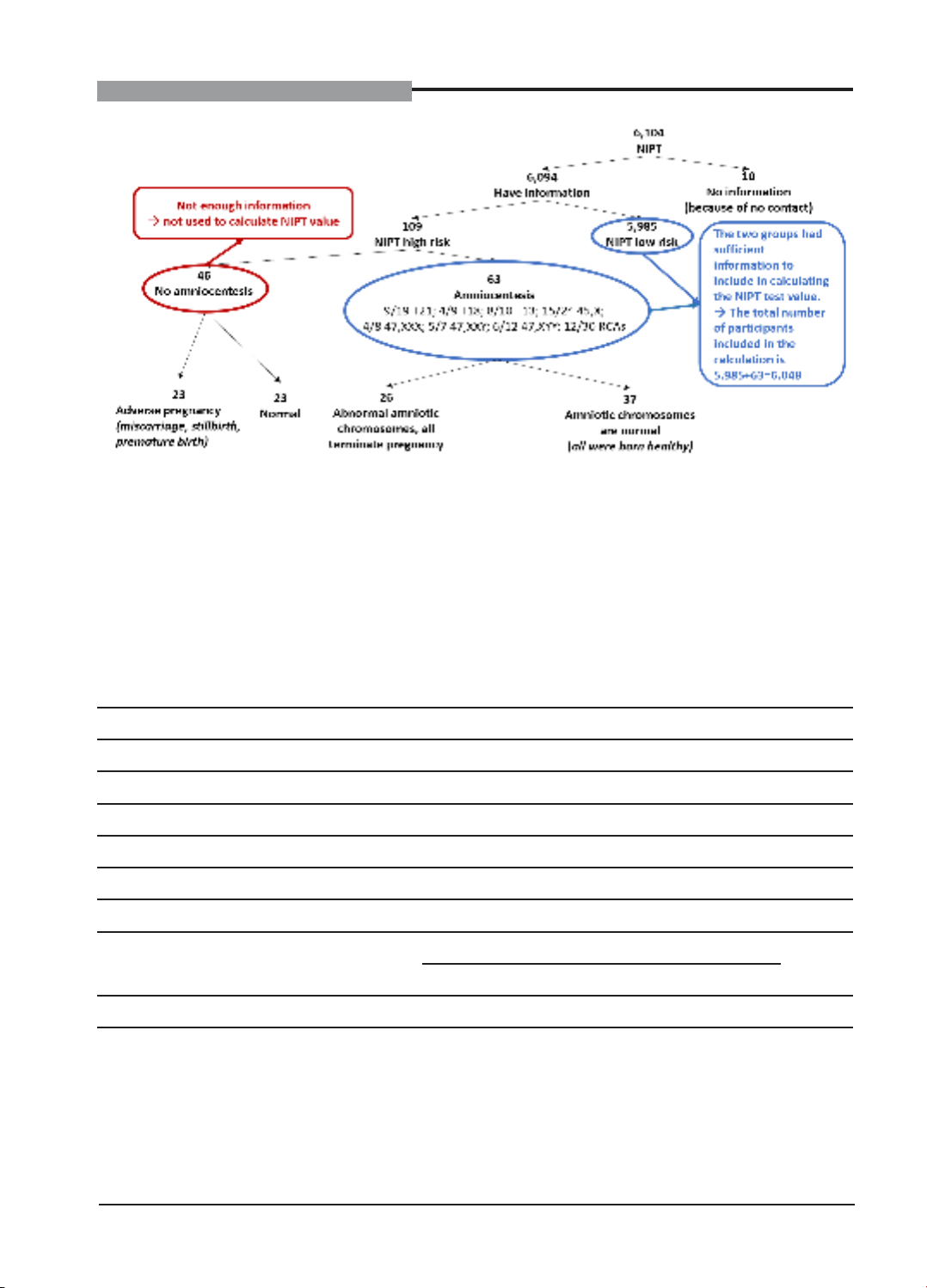
Figure 3. Diagram summarizing data about research subjects
There are 6,094 pregnant women who have
information, including 109 high-risk cases and
5,985 low-risk NIPT cases. Of the high-risk
cases, 46 participants don’t offer amniocentesis
and 63 participants perform amniocentesis.
Cases without amniocentesis are not included
in calculating the values (Se, Sp, PPV, NPV).
There are only 5,985 negative cases and 63
amniocentesis groups with enough information,
so the values of the NIPT in our study are
calculated based on 5,985 + 63 = 6,048
(participants).
Table 3. Value of the NIPT for comprehensive fetal aneuploidies screening
Values T21 T18 T13 45,X 47,XXX 47,XXY 47,XYY RCAs
TP (n) 8 2 5 6 1 1 3 0
TN (n) 6,053 6,058 6,054 6,047 6,058 6,057 6,056 6,050
FP (n) 1 2 3 9 3 4 3 12
FN (n) 0 0 0 0 0 0 0 0
Se (%) 100 100 100 100 100 100 100 100
Sp (%) 99.98 99.97 99.95 99.85 99.95 99.93 99.95 99.80
PPV (%) 88.89 50.00 62.50 40.00 25.00 20.00 50.00 0.00
36.67
NPV (%) 100 100 100 100 100 100 100 100
,
,
Within the scope of the study, the sensitivity
and negative predictive value of the NIPT for
detecting all fetal aneuploidies are 100% and
the specificity is above 99.8%. The positive
predictive value of the NIPT (only considering
cases with amniocentesis) for Down syndrome
(T21) is the highest at 88.89%, followed by
Patau syndrome (T13): 62.5%, Edwards
syndrome (T18): 50%, Jacob syndrome
(47,XYY): 50%, Turner syndrome (45,X): 40%.