* Corresponding author.
E-mail addresses: msafarabadi@ut.ac.ir (M. Safarabadi)
© 2015 Growing Science Ltd. All rights reserved.
doi: 10.5267/j.esm.2015.2.004
Engineering Solid Mechanics 3 (2015) 75-84
Contents lists available at GrowingScience
Engineering Solid Mechanics
homepage: www.GrowingScience.com/esm
Prediction of equivalent static loads act on a micro satellite via modal analysis
M. Safarabadia* and S. Bazarganb
aSchool of Mechanical Engineering, College of Engineering, University of Tehran, Tehran, Iran
bAerospace Engineering Faculty, KNT University of Technology, Tehran, Iran
A R T I C L E I N F O A B S T R A C T
Article history:
Received October 6, 2014
Accepted 2 February 2015
Available online
2 February 2015
In this research, the
influences of modal properties of a micro cubic satellite on equivalent
static loads (due to combination of quasi-static and dynamic loads during launch time) have
been studied. The study shows that the magnitude of equivalent static loads can be affected by
satellite effective modes and effective mass distribution along natural frequencies. Besides,
when to distinct launchers with different dynamic environments candidate for launch,
analytical results illustrate that sometimes the equivalent static combined load value can be
higher for the launcher with smaller quasi-static loads. This phenomenon is due to effective
modal mass distribution of the satellite. Consequently, a higher combined load may be
occurred during launch for smaller quasi-static conditions. Furthermore, in separation phase of
satellite from the launcher, the satellite modal parameters influence the magnitude of applied
shock load in both axial (launch) and lateral directions, importantly. Thus the present study
yields reliable input values for separation shock test which considers dynamic properties of the
satellite in comparison with some standards and launcher manuals, suggest a rough estimation
of shock load, neglecting the satellite structure dynamic behavior.
© 2015 Growing Science Ltd. All rights reserved.
Keywords:
Quasi-static load
Random vibration
Low frequency load
Equivalent static load
Shock Phenomenon
Modal effective mass
1. Introduction
The satellite structure must withstand the static and dynamic loads during launch and injection into
its final orbit. The launch process conditions may induce nearly constant acceleration to the satellite.
Usually these acceleration values introduce as multiplies of gravitational acceleration in three main
direction (one along the launch direction, and two in lateral directions). These loads are defined as
quasi-static loads (Larson & Wertz, 1999). On the other hand, other dynamic loads exist during launch
which can be added to the above mentioned quasi-static loads. These dynamic loads include random
vibration load, low frequency sine load and acoustic vibrations. These loads are due to launcher engine
and its related parts and components. During lift-off, the main cause of random vibrations is the acoustic
loads due to engine noise, the aerodynamic forces due to supersonic speed achieved by the launcher, is

76
another source of random vibration during launch. These dynamic loads are added to the quasi-static
loads and consequently, several combined load conditions can be occurred (Safarin, 1995).
Another source of applied dynamic load is due to shock phenomenon, resulting from separation of
satellite from its launcher. This load must be introduced as an equivalent static load too (Himelblau et
al., 2001). Hence, in order to perform a stress analysis for the satellite structure, the integration of quasi-
static and dynamic loads is required. Because of various nature of the two mentioned loads (static and
dynamic) and an equivalent static load is considered during launch in order to combination of them.
Consequently, in this paper, based on the modal analysis results, these equivalent static loads are
predicted and the effects of satellite effective modes distribution on these loads is investigated. For this
purpose, a finite element model of the satellite is build up and a modal analysis is performed using
MSC Nastran/MSC Patran software. The consequent effective modes and the corresponding effective
mass is employed for prediction of the equivalent static loads due to random vibrations, low frequency
sine vibration and shock loads, separately. The results show that the effective modes distribution
influences the equivalent static loads. In other words, the effective modal mass plays an important role
in dynamic loads act on the satellite. So, the total applied loads to the satellite are dependent upon its
dynamic characteristics. Thus, in order to minimize loads act on the satellite structure, an optimum
design for satellite structure could be achieved which leads to an optimum modal effective modes
distribution. Consequently, non-destructive stresses and an acceptable margin of safety is obtainable
during launch.
2. Loads applied on the satellite during launch
A satellite structure provides the necessary mechanical support for the whole satellite subsystems.
The structure must withstand the static and dynamic loads from the launcher during the satellite launch
and injection in to its final orbit. The satellite base plate is attached to the launcher through an interface.
In about ten minutes during which the launcher transfers the satellite to its final orbit, the satellite
structure is acted upon by static and dynamic loads. These loads are considered in the design of the
satellite structure. The propulsive thrust of the launcher produces an almost constant propulsive force
along the launcher axis. Acceleration increases slightly with the decrease in the launcher fuel mass, and
ceases completely on complete consumption of the fuel. Satellite launchers are usually of multistage
type. Therefore, the above process may induce nearly constant acceleration to the satellite with different
intensities. Satellite manufacturers usually present the acceleration values as multiples of gravitational
(quasi-static loads) acceleration in three main directions (one along the launch direction, and two in
direction perpendicular to the launch direction). These acceleration values basically demonstrate the
inertial phenomenon, which is applied to all the satellite components in the form of inertial forces
(Larson & Wertz, 1999). Table 1 introduces the quasi-static loads based on the information reported in
Cosmos launch systems (1999).
Table 1. Quasi-static load magnitudes for Cosmos launch vehicle as a factor of gravitational
acceleration
Launch Vehicle Type Longitudinal (launch) Direction Lateral Directional
Cosmos 6.8 g 1.6 g
In addition to this effect, gravitational acceleration graphs based on frequency show the transient effect
of this phenomenon at low frequencies (between 5 to 100 Hz). Table 2 show the level of these sinusoidal
vibrations for Cosmos launcher (Cosmos Launch System, 1999).
Table 2. Low frequency sinusoidal loads for Cosmos launcher as a factor of gravitational acceleration
in both longitudinal and lateral directions
Frequency band [Hz] 5-20 20-40 40-65 65-100
Amplitude [g] 0.5 0.7 1.0 1.7

M. Safarabadi and S. Bazargan / Engineering Solid Mechanics 3 (2015)
77
Another source of applied load on the satellite structure during the launch period is the random
vibrations due to launcher engine and its related parts and components. During lift off, the main cause
of these random vibrations is the acoustic loads due to engine noise. Beside this factor, the random
vibrations are caused by aerodynamic forces due to supersonic speed achieved by the launcher. The
combination of these vibrations is transmitted to the satellite through the rocket structure (Larson &
Wertz, 1999). At the same time, satellite structural elements, with large area to mass ratios (e.g. solar
panels) are directly and severely affected by the acoustic phenomenon. Loads resulting from random
phenomenon cannot be expressed as multiple of gravitational acceleration. The three variables which
help describe the random vibrations are: type of distribution, frequency content, and magnitude of these
vibrations (Wijker, 2003).
In general, it is assumed that the random phenomenon has a Gaussian distribution, and in this
manner the type of intensity distribution in time is defined. For expression of frequency content, the
power spectral density (PSD) is used (for this specific application, the term acceleration is a better
choice). An acceleration spectral density (ASD) at frequency f, is the mean-square acceleration within
a selected frequency band (whose center is f) divided by the bandwidth. Commonly, PSD is expressed
in units of /, where g is the acceleration of Earth's gravity at sea level (Safarin, 1995). To show
the PSD, it is plotted on log-log paper, typically covering the frequency range of 20 to 2000 Hz which
has been found to adequately describe random vibration for structures and electronic components. The
random vibration loads of Cosmos launcher (Cosmos Launch System, 1999) is presented in Table 3.
Table 3. Spectral density of random vibration acceleration for Cosmos launcher.
Frequency [Hz] PSD [g2/Hz]
20
-
50
0.004
-
0.01
50-125 0.01-0.11
125
-
135
0.11
135-145 0.11-0.08
145
-
200
0.08
200-2000 0.08-0.016
The third source of applied load to the structure is due to the shock phenomenon, resulting from
separation of satellite from its launcher. To produce the suitable initial velocity in the satellite, it is
necessary to apply a big acceleration in a very short period. This may be achieved using explosive
mechanisms. Other phenomena such as separation of antenna and deployment of solar panels can also
cause shock. However, normally almost all of the shock phenomenon is caused by separation of satellite
from its launcher. Shock environment is described by a shock spectrum (Sarafin and Larson 1995)
Table 4 presents the maximal values of the shock loads for Cosmos launch vehicle (Cosmos Launch
System, 1999). The values include an amplification factor of Q=10.
Table 4. The maximal values of the shock loads acceleration for Cosmos launcher
Frequency band [Hz] 100-400 400-10000
Amplitude [g] 10-150 150-400
The main loads due to launch conditions are placed in the three groups given above. The satellite
structure due to the above conditions will bear reactive inertial forces due to the transmitted
accelerations from the satellite base plate. The calculated stresses during the worst loading conditions
are compared with the yield point and tensile strength to determine the safety factors. There is an
acoustic environment induced by stage one engine operation and boundary layer noise. These loads are
in this investigation ignored in comparison with the value of other mentioned loads and the small
satellite dimensions.
78
In the proto-qualification test phase and before launch also some loads related to mention loads act
on the satellite. One of them is sinusoidal vibrations loads for the proto-qualification test which is equal
with sinusoidal vibrations loads declared by launch vehicle manufacturers. Another test load is random
vibrations loads for the proto-qualification test which its level is +3db upper than random vibrations
loads declared by launch vehicle manufacturers as is mentioned in the launch vehicle manuals
according to standard ECSS-E-10-03A (Noordwijk, 2002).
3. Calculation of equivalent static loads
As mentioned earlier, during launch time, the quasi-static loads are combined with random
vibrations and low frequency loads. So, in order to perform strength analysis for satellite structure and
its subsystems, it is necessary to predict the equivalent static loads of these combined load conditions.
3.1 Quasi-static load and random vibrations combination
In the case of base excitation phenomenon of a system with one degree of freedom, consisting of
spring and mass, with random vibration of constant amplitude of white noise type with constant
frequency range of zero to infinity, the loads due to random vibrations can be expressed on basis of
gravitational acceleration (Miles, 2012).
In recent years, a method has been developed for extension of this relation (equation) to include
systems of n degrees of freedom. It can be shown that using decoupled equations in a particular
coordinate system, for base excitation phenomenon of a system with n degrees of freedom, the dynamic
characteristics of the system can be expressed on basis of normal modals and effective masses (Plesseria
et al., 2000; Emami & Safarabadi, 2007; Bohlouri et al., 2014). The normal modes and effective masses
define specific directions in which the acceleration is independent and is related to the frequency and
mode shape of that frequency. On the other hand, the absorbed energy for movement in that specific
direction is linearly related to effective mass that is defined for that particular mode. The total effective
masses are equivalent to the total mass of structure, and therefore, amount of effective mass for each
mode expresses the specific share of that mode in the total vibrations of the system (Plesseria et al.,
2000; Emami & Safarabadi, 2007; Safarabadi & Emami, 2008; Safarabadi & Emami, 2009).
Under such conditions, the Miles equation for systems with n degrees of freedom can be expressed as
following:
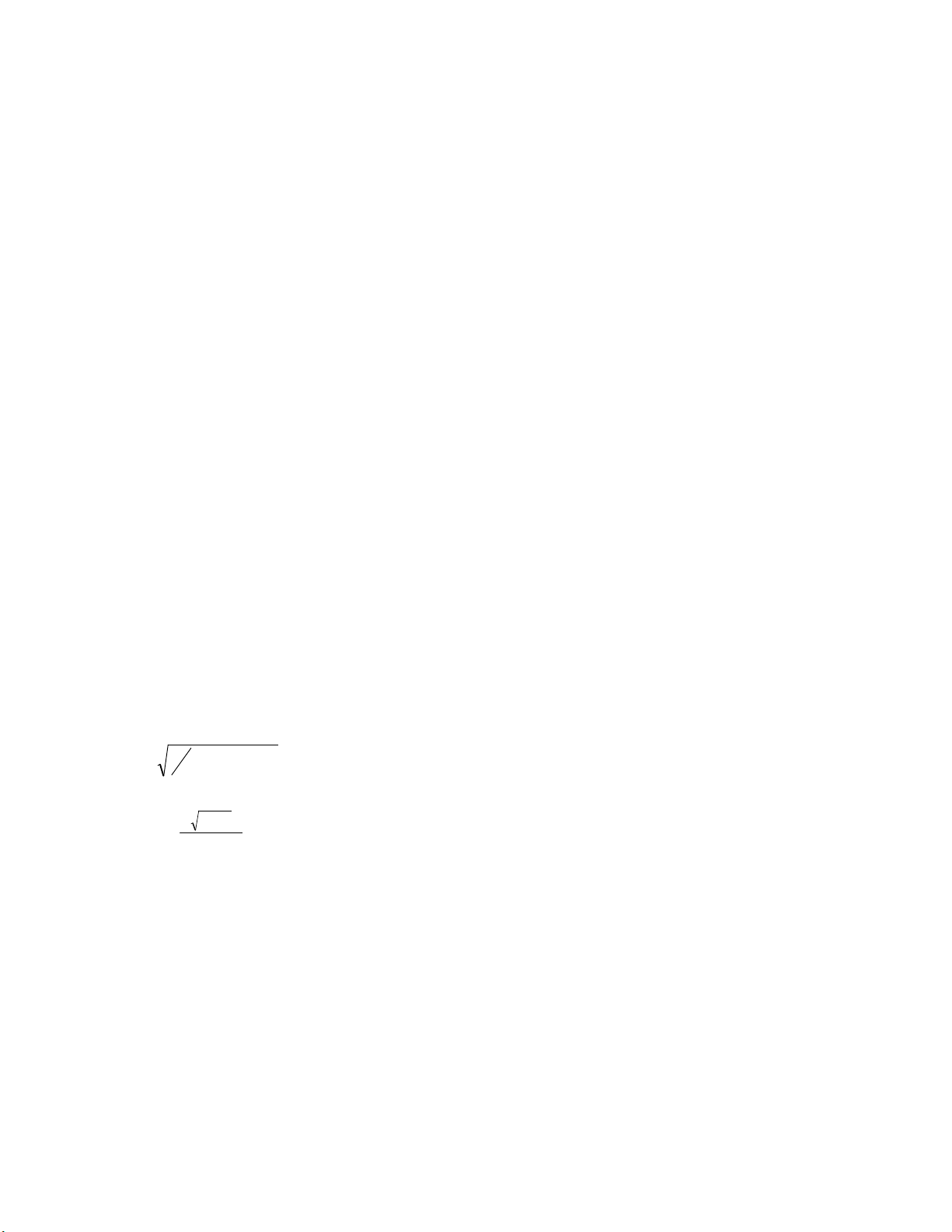
iii WQfn 2
(1)
ieffii mgnp ,
(2)
gm
P
RVL
ieff
i
,
2
3
(3)
The equivalent load factor as a multiple of gravitational acceleration is calculated using Eq. (1). In
the above equations, i
f and i
Ware natural frequency and PSD value at mode respectively. is the
amplification factor. Value of i
p for each of the selected modes is calculated using Eq. (2). In this
equation, ieff
m,is the effective mass obtained at mode and gravitational acceleration g. Eq. (3) yields
the random vibration load factor () which considers a factor equal to 3 according to statistical
results and uncertainties (Plesseria et al., 2000; Safarabadi & Emami, 2009).
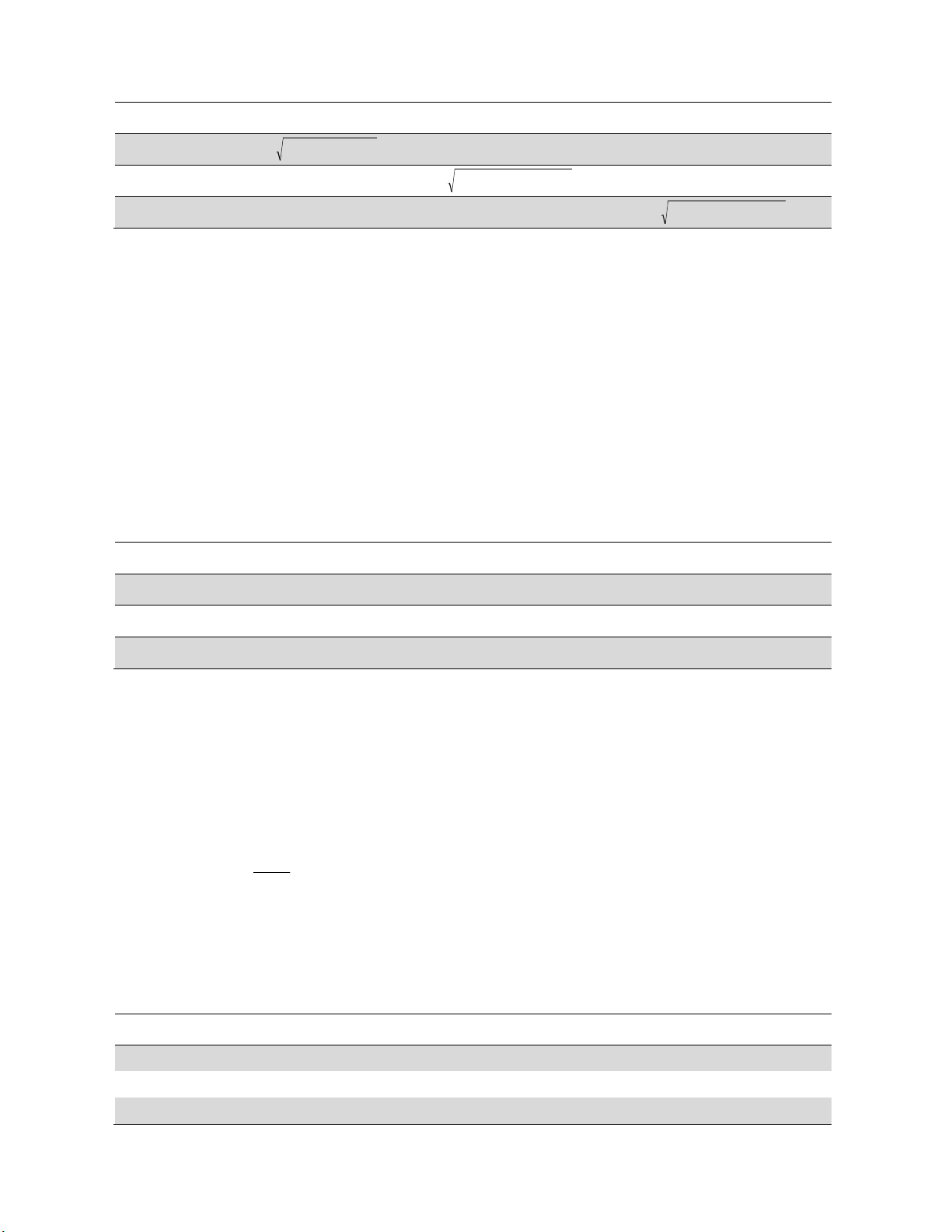
Table 5 presents the load cases that may be occurred due to combination of quasi-static loads and
random vibrations during launch. In this table, and introduces quasi-static and random
vibration load factors respectively.
M. Safarabadi and S. Bazargan / Engineering Solid Mechanics 3 (2015)
79
Table 5. Combination of quasi-static and random vibration loads at launch time.
LOAD CASE Lateral Direction (Y) Lateral Direction (Z) Axial Direction (X)
1 to 8 22
AX
RVL
AX
QSL LAT
QSL LAT
QSL
9 to 16
AX
QSL 22
YLAT
RVL
LAT
QSL
LAT
QSL
17 to 24 AX
QSL LAT
QSL 22
ZLAT
RVL
LAT
QSL
3.2 Quasi-static load and low frequency sinusoidal vibrations combination
Harmonic sinusoidal vibrations are applied to the satellite at low frequencies (between 5-100 Hz).
These loads can be introduces as a factor of gravitational acceleration (g) based on below equation:
SFQgSL INPUTSINE
(4)
where SINE
SL is the equivalent static load due sinusoidal vibrations. INPUT
g is the magnitude of low
frequency load (which is presented in launcher manual) at three first effective frequencies of the
satellite in axial and lateral directions. Q and SF are amplification factor and load factor of safety
respectively. As mentioned before, the harmonic sinusoidal low frequency vibrations integrate with
quasi-static loads during launch. Table 6 presents the equivalent static loads along three directions
(axial and lateral) induced by this combination (Emami et al., 2008).
Table 6. Combination of quasi-static and low frequency vibration loads at launch time.
LOAD CASE Lateral Direction (Y) Lateral Direction (Z) Axial Direction (X)
25
-
32
)( LATSINE QSLSL LAT
QSL
AX
QSL
33-40 LAT
QSL )( LATSINE QSLSL AX
QSL
41-48 LAT
QSL
LAT
QSL
)( AXSINE QSLSL
3.3 Calculation of equivalent static loads due to separation (shock phenomenon)
Of the three groups of loads acting on the structure, the third group, the forces resulting from the
shock, act on the structure when different modules in the launcher propulsion system have completed
their functions. The first two groups can appear in combination. The resultant loads due to the shock
phenomenon are act on the structure, independently. Intensity of the equivalent shock force on the
structure in any direction equals the maximum force obtained for different modes in that particular
direction, and is obtained using the following relation (Emami et al., 2008):
Sat
ieff
iShockEquvalent M
m
Sg ,
(5)
In Eq. (5) ieff
m,and are the effective mass obtained at mode and total mass of the satellite,
respectively. i
S is the magnitude of shock load (according to the launcher manual) at effective modes.
Table 7 introduces the load states due to separation (Emami et al., 2008).
Table 7. The equivalent shock loads in three main directions.
LOAD CASE Lateral Direction (Y) Lateral Direction (Z) Axial Direction (X)
49-50 YShockEquvalent
g)(
Typeequationhere.
- -
51
-
52
-
ZShockEquvalent
g)(
-
53-54 - - XShockEquvalent
g)(