

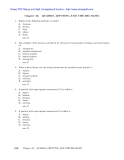
28. Magnetic dipole X is fixed and dipole Y is free to move. Dipole Y will initially:
...................................................................................................................................................................................... .
.
..
.
.
.
.
.
.
.
.
.
.
.
.
.
.
.
.
.
.
.
.
.
.
.
..
.
.
..
.
.
.
.
.
.
.
.
.
.
.
.
.
.
.
.
.
.
.
.
.
.
X...................................................................................................................................................................................... .
.
..
.
.
.
.
.
.
.
.
.
.
.
.
.
.
.
.
.
.
.
.
.
.
.
..
.
.
..
.
.
.
.
.
.
.
.
.
.
.
.
.
.
.
.
.
.
.
.
.
.
Y
A. move toward X but not rotate
B. move away from X but not rotate
C. move toward X and rotate
D. move away from X and rotate
E. rotate but not translate
ans: A
29. Magnetic dipole X is fixed and dipole Y is free to move. Dipole Y will initially:
...................................................................................................................................................................................... .
.
..
.
.
.
.
.
.
.
.
.
.
.
.
.
.
.
.
.
.
.
.
.
.
.
..
.
.
..
.
.
.
.
.
.
.
.
.
.
.
.
.
.
.
.
.
.
.
.
.
.
X
.
.
.
.
.
.
.
.
.
.
.
.
.
.
.
.
.
.
.
.
.
.
.
.
.
.
.
.
.
.
.
.
.
.
.
.
.
.
.
.
.
.
.
.
.
.
.
.
.
.
.
.
.
.
.
.
.
.
.
.
.
.
.
.
.
.
.
.
.
.
.
.
.
.
.
.
.
.
.
.
.
.
.
.
.
.
.
.
.
.
.
.
.
.
.
.
.
.
.
.
.
.
.
.
.
.
.
.
.
.
.
.
.
.
.
.
.
.
.
.
.
.
.
.
.
.
.
.
.
.
.
.
.
.
.
.
.
.
.
.
.
.
.
.
.
.
.
.
.
.
.
.
.
.
.
.
.
.
.
.
.
.
.
.
.
.
.
.
.
.
.
.
.
.
.
.
.
.
.
.
..
.
.
.
.
.
.
.
.
.
.
.
.
.
.
.
.
.
.
.
.
.
.
.
.
.
.
.
.
.
.
.
.
.
.
.
.
.
.
.
.
.
.
.
.
.
.
.
.
.
.
.
.
.
.
.
Y
A. move toward X but not rotate
B. move away from X but not rotate
C. move toward X and rotate
D. move away from X and rotate
E. rotate but not move toward or away from X
ans: E
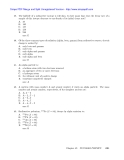
30. The diagram shows the angular momentum vectors of two electrons and two protons in the
same external magnetic field. The field points upward in the diagram. Rank the situations
according to the potential energy, least to greatest.
••••
.
.
.
.
.
.
.
.
.
.
.
.
.
.
.
.
.
.
.
.
.
.
.
.
.
.
.
.
.
.
.
.
.
.
.
.
.
.
.
.
.
.
.
.
.
.
.
.
.
.
.
.
.
.
.
.
.
.
.
.
.
.
.
.
.
.
.
.
.
.
.
.
..
.
.
.
.
.
.
.
.
.
.
.
.
.
.
.
.
.
.
.
.
.
.
.
.
.
.
.
.
.
.
.
.
.
.
.
.
.
.
.
.
.
.
.
.
.
.
.
.
.
.
.
.
.
.
.
.
.
.
.
.
.
.
.
.
.
.
.
.
.
.
.
.
.
.
.
.
.
.
.
.
.
.
.
.
.
.
.
.
.
.
.
.
.
.
.
.
.
.
.
.
.
.
.
.
.
.
.
.
.
.
.
.
.
.
.
..
.
.
.
.
.
.
.
.
.
.
.
.
.
.
.
.
.
.
.
.
.
.
.
.
.
.
.
.
.
.
.
.
.
.
.
.
.
.
.
.
.
.
.
.
.
.
.
.
.
.
.
.
.
.
.
.
.
.
.
.
.
.
.
.
.
.
.
.
.
.
.
.
.
.
.
.
.
.
.
.
.
.
.
.
.
.
.
.
.
.
.
.
.
.
.
.
.
.
.
.
.
.
.
.
.
.
.
.
.
.
.
.
.
.
.
..
.
.
.
.
.
.
.
.
.
.
.
.
.
.
.
.
.
.
.
.
.
.
.
.
.
.
.
.
.
.
.
.
.
.
.
.
.
.
.
.
.
.
.
.
.
.
.
.
.
.
.
.
.
.
.
.
.
.
.
.
.
.
.
.
.
.
.
.
.
.
.
.
.
.
.
.
.
.
.
.
.
.
.
.
.
.
.
.
.
.
.
.
.
.
.
.
.
.
.
.
.
.
.
.
.
.
.
.
.
.
.
.
.
.
.
..
.
.
.
.
.
.
.
.
.
.
.
.
.
.
.
.
.
.
.
.
.
.
.
.
.
.
.
.
.
.
.
.
.
.
.
.
.
.
.
.
.
.
.
eepp
1234
.
.
.
.
.
.
.
.
.
.
.
.
.
.
.
.
.
.
.
.
.
.
.
.
.
.
.
.
.
.
.
.
.
.
.
.
.
.
.
.
.
.
.
.
.
.
.
.
.
.
.
.
.
.
.
.
.
.
.
.
.
.
.
.
.
.
.
.
.
.
.
.
.
.
.
.
.
.
.
.
.
.
.
.
.
.
.
.
.
.
.
.
.
.
.
.
.
.
.
.
.
.
.
.
.
.
.
.
.
.
.
.
.
.
.
.
.
.
.
.
.
.
.
.
.
.
.
.
.
.
.
.
.
.
.
.
.
.
.
.
.
.
.
.
..
.
.
.
.
.
.
.
.
.
.
.
.
.
.
.
.
.
.
.
.
.
.
.
.
.
.
.
.
.
.
.
.
.
.
.
.
.
.
.
.
.
.
.
.
.
.
.
.
.
.
.
.
.
.
.
B
A. 1 and 3 tie, then 2 and 4 tie
B. 2 and 3 tie, then 1 and 4 tie
C. 1 and 2 tie, then 3 and 4 tie
D. 3 and 4 tie, then 1 and 2 tie
E. all tie
ans: B
Chapter 32: MAXWELL’S EQUATIONS; MAGNETISM AND MATTER 481
Simpo PDF Merge and Split Unregistered Version - http://www.simpopdf.com

31. The energy of a magnetic dipole in an external magnetic field is least when:
A. the dipole moment is parallel to the field
B. the dipole moment is antiparallel to the field
C. the dipole moment is perpendicular to the field
D. none of the above (the same energy is associated with all orientations)
E. none of the above (no energy is associated with the dipole-field interaction)
ans: A
32. The magnetic properties of materials stem chiefly from:
A. particles with north poles
B. particles with south poles
C. motions of protons within nuclei
D. proton spin angular momentum
E. electron magnetic dipole moments
ans: E
33. Magnetization is:
A. the current density in an object
B. the charge density of moving charges in an object
C. the magnetic dipole moment of an object
D. the magnetic dipole moment per unit volume of an object
E. the magnetic field per unit volume produced by an object
ans: D
34. The units of magnetization are:
A. ampere
B. ampere·meter
C. ampere·meter2
D. ampere/meter
E. ampere/meter2
ans: D
35. If
Lis the orbital angular momentum of an electron, the magnetic dipole moment associated
with its orbital motion:
A. is in the direction of
Land has magnitude proportional to L
B. is opposite to the direction of
Land has magnitude proportional to L
C. is in the direction of
Land has magnitude proportional to L2
D. is opposite to the direction of
Land has magnitude proportional to L2
E. does not depend on
L
ans: B
482 Chapter 32: MAXWELL’S EQUATIONS; MAGNETISM AND MATTER
Simpo PDF Merge and Split Unregistered Version - http://www.simpopdf.com

36. If an electron has an orbital angular momentum with magnitude Lthe magnitude of the orbital
contribution to its magnetic dipole moment is given by:
A. eL/m
B. eL/2m
C. 2eL/m
D. mL/e
E. mL/2
ans: B
37. An electron traveling with speed varound a circle of radius ris equivalent to a current of:
A. evr/2
B. ev/r
C. ev/2πr
D. 2πer/v
E. 2πev/r
ans: C
38. The intrinsic magnetic dipole moments of protons and neutrons are much less than that of an
electron because:
A. their masses are greater
B. their angular momenta are much less
C. their angular momenta are much greater
D. their charges are much less
E. their radii are much less
ans: A
39. The spin magnetic dipole moment of an electron:
A. is in the same direction as the spin angular momentum
B. is zero
C. has a magnitude that depends on the orbital angular momentum
D. has a magnitude that depends on the applied magnetic field
E. none of the above
ans: E
40. If an electron has zero orbital angular momentum, the magnitude of its magnetic dipole moment
equals:
A. zero
B. half the Bohr magneton
C. a Bohr magneton
D. twice a Bohr magneton
E. none of these
ans: C
Chapter 32: MAXWELL’S EQUATIONS; MAGNETISM AND MATTER 483
Simpo PDF Merge and Split Unregistered Version - http://www.simpopdf.com

41. The magnetic dipole moment of an atomic electron is typically:
A. much less than a Bohr magneton
B. a few Bohr magnetons
C. much greater than a Bohr magneton
D. much greater or much less than a Bohr magneton, depending on the atom
E. not related to the value of the Bohr magneton
ans: B
42. The magnitude of the Bohr magneton in J/T is about:
A. 10−15
B. 10−19
C. 10−23
D. 10−27
E. 10−31
ans: C
43. The molecular theory of magnetism can explain each of the following EXCEPT:
A. an N pole attracts a S pole
B. stroking an iron bar with a magnet will magnetize the bar
C. when a bar magnet is broken in two, each piece is a bar magnet
D. heating tends to destroy magnetization
E. hammering tends to destroy magnetization
ans: A
44. Lenz’ law can explain:
A. paramagnetism only
B. diamagnetism only
C. ferromagnetism only
D. only two of the three types of magnetism
E. all three of the types of magnetism
ans: B
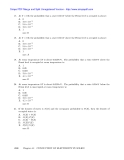
45. The diagram shows two small diamagnetic spheres, one near each end of a bar magnet. Which
of the following statements is true?
NS
.
.
.
.
.
.
.
.
.
.
.
.
.
.
.
.
.
.
.
.
.
.
.
.
..
......
..
.
.
.
.
.
.
.
.
.
.
.
.
.
.
.
.
.
.
.
.
.
.
.
.
.
.
.
.
.
.
.
.
.
.
.
.
.
.
.
.
.
.
.
.
.
.
.
.
.......
.
.
.
.
.
.
.
.
.
.
.
.
.
.
.
.
.
.
.
.
.
.
.
.
..
.
.
.
.
.
.
.
.
.
.
.
.
.
.
.
.
.
.
.
.
.
.
.
..
......
..
.
.
.
.
.
.
.
.
.
.
.
.
.
.
.
.
.
.
.
.
.
.
.
.
.
.
.
.
.
.
.
.
.
.
.
.
.
.
.
.
.
.
.
.
.
.
.
.
...
.
...
.
.
.
.
.
.
.
.
.
.
.
.
.
.
.
.
.
.
.
.
.
.
.
.
.
12
A. The force on 1 is toward the magnet and the force on 2 is away from the magnet
B. The force on 1 is away from the magnet and the force on 2 is away from the magnet
C. The forces on 1 and 2 are both toward the magnet
D. The forces on 1 and 2 are both away from the magnet
E. The magnet does not exert a force on either sphere
ans: D
484 Chapter 32: MAXWELL’S EQUATIONS; MAGNETISM AND MATTER
Simpo PDF Merge and Split Unregistered Version - http://www.simpopdf.com

46. Paramagnetism is closely associated with:
A. the tendency of electron dipole moments to align with an applied magnetic field
B. the tendency of electron dipole moments to align opposite to an applied magnetic field
C. the exchange force between electrons
D. the force exerted by electron dipole moments on each other
E. the torque exerted by electron dipole moments on each other
ans: A
47. The diagram shows two small paramagnetic spheres, one near each end of a bar magnet. Which
of the following statements is true?
NS
.
.
.
.
.
.
.
.
.
.
.
.
.
.
.
.
.
.
.
.
.
.
.
.
..
......
.
..
.
.
.
.
.
.
.
.
.
.
.
.
.
.
.
.
.
.
.
.
.
.
.
.
.
.
.
.
.
.
.
.
.
.
.
.
.
.
.
.
.
.
.
.
.
.
.
...
..
..
.
.
.
.
.
.
.
.
.
.
.
.
.
.
.
.
.
.
.
.
.
.
.
.
..
.
.
.
.
.
.
.
.
.
.
.
.
.
.
.
.
.
.
.
.
.
.
.
.
...
..
..
..
.
.
.
.
.
.
.
.
.
.
.
.
.
.
.
.
.
.
.
.
.
.
.
.
.
.
.
.
.
.
.
.
.
.
.
.
.
.
.
.
.
.
.
.
.
.
.
.
.......
.
.
.
.
.
.
.
.
.
.
.
.
.
.
.
.
.
.
.
.
.
.
.
.
.
12
A. The force on 1 is toward the magnet and the force on 2 is away from the magnet
B. The force on 1 is away from the magnet and the force on 2 is away from the magnet
C. The forces on 1 and 2 are both toward the magnet
D. The forces on 1 and 2 are both away from the magnet
E. The magnet does not exert a force on either sphere
ans: C
48. A paramagnetic substance is placed in a weak magnetic field and its absolute temperature T
is increased. As a result, its magnetization:
A. increases in proportion to T
B. increases in proportion to T2
C. remains the same
D. decreases in proportion to 1/T
E. decreases in proportion to 1/T 2
ans: D
49. A magnetic field
B0is applied to a paramagnetic substance. In the interior the magnetic field
produced by the magnetic dipoles of the substance is:
A. greater than
B0and in the opposite direction
B. less than
B0and in the opposite direction
C. greater than
B0and in the same direction
D. less than
B0and in the same direction
E. the same as
B0
ans: D
50. A paramagnetic substance, in an external magnetic field, is thermally isolated. The field is
then removed. As a result:
A. the magnetic energy of the magnetic dipoles decreases
B. the temperature of the substance increases
C. the magnetization decreases, but only slightly
D. the magnetization reverses direction
E. none of the above
ans: E
Chapter 32: MAXWELL’S EQUATIONS; MAGNETISM AND MATTER 485
Simpo PDF Merge and Split Unregistered Version - http://www.simpopdf.com





%20--%3e%3cdefs%3e%3cstyle%3e%20.st0%20{%20fill:%20%23fff;%20}%20.st1%20{%20fill:%20%237800fa;%20}%20%3c/style%3e%3c/defs%3e%3cpath%20class='st1'%20d='M117.78,12.18H43.11c2.9,3.47,4.65,7.94,4.65,12.82,0,5.6-2.3,10.66-6.01,14.29h76.02l7.22-13.56-7.22-13.56Z'/%3e%3cg%3e%3cpath%20class='st0'%20d='M53.58,26.17h-.59v-1.46h.59v-4.96h2.83c1.78,0,2.67.94,2.67,2.82v5.76c0,1.87-.89,2.81-2.67,2.81h-2.83v-4.96ZM55.36,21.37v3.34h1.1v1.46h-1.1v3.34h1.01c.61,0,.91-.37.91-1.1v-5.93c0-.74-.3-1.1-.91-1.1h-1.01Z'/%3e%3cpath%20class='st0'%20d='M65.99,31.14h-1.8l-.31-2.07h-2.19l-.31,2.07h-1.64l1.82-11.39h2.62l1.82,11.39ZM65.28,18.04c-.25.46-.51.77-.75.94-.21.15-.47.22-.79.22-.26,0-.57-.07-.92-.22l-.38-.15c-.14-.05-.26-.07-.37-.07-.3,0-.53.18-.71.54l-.91-.68c.25-.46.51-.77.75-.94.21-.14.48-.21.79-.21.26,0,.57.07.92.21l.38.15c.14.05.26.07.37.07.3,0,.53-.18.71-.54l.91.68ZM61.91,27.52h1.73l-.87-5.76-.87,5.76Z'/%3e%3cpath%20class='st0'%20d='M74.53,26.89v1.52c0,1.91-.89,2.86-2.67,2.86s-2.67-.95-2.67-2.86v-5.93c0-1.91.89-2.86,2.67-2.86s2.67.95,2.67,2.86v1.11h-1.69v-1.22c0-.75-.31-1.12-.93-1.12s-.93.37-.93,1.12v6.15c0,.74.31,1.11.93,1.11s.93-.37.93-1.11v-1.63h1.69Z'/%3e%3cpath%20class='st0'%20d='M81.4,31.14h-1.8l-.31-2.07h-2.19l-.31,2.07h-1.64l1.82-11.39h2.62l1.82,11.39ZM75.9,19.2l1.52-1.91h1.71l1.51,1.91h-1.61l-.76-.95-.75.95h-1.61ZM77.32,27.52h1.73l-.87-5.76-.87,5.76ZM83.1,15.99l-1.76,1.91h-1.26l1.17-1.91h1.86Z'/%3e%3cpath%20class='st0'%20d='M84.86,19.75c1.78,0,2.67.94,2.67,2.82v1.48c0,1.87-.89,2.81-2.67,2.81h-.85v4.28h-1.79v-11.39h2.64ZM84.01,21.37v3.86h.85c.58,0,.87-.36.87-1.08v-1.71c0-.71-.29-1.07-.87-1.07h-.85Z'/%3e%3cpath%20class='st0'%20d='M93.51,19.75c1.78,0,2.67.94,2.67,2.82v1.48c0,1.87-.89,2.81-2.67,2.81h-.85v4.28h-1.79v-11.39h2.64ZM92.66,21.37v3.86h.85c.58,0,.87-.36.87-1.08v-1.71c0-.71-.29-1.07-.87-1.07h-.85Z'/%3e%3cpath%20class='st0'%20d='M98.8,31.14h-1.79v-11.39h1.79v4.88h2.03v-4.88h1.83v11.39h-1.83v-4.88h-2.03v4.88Z'/%3e%3cpath%20class='st0'%20d='M105.36,24.55h2.46v1.62h-2.46v3.34h3.09v1.63h-4.88v-11.39h4.88v1.63h-3.09v3.18ZM108.17,17.29l-1.76,1.91h-1.26l1.17-1.91h1.86Z'/%3e%3cpath%20class='st0'%20d='M112.2,19.75c1.78,0,2.67.94,2.67,2.82v1.48c0,1.87-.89,2.81-2.67,2.81h-.85v4.28h-1.79v-11.39h2.64ZM111.35,21.37v3.86h.85c.58,0,.87-.36.87-1.08v-1.71c0-.71-.29-1.07-.87-1.07h-.85Z'/%3e%3c/g%3e%3ccircle%20class='st1'%20cx='25'%20cy='25'%20r='20'/%3e%3cpath%20class='st0'%20d='M32.78,19.27c2.92,0,4.43,2.55,5.28,5.33l.71,2.17c.14.38-.33.75-.71.75h-5.61c.19-.33.24-.71.09-1.08l-.75-2.45c-.43-1.32-.99-2.64-1.79-3.77.75-.57,1.65-.94,2.78-.94h0ZM25,18.38c3.25,0,4.9,2.78,5.89,5.89l.76,2.45c.14.42-.33.8-.8.8h-11.69c-.42,0-.94-.38-.8-.8l.75-2.45c.99-3.11,2.64-5.89,5.89-5.89h0ZM25,11.35c1.74,0,3.11,1.37,3.11,3.11s-1.37,3.11-3.11,3.11-3.11-1.41-3.11-3.11,1.41-3.11,3.11-3.11h0ZM17.27,19.27c1.08,0,1.98.38,2.73.94-.8,1.13-1.37,2.45-1.74,3.77l-.8,2.45c-.14.38-.05.75.09,1.08h-5.56c-.42,0-.9-.38-.75-.75l.71-2.17c.9-2.78,2.41-5.33,5.33-5.33h0ZM17.27,12.91c1.51,0,2.78,1.27,2.78,2.83s-1.27,2.83-2.78,2.83-2.83-1.27-2.83-2.83,1.27-2.83,2.83-2.83h0ZM32.78,12.91c1.56,0,2.78,1.27,2.78,2.83s-1.23,2.83-2.78,2.83-2.83-1.27-2.83-2.83,1.27-2.83,2.83-2.83h0ZM27.07,28.56v.09c0,.57-.24,1.08-.61,1.46h0v.05c-.38.33-.9.57-1.46.57s-1.08-.24-1.46-.61h0c-.38-.38-.61-.9-.61-1.46v-.09h1.41v.09c0,.19.05.38.19.47v.05c.09.09.28.19.47.19s.38-.09.47-.19v-.05c.14-.09.24-.28.24-.47t-.05-.09h1.41ZM30.99,28.56v.09c0,1.65-.66,3.16-1.74,4.24-1.08,1.08-2.59,1.79-4.24,1.79s-3.16-.71-4.24-1.79l-.05-.05c-1.04-1.08-1.7-2.55-1.7-4.2v-.09h1.41v.09c0,1.27.47,2.4,1.27,3.25h.05c.85.85,1.98,1.37,3.25,1.37s2.4-.52,3.25-1.37c.85-.8,1.37-1.98,1.37-3.25v-.09h1.37ZM34.99,28.56v.09c0,2.78-1.13,5.28-2.92,7.07-1.79,1.79-4.29,2.92-7.07,2.92s-5.23-1.13-7.07-2.92c-1.79-1.79-2.92-4.29-2.92-7.07v-.09h1.41v.09c0,2.4.94,4.53,2.5,6.08,1.56,1.56,3.72,2.5,6.08,2.5s4.52-.94,6.08-2.5c1.56-1.56,2.5-3.68,2.5-6.08v-.09h1.41Z'/%3e%3c/svg%3e)