RESEARCH Open Access
Understanding multinational companies in public
health systems, using a competitive advantage
framework
Jane Lethbridge
Abstract
Background: This paper discusses the findings of a study which developed five case studies of five multinational
health care companies involved in public health care systems. Strategies were analysed in terms of attitude to
marketing, pricing and regulation. The company strategies have been subjected to an analysis using Porter’s Five
Forces, a business strategy framework, which is unusual in health policy studies.
Methods: This paper shows how analysing company strategy using a business tool can contribute to
understanding the strategies of global capital in national health systems. It shows how social science
methodologies can draw from business methods to explain company strategies.
Results: The five companies considered in this paper demonstrate that their strategies have many dimensions,
which fit into Porter’s Five Forces of comparative advantage. More importantly the Five Forces can be used to
identify factors that influence company entry into public health care systems.
Conclusions: The process of examining the strategic objectives of five health care companies shows that a
business tool can help to explain the actions and motives of health care companies towards public health care
systems, and so contribute to a better understanding of the strategies of global capital in national health systems.
Health service commissioners need to understand this dynamic process, which will evolve as the nature of public
health care systems change.
Background
Multinational company involvement in public health
care systems has been evolving since the late 1980s/
1990s, with the introduction of compulsory competitive
tendering for services such as catering, cleaning and
facilities management services. For some companies, this
formed the springboard for involvement in formal pub-
lic-private partnerships for capital projects [1]. However
in these two phases, the multinational companies were
more likely to be service, property and finance compa-
nies, rather than health care companies. More recently,
healthcare multinationals have started to become
involved in public health care systems as providers of
health care [2]. This paper explore the processes
involved in this development, which can be argued in
another variant of public-private partnerships-or even a
further stage in a typology from marketisation to privati-
sation [3].
This paper aims to explore how a group of health care
multinational companies have become part of several
national health care systems over the last decade. The
characteristics of this group of new global players are
varied and reflect the national origins of many compa-
nies. They include experience of delivering acute, mental
health services, and care services for older people to
public providers at national levels, vertical integration of
renal care services, and high technology care. Much of
the expansion has taken place in Europe, during the last
decade. The expansion of renal care companies and
high technology care is a more global expansion.
Expansion into older care services is beginning to have
a global impact in countries with an ageing population.
Understanding this process of integration into public
health systems will help to provide insights into the
Correspondence: j.lethbridge@gre.ac.uk
Principal Lecturer, Public Services International Research Unit (PSIRU), The
Business School, University of Greenwich, UK
Lethbridge Globalization and Health 2011, 7:19
http://www.globalizationandhealth.com/content/7/1/19
© 2011 Lethbridge; licensee BioMed Central Ltd. This is an Open Access article distributed under the terms of the Creative Commons
Attribution License (http://creativecommons.org/licenses/by/2.0), which permits unrestricted use, distribution, and reproduction in
any medium, provided the original work is properly cited.

strategies that global capital is using to access national
health systems. This paper will use a competitive advan-
tage framework to gain an understanding of how these
companies have moved into the public sector, which
will contribute to the development of new health policy
methodologies to study public-private relationships.
Methodology
The research question underlying this paper is “How
and why can global private interests enter national
health policy settings? The hypothesis that emerges
from this research question is “That global private inter-
ests enter national health policy settings through the use
of expertise and additional skills for national health sys-
tems dealing with growing demographic pressures and
demands for health care.”
How to research the involvement of multinational
health care companies in public sector health care sys-
tems raises a number of methodological issues which
need to be considered in wider debates about globalisa-
tion and health. Much qualitative social science research
has focused on the processes of understanding research
subjects and so creating an understanding of different
forms of social reality. Social science research, through-
out the twentieth century, has gradually evolved ways of
exploring different social realities of communities con-
nected to health care, whether patients, health profes-
sionals or health institutions as forms of organisational
culture.
Exploring the actions of multinational companies in
relation to their growing role in public health care sys-
tems raises questions about whether to consider com-
pany activities in a business or a sociological context.
Do we want to explore the ‘life-worlds’of multinational
companies? Initial research that explored the strategies
of five multinational health care companies used ten key
informant interviews, supported by analysis of company
publications and evidence from market research reports,
published academic research on aspects of contracting,
regulation and pricing at a global and national level, and
the press [1].
Business research tends to ask questions about how
and why companies take certain decisions and the impli-
cations of these decisions for company competitiveness
and profits. As a form of applied research, business
research can be used by companies to inform future
strategies. This paper argues that research into how
multinational health care companies are becoming inte-
gral parts of public sector health systems, has to engage
with some of the strategic methodologies that compa-
nies use to analyse their competitive environments. This
can be seen as a form of interpretivist research in that it
tries to understand decisions from the perspective of
this new group of stakeholders, within the public sector.
Rather as research into patient experience starts by try-
ing to understand the ‘world’of the patient, this
research aims to start to understand the world of the
multinational health care company, through a competi-
tive advantage framework.
As the number of health care multinational companies
involved in public healthcare systems is growing slowly,
it was decided to use a case study approach, with five
companies chosen to illustrate different scenarios. These
companies have been chosen because they fulfilled one
or more of these five basic criteria:
•Extensive experience of working with public health
systems
•Moving into health care from service sector
•Moving from one region into global markets
•Expanding in one region with strong public sector
•Expanding in one region with weaker public sector
1. A Swedish company, Capio, was chosen because it
was starting to expand outside the Nordic market that it
wascurrentlyactivein.TheNordicregionhasastrong
public sector focus for health service delivery. Studying
how a company expanded in countries with a strong
public sector would provide insights into how a com-
pany articulated its strategy for working with a public
sector.
2. ISS Healthcare, was chosen because the large parent
company, ISS, was already involved in global facilities
management business in the public and private sectors.
This multinational company had set up a health care
division as a way of entering a more specific health care
market and would provide evidence of how a services
company moved towards healthcare contracts.
3. A German health care MNC, Fresenius, was chosen
because it was expanding globally and because it has a
vertical range of health care products from kidney dialy-
sis to health care delivery. It might illustrate different
strategies for entering public health care markets.
4. An Asian company, Parkway Holdings, was chosen
because it was expanding in a regional market in Asia,
where public health systems have different remits and
scope.
5. A well-established, UK based company, BUPA, was
chosen because of its move from UK market to interna-
tional market, particularly Asia.
A qualitative approach was used to assess strategic
developments. Data was gathered through both inter-
views and document analysis. A question guide was
drawn up which covered topics such as approaches to
overall strategic development, marketing strategies, per-
ceptions of the external environment, relationships with
public health systems, and attitudes to contracting, pri-
cing and regulation. As an additional stage of data
Lethbridge Globalization and Health 2011, 7:19
http://www.globalizationandhealth.com/content/7/1/19
Page 2 of 10
gathering, the company strategies were tested after five
years to see if they had been met and to what extent
these strategies has changed over this period. This was
done through an analysis of company documents during
the five year period.
Face to face interviews were conducted by Jane Leth-
bridge in Europe and Loh Foon Fong in South East
Asia. One interview was conducted by telephone.
Other data was gathered by Jane Lethbridge. Data ana-
lysis was conducted by Jane Lethbridge. Potential inter-
viewees were approached by e-mail, with an outline of
the UNRISD project and a copy of the question guide.
A list of respondents is attached as an appendix. Inter-
views were recorded by tape recorder, with additional
notes taken during the interviews to highlight what
were felt to be important issues and which acted as
prompts during the interview. The interviews were
transcribed.
Grounded theory informed the interview analysis. The
text of the interviews was coded which helped to iden-
tify the major concerns of respondents. These were
compared to the key themes that had been used to
inform the development of the question guide. These
two groups were then compared and the codes were re-
grouped to form concepts. The document analysis was
approached by looking at company and related reports,
over a 10 year time period. The company reports were
subject to an analysis of key developments that had
taken place during this period, particularly indicators of
expansion or contraction within a market. The results of
newspaper searches of the period were used to explore
mergers and acquisitions.
Models of business strategy have evolved over the last
few decades. The essential core of business strategy is to
try to assess and plan for competitive advantage. There
are three main approaches to strategic management.
The oldest approach uses an input/output model to
assess outcomes in a competitive external environment.
A second approach looks at a resource based view of
the company. A third and more recent approach is
knowledge management [nine]. This paper will focus on
the assessment of the competitive external environment
because this will help to explain how companies are
viewing public sector health systems. It is the interpreta-
tion of a public health care sector environment through
a competitive lens, which will contribute to a greater
understanding of company strategies.
One of the foundations of modern business strategy,
which provides a model to assess the external business
environment is Porter’s Five Forces theory of company
expansion [4,5]. Porter’s Five Forces of company expan-
sion will be used as a framework for the strategic analy-
sis of the five multinational health care companies,
which were the subject of research five years ago. Porter
looks at the interdependence of dynamic factors in com-
pany expansion, particularly competitive advantage. His
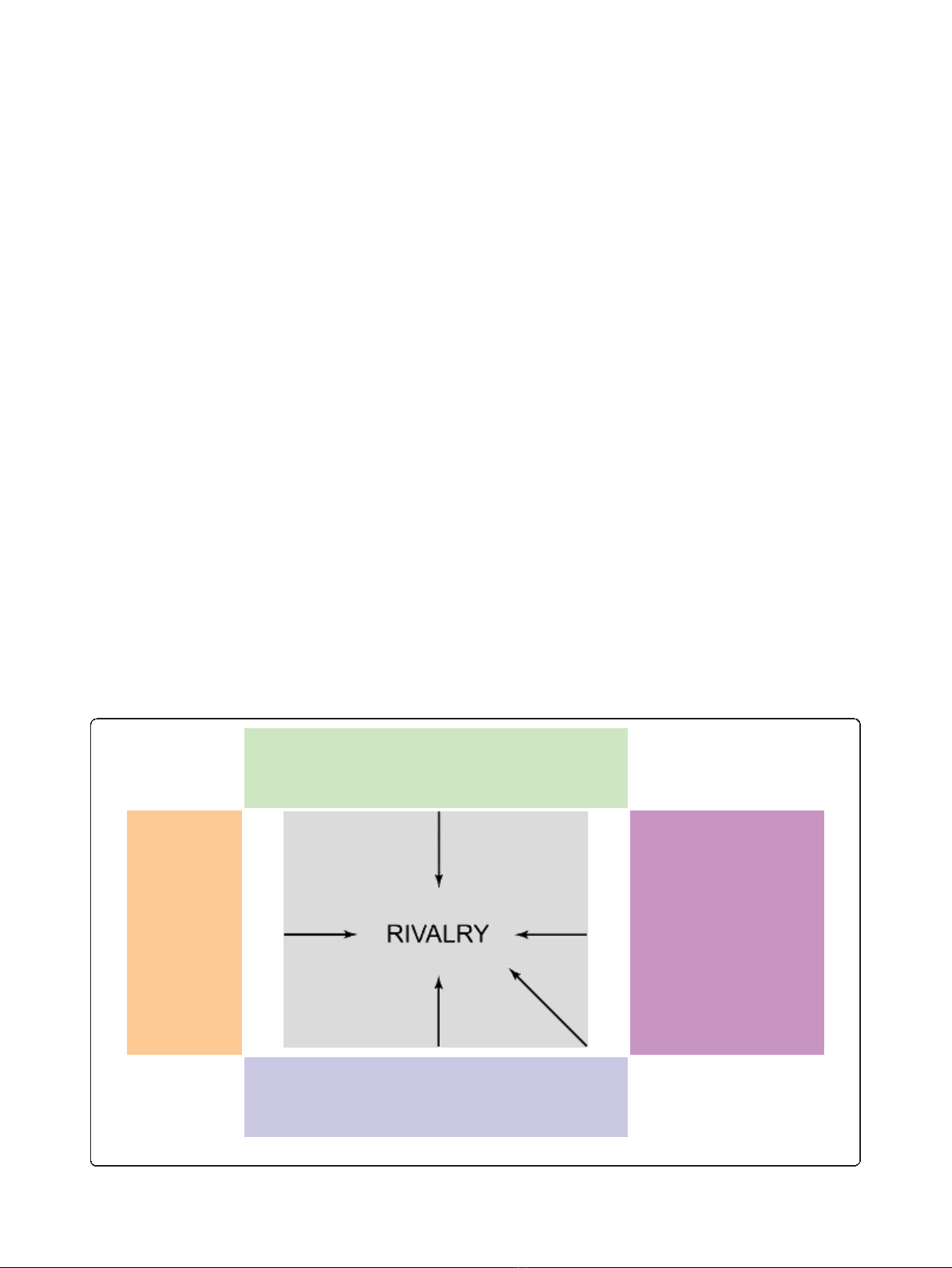
theory of company expansion has five basic elements
(Figure 1).
POWER OF SUPPLIERS
BARRIERS
TO ENTRY/
THREAT
OF NEW
MARKET
ENTRANTS
THREAT OF
SUBSTITUTES
(INCLUDING
TECHNOLOGY
CHANGE)
BARGAINING POWER OF BUYERS
DEGREE OF RIVALRY
Figure 1 Porter’s Five Forces. (Porter, 1980).
Lethbridge Globalization and Health 2011, 7:19
http://www.globalizationandhealth.com/content/7/1/19
Page 3 of 10

This paper is testing the use of Porter’sfiveforces
model as a way of achieving a better understanding of
multinational health care company strategies. In the
context of exploring different social science methodolo-
gies for the study of health policy and health systems,
Porter’s Five Forces model has had a great influence on
strategic management. Porter is considered to have pro-
vided strategic management with a theoretical frame-
work, which is accessible to both academics and
practitioners [6]. In this sense, it was considered an
appropriate model to analyse multinational company
behaviour in the health sector.
There have been some isolated attempts to apply Por-
ter’s model on competitive advantage to the health care
industry. Pines (2006) applied the model to emergency
medicine in the United States [7]. Emergency medicine
is unusual in that it has to provide continual access to
the health care system. The analysis showed the precar-
ious position of emergency care but highlighted how
emergency medicine physicians could campaign for
change to strengthen their position. Sheppard (1997)
applies Porter’s Five Forces to the Australian physiother-
apy industry [8]. This analysis concluded that phy-
siotherapy should reposition so that clients were viewed
as both suppliers and recipients of care, in order to gain
competitive advantage.
Breedveld et al (2006) used an adapted model of Por-
ter’sFiveForcestoexaminetheDutchhomecare
industry [9]. The study concluded that two additional
factors, the role of government and relations with sup-
pliers of complementary products or services, should
be included in order to explain how the home care
industry operated. This relatively small group of stu-
dies, where Porter’s Five Forces have been applied in a
health care context, are primarily concerned with dif-
ferent national health care settings, such as emergency
medicine. The application to public health care service
services is limited. Gaining insights into how private
providers, particularly international health care compa-
nies, view the potential of national health care markets,
will contribute to a greater understanding of how
changes in public sector health care policy affects com-
pany behaviour.
In this study, Porter’s Five Forces have been used to
identify key factors that have real or potential impact
on company entry into national health systems, by
understanding approaches to strategic comparative
advantage. These factors can be used by public health
systems to impact of companies. Porter’s Five Forces
have been translated into key factors, which are set out
below.
•Existing competitive rivalry-The importance of
ownership
•Barriers to entry-Gaining influence
•Bargaining power of buyers-Exploiting national
differences
•Power of suppliers-Making adjustments
•Threat of substitute products-Providing expert
capacity
This provides an indication of how further strategic
public-private partnerships are being constructed by the
private sector. The findings are set out in the following
section.
Findings
Existing competitive rivalry-The importance of
ownership
Market growth for five health care multinational com-
panies perceived market growth in two ways, and both
were dependent on finding ways for patients/consumers
to pay for health care. In the conventional private sector
health care market, health insurance is a key element
necessary for private health care expansion unless
depending on private direct payers. A much more signif-
icant finding in the 2005 research was that health care
companies viewed the public health care sector as an
expanding market, albeit a new and different one. The
rate of outsourcing of services from the public sector,
including clinical services, has increased and thus pro-
vides an expanding market. Contracting out of clinical
services and high technology diagnostic testing has
increased as a result of legislation and health policies
that increased the role of private providers in providing
‘choice’for patients. Company strategies reflected this
analysis. Capio wanted to “become a pan-European
operator, playing a role in the restructuring of the health
care sector; to focus on “the provision of acute health
care sector": and to “develop further focused service lines
e.g. ophthalmology, oncology, cardiac surgery, orthopae-
dics. ISS healthcare aimed to expand into the Nordic
market with specific medical specialties.
Rivalry in health care industry manifests itself in many
ways, particularly in the context of the public health
caresector.Perhapstheissueofpriceisthemost
important. Health care companies have found that the
lack of transparency of public health care prices made
competing more difficult. In 2005, the introduction of
diagnostic or health resource group (DRG/HRG) sys-
tems of pricing, by the public sector, was considered a
positive development by the five health care companies.
Diagnostic related groups (DRGs) are a system of cate-
gorising patients based on diagnosis, treatment/proce-
dures, age and length of stay. Categories establish a
uniform cost of each category and a maximum price for
reimbursement. Medicare, the United States government
health insurance programme,originallyintroduced
Lethbridge Globalization and Health 2011, 7:19
http://www.globalizationandhealth.com/content/7/1/19
Page 4 of 10

DRGs in 1983 as a way of trying to control the Medi-
care budget [10]. These new national systems of diag-
nostic/health related groups have been more widely
adopted over the past five years in relation to resource
allocation and pricing. It also enables international com-
parisons to be made [11]. In the United Kingdom, pri-
cing by health related groups or ‘Payment By Results’
has been implemented in acute services, since 2005 [12].
In Nordic countries, diagnostic related groups have
become the basis for pricing and are considered to
improve quality through higher prices or extra payments
[11]. In Germany, the new system is considered to
increase competition between hospitals [13].]. One of
the main concerns felt by four companies was that they
would only be able to compete as a result of transpar-
ency in pricing. Their criticisms of the existing DRGs
systems, in Europe, were based on a view that govern-
ments were setting pricing systems that were still biased
towards public providers.
Changes in ownership are an indication of how rivalry is
operating in the health care industry. In the last five years
there have been some significant changes in ownership
experienced by the five companies. The most significant
changes in ownership were experienced by Capio and ISS,
both Nordic companies. In September 2006, Capio was
bought by Opica, a company “indirectly jointly owned by
Apax Partners Worldwide LLP, by Nordic Capital Fund VI
and by funds advised or managed by Apax Partners SA“.
The company was de-listed in November 2006. Opica AB
is jointly owned by Apax Europe VI (45%), Nordic Capital
Fund VI (44%) and Apax France (11%). This acquisition
was conditional on Capio selling its UK hospitals in order
“to avoid regulatory problems“[14]. In June 2007, Opica
was given permission by the European Commission to sell
Capio UK [15]. Capio UK was sold to Ramsay Health care,
an Australian health care company, in 2008. This shows
that the European Commission (EC) was a player in this
process. Between 2007 and 2010, Capio also sold its hospi-
tals in Finland, Denmark and Switzerland, but achieved its
goals of moving into Spain and Germany, as well as conso-
lidating its presence in France.
In February 2005, ISS sold its health care operations
and its 49% interest in CarePartner to a joint venture,
now named Aleris Holding AB, owned by ISS EQT III
ltd and Aleris’s management. ISS made a profit of
DKK123 million from this sale. At the end of June 2005,
ISS sold its interest in this joint venture and made a
further profit of DKK 114 million. In 2005, ISS itself
was bought by PurusCo A/S, a consortium of EQT (a
Swedish private equity company) and Goldman Sachs
Capital Partners and was de-listed from the Copenhagen
Stock exchange. As with the Capio sale, the European
Commission was involved as a competition regulator in
this process.
ThecaseofParkwayownershipisamuchmorefluid
situation. In 2005, Texas Pacific Capital (TPG) bought
26% of Parkway shares [16]. In March 2010, TPG sold
23.9% of shares to Fortis International, an Indian health
care company, interested in international expansion.
Within weeks, Khazanah Nasional Berhad, the Malaysian
government investment arm, and existing Parkway
shareholder, had made a bid for ownership. In June
2010, these two shareholders were struggling to control
Parkway but by July 2010, Khazanah Nasional Berhad
was successful in gaining control of Parkway [17]). This
sale was not subject to the same regulatory competition
rules that exist in Europe. The overall ownership of
both BUPA and Fresenius remains the same in 2010 as
itwasin2005buttheyhavebothbeeninvolvedin
acquisitions to enter new markets and implemented
some rationalisations. Although BUPA remains a non-
profit company, it sold 25 acute hospitals to Cinven, a
private equity investor, for £1.44 billion in 2007, in
order to pay off debt and to focus on long term devel-
opment of the company, internationally and in the care
sector [18]. As a company in a country that is part of
the European Union, it will have been scrutinised by the
European Commission Since 2007, the company has
expanded it health insurance and care activities globally.
It bought the Amity Group in Australia and Guardian
Health care in New Zealand. It also entered the US
market in 2008 with the acquisition of Health Dialog, a
company providing health care analytics and decision
support services to 19 million people in the US and UK,
Spain and France. However, in 2009, BUPA acquired
the Brompton Hospital, which is based in London and
serves the international market, rather than the UK
market [18].
As part of its strategy to expand into health care
management, Fresenius bought the HELIOS group, a
German private hospital group, which has 55 hospitals
and 26,000 employees in Germany. This became an
internal Fresenius division. The Wittgensteiner Klinken
Group, which Fresenius bought in 2001, has been inte-
grated into the HELIOS division. There are further
signs of internal change within Fresenius with the
acquisition by Fresenius Vamed, the international
health management division, of four clinics in the
CzechRepublic,fromFreseniusHelios.FreseniusMed-
ical Care, the dialysis clinics division, bought the Renal
Care Group, a company providing kidney dialysis, in
the United States in 2006, thus expanding its presence
in North America [19].
Although the four companies have different patterns
of sales and acquisitions, they show that there is a con-
stant process of reviewing what is profitable and what is
considered important to test out. Both Capio and BUPA
have sold a large part of their portfolio in order to
Lethbridge Globalization and Health 2011, 7:19
http://www.globalizationandhealth.com/content/7/1/19
Page 5 of 10


![Liệu pháp nội tiết trong mãn kinh: Báo cáo [Mới nhất]](https://cdn.tailieu.vn/images/document/thumbnail/2024/20240705/sanhobien01/135x160/4731720150416.jpg)