

* Corresponding author. Tel.: +19792188169
E-mail addresses: btakabi@tamu.edu (B. Takabi)
© 2016 Growing Science Ltd. All rights reserved.
doi: 10.5267/j.esm.2015.10.002
Engineering Solid Mechanics 4 (2016) 25-32
Contents lists available at GrowingScience
Engineering Solid Mechanics
homepage: www.GrowingScience.com/esm
Thermomechanical transient analysis of a thick-hollow FGM cylinder
Behrouz Takabi*
Texas A&M University, Department of Mechanical Engineering, 3123 TAMU, College Station, TX 77843, United States
A R T I C L E I N F O A B S T R A C T
Article history:
Received 6 April, 2015
Accepted 10 October 2015
Available online
11 October 2015
This paper presents an analytical and a numerical thermomechanical investigation of a thick-
walled cylinder made of the functionally graded materials (FGMs). The hollow cylinder is
subjected to a pressure and a thermal load and the properties of this material are varying across
the thickness from the inner face that is a ceramic to the outer one which is a metal. After
validating the current results by the analytical results, the thermomechanical behavior of the
cylinder in the transient condition is investigated and the hoop and radial stresses and also
temperature distribution are reported. The results reveal that the use of FG material causes a
decrease in the stress; thus, it significantly improves thermomechanical behavior of the
domain, thanks to using FG materials.
© 2016 Growing Science Ltd. All rights reserved.
Keywords:
FGM
Hollow cylinder
Numerical solution
Transient
Thermomechanical
Tempreture
Nomenclature
r Radios ρ Density Pb External pressure l Element length
T Temperature σrr Radial stress Ta Inner temperature
P Pressure σθθ Hoop stress Tb Outer temperature
E Young modulus C Specific heat capacity a Inner radius
u Displacement K Thermal conductivity b Outer radius
ε Strain α Thermal expansion f Volume fraction of FGM
υ Poisson ratio Pa Internal pressure n Power factor of FGM
1. Introduction
Nowadays, functionally graded materials (FGMs) are playing an important role in the design of
complicated and modern structures. FGMs have a range of specifications which caused scientists tend
to study on these materials. The most important exclusivity of FGMs is the ability of change in properties

26
from one surface to the other, gradually and continuously. Therefore, these advanced materials can be
utilized in structures which need to have varying properties in certain directions. One of the common
applications of this material is in a cylinder that should resist high thermal stresses in the inner surface,
while the outer face is under high mechanical loads. Therefore, FGM cylindrical structures have been
widely employed in automobile and nuclear and aerospace industries.
In order to design and analysis of structures made of FGM, various simulation methods including
numerical and analytical approaches have been proposed so far (Aihara et al., 1998; Salavati et al., 2014;
Vimal et al., 2014). Most of the studies have focused on assessing thermal stresses and also the
deformation of the domain, such as the use of FGMs for controlling of thermal deformations
(Wetherhold et al., 1996), the investigation of thermal stresses and deformation in shells made of FGM
under thermal loads (Takezono et al., 1996; Zhang et al., 1994).
Kandil et al. (1995) performed a computational study on a thick-walled cylinder subjected to dynamic
internal temperature gradient. They reported thermal stresses and also the temperature distribution
within the cylinder wall. Ghosn and Sabbaghian (1982) achieved the general solutions of governing
equations in the Laplace transform domain for a one dimensional axisymmetric thermoelastic material.
Moreover, a transversely isotropic hollow cylinder of finite length has solved using a direct power series
approximation by Chen (1983). Shahani and Nabavi (2007) analytically investigated the thermoelastic
behavior of a thick-walled cylinder. For this purpose, they used the finite Hankel transform. Besides,
they applied the time dependent thermal boundary conditions on the inner surface of the cylinder.
Moreover, for the mechanical boundary conditions, they considered that traction is prescribed on the
inner surface and the fixed displacement boundary condition on the outer one; further, they examined
the case that tractions are prescribed on both the inner and outer surfaces of the hollow cylinder.
Therefore, the transient thermal response of the cylinder was derived and then the quasi-static structural
problem was solved and closed form relations were extracted for the thermal stresses.
Kardomateas (1989, 1990) performed an analytical study on an orthotropic hollow cylinder subjected
to general form of constant thermal boundary conditions, using Hankel asymptotic expansions for Bessel
functions. Yee and Moon (2002) performed a study on the transient, plane quasi-static thermal stress
analysis of an orthotropic hollow cylinder subjected to an arbitrary initial temperature distribution and
homogeneous thermal boundary conditions. The thermoelastic solution was obtained by a stress function
approach. Jabbari et al. (2007) suggested a general theoretical analysis of three-dimensional mechanical
and thermal stresses for a short hollow FGM cylinder by the generalized Bessel function and Fourier
series.
Goshima and Miyao (1991) analytically solved a long hollow circular cylinder subjected to transient
internal heat generation due to x-ray radiation, while there is convection on its inner and outer surfaces.
For this purpose, they used Laplace transform and Green’s function. Bayat et al. (2012) performed a
thermo-mechanical analysis on a hollow FGM sphere. They investigated the effect of non-homogeneity
in FGM thick sphere by choosing a dimensionless parameter. They also reported that by changing the
value of that parameter, the properties of FGM can be so modified that the lowest stress levels are
reached.
Most of the literatures have performed the analytical solution of some simple geometries made of
FGM, considering simplified assumptions, such as employing Hankel transform (Goshima & Miyao,
1991) or Laplace transform (Sutradhar et al., 2001). In this work, a thick-hollow FGM cylinder subjected
to both internal and external pressures and also under thermal loads is solved. Moreover, in this study,
the properties of material are varying from the inner layer that is a ceramic to the outer face which is a
metal continuously and gradually in the thickness direction. The variable properties are density, specific
heat capacity and thermal conductivity. Then, the transient thermal distribution and also stress
distribution including the hoop, radial stresses are calculated. Then the current results are validated by
an analytical solution in (Shahani & Nabavi, 2007).
B. Takabi / Engineering Solid Mechanics 4 (2016)
27
2. Analysis and formulation
For the analysis, a hollow cylinder made of functionally graded material with inner and outer radius
a and b, respectively is considered. This cylinder is long enough in the axial direction for satisfying the
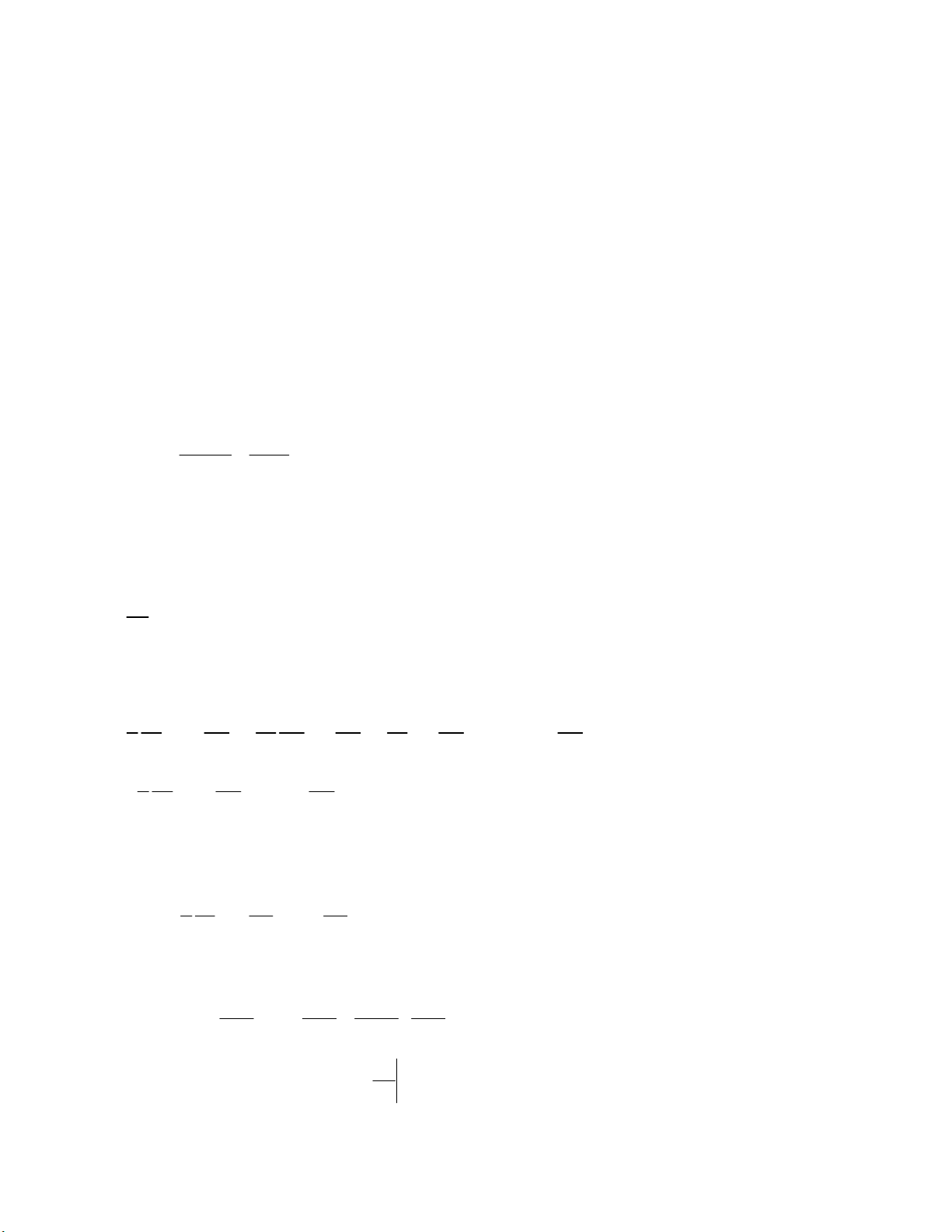
plane strain condition. The properties of this material such as
, c and k are varying from the inner to
outer face. However, because the impact of
(Poisson ratio) is negligible on the stresses,
is assumed
to be constant throughout the thickness. This assumption has used in numerous studies such as Erdogan
(1995), Horgan and Chan (1999), Chen and Erdogan (1996). Then the temperature distribution is found
and radial and hoop stress also are calculated and discussed.
For the computational approach, the assumption of multi-layer is used for FGM in the thickness
direction. In other words, the geometry consists of some layers and each layer is formed by some
elements. The properties in each layer are assumed to be constant which is a common and usual approach
in this field.
2.1.Temperature distribution
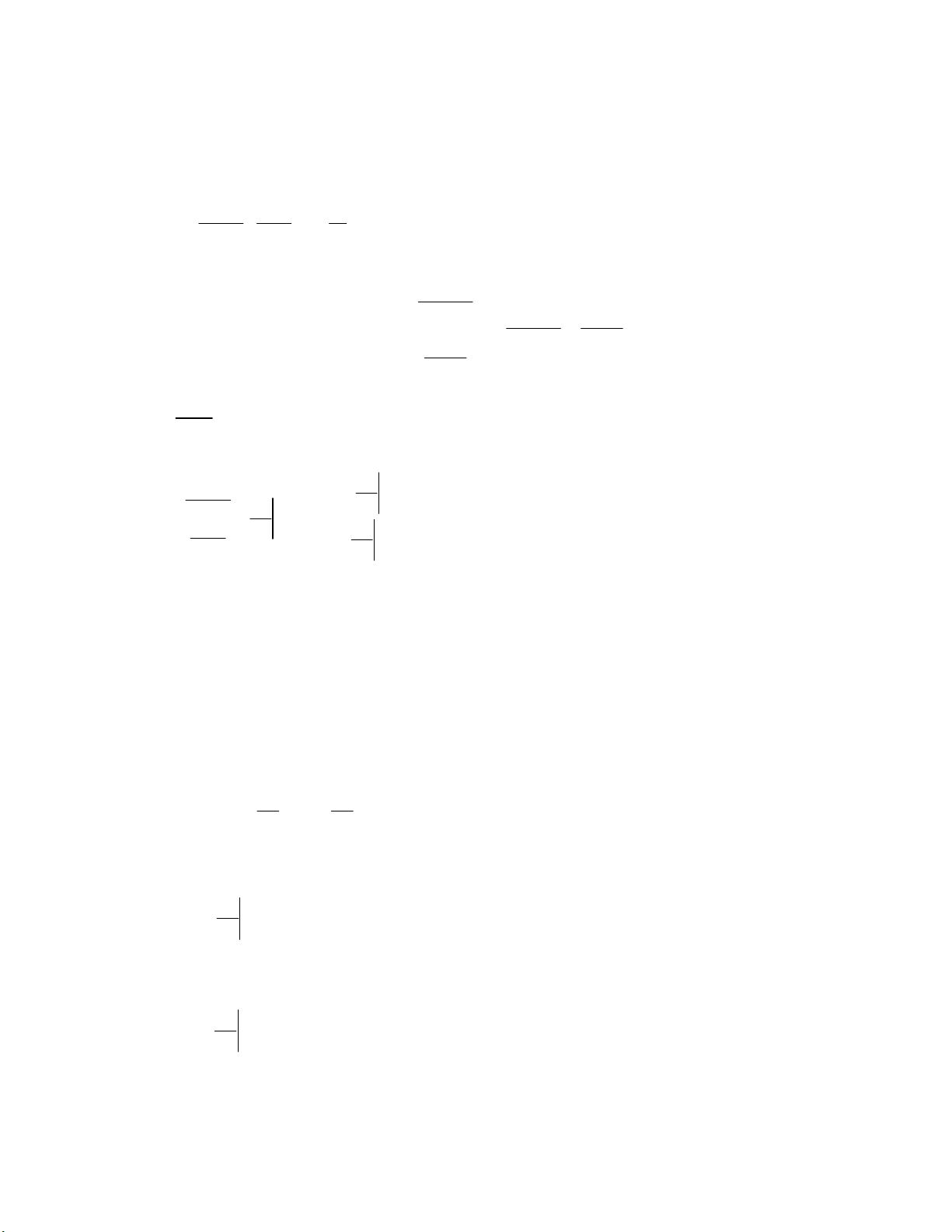
The Temperature in any element is calculated by linear form of shape function:
a)-(1
e
TNT
b)-(1
l
rr
l
rr
Nii 1
][
and
c)-(1
1ii
lr r
and also we have
(2)
e
TN
t
T
According to Fourier equation (Eq. (3)) and considering the plane strain condition (the cylinder is long
enough), the axisymmetric equation will be as Eq. 4:
(3)
2
11 ,
p
TTTT
Kr K K q C
rr r z z t
r
(4)
1,
p
TT
Kr C
rr r t
where
is density, C specific heat capacity and K thermal conductivity.
Using Galerkin method for Eq. (4), we have:
(5)
02
1
drr
t
T
c
r
T
Kr
rr
NT
Simplifying Eq. (5) yields
(6)
1
i
i
r
r
T
e
T
e
T
TT
r
T
rNKTdrNrNc
Tdr
r
N
r
r
N
r
N
N
r
N
NK
28
Employing finite element in matrix form gives us Eq. (7).
(7)
fTCTK e
e
][][
where
11
11
2
1
iiii
iiii
r
r
T
rrrr
rrrr
l
K
dr
r
N
r
r
N
KK
i
i
,
(8)
11
1
1
11
11
3,
3
12
ii
ii
i
rr
Tii
i
rr
ii ii
ii i i
rr
rrrr
l
CcNrNdrc r dr
rr ll
l
rr rr
cl
rr r r
(9)
1
1
1
1
i
i
i
i
r
i
r
i
r
r
i
i
r
T
r
r
T
r
K
r
T
r
l
rr
l
rr
Kf .
(10)
Moreover, Eq. 11 shows the relation between the place and the time for temperature (T)
(11)
11
[] [] ,
pp
ii
pp
ii
TT
K
Cf
TT
where
p
is a time parameter and istands for a place parameter.
In Eq. (11), backward method is used for time derivative of temperature. It should be noted that these
Eqs. are for one element; and these matrixes must be assembled into a general matrix.
(12)
r
T
K
r
T
KTT jjjj
11 ,
Using continuity condition in layer boundaries (Eq. (12)), vector
f
is eventually assembled as:
(13)
N
rr
NN
rr
r
T
rK
r
T
rK
F
1
11
B. Takabi / Engineering Solid Mechanics 4 (2016)
29
2.2.Stress distribution
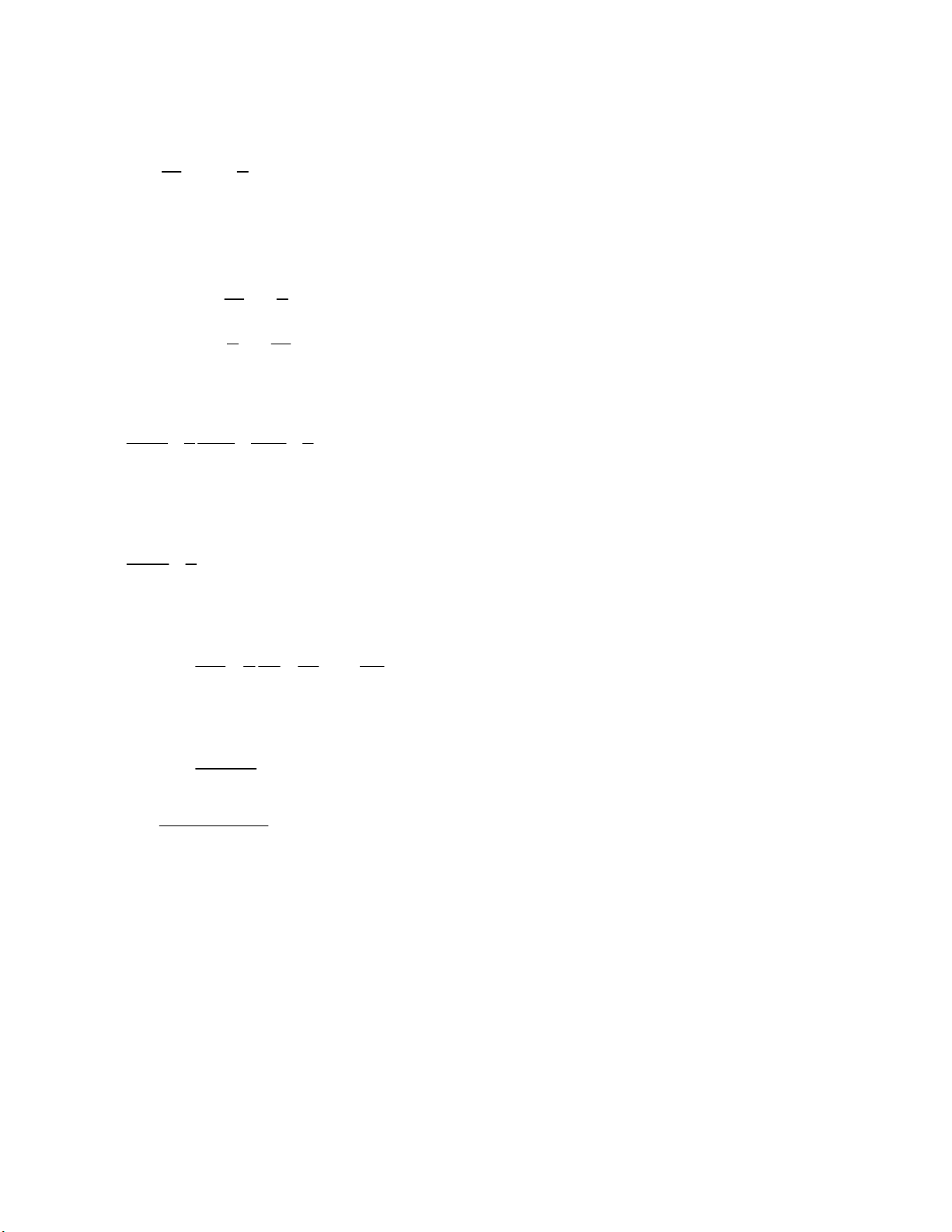
Using the plane strain assumption and axisymmetry, the strain displacement follows the below
equations:
0,,
zzrr r
u
r
u
(14)
)()()2(
)()()2(
0
0
TT
TT
zzrr
zzrrrr
a,b)-(15
)()()2(
)()()2(
0
0
TT
r
u
r
u
TT
r
u
r
u
rr
a,b)-(16
In the radial direction, the governing equation is:
(17)
u
rzr
rrr
zr
r
rr
)(
11
2
2
and after simplifying the governing equation according to the assumptions used in this problem, we
have
(18)
u
r
rrr
rr
)(
1
2
2
Eventually, the equation in terms of displacement is
(19)
u
r
T
r
u
r
u
r
r
u
)
1
)(2( 22
2
where
(20)
,
2(1 )
,
(1 )(1 2 )
(3 2 ) ,
E
G
E
where E stands for Young modulus,
is Poisson ratio and
is thermal expansion.
Employing the similar approach for temperature distribution (Galerkin method) and assembling the
related matrix and applying continuity condition in layer boundaries (Eq. (21)), then Eq. (19) is solved
and stress distribution is found.
(21)
1
1,
j
rr
j
rrjj uu
3. Simulation of properties varying
In this paper, it is considered that the material properties are varying from inner face (ceramic layer)
gradually to the outer one (metal layer) in the thickness direction according to the volume fraction law.




![Đề thi nguyên lý động cơ đốt trong [mới nhất]](https://cdn.tailieu.vn/images/document/thumbnail/2012/20121222/endlesslovelp/135x160/7001356177347.jpg)


![Đề thi Động cơ đốt trong kết thúc học phần: Tổng hợp [năm]](https://cdn.tailieu.vn/images/document/thumbnail/2026/20260320/hoabattu2026/135x160/24841774320014.jpg)


