

VẬT LÝ THỰC PHẨM
(Food Physics)
CBGD: Dương Văn Trường
Viện Công nghệ Sinh học và Thực phẩm
Đại học Công nghiệp TP HCM
Email: duongvantruong@iuh.edu.vn hoặc
duongvantruong1510@gmail.com
DT : 0904 374 160

Nội dung chương trình
Chương 1: Hoạt độ nước
Chương 2: Các thông số vật lý và tính chất của thực
phẩm
Chương 3 : tính chất bề mặt của thực phẩm
Chương 4: Các tính chất lưu biến của thực phẩm
Chương 5 : Tính chất nhiệt, điện của thực phẩm

Tài liệu tham khảo
•Bài giảng VLTP :
https://sites.google.com/site/duongvantruong1510/cong-nghe-
thuc-pham/vat-ly-thuc-pham
•Wilhelm, Luther R., Dwayne A. Suter, and Gerald H. Brusewitz.
2004. Physical Properties of Food Materials. Chapter 2 in Food &
Process Engineering Technology, 23-52. St.
•James F. Steffe, 1996, Reological methods in food process
engineering (second edition), Freeman Press, USA.
•Jasim Ahmed Hosahalli S. Ramaswamy, Stefan Kasapis Joyce I. Boye,
Novel Food Processing (Effects on Rheological and Functional
Properties), CRC Press
•Physical Chemistry of Foods

TÀI LIỆU THAM KHẢO
(References)
[1].Andrew J. Rosenthal (1999). Food Texture Measurement and
Perception. ISBN 0-8342-1238-2, Aspen Publishers, Inc., Printed in the
United States of America
[2]. Ignacio Arana (2012). Physical Properties of Foods- Novel
Measurement Techniques and Applications. CRC Press. ISBN -13: 978-1-
4398-3537-1
[3]. Ludger Figura and Arthur A. Teixeira (2007). Physics Food. ISBN 978-3-
540-341918, Springer- Verlag Berlin – Heidelberg.
[4]. Tharwat F. Tadros (2005). Applied Surfactants- Principles and
Applications. ISBN-13: 978-3-527-30629-9, WILEY-VCH Verlag GmbH & Co.
KGaA, Weinheim.
[5]. Serpil Sahin and Servet Gülüm Sumnu (2006). Physical Properties of
Foods. ISBN-13: 978-0387-30780-0, Springer, Printed in the United
States of America.
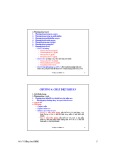
Tại sao phải nghiên cứu tính chất vật lý của thực phẩm?
- Phân tích thiết
bị
- XD hệ thống
thiết bị phù
hợp
Mục đích
Thay đổi của quá
trình chế biến: biến
đổi cơ học, nhiệt,
điện, quang, âm và
điện từ
TP có nguồn gốc sinh
học : tươi sống hoặc
qua chế biến


![Giáo trình Công nghệ sản xuất bánh kẹo (Nghề Chế biến thực phẩm - Trình độ trung cấp) - Trường Cao đẳng Cơ điện Hà Nội [Mới nhất]](https://cdn.tailieu.vn/images/document/thumbnail/2026/20260323/lionelmessi01/135x160/52561774426348.jpg)


![Giáo trình Hoá sinh thực phẩm - Trường Cao đẳng Cơ điện Hà Nội [Mới nhất]](https://cdn.tailieu.vn/images/document/thumbnail/2026/20260323/lionelmessi01/135x160/29921774423858.jpg)


