

BioMed Central
Page 1 of 10
(page number not for citation purposes)
Retrovirology
Open Access
Research
Comparative biochemical analysis of HIV-1 subtype B and C
integrase enzymes
Tamara Bar-Magen1, Richard D Sloan1, Verena H Faltenbacher1,
Daniel A Donahue1,2, Björn D Kuhl1,3, Maureen Oliveira1, Hongtao Xu1 and
Mark A Wainberg*1,2,3
Address: 1McGill University AIDS Centre, Lady Davis Institute-Jewish General Hospital, Montreal, Quebec, Canada, 2Department of Microbiology
and Immunology, McGill University, Montreal, Quebec H3A 2T5, Canada and 3Division of Experimental Medicine, McGill University, Montreal,
Quebec H3A 2T5, Canada
Email: Tamara Bar-Magen - tamara.bar-magen@mail.mcgill.ca; Richard D Sloan - richard.sloan@mail.mcgill.ca;
Verena H Faltenbacher - v.faltenbacher@web.de; Daniel A Donahue - daniel.donahue@mail.mcgill.ca;
Björn D Kuhl - Bjorn.kuhl@mail.mcgill.ca; Maureen Oliveira - moliveira@ldi.jgh.mcgill.ca; HongtaoXu-hongtaoxu_00@yahoo.com;
Mark A Wainberg* - mark.wainberg@mcgill.ca
* Corresponding author
Abstract
Background: Integrase inhibitors are currently being incorporated into highly active antiretroviral
therapy (HAART). Due to high HIV variability, integrase inhibitor efficacy must be evaluated against
a range of integrase enzymes from different subtypes.
Methods: This study compares the enzymatic activities of HIV-1 integrase from subtypes B and C
as well as susceptibility to various integrase inhibitors in vitro. The catalytic activities of both
enzymes were analyzed in regard to each of 3' processing and strand transfer activities both in the
presence and absence of the integrase inhibitors raltegravir (RAL), elvitegravir (EVG), and MK-
2048.
Results: Our results show that integrase function is similar with enzymes of either subtype and
that the various integrase strand transfer inhibitors (INSTIs) that were employed possessed similar
inhibitory activity against both enzymes.
Conclusion: This suggests that the use of integrase inhibitors against HIV-1 subtype C will result
in comparable outcomes to those obtained against subtype B infections.
Background
Integration of viral cDNA into the host genome is one of
the definitive features of retroviral replication. Integration
is mediated by the HIV pol-encoded integrase enzyme.
Recently, integrase inhibitors have been added to the arse-
nal of antiviral drugs used in therapy. RAL (Merck) was
the first integrase inhibitor to be approved by the US Food
and Drug Administration (FDA) after clinical trials dem-
onstrated that this drug promoted a rapid and sustained
antiretroviral effect [1]. EVG (GS-9137, Gilead), another
integrase inhibitor, is currently in phase III clinical trials
[2]. Other integrase inhibitors, such as MK-2048 (Merck),
are still in pre-clinical development.
Published: 11 November 2009
Retrovirology 2009, 6:103 doi:10.1186/1742-4690-6-103
Received: 16 June 2009
Accepted: 11 November 2009
This article is available from: http://www.retrovirology.com/content/6/1/103
© 2009 Bar-Magen et al; licensee BioMed Central Ltd.
This is an Open Access article distributed under the terms of the Creative Commons Attribution License (http://creativecommons.org/licenses/by/2.0),
which permits unrestricted use, distribution, and reproduction in any medium, provided the original work is properly cited.
Retrovirology 2009, 6:103 http://www.retrovirology.com/content/6/1/103
Page 2 of 10
(page number not for citation purposes)
Integrase inhibitors are active against both B- and non-B
subtypes in therapy [3,4]. Subtype C variants are respon-
sible for approximately 50% of global infections, mostly
in Sub-Saharan Africa and India [5]. It is therefore impor-
tant to determine whether the integrase enzymes of differ-
ent HIV-1 subtypes behave in a parallel manner to one
another and whether they respond similarly to the use of
integrase inhibitors of HIV-1 replication.
After viral entry and reverse transcription, reverse-tran-
scribed double-stranded blunt-ended DNA is incorpo-
rated into the host cell genome through two catalytic
activities mediated by integrase: 3' end processing and
strand transfer [6,7]. During 3' end processing, a dinucle-
otide adjacent to the conserved 3' terminal CA is excised
from the 3' end of the recently reverse transcribed HIV-1
DNA genome, generating 3' hydroxyl ends. During the
strand transfer reaction, both newly generated 3' ends are
covalently linked to target DNA in a concerted fashion via
a one-step transesterification reaction [8]. In vitro, inte-
grase can also catalyze two additional reactions: disinte-
gration and specific internal endonucleolytic cleavage
[9,10].
Variability between different HIV-1 integrases at an amino
acid level is low, ≈ 8-12%. However, sites of amino acid
differences between subtypes are often close to resistance-
related amino acids. We were therefore interested in ana-
lyzing whether such minor differences might be impor-
tant in differential acquisition of INSTI resistance
mutations in a subtype-specific manner [11]. Further-
more, natural polymorphisms in non-B integrase proteins
might alter INSTI binding or activity [12,13]. An in silico
comparison of subtype B and CRF A/G integrase predicted
that polymorphisms within subtypes might affect struc-
ture and substrate binding characteristics of IN enzymes
[13]. In this study, we compared the enzymatic activities
of subtype B and C recombinant integrases in the context
of inhibition by RAL, EVG, and the novel INSTI MK-2048.
Results
Purification of active subtype C integrase
Subtype C integrase was PCR amplified from the pINDIE-
C1 molecular clone and introduced into the expression
vector pET-15B, replacing the ORF of subtype B integrase
previously cloned by Bushman et al. [14]. To increase the
solubility of subtype C recombinant proteins, two amino
acid changes were introduced: a phenylalanine at codon
185 was changed to a histidine, and a cysteine at codon
280 was changed to a serine. These changes mimic those
previously introduced into subtype B integrase to increase
solubility and are known to not affect catalytic activity
[15,16]. Expression and purification of the subtype B and
C integrase enzymes were performed simultaneously as
previously described for subtype B integrase [15] with
minor modifications. Subtype B and C integrases were
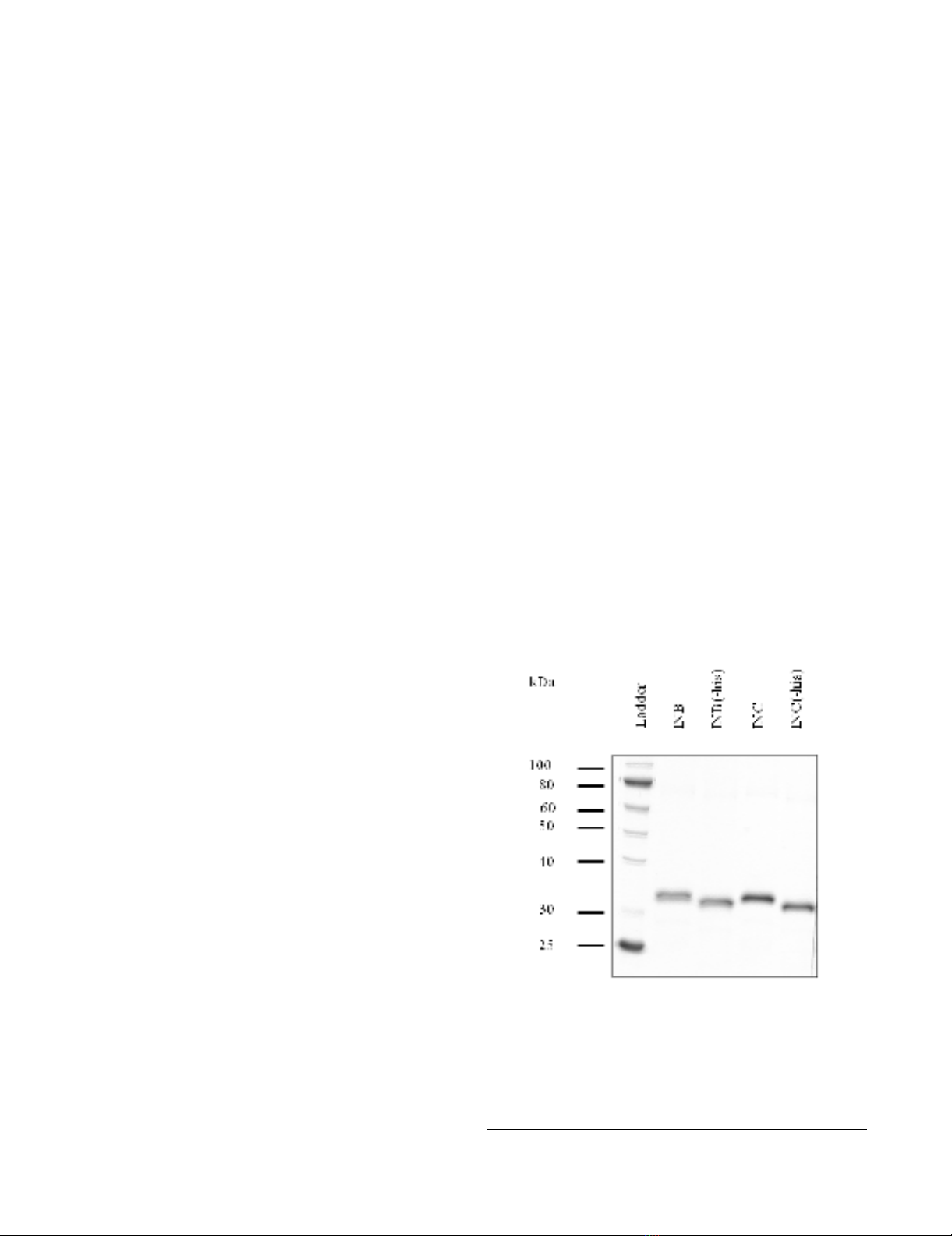
successfully purified to > 95% homogeneity (Figure 1).
The N-terminal His tag was removed from recombinant
integrase enzymes by thrombin cleavage (Figure 1). When
the enzymatic activities of both subtype B and C purified
recombinant proteins in the presence or absence of the N-
terminal His tag were compared, no difference was
detected (data not shown). Therefore, all further experi-
ments were orchestrated using recombinant integrase that
did not undergo His tag removal.
Biochemical properties of subtype C integrase
Integrase mediates the insertion of viral cDNA into host
chromatin through two unique enzymatic activities: 3'
processing and strand transfer [6,17]. Oligonucleotides
that mimic the viral LTR ends can be utilized to analyze
these two catalytic activities in vitro. First, subtype B and C
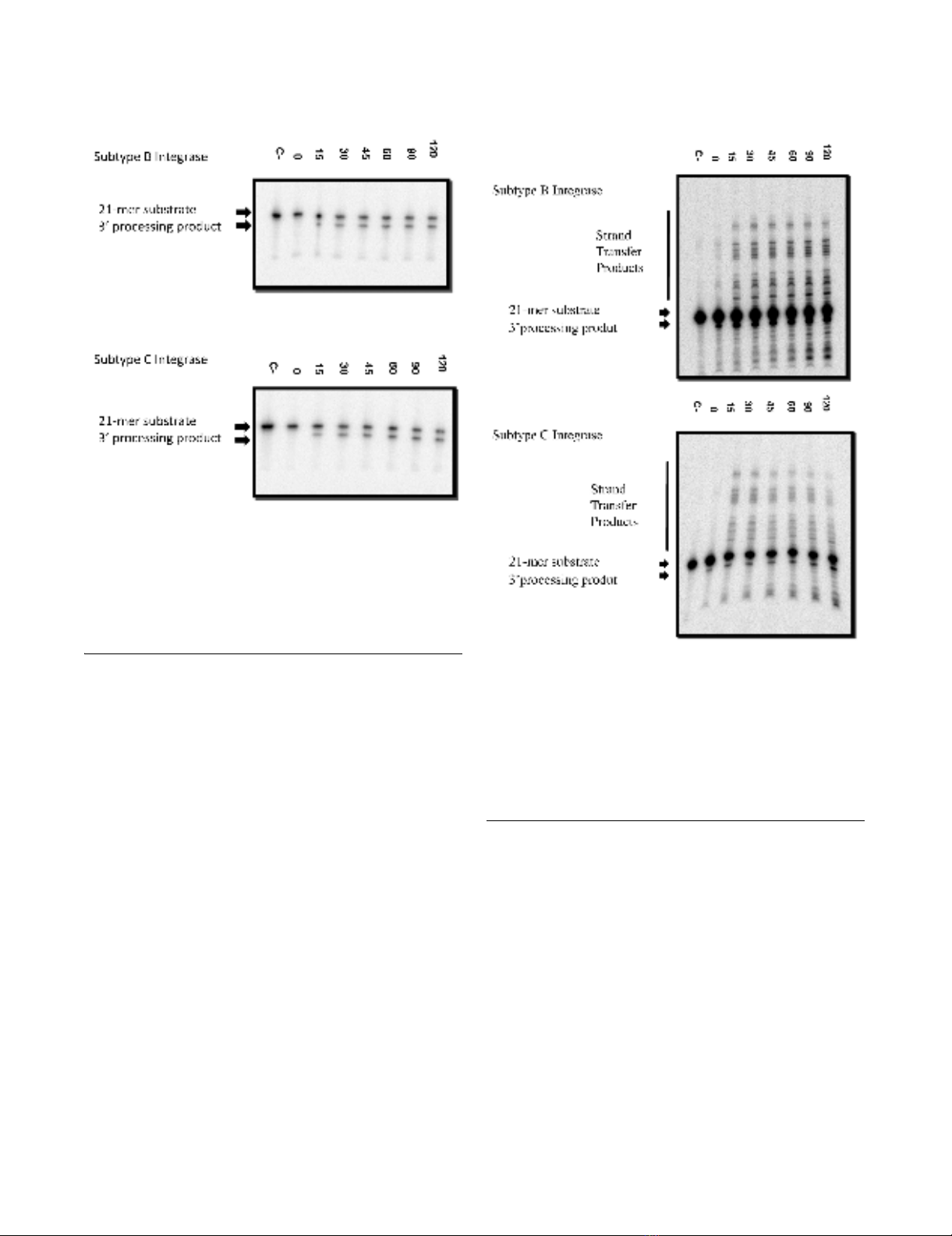
integrases were tested for their ability to perform 3'
processing (Figure 2) and strand transfer (Figure 3). Time
course experiments show similar results for both
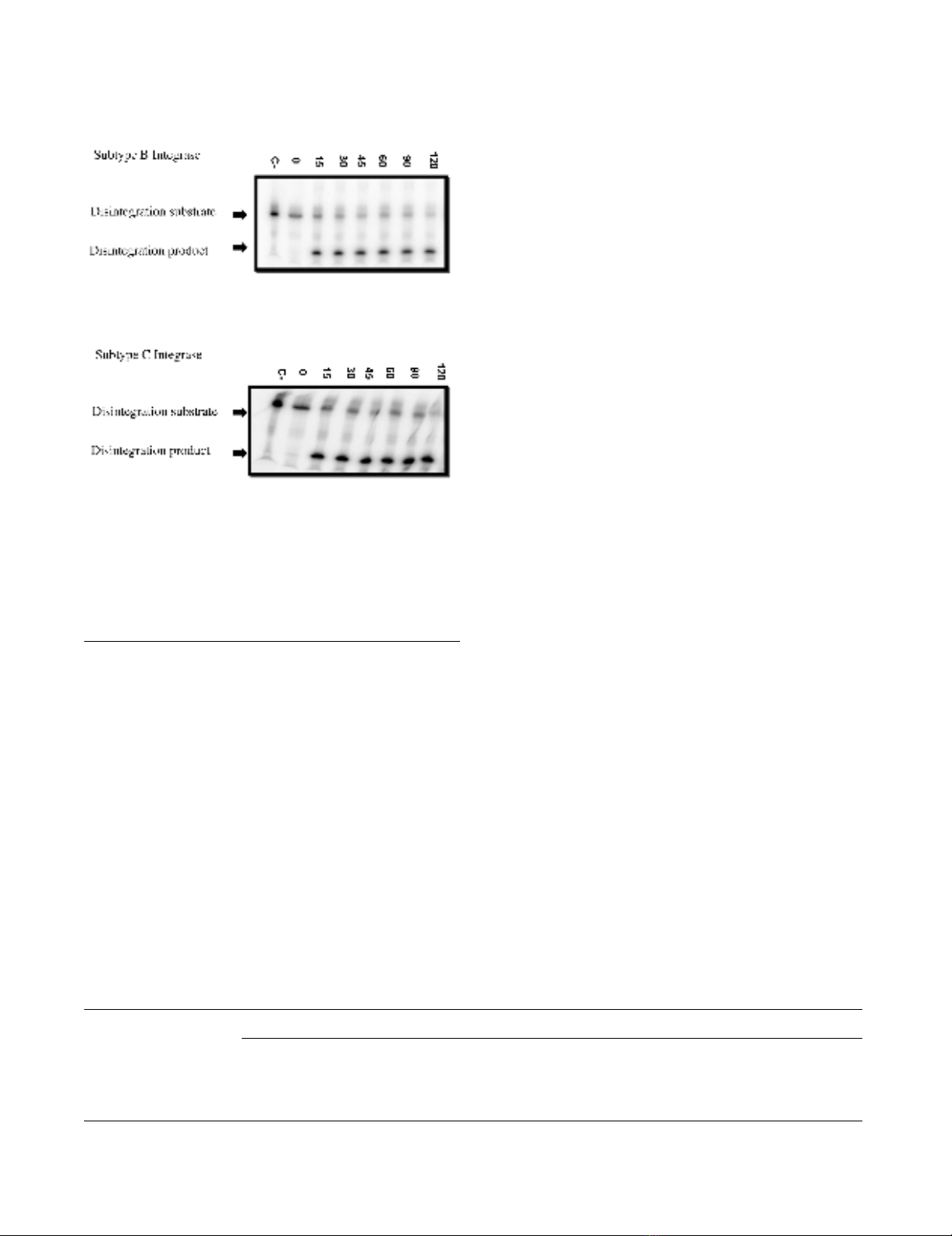
enzymes. Disintegration was also analyzed and subtype C
recombinant protein catalyzed this activity to a similar
extent as did subtype B recombinant protein (Figure 4).
These experiments confirm the activity of our subtype C
purified recombinant protein.
Purification of recombinant subtype B and C integrase enzymesFigure 1
Purification of recombinant subtype B and C inte-
grase enzymes. N-terminal His tags of the enzymes were
removed from purified subtype B and C recombinant proteins
by thrombin cleavage. Lane 1, protein ladder (10-250 kDa)
(New England Biolabs); INB, subtype B integrase; INC, sub-
type C integrase.
Retrovirology 2009, 6:103 http://www.retrovirology.com/content/6/1/103
Page 3 of 10
(page number not for citation purposes)
Subtype B and C enzymes are inhibited to a similar extent
by RAL, MK-2048 and EVG
RAL and EVG are INSTIs with high specific activity against
strand transfer [18,19]. MK-2048 is a prototype second-
generation INSTI with a resistance profile that is distinct
from RAL and EVG [20,21]. These three drugs have been
reported to be approximately 100-fold less specific for the
inhibition of 3' processing activity compared to strand
transfer [18,22,23].
Purified recombinant subtype B and C integrase enzymes
were incubated with increasing concentrations of inte-
grase inhibitors and corresponding templates. The results
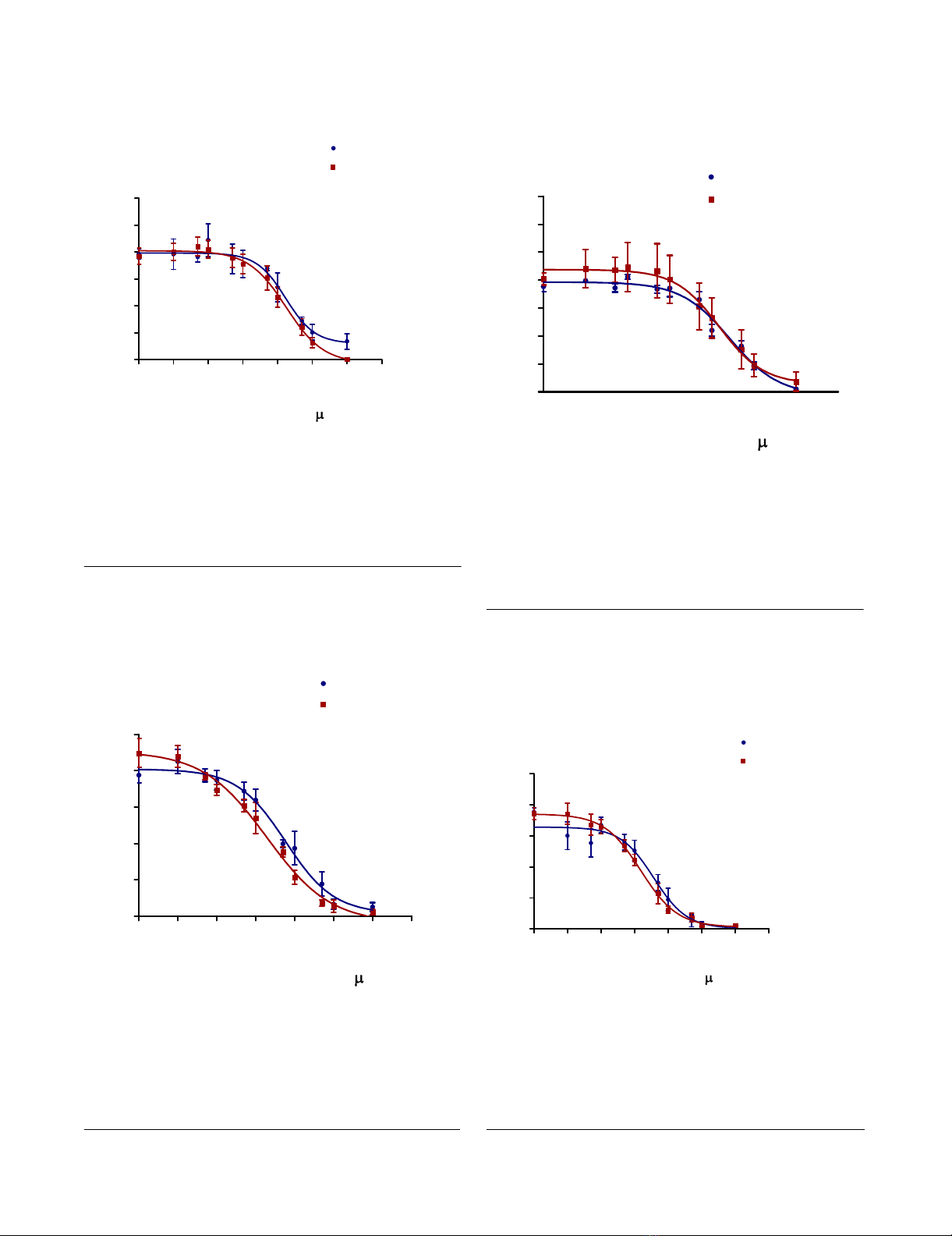
of Table 1 and Figures 5, 6 and 7 show that 3' processing
mediated by recombinant enzymes of both subtypes was
inhibited to a similar extent (p > 0.05) by all three drugs
in the presence of MnCl2. The inhibition of 3' processing
required much higher concentrations of integrase inhibi-
tors than those needed to block strand transfer for both
subtype enzymes (Table 1), consistent with previously
reported data for subtype B integrase [18].
The strand transfer activity of subtype B and C recom-
binant proteins was inhibited by all three inhibitors. The
IC50 values of RAL for subtype B and C integrase strand
transfer were 0.37 μM and 0.15 μM, respectively, in assays
that employed Mn2+ as the cation (Figure 8, Table 1). The
IC50 values for EVG inhibition of strand transfer in Mn2+-
based assays were 0.014 μM and 0.018 μM for the subtype
B and C enzymes, respectively (Figure 9, Table 1). The IC50
values for MK-2048 against subtype B and C enzymes
were 0.075 μM and 0.08 μM, respectively (Figure 10,
Table 1).
Disintegration was inhibited by high concentrations of
MK-2048 to a comparable extent with both subtype B and
C enzymes (Figures 11, 12, 13). In contrast, neither RAL
nor EVG had much effect on this process, which is a dis-
covery that is consistent with work by others [22]. We also
evaluated strand transfer in the presence of MgCl2 rather
than MnCl2 and obtained similar IC50 values (p > 0.05)
3' Processing assayFigure 2
3' Processing assay. One representative reaction (out of
five reactions) is illustrated. Recombinant enzyme was incu-
bated at 37°C with templates (radiolabeled double stranded
oligonucleotide INT1/2) for the indicated times up to 120
minutes. The 21-mer substrate and 19-mer 3' processing
products are indicated.
Strand transfer assayFigure 3
Strand transfer assay. One representative reaction (out of
five reactions) is depicted. Recombinant integrase enzyme
was incubated at 37°C for 3 minutes for the initial 3' process-
ing reaction. T35/SK70, double stranded oligonucleotide sub-
strate, was added and reaction tubes were incubated at 37°C
for the indicated times up to 120 minutes. The 21-mer sub-
strate, 19-mer 3' processing, and strand transfer products are
indicated.
Retrovirology 2009, 6:103 http://www.retrovirology.com/content/6/1/103
Page 4 of 10
(page number not for citation purposes)
for each of subtype B versus C enzymes with each of RAL,
EVG and MK-2048 in a microtiter plate system [24] (Table
2). Consistent with previous observations, IC50 values
were lower when these reactions were performed with
MgCl2 than with MnCl2 [2,24].
Inhibition of replication by integrase inhibitors was also
evaluated in cell culture based assays using cord blood
mononuclear cells (Table 3). Subtype B and C clinical iso-
lates were inhibited to a similar extent by each of RAL,
EVG and MK-2048.
Discussion
Most HIV-1 patients are infected with non-B subtypes,
most commonly subtype C [5], and subtype-specific dif-
ferences in the development of drug resistance have been
reported [25]. Therefore, it is important to understand the
activity of enzymes of different subtypes. In our study,
subtype B and C integrase enzymes were evaluated; and
the activity of integrase inhibitors against them were com-
pared, since a role for polymorphisms and structure-func-
tion differences between subtypes in drug resistance has
been demonstrated [11,12,23].
Strand transfer inhibitors have been shown as efficient
inhibitors of integration amongst a wide range of retrovi-
ruses [26]. In silico observations suggest that subtype-spe-
cific differences in regard to key amino acids in integrase,
including those close to the catalytic site, may pose an
effect on the binding of RAL [13,27,28]. Therefore, sub-
type-specific variations in DNA-binding domains could
also affect the affinity of RAL for integrase. In vitro, sub-
type B and C recombinant proteins retain similar enzy-
matic capacities in the absence of drug (Figures 2, 3, 4),
with comparable strand transfer, 3' processing and disin-
tegration activities, as measured by time course experi-
ments. We also show that RAL and EVG had similar effects
against both subtype B and C integrase enzymes, regard-
less of whether Mg2+ or Mn2+ was used as a cation (Tables
1 and 2). In addition to the foregoing, we have evaluated
the IC50 values of RAL, EVG and MK-2048 in cell-based
assays using clinical isolates of viruses of either subtype B
or subtype C origin (Table 3). No significant differences
were observed between subtypes in regard to drug suscep-
tibility. These findings are consistent with recent results
on similarities vis-à-vis biochemical activity and suscepti-
bility to antiretroviral drugs of reverse transcriptase
enzymes derived from HIV-1 subtypes B and C [29].
Conclusion
Our results provide biochemical and tissue culture evi-
dence that integrase enzymes from HIV-1 subtypes B and
C are inhibited by each of RAL, EVG and MK-2048 to a
similar extent. These findings are supportive of the use of
these inhibitors in patients infected with subtype C virus.
Disintegration assayFigure 4
Disintegration assay. One representative reaction (out of
five reactions) is portrayed. Recombinant enzyme was incu-
bated at 37°C for the indicated times up to 120 minutes with
disintegration template (radiolabeled oligonucleotide D). Dis-
integration template and product are indicated. (C-), Nega-
tive control lane without integrase enzyme. Top panel,
subtype B integrase; bottom panel, subtype C integrase.
Table 1: IC50 values for RAL, EVG and MK-2048 for subtype B and subtype C integrase in Mn2+-based enzymatic assays.
3' Processing IC50aStrand Transfer IC50a
Subtype B Subtype C Subtype B Subtype C
RAL(μM) 1.71(0.7-4.5) 1.75(0.7-3.9) 0.37(0.2-0.8) 0.15(0.09-0.3)
MK-2048(μM) 0.58(0.28-1.20) 0.19(0.09-0.39) 0.075(0.04-0.14) 0.08(0.03-0.2)
EVG(μM) 2.66(1.44-4.91) 1.5(0.29-7.74) 0.014(0.003-0.07) 0.018(0.006-0.05)
aAll differences between subtypes were not statistically significant. 95% Confidence Intervals are indicated.
Retrovirology 2009, 6:103 http://www.retrovirology.com/content/6/1/103
Page 5 of 10
(page number not for citation purposes)
Inhibition of 3' processing as a function of increasing RAL concentrationFigure 5
Inhibition of 3' processing as a function of increasing
RAL concentration. Subtype B and C 3' processing activity
(presented as relative percentage) in relation to increasing
RAL concentration. This graph was prepared with GraphPad
Prism 4.0, the combined result of quantification and analyses
of at least 3 independent experiments.
0
25
50
75
100
125
150
Integrase subtype B
Integrase subtype C
n = 6+/- SEM
0.0001
0.001
0.01
0.1
1
10
100
1000
RAL concentration ( M)
Relative 3' Processing (%)
Inhibition of 3' processing as a function of increasing MK-2048 concentrationFigure 6
Inhibition of 3' processing as a function of increasing
MK-2048 concentration. Subtype B and C 3' processing
activity (presented as relative percentage) in relation to
increasing MK-2048 concentration. This graph was prepared
with GraphPad Prism 4.0, the combined result of quantifica-
tion and analyses of at least 3 independent experiments.
0
25
50
75
100
125
Integrase subtype B
Integrase subtype C
n = 5+/- SEM
0.0001
0.001
0.01
0.1
1
10
100
1000
MK 2048 concentration ( M)
Relativ e 3' Processing (%)
Inhibition of 3' processing as a function of increasing EVG concentrationFigure 7
Inhibition of 3' processing as a function of increasing
EVG concentration. Subtype B and C 3' processing activity
(presented as relative percentage) in relation to increasing
EVG concentration. This graph was prepared with GraphPad
Prism 4.0, the combined result of quantification and analyses
of at least 3 independent experiments.
0
25
50
75
100
125
150
175 Integrase subtype C
0.0001
0.001
0.01
0.1
1
10
100
1000
n = 6 +/- SEM
Integrase subtype B
EVG concentration [ M]
Relative 3' Processing (%)
Inhibition of strand transfer as a function of increasing RAL concentrationFigure 8
Inhibition of strand transfer as a function of increas-
ing RAL concentration. Subtype B and C strand transfer
activity (presented as relative percentage) in relation to
increasing RAL concentration. This graph was prepared with
GraphPad Prism 4.0, the combined result of quantification
and analyses of at least 3 independent experiments.
0
25
50
75
100
125
Integrase subtype B
Integrase subtype C
n = 7+/- SEM
0.0001
0.001
0.01
0.1
1
10
100
1000
RAL concentration ( M)
Relative Strand Transfer Activity (%)


%20--%3e%3cdefs%3e%3cstyle%3e%20.st0%20{%20fill:%20%23fff;%20}%20.st1%20{%20fill:%20%237800fa;%20}%20%3c/style%3e%3c/defs%3e%3cpath%20class='st1'%20d='M117.78,12.18H43.11c2.9,3.47,4.65,7.94,4.65,12.82,0,5.6-2.3,10.66-6.01,14.29h76.02l7.22-13.56-7.22-13.56Z'/%3e%3cg%3e%3cpath%20class='st0'%20d='M53.58,26.17h-.59v-1.46h.59v-4.96h2.83c1.78,0,2.67.94,2.67,2.82v5.76c0,1.87-.89,2.81-2.67,2.81h-2.83v-4.96ZM55.36,21.37v3.34h1.1v1.46h-1.1v3.34h1.01c.61,0,.91-.37.91-1.1v-5.93c0-.74-.3-1.1-.91-1.1h-1.01Z'/%3e%3cpath%20class='st0'%20d='M65.99,31.14h-1.8l-.31-2.07h-2.19l-.31,2.07h-1.64l1.82-11.39h2.62l1.82,11.39ZM65.28,18.04c-.25.46-.51.77-.75.94-.21.15-.47.22-.79.22-.26,0-.57-.07-.92-.22l-.38-.15c-.14-.05-.26-.07-.37-.07-.3,0-.53.18-.71.54l-.91-.68c.25-.46.51-.77.75-.94.21-.14.48-.21.79-.21.26,0,.57.07.92.21l.38.15c.14.05.26.07.37.07.3,0,.53-.18.71-.54l.91.68ZM61.91,27.52h1.73l-.87-5.76-.87,5.76Z'/%3e%3cpath%20class='st0'%20d='M74.53,26.89v1.52c0,1.91-.89,2.86-2.67,2.86s-2.67-.95-2.67-2.86v-5.93c0-1.91.89-2.86,2.67-2.86s2.67.95,2.67,2.86v1.11h-1.69v-1.22c0-.75-.31-1.12-.93-1.12s-.93.37-.93,1.12v6.15c0,.74.31,1.11.93,1.11s.93-.37.93-1.11v-1.63h1.69Z'/%3e%3cpath%20class='st0'%20d='M81.4,31.14h-1.8l-.31-2.07h-2.19l-.31,2.07h-1.64l1.82-11.39h2.62l1.82,11.39ZM75.9,19.2l1.52-1.91h1.71l1.51,1.91h-1.61l-.76-.95-.75.95h-1.61ZM77.32,27.52h1.73l-.87-5.76-.87,5.76ZM83.1,15.99l-1.76,1.91h-1.26l1.17-1.91h1.86Z'/%3e%3cpath%20class='st0'%20d='M84.86,19.75c1.78,0,2.67.94,2.67,2.82v1.48c0,1.87-.89,2.81-2.67,2.81h-.85v4.28h-1.79v-11.39h2.64ZM84.01,21.37v3.86h.85c.58,0,.87-.36.87-1.08v-1.71c0-.71-.29-1.07-.87-1.07h-.85Z'/%3e%3cpath%20class='st0'%20d='M93.51,19.75c1.78,0,2.67.94,2.67,2.82v1.48c0,1.87-.89,2.81-2.67,2.81h-.85v4.28h-1.79v-11.39h2.64ZM92.66,21.37v3.86h.85c.58,0,.87-.36.87-1.08v-1.71c0-.71-.29-1.07-.87-1.07h-.85Z'/%3e%3cpath%20class='st0'%20d='M98.8,31.14h-1.79v-11.39h1.79v4.88h2.03v-4.88h1.83v11.39h-1.83v-4.88h-2.03v4.88Z'/%3e%3cpath%20class='st0'%20d='M105.36,24.55h2.46v1.62h-2.46v3.34h3.09v1.63h-4.88v-11.39h4.88v1.63h-3.09v3.18ZM108.17,17.29l-1.76,1.91h-1.26l1.17-1.91h1.86Z'/%3e%3cpath%20class='st0'%20d='M112.2,19.75c1.78,0,2.67.94,2.67,2.82v1.48c0,1.87-.89,2.81-2.67,2.81h-.85v4.28h-1.79v-11.39h2.64ZM111.35,21.37v3.86h.85c.58,0,.87-.36.87-1.08v-1.71c0-.71-.29-1.07-.87-1.07h-.85Z'/%3e%3c/g%3e%3ccircle%20class='st1'%20cx='25'%20cy='25'%20r='20'/%3e%3cpath%20class='st0'%20d='M32.78,19.27c2.92,0,4.43,2.55,5.28,5.33l.71,2.17c.14.38-.33.75-.71.75h-5.61c.19-.33.24-.71.09-1.08l-.75-2.45c-.43-1.32-.99-2.64-1.79-3.77.75-.57,1.65-.94,2.78-.94h0ZM25,18.38c3.25,0,4.9,2.78,5.89,5.89l.76,2.45c.14.42-.33.8-.8.8h-11.69c-.42,0-.94-.38-.8-.8l.75-2.45c.99-3.11,2.64-5.89,5.89-5.89h0ZM25,11.35c1.74,0,3.11,1.37,3.11,3.11s-1.37,3.11-3.11,3.11-3.11-1.41-3.11-3.11,1.41-3.11,3.11-3.11h0ZM17.27,19.27c1.08,0,1.98.38,2.73.94-.8,1.13-1.37,2.45-1.74,3.77l-.8,2.45c-.14.38-.05.75.09,1.08h-5.56c-.42,0-.9-.38-.75-.75l.71-2.17c.9-2.78,2.41-5.33,5.33-5.33h0ZM17.27,12.91c1.51,0,2.78,1.27,2.78,2.83s-1.27,2.83-2.78,2.83-2.83-1.27-2.83-2.83,1.27-2.83,2.83-2.83h0ZM32.78,12.91c1.56,0,2.78,1.27,2.78,2.83s-1.23,2.83-2.78,2.83-2.83-1.27-2.83-2.83,1.27-2.83,2.83-2.83h0ZM27.07,28.56v.09c0,.57-.24,1.08-.61,1.46h0v.05c-.38.33-.9.57-1.46.57s-1.08-.24-1.46-.61h0c-.38-.38-.61-.9-.61-1.46v-.09h1.41v.09c0,.19.05.38.19.47v.05c.09.09.28.19.47.19s.38-.09.47-.19v-.05c.14-.09.24-.28.24-.47t-.05-.09h1.41ZM30.99,28.56v.09c0,1.65-.66,3.16-1.74,4.24-1.08,1.08-2.59,1.79-4.24,1.79s-3.16-.71-4.24-1.79l-.05-.05c-1.04-1.08-1.7-2.55-1.7-4.2v-.09h1.41v.09c0,1.27.47,2.4,1.27,3.25h.05c.85.85,1.98,1.37,3.25,1.37s2.4-.52,3.25-1.37c.85-.8,1.37-1.98,1.37-3.25v-.09h1.37ZM34.99,28.56v.09c0,2.78-1.13,5.28-2.92,7.07-1.79,1.79-4.29,2.92-7.07,2.92s-5.23-1.13-7.07-2.92c-1.79-1.79-2.92-4.29-2.92-7.07v-.09h1.41v.09c0,2.4.94,4.53,2.5,6.08,1.56,1.56,3.72,2.5,6.08,2.5s4.52-.94,6.08-2.5c1.56-1.56,2.5-3.68,2.5-6.08v-.09h1.41Z'/%3e%3c/svg%3e)