


1
CRM: The Winning Strategy in a Challenging Economy
Microsoft Dynamics CRM
Table of Contents
INTRODUCTION ........................................................................................................................................................ 2
MARKET BACKDROP.................................................................................................................................................... 2
PLANNING FOR SUCCESS .............................................................................................................................................. 2
THE ROLE OF CRM IN A CHALLENGING ECONOMY .................................................................................................... 2
CRM: THE ENABLING TECHNOLOGY ............................................................................................................................... 2
FIVE KEY STRATEGIES WITH CRM .................................................................................................................................. 3
FOCUS ON EXISTING CUSTOMERS ............................................................................................................................. 3
RETAIN THE RIGHT CUSTOMERS ..................................................................................................................................... 3
MAXIMIZE CUSTOMER PROFITABILITY.............................................................................................................................. 4
MAXIMIZE REVENUE OPPORTUNITIES ...................................................................................................................... 4
EVALUATE THE MARKETING MIX .................................................................................................................................... 4
RE-PRIORITIZE SALES INVESTMENTS ................................................................................................................................ 5
DO MORE WITH LESS ................................................................................................................................................ 6
STREAMLINE BUSINESS PROCESSES ................................................................................................................................. 6
IMPROVE PERSONAL PRODUCTIVITY ................................................................................................................................ 7
REDUCE OPERATIONAL COSTS .................................................................................................................................. 7
RIGHT-SIZE SERVICE COSTS ........................................................................................................................................... 7
REDUCE COSTS THROUGH CONSOLIDATION ....................................................................................................................... 8
OPTIMIZE EXISTING IT ASSETS .................................................................................................................................. 9
MAXIMIZE THE VALUE OF EXISTING SYSTEMS .................................................................................................................... 9
MAXIMIZE MICROSOFT INVESTMENTS ........................................................................................................................... 10
A RELIABLE TECHNOLOGY INVESTMENT ................................................................................................................. 10
KEY TECHNOLOGY REQUIREMENTS ............................................................................................................................... 10
LONG-TERM VENDOR VIABILITY ................................................................................................................................... 11
THE POWER OF CHOICE ............................................................................................................................................. 11
CONCLUSION .......................................................................................................................................................... 11
WORKS CITED ......................................................................................................................................................... 12
ADDITIONAL RESOURCES ........................................................................................................................................ 12

2
CRM: The Winning Strategy in a Challenging Economy
Microsoft Dynamics CRM
Introduction
MARKET BACKDROP
As the economic environment continues to fluctuate, many organizations are asking themselves what strategies they
can pursue to bring tangible business benefits while taking stock of the economic conditions.
In a growth economy, businesses typically work hard to expand their customer base and spend aggressively to stoke
the growth engine. When money is tight however, existing customer relationships grow in importance as
organizations seek a cost-effective way to nurture business expansion.
And while there is no magic pill or panacea, customer relationship management (CRM) solutions can provide the
foundation for sustainable growth and enable organizations to survive and thrive in these uncertain times.
PLANNING FOR SUCCESS
While the natural reaction for many companies in challenging times is to become inwardly focused and concentrate
on conserving capital, history has shown that it is in these critical times that organizations have a significant
opportunity to outflank their competition. In fact, a study conducted by Bain and Company found that during the last
recession more than a fifth of the companies in the bottom quartile jumped to the top quartile in their industry and
more than a fifth of “leadership companies” fell to the bottom quartile (Bain and Company 2008).
Forward-looking companies maintain their unwavering focus on investing in and optimizing existing assets through
both good and bad times, coupled with a concerted effort to exploit operational efficiencies. A study by the McGraw-
Hill Laboratory shows that companies who continued strategic spending during a recession outperformed non-
spenders and experienced revenue growth of 275 percent during the first full year of recovery (McGraw-Hill).
And the key asset that lies at the center of every business is customers. It is by protecting and investing in this single
most important asset that companies can establish the foundation for a sustainable business. In fact, improving
customer loyalty and experience are listed in Forrester’s Trends 2009 report as the top two concerns of business
executives (Band, Leaver, and Magarie 2008). In the Marketing Executives Networking Group survey, customer
satisfaction and retention were noted as the top executive priorities for 2009, both rising in importance from 2008
(Tsai 2009).
These trends are likely to continue—and even intensify—as businesses increase their focus on existing customers.
The Role of CRM in a Challenging Economy
CRM: THE ENABLING TECHNOLOGY
In today’s economy organizations can’t rely on brute strength to maximize the value of their customer relationships;
rather, they need enabling technologies and tools. CRM is a technology that allows organizations to track and
leverage every customer interaction to maximize revenue opportunities and improve customer loyalty.
But CRM does much more than just track customer interactions. It also helps organizations optimize their operations
by automating routine tasks and standardizing best practices. Ultimately, CRM allows organizations to better acquire,
manage, serve, and extract value from their customers while improving operational efficiency—something that is
critical in today’s economy.
In fact, customer relationship management was noted as a leading priority of business executives by AMR Research
in 2008 (Fletcher 2008). This trend has continued, with Forrester Research showing that more than a third of
enterprises plan for CRM upgrades in 2009 (Marston 2009). And Nucleus Research goes on to state that, “If there is
one technology area where you should increase your investment today [in these uncertain economic times], it’s
CRM” (Nucleus Research 2008).

3
CRM: The Winning Strategy in a Challenging Economy
Microsoft Dynamics CRM
And compared to setting up a new manufacturing plant, aggressively hiring new sales and customer service
representatives, or raising capital to acquire other companies, CRM is a technology that can be implemented rapidly
with relatively limited costs. It is something that any company should consider as it attempts to ensure success in
these challenging times. Put simply, CRM can provide real business benefits in times where every dollar counts.
FIVE KEY STRATEGIES WITH CRM
But what exactly does CRM enable and what are the potential benefits? While there are surely many approaches
being espoused in the market today, we believe there are five main strategies that companies can employ to survive
and thrive during uncertain economic conditions:
1. Focus on existing customers
2. Maximize revenue opportunities
3. Do more with less
4. Reduce operational costs
5. Optimize existing IT assets
This paper will demonstrate how Microsoft Dynamics® CRM business software can provide organizations with the
tools and capabilities they need to successfully achieve those five strategies and how to turn a down economy into
an opportunity to grow.
Focus on Existing Customers
It is common knowledge in business circles that it is significantly cheaper to retain existing customers than to acquire
new ones. By providing employees with quick access to actionable customer data, organizations can better identify
the right customers, increase their loyalty, and maximize their profitability.
RETAIN THE RIGHT CUSTOMERS
Effective customer retention begins with knowledge. Companies should assemble a complete customer profile that
allows users to see all demographic data, interactions, communications, and purchases made. This information,
combined with robust segmentation and analysis tools, enables organizations to better gauge the profitability of
each customer.
Organizations can then create programs and policies commensurate with the customer’s profitability. For example,
organizations can configure call routing systems to automatically identify high-value customers and route them to
premium customer service representatives. Or with access to key metrics agents may be empowered to provide on-
the-spot discounts proportionate with each customer’s value.
But routing the call is only the beginning. In today’s market customers want quality not quantity of information.
Customer service agents should be empowered to resolve issues more quickly by being equipped with a complete
customer history and a full view of service incidents so they can zero in on relevant facts and provide the appropriate
service or product. And with access to order and invoice information within the CRM system itself, customer service
agents can quickly answer billing questions without tedious transfers to other departments.
As important as efficient inbound communication is, it is proactive, relevant communication that often endears an
organization to its customers. For example, organizations can set up an automated process to alert affected
customers of potential issues, such as product defects, and then automatically send out proactive communications to
keep their customer base informed. Or they can set up a simple process to automatically send out timely messages,
like birthday cards or product vouchers based on a specific date or long customer loyalty to show appreciation to the
customer. It is often these “little things” that strengthen the connection between company and customer.
With 360-degree customer views, insightful analytics, and streamlined customer service capabilities, Microsoft
Dynamics CRM allows organizations to better identify, service, and retain customers.

4
CRM: The Winning Strategy in a Challenging Economy
Microsoft Dynamics CRM
VisionShare, a provider of secure data connectivity for the healthcare industry, used
Microsoft Dynamics CRM to streamline its support activities so agents had better access to
relevant data. This solution helped VisionShare achieve a 98% customer renewal rate and
increase revenue by 115%.
Pathology Associates Medical Laboratories (PAML), a medical testing company, used
Microsoft Dynamics CRM to implement a comprehensive system for managing interactions
and data across all customer-facing activities. PAML was able to reduce turnaround times
from an average of three days to hours or minutes and thus eliminate customer churn,
which had been at 20%.
MAXIMIZE CUSTOMER PROFITABILITY
Establishing customer loyalty is only half of the equation. Organizations also need to maximize the profitability of
their existing customers and better capitalize on revenue opportunities.
Organizations can use robust segmentation and data mining capabilities to identify trends and patterns that indicate
key selling scenarios based on buying behavior, demographics, or other criteria. Taken to another level, organizations
might leverage leading indicators such as life-time value (LTV) to predict future profitability and use that information
as the basis for more accurate lead scoring and effective sales engagement.
Marketing teams should be able to easily create nurturing programs via guided campaign wizards and send out a
steady trickle of relevant information about new products or offers to keep the pipeline primed. Sales and marketing
organizations can then jointly track revenue generated and tailor marketing programs based on real-time results of
those programs.
But maximizing customer profitability is not just about sales and marketing. When service agents have access to up-
to-date information, they are better able to take advantage of revenue opportunities. Real-time visibility into
contract details and renewals allows agents to proactively address issues before the contract expires and thereby
improve renewal rates. Or agents can use embedded analytics based on customer purchase history and profile to
provide more compelling up-sell and cross-sell offers.
By providing a 360-degree customer view coupled with insightful analytics, Microsoft Dynamics CRM gives
companies the foundation they need to maximize customer profitability.
Arvato AG, a business media service company, used Microsoft Dynamics CRM to
consolidate customer data, enabling it to identify other Arvato units at the same customer
in seconds, which previously took two weeks, and then better capitalize on cross-sell
opportunities.
Roland DGA, a global high-tech manufacturing company, used Microsoft Dynamics CRM to
track and increase customer warranty renewals, resulting in more than U.S. $100,000 in
increased annual profits.
Maximize Revenue Opportunities
In today’s economy it is imperative that organizations not only maximize the value of existing customers but also win
new business in order to establish a foundation for sustainable growth.
EVALUATE THE MARKETING MIX
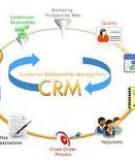
One of the most effective ways to maximize revenue opportunities is by optimizing the marketing mix. But in order
to do that, marketing departments need end-to-end visibility into marketing data through a unified CRM application.
![Quản lý quan hệ khách hàng là gì? [Định nghĩa và cách quản lý hiệu quả]](https://cdn.tailieu.vn/images/document/thumbnail/2014/20140604/lephuoccuulong/135x160/1685910_148.jpg)







![Bán hàng đa kênh và thương mại điện tử: Tài liệu [Mô tả/Hướng dẫn/Kinh nghiệm]](https://cdn.tailieu.vn/images/document/thumbnail/2026/20260526/vispacex_27/135x160/701779800792.jpg)


![Tài liệu tiếp thị người ảnh hưởng: Xu hướng dẫn dắt thị trường [mới nhất]](https://cdn.tailieu.vn/images/document/thumbnail/2026/20260515/baobinh_011/135x160/1601778820276.jpg)


%20--%3e%3cdefs%3e%3cstyle%3e%20.st0%20{%20fill:%20%23fff;%20}%20.st1%20{%20fill:%20%237800fa;%20}%20%3c/style%3e%3c/defs%3e%3cpath%20class='st1'%20d='M117.78,12.18H43.11c2.9,3.47,4.65,7.94,4.65,12.82,0,5.6-2.3,10.66-6.01,14.29h76.02l7.22-13.56-7.22-13.56Z'/%3e%3cg%3e%3cpath%20class='st0'%20d='M53.58,26.17h-.59v-1.46h.59v-4.96h2.83c1.78,0,2.67.94,2.67,2.82v5.76c0,1.87-.89,2.81-2.67,2.81h-2.83v-4.96ZM55.36,21.37v3.34h1.1v1.46h-1.1v3.34h1.01c.61,0,.91-.37.91-1.1v-5.93c0-.74-.3-1.1-.91-1.1h-1.01Z'/%3e%3cpath%20class='st0'%20d='M65.99,31.14h-1.8l-.31-2.07h-2.19l-.31,2.07h-1.64l1.82-11.39h2.62l1.82,11.39ZM65.28,18.04c-.25.46-.51.77-.75.94-.21.15-.47.22-.79.22-.26,0-.57-.07-.92-.22l-.38-.15c-.14-.05-.26-.07-.37-.07-.3,0-.53.18-.71.54l-.91-.68c.25-.46.51-.77.75-.94.21-.14.48-.21.79-.21.26,0,.57.07.92.21l.38.15c.14.05.26.07.37.07.3,0,.53-.18.71-.54l.91.68ZM61.91,27.52h1.73l-.87-5.76-.87,5.76Z'/%3e%3cpath%20class='st0'%20d='M74.53,26.89v1.52c0,1.91-.89,2.86-2.67,2.86s-2.67-.95-2.67-2.86v-5.93c0-1.91.89-2.86,2.67-2.86s2.67.95,2.67,2.86v1.11h-1.69v-1.22c0-.75-.31-1.12-.93-1.12s-.93.37-.93,1.12v6.15c0,.74.31,1.11.93,1.11s.93-.37.93-1.11v-1.63h1.69Z'/%3e%3cpath%20class='st0'%20d='M81.4,31.14h-1.8l-.31-2.07h-2.19l-.31,2.07h-1.64l1.82-11.39h2.62l1.82,11.39ZM75.9,19.2l1.52-1.91h1.71l1.51,1.91h-1.61l-.76-.95-.75.95h-1.61ZM77.32,27.52h1.73l-.87-5.76-.87,5.76ZM83.1,15.99l-1.76,1.91h-1.26l1.17-1.91h1.86Z'/%3e%3cpath%20class='st0'%20d='M84.86,19.75c1.78,0,2.67.94,2.67,2.82v1.48c0,1.87-.89,2.81-2.67,2.81h-.85v4.28h-1.79v-11.39h2.64ZM84.01,21.37v3.86h.85c.58,0,.87-.36.87-1.08v-1.71c0-.71-.29-1.07-.87-1.07h-.85Z'/%3e%3cpath%20class='st0'%20d='M93.51,19.75c1.78,0,2.67.94,2.67,2.82v1.48c0,1.87-.89,2.81-2.67,2.81h-.85v4.28h-1.79v-11.39h2.64ZM92.66,21.37v3.86h.85c.58,0,.87-.36.87-1.08v-1.71c0-.71-.29-1.07-.87-1.07h-.85Z'/%3e%3cpath%20class='st0'%20d='M98.8,31.14h-1.79v-11.39h1.79v4.88h2.03v-4.88h1.83v11.39h-1.83v-4.88h-2.03v4.88Z'/%3e%3cpath%20class='st0'%20d='M105.36,24.55h2.46v1.62h-2.46v3.34h3.09v1.63h-4.88v-11.39h4.88v1.63h-3.09v3.18ZM108.17,17.29l-1.76,1.91h-1.26l1.17-1.91h1.86Z'/%3e%3cpath%20class='st0'%20d='M112.2,19.75c1.78,0,2.67.94,2.67,2.82v1.48c0,1.87-.89,2.81-2.67,2.81h-.85v4.28h-1.79v-11.39h2.64ZM111.35,21.37v3.86h.85c.58,0,.87-.36.87-1.08v-1.71c0-.71-.29-1.07-.87-1.07h-.85Z'/%3e%3c/g%3e%3ccircle%20class='st1'%20cx='25'%20cy='25'%20r='20'/%3e%3cpath%20class='st0'%20d='M32.78,19.27c2.92,0,4.43,2.55,5.28,5.33l.71,2.17c.14.38-.33.75-.71.75h-5.61c.19-.33.24-.71.09-1.08l-.75-2.45c-.43-1.32-.99-2.64-1.79-3.77.75-.57,1.65-.94,2.78-.94h0ZM25,18.38c3.25,0,4.9,2.78,5.89,5.89l.76,2.45c.14.42-.33.8-.8.8h-11.69c-.42,0-.94-.38-.8-.8l.75-2.45c.99-3.11,2.64-5.89,5.89-5.89h0ZM25,11.35c1.74,0,3.11,1.37,3.11,3.11s-1.37,3.11-3.11,3.11-3.11-1.41-3.11-3.11,1.41-3.11,3.11-3.11h0ZM17.27,19.27c1.08,0,1.98.38,2.73.94-.8,1.13-1.37,2.45-1.74,3.77l-.8,2.45c-.14.38-.05.75.09,1.08h-5.56c-.42,0-.9-.38-.75-.75l.71-2.17c.9-2.78,2.41-5.33,5.33-5.33h0ZM17.27,12.91c1.51,0,2.78,1.27,2.78,2.83s-1.27,2.83-2.78,2.83-2.83-1.27-2.83-2.83,1.27-2.83,2.83-2.83h0ZM32.78,12.91c1.56,0,2.78,1.27,2.78,2.83s-1.23,2.83-2.78,2.83-2.83-1.27-2.83-2.83,1.27-2.83,2.83-2.83h0ZM27.07,28.56v.09c0,.57-.24,1.08-.61,1.46h0v.05c-.38.33-.9.57-1.46.57s-1.08-.24-1.46-.61h0c-.38-.38-.61-.9-.61-1.46v-.09h1.41v.09c0,.19.05.38.19.47v.05c.09.09.28.19.47.19s.38-.09.47-.19v-.05c.14-.09.24-.28.24-.47t-.05-.09h1.41ZM30.99,28.56v.09c0,1.65-.66,3.16-1.74,4.24-1.08,1.08-2.59,1.79-4.24,1.79s-3.16-.71-4.24-1.79l-.05-.05c-1.04-1.08-1.7-2.55-1.7-4.2v-.09h1.41v.09c0,1.27.47,2.4,1.27,3.25h.05c.85.85,1.98,1.37,3.25,1.37s2.4-.52,3.25-1.37c.85-.8,1.37-1.98,1.37-3.25v-.09h1.37ZM34.99,28.56v.09c0,2.78-1.13,5.28-2.92,7.07-1.79,1.79-4.29,2.92-7.07,2.92s-5.23-1.13-7.07-2.92c-1.79-1.79-2.92-4.29-2.92-7.07v-.09h1.41v.09c0,2.4.94,4.53,2.5,6.08,1.56,1.56,3.72,2.5,6.08,2.5s4.52-.94,6.08-2.5c1.56-1.56,2.5-3.68,2.5-6.08v-.09h1.41Z'/%3e%3c/svg%3e)