RESEARCH Open Access
Ethnomedicinal and ecological status of plants in
Garhwal Himalaya, India
Munesh Kumar
1*
, Mehraj A Sheikh
1
and Rainer W Bussmann
2
Abstract
Background: The northern part of India harbours a great diversity of medicinal plants due to its distinct
geography and ecological marginal conditions. The traditional medical systems of northern India are part of a time
tested culture and honored still by people today. These traditional systems have been curing complex disease for
more than 3,000 years. With rapidly growing demand for these medicinal plants, most of the plant populations
have been depleted, indicating a lack of ecological knowledge among communities using the plants. Thus, an
attempt was made in this study to focus on the ecological status of ethnomedicinal plants, to determine their
availability in the growing sites, and to inform the communities about the sustainable exploitation of medicinal
plants in the wild.
Methods: The ecological information regarding ethnomedicinal plants was collected in three different climatic
regions (tropical, sub-tropical and temperate) for species composition in different forest layers. The ecological
information was assessed using the quadrate sampling method. A total of 25 quadrats, 10 × 10 m were laid out at
random in order to sample trees and shrubs, and 40 quadrats of 1 × 1 m for herbaceous plants. In each climatic
region, three vegetation sites were selected for ecological information; the mean values of density, basal cover, and
the importance value index from all sites of each region were used to interpret the final data. Ethnomedicinal uses
were collected from informants of adjacent villages. About 10% of inhabitants (older, experienced men and
women) were interviewed about their use of medicinal plants. A consensus analysis of medicinal plant use
between the different populations was conducted.
Results: Across the different climatic regions a total of 57 species of plants were reported: 14 tree species, 10
shrub species, and 33 herb species. In the tropical and sub-tropical regions, Acacia catechu was the dominant tree
while Ougeinia oojeinensis in the tropical region and Terminalia belerica in the sub-tropical region were least
dominant reported. In the temperate region, Quercus leucotrichophora was the dominant tree and Pyrus pashia the
least dominant tree. A total of 10 shrubs were recorded in all three regions: Adhatoda vasica was common species
in the tropical and sub-tropical regions however, Rhus parviflora was common species in the sub-tropical and
temperate regions. Among the 33 herbs, Sida cordifolia was dominant in the tropical and sub-tropical regions,
while Barleria prionitis the least dominant in tropical and Phyllanthus amarus in the sub-tropical region. In
temperate region, Vernonia anthelmintica was dominant and Imperata cylindrica least dominant. The consensus
survey indicated that the inhabitants have a high level of agreement regarding the usages of single plant. The
index value was high (1.0) for warts, vomiting, carminative, pain, boils and antiseptic uses, and lowest index value
(0.33) was found for bronchitis.
Conclusion: The medicinal plants treated various ailments. These included diarrhea, dysentery, bronchitis,
menstrual disorders, gonorrhea, pulmonary affections, migraines, leprosy. The ecological studies showed that the
tree density and total basal cover increased from the tropical region to sub-tropical and temperate regions. The
species composition changed with climatic conditions. Among the localities used for data collection in each
climatic region, many had very poor vegetation cover. The herbaceous layer decreased with increasing altitude,
* Correspondence: muneshmzu@yahoo.com
1
Department of Forestry, HNB Garhwal University, Srinagar Garhwal,
Uttarakhand, India
Full list of author information is available at the end of the article
Kumar et al.Journal of Ethnobiology and Ethnomedicine 2011, 7:32
http://www.ethnobiomed.com/content/7/1/32 JOURNAL OF ETHNOBIOLOGY
AND ETHNOMEDICINE
© 2011 Kumar et al; licensee BioMed Central Ltd. This is an Open Access article distributed under the terms of the Creative Commons
Attribution License (http://creativecommons.org/licenses/by/2.0), which permits unrestricted use, distribution, and reproduction in
any medium, provided the original work is properly cited.

which might be an indication that communities at higher elevations were harvesting more herbaceous medicinal
plants, due to the lack of basic health care facilities. Therefore, special attention needs to be given to the
conservation of medicinal plants in order to ensure their long-term availability to the local inhabitants. Data on the
use of individual species of medicinal plants is needed to provide an in-depth assessment of the plants availability
in order to design conservation strategies to protect individual species.
Background
The Indian Himalayan Region (IHR) has long been a
source of medicine for the millions of people of this
region as well as people living in other parts of India. At
present, the pharmaceutical sector in India is making
use of 280 medicinal plant species, of which 175 are
found in the IHR [1].
The northern part of India harbors a great diversity of
medicinal plants because of the majestic Himalayan
range. So far, about 8000 species of angiosperms, 44
species of gymnosperms, and 600 species of pterido-
phytes have been reported in the Indian Himalaya [2].
Of these, 1748 species are used as medicinal plants [3],
and the maximum number of species used as medicines
has been reported from Uttarakhand [4]. Of these, sixty-
two are endemic to the Himalaya.
In India, the native people exploit a variety of herbals
for effective treatment of various ailments. The plant
parts used, preparation, and administration of drugs
vary from place to place [5]. Indigenous knowledge is as
old as human civilization, but the term ethnobotany was
coined by an American botanist, John Harshburger [6],
who understood the term to mean the study of the
plants used by primitive and aboriginal people. Since
time immemorial, plants have been employed by tradi-
tional medicine in different parts of the world. Accord-
ing to the World Health Organization (WHO), as many
as 80% of the world’s people depend on traditional med-
icine to meet their primary health care needs. There are
considerable economic benefits stemming from the
development of indigenous medicine and the use of
medicinal plants for the treatment of various diseases
[7]. Medicinal plants have traditionally occupied an
importantpositioninthesocio-cultural, spiritual, and
health arena of rural and tribal India. India has one of
the oldest, richest, and most diverse systems of tradi-
tional medicine. The use of plants to cure diseases is an
age-old practice. The preparation of locally available
medicinal plants remains an important part of health
care for humans, especially for people living in rural
areas, where people lack access to modern medicine
facilities, and are unable to afford synthetic drugs due to
its high cost. The forests of India have been the source
of invaluable medicinal plants since man became aware
of the preventive and curative properties of plants and
started using them for human health care.
The old Indian Systems of Medicine (ISM) are among
the most ancient medical traditions known, and derive
maximum formulations from plants and plant extracts
found in the forests. About 400 plants are used in the
regular production of Ayurvedic, Unani, Siddha, and tri-
bal medicine. About 75% of these are taken from tropi-
cal forests and 25% from temperate forests. Thirty (30)
percent of ISM preparations are derived from roots,
14% from bark, 16% from whole plants, 5% from flow-
ers, 10% from fruits, 6% from leaves, 7% from seeds, 3%
fromwood,4%fromrhizomes,and6%fromstems.
Fewer than 20% of the plants used are cultivated [8].
The occurrence of diverse ecosystems along altitudinal
gradients form the tropical to the temperate and alpine
zones with its associated impressive array of species and
genetic diversity make India one of the 12 mega-biodi-
versity countries of the world. Forest represents one of
the dominant components of the vegetation of India
and forest floras constitute an invaluable reserve of eco-
nomically important species, harboring traditional vari-
eties and wild relatives of many crops. The wide range
of plant species help to provide for people’sneeds,
including the need for medicines.
The changing situation in the various ecological zones,
especially the loss of habitat, habitat fragmentation, and
habitat degradation is the major threat to plant diversity
of the region. In those areas, where human population
density is highest, most of the original habitats have
already been destroyed, and many of the important
medicinal plant species have been lost. The demand for
housing, agriculture, and tourism development is also
high. Degradation caused by an increase in human activ-
ities related to the growing population, and the lack of
serious efforts to counteract them is an important con-
cern. Human destruction of natural habitats, migration
of human population, invasive species, the growing
demand for natural resources and the lack of adequate
training on the subject of biodiversity, all these factors
are accelerating the loss of plant species. Along with the
disappearance of plants from the area, traditional knowl-
edge is also being lost.
The importance of ethnobiological knowledge for sug-
gesting new paths in scientific research on ecology and
conservation monitoring, has received much attention in
resource management [9,10]. International agencies such
as the World Wildlife Fund (WWF) and UNESCO as
Kumar et al.Journal of Ethnobiology and Ethnomedicine 2011, 7:32
http://www.ethnobiomed.com/content/7/1/32
Page 2 of 13

part of their people and plants initiative, have also pro-
moted research on ethnobotanical knowledge and the
integration of people’s perceptions and practices in
resource management at the local level [11]. Incorpora-
tion into biological and ecological studies of local-use
patterns and of the social and institutional background
that guides the relationships between people and nature,
has led to a greater understanding of the relationship
between social and ecological dynamics [12].
In the Himalayan region, which is rich in floral diver-
sity, plants are used by the local inhabitants for their
daily needs, even as they exploit the forests for different
industrial purposes. The people of the Himalayan region
are well aware of the traditional use of medicinal plants,
but the ecological distribution of the species in the areas
surrounding human habitat tell us the rate of its utiliza-
tion for sustainable long-term use. Although many stu-
dies have been carried out on the ethnomedicinal uses
of the plants described from the different parts of India
and elsewhere [13-20]. However, there have been few
ecological studies of medicinal plants in the Himalayan
region in general, and none in Garhwal Himalaya. The
present study was conducted to understand the ethno-
medicinal and ecological status of plants in the region.
The study focused on the following: 1).The use of med-
icinal plants by local inhabitants for various ailments. 2)
The ecological status, presence and availability of medic-
inal plants around the villages for the villagers needs. 3)
The level of exploitation by the local inhabitants and
possible sustainable conservation measures.
Materials and methods
Details of study area
Ecological information about medicinal plant species
was collected in three different climatic regions of Garh-
wal Himalaya: tropical, sub-tropical, and temperate
regions at an average altitude of 350, 1100, and 2300 m
a.m.s.l. (Figure 1), and their medicinal use was docu-
mented. The tropical region was primarily flat with a
few south west facing hills. The sub-tropical region also
faced toward south west. The temperate sites were
south east facing. The summer season in the tropical
region is very hot and temperatures range between 18-
24°C. In sub-tropical region, which is mildly hot in the
summer season, temperatures range between 17-23°C,
and in temperate region temperatures range between 7-
15°C, with some days below freezing in winter (October
to February). The tropical region is part of the Pauri
Garhwal district in the foothill region of Garhwal Hima-
laya. The sub-tropical and temperate regions are in
Tehri Garhwal district. The total population of the vil-
lages was 1140 inhabitants in the tropical, 374 in the
sub-tropical and 464 temperate regions respectively. Ten
percent of the population (114, 38 and 47) was
interviewed. Further details of the regions are given in
Table 1.
Data collection and analysis
Vegetation
Ecological data indicating the species composition in
different forest layers were collected from each region.
The species composition (Table 2) was assessed with
the help of quadrate sampling method. A total of 25,
10 × 10 m quadrats were selected randomly to assess
trees and shrubs, and 40, 1 × 1 m quadrats were used
for herbaceous plants. The vegetation data were quan-
titatively analyzed for density, total basal cover (TBC)
[21], and the importance value index (IVI) was calcu-
lated as the sum of relative frequency, relative density
and relative dominance [22]. In each climatic region,
three sites were selected, and the mean values of den-
sity, basal cover, and importance value index from all
sites of each region were used to interpret the final
data.
Ethnomedicinal inventory
Informationonplantswithethnomedicinaluseswas
collected from informants living in villages adjacent to
the surrounding forest. After establishing oral prior
informed consent in village meetings, about 10% of the
inhabitants were interviewed about their dependence on
the forest for various products, especially for medicinal
purposes. The informants were randomly selected and
included older men and women, well versed in the iden-
tification of plants, who regularly used and visited the
forests since their childhood and used plants to cure
various ailments. In the initial selection of informants
younger participants were considered, but were later
excluded because initial interviews indicated that they
did not have much knowledge about medicinal plant
use. The interviews were conducted in the local dialect
to avoid translation problems. During the interviews
structured questionnaires were used to obtain informa-
tion on medicinal plants, including the local name of
the plant, name of the disease for which a particular
plant was used, part of the plant used etc. The infor-
mants were asked to show the plants in their natural
habitat. Specimens of all plants were then collected and
identified at the Garhwal University Herbarium (GUH),
using [23].
Consensus survey
A consensus survey was conducted based on peoples
opinion on the number of plants used for a particular
ailment. The consensus factor (Fic) was used to test the
homogeneity of the informant’s knowledge according
methods described by Trotter and Logan [24] and Ragu-
pathy et al. [25]
Kumar et al.Journal of Ethnobiology and Ethnomedicine 2011, 7:32
http://www.ethnobiomed.com/content/7/1/32
Page 3 of 13
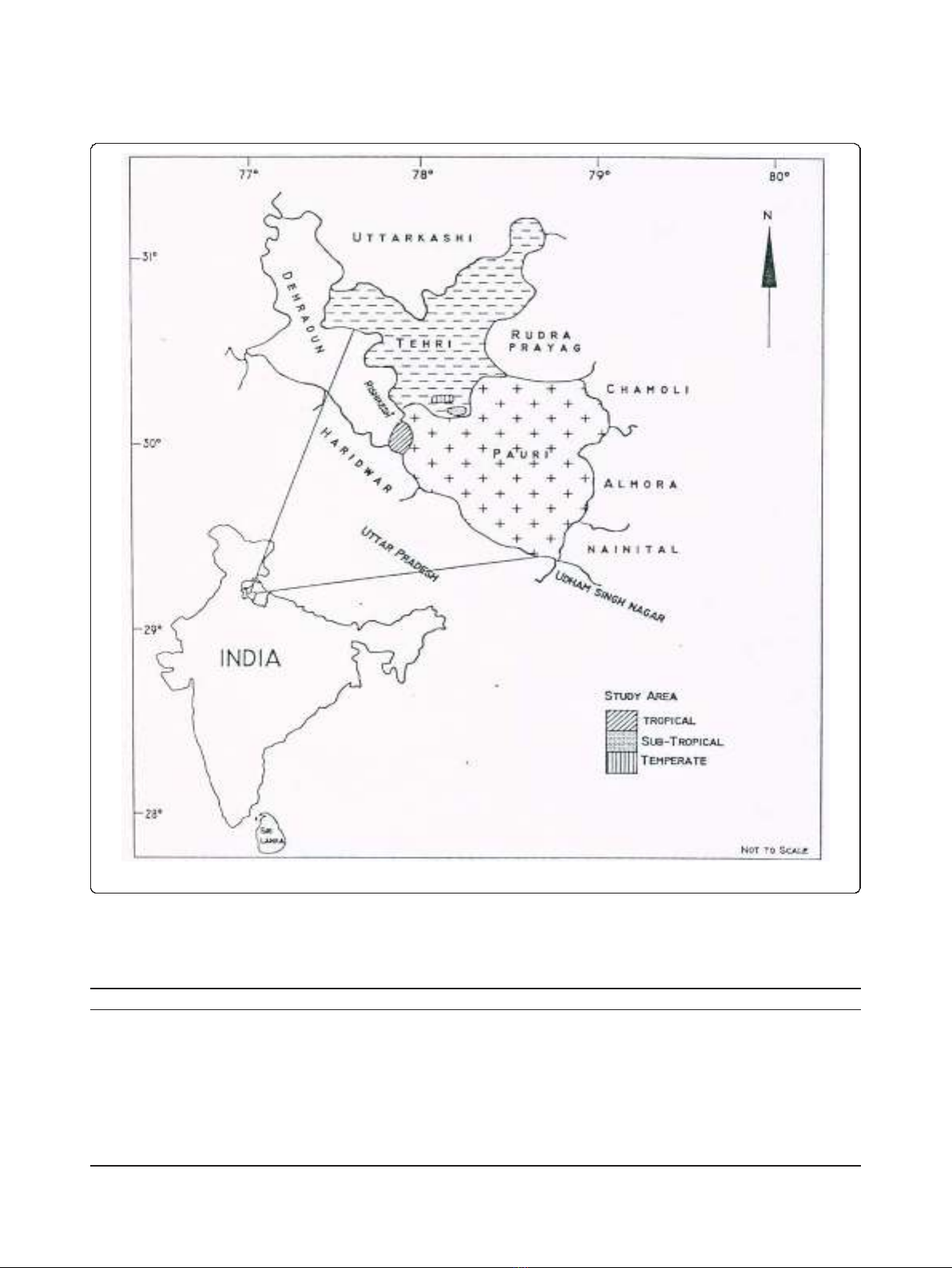
Figure 1 Location map of the study area.
Table 1 Description of study area
Parameter Tropical Sub-tropical Temperate
Location 30° 6’N, 78° 24’E 30° 29’N 78° 24’E 30° 22’N 78° 23’E
Altitude (m.a.s.l.) 350 1100 2300
Aspect South West South West South East
Temperature (mean annual) 24° 17°-23° 7°-15°
Precipitation (mm) 1350 960 1600
Human population 1140 374 464
Total informants 114 38 47
Average family size 6 5 6
Kumar et al.Journal of Ethnobiology and Ethnomedicine 2011, 7:32
http://www.ethnobiomed.com/content/7/1/32
Page 4 of 13

Table 2 Density, TBC (total basal cover), IVI (importance value index) of ethnomedicinal plants
Species Family Tropical Sub-tropical Temperate
Trees (ha
-1
) Ethnomedicinal uses Part
used
Density TBC IVI Density TBC IVI Density TBC IVI
Acacia catechu (L.
f.) Willd.
Fabaceae digestive purposes, respiratory
diseases, diarrhea, dysentery,
bronchitis, menstrual disorder
W,B 88 2.08 29.22 106 2.40 41.20 - - -
Aegle marmelos
(L.) Corrêa
Rutaceae digestive disorders F 52 0.74 19.19 88 1.34 34.08 - - -
Cassia fistula L. Fabaceae antiseptic, asthma, respiratory
disorder
F,B 56 1.068 17.39 - - - - - -
Holarrhena
antidysenterica (L.)
Wall. ex A. DC.
Apocynaceae Dysentery, febrifuge B,L,S 72 1.33 23.63 - - - - - -
Lyonia ovalifolia
(Wall.) Drude
Ericaceae Wounds, boils S - - - - - - 153 3.55 54.97
Ougeinia
oojeinensis Hochr.
Fabaceae digestive troubles G 32 0.40 14.69 56 1.24 22.6 - - -
Phyllanthus
embelica L.
Euphorbiaceae Source of vitamin C F - - - 44 0.81 19.02 - - -
Prunus cerasoides
Buch.-Ham. ex D.
Don
Rosaceae Swellings, contusions B - - - - - - 84 1.73 33.76
Pyrus pashia
Buch.-Ham. ex D.
Don
Rosaceae digestive disorders F - - - - - - 82 1.75 30.87
Quercus
leucotrichophora
A. Camus
Fagaceae gonorrheal and digestive
disorders
G - - - - - - 219 5.02 71.14
Rhododendron
arboreum Sm.
Ericaceae digestive and respiratory
disorders
F,B - - - - - - 160 4.40 62.19
Terminalia belerica
Roxb.
Combretaceae Fruit is ingredient of Trifala F 32 1.28 20.34 32 0.74 11.43 - - -
Terminalia
chebula Retz.
Combretaceae Fruit is ingredient of Trifala F - - - 32 1.34 14.19 - - -
Terminalia
tomentosa (Roxb.)
Wight &Arn.
Combretaceae liver troubles B 24 0.57 15.09 36 1.34 17.34 - - -
Shrubs (ha
-1
)
Adhatoda vasica
Nees in Wallich,
Pl. Asiat. Rar.
Acanthaceae cough, cold, pulmonary
affections, bronchitis and fever
F,L,T 364 0.041 60.79 394 0.062 36.45 - - -
Berberis asiatica
Roxb.
Berberidaceae ophthalmic R - - - - - - 275 0.034 77.80
Calotropis procera
(Aiton). W.T. Aiton
Asclepiadaceae expectorant, cough, cold, asthma R,F 92 0.007 16.96 - - - - - -
Colebrookea
oppositifolia Sm.
Lamiaceae wounds L 72 0.008 13.48 - - - - - -
Cotoneaster
bacillaris Wall.
Kurz ex Lindl.
Rosaceae scabies and rheumatic arthritis L - - - - - - 72 0.009 26.83
Indigofera
gerardiana Wall.
ex Baker
Fabaceae diarrhea, dysentery and cough. L 252 0.063 29.25 - - -
Leptodermis
lanceolata Wall.
Rubiaceae migraines B - - - - - - 116 0.011 28.79
Prinsipia utilis
Royle
Rosaceae rheumatic pains, diarrhea S,B - - - - - - 180 0.042 41.86
Kumar et al.Journal of Ethnobiology and Ethnomedicine 2011, 7:32
http://www.ethnobiomed.com/content/7/1/32
Page 5 of 13

![PET/CT trong ung thư phổi: Báo cáo [Năm]](https://cdn.tailieu.vn/images/document/thumbnail/2024/20240705/sanhobien01/135x160/8121720150427.jpg)