
BioMed Central
Page 1 of 12
(page number not for citation purposes)
Implementation Science
Open Access
Systematic Review
Healthcare professionals' intentions and behaviours: A systematic
review of studies based on social cognitive theories
Gaston Godin*†1, Ariane Bélanger-Gravel†2, Martin Eccles3 and
Jeremy Grimshaw4,5
Address: 1Canada Research Chair on Behaviour and Health, Laval University, Québec, Canada, 2Research Group on Behaviour and Health, Faculty
of Nursing, Laval University, Québec, Canada, 3Institute of Health and Society, Newcastle University, Newcastle upon Tyne, UK, 4Clinical
Epidemiology Program, Ottawa Health Research Institute, Ontario, Canada and 5Department of Medicine, University of Ottawa, Ontario, Canada
Email: Gaston Godin* - Gaston.Godin@fsi.ulaval.ca; Ariane Bélanger-Gravel - Ariane.belanger-gravel@fsi.ulaval.ca;
Martin Eccles - martin.eccles@newcastle.ac.uk; Jeremy Grimshaw - jgrimshaw@ohri.ca
* Corresponding author †Equal contributors
Abstract
Background: There is an important gap between the implications of clinical research evidence and the
routine clinical practice of healthcare professionals. Because individual decisions are often central to
adoption of a clinical-related behaviour, more information about the cognitive mechanisms underlying
behaviours is needed to improve behaviour change interventions targeting healthcare professionals. The
aim of this study was to systematically review the published scientific literature about factors influencing
health professionals' behaviours based on social cognitive theories. These theories refer to theories where
individual cognitions/thoughts are viewed as processes intervening between observable stimuli and
responses in real world situations.
Methods: We searched psycINFO, MEDLINE, EMBASE, CIHNAL, Index to theses, PROQUEST
dissertations and theses and Current Contents for articles published in English only. We included studies
that aimed to predict healthcare professionals' intentions and behaviours with a clear specification of
relying on a social cognitive theory. Information on percent of explained variance (R2) was used to
compute the overall frequency-weighted mean R2 to evaluate the efficacy of prediction in several contexts
and according to different methodological aspects. The cognitive factors most consistently associated with
prediction of healthcare professionals' intention and behaviours were documented.
Results: Seventy eight studies met the inclusion criteria. Among these studies, 72 provided information
on the determinants of intention and 16 prospective studies provided information on the determinants of
behaviour. The theory most often used as reference was the Theory of Reasoned Action (TRA) or its
extension the Theory of Planned Behaviour (TPB). An overall frequency-weighted mean R2 of 0.31 was
observed for the prediction of behaviour; 0.59 for the prediction of intention. A number of moderators
influenced the efficacy of prediction; frequency-weighted mean R2 varied from 0.001 to 0.58 for behaviour
and 0.19 to 0.81 for intention.
Conclusion: Our results suggest that the TPB appears to be an appropriate theory to predict behaviour
whereas other theories better capture the dynamic underlying intention. In addition, given the variations
in efficacy of prediction, special care should be given to methodological issues, especially to better define
the context of behaviour performance.
Published: 16 July 2008
Implementation Science 2008, 3:36 doi:10.1186/1748-5908-3-36
Received: 7 April 2008
Accepted: 16 July 2008
This article is available from: http://www.implementationscience.com/content/3/1/36
© 2008 Godin et al; licensee BioMed Central Ltd.
This is an Open Access article distributed under the terms of the Creative Commons Attribution License (http://creativecommons.org/licenses/by/2.0),
which permits unrestricted use, distribution, and reproduction in any medium, provided the original work is properly cited.

Implementation Science 2008, 3:36 http://www.implementationscience.com/content/3/1/36
Page 2 of 12
(page number not for citation purposes)
Background
Healthcare professionals are continually exposed to new
research findings that could contribute to more effective
and efficient patient care. Unfortunately, the transfer of
research findings into practice does not happen as readily
as desired [1], and many authors have documented gaps
between evidence-based practices and the routine clinical
practice of healthcare professionals [2,3].
A wide range of factors can influence the clinical practice
of healthcare professionals [4], including individual moti-
vational predispositions to change as well as economic,
political, and organizational contexts. However, our
understanding of these factors and optimal approaches to
change healthcare professional behaviour is incomplete.
This has led to calls for more theory-based research to bet-
ter inform the design of interventions to change health-
care professionals' behaviour [1,5,6]. Although several
theoretical perspectives could be used to explore the deter-
minants of the healthcare professionals' behaviours, most
or many clinical practice adoption decisions are individ-
ual professional decisions [7]. Consequently, it would be
useful to obtain a better understanding of the individual
mechanisms of the adoption of new behaviours from
social psychology theories [8]. For the purpose of this
review, social cognitive theories refer to theories where
individual cognitions/thoughts are viewed as processes
intervening between observable stimuli and responses in
real world situations.
The problem of understanding why healthcare profes-
sionals do or do not implement research findings can be
viewed as similar to finding out why people in general do
or do not adopt a given behaviour such as health-related
habits. This has been extensively investigated, and social
psychological theories have already demonstrated their
value. For the prediction of health-related behaviours,
there are several social cognitive theories that predict
moderate to large amount of the variance of intention and
behaviour [9].
It is surprising that relatively little attention has been
given to reviewing published studies applying social cog-
nitive theories investigating healthcare professional
behaviours. It is only recently that two publications have
reviewed specific aspects of theory-based studies of
healthcare professional behaviour and practice. Eccles
and colleagues [10] concluded that intention was a valid
proxy measure for behaviour among clinicians (i.e., phy-
sicians, nurses, pharmacists, other health workers). They
did not quantify the strength of association between
intention and behaviour among healthcare professionals,
but based on the review of ten prospective studies, they
concluded that this association was similar in magnitude
to that reported for non-professional populations. For
example, in a quantitative summary of meta-analyses,
Sheeran estimated that, on average, 28% of the variance in
behaviour (R2) is accounted for by intentions [11].
A review by Perkins and colleagues [12] was limited to
applications of the theories of reasoned action (TRA) [13]
and planned behaviour (TPB) [14] to understand clini-
cians' behaviour (i.e. physicians, nurses, pharmacists,
other health workers). They found very few studies (N =
19), and only half of them (N = 9) included a measure of
behaviour (eight self-reported; one objective from medi-
cal record). As in the review by Eccles and colleagues [10],
they also did not quantify the strength of association
between TRA/TPB constructs and actual behaviour, but
nonetheless concluded that different constructs of these
two theories predict intention and behaviour among dif-
ferent groups of clinicians.
Obviously, more information is needed regarding the use-
fulness of social cognitive theories to understand and pre-
dict healthcare professionals' intentions and behaviours.
The aim of this study was to review systematically the lit-
erature to quantify to what extent studies based on social
cognitive theories explain intention of healthcare profes-
sionals to adopt clinical behaviours and predict health
professionals' clinical behaviour. Given that any of several
social cognitive theories could have been used to investi-
gate healthcare professional behaviours, this review was
not limited to applications of the TRA and TPB. Other
social theories such as Bandura's social cognitive theory
[15], Triandis' theory of interpersonal behaviour [16] and
others theories of behaviour were included as well.
Methods
Inclusion and exclusion criteria
We included studies that assessed the predictive value of
clearly specified social cognitive theories (e.g., theory of
planned behaviour, social cognitive theory, theory of
interpersonal behaviour, etc.) for clinician intentions
and/or clinical behaviours. It must be mentioned that
these theories are considered 'theories of the problem'
(i.e., determinants) instead of 'theories of the action' (i.e.,
change). Clinical behaviours were defined as any behav-
iour performed in a clinical context. We only included
prospective studies focusing on prediction of behaviour,
i.e., studies assessing behaviour at a later point in time fol-
lowing the assessment of the theoretical constructs; this
was done in order to respect one of the main theoretical
assumptions of the majority of the social cognitive theo-
ries [13,17]. Studies that predicted behaviour instead of
intention within a cross-sectional design were excluded.
However we did include cross-sectional studies focusing
on prediction of intention. Finally, studies aimed at pre-
dicting students' behaviours (except for residents in med-

Implementation Science 2008, 3:36 http://www.implementationscience.com/content/3/1/36
Page 3 of 12
(page number not for citation purposes)
icine) were excluded because these were not considered
clinical-related behaviours.
Literature search
The literature search was performed between September
14 and October 30, 2007 by ABG. We searched psycINFO
(1960–2007), MEDLINE (1966–2007), EMBASE (1974–
2007), CIHNAL (1982–2007), Index to theses (1970–
2007), PROQUEST dissertations & theses (1960–2007),
and Current Contents (2006–2007) for articles published
in English only. The search strategy was behaviour OR
intention AND [health professionals] (see Additional file
1: The literature search). This was modified as appropriate
for the other databases such as MEDLINE and EMBASE.
ABG undertook the initial screen of the search results for
potentially included studies. ABG and GG then screened
potentially included studies against the inclusion criteria.
For all included studies, the reference lists were checked
manually.
Review methods
Data about authors and year of publication, population
under study, sample size, study design, main theory used,
variable predicted (intention/behaviour), kind of behav-
iour, variables measured, and main results were abstracted
by ABG and reviewed by GG; this is summarized in elec-
tronic tables (see Additional file 2: Prospective studies
aimed at predicting health professionals' behaviour, and
Additional file 3: Studies aimed at predicting health pro-
fessionals' intentions). Duplicate data abstraction was
undertaken for 15% of the dataset by SA. Disagreements
were resolved by consensus between ABG, GG and SA.
When necessary, we attempted to contact the authors by
e-mail for key missing data elements.
Before analyzing the data set, a number of decisions were
taken. First, several of the published studies used the same
sample to predict different intentions/behaviours. In this
situation, we selected at random one of the intention/
behaviour models in order to avoid attributing more
weight to such studies. Second, a few studies reported
results from application of different theories to the same
sample. For the same reason mentioned above, only the
model with the highest explained variance was retained
for analysis.
For the analysis, we calculated an overall frequency-
weighted mean R2 for intentions and behaviours. We also
documented the variables measured and the number of
times these variables contributed significantly (p < 0.05)
to the prediction of the dependent variable (i.e., variables
most consistently associated with intention or behav-
iours). These variables were classified according to the
theoretical domains defined by Michie and colleagues [8]
(see Additional file 4: Classification of variables). How-
ever, in order to take into consideration the ethical dimen-
sion of healthcare professional behaviours, moral norm
was retained as an additional category. Also, although
past behaviour and habits are not psychosocial constructs
per se, these two factors were retained as another category.
In addition, we explored the impact of a number of a priori
defined potential moderators by comparing the fre-
quency-weighted mean R2 for different categories of mod-
erators using Fisher's Z transformation procedure for
correlations. A small number of empirical criteria (i.e.,
moderators) were used to evaluate the efficacy of the stud-
ies to predict intention/behaviour. Moderators included:
type of professional (e.g., physicians, nurses, pharmacists,
etc.); type of behaviour (e.g., prescribing, compliance with
guidelines, wearing gloves, perform an examination, etc.);
main theory used (e.g., theory of planned behaviour,
social cognitive theory, etc); sample size; psychometric
qualities; type of dependent variable measurement
(objective: direct observation, documentation from data-
bases and behaviour reported from the patients; subjec-
tive: self-reported behaviour) and the level of
correspondence between intention and behaviour. Based
on the work of Rashidian and colleagues [18], we dichot-
omized the studies in two categories: less than 150
respondents versus 150 and more. For psychometric qual-
ities, we dichotomized internal consistency as good
(Cronbach's alpha coefficient of 0.60 or more) versus
poor/no information provided [19]. If only partial infor-
mation was provided, the studies were classified as 'good'
if the reported psychometric qualities met the standards.
The level of correspondence between intention and
behaviour was evaluated according to Fishbein and
Ajzen's guidelines [13]; that is, intention and behaviour
must correspond in terms of action (e.g., advise to have),
target (e.g., retina screening), context (e.g., patients with
type 2 diabetes), and time (e.g., during the next three
months). Studies for which the measurement of intention
and behaviour corresponded in terms of action, target,
and context were classified as having a good intention-
behaviour level of correspondence; the time element was
not considered.
Results
Description of included studies
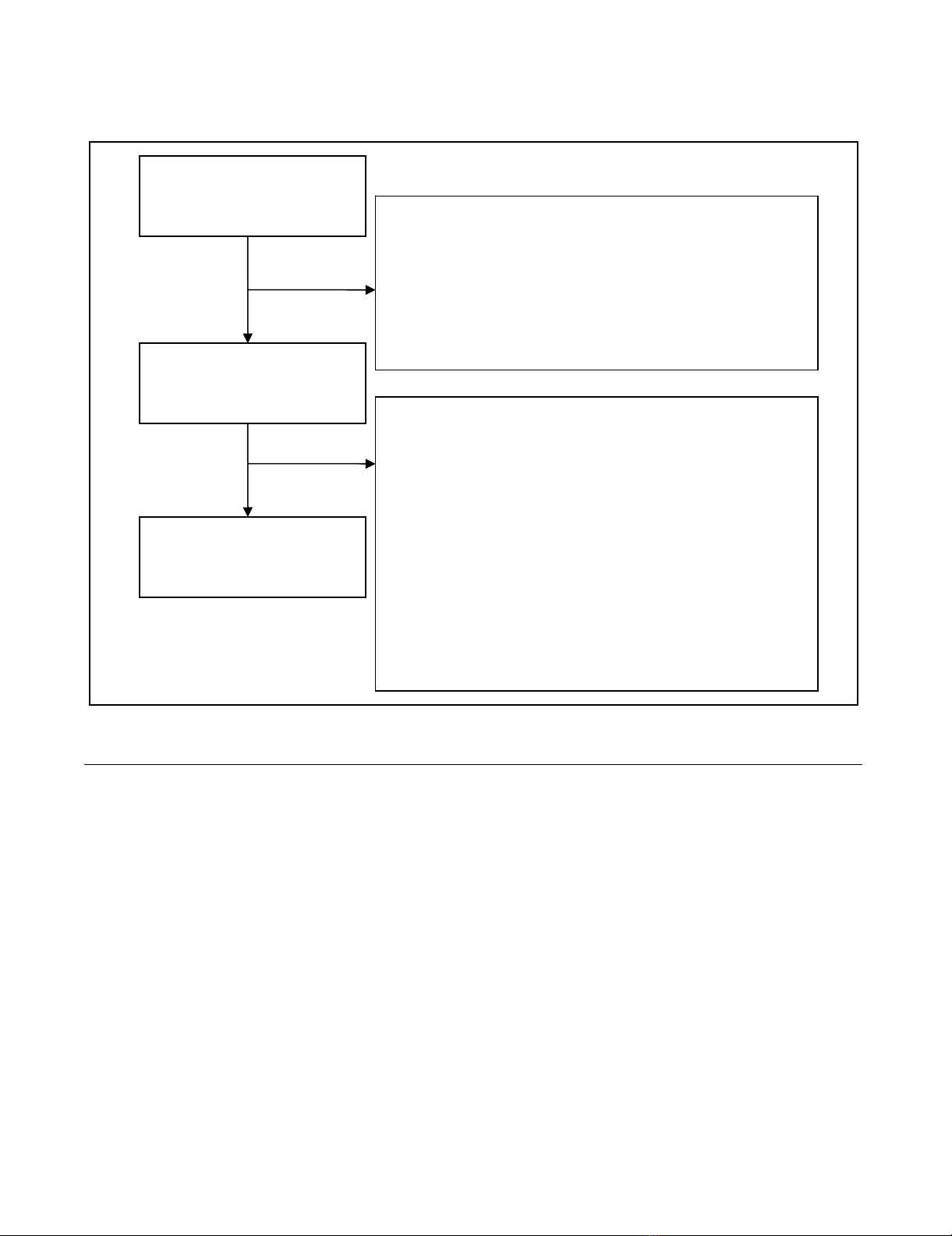
Results from the bibliographic screen are presented in Fig-
ure 1. Seventy-six studies (N = 20,259 participants) were
included in the review. Among these, 16 studies adopted
a longitudinal design to predict healthcare professional's
behaviours. In addition, 72 of these studies provided
information on determinants of intention.
Clinical-related behaviours were investigated in popula-
tions of physicians [20-25], nurses [26-32], and other
health professionals (i.e., pharmacists [33,34] and psy-
chologists [35]). Among physicians, the behaviours inves-
Implementation Science 2008, 3:36 http://www.implementationscience.com/content/3/1/36
Page 4 of 12
(page number not for citation purposes)
tigated were related to clinical practice (e.g., prescribing,
performing an examination, referring patients to special-
ists, etc.) [20-23], compliance with guidelines (e.g., hand
hygiene and wearing gloves) [24], and counseling [25].
Among nurses, the behaviours studied were related to
clinical practice (e.g., professional support for labour,
pain management, providing care to patients, etc.)
[26,30,31], compliance with guidelines [27,28], and doc-
umentation [29,32]. Clinical practice [35] and counseling
[33,34] were also investigated for other professionals.
For the prediction of intention, several studies were also
available for the different categories of health profession-
als: physicians [20,21,23-25,36-59], nurses [26-31,60-
82], and other clinicians [35,83-95]. Other clinicians
included pharmacists [85,88,90,94], dentists [83,95],
mental health professionals [86,87], psychologists [35],
social workers [91], and a mix of different professions
[84,89,92,93]. Among studies of physicians' intention,
the prediction of intention related to clinical practice (e.g.,
prescribing, performing an examination, referring
patients to specialists, etc.) [20,21,23,37,38,41,48,49,53-
55,57-59], acceptance of technologies [40,42,45,46,51],
compliance with guidelines (e.g., hand hygiene and wear-
ing gloves) [24,36,44,50,56], counseling [25,39,52], and
documentation [43,47]. Among nurses, their intentions
related to clinical practice (e.g., professional support for
labour, pain management, providing care to patients, etc.)
[26,30,31,60-64,66-72,74-79,81], acceptance of technol-
ogies [65], compliance with guidelines [27,28,73,80,82],
and documentation [29]. Clinical practice
[35,83,84,87,91,95], compliance with guidelines
[89,92,93], and counseling [85,86,88,90,94] were also
investigated for other professionals.
Social cognitive models efficacy
There were important variations in efficacy of prediction
of behaviour and intention; the R2 varied from 0.001 to
The QUORUM statement flow diagramFigure 1
The QUORUM statement flow diagram.
Potential relevant articles
screened
(N = 148) Excluded articles (N = 24)
- Not health professionals (N = 3)
- Text not in English (N = 4)
- Complete text not available (N = 7)
- Literature Review (N = 4)
- No test of theory (N = 4)
- Explicative text of theory (N = 1)
Articles retained for
detailed evaluation
(N =124) Excluded articles (N = 48)
- Use a cross-sectional design to predict
behaviour (N = 16)
- Not reported the needed statistics (N = 14)
- No clear reference of the theory used (N = 5)
- Using students samples (N = 9)
- Inappropriate measures of theoretical
constructs (N = 3)
- Measurement of willingness instead of
intention (N = 1)
- The reported model was based on the same
sample used in another publication (N =1)
Articles included in the
review (N = 76)

Implementation Science 2008, 3:36 http://www.implementationscience.com/content/3/1/36
Page 5 of 12
(page number not for citation purposes)
0.58 for behaviour and 0.14 to 0.91 for intention. Overall,
the frequency-weighted mean R2 for the prediction of
behaviour was 0.31 (Number of studies (N) = 15, number
of professionals (N) = 2,112) and 0.59 (N = 64, N =
14,986) for the prediction of intention. The overall effi-
cacy of prediction according to the main theory used to
guide the studies is presented in Table 1. For the predic-
tion of behaviour, the theory most often used as reference
was the TRA or its extension the TPB. Only one study used
the operant learning theory (OLT) [96], and another one
used the social cognitive theory (SCT) [15]. The predictive
power of studies employing the TRA/TPB to predict health
professionals' behaviours was significantly better than
studies employing the other theories (Z = 6.085; p <
0.0001).
For the prediction of intention, the theories most fre-
quently used to guide the studies were, in order of impor-
tance, the TRA/TPB, the technology acceptance model
(TAM) [97], the theory of interpersonal behaviour (TIB),
the OLT and, finally, the attitude, social and self-efficacy
model (ASE) [98]. However, among these theories, stud-
ies based on the TIB best predicted health professionals'
intentions (Z = 12.461; p < 0.0001, Z = 11.287; p < 0.0001
and Z = 12.389; p < 0.0001 for the comparison with TPB/
TRA, TAM, and the other theories, respectively).
Most consistent variables associated with behaviour and
intention
The number of times the variables were assessed and
found to have a significant effect for the prediction of
behaviour and intention is presented in Table 2. Among
the variables assessed, the cognitive factors most consist-
ently associated with prediction of healthcare profes-
sional's behaviours (i.e., at least 50% of the time) were
beliefs about capabilities (sample size-weighted average
correlation: r+ = 0.18, k = 7, N = 1,484), and intention
(sample size-weighted average correlation: r+ = 0.46, k =
11, N = 1,754). Beliefs about consequences, social influ-
ences, past behaviour, and knowledge were also reported
to be correlates of behaviour, but to a lesser extent. The
other variables were not assessed at least three times and
no further analysis was performed.
With respect to the factors explaining intention, the most
consistently significant cognitive factors (i.e., at least 50%
of the time) were beliefs about capabilities, beliefs about
consequences, moral norm, social influences, and social/
professional role and identity. Other determinants fre-
quently reported were past behaviour and emotion.
Finally, the less frequently significant variables were
socio-demographic characteristics, environmental influ-
ences, and knowledge.
Type of professional and behaviour
The efficacy of the studies using social cognitive theories
to explain intention and predict behaviour of healthcare
professionals for different types of professionals and
behaviours is presented in Table 3. The comparison of the
computed frequency-weighted mean R2 between health-
care professional categories indicated that compared to
physicians and nurses' behaviours the prediction for other
professionals was better (Z = -5.791; p < 0.0001 and Z = -
6.069; p < 0.0001, respectively). For the prediction of
intention, there were significant differences between the
frequency-weighted mean R2 values of all types of profes-
sionals (physicians versus nurses: Z = -13.414; p < 0.0001;
physicians versus other professionals: Z = -5.909; p <
0.0001; and nurses versus other professionals: Z = 6.009;
p < 0.0001) with the better prediction observed in studies
of nurses.
Methodological moderators of the efficacy of prediction
The efficacy of prediction of behaviour and intention
according to different methodological moderators is pre-
sented in Table 4. The results indicate that the prediction
of behaviour and intention was significantly better when
sample sizes were equal to or greater than 150 participants
Table 1: Overall efficacy of prediction according to the theory used in the studies
Main theory used to model... Number of
participants
(studies)
Frequency-
weighted mean
R2
Behaviour
- Theory of planned behaviour (theory of reasoned action) 1,882 (14) 0.35
- Others* 230 (1) 0.06
Intention
- Theory of interpersonal behaviour 734 (3) 0.81
- Theory of planned behaviour (theory of reasoned action) 13,188 (56) 0.59
- Technology acceptance model 535 (2) 0.47
- Others 529 (3) 0.42
Note: Because there were missing data in few publications, total differs from 16 and 72 studies for the behaviour and intention, respectively.
* Only the study based on the Operant Learning Theory was included; the other study did not provide information on R2.