

* Corresponding author
E-mail address:hayder.k.hayder@gmail.com (H. K. Salim)
© 2019 by the authors; licensee Growing Science, Canada
doi: 10.5267/j.uscm.2018.7.004
Uncertain Supply Chain Management 7 (2019) 329–340
Contents lists available at GrowingScience
Uncertain Supply Chain Management
homepage: www.GrowingScience.com/uscm
Integration between open records and target cost to effectively manage supply chain costs
Azhar Ghailan Marhoona, Hayder Kareem Salimb* and Shaymaa Abdul Husein Abdul Kadhima
aCollege of Administration and Economics, University of Al-Qadisiyah, Iraq
bTechnical Institute Ammara, Southern Technical University, Iraq
C H R O N I C L E A B S T R A C T
Article history:
Received June 16, 2018
Accepted July 30 2018
Available online
July 30 2018
During the past few years, there have been tremendous attempts among various companies to
implement the principles of supply chain management to increase their capabilities. Reduction
in supply chain cost is an important element to support competitive advantage. However, to
manage the cost of supply chain, managing target and order costs is essential. Reduction in
both target cost and order cost is crucial to maintain reasonable supply chain cost, which
directly influences the competitive advantage. Thus, the primary objective of this study is to
support competitive advantage by the help of integration between target cost and order cost.
To achieve this, quantitative research technique was adopted based on a survey technique and
300 questionnaires were distributed among the managerial employees of supply chain
companies in Iraq. While analyzing the data through Smart PLS 3, it was revealed that any
reduction in target cost and order cost could decrease the overall supply chain cost and this
helps to sustain competitive advantage. Therefore, supply chain cost plays the mediating role
to enhance competitive advantage through integration of the target cost and the order cost.
Finally, this study is beneficial for supply chain companies to enhance competitive advantage
through reduction in supply chain cost.
ensee Growing Science, Canada© 2018 by the authors; lic
Keywords:
Supply chain
Target cost
Order cost
Competitive advantage
1. Introduction
Now a day, companies are unable to sustain competitive advantage, particularly in cost (Cooper, 2017;
Cooper, 1995; Fine, 1998; Metri, & Kaur, 2018; Schonberger, 1996; Wheelwright & Clark, 1992). This
issue is most common in Iraqi based supply chain companies. Supply chain companies are not able to
handle high cost and cannot sustain the low cost for longer time. In this situation, domestic companies
in Iraq are struggling to get market dominance which is also one of the worldwide practice. Based on
the supply chain cost control issues and intense competition, Iraqi supply chain companies are unable
to get competitive advantage. High cost supply chain process increases the overall supply chain cost,
which decline the competitive advantage (Collis & Montgomery, 1995; Cooper & Chew, 1996; Cooper
& Slagmulder, 1997; Shepherd, 1997). Result of core competencies could be in form of various types
of competitive advantage such as competitive advances in services, products, skills of employees,
innovation, technology and cost benefits.
330
To handle supply chain cost and to sustain competitive advantages, target cost and order cost control
are the key elements. As it is demonstrated by Marginean and Bobescu (2014) the target costing method
is one of the most appropriate methods to control the cost and most suitable to evaluate product price
and profit margin. Moreover, Jack (2008) suggests applying target costing procedure based on the
usefulness of cost control. Therefore, target costing is the appropriate technique to lower down the
supply chain cost and gain competitive advantage. Similarly, any decrease in inventory levels of raw
materials, work-in-process, and finished items has emerged a primary point of attention for supply
chain management companies and now the companies are investing to reduce the order cost (Zhang et
al., 2007). Any reduction in order cost influences positively on both supply chain cost and competitive
advantage.
Most of the latest previous studies (see, for instance, Palandeng et al., 2018; Prajogo et al., 2016; Singh
et al., 2018; Wu et al., 2018) on supply chain management and competitive advantage, have disregarded
the target cost and order cost to reach competitive advantage by lowering the supply chain cost. Thus,
the current study is one of the attempts to fill this gap. As in rare cases any study formally documented
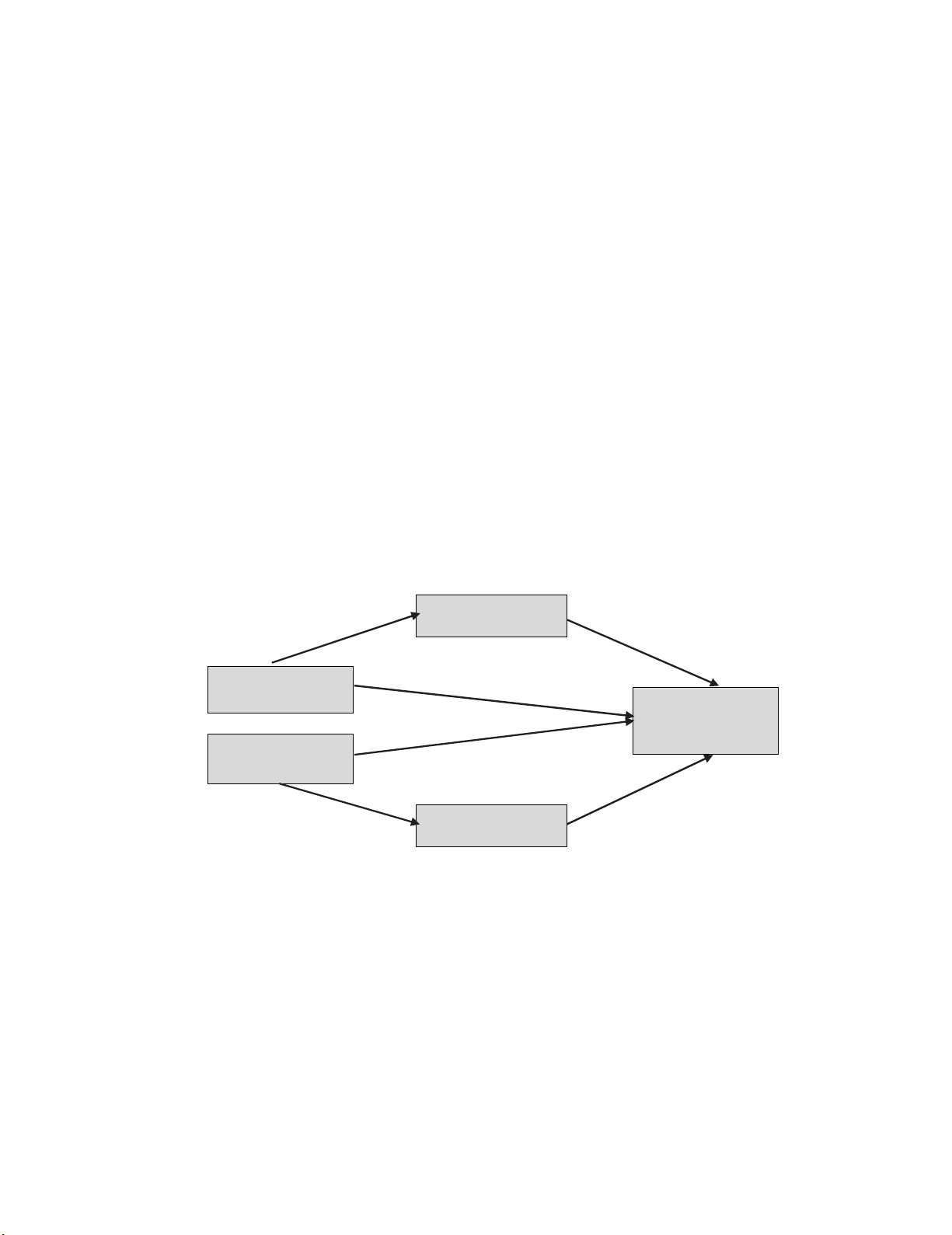
the integration of target cost and order cost to reach sustainable competitive advantage, as shown in
Fig. 1. Therefore, the prime objective of this study is to support competitive advantage by the help of
integration between target cost and order cost. To achieve this objective, the sub-objectives are as
follows;
1. To investigate the role of target cost and order cost to minimize the supply chain cost.
2. To investigate the role of target cost and order cost to sustain competitive advantage.
3. To investigate the mediating role of supply chain cost.
Supply Chain Cost
Target Cost
Competitive
Advantage
Order Cost
Supply Chain Cost
Fig. 1. Theoretical Framework
2. Literature Review and Hypotheses Development
In a competitive era of industrialization, competitive advantage is most important for supply chain
companies. Competitive advantage can be defined as, “a condition or circumstance that puts a company
in a favorable or superior business position” and competitive advantage is the most important element
for every company (Smith & Lockamy, 2000). In Iraqi firms, supply chain management is crucial to
gain competitive advantage. However, supply chain management is central to attain competitive
advantage. “Supply chain management is a joint, cross-enterprise operating strategy that bring into line
the flow of inward materials, manufacturing, as well as downstream supply in a manner responsive to
changes in customer demand without creating surplus inventory” (Cooper & Ellram, 1993; Ganeshan
et al., 1999; Quinn, 1998). As described by Balsmeier and Voisin (1996), supply chain management is
A. Ghailan Marhoon et al. / Uncertain Supply Chain Management 7 (2019)
331
not the old wine of “supplier management” poured into a colorful bottle. In its place, supply chain
management is a fresh as well as potent approach that integrates the system of various operating units
into a well-managed distribution system that improves the customer value, moreover, increases the
satisfaction level among customers and that defends the competitiveness of the whole supply chain
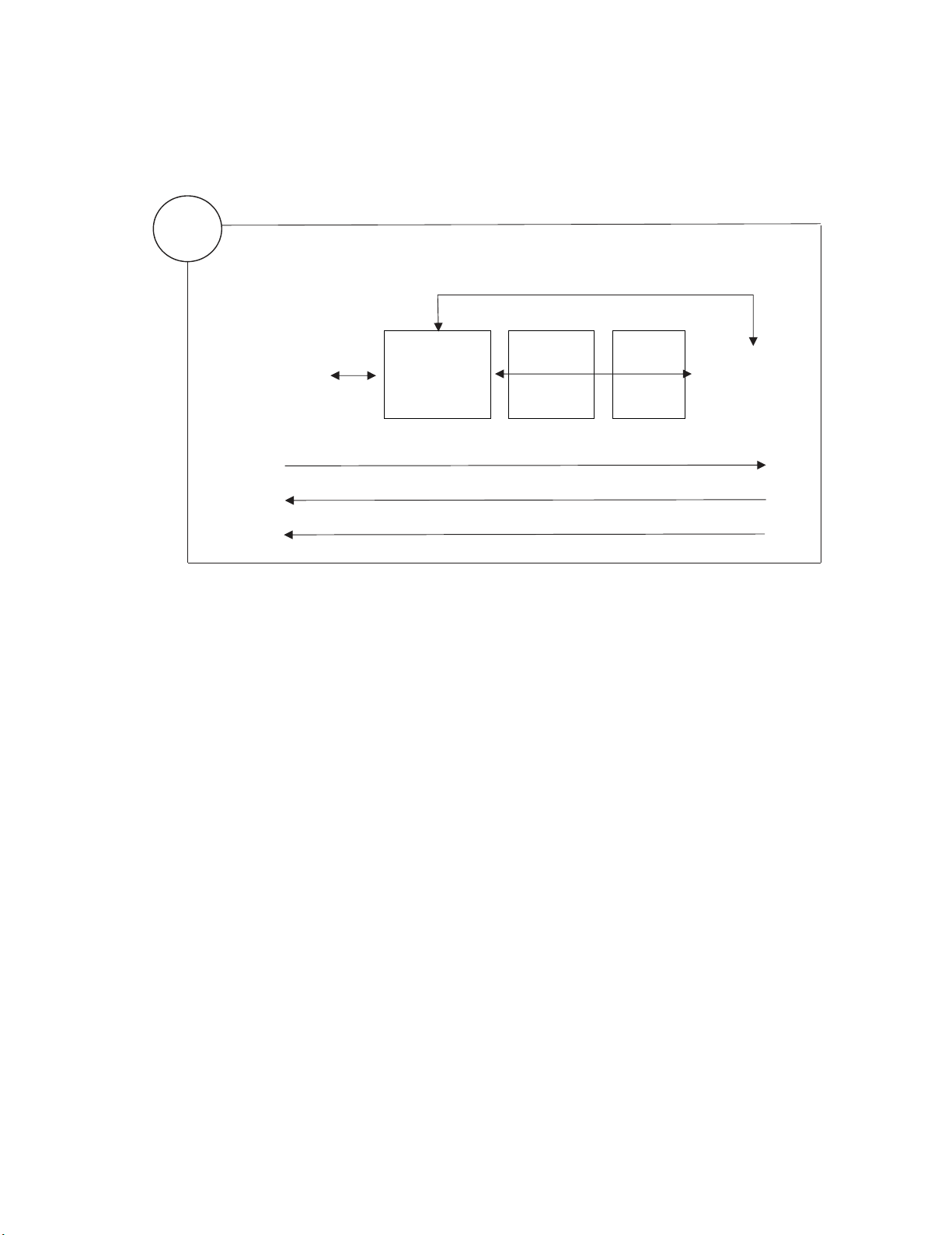
(Lummus & Vokurka, 1999). Fig. 2 shows the supply chain process in detail.
Supply Chain
Service and Support
Producers
(transformation
process)
Distributers Retailers
Suppliers Customers
(Source of supply) (Source of demand)
Dominant Flows of Products and Services
Dominant Flow of Demand and Design Information
Dominant Flow of Cash Payments
Fig. 2. Supply Chain Management
To attain competitive advantage, cost control in supply chain process is most crucial. As the supply
chain is one of the complete process which involves all the steps from raw material to customers, that
is the reason cost control is much crucial. In the competitive market, cost control is one of the important
elements, which influence competitive advantage. However, to control supply chain cost, target cost
(Smith & Lockamy, 2000) and order cost (Zhang et al., 2007) are most important. As the use of credit
in both target and order cost is most important (Arif et al., 2017). Target costing is one of the systematic
procedure for confirming that a product launched with definite quality, suitable functionality, and sales
price can be formed at a life-cycle cost that produces the needed level of profitability for company
(Cooper & Slagmulder, 1997). However, incompletely masked by different variation in its
implementations element, the targeting costing system has a specific structure.
The origins of target costing comes from the Japanese car industry in the early 1960s (Monden, 1995;
Nicolini et al., 2000; Yook et al., 2005; Ansari et al., 2007). After that there has been an extensive
evidence of the implementation of related target cost concepts by Ford at the start of the 20th century,
such as the formation of a target price to guide the different development process of the Model T
(Monden & Sakurai, 1989; Cooper & Slagmulder, 1997; Feil et al., 2004). Now a day, most of the
companies try to use target cost as one of their tools to gain or sustain the competitive advantage.
Therefore, any decrease in target cost will increase the competitive advantage by decreasing the supply
chain cost of companies.
Early in the process, a firm fixes the price which customers are ready to pay for a product, for its
different functionality, specific quality, and all available substitute products provided by competing
companies. From this price, the firm deducts the profit margin essential to satisfy its various
stakeholders and to fund the research as well as development of unique future products (Smith &
Lockamy, 2000). This deduction of profit to satisfy the stakeholders such as material providers,

332
employees, suppliers and any other stakeholders has significant influence on competitive advantage
through supply chain cost. This deduction of profit should be minimized to get competitive advantage.
On the other hand, ordering costs are the expenditures experienced to create as well as process an order
to the concerned supplier. Generally, these costs are comprised of the determination of the economic
order quantity for an inventory item. Various examples of ordering costs are including; cost to make a
purchase order and labor cost needed to scrutinize goods when they are received. This cost is the most
important to define the overall supply chain cost (Woo et al., 2001). Any decrease in target cost and
order cost, decreases the overall supply chain cost. Decrease in supply chain cost, increases the ability
of supply chain firm to attain or sustain competitive advantage in highly competitive market. Therefore,
Iraqi companies should adopt different strategies to cut the target cost and order cost, as both are most
crucial (Smith & Lockamy, 2000; Zhang et al., 2007).
Developed for repetitive production, generally the procedure operates with targets to achieve for cost
while expected manufacturing period. Decrease in target cost is a consequence of the expectancy that
competition from new products as well as price pressure from competitors will drive down the overall
selling prices over the manufacturing lifespan of the any type of product (Jørgensen, 2005; Jørgensen,
& Emmitt, 2009). Thus, in this situation, any reduction in target cost is most crucial. According to
Roslender and Hart (2002), target cost is largely seen as a broad-based management philosophy and
not a management accounting procedure, and generally, it is better selected by the phrase ‘target-cost
management’. This target cost management has significant link with supply chain cost. A better target
cost management influences positively on overall supply chain cost. Supply chain cost management
influences positively on competitive advantage which affects on the overall firm performance. Thus, it
is concluded that;
H1- Target cost is significantly related to supply chain cost.
H2- Target cost is significantly related to competitive advantage.
In a competitive environment, a buyer has the privilege of decreasing the ordering cycle. However, the
ideal ordering cycle preferred by the buyer may not be the most cost-effective for the various vendors.
To restructure the supply chain, the vendor is likely to orchestrate his production cycle in a well-
managed system, as well as the raw material procurement cycle, with the buyers’ ordering cycles,
therefore, that the total cost of inventory for the whole chain can be reduced (Zhang et al., 2007).
Moreover, Yang and Wee (2000) established an integrated economic ordering policy for various
worsening items for buyer and vendor. This establishment of integrated economic ordering policy also
focuses on lowering the ordering cost. In the same direction, Wu and Wee (2001) considered the
multiple lot size distributions in the model proposed by Yang and Wee (2000). Nevertheless, Ouyang
et al. (2004) offered a single-vendor single-buyer integrated production inventory model with the
assumption that lead time demand is stochastic and the lead time can be decreased at an added cost. All
these policies have some positive influences on any company’s competitive advantage by decreasing
the average ordering cost.
For instance, it is quite possible to decrease ordering cost as well as time by utilizing third-party
logistics system and vendor-managed inventory. Executing electronic data interchange (EDI) not only
links, but also automates the inquiring, ordering, payment and shipping actions between buyers and
vendor. Additionally, Porteus (1985) considered investment in different reduced setups in the economic
order quantity (EOQ) model. Various other studies established economic production quantity (EPQ)
models with setup cost reduction (see, for instance, Billington, 1987; Coates et al., 1996; Kim et al.,
1992).

A. Ghailan Marhoon et al. / Uncertain Supply Chain Management 7 (2019)
333
Therefore, from the literature, it is evident that ordering cost has significant relationship with
competitive advantage. The ordering cost also has a significant relationship with overall supply chain
cost of a company. Hence, it is concluded that;
H3- Order cost is significantly related to supply chain cost.
H4- Order cost is significantly related to competitive advantage.
Moreover, as discussed earlier the target cost and order cost have significant relationships with supply
chain costs, additionally supply chain cost has significant relationship with competitive advantage. A
decrease in target cost and order cost decreases the supply chain cost, which enhances the competitive
advantage. Thus, in this situation, supply chain cost plays essential role as mediating variable between
target cost and order cost, and competitive advantage. Hence, below hypotheses are proposed;
H5- Supply chain cost mediates the relationship between target cost and competitive advantage.
H6- Supply chain cost mediates the relationship between order cost and competitive advantage.
Additionally, from above discussion, it is revealed that;
H7- Supply chain cost is significantly related to competitive advantage.
3. Research Methodology
3.1 Research Design
The current study is based on the quantitative research technique rather than qualitative. Data were
collected only one time; therefore, it is cross-sectional research design. Supply chain companies in Iraq
were selected. Data were collected from the managerial employees of supply chain companies. Only
those employees were selected having direct involvement in supply chain activities.
3.2 Sampling Design
Probability sampling was used to collect the data from managerial employees of supply chain
companies and cluster sampling was used to distribute the survey instrument. This sampling techniques
was selected based on the reason that it is one of the suitable techniques, which best represents the
population (Sekaran & Bougie, 2016).
3.3 Sample size
Sample size was selected based on Comrey and Lee (1992) inferential statistics. According to this
series, 200 sample size is sufficient to satisfy the requirements of any research analysis. Thus, 200
questionnaires were distributed among the managerial employees of supply chain companies in Iraq.
Moreover, 5-point Likert scale was selected, as it is one of the best scale to measure the attitude as well
as opinions of various individuals. 5-point Likert scale was selected and Smart PLS was used to analyze
the collected data.
4. Data Analysis and Results
In the start of data analysis, before testing the hypotheses, outer model was examined. It is one of the
essential requirements to move further to test inner model. In outer model examination, factor loading
was examined, it should be more than 0.5 as stated by Hair et al., (2010). Cronbach alpha and composite
reliability were also examined, and they should be more than 0.7. Additionally, to examine the internal
consistency or convergent validity, average variance extracted (AVE) was examined. Fig. 3 shows the
outer model assessment.




![Câu hỏi ôn tập Kinh tế môi trường: Tổng hợp [mới nhất/chuẩn nhất]](https://cdn.tailieu.vn/images/document/thumbnail/2025/20251223/hoaphuong0906/135x160/56451769158974.jpg)


![Giáo trình Kinh tế quản lý [Chuẩn Nhất/Tốt Nhất/Chi Tiết]](https://cdn.tailieu.vn/images/document/thumbnail/2026/20260122/lionelmessi01/135x160/91721769078167.jpg)


