

REGULAR ARTICLE
Sensitivity analysis of minor actinides transmutation to physical
and technological parameters
Timothée Kooyman
*
and Laurent Buiron
CEA Cadarache, DEN/DER/SPRC/LEDC, Bat. 230, 13108 Saint-Paul-lez-Durance, France
Received: 24 September 2015 / Received in final form: 30 October 2015 / Accepted: 3 November 2015
Published online: 11 December 2015
Abstract. Minor actinides transmutation is one of the three main axis defined by the 2006 French law for
management of nuclear waste, along with long-term storage and use of a deep geological repository.
Transmutation options for critical systems can be divided in two different approaches: (a) homogeneous
transmutation, in which minor actinides are mixed with the fuel. This exhibits the drawback of “polluting”the
entire fuel cycle with minor actinides and also has an important impact on core reactivity coefficients such as
Doppler Effect or sodium void worth for fast reactors when the minor actinides fraction increases above 3 to 5%
depending on the core; (b) heterogeneous transmutation, in which minor actinides are inserted into
transmutation targets which can be located in the center or in the periphery of the core. This presents the
advantage of decoupling the management of the minor actinides from the conventional fuel and not impacting the
core reactivity coefficients. In both cases, the design and analyses of potential transmutation systems have been
carried out in the frame of Gen IV fast reactor using a “perturbation”approach in which nominal power reactor
parameters are modified to accommodate the loading of minor actinides. However, when designing such a
transmutation strategy, parameters from all steps of the fuel cycle must be taken into account, such as spent fuel
heat load, gamma or neutron sources or fabrication feasibility. Considering a multi-recycling strategy of minor
actinides, an analysis of relevant estimators necessary to fully analyze a transmutation strategy has been
performed in this work and a sensitivity analysis of these estimators to a broad choice of reactors and fuel cycle
parameters has been carried out. No threshold or percolation effects were observed. Saturation of transmutation
rate with regards to several parameters has been observed, namely the minor actinides volume fraction and the
irradiation time. Estimators of interest that have been derived from this approach include the maximum neutron
source and decay heat load acceptable at reprocessing and fabrication steps, which influence among other things
the total minor actinides inventory, the overall complexity of the cycle and the size of the geological repository.
Based on this analysis, a new methodology to assess transmutation strategies is proposed.
1 Introduction
Minor actinides transmutation represents a potential
solution to decrease the amount and hazards caused by
nuclear. It can be achieved by subjecting minor actinides
nuclei to a neutron flux. Minor actinides transmutation can
take two forms, either the minor actinide nuclei undergoes
fission and yields fission products which are shorter lived or
captures a neutron and is transmuted into another heavy
nuclide. The main minor actinides that are produced in
nuclear reactors are:
–
237
Np, produced by neutron capture on
235
U in light-
water reactors, decaying to
233
Pa with a half-life of
2.14 10
6
years. It is also produced by (n,2n) reactions
on
238
U in fast reactors and from
241
Am decay;
–
241
Am, produced by decay of
241
Pu and decaying to
237
Np
with a half-life of 432 years;
–
243
Am, produced by neutron capture on
242
Pu and
decaying to
239
Pu with a half-life of 7370 years;
–
244
Cm which is produced by capture on
243
Am which
decays to
240
Pu with a half-life of 18.1 years and which is
mainly found in MOX fuels.
When plutonium is recovered from the spent fuel by
reprocessing and then reused, only minor actinides and
fission products remain in the final waste, along with the
small uranium and plutonium losses from the reprocessing
step. In this case, both long-term radiotoxicity and final
spent fuel repository design constraints are dominated by
minor actinides, as the fission products contribution
become negligible after a few hundred years.
* e-mail: timothee.kooyman@cea.fr
EPJ Nuclear Sci. Technol. 1, 15 (2015)
©T. Kooyman and L. Buiron, published by EDP Sciences, 2015
DOI: 10.1051/epjn/e2015-50055-0
Nuclear
Sciences
& Technologies
Available online at:
http://www.epj-n.org
This is an Open Access article distributed under the terms of the Creative Commons Attribution License (http://creativecommons.org/licenses/by/4.0),
which permits unrestricted use, distribution, and reproduction in any medium, provided the original work is properly cited.

Minor actinides transmutation consequently appears as
a potential strategy to minimize the fraction and mass of
MA in the waste and reduce the spent fuel burden. As such,
it was included in the 2006 French law on nuclear waste
management as a research option to deal with nuclear
wastes management. In the asymptotic case of a complete
multi-recycling of all minor actinides, the only waste would
be the associated reprocessing losses, which can be as low as
0.01% [1] of the reprocessed mass, thus dividing by a factor
up to 1000 the impact of minor actinides.
Minor actinides transmutation has been studied for
several decades and many concepts have been discussed so
far. We will only focus here on transmutation in critical
reactors. Studies have been made on transmutation in
thermal [2] and fast reactors [3], either in dedicated [4]or
industrial reactors with various types of fuel, coolant and
minor actinides isotopic vector. Several experiments have
also been carried in various reactors such as the SUPER-
FACT experiment in the PHENIX reactor [5] or more
recently the METAPHIX experiments in the same reactor.
Fast reactors exhibit an advantage for transmutation
compared to thermal systems as they have a higher neutron
excess and as they produce less minor actinides from
capture on plutonium isotopes. So far, transmutation
options for such reactors can be divided in two different
approaches. In the homogeneous approach, minor actinides
are loaded in the core in fractions higher than in the natural
fraction of minor actinides present in the fuel at equilibrium
(below 0.5% depending on the spectrum). For minor
actinides content above 2–5%, depending on the core
design, reactivity coefficients such as Doppler feedback and
coolant void worth are negatively impacted, which has an
impact on safety performances of the core (see Refs. [3,6]). If
we consider reference core design for sodium cooled
reactors, minor actinides fraction in the fuel is limited to
2.5–3% to keep acceptable reactivity coefficients [7].
Additionally, this approach exhibits the drawback of
“polluting”the entire fuel cycle with minor actinides, thus
increasing the cost of every step of the fuel cycle [8].
In the heterogeneous approach, minor actinides are
inserted into transmutation targets which can be located in
the center or in the periphery of the core. This presents the
advantage of dissociating the management of the minor
actinides from the conventional fuel and not impacting the
core reactivity coefficients.
A transmutation strategy can have various objectives:
the goal can be to limit the minor actinides inventory while
operating a nuclear reactor fleet, or to transmute the minor
actinides stockpile originating from the current operations
of LWRs. The interest of the use of a given reactor type for
transmutation purposes must be evaluated bearing in mind
this final objective. Preliminary questions such as the use of
dedicated reactors and reprocessing facilities must also be
solved before designing a complete transmutation strategy.
We considered here that the main goal of transmutation
issues was to minimize the volume and burden in terms of
repository size and radiotoxicity of the waste associated
with nuclear energy. Consequently, we made the hypothesis
of a closed cycle with plutonium multi-recycling. Only
transmutation in fast reactors spectrum was studied here,
as a fast spectrum appears to be more suited to
transmutation. The results are detailed here for transmu-
tation in homogeneous mode which shows the best
performances but the conclusions are quite similar for
transmutation in heterogeneous mode.
2 Scope of the study
Most of the work related to transmutation has been carried
out seeking for an efficient transmutation system, that is to
say a reactor design which exhibits high minor actinides
consumption rate with “acceptable”safety parameters. The
common approach to this problem was to start from an
existing core and modify it to accommodate the loading of a
given fraction of minor actinides, as it is proposed for
instance in [9], where the core geometry is modified to
decrease the sodium void worth, permitting a subsequent
addition of minor actinides in the reactor.
A drawback of this approach is that it focuses solely on
the reactor side of the transmutation process while additional
constraints on the strategy related to fuel cycle must also be
taken into account. Indeed, minor actinides bearing fuels
typically lead to complications at the fabrication stage and
have more stringent mechanical requirements due to an
increased helium production in the fuel. Minor actinides
bearing fuel handling and reprocessing are also more
complicated, due to their important decay heat and neutron
source. Consequently, they also require enhanced radiopro-
tection shielding during the fabrication process.
The aim of this work was to implement a low-level
approach to the transmutation concept. First, a global
study of the reactor parameters which may have an impact
on transmutation has been carried out. Then, fuel cycle
considerations and constraints were taken into account to
evaluate their effect both on transmutation and on the
reactor parameters. From the results, it was then possible to
identify a set of relevant parameters which encompassed
both reactor and fuel cycle constraints and to outline a
global methodology for the design of a comprehensive
transmutation strategy.
3 Methodology
A simplified approach of reactor physics was used to
evaluate the impact of various parameters on transmuta-
tion performances. In order to assess their effect on fuel
cycle aspects, a simplified equilibrium algorithm described
in Figure 1 was used. The list of parameters which were
studied for the reactor part is given in Table 1. The
plutonium fraction in the fuel is set at 20%.
A moderating material was added to the cell in some cases
to evaluate the effect of a degraded spectrum, even in
unrealistic quantities. Even if this material is denominated
“moderator”in this paper for simplicity of language, it was not
added in the medium as a design feature but as solution to
explore a wide range of potentially available spectrum.
Variation ranges of the various materials were voluntarily
taken as extreme in order to correctly evaluate all possible
configurations. As such and due to the simplicity of the model
considered, the results cannot be directly transposed to reach a
2 T. Kooyman and L. Buiron: EPJ Nuclear Sci. Technol. 1, 15 (2015)

conclusion regarding full-core model. For instance, a full-core
model would incorporate information about the geometrical
design of the assembly, which feasibility depends on the fuel/
coolant/moderator chosen for instance. However, the model
used is enough to give a broad understanding of the effects of
neutron spectrum variation and broad design parameters such
as fuel or coolant fraction in the core, or power.
To simulate the irradiation, 33 group cross-sections
were calculated using a homogeneous cell model and the
ECCO cell code [10]. These cross-sections were then
collapsed into one group cross-sections for depletion
calculation which were carried out with a constant flux
and a depletion chain ranging from
234
Uto
252
Cf. Cooling
down was simulated using the same depletion calculation
without flux. Minimal cooling time was set at 5 years and no
limits were considered for upper cooling time. The effect of
the following parameters was studied:
–maximum allowable decay heat at reprocessing;
–maximum allowable neutron source at reprocessing;
–manufacturing time.
The impact of each parameter on the transmutation
performances was estimated using the transmutation rate,
defined as the fraction of a nuclide having disappeared
either by capture or by fission, and the fission rate, which is
the ratio of nuclides which have undergone fission over the
number of nuclides having disappeared.
tiXðÞ¼1final content in nuclide X
initial content in nuclide X
tfXðÞ¼fraction of nuclide X that has fissioned
fraction of nuclide X that has disappeared :
The core was initially loaded with a given volume
fraction of minor actinide with the vector given in Table 2.
This vector is deemed representative of what should be
available in France by 2035. The mass of fuel which had
undergone fission was replaced with the equivalent mass of
initial feed to keep a constant mass of fuel. The algorithm
was stopped once the difference between the
241
Am fraction
in the fuel at the beginning of two consecutive cycles was
below 0.5%.
It has to be noted here that for several nuclides, the
main one being
241
Am, the transmutation rate can be
defined either between the beginning and the end of
irradiation or between the start of irradiation and the end of
reprocessing, as there will be a production of
241
Am during
reprocessing due to
241
Pu decay. We referred to the first one
as the “irradiation transmutation rate”and the second one
as the “cycle transmutation rate”.
For decay heat calculations, the isotopes used are given
in Table 3. Fission products contribution to the total
residual power was neglected, as their contribution to the
residual power is only 10% after 5 years cooling for MOX
fuels irradiated in fast reactors, which is the minimal delay
which was considered. The power density was calculated for
an assembly of 175 kg of heavy nuclides.
4 Results from reactor analysis
The impact of each parameter discussed in Table 1 on the
fission rate and the transmutation was assessed in order to
pinpoint the relevant ones. Representative volume fractions
of a typical fast reactor were taken with 40% of fuel, 40% of
coolant and 20% of structures.
4.1 Effect of the fuel type and fraction
The decrease in the transmutation rate concomitant with the
increase in the fission rate when going from oxide to metal, as
Table 1. Reactor parameters.
Physical/technological parameter Variation range
Fuel type and fraction Oxide/Nitride/Carbide/Metal between 20 to 50%
Coolant type and fraction Sodium/LBE
a
/Helium between 20 to 50%
Moderating material type if any None/ZrH
2
/Be/MgO
Fraction of MA in the fuel (MA/total heavy metals) 1 to 50%
Fraction of moderator 0 to 20%
Irradiation time 300 to 10,000 EPFD
Flux level 10
13
to 10
15
n/cm
2
/s
Composition of the MA feed Am/Am + Cm + Np
a
Lead-Bismuth Eutectic.
Fig. 1. Algorithm used for multi-recycling simulation.
T. Kooyman and L. Buiron: EPJ Nuclear Sci. Technol. 1, 15 (2015) 3

seen in Table 4, is explained by the modification of the
spectrum in the cell. With a metal alloy fuel, the harder
spectrum leads to a lower capture cross-section for the minor
actinides, which decreases the total absorption cross-section
and thus the transmutation rate while increasing the fraction
of fissions for the same irradiation time of 1000 EPFD.
One can note that the range of variations of both rates is
limited to a few percent, which leads to the conclusion that
the choice of the fuel will be mainly dictated by thermo-
mechanical constraints pertaining to the residence time,
flux level and reactor technology rather than by solely
neutronic considerations. The increase of the fuel fraction
slightly hardens the spectrum thus slightly decreases
transmutation rate by a few percent.
4.2 Effect of the coolant type and fraction
Similarly to the previous case, we can observe in Table 5
here that a small change in the spectrum due to the use of a
lighter or heavier coolant has a small effect on the fission
and transmutation rate, but once again, this is limited to a
few percent so it is concluded that coolant choice will more
likely be driven by safety constraints and technological
considerations rather than by neutronic aspects.
4.3 Effect of the neutron spectrum
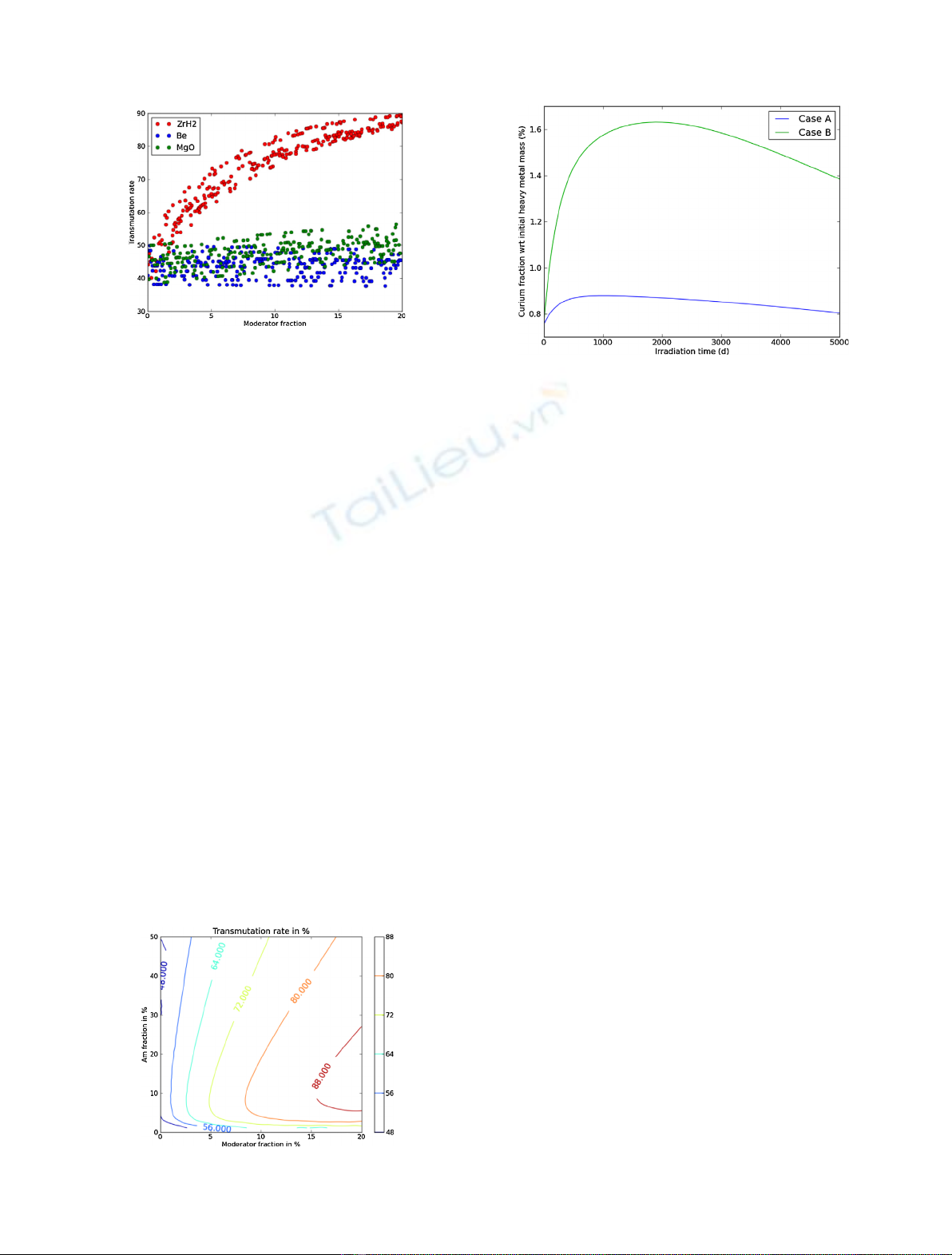
Figure 2 shows the effect of the various moderator materials
on the transmutation rate for a cell with 30% fuel, 30%
coolant and between 40 and 20% of structures. It is clear
that the hydrogenated moderator ZrH
2
, which has a more
efficient moderating effect, is the most effective to slow
down the neutrons. However, its use in reactor is difficult
mainly due to dissociation issues that were not taken into
account here. The two other moderators are less efficient
and their impact on the transmutation rate is consequently
smaller. In each case, the impact on fission rate is inversely
proportional to the impact on the transmutation rate. This
is explained by the change in the spectrum which has
already been discussed before.
However, this highlights a potential use of the
moderator to accelerate transmutation kinetic. Using
moderator material increases the total absorption cross-
section and thus the transmutation rate while decreasing
the fission cross-section. This leads to an increase in the
production of curium and heavier minor actinides. Howev-
er, using moderator appears as a possible solution to tune
the production of curium with regards to cycle constraints
in order to maximize the transmutation rate. This will be
discussed in the next parts. It should also be noted that
addition of moderating material may lead to damaging
power peaking issues [11].
Table 2. Minor actinides isotopic vector.
Element Mass fraction (%)
237
Np 16.87
241
Am 60.62
242
Am 0.24
243
Am 15.7
242
Cm 0.02
243
Cm 0.07
244
Cm 5.14
245
Cm 1.26
246
Cm 0.08
Table 3. Isotopes used for residual power calculations and neutron source calculations.
Isotope
242
Cm
244
Cm
241
Am
238
Pu
Power density (W/g) 121.4 2.84 0.11 0.57
Isotope
244
Cm
245
Cm
248
Cm
252
Cf
Neutron emission
(10
7
n/s/g)
1.4 1 4.4 2.1 × 10
5
Table 4. Effect of the fuel type for a cell with 6.5% Am,
averaged over the results for the three coolant types.
Fuel type Transmutation rate (%) Fission rate (%)
Oxide 67.5 11.5
Carbide 62 14.5
Nitride 60.8 15.5
Metal 57.7 16.3
Table 5. Effect of the coolant material type for a cell with
6.5% Am, averaged over the results for the four fuel types.
Coolant type Transmutation rate (%) Fission rate (%)
Helium 66 11.9
LBE 61 14.6
Sodium 62.5 14.9
4 T. Kooyman and L. Buiron: EPJ Nuclear Sci. Technol. 1, 15 (2015)
4.4 Effect of the MA isotopic vector and volume fraction
Increasing the minor actinides volume fraction in the fuel has
two effects which are opposite. On the one hand, an increase
in the MA fraction leads to a harder spectrum, which
decreases the transmutation rate. On the other hand, the
increase in the loaded fraction of minor actinides also
increases the transmutation rate by displacing the fuel
isotopic vector further way from its equilibrium value. The
first effect is predominant at high fraction and the second one
is more visible at low fraction. This can be seen on Figure 3,
which shows the transmutation rate at 1000 EPFD versus
the fraction of moderator and the fraction of minor actinides
for 10
15
n/cm
2
/s flux with 40% fuel at 20% Pu fraction and
20% structures. One can see that for a constant moderator
volume fraction, the transmutation rate first increases with
the minor actinides fraction and then decreases. This is seen
with all kind of coolant/fuel combination, all moderator
material and with Am only or all minor actinides. This means
that there is an optimal value for MA fraction loaded in the
fuel, which depends also on the moderator fraction. In our
calculations, no impact of the minor actinides vector on the
transmutation rate or fission was found. However, in a “true”
reactor, this vector will have an impact on reactivity and
safety coefficients of the reactor.
It should also be noted that the position of this optimum
may not be adequate with regards to the minor actinides
inventory management. Indeed, it corresponds to relatively
low minor actinides fraction.
4.5 Effect of flux level and irradiation time
At the first order, transmutation rates variation with regards
both to flux level and irradiation time goes as 1e’Tso an
increase in any of these two parameters will lead to an
increase in the transmutation rate without any impact on the
fission rate, which is verified by our calculations.
Consequently, there is an interest in using the highest
possible flux level to accelerate the transmutation process.
For irradiation time, the reasoning is similar but appropri-
ate care should be taken with regards to the so-called
“curium peak”, which can be seen on Figure 4.
This peak is due to the competition between the
production of curium from capture on americium isotopes
and the destruction of these curium nuclei by fission or
capture. At beginning of irradiation, the americium fraction
is high which leads to a high production rate of curium with
a low consumption rate as the curium fraction is still low.
The height of this peak is proportional to the ratio of
absorption cross-sections of Cm and Am isotopes. In a fast
flux, this ratio is lower than in an epithermal flux, thus
explaining why the peak appears to be lower in case A on
Figure 4, which corresponds to a fast spectrum than in case
B which corresponds to a more degraded spectrum. Both
cases were introduced as “extremal”spectrum that can be
found in a fast reactor, either with a very energetic
spectrum (case A) or a very degraded spectrum (case B). It
should also be noted that evolution kinetic of the curium
fraction depends on the absorption cross-sections of Cm
and Am, which explains the difference observed in terms of
evolution on Figure 4.
From the previous analysis, we can conclude that the
most important parameters in terms of reactor design for
transmutation purposes are the amount of minor actinides
loaded in the core and the spectrum. The other parameters
studied have an impact which is small compared to the
Fig. 2. Transmutation rate versus moderator fraction.
Fig. 3. Transmutation rate versus fraction of moderator.
Fig. 4. Illustration of the curium peak for case A and B (detailed
below in Tab. 6).
T. Kooyman and L. Buiron: EPJ Nuclear Sci. Technol. 1, 15 (2015) 5




![Đề ôn tập cuối kỳ môn Kỹ thuật nhiệt - Nhiệt động học [mới nhất]](https://cdn.tailieu.vn/images/document/thumbnail/2026/20260310/hoaphuong0906/135x160/60681773197823.jpg)

![Bài giảng thang máy và thang cuốn: Tổng hợp kiến thức [chuẩn nhất]](https://cdn.tailieu.vn/images/document/thumbnail/2026/20260310/hoaphuong0906/135x160/41471773283876.jpg)
