

arXiv:cond-mat/0007418v1 [cond-mat.stat-mech] 26 Jul 2000
Statistical Physics of Traffic Flow 1
Andreas Schadschneider a,2
aInstitut f¨ur Theoretische Physik, Universit¨at zu K¨oln, D-50923 K¨oln, Germany
Physica A285, 101 (2000)
Abstract
The modelling of traffic flow using methods and models from physics has a long his-
tory. In recent years especially cellular automata models have allowed for large-scale
simulations of large traffic networks faster than real time. On the other hand, these
systems are interesting for physicists since they allow to observe genuine nonequi-
librium effects. Here the current status of cellular automata models for traffic flow
is reviewed with special emphasis on nonequilibrium effects (e.g. phase transitions)
induced by on- and off-ramps.
Key words: Cellular automata, complex systems, nonequilibrium physics
1 Introduction
Despite the long history of application of methods from physics to traffic flow
problems (going back to the fifties) it has only recently blossomed into a
successfull field of “exotic statistical physics” [1]. Until a few years ago most
approaches were based on ”classical” methods from physics, especially from
mechanics and hydrodynamics. In general one can distinguish microscopic and
macroscopic approaches.
In microscopic models individual vehicles are distinguished. A typical exam-
ple are the so-called car-following theories [2,3]. For each car one writes an
1Supported by SFB 341 (K¨oln-Aachen-J¨ulich)
2E-mail: as@thp.uni-koeln.de
Preprint submitted to Elsevier Preprint 1 February 2008

equation of motion which is the analogue of Newton’s equation. The basic
philospophy of the car-following approach can be summarized by the equa-
tion [Response]n=κn[Stimulus]nfor the n−th vehicle. Each driver nre-
sponds to the surrounding traffic conditions which constitute the stimulus
for his reaction. The constant of proportionality κnis also called sensitivity.
Usually also the reaction-time of the drivers is taken into account. A typical
example is the follow-the-leader model [3] where the stimulus is given by the
velocity difference to the next car ahead. Assuming that drivers tend to move
at the same speed as the leading car the equations of motion are given by
¨xn(t) = κn[ ˙xn+1(t)−˙xn(t)]. In order to obtain realistic behaviour the sensi-
tivity κnhas to become a function of the velocity and the distance between
the cars, κn=κn(vn, xn+1 −xn). In recent years the so-called optimal-velocity
model [4] has successfully been used. Here the acceleration is determined by
the difference of the actual velocity vn(t) and an optimal velocity Vopt(∆xn)
which depends on the distance ∆xnto the next car. The equations of motion
are then of the form ¨xn(t) = κn[Vopt(∆xn)−vn(t)].
In macroscopic models one does not distinguish individual cars. Instead a
”coarse-grained” fluid-dynamical description in terms of densities c(x, t) and
flows J(x, t) is used. Traffic is then viewed as a compressible fluid formed
by the vehicles. Density and flow are related through a continuity equation
which for closed systems takes the form ∂c/∂t +∂J/∂x = 0. Since this is only
one equation for two unknown functions one needs additional information. In
one of the first traffic models Lighthill and Whitham [5] assumed that J(x, t)
is determined by c(x, t), i.e. J(x, t) = J(c(x, t)). Inserting this assumption
into the continuity equation yields the so-called Lighthill-Whitham equation
∂c/∂t+vg∂c/∂x = 0 with vg=dJ/dc. However, for a more realistic description
of an traffic additional equation, the analogue of the Navier-Stokes equation
for fluids, describing the time-dependence of the velocities vn(x, t) has to be
considered instead of the simple Lighthill-Whitham assumption.
The first approach borrowing ideas from statistical physics is the kinetic theory
of vehicular traffic [6]. Here traffic is treated as a gas of interacting particles.
The interactions are described by a dynamical equation in phase space which
is the analogue of the Boltzmann equation in the kinetic theory of gases.
This is only a a very brief overview over the different approaches for the de-
scription of traffic flow. For a more complete exposition of the models and their
merits we refer to the literature, e.g. [1,6–13]. Nice overviews over the physics
of related nonequilibrium models can be found in [14–17]. In the following
we concentrate on a class of models developed in the last few years, namely
(probabilistic) cellular automata. These models describe stochastic processes
and are therefore of general interest for statistical physics [18,19]. An exten-
sive review of the application of cellular automata to traffic flow and related
systems can be found in [1]. Here we focus on aspects that have not been
2

discussed in much detail in [1], e.g. the effects of on- and off-ramps.
2 Some empirical facts
The most simple empirical facts that should be reproduced by any traffic
model are the spontaneous formation of jams and the characteristic form of
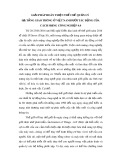
the flow-density relation, the so-called fundamental diagram. The space-time
plot of Fig. 1 shows the formation and propagation of a traffic jam. In the
beginning, the vehicles are well separated from each other. Then, without any
obvious reason like an accident or road construction, a dense region appears
due to fluctuations. This finally leads to the formation of a jam which remains
stable for a certain period of time but disappears again without any obvious
reason. During its lifetime the front of the jam moves backwards against the
driving direction of the cars with a characteristic velocity of approximately 15
km/h.
t
Fig. 1. Trajectories of individual vehicles on a single lane of a multi-lane highway
showing the spontaneous formation of a jam (from [20]).
A more detailed analysis of traffic jams in absence of hindrances has been
given by Kerner and Rehborn [21–23]. They found that the upstream velocity
and, therefore, the outflow from a jam is approximately constant. The outflow
from a jam and the velocity of the jam fronts are now regarded as two impor-
tant empirical parameters of highway traffic which can be used for calibrating
theoretical models.
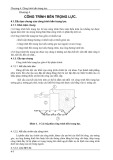
Fig. 2 shows a typical fundamental diagram obtained from empirical data. One
3

can clearly distinguish two regions, the free-flow regime at small densities and
the congested regime at high densities. In the free-flow regime the cars do not
hinder each others motion and therefore the flow grows linearly with density.
In the congested regime however, the motion of the vehicles is dominated
by the hindrance due to other cars. Here the flow decreases with increasing
density.
Fig. 2. Empirical data for flow and density (occupancy) measured directly by count-
ing loops on a Canadian highway. Each point in the diagram corresponds to an
average over a time interval of five minutes (from [24]).
These considerations only give the basic structure of the fundamental diagram.
In Sec. 4 a more detailed analysis of empirical data will be presented which
reveals a much richer structure, e.g. the existance of hysteresis and metastable
states. Furthermore in the congested regime one can distinguish two different
phases, namely stop-and-go traffic and synchronized flow.
3 Cellular automata models
The Nagel-Schreckenberg (NaSch) model [25] is a probabilistic cellular au-
tomaton (CA) able to reproduce the basic features of traffic flow as discussed
in Sec. 2. In a CA not only space and time are discrete, but also the state
variable. In the NaSch model, each cell can be empty or occupied by exactly
one car (Fig. 3). The state of the car is then characterized by its velocity v
which can take one of the vmax + 1 allowed integer values v= 0,1, ..., vmax.
Suppose, xnand vndenote the position and velocity, respectively, of the n-th
vehicle. Then, dn=xn+1 −xn, is the gap in between the n-th car and the car
in front of it at time t. At each time step t→t+ 1, the arrangement of the
Ncars on a finite lattice of length L(i.e. for a global density ρ=N/L) is
updated in parallel according to the following ”rules”:
4

Step 1: Acceleration.
If vn< vmax, the speed of the n-th car is increased by one, i.e.
vn→min(vn+ 1, vmax) (U1).
Step 2: Deceleration (due to other cars).
If dn≤vn, the speed of the n-th car is reduced to dn−1, i.e.,
vn→min(vn, dn−1) (U2).
Step 3: Randomization.
If vn>0, the speed of the n-th car is decreased randomly by unity with prob-
ability p, i.e.,
vn→max(vn−1,0) with probability p(U3).
Step 4: Vehicle movement.
Each car is moved forward according to its new velocity determined in Steps
1–3, i.e.
xn→xn+vn(U4).
1
x x
0
x x
1
x x
2
x x
7,5 meter
!
Fig. 3. A typical configuration in the NaSch model. The number in the upper right
corner is the speed of the vehicle.
The NaSch model is a minimal model in the sense that all the four steps are
necessary to reproduce the basic features of real traffic; however, additional
rules are needed to capture more complex situations. Step 1 reflects the gen-
eral tendency of the drivers to drive as fast as possible without crossing the
maximum speed limit. Step 2 is intended to avoid collision between the cars.
The randomization in step 3 takes into account the different behavioural pat-
terns of the individual drivers, especially, nondeterministic acceleration as well
as overreaction while slowing down; this is crucially important for the sponta-
neous formation of traffic jams. Even changing the precise order of the steps
of the update rules stated above would change the properties of the model.
E.g. after changing the order of steps 2 and 3 there will be no overreactions at
braking and thus no spontaneous formation of jams (see below). The NaSch
model may be regarded as stochastic CA [18]. In the special case vmax = 1
the deterministic limit of the NaSch model is equivalent to the CA rule 184
in Wolfram’s notation [18].
5








%20--%3e%3cdefs%3e%3cstyle%3e%20.st0%20{%20fill:%20%23fff;%20}%20.st1%20{%20fill:%20%237800fa;%20}%20%3c/style%3e%3c/defs%3e%3cpath%20class='st1'%20d='M117.78,12.18H43.11c2.9,3.47,4.65,7.94,4.65,12.82,0,5.6-2.3,10.66-6.01,14.29h76.02l7.22-13.56-7.22-13.56Z'/%3e%3cg%3e%3cpath%20class='st0'%20d='M53.58,26.17h-.59v-1.46h.59v-4.96h2.83c1.78,0,2.67.94,2.67,2.82v5.76c0,1.87-.89,2.81-2.67,2.81h-2.83v-4.96ZM55.36,21.37v3.34h1.1v1.46h-1.1v3.34h1.01c.61,0,.91-.37.91-1.1v-5.93c0-.74-.3-1.1-.91-1.1h-1.01Z'/%3e%3cpath%20class='st0'%20d='M65.99,31.14h-1.8l-.31-2.07h-2.19l-.31,2.07h-1.64l1.82-11.39h2.62l1.82,11.39ZM65.28,18.04c-.25.46-.51.77-.75.94-.21.15-.47.22-.79.22-.26,0-.57-.07-.92-.22l-.38-.15c-.14-.05-.26-.07-.37-.07-.3,0-.53.18-.71.54l-.91-.68c.25-.46.51-.77.75-.94.21-.14.48-.21.79-.21.26,0,.57.07.92.21l.38.15c.14.05.26.07.37.07.3,0,.53-.18.71-.54l.91.68ZM61.91,27.52h1.73l-.87-5.76-.87,5.76Z'/%3e%3cpath%20class='st0'%20d='M74.53,26.89v1.52c0,1.91-.89,2.86-2.67,2.86s-2.67-.95-2.67-2.86v-5.93c0-1.91.89-2.86,2.67-2.86s2.67.95,2.67,2.86v1.11h-1.69v-1.22c0-.75-.31-1.12-.93-1.12s-.93.37-.93,1.12v6.15c0,.74.31,1.11.93,1.11s.93-.37.93-1.11v-1.63h1.69Z'/%3e%3cpath%20class='st0'%20d='M81.4,31.14h-1.8l-.31-2.07h-2.19l-.31,2.07h-1.64l1.82-11.39h2.62l1.82,11.39ZM75.9,19.2l1.52-1.91h1.71l1.51,1.91h-1.61l-.76-.95-.75.95h-1.61ZM77.32,27.52h1.73l-.87-5.76-.87,5.76ZM83.1,15.99l-1.76,1.91h-1.26l1.17-1.91h1.86Z'/%3e%3cpath%20class='st0'%20d='M84.86,19.75c1.78,0,2.67.94,2.67,2.82v1.48c0,1.87-.89,2.81-2.67,2.81h-.85v4.28h-1.79v-11.39h2.64ZM84.01,21.37v3.86h.85c.58,0,.87-.36.87-1.08v-1.71c0-.71-.29-1.07-.87-1.07h-.85Z'/%3e%3cpath%20class='st0'%20d='M93.51,19.75c1.78,0,2.67.94,2.67,2.82v1.48c0,1.87-.89,2.81-2.67,2.81h-.85v4.28h-1.79v-11.39h2.64ZM92.66,21.37v3.86h.85c.58,0,.87-.36.87-1.08v-1.71c0-.71-.29-1.07-.87-1.07h-.85Z'/%3e%3cpath%20class='st0'%20d='M98.8,31.14h-1.79v-11.39h1.79v4.88h2.03v-4.88h1.83v11.39h-1.83v-4.88h-2.03v4.88Z'/%3e%3cpath%20class='st0'%20d='M105.36,24.55h2.46v1.62h-2.46v3.34h3.09v1.63h-4.88v-11.39h4.88v1.63h-3.09v3.18ZM108.17,17.29l-1.76,1.91h-1.26l1.17-1.91h1.86Z'/%3e%3cpath%20class='st0'%20d='M112.2,19.75c1.78,0,2.67.94,2.67,2.82v1.48c0,1.87-.89,2.81-2.67,2.81h-.85v4.28h-1.79v-11.39h2.64ZM111.35,21.37v3.86h.85c.58,0,.87-.36.87-1.08v-1.71c0-.71-.29-1.07-.87-1.07h-.85Z'/%3e%3c/g%3e%3ccircle%20class='st1'%20cx='25'%20cy='25'%20r='20'/%3e%3cpath%20class='st0'%20d='M32.78,19.27c2.92,0,4.43,2.55,5.28,5.33l.71,2.17c.14.38-.33.75-.71.75h-5.61c.19-.33.24-.71.09-1.08l-.75-2.45c-.43-1.32-.99-2.64-1.79-3.77.75-.57,1.65-.94,2.78-.94h0ZM25,18.38c3.25,0,4.9,2.78,5.89,5.89l.76,2.45c.14.42-.33.8-.8.8h-11.69c-.42,0-.94-.38-.8-.8l.75-2.45c.99-3.11,2.64-5.89,5.89-5.89h0ZM25,11.35c1.74,0,3.11,1.37,3.11,3.11s-1.37,3.11-3.11,3.11-3.11-1.41-3.11-3.11,1.41-3.11,3.11-3.11h0ZM17.27,19.27c1.08,0,1.98.38,2.73.94-.8,1.13-1.37,2.45-1.74,3.77l-.8,2.45c-.14.38-.05.75.09,1.08h-5.56c-.42,0-.9-.38-.75-.75l.71-2.17c.9-2.78,2.41-5.33,5.33-5.33h0ZM17.27,12.91c1.51,0,2.78,1.27,2.78,2.83s-1.27,2.83-2.78,2.83-2.83-1.27-2.83-2.83,1.27-2.83,2.83-2.83h0ZM32.78,12.91c1.56,0,2.78,1.27,2.78,2.83s-1.23,2.83-2.78,2.83-2.83-1.27-2.83-2.83,1.27-2.83,2.83-2.83h0ZM27.07,28.56v.09c0,.57-.24,1.08-.61,1.46h0v.05c-.38.33-.9.57-1.46.57s-1.08-.24-1.46-.61h0c-.38-.38-.61-.9-.61-1.46v-.09h1.41v.09c0,.19.05.38.19.47v.05c.09.09.28.19.47.19s.38-.09.47-.19v-.05c.14-.09.24-.28.24-.47t-.05-.09h1.41ZM30.99,28.56v.09c0,1.65-.66,3.16-1.74,4.24-1.08,1.08-2.59,1.79-4.24,1.79s-3.16-.71-4.24-1.79l-.05-.05c-1.04-1.08-1.7-2.55-1.7-4.2v-.09h1.41v.09c0,1.27.47,2.4,1.27,3.25h.05c.85.85,1.98,1.37,3.25,1.37s2.4-.52,3.25-1.37c.85-.8,1.37-1.98,1.37-3.25v-.09h1.37ZM34.99,28.56v.09c0,2.78-1.13,5.28-2.92,7.07-1.79,1.79-4.29,2.92-7.07,2.92s-5.23-1.13-7.07-2.92c-1.79-1.79-2.92-4.29-2.92-7.07v-.09h1.41v.09c0,2.4.94,4.53,2.5,6.08,1.56,1.56,3.72,2.5,6.08,2.5s4.52-.94,6.08-2.5c1.56-1.56,2.5-3.68,2.5-6.08v-.09h1.41Z'/%3e%3c/svg%3e)