BioMed Central
Page 1 of 10
(page number not for citation purposes)
Journal of NeuroEngineering and
Rehabilitation
Open Access
Research
Effects of intensive arm training with the rehabilitation robot
ARMin II in chronic stroke patients: four single-cases
Patricia Staubli1,2,3, Tobias Nef4,5, Verena Klamroth-Marganska*1,2 and
Robert Riener1,2
Address: 1Sensory-Motor Systems Lab, Institute of Robotics and Intelligent Systems, ETH Zurich, Switzerland, 2Spinal Cord Injury Center, Balgrist
University Hospital, University Zurich, Switzerland, 3Department of Biology, Institute of Human Movement Sciences and Sport, ETH Zurich,
Switzerland, 4Department of Biomedical Engineering, The Catholic University of America, Washington D.C., USA and 5Center for Applied
Biomechanics and Rehabilitation Research, National Rehabilitation Hospital, Washington D.C., USA
Email: Patricia Staubli - patricia.staubli@alumni.ethz.ch; Tobias Nef - nef@cua.edu; Verena Klamroth-
Marganska* - verena.klamroth@mavt.ethz.ch; Robert Riener - riener@mavt.ethz.ch
* Corresponding author
Abstract
Background: Robot-assisted therapy offers a promising approach to neurorehabilitation,
particularly for severely to moderately impaired stroke patients. The objective of this study was to
investigate the effects of intensive arm training on motor performance in four chronic stroke
patients using the robot ARMin II.
Methods: ARMin II is an exoskeleton robot with six degrees of freedom (DOF) moving shoulder,
elbow and wrist joints. Four volunteers with chronic (≥ 12 months post-stroke) left side hemi-
paresis and different levels of motor severity were enrolled in the study. They received robot-
assisted therapy over a period of eight weeks, three to four therapy sessions per week, each
session of one hour.
Patients 1 and 4 had four one-hour training sessions per week and patients 2 and 3 had three one-
hour training sessions per week. Primary outcome variable was the Fugl-Meyer Score of the upper
extremity Assessment (FMA), secondary outcomes were the Wolf Motor Function Test (WMFT),
the Catherine Bergego Scale (CBS), the Maximal Voluntary Torques (MVTs) and a questionnaire
about ADL-tasks, progress, changes, motivation etc.
Results: Three out of four patients showed significant improvements (p < 0.05) in the main
outcome. The improvements in the FMA scores were aligned with the objective results of MVTs.
Most improvements were maintained or even increased from discharge to the six-month follow-up.
Conclusion: Data clearly indicate that intensive arm therapy with the robot ARMin II can
significantly improve motor function of the paretic arm in some stroke patients, even those in a
chronic state. The findings of the study provide a basis for a subsequent controlled randomized
clinical trial.
Published: 17 December 2009
Journal of NeuroEngineering and Rehabilitation 2009, 6:46 doi:10.1186/1743-0003-6-46
Received: 31 March 2009
Accepted: 17 December 2009
This article is available from: http://www.jneuroengrehab.com/content/6/1/46
© 2009 Staubli et al; licensee BioMed Central Ltd.
This is an Open Access article distributed under the terms of the Creative Commons Attribution License (http://creativecommons.org/licenses/by/2.0),
which permits unrestricted use, distribution, and reproduction in any medium, provided the original work is properly cited.
Journal of NeuroEngineering and Rehabilitation 2009, 6:46 http://www.jneuroengrehab.com/content/6/1/46
Page 2 of 10
(page number not for citation purposes)
Background
Stroke remains the leading cause of permanent disability.
Recent studies estimate that it affects more than 1 million
people in the EU [1,2] and more than 0.7 million in the
U.S. each year [3]. The major symptom of stroke is severe
sensory and motor hemiparesis of the contralesional side
of the body [4]. The degree of recovery highly depends on
the severity and the location of the lesion [5]. However,
only 18% of stroke survivors regain full motor function
after six months [6]. Restoration of arm and hand func-
tions is essential [6] to cope with tasks of daily living and
regain independence in life.
There is evidence that the rehabilitation plateau can be
prolonged beyond six months post-stroke and that
improvements in motor functions can be achieved even in
a chronic stage with appropriate therapy [7,8]. For this to
occur, effective therapy must comprise key factors con-
taining repetitive, functional, and task-specific exercises
performed with high intensity and duration [9-12].
Enhancing patients' motivation, cooperation, and satis-
faction can reinforce successful therapy [13]. Robot-
assisted training can provide such key elements for induc-
ing long-term brain plasticity and effective recovery [14-
19].
Robotic devices can objectively and quantitatively moni-
tor patients' progress - an additional benefit since clinical
assessments are often subjective and suffer from reliability
issues [20]. Patient-cooperative control algorithms
[21,22] can support patients' efforts only as much as
needed, thus allowing for intensive robotic intervention.
Several clinical studies have been successfully conducted
with endeffector based robots [14,16,17,23]. In these
robots, the human arm is connected to the robot at a sin-
gle (distal) limb only. Consequently, endeffector based
robots are easy to use but do not allow single joint torque
control over large ranges of motion. In general, they pro-
vide less guidance and support than exoskeleton robots
[24]. In this study we propose using an exoskeleton-type
robot for the intervention. Such a type of robot provides
superior guidance and permits individual joint torque
control [24]. The device used here is called ARMin and has
been developed over the last six years [21,25].
A first pilot study with three chronic stroke patients
showed significant improvements in motor functions
with intensive training using the first prototype ARMin I.
Since ARMin I provided therapy only to the shoulder and
elbow, there were no improvements in distal arm func-
tions [25]. Consequently, the goal was to develop a robot,
which enables a larger variability of different (also more
complex and functional) training modalities involving
proximal and distal joint axes [26,27].
For this study we used an enhanced prototype, ARMin II,
with six independently actuated degrees of freedom
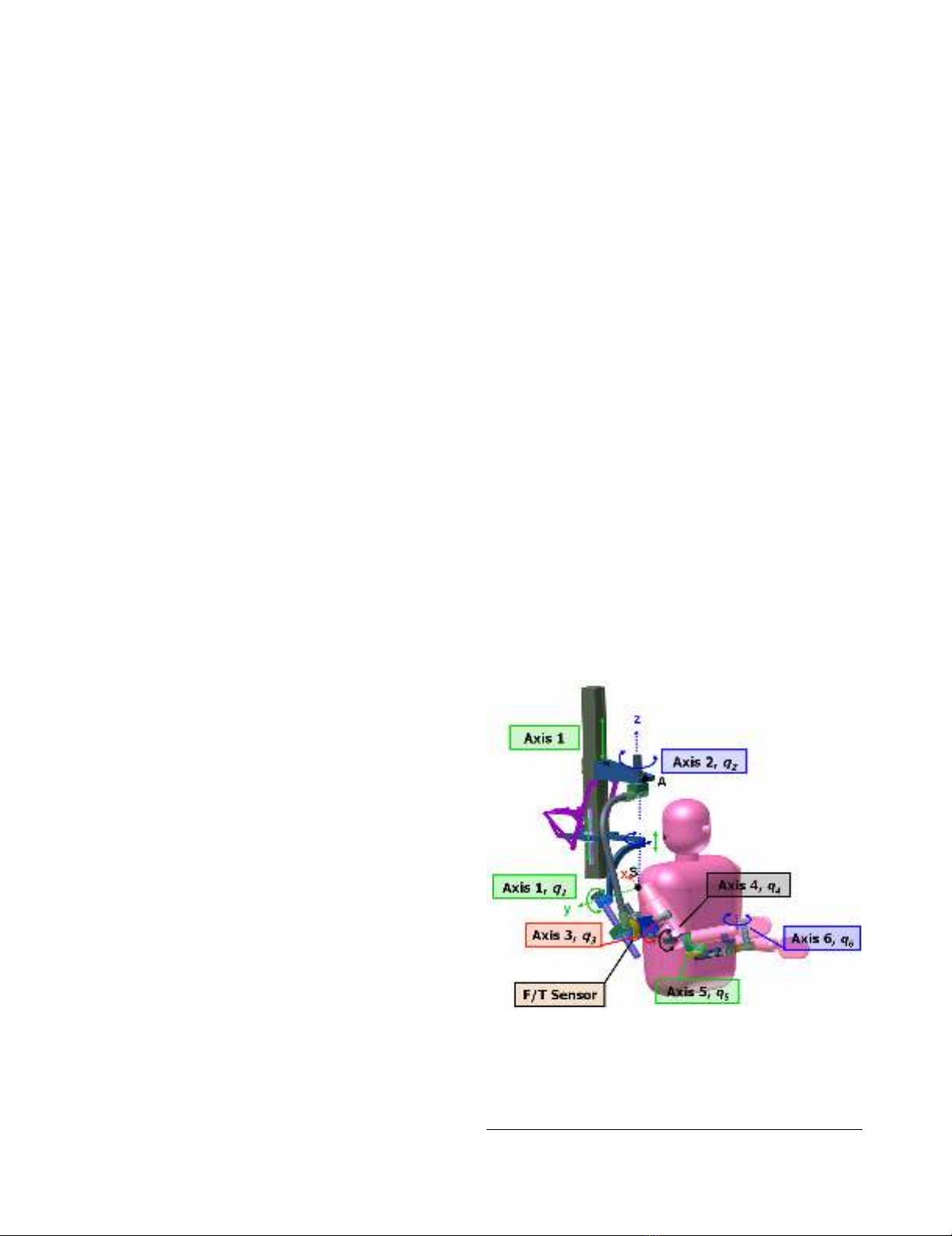
(DOF) and one coupled DOF (Figure 1). The robot trains
both proximal joints (horizontal and vertical shoulder
rotation, arm inner - outer rotation, and elbow flexion -
extension) and distal joints (pro - supination of lower arm
and wrist flexion - extension). Together with an audiovis-
ual display, ARMin II provides a wide variety of training
modes with complex exercises and the possibility of per-
forming motivating games.
The goal of this study was to investigate the effects of
ARMin II training on motor function, strength and use in
everyday life.
Methods
Participants
Four patients (three male, one female) met the inclusion
criteria and volunteered in the study. The inclusion crite-
ria were i) diagnosis of a single ischemic stroke on the
right brain hemisphere with impairment of the left upper
extremity and ii) that stroke occurred at least twelve
months before study entrance.
Study exclusion criteria were 1) pain in the upper limb, so
that the study protocol could not be followed, 2) mental
illness or insufficient cognitive or language abilities to
understand and follow instructions, 3) cardiac pace-
maker, and 4) body weight greater than 120 kg.
Mechanical structure of the exoskeleton robot ARMin IIFigure 1
Mechanical structure of the exoskeleton robot
ARMin II. Axis 1: Vertical shoulder rotation, Axis 2: Hori-
zontal shoulder rotation, Axis 3: Internal/external shoulder
rotation, Axis 4: Elbow flexion/extension, Axis 5: Pro/supina-
tion of the lower arm, Axis 6: Wrist flexion/extension.
Journal of NeuroEngineering and Rehabilitation 2009, 6:46 http://www.jneuroengrehab.com/content/6/1/46
Page 3 of 10
(page number not for citation purposes)
All four patients received written and verbal information
about the study and gave written informed consent. The
protocol of the study was approved by the local ethics
committee.
Procedure
To investigate the effects of training with the rehabilita-
tion device ARMin II, four single-case studies with A-B
design were applied. Clinical evaluations of the Fugl-
Meyer Score of the upper extremity Assessment (FMA), the
Wolf Motor Function Test (WMFT), the Catherine Bergego
Scale (CBS), and the Maximal Voluntary Torques (MVTs)
were administered twice during a baseline period of three
weeks (A). A training phase of eight weeks (B) followed.
The same evaluation tools were applied every two weeks.
Patients 1 and 4 executed three training hours per week
(totally 24 hours over entire training period), patients 2
and 3 completed four training hours per week (totally 32
hours). A single training session comprised approximately
15 minutes passive mobilization and approximately 45
minutes active training. Training sessions were always led
by the same therapist.
Robotic therapy
ARMin II [21] allows for complex proximal and distal
motions in the functional 3-D workspace of the human
arm (Figure 1). The patient sits in a wheelchair (wheels
locked) and the arm is placed into an orthotic shell, which
is fixed and connected by three cuffs to the exoskeletal
structure of the robot. Position and force sensors support
active and passive control modes. Two types of therapy
modes were applied: a passive 'teach and repeat' mobiliz-
ing mode and a game mode with active training modali-
ties.
For the passive therapy, the therapist can carry out a
patient-specific mobilization sequence adapted to indi-
vidual needs and deficits, using the robot's 'teach and
repeat' mode. The therapist guides the mobilization
('teach') by moving the patient's arm in the orthotic shell.
The trajectory of this guided mobilization is recorded by
the robot, so that the same mobilization can be repeated
several times ('repeat'). The patient receives visual feed-
back from an avatar on the screen, that performs the same
movements in real-time. During the teaching sessions, the
robot is controlled by a zero-impedance mode, in which
the robot does not add any resistance to the movement, so
that the therapist consequently only feels the resistance of
the human arm. During the 'repeat' mode, the robot is
position-controlled and repeats the motion that has been
recorded before.
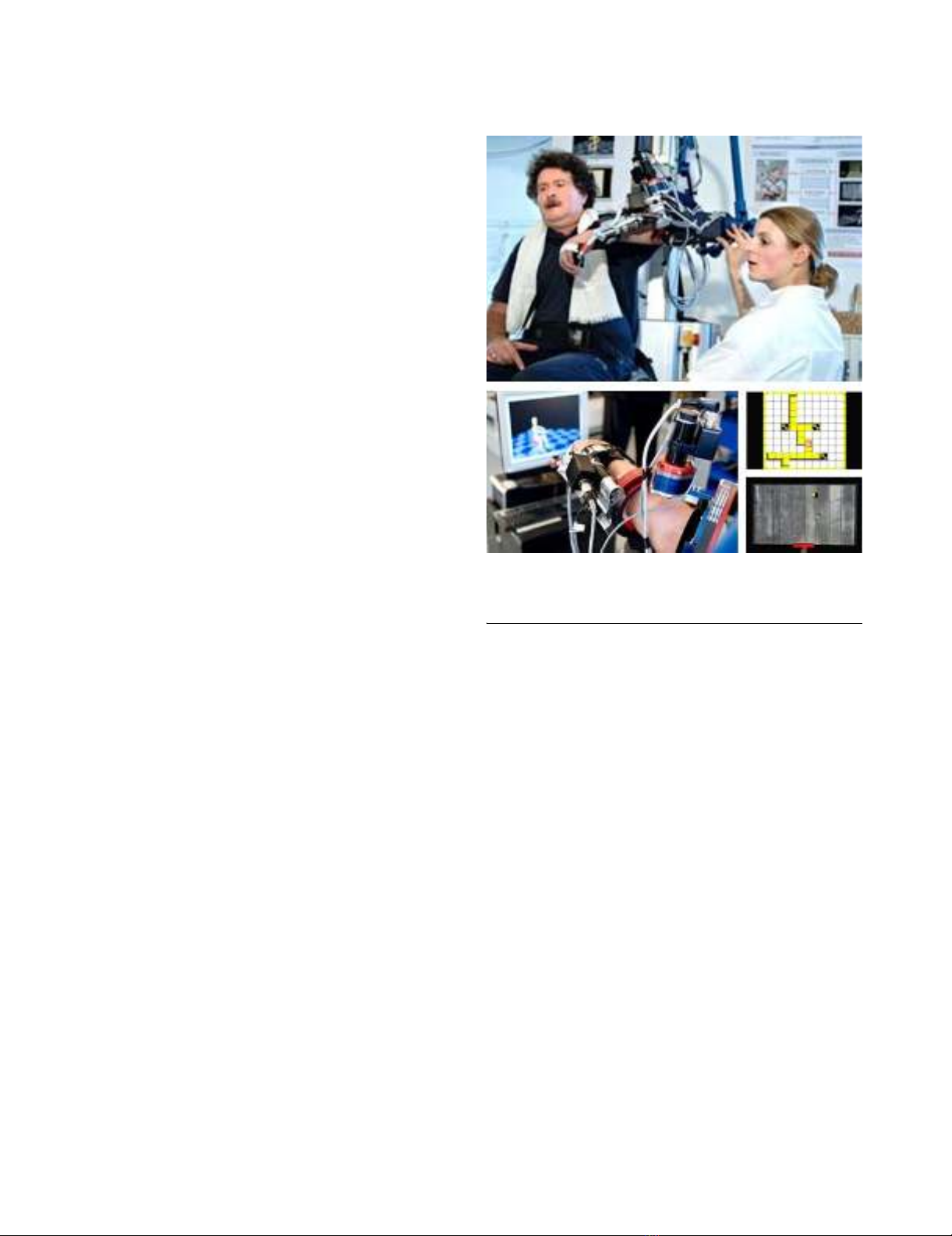
For the active part of the therapy, a ball game and a laby-
rinth scenario were selected (see Figure 2). In the ball
game, the patient moves a virtual handle on the screen.
The aim is to catch a ball that is rolling down a virtual
ramp by shifting the handle. When a patient is unable to
succeed, the robot provides support by directing the han-
dle to the ball (ARMin II in impedance-control mode). To
give the patient visual feedback, the color of the handle
turns from green to red when robot-support is delivered.
Acoustic feedback is provided when a ball is precisely
caught. The difficulty level of the ball game can be modi-
fied and adjusted to the patient's need by the therapist, i.e.
the number of joint axes involved, the starting arm posi-
tion, the range of motion, the robotic assistance, resist-
ance or opposing force, and speed.
In the labyrinth game, a red ball (cursor) moves according
to the patient's arm motions. The objective is to direct the
ball from the bottom to the top of the labyrinth. The cur-
sor must be moved accurately. If the ball touches the wall
too hard, it drops to the bottom and the game restarts.
Like the ball game, the labyrinth provides various training
modalities by changing the settings, such as the amount of
arm weight compensation, vertical support, number of
joint axes involved, working space and sensitivity of the
wall [28].
Outcome measurements
To ensure reproducibility and consistency of the testing
procedure, all measurements were executed by the same
person and with the same settings for each patient. Evalu-
ations were always completed before training sessions.
Subject in the robot ARMin II with labyrinth and ball game scenarioFigure 2
Subject in the robot ARMin II with labyrinth and ball
game scenario.

Journal of NeuroEngineering and Rehabilitation 2009, 6:46 http://www.jneuroengrehab.com/content/6/1/46
Page 4 of 10
(page number not for citation purposes)
Clinical assessments were filmed and later evaluated by an
independent "blinded" therapist from "Charité, Median
Clinic Berlin, Department Neurological Rehabilitation".
The main clinical outcome was the Fugl-Meyer Assess-
ment (FMA) of the upper-limb. This impairment-based
test consists of 33 items with a total maximum score of 66.
The test records the degree of motor deficits and reflexes,
the ability to perform isolated movements at each joint
and the influence of abnormal synergies on motion [29].
It shows good quality factors (reliability and validity)
[30,31] and it is widely used for clinical and research
assessments [32].
The Wolf Motor Function Test (WMFT) is a 15-item
instrument to quantify disability and to assess perform-
ance of simple and complex movements as well as func-
tional tasks [33]. This test has high interrater reliability,
internal consistency, and test-retest reliability [34]. The
WMFT is responsive to patients with mild to moderate
stroke impairments. However, for severely affected
patients it has low sensitivity due to a floor effect (when
single test items are too difficult).
Severity of neglect was evaluated with the Catherine
Bergego Scale (CBS), a test that shows good reliability,
validity [35], and sensitivity [36].
To assess sensory functions of the upper limb, the Ameri-
can Spinal Injury Association (ASIA) scoring system was
used [37]. The degree of sensation to pinprick (absent = 0,
impaired = 1, normal = 2) was determined at the key sen-
sory points of the C4 to T1 dermatomes. The single scores
were summed.
In addition, a questionnaire was designed, referring to
ADL-tasks, progress, changes, motivation etc. The patients
then had to rate the different questions on a scale from 1
to 10, and furthermore, add a comment, expressing their
subjective experiences and impressions.
Measurements with ARMin II
With the ARMin II robot, maximal voluntary torques
(MVTs) were determined for six isometric joint actions
including vertical shoulder flexion and extension, hori-
zontal shoulder abduction and adduction, as well as
elbow flexion and extension. Patients were seated in a
locked wheelchair with the upper body fixed by three belts
(two crosswise diagonal torso belts and one belt over the
waist) to prevent the torso from assisting the movements.
The starting position was always the same. The shoulder
was flexed 70° and transversally abducted 20°, the rota-
tion of the upper and lower arm was neutral (0°), and the
elbow was flexed 90°. Patients were instructed to generate
maximal isometric muscle contractions against the resist-
ance of ARMin II for at least two seconds before relaxing.
During the effort, verbal encouragement was given in each
case.
Data analysis
From the main baseline measurements - FMA, WMFT,
CBS, and MVT - the mean values and standard deviations
were calculated. Data recorded during the intervention
phases were evaluated by using the least square linear
regression model with applied bootstrap resampling tech-
nique [38]. For the statistical analysis, the programs SYS-
TAT 12 and Matlab 6.1 were used. The significance level p
≤ 0.05 of the slope of the regression line was considered
to indicate a statistically significant improvement.
Results
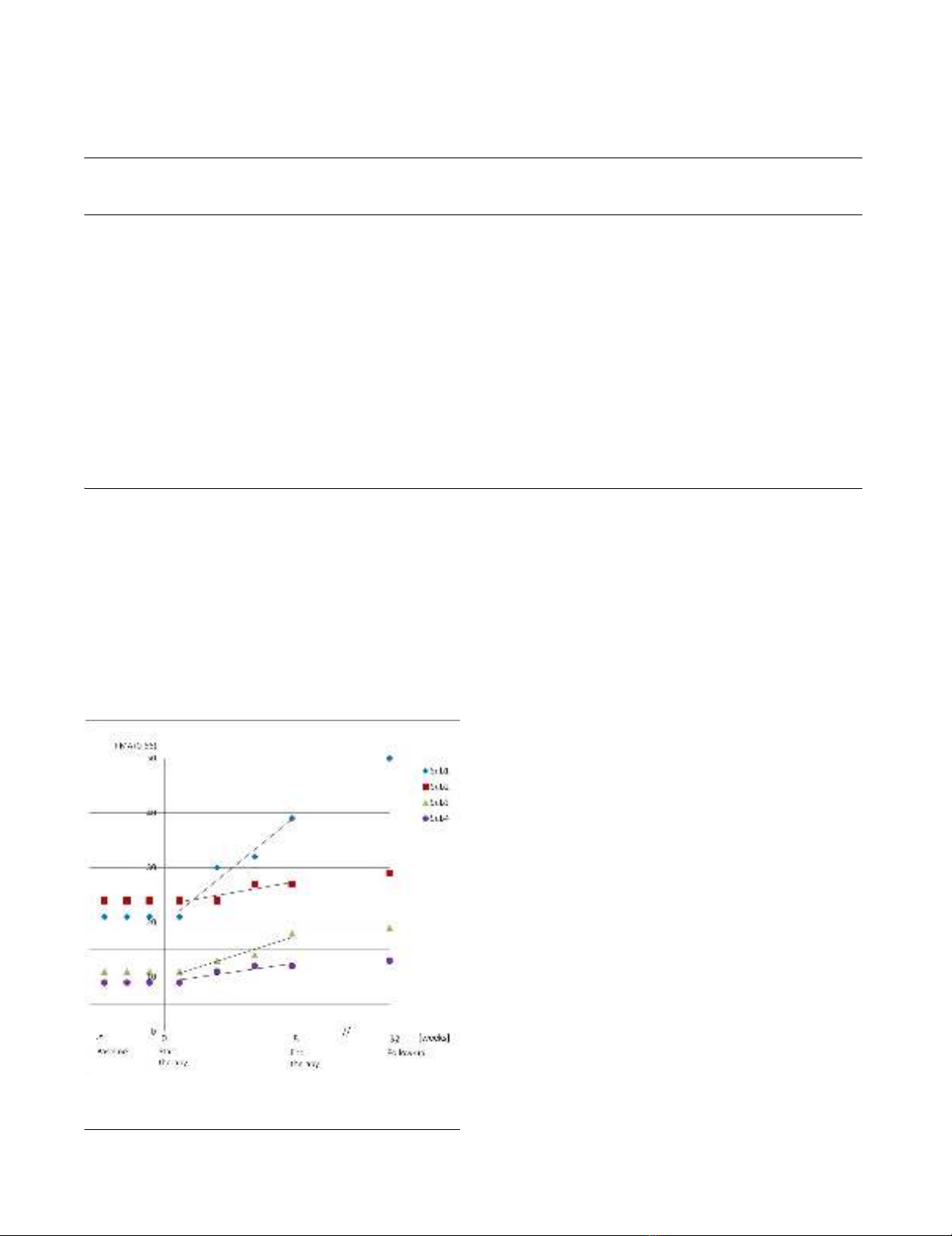
The results of the FMA are presented in Table 1. From
baseline to discharge, patients 1, 2, and 3 increased their
scores significantly (p < 0.05). They continued to improve
in the FMA at the six-month follow-up (see Figure 3).
Patient 1 gained +17.6 points in the FMA (from 21 to 38.6
points), while at the follow-up, six months later, he dem-
onstrated even further impressive progress, without hav-
ing received additional therapy in the mean time. Overall,
patient 1 showed an absolute improvement of +29 points
(from 21 to 50 points), particularly due to high recovery
in distal arm functions (+21 points).
The FMA gains of patients 2 and 3 were +5 points (from
24 to 29 points) and +8 points (from 11 to 19 points).
These findings were in line with other investigations
about the effects of robot-assisted therapy in chronic
stroke patients that demonstrated changes between 3.2
and 6.8 points [14,23,39-43]. However, one must note
that such comparisons have to be done with care since
studies often differ in methods and criteria (e.g. interven-
tion time, number of training sessions per week, duration
of training sessions, type of stroke, affected brain side,
time post-stroke, and severity of lesion). Patient 4 showed
an increase of +3 points (from 10 to 13 points) in the
FMA; however, this increase was statistically not signifi-
cant.
Typical arm functions that are relevant for activities of
daily life can be expressed by the WMFT (Table 2). During
the therapy, the WMFT scores of patients 1, 2 and 3
increased by +1.00, +0.5, and +0.86 points, respectively.
Patients 2 and 3 slightly diminished at follow-up. Never-
theless, these three patients achieved significant progress
(p < 0.05), in contrast to patient 4, who showed no signif-
icant improvement. However, at the follow-up examina-
tion, patient 4 was the only one who further improved in
the WMFT (see Figure 4).
Journal of NeuroEngineering and Rehabilitation 2009, 6:46 http://www.jneuroengrehab.com/content/6/1/46
Page 5 of 10
(page number not for citation purposes)
A questionnaire was used to obtain further information
about patient status. The patients reported progress of the
affected upper extremity in everyday life activities (e.g. the
arm can be lifted higher and better, is more integrated,
feels lighter and is less stiff, able to lift glass, fold laundry,
use index finger, and control motions better). The grades
of patients 1 to 4 regarding the use of their impaired arm
during ADLs after the intervention (scale range 1 to 10, no
better use = 1, much better use = 10) were 5, 7, 4 and 3,
respectively. Furthermore, they described to be more
motivated and willing to try to engage their arm in diverse
daily activities.
An overview of the MVTs, consisting of six different torque
measurements, is presented in Table 3. At the follow-up,
improvement in muscle strength increased in patient 1,
while it slightly diminished in patients 2 and 3. In patient
4, muscle strength returned to the base level at the follow-
up.
The demographic data and clinical characteristics of the
four patients are summarized in Table 4. None of the
patients reported any adverse effects from robot-mediated
therapy. In contrast, patients 3 and 4 described reduced
hardening and pain of their neck and shoulder muscles.
Patients 1, 2 and 3 completed measurements and therapy
sessions, except for patient 4, who missed one measure-
ment date and two therapy sessions for reasons that are
not related to the study.
Discussion
In this study, intensive therapy using the robot ARMin II
was administered to four chronic stroke patients during
eight weeks of training. Patients 1 and 4 received 32 and
Table 1: Overview of the Fugl-Meyer Assessment
FMA: Total§
sh/e§
w/h§
Baseline Post-
therapy
Difference†Follow
up (6 mt)
Difference‡Total
change
R2p
S1: Total 21 38.6 +17.6 50 +11.4 +29 0.943 0.001*
sh/e 20 24.0 +4.0 28 +4.0 +8
w/h 1 14.6 +13.6 22 +7.4 +21
S2: Total 24 27.1 +3.1 29 +1.9 +5 0.800 0.041*
sh/e 21 23.1 +2.1 24 +0.9 +3
w/h 3 4.0 +1.0 5 +1.0 +2
S3: Total 11 17.8 +6.8 19 +1.2 +8 0.908 0.003*
sh/e 10 15.8 +
5.8
18 +2.2 +8
w/h 1 2.0 +1.0 1 -1.0 +0
S4: Total 10 12.1 +2.1 13 +0.9 +3 0.408 0.172
sh/e 10 12.1 +2.1 12 -0.1 +2
w/h 0 0 +0 1 +1.0 +1
Note: An increase in score indicates improvement. S1 - S4 means subject 1 to 4.
§Fugl-Meyer (FMA), total score, maximum = 66; score for shoulder/elbow (sh/e), max. = 36; score for wrist/hand (w/h), max. = 30
†Difference of score between baseline and post-test.
‡Difference of score between post-test and follow up.
*Indicate significant p-values < 0.05
Clinical FMA scores across evaluation sessionsFigure 3
Clinical FMA scores across evaluation sessions.


![Báo cáo seminar chuyên ngành Công nghệ hóa học và thực phẩm [Mới nhất]](https://cdn.tailieu.vn/images/document/thumbnail/2025/20250711/hienkelvinzoi@gmail.com/135x160/47051752458701.jpg)