BioMed Central
Page 1 of 15
(page number not for citation purposes)
BMC Plant Biology
Open Access
Research article
Overexpression of mtDNA-associated AtWhy2 compromises
mitochondrial function
Alexandre Maréchal, Jean-Sébastien Parent, Mohammed Sabar,
Félix Véronneau-Lafortune, Charbel Abou-Rached and Normand Brisson*
Address: Department of Biochemistry, Université de Montréal, 2900 Édouard-Montpetit, Montréal, Québec, H3C 3J7, Canada
Email: Alexandre Maréchal - alexandre.marechal@umontreal.ca; Jean-Sébastien Parent - js.parent@umontreal.ca;
Mohammed Sabar - mohammed.sabar@umontreal.ca; Félix Véronneau-Lafortune - felix.veronneau.lafortune@umontreal.ca; Charbel Abou-
Rached - charbel.abou-rached@umontreal.ca; Normand Brisson* - normand.brisson@umontreal.ca
* Corresponding author
Abstract
Background: StWhy1, a member of the plant-specific Whirly single-stranded DNA-binding
protein family, was first characterized as a transcription factor involved in the activation of the
nuclear PR-10a gene following defense-related stress in potato. In Arabidopsis thaliana, Whirlies have
recently been shown to be primarily localized in organelles. Two representatives of the family,
AtWhy1 and AtWhy3 are imported into plastids while AtWhy2 localizes to mitochondria. Their
function in organelles is currently unknown.
Results: To understand the role of mitochondrial Whirlies in higher plants, we produced A.
thaliana lines with altered expression of the atwhy2 gene. Organellar DNA immunoprecipitation
experiments demonstrated that AtWhy2 binds to mitochondrial DNA. Overexpression of atwhy2
in plants perturbs mitochondrial function by causing a diminution in transcript levels and mtDNA
content which translates into a low activity level of respiratory chain complexes containing
mtDNA-encoded subunits. This lowered activity of mitochondria yielded plants that were reduced
in size and had distorted leaves that exhibited accelerated senescence. Overexpression of atwhy2
also led to early accumulation of senescence marker transcripts in mature leaves. Inactivation of
the atwhy2 gene did not affect plant development and had no detectable effect on mitochondrial
morphology, activity of respiratory chain complexes, transcription or the amount of mtDNA
present. This lack of phenotype upon abrogation of atwhy2 expression suggests the presence of
functional homologues of the Whirlies or the activation of compensating mechanisms in
mitochondria.
Conclusion: AtWhy2 is associated with mtDNA and its overexpression results in the production
of dysfunctional mitochondria. This report constitutes the first evidence of a function for the
Whirlies in organelles. We propose that they could play a role in the regulation of the gene
expression machinery of organelles.
Published: 18 April 2008
BMC Plant Biology 2008, 8:42 doi:10.1186/1471-2229-8-42
Received: 21 September 2007
Accepted: 18 April 2008
This article is available from: http://www.biomedcentral.com/1471-2229/8/42
© 2008 Maréchal et al; licensee BioMed Central Ltd.
This is an Open Access article distributed under the terms of the Creative Commons Attribution License (http://creativecommons.org/licenses/by/2.0),
which permits unrestricted use, distribution, and reproduction in any medium, provided the original work is properly cited.

BMC Plant Biology 2008, 8:42 http://www.biomedcentral.com/1471-2229/8/42
Page 2 of 15
(page number not for citation purposes)
Background
Plant cells comprise three organelles (nucleus, plastids
and mitochondria) that possess and maintain genetic
information. Coordination of gene expression in these
organelles is critical for plant development and survival
[1,2]. Since the endosymbiosis events that resulted in the
integration of plastids and mitochondria into eukaryotic
cells, most of the genetic information found in the cyano-
bacterial and α-proteobacterial ancestors has been trans-
ferred to the nucleus. Nevertheless, remnants of the
original genomes are still found in organelles. In Arabi-
dopsis, the mitochondrial genome contains coding
sequences for approximately 87 genes encoding mainly
components of the translational apparatus and of the
electron transport chain [3]. Since no protein involved in
general DNA metabolism is present in the mitochondrial
genome of Arabidopsis, gene expression in this organelle
is under nuclear control. A consequence of this is that
extensive anterograde (nucleus to organelle) and retro-
grade (organelle to nucleus) signalling is required for co-
regulation of nuclear and organellar genes that encode
proteins working cooperatively in organelles as well as for
the general homeostasis of mitochondria.
Whirlies form a small family of single-stranded DNA
(ssDNA) binding proteins found mainly in the plant king-
dom. StWhy1, the prototypical Whirly from Solanum
tuberosum, has been characterized as a transcriptional acti-
vator of the pathogenesis-related gene PR-10a following
elicitation or wounding of potato tubers [4-6]. Following
stress, it was shown to bind with high affinity to a single-
stranded form of an inverted-repeat-containing region
located in the promoter of PR-10a called the elicitor
response element (ERE) both in vitro and in vivo [6]. Anal-
ysis of the crystal structure of StWhy1 revealed that in vivo
Whirlies adopt a tetrameric form. Each protomer consists
of two antiparallel β sheets packed perpendicularly
against each other forming blade-like extensions which
protrude out of an α-helical core that allows formation of
a stable tetramer. The surface formed by these "blades"
was proposed to form the Whirly ssDNA-binding domain
[7]. In accordance with the role of StWhy1 in S. tuberosum,
the Arabidopsis homolog AtWhy1 was shown to be
required for both full basal and specific disease resistance
responses to the obligate biotroph Peronospora parasitica
[6].
Based on analysis of the primary sequence of Whirly pro-
teins from a variety of flowering plants, we predicted that
they could localize to organelles [5]. Recently, this was
confirmed for the Arabidopsis thaliana Whirly representa-
tives. Two of those Whirlies, AtWhy1 [TAIR:At1g14410]
and AtWhy3 [TAIR:At2g02740] are imported in plastids
whereas AtWhy2 [TAIR:At1g71260] is targeted to the
mitochondria ([8] and our unpublished data). Remarka-
bly, all flowering plants, when sufficient sequence infor-
mation is available, contain at least two Whirly
representatives, one predicted to be plastid-localized
while the other is expected to be in mitochondria. In a
recent turn of events, another nuclear function has been
proposed for the Whirlies as AtWhy1 was shown to be
involved in telomere length homeostasis [9]. Although
dual-localization of Whirlies to nucleus and organelles in
the same cell remains to be shown, it is possible that
under certain circumstances, such as specific stresses or
developmental cues, Whirlies could shuttle between cell
compartments, thus representing good candidates as
mediators of antero/retrograde signalling. In a first step
towards a better understanding of the relationship
between the nuclear functions of the Whirlies and their
primary localization to organelles, we decided to eluci-
date the functions of the Whirlies in mitochondria.
Results
Overexpression of AtWhy2 perturbs mitochondrial
function
To investigate the role of mitochondrial Whirlies, we pro-
duced plants with altered expression of the atwhy2
(At1g71260) gene. Homozygous plants carrying a T-DNA
insertion in the 3' untranslated region and completely
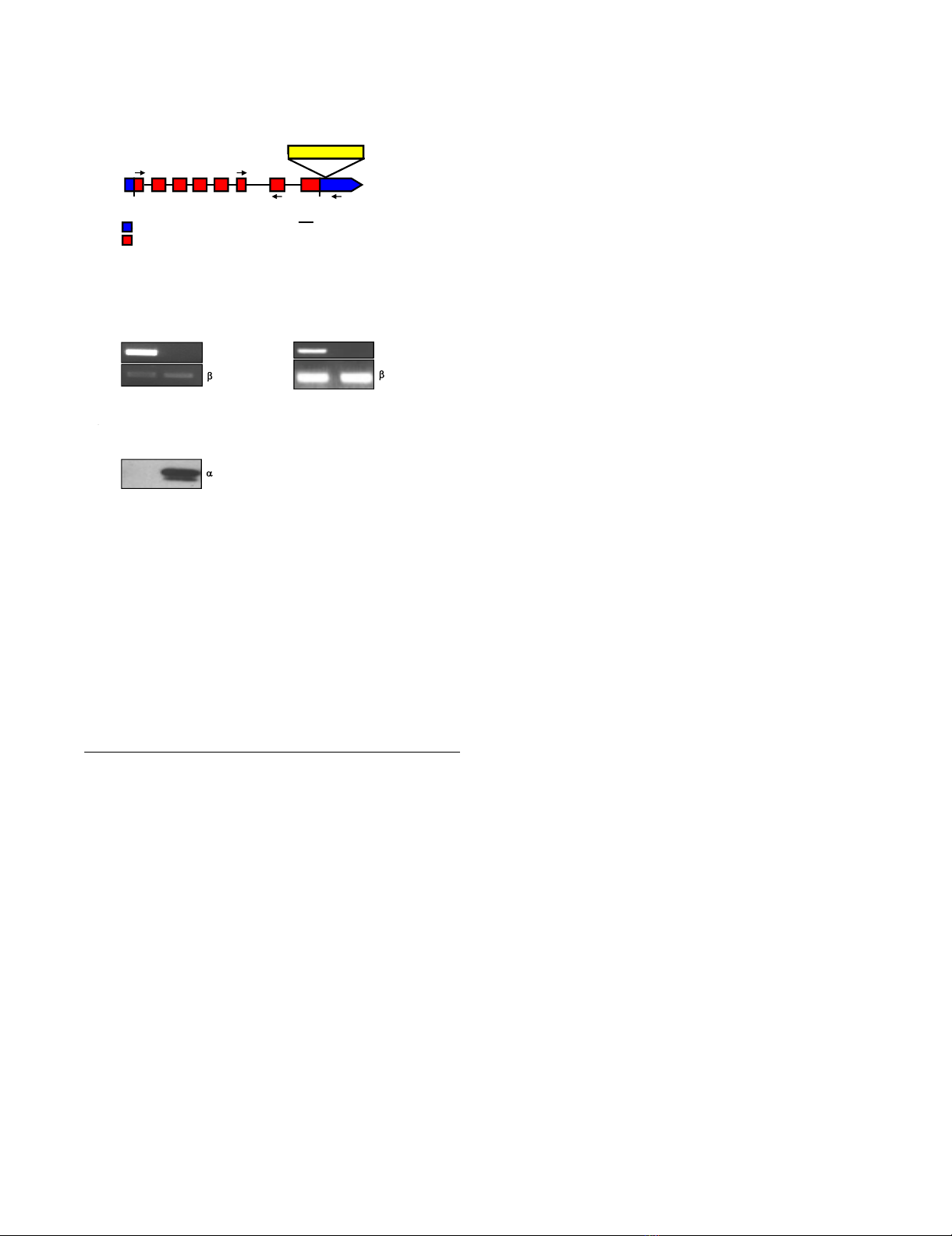
devoid of atwhy2 expression were obtained (Figure 1A and
1B). In addition, plants constitutively overexpressing a
myc-tagged version of AtWhy2 under the control of the
CaMV 35S promoter were produced (Figure 1C). While
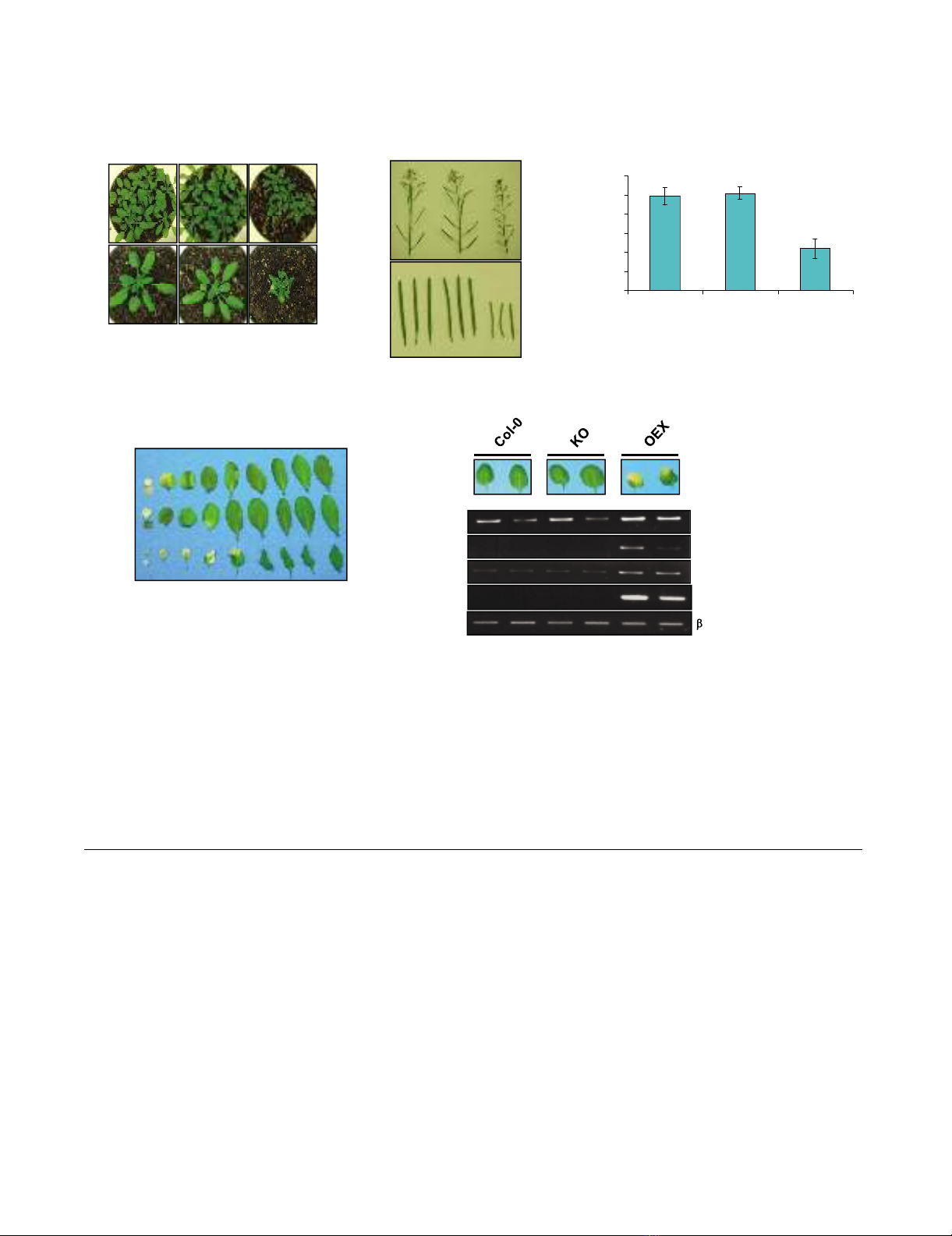
the knock-out plants (KO) showed no visible phenotype
(Figure 2A), plants overexpressing atwhy2 (OEX) were
smaller and produced shorter siliques containing about
half the amount of seeds found in wild-type plants (Figure
2B and 2C). Interestingly, OEX plants also developed dark
green distorted leaves and their mature leaves exhibited
signs of early senescence when compared to wild-type
(Col-0) or KO plants (Figure 2A and 2D). To document
this accelerated cell death, we monitored the expression
levels of a number of previously described senescence-
associated genes (SAGs) in the third and fourth leaves of
5 week old plants from each genotype using RT-PCR (Fig-
ure 2E). These genes have all been described as molecular
markers of leaf senescence because their abundance is sig-
nificantly increased during this genetically programmed
phenomenon [10,11]. The mRNAs of all tested SAGs were
clearly more abundant in OEX compared to Col-0 and KO
plants, thereby confirming that the early yellowing of
leaves is an indication that a senescent state is reached
more rapidly in leaves of plants overexpressing atwhy2. To
ascertain that the observed phenotypes were not due to a
non-specific effect of the overexpression of a mitochon-
dria-targeted myc-tag, we produced transgenic plants con-
stitutively expressing an untagged version of AtWhy2 and
observed the same phenotypes (data not shown).
BMC Plant Biology 2008, 8:42 http://www.biomedcentral.com/1471-2229/8/42
Page 3 of 15
(page number not for citation purposes)
Recent reports have highlighted the role of mitochondria
in regulation of senescence in numerous organisms
including yeast, flowering plants and mammals [12-15].
As it has been demonstrated that AtWhy2 is imported into
mitochondria in vivo, these observations prompted us to
verify whether mitochondria in plants with altered atwhy2
expression were still functional. In order to monitor the
activity of the mitochondrial respiratory chain complexes,
we used blue-native polyacrylamide gel electrophoresis
(BN-PAGE) coupled to in-gel histochemical staining of
enzymatic activities [16]. Using this procedure, we were
able to evaluate the individual activities of NADH dehy-
drogenases, succinate dehydrogenase (Complex II) and
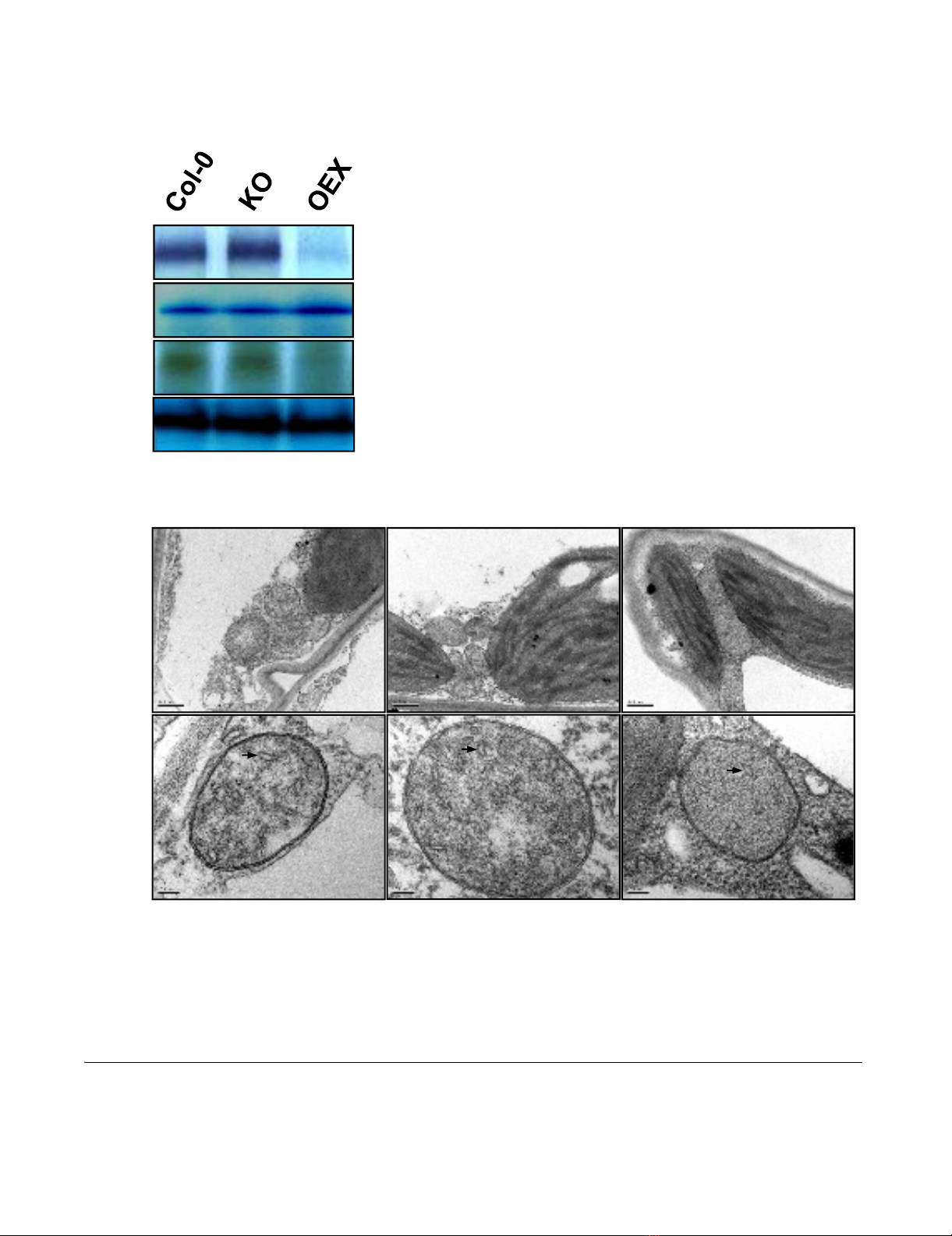
cytochrome C oxidase (Complex IV). No differences in
activity for all the observed complexes could be found
between Col-0 and KO plants (Figure 3A). In contrast,
OEX plants exhibited strong deficiencies in Complexes I
and IV while their alternative NADH dehydrogenase and
Complex II remained as competent as those found in
wild-type and KO. Interestingly, only complexes contain-
ing subunits encoded by the mitochondrial genome were
affected in the OEX plants. Complexes composed exclu-
sively of polypeptides encoded in the nuclear genome
were intact. These observations prompted us to use elec-
tron microscopy to monitor the quantity and ultrastruc-
ture of organelles present in the various lines. All plants
contained approximately the same number of mitochon-
dria that were of similar size (Figure 3B upper panel). At
higher magnification, mitochondria from OEX plants
exhibited a simpler structure than those in Col-0 and KO
plants. In general cristae were slightly less abundant in
OEX plants (Figure 3B lower panel (black arrows)). The
invaginations of the inner membrane were counted on 10
mitochondrial sections of similar size for each of the gen-
otypes. Cristae density averages for all observed sections
(in cristae/µm2) were 24.2 ± 7.9, 23.3 ± 10.3 and 17.1 ±
7.1 for Col-0, KO and OEX plants respectively. Altogether,
these results indicate that mitochondrial function is com-
promised upon overexpression of atwhy2.
General downregulation of mitochondrial gene expression
and mtDNA levels in plants overproducing AtWhy2
The ssDNA-binding capacity of the Whirlies could be an
important regulator of gene expression in organelles.
Since StWhy1 has been shown to act as a transcriptional
activator for the PR-10a nuclear gene in tubers following
elicitation, it is plausible that AtWhy2 could take part in
the regulation of transcription in mitochondria [4,6]. This
eventual function was investigated by monitoring mito-
chondrial gene expression in plants with altered atwhy2
content using RNA gel blots.
Since respiratory chain complexes I and IV function is
compromised in OEX plants, we evaluated the expression
levels of three subunits from each of these complexes that
are encoded by the mitochondrial genome. As shown in
Figure 4A, steady-state RNA levels for nad3, nad4, nad7
and for cox1, cox2 and cox3 were all significantly reduced
in OEX plants compared to Col-0 and KO plants. No
change could be observed between Col-0 and KO plants
for the steady state RNA levels detected with all probes.
This is in agreement with the similar activity observed for
the respective supercomplexes (Figure 3A). Similar results
were obtained for mitochondrial genes atp8, atp9, orf240a,
rps3 and rpl16. Upon closer examination we observed that
the smallest RNA forms, presumably representing the
mature translated RNA, are usually less affected than the
larger forms, which may represent the primary transcripts.
Surprisingly, for the rpl16 probe, the smallest RNA prod-
ucts were more abundant in OEX compared to KO and
wild-type plants. We propose that these differences
between the abundance of RNAs of different sizes could
be due to post-transcriptional stabilization compensating
for the reduced production of the large primary tran-
scripts.
Production of plants with altered expression of atwhy2Figure 1
Production of plants with altered expression of
atwhy2. A. Physical map of the atwhy2 (AT1G71260) gene.
The position of the T-DNA insertion in the KO line is indi-
cated. The small arrows symbolize the primers used to
amplify atwhy2 mRNA by RT-PCR. B. Molecular analysis of
plants homozygous for the disrupted atwhy2 allele. RT-PCR
was performed on Col-0 and KO total RNA samples using
two sets of primers (P1/P2 and P3/P4). Semi-quantitative
conditions were used and primers for tubulin amplification
were used as a control. C. Levels of the AtWhy2-myc fusion
protein in OEX and wild-type (Col-0) plants were monitored
by Western blot using a monoclonal antibody against the c-
myc epitope.
T-DNA
A
ATG STOP
UTR
P4
P3
P1
P2
UTR
EXON
0,1kb
Col-0 KO
AtWhy2 (P1/P2) AtWhy2 (P3/P4)
Col-0 KO
B
-tubulin -tubulin
C
-myc epitope
Col-0 OEX
C
BMC Plant Biology 2008, 8:42 http://www.biomedcentral.com/1471-2229/8/42
Page 4 of 15
(page number not for citation purposes)
AtWhy2 has never been detected in the nucleus and is
consistently described as a mitochondrial protein ([8] and
our unpublished data). However it still remains possible
that at least part of the deficiency in mitochondrial com-
plexes observed in OEX plants could be due to a defect in
the expression of nuclear genome-encoded respiratory
chain subunits or to a general defect in RNA metabolism.
To verify this, we first tested nuclear 25S rRNA levels by
ethidium bromide staining. Figure 4A shows that the
amount of 25S rRNA did not vary in the three types of
plants. We then measured the levels of act3 mRNA, coding
for actin and showed that these levels remained
unchanged in all the plants (Figure 4A). We also evaluated
the expression of two different nuclear genes encoding
subunits of both the NADH dehydrogenase (Complex I)
and of the cytochrome C oxydase (Complex IV) using
semi-quantitative RT-PCR. No differences in expression
levels could be observed among Col-0, KO and OEX
plants for the nadb18 [TAIR:At2g02050], nad51
[TAIR:At5g08530], coxVb [TAIR:At1g80230] and cox6b
[TAIR:At1g22450] genes (Figure 4B). Oligonucleotides
designed to amplify a β-tubulin cDNA were used as a
loading control. Transcript levels for nad4 and cox1 cDNA,
which are encoded in the mitochondrial genome, were
reduced in OEX plants (Figure 4B), as also shown by RNA
gel blot (Figure 4A). Altogether, the data presented here
Phenotypic characterization of plants with altered expression of atwhy2Figure 2
Phenotypic characterization of plants with altered expression of atwhy2. A. Four week old plants of the indicated
genotypes grown in soil were photographed. B. Representative inflorescences and individual siliques taken from six week old
plants of the indicated genotypes were photographed. C. Twenty individual mature siliques from the indicated genotypes were
dissected and their average seed content was calculated. D. Equivalent leaves were taken from 6 week old plants and photo-
graphed. Leaves are ordered by age from left to right. E. Early accumulation of senescence marker transcripts in mature leaves
of OEX plants. RT-PCR was performed on Col-0, KO and OEX RNA samples taken from the 3rd (L3) and 4th (L4) leaves of 5
week old plants using oligonucleotides designed to amplify specifically the following genes: At1g47128: Cystein protease
RD21A, At2g45570: YLS6, Cell-death-associated cytochrome, At2g38860: YLS5, Protease I and At5g45890: SAG12, Cystein
protease. Semi-quantitative conditions and primers for β-tubulin amplification were used to ensure adequate loading for all
samples.
!
"
BMC Plant Biology 2008, 8:42 http://www.biomedcentral.com/1471-2229/8/42
Page 5 of 15
(page number not for citation purposes)
Mitochondrial perturbation due to overproduction of AtWhy2Figure 3
Mitochondrial perturbation due to overproduction of AtWhy2. A. Activity of mitochondrial respiratory chain com-
plexes in plants with altered expression of atwhy2. BN-PAGE was used to separate membrane protein complexes from crude
mitochondrial fraction taken from plants of the indicated genotypes. Activity of the different complexes was evaluated by in-gel
enzymatic assays using equivalent protein amounts for all plants. B. Mitochondria ultrastructure was evaluated using transmis-
sion electron microscopy. In the upper panel, representative mitochondria from the indicated genotypes were photographed
at 25000 × magnification. The bar represents 0.5 µm. In the lower panel, organelles were observed at 100000 × magnification.
The bar represents 100 nm. Black arrows point to invaginations of the inner membrane (cristae).
!"