EURASIP Journal on Applied Signal Processing 2003:12, 1210–1218
c
2003 Hindawi Publishing Corporation
Nonstationary Interference Excision in Time-Frequency
Domain Using Adaptive Hierarchical Lapped
Orthogonal Transform for Direct Sequence
Spread Spectrum Communications
Li-ping Zhu
Department of Electronics Engineering, Shanghai Jiao Tong University, Shanghai 200030, China
College of Information Engineering, Dalian Maritime University, Dalian, Liaoning 116026, China
Email: zlp668@sjtu.edu.cn
Guang-rui Hu
Department of Electronics Engineering, Shanghai Jiao Tong University, Shanghai 200030, China
Email: grhu@sjtu.edu.cn
Yi-Sheng Zhu
College of Information Engineering, Dalian Maritime University, Dalian, Liaoning 116026, China
Email: yszhu@dlmu.edu.cn
Received 22 November 2002 and in revised form 15 June 2003
An adaptive hierarchical lapped orthogonal transform (HLOT) exciser is proposed for tracking, localizing, and rejecting the non-
stationary interference in direct sequence spread spectrum (DSSS) communications. The method is based on HLOT. It utilizes
a fast dynamic programming algorithm to search for the best basis, which matches the interference structure best, in a library
of lapped orthogonal bases. The adaptive HLOT differs from conventional block transform and the more advanced modulated
lapped transform (MLT) in that the former produces arbitrary time-frequency tiling, which can be adapted to the signal structure,
while the latter yields fixed tilings. The time-frequency tiling of the adaptive HLOT can be time varying, so it is also able to track
the variations of the signal time-frequency structure. Simulation results show that the proposed exciser brings significant perfor-
mance improvement in the presence of nonstationary time-localized interference with or without instantaneous frequency (IF)
information compared with the existing block transform domain excisers. Also, the proposed exciser is effective in suppressing
narrowband interference and combined narrowband and time-localized impulsive interference.
Keywords and phrases: nonstationary interference excision, adaptive hierarchical lapped orthogonal transform, hierarchical bi-
nary tree, best basis selection, dynamic programming algorithm.
1. INTRODUCTION
Over the past several years, interference excision techniques
based on time-frequency representations of the jammed sig-
nal have received significant attentions in direct sequence
spread spectrum (DSSS) communications [1,2,3,4]. The
attraction of the time-frequency domain interference exci-
sion techniques is that they have the capability of analyzing
the time-varying characteristics of the interference spectrum,
while the existing time domain and transform domain tech-
niques do not.
The time-frequency representation of a signal refers to
expanding the signal in orthogonal basis functions which
give orthogonal tilings of the time-frequency plane. Herley
et al. [5]usetime-frequency tile of a particular basis func-
tion to designate the region in the time-frequency plane
which contains most of that function’s energy. The time-
frequency tiles of the spread spectrum signal and the chan-
nel additive white Gaussian noise (AWGN) have evenly dis-
tributed energy, while that of the rapidly changing nonsta-
tionary interference have energy concentrated in just a few
tiles. Consequently, it is easy to differentiate the interference
from the signal and AWGN in the time-frequency domain.
A good time-frequency exciser should be able to concentrate

Time-Frequency Domain Interference Excision for DSSS Systems 1211
the jammer energy on as few number of time-frequency tiles
as possible in order to suppress interference efficiently with
minimum signal distortion. This is equivalent to finding the
best set of basis functions for the expansion of the jammed
signal.
Conventional block transforms such as FFT and DCT re-
sult in fixed time-frequency resolution [6]. So do the modu-
lated lapped transforms (MLT). They are often used to sup-
press narrowband interference. We show that they can also
be used to suppress nonstationary interference by perform-
ing transforms after suitable segmentation of the time axis.
However, as this method pays no attention to the signal time-
frequency structures and splits the time axis blindly with
equal segments, it does not always yield good results if the
characteristics of the interference are not known in advance.
The method proposed in [1] first decides the domain of exci-
sion, then cancels the interference in the appropriate domain.
It excises nonstationary interference in the time domain.
The method proposed in [2,3] is based on the generalized
Cohen’s class time-frequency distribution (TFD) of the re-
ceived signal from which the parameters of an adaptive time-
varying interference excision filter are estimated. The TFD
method has superior performance for interference with in-
stantaneous frequency (IF) information such as chirp signals,
but is less effective for pulsed interference without IF infor-
mation such as time-localized wideband Gaussian interfer-
ence. In [4], a pseudo time-frequency distribution is defined
to determine the location and shape of the most energetic
time-frequency tile along with its associated block transform
packets (BTP) basis function. The interfering signal is ex-
panded in terms of the BTP basis function in a sequential
way until the resulting time-frequency spectrum is flat. The
adaptive BTP provide arbitrary time-frequency tiling pattern
which can be used to track and suppress time-localized wide-
band Gaussian interference. However, this method is not
practical for real time processing as no fast algorithm is pro-
vided for selecting the BTP basis functions. In this paper, we
propose an adaptive hierarchical lapped orthogonal trans-
form (HLOT) which splits the time axis with unequal seg-
ments adapted to the signal time-frequency structures. The
proposed adaptive HLOT has an arbitrary tiling in the time
domain and has fixed frequency resolution at a given time.
The tree structure associated with the desired pattern can be
time varying, so it is able to track the variation of the signal
time-frequency structure. A fast dynamic programming al-
gorithm is utilized to search for the best basis which adapts
to the jammed signal. The proposed exciser has superior per-
formance for nonstationary time-localized interference with
or without IF information and has performance comparable
with traditional transform domain excisers for narrowband
interference.
The paper is organized as follows. In Section 2, adap-
tive HLOT and best basis selection algorithm are introduced
by means of hierarchical binary tree pruning. In Section 3,
adaptive HLOT-based interference excision is explained in
detail. In Section 4, simulation results using the proposed
adaptive exciser are presented. Finally, in Section 5,conclu-
sions are made.
0apap+1 ap+2 n
Ip
gp−1[n]gp[n]gp+1[n]
Figure 1: HLOT divides the time axis into overlapping intervals of
varying sizes.
2. ADAPTIVE HLOT AND BEST BASIS
SELECTION ALGORITHM
2.1. HLOT
HLOT is an effective multiresolution signal decomposition
technique based on lapped orthogonal basis. It decomposes
a signal into orthogonal segments whose supports overlap, as
shown in Figure 1.
Here, gp[n](p∈Z) represent smooth windows which
satisfy symmetry and quadrature properties on overlapping
intervals [7], ap(p∈Z) indicates the position of gp[n] in the
time axis, and Ip(p∈Z) is the support of window gp.The
lapped orthogonal basis is defined from a Cosine-IV basis
of L2(0,1) by multiplying a translation and dilation of each
vector with gp[n](p∈Z).
2.2. Criteria for best basis selection
A best lapped orthogonal basis can adapt the time segmenta-
tion to the variation of the signal time-frequency structure.
Assuming fis the signal under consideration and Dis a dic-
tionary of orthogonal bases whose indices are in Λ,
D=
λ∈Λ
Bλ,(1)
where Bλ={gλ
m}1≤m≤Nis an orthonormal basis consisting of
Nvectors and λis the index of Bλ. In order to facilitate fast
computation, only the bases with dyadic sizes are considered.
Suppose Bαis the basis that matches the signal best, that is, it
satisfies the following condition:
M
m=1
f,gα
m
2
f2≥
M
m=1
f,gλ
m
2
f2
∀1≤M≤N, λ ∈Λ,λ= α.
(2)
The inner product f,gλ
mis the lapped transform coefficient
of fin basis gλ
m. It is a good measure of signal expansion
efficiency. The squared sum of f,gλ
mreflects the approxi-
mation extent between fand the signal constructed with Bλ.
The larger the squared sum of f,gλ
m, the better Bλmatches
the signal. Condition (2) is equivalent to minimizing a Schur
concave sum C(f,Bλ)[8]:
Cf,Bλ=
M
m=1
Φ
f,gλ
m
2
f2∀1≤M≤N, (3)
where Φis an additive concave cost function.

1212 EURASIP Journal on Applied Signal Processing
j=0
j=1
j=2
j=3
f
n0
0
n0
1n1
1
n0
2n1
2n2
2n3
2
n0
3n1
3n2
3n3
3n4
3n5
3n6
3n7
3
(a) Hierarchical binary tree
B0
0
B0
1B1
1
B0
2B1
2B2
2B3
2
B0
3B1
3B2
3B3
3B4
3B5
3B6
3B7
3
t
t
t
t
L
(b) HLOT with windows of dyadic lengths
Figure 2: HLOT is organized as subsets of a binary tree.
Several popular concave cost functionals are the Shannon
entropy, the Gaussian entropy and the lp(0 <p≤1) cost
[8,9,10]. Coifman and Wickerhauser use Shannon entropy
for best basis selection, while Donoho adopts lpcost for min-
imum entropy segmentation since the lpentropy indicates a
sharper preference for a specific segmentation than the other
entropies [9]. The objective of the HLOT is virtually a prob-
lem of minimum entropy segmentation, so we choose lpcost
function Φ(x)=x1/2. Therefore, the best basis Bαcan be
found by minimizing C(f,Bλ):
Cf,Bα=min
λ∈ΛCf,Bλ=min
λ∈Λ
N
m=1
f,gλ
m
f.(4)
Choice of lpcost can be further justified in Figure 7 of
Section 4.
2.3. Adaptive HLOT and fast dynamic
programming algorithm
The objective of the proposed adaptive HLOT is to decom-
pose the considered signal in the best lapped orthogonal ba-
sis. First, an HLOT is performed to fwith all the bases in
the dictionary. This is depicted in Figure 2 with the library
Dbeing organized as subsets of a binary tree to facilitate fast
computation.
Suppose Jis the depth of the binary tree, and the length
of signal fis L. Here, we consider dyadic split of time axis, so
Lshould be the power of two, that is,
L=2J;(5)
fshould be padded with zeros if (5) is not satisfied. Each
tree node np
j(0 ≤p≤2j−1,0≤j≤J−1) represents
a subspace of the considered signal. Each subspace is the or-
thogonal direct sum of its two children nodes n2p
j+1 and n2p+1
j+1 .
Basis Bp
jcorresponds to the lapped orthogonal basis over in-
terval p(0 ≤p≤2j−1) of the 2jintervals at level jof the
tree. It is given by
Bp
j=gp(n)2
lp
cos π
lpk+1
2
×n−plp+1
20≤k,n<lp,0≤p≤2j−1,0≤j≤J−1
,
(6)
where lp=L/2j. The library Dis the union of all the lapped
orthogonal bases which corresponds to all the subspace of
the signal:
D=
0≤j≤J−1
0≤p≤2j−1
Bp
j.(7)
The fast dynamic programming algorithm introduced by
Coifman and Wickerhauser [8] is employed to find the best
basis. It is a bottom-up progressively searching process. Sup-
pose Op
jis the best basis at node np
j, then the dynamic pro-
gramming algorithm can be described as follows.
(1) At the bottom of the tree, each node is not subdecom-
posed, so Op
j=Bp
j.

Time-Frequency Domain Interference Excision for DSSS Systems 1213
rΨ
(HLOT)
R׈
RΨ−1
(IHLOT) ×
ˆ
rξ
Bα
w
c
·,· arg(min(Φ(·)))
D=Bp
j
0≤j≤J−1
0≤p≤2j−1
Figure 3: DSSS receiver employing adaptive HLOT excision and detection.
(2) Let j=J−1, then
Op
j
=
O2p
j+1 O2p+1
j+1 if Cf,O2p
j+1+Cf,O2p+1
j+1 <C
f,Bp
j,
Bp
jif Cf,O2p
j+1+Cf,O2p+1
j+1 ≥Cf,Bp
j.
(8)
(3) Let j=J−2 and repeat (2) until the root gives the best
basis of f.
This algorithm is capable of tuning the hierarchical trans-
form to the signal structure under consideration. A signal of
Lpoints can be expanded in O(log L) operations, and the best
basis selection may be obtained in an additional O(L)opera-
tions [8].
3. ADAPTIVE HLOT-BASED INTERFERENCE EXCISION
3.1. Adaptive HLOT-based DSSS receiver model
Figure 3 illustrates the block diagram of the DSSS receiver
employing the proposed adaptive HLOT exciser algorithm.
Assume that the received signal is sampled at the chip
rate of the PN sequence and partitioned into disjoint length-
Ldata segments corresponding to the individual data bits.
The L×1 input vector rconsists of the sum of Lsamples
from the spread data bit with those from the additive noise
and interference, expressed as
r=s+n+j. (9)
Here, each data bit is spread by a full-length PN code, that is,
s=d(k)c, (10)
where d(k) is the current data bit with d(k)∈{−1,+1},
and cis the length-LPN code; vector nrepresents zero mean
AWGN samples with two-sided power spectral density N0/2;
vector jrepresents time-varying nonstationary interference
samples.
3.2. Adaptive HLOT-based interference
excision algorithm
Adaptive HLOT-based interference excision is performed as
shown in Figure 3. The inner products between rand all the
bases in Dare computed first and the best basis Bαis selected
using fast dynamic programming algorithm introduced in
Section 2. Then ris transformed to the frequency domain by
HLOT using Bα. The transform domain coefficients can be
expressed as
R=Ψr , (11)
where Ψrepresents L×Lforward HLOT matrix. Since the
spectra of sand nare flat, while that of jis sharp and narrow,
the transform domain coefficients with large amplitude cor-
respond to the interference. For excision, these coefficients
are either entirely eliminated or their power is reduced by
clipping through the application of threshold or multiply-
ing by a weighting function [11]. Here, the interference co-
efficients are replaced by zeros. If no interference exists, Ris
passed without modification. The excised coefficients ˆ
Rare
given by
ˆ
R=diag wR , (12)
where the values of the excision vector wareeither0or1and
diag(·)denotesL×Lmatrix with diagonal elements corre-
sponding to the excision vector. The excised coefficients are
then transformed back to time domain by inverse HLOT and
the reconstructed received signal ˆ
ris given by
ˆ
r=Ψ−1ˆ
R , (13)
where Ψ−1represents L×Linverse HLOT matrix. Assuming
perfect synchronization, the decision variable ξcan be given
by correlating ˆ
rwith PN code sequence c:
ξ=cTˆ
r. (14)
Finally, the transmitted data bit is determined by putting ξ
through a threshold device with the decision boundary set to
zero.
1214 EURASIP Journal on Applied Signal Processing
200
0
−200
Amplitude
0 10203040506070
Coefficient index
(a)
300
200
100
0
Magnitude
0 10203040506070
Coefficient index
(b)
200
100
0
Magnitude
010203040506070
Coefficient index
(c)
1000
500
0
Magnitude
0 10203040506070
Coefficient index
(d)
200
100
0
Magnitude
0 10203040506070
Coefficient index
(e)
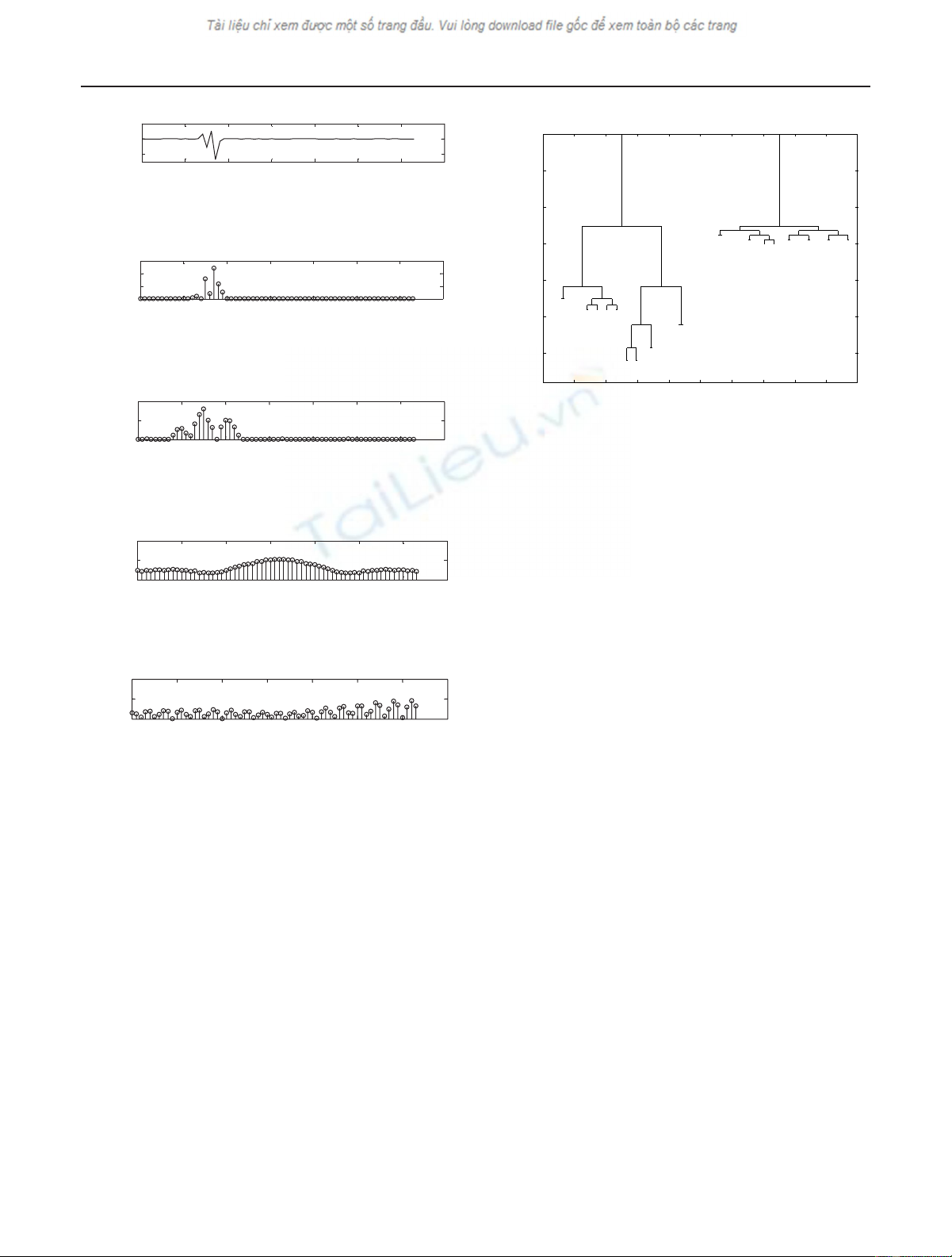
Figure 4: Comparison of basis expansions of nonstationary signal.
(a) The time-localized interference signal, SNR=18 dB, ISR=20 dB.
(b) Adaptive HLOT basis expansion. (c) MLT basis expansion. (d)
FFT basis expansion. (e) DCT basis expansion.
The main advantage of the proposed adaptive HLOT ex-
ciser is that the time-frequency tiling of the best basis can be
adapted to the variations of the received signal structure. It
is especially suitable for tracking, localizing, and suppressing
nonstationary interference.
4. PERFORMANCE EVALUATIONS
To evaluate the interference rejection capability of the pro-
posed adaptive HLOT exciser in DSSS communications, a
simulation packet was developed based on Stanford Univer-
sity’s signal processing software. The performance of the pro-
posed adaptive HLOT exciser along with MLT-, FFT-, and
Best basis tree
0
−2
−4
−6
−8
−10
−12
lpcost drop
00.20.40.60.81
Splits of time domain
Figure 5: The best basis tree of the adaptive HLOT of nonstationary
interference.
DCT-based excisers with fixed time resolution of 8 samples
and conventional 64-point FFT- and DCT-based excisers is
evaluated. A 63-chip maximum length PN code was used
to spread the input data stream. A BPSK modulation and
an AWGN channel were assumed. Four types of interfer-
ences are considered: a nonstationary time-localized wide-
band Gaussian jammer, a nonstationary time-localized chirp
jammer, a single-tone jammer, and a combined single-tone
and time-localized impulsive jammer.
Nonstationary time-localized wideband Gaussian
interference (without IF information)
For the nonstationary time-localized wideband Gaussian
jammer that is randomly switched with a 10% duty cycle,
Figure 4 compares the magnitude responses of the adaptive
HLOT, MLT with time resolution of 8 samples, 64-point FFT,
and DCT. The signal-to-noise ratio (SNR) is 18 dB and the
interference-to-signal ratio (ISR) is 20 dB. It is clear that the
adaptive HLOT is capable of concentrating the jammer en-
ergy to the least number of spectrum coefficients. Therefore,
it allows minimum number of frequency bins to be excised
and causes minimum signal distortion.
Figure 5 displays the best basis tree associates with the
adaptive HLOT of the nonstationary interference. Figure 6
depicts the time-frequency tiling of the best basis that is
adapted to the jammed signal time-frequency structures. It is
shown that the proposed adaptive HLOT produces an arbi-
trary time axis split which reflects the variations of the signal
structure. Figure 7 compares the error energy of signal ap-
proximation by two sets of best basis which are selected by lp
cost and Shannon entropy criteria, respectively. It is obvious
that the lpcost-based best basis representation of the signal
shows less error.
Figure 8 shows the BER performance of the proposed
adaptive HLOT exciser along with the block transform


![Báo cáo seminar chuyên ngành Công nghệ hóa học và thực phẩm [Mới nhất]](https://cdn.tailieu.vn/images/document/thumbnail/2025/20250711/hienkelvinzoi@gmail.com/135x160/47051752458701.jpg)