

242
1. Introduction
Diesel engines are highly efficient and reliable power sources
that have been commonly used in the manufacturing, transport,
and agricultural sectors. However, the diesel fuel emissions con-
tain harmful pollutants such as nitrogen oxides (NOx), carbon
monoxide (CO), unburned hydrocarbon (UHC), particulate mat-
ter (PM), as well as greenhouse gases (e.g., CO2, CH4, N2O) [1-3].
These pollutants can have tremendous wide-ranging impacts
on, for instance, acidification, ozone depletion, and the presence
of human and ecological toxins (especially those adding to respi-
ratory and cardiovascular problems) [4-6]. An increased aware-
ness of and concern for environmental and health impacts is
directly and indirectly enforced in many countries through ex-
haust emissions and pollution control initiatives. In addition,
the consumption of diesel fuels is also increasing the rapid deple-
tion of worldwide petroleum reserves, which are predicted to
come to an end in the not too distant future. These reasons
accelerate the push to conduct research in the area of vegetable
oil-based fuel alternatives.
Several vegetable oils (e.g., palm oil, canola oil, soybean oil),
which are renewable resources derived from agricultural feed-
stock, have been successfully utilized as alternatives for diesel
fuels [7, 8] due to their similar physicochemical properties and
comparable fuel performance to diesel fuels [9, 10]. The use
of vegetable oils offers a potential reduction in harmful pollution
generated from exhaust gas emissions. It is widely known that
the high viscosity and common phase changes or freezing of
vegetable oils at cold temperatures can lead to several complica-
tions in engines such as poor combustion, injector cocking, and
the sticking of piston rings [11, 12]. For this reason, it is necessary
to reduce the viscosity of vegetable oils in order to improve
Environ. Eng. Res. 2018; 23(3): 242-249
pISSN 1226-1025
https://doi.org/10.4491/eer.2017.204
eISSN 2005-968
X
Exhaust emissions of a diesel engine using ethanol-in-palm
oil/diesel microemulsion-based biofuels
Ampira Charoensaeng1, Sutha Khaodhiar2,3, David A. Sabatini4, Noulkamol Arpornpong5†
1The Petroleum and Petrochemical College, Chulalongkorn University, Bangkok 10330, Thailand
2Department of Environmental Engineering, Chulalongkorn University, Bangkok 10330, Thailand
3The Center of Excellence on Hazardous Substance Management, Chulalongkorn University, Bangkok 10330, Thailand
4School of Civil Engineering and Environmental Science, The University of Oklahoma, Oklahoma 73019, USA
5Faculty of Agriculture, Natural Resources and Environment, Naresuan University, Phitsanulok 65000, Thailand
ABSTRACT
The use of palm oil and diesel blended with ethanol, known as a microemulsion biofuel, is gaining attention as an attractive renewable fuel
for engines that may serve as a replacement for fossil-based fuels. The microemulsion biofuels can be formulated from the mixture of palm
oil and diesel as the oil phase; ethanol as the polar phase; methyl oleate as the surfactant; alkanols as the cosurfactants. This study investigates
the influence of the three cosurfactants on fuel consumption and exhaust gas emissions in a direct-injection (DI) diesel engine. The microemulsion
biofuels along with neat diesel fuel, palm oil-diesel blends, and biodiesel-diesel blends were tested in a DI diesel engine at two engine loads
without engine modification. The formulated microemulsion biofuels increased fuel consumption and gradually reduced the nitrogen oxides
(NOx) emissions and exhaust gas temperature; however, there was no significant difference in their carbon monoxide (CO) emissions when
compared to those of diesel. Varying the carbon chain length of the cosurfactant demonstrated that the octanol-microemulsion fuel emitted
lower CO and NOx emissions than the butanol- and decanol-microemulsion fuels. Thus, the microemulsion biofuels demonstrated competitive
advantages as potential fuels for diesel engines because they reduced exhaust emissions.
Keywords: Cosurfactant, Engine test, Exhaust emissions, Microemulsion biofuel, Palm oil
This is an Open Access article distributed under the terms
of the Creative Commons Attribution Non-Commercial License
(http://creativecommons.org/licenses/by-nc/3.0/) which per-
mits unrestricted non-commercial use, distribution, and reproduction in any
medium, provided the original work is properly cited.
Copyright © 2018 Korean Society of Environmental Engineers
Received December 11, 2017 Accepted February 2, 2018
†Corresponding author
Email: noulkamola@nu.ac.th
Tel: +66-5596-2755 Fax: +66-5596-2750

Environmental Engineering Research 23(3) 242-249
243
engine performance. Several approaches for decreasing a vegeta-
ble oil’s viscosity have been developed; they include fast pyrolysis
and direct blending with diesel, transesterification, and emulsifica-
tion [9, 13-15]. Transesterification is a process in which trigly-
cerides are converted into a mixture of methyl esters (known
as biodiesel) and glycerol as a byproduct through a thermo-chem-
ical process using an alcohol, heat, and a catalyst [16, 17].
Biodiesel has higher oxygen content than diesel, which enhances
its combustion efficiency, and reduces CO, UHC, and PM but
produces greater NOx emissions (approximately 10% more NOx
than diesel) [17, 18]. Moreover, many researchers tried to improve
the fuel performance and emission characteristics of various
types of biodiesel by adding 10-20% alkanols (ethanol [19], buta-
nol [20], pentanol [21]) as an oxygenate additive.
Microemulsification is another promising biofuel mod-
ification technology; it is used to create microemulsion biofuels
to reduce viscosity and NOx emissions while achieving a combus-
tion efficiency similar to that of a petroleum-based fuel [22,
23]. Microemulsion fuels are isotropic, transparent, and thermo-
dynamically stable solutions of colloid dispersion. The micro-
emulsion fuels are classified into Winsor Type II or water in
oil (w/o) microemulsions. They are formulated by a mixture
of two immiscible liquid fuels with different polarities (i.e.,
oils/water, oils/ethanol) using an appropriate surfactant and with
or without a cosurfactant or amphiphilic molecules to stabilize
all of the components. Recently, microemulsion fuels have been
formed by renewable liquid fuels such as high viscosity of vegeta-
ble oil and diesel blends [22-24] mixed with supplementary
viscosity reducers, ethanol and/or butanol. Due to the dis-
advantages of transesterification, the microemulsification of veg-
etable oils offer an alternative method for avoiding by-products
and wastes (i.e., glycerol and wastewater) [6].
Having an appropriate surfactant system is the key parameter
influencing microemulsion biofuel formation, for which a certain
surfactant concentration is generally required to maintain the
phase stability without any phase separation and precipitation
[3, 25]. In addition, cosurfactants (i.e., alkanols) which have
a strong binding affinity to the surfactant molecules, have been
used to facilitate the existing surfactant by promoting larger
curvatures and higher either nonpolar oil or polar ethanol
solubilization. Understanding the effect of the alkanol chain
length of the cosurfactant on the formation of w/o microemulsion
systems has been investigated by different researchers and our
research group [26]. The results indicated that there is a correla-
tion between the required amounts of surfactant concentrations
and the chain lengths of alkanols (i.e., n-butanol, n-octanol,
n-decanol). However, few research studies have observed the
effect of alkanol as a cosurfactant in exhaust gas emissions,
and there has been no publication on palm oil based micro-
emulsion biofuels.
Environmental concerns surrounding fuels have been increas-
ing, not only with regards to diesel but also sustainable alternative
fuels. Attaphong et al. [26] formulated vegetable oil based micro-
emulsion fuels comprising of canola oil-diesel blended with etha-
nol as a viscosity reducer, using anionic carboxylate-based ex-
tended surfactants and cosurfactants to stabilize and form homo-
genous fuels. Nguyen et al. [3] formulated canola oil-diesel micro-
emulsion fuels using oleylamine and 1-octanol as a surfactant
and a cosurfactant, and they also evaluated some of the fuel
properties and diesel engine performance through a comparison
of the microemulsion fuels and diesel fuel. Their results indicated
that the microemulsion fuels had fuel properties, including the
cloud point and pour point, as well as kinematic viscosity, that
met the ASTM standards for biodiesel. Moreover, their results
from the direct-injection (DI) diesel engine test demonstrated
differences in fuel consumption: the engine using the micro-
emulsion fuels consumed slightly more fuel than when it was
run with diesel. Notably, some of the tests run with different
microemulsion fuel formulations emitted lower amounts of NOx
and CO emissions, compared with the amounts emitted by the
conventional diesel fuel. These remarkable results thus promote
the further investigation of these microemulsion fuels for use
in diesel engines.
Singh et al. [27] formulated hybrid fuels consisting of coconut
oil-ethanol-surfactant (butan-1-ol), and tested as a fuel in a direct
injection diesel engine. The results indicated that the engine
efficiency of the hybrid fuels was similar compared to a regular
diesel and their efficiency was improved as the viscosity of
the fuel decreased. The NOx, SO2 and CO2 emissions of the
hybrid fuels were lower compared to a diesel, but an increase
in the CO emission was observed. Qi et al. [19] investigated
the performance, combustion and emission characteristics of
a turbocharged common rail direct injection (CRDI) diesel engine
using the Tung oil-diesel-ethanol microemulsion fuels. The re-
sults indicated that the microemulsion fuels showed higher the
brake specific fuel consumption (BSFC), lower smoke emissions
at high engine loads. However, the CO and HC emissions at
low engine loads were higher as compared to a diesel fuel.
This study aims to evaluate the fuel performance of micro-
emulsion fuels containing palm oil (which is widely produced
in Thailand) and diesel blended with ethanol, as the viscosity
reducer, and stabilized by methyl oleate, as the surfactant. The
effects of the cosurfactant’s chain length (1-butanol, 1-octanol,
and 1-decanol) on fuel consumption as well as exhaust gas emis-
sions from the engine testing experiment were investigated. To
evaluate the exhaust gas characteristics of the microemulsion
fuels, this study measured the CO, CO2, NOx emissions and
exhaust gas temperatures, which offer the primary challenges
for producing effective microemulsion fuels that can compare
in performance to commercial-grade diesel fuel. A small-sized
DI engine was used to perform the engine test, at an engine
speed of 1,200 rpm and two different engine loads.
2. Materials and Methods
2.1. Materials
Food-grade palm oil (Morakot Industries PCL, Bangkok,
Thailand) and commercial-grade diesel (PTT Public Company
Limited, Bangkok, Thailand) were used as the oil phase in the
biofuel blends. They were purchased from local suppliers in
Thailand. Ethyl alcohol (99.8% purity, anhydrous) was used
as the polar phase and purchased from Acros Organics (Italmar,

Ampira Charoensaeng et al.
244
Thailand). Methyl oleate (MO, 70% purity), selected as the surfac-
tant, was purchased from Sigma Aldrich (Thailand). The three
cosurfactants selected in this study were n-butanol, n-octanol,
and n-decanol with 99% purity, and they were also purchased
from Sigma Aldrich (Thailand).
2.2. Methods
2.2.1. Palm oil-diesel microemulsion fuels
The palm oil-diesel microemulsion fuels were prepared by mix-
ing the diesel fuel and palm oil at the volumetric ratio of 1:1
with anhydrous ethanol, methyl oleate and the cosurfactant
(1-butanol or 1-octanol or 1-decanol) at various ratios. The surfac-
tant systems, methyl oleate and the cosurfactant mixture were
prepared at a fixed mole ratio of 1:8 (i.e., 0.125 M. of methyl
oleate and 1 M. of the cosurfactant). In addition, three co-
surfactants with different carbon chain lengths, namely, 1-buta-
nol, 1-octanol and 1-decanol, were used as the cosurfactant.
The fixed volumetric composition of ethanol at 20 percent by
volume was set based on the viscosity of the microemulsion
fuels and fuel properties. While the volumes of the methyl oleate
and ethanol concentrations were kept constant, the cosurfactant
and palm-diesel blend ratios were varied. For these selected
formulations, the phase of the microemulsion fuels was clear
without any phase separation or precipitation occurring. The
mixture was hand-shaken gently to obtain a homogeneous
solution. The details of the microemulsion fuel preparation can
be seen elsewhere [22]. Moreover, the diesel fuel, palm oil-diesel
blends (PD, with a volumetric ratio of 1:1), and biodiesel-diesel
blends (BD, with a volumetric ratio of 1:1) were prepared for
comparison purposes.
2.2.2. Exhaust emissions
Fig. 1 shows a schematic diagram of the components of the
diesel engine test. The engine used was a Mitsuki 418 cc (Model
MIT-186FE); it had a direct injection type diesel engine
(single-cylinder, air-cooled, four-stroke) with an 18:1 com-
pression ratio. A hydraulic dynamometer (Sun ST-3 series, AC
asynchronous generator) was coupled with the engine to apply
power using a belt and pulley. The test engine was used without
any modification. The technical specifications of the test engine
are shown in Table S1. This type of engine is commonly used
for light-duty agricultural and industrial applications. In addi-
tion, this engine was used as an initial (entry level) engine to
test the microemulsion fuels; a future study will extend the
use of these fuels to a larger engine and load. The engine test
was performed at an engine speed of 1,200 ± 12 rpm and two
different loads (0.5 and 1.0 kW) for the formulated microemulsion
biofuels and the other fuels for comparison purposes. A digital
multimeter and tachometer were used to measure the loads on
dynamometer and speeds, respectively.
The fuel consumption of various biofuel formulations was
determined using a 500 mL cylinder and digital stopwatch. Then,
the consumed fuel volume and fuel density were used to calculate
the fuel consumption (g/h). An exhaust emission analyzer (Testo
350 XL), located at the exhaust line, was used to measure the
emissions and gas temperature from the engine. The specifica-
tions of the gas analyzer are reported in Table S2. The NOx,
Fig. 1. Schematic chart of the experimental setup.
CO2, and CO emissions in the exhaust gas of the microemulsion
fuels were determined. The emission index of species i, which
is the mass of the pollutant released per unit mass of fuel burnt
(g/kg fuel), was calculated using Eq. (1) [25].
×
(1)
where
is the mole fraction of the species
,
and
are the mole fractions of
and
in the exhaust,
is the
number of moles of carbon in a mole of fuel, and
and
are the molecular weights of species
and the fuel,
respectively. In addition, a statistical analysis for the emissions
was performed with Stata version 11 (Stata-corp, TX), and the
results were considered statistically significant, using a two-sided
test and significance level of 0.05 (p < 0.05).
In this study, neat diesel fuel was initially injected into the
test engine in order to generate the reference line. The prepared
palm oil-diesel microemulsion fuels were then sequentially test-
ed under similar circumstances to evaluate the exhaust gas
emissions. The volumetric mass of the test fuel was measured
and recorded before and after in each batch. Before each set
of fuel tests, the new fuel sample was flushed through the engine
for five minutes [3] in order to warm up the engine and rinse
the remaining fuel in the engine line. Then, the engine was
allowed to run for 30 min simultaneously after the five-minute
pre-running period to evaluate the microemulsion fuel’s
performance. The engine load, speed, and fuel consumption
were measured in order to evaluate fuel performance. BSFC,
a significant parameter of engine performance, was then calcu-
lated for the tested fuels.
3. Results and Discussion
3.1. Properties of the Microemulsion Fuel
The fuel properties, water content and heat of combustion of
the microemulsion biofuels were measured according to ASTM
standards D6304 and D240, respectively. Table 1 summarizes
the formations and fuel characteristics of the biofuels. The results
showed that the kinematic viscosity of the PD fuel dramatically
dropped to three times lower than that of the neat palm oil
Environmental Engineering Research 23(3) 242-249
245
(36.8-39.6 cSt at 40oC). It was, however, still more than double
the kinematic viscosity of the No. 2 diesel standard. The higher
viscosity of the neat palm oil, as compared to the diesel’s, is
attributable to the complex mixture of the palm oil, which typi-
cally has a high molecular weight and large molecular structure.
As consider the kinematic viscosity of the microemulsion
fuels; our previous work [22], the microemulsion fuels (mixtures
of the diesel/palm oil, ethanol, surfactant and cosurfactant) were
observed to have kinematic viscosity results at 40oC, for all the
test fuels, that were relatively close to that of a regular diesel
(ranging from 4.3 to 4.6 cSt) (See Table 1).
A similar blending technique can be applied for a neat biodiesel
and regular diesel mixture as the biodiesel/diesel blends had
a competitive net fuel viscosity result. However, the costs of
biodiesel production as well as the environmental burdens from
their byproducts, wastewater and spent chemicals still pose chal-
lenges to widespread implementation.
The heat of combustion is frequently a parameter used to
evaluate the fuel consumption of diesel engines. The results
show that all the microemulsion biofuels had lower combustion
energy than the diesel and PD but the same as the BD. As a
result, the lower heating content of the microemulsion biofuels
can be said to affect their fuel economy because they induced
a greater fuel requirement for the engine to generate the same
amount of electrical power. The relation of the heating value
and fuel consumption is consistent with the fuel consumption
results for the diesel test engine reported below.
The determination of water in composite microemulsion-
based fuel has been carried out by volumetric Karl Fischer (KF)
titration. For this study, the result shows that the water content
in microemulsion fuels was 0.16-0.18% which is higher than
that in commercial diesel fuel (0.01%) and palm oil-diesel blends
(0.06%) as shown in Table 1. Thus, it is implied that the water
content in the microemulsion fuel mainly come from the anhy-
drous ethanol (99.5% purity) in its composition.
Regarding the effects of the cosurfactants, as the number of
the carbon chain length, C4 to C10, in the cosurfactant increased,
a small increase occurred in the overall hydrophobicity of the
surfactant system to stabilize the oil and ethanol phases.
However, both the water content and the heat of combustion
of the microemulsion biofuels were not significantly affected
by increases in the number of the carbon chain length in the
cosurfactant molecule.
3.2. Fuel Consumption
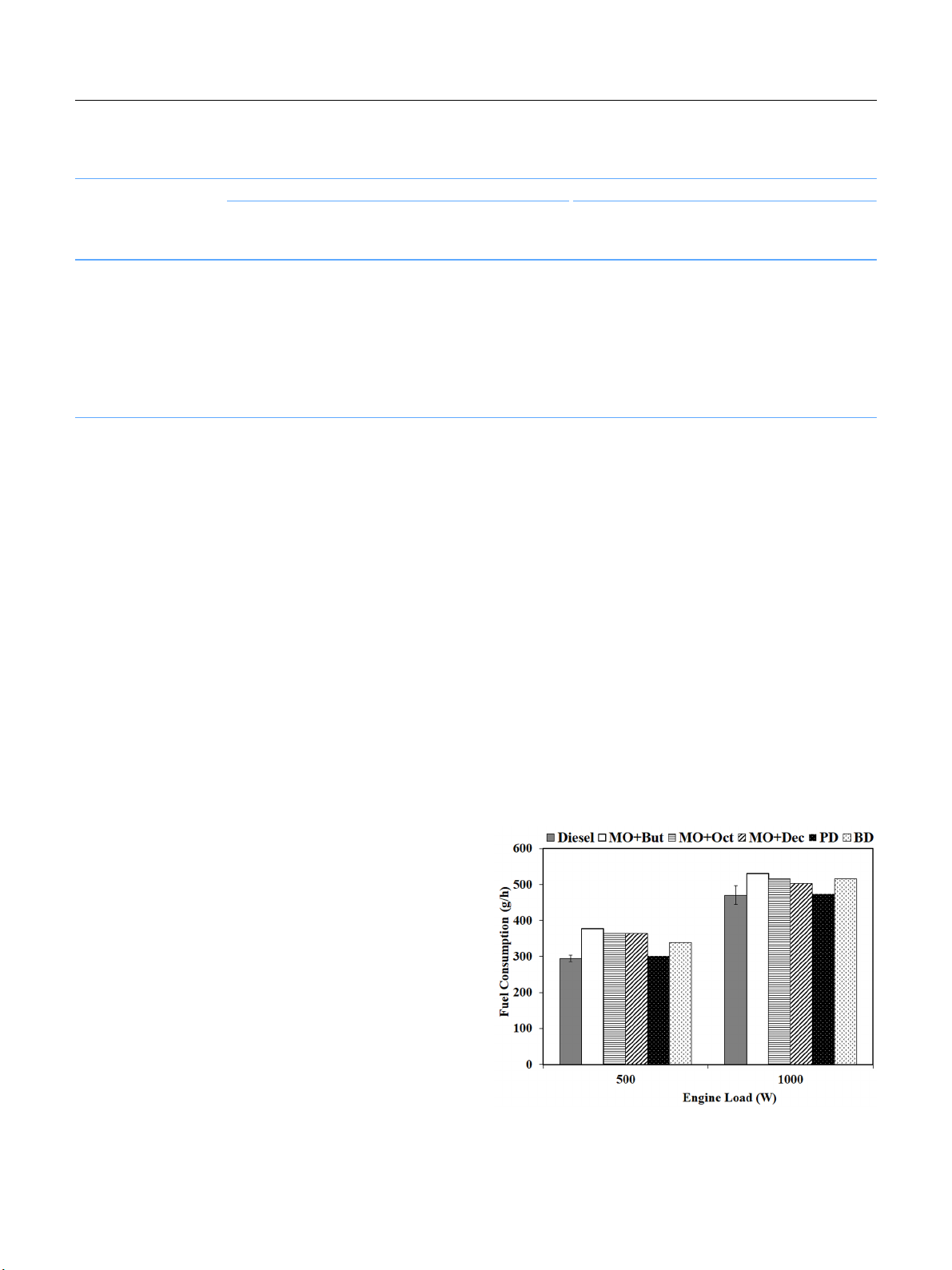
The fuel consumption (g/h) at two engine loads for the diesel,
microemulsion fuels, palm oil-diesel blends, and biodiesel-diesel
blends is summarized in Fig. 2. All sets of fuel performance
tests demonstrated that the fuel consumption was much greater
at 1,000 W than 500 W, as expected. The fuel consumption of
the microemulsion biofuels ranged from 364-377 g/h at 500 W
and 502-530 g/h at 1,000 W, which ranged from 23 to 27 percent
and 7 to 13 percent more than the fuel requirement for the diesel
Fig. 2. Fuel consumptions of diesel, microemulsion fuels, palm oil-diesel
blends, and biodiesel-diesel blends (see Table 1 for abbreviations).
Table 1. Composition (% vol.) for Palm Oil-diesel Blends, Biodiesel-diesel Blends, and Microemulsion Fuels Where the Ratio of Cosurfactan
t
and Palm Oil-diesel Blends Was Varied. Methyl Oleate to Ethanol Ratio Was Fixed at 1:1.25
Sample
Formulation Fuel properties
Diesel Palm oil Surfactant Cosurfactant Ethanol B100
Viscosity
@ 40
˚
C
(cSt)
Density
@ 25
˚
C
(g/mL)
Heat of
combustion
b
(MJ/kg)
Water
content
c
(%vol.)
A/F
st
ratio
d
Diesel 100.0 - - - - - 4.1 0.83 45.8 0.01 14.86
Palm oil-Diesel (PD) 50.0 50.0 -- - - 11.7 0.88 42.5 0.06 13.49
Biodiesel-Diesel (BD) 50.0 - - - - 50.0 4.5 0.87 39.2 0.09 13.50
Microemulsion fuel
1-butanol (MO+But) 32.5 32.5 6.0 9.0 20.0 - 4.3
a
0.85 39.2 0.16 12.39
1-octanol (MO+Oct) 29.0 29.0 6.0 16.0 20.0 - 4.3
a
0.87 39.2 0.16 12.47
1-decanol (MO+Dec) 27.5 27.5 6.0 19.0 20.0 - 4.6
a
0.88 39.5 0.18 12.50
a Data from our previous work [18]
b Heat of combustion of fuels were measured using bomb calorimeter (ASTM D240).
c Water content was measured using Karl Fischer (KF) titrator (ASTM D6304).
d Air-fuel ratio is the mass ratio of air to fuel present in an internal combustion engine during stoichiometric mixture.
Ampira Charoensaeng et al.
246
Fig. 3. Break specific consumption for diesel, microemulsion fuels, PD,
and BD.
fuel at 500 W (295 g/h) and the diesel fuel at 1,000 W (471 g/h),
respectively. This is because the alkanols (i.e., ethanol and co-
surfactants) have a lower calorific value (see Table 1) than that
of the diesel fuel; therefore, the net energy values of the micro-
emulsion biofuels were significantly reduced when large volumes
of the alkanols were present in the systems [28].
The PD is a mixture of palm oil and diesel at a volumetric
ratio of 1:1. At both engine-load conditions, the PD produced a
slightly higher fuel consumption (only 1-2%) to that of diesel.
From these results, it is concluded that the fuel consumption under
these conditions was not affected by the fraction of the palm oil
and diesel blend due to its heat of combustion (see Table 1).
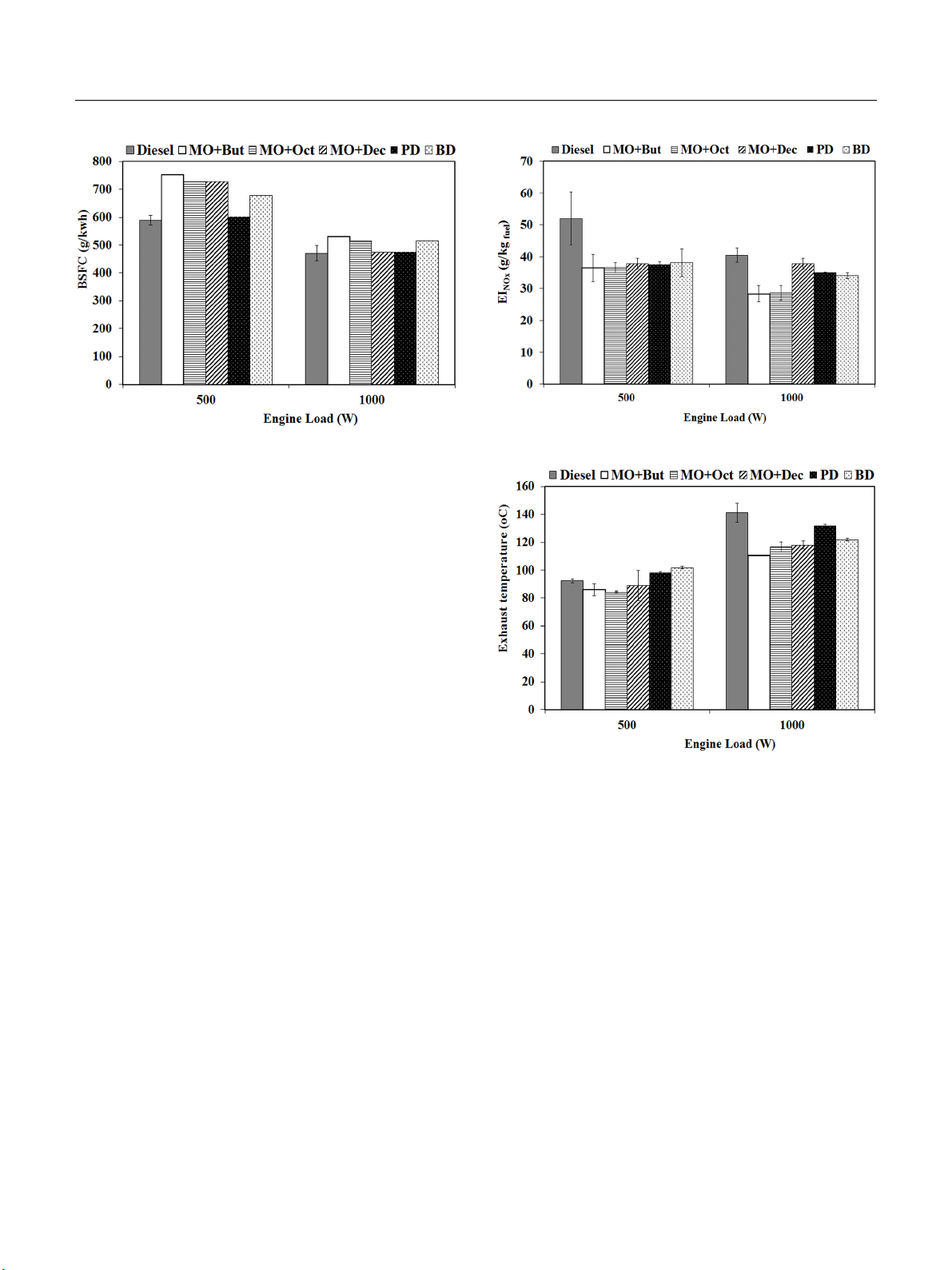
Fig. 3 shows the BSFC results of all the fuels. The BSFC
indicates the amount of fuel consumption that was needed to
generate the same energy power. The BSFC of all the fuels de-
creased as engine loads increased due to the higher fuel combus-
tion and lower heat losses. Moreover, it is interesting to note
that the BSFC of all the microemulsion biofuels increased for
all the engine loads. The BSFC increments tended to become
smaller as the engine load increased. The engine consumed
more microemulsion biofuels than the neat diesel fuel in order
to generate the same engine output because of the lower heat
content of alcohol in the fuel blends.
3.3. Exhaust Emissions
3.3.1. NOx emissions
The NOx emissions were measured in the exhaust for the different
microemulsion biofuels as shown in Fig. 4. In general, the sources
of NOx in the combustion process are mainly generated from
thermal NOx and fuel NOx. The combustion (flame) temperature,
the residence time of nitrogen at that temperature, and oxygen
content in an engine cylinder are the major factors affecting
the formation of NOx [28, 29]. In general, more fuel is consumed
and combusted in the cylinder when engine loads increase, which
results in higher gas temperatures and NOx emissions. A contrary
trend was observed in Fig. 4, where NOx emissions decreased
as the engine load increased for all microemulsion biofuels.
Fig. 4. NOx emissions for diesel, microemulsion fuels, PD, and BD.
Fig. 5. The exhaust gas temperature of diesel, microemulsion fuels,
PD, and BD.
A comparison among the fuels point to NOx emissions from
all microemulsion fuels as being lower than those of the neat
diesel (Fig. 4.), PD, and BD fuels at both engine loads, with
the statistical difference being more apparent for the higher load
(1,000 W). This reduction of NOx could be due to the evaporation
of alcohol (i.e., the ethanol cosurfactant) dispersed in the micro-
emulsified fuels, leading to lower gas temperatures in the cylinder
as a result of their higher latent heat of vaporization. Moreover,
the limitation of air supply in term of oxygen and nitrogen avail-
able to form NOx in a stoichiometric mixture (Table 1) [30].
Thus, NOx emissions from microemulsion fuels were reduced
by replacing a portion of the diesel with ethanol and the
cosurfactant.
Fig. 5 presents dissimilar exhaust gas temperatures for all
the tested fuels versus those of the two engine loads. It was
observed that all of the microemulsion fuels emitted lower ex-
haust gas temperatures than the other fuels because of the lower
heating value of ethanol and the cosurfactants in the micro-
emulsion fuels. Accordingly, the lower exhaust gas temperature







![Bài giảng Kỹ thuật điện - điện tử ô tô [chuẩn nhất]](https://cdn.tailieu.vn/images/document/thumbnail/2026/20260121/hoatrami2026/135x160/37681769069450.jpg)


![Câu hỏi ôn tập Truyền động điện [mới nhất]](https://cdn.tailieu.vn/images/document/thumbnail/2025/20250613/laphong0906/135x160/88301768293691.jpg)
![Giáo trình Kết cấu Động cơ đốt trong – Đoàn Duy Đồng (chủ biên) [Phần B]](https://cdn.tailieu.vn/images/document/thumbnail/2025/20251120/oursky02/135x160/71451768238417.jpg)


