

Proceedings of Mechanical Engineering Research Day 2018, pp. 268-269, May 2018
__________
© Centre for Advanced Research on Energy
Optimization of diesel, palm oil biodiesel and ethanol blend in a diesel
engine
Md Isa Ali1,2,*, Hikneshwaran Seathuraman1
1)Faculty of Mechanical Engineering, UniversitiTeknikal Malaysia Melaka,
Hang Tuah Jaya, 76100 Durian Tunggal, Melaka, Malaysia.
2)Centre for Advanced Research on Energy, Universiti Teknikal Malaysia Melaka,
Hang Tuah Jaya, 76100 Durian Tunggal, Melaka, Malaysia.
*Corresponding e-mail: mdisa@utem.edu.my
Keywords: Palm oil biodiesel; power; fuel consumption; emission; optimization
ABSTRACT – A Kipor KM 170F engine was operated
on different fuels produced by blending palm oil
biodiesel and ethanol with diesel fuel. Four fuel blends,
namely: neat diesel fuel and 85:10:5, 80:10:10 and
70:25:5 (% v/v) blends of diesel:palm oil
biodiesel:ethanol, were prepared and tested for engine
performance and emission analyses. Engine
performance and emission data were used to optimize
the blend of diesel fuel:palm oil biodiesel:ethanol for
reducing engine emissions. The emissions were found to
be minimum with a 70:25:5 blend of diesel fuel:palm oil
biodiesel:ethanol without a significant drop in engine
power output.
1.0 INTRODUCTION
The use of vegetable oils as alternate fuel sources
or fuel extenders has been studied extensively. Many
researches have been done in the past three decades on
the use of oils from plant as alternative diesel fuel. The
major problem associated with the direct use of oils is
their high viscosity, which interferes with fuel injection
and atomization, which contribute to incomplete
combustion, nozzle coking, engine deposits, lubricating
oil dilution and ring sticking [1-2]. Several researchers
have investigated experimentally the performance and
emissions characteristics of either the vegetable oils or
biodiesels when fuelling diesel engines [3-6]. However,
the use of these biofuels in diesel engines will depend
on their individual physicochemical properties. Most of
the researchers just blend the produced biodiesels with
diesel. Studies on the use of ethanol in the blends are
very limited and not yet fully understood. Fuel
properties are the main factors for performance and
emission control. The present study examines the blend
of conventional diesel fuel, palm oil biodiesel and
ethanol in a standard, fully instrumented, four strokes,
direct injection diesel engine. In this way, a clearer
picture is produced showing the relative performance
and emissions characteristics of the blends.
2.0 METHODOLOGY
A Kipor KM 170F diesel engine was
used in this
study. Specifications of the engine are presented in Table
1. The following test fuels were used in this study:
a) 100% diesel fuel (baseline).
b) 85% diesel fuel,10% palm oil biodiesel and
5% ethanol.
c) 80% diesel fuel, 10% palm oil biodiesel and
10% ethanol.
d) 70% diesel fuel, 25% palm oil biodiesel and
5% ethanol.
Table 1 Engine specifications.
Specifications
Kipor KM 170F
Type of engine
1 cylinder, 4 strokes, DI
Bore x stroke
70 mm x 55 mm
Displacement
0.211 L
Rated power
2.5 kW
Compression ratio
20
Fuel tank capacity
2.5 L
Engine testing on the above fuels was performed at
load ranging from 0 bar to 20 bars, at full throttle using
standard method SAE J1349 and emissions
characteristics were determined using SAE J1312
standard. The sequence of fuels used was completely
randomized. Standard performance and exhaust
emission data were recorded and each test run replicated
thrice. The engine was run at the specific speeds and
loads for a minimum of 6 min and data were recorded
during the last 2 min of operation. The response
variables included power, brake specific fuel
consumption (BSFC), and HC emission. These data
were recorded at 5 s intervals for 2 min and averaged
over that period. After completion of one set of
experiments with four fuels the whole set was
replicated. Statistical analyses for the response of the
engine with different fuel blends were performed to
determine the trends of the response variables. The
response variables considered were engine power
output, BSFC and HC emission. The optimization was
based on maximizing power output and minimizing
BSFC and engine emissions. Response surfaces for
power, BSFC and response curves for HC emission
characteristics tests were plotted.
3.0 RESULTS AND DISCUSSION
3.1 Engine performance
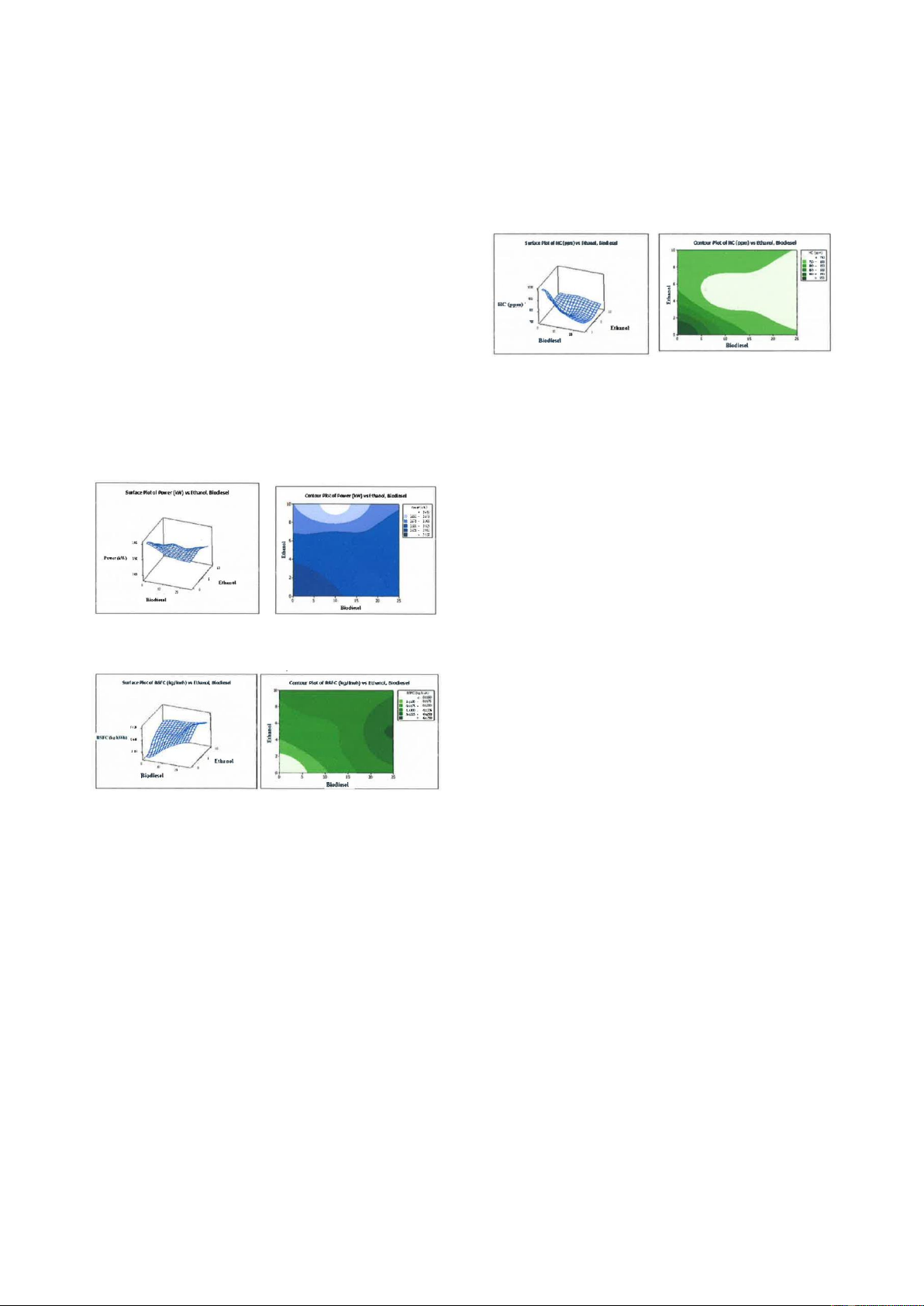
Figure 1 shows the statistical analyses performed
to find the effects of fuel blends on power output. The
figure showed that there is a significant linear and
quadratic effect of ethanol on power output, whereas the
biodiesel had a very small effect on the power output.
No interaction between ethanol and biodiesel was
observed. The regression model for the power output
Ali and Seathuraman, 2018
269
was:
P = 2.55 – 0.001E – 6.988 x 10⁻¹⁹B – 0.001E2
Where P = power (kW), E = ethanol (%) and B =
biodiesel (%). The engine power output at each load
was compared for each fuel blend. A drop in power
output was observed when the biodiesel:ethanol blend
was increased. The reduction in power output up to
7.4% with an increase in biodiesel:ethanol was expected
as this blend had less energy content than diesel fuel.
The contour plot with the darkest region would be the
optimized region. Since the aim is higher power so the
darker region must be observed, and the darkest region
would be the optimized region while the lightest region
is out of the optimization region.
The BSFC for all fuel blends are shown in Figure 2.
Statistical analyses showed that there was no interaction
between biodiesel and ethanol. The regression model for
BSFC was:
BSFC = 0.1128 + 0.00981E + 0.00036B – 4.6 x 10⁻⁵E2
Where BSFC = brake specific fuel consumption (kg/
kW-h); E = ethanol (%) and B = biodiesel (%).
Figure 1 Surface and contour plot of power against
ethanol and biodiesel.
Figure 2 Surface and contour plot of BSFC against
ethanol and biodiesel.
When the fuel consumption of the engine was
considered on the basis of energy supplied per kWh, this
showed that there was a drop of energy available for
each increament in biodiesel:ethanol blend per kWh and
thus a drop of power for the respective blend was
justified. The BSFC at any load was minimum with
diesel fuel and it increased linearly with an increase in
the biodiesel:ethanol content in the blend.
3.2 Emission analysis
Variations of HC emissions with different fuel
blends are shown in Figure 3. Regression analyses
performed for the effect of fuel blends on HC emissions
showed a significant quadratic effect. The regression
model for variation in HC emissions with fuel blends
was:
HC = 987 – 87.9E – 0.26667B + 6.76667E2
Where HC = HC emissions (ppm), E = ethanol (%) and
B = biodiesel (%). The purpose for surface plot is to
obtain lower HC level than diesel fuel. Since, the
intention is to lower HC, so the lighter region must be
observed, and the lightest region would be the
optimized region while darkest region is out of the
optimization region. A significant reduction in HC
emissions was observed when diesel was blended with
biodiesel and ethanol in the ratio of 70:25:5 percent,
respectively.
Figure 3 Surface and contour plot of HC emission
against ethanol and biodiesel.
4.0 CONCLUSION
Engine performance with a diesel:biodiesel:ethanol
fuel blend was not affected to a great extent from that of
diesel fueled engine performance. There was a 7.4%
power reduction, brake specific fuel consumption was
increased by 10.9% for 70:25:5 diesel:biodiesel:ethanol
blend and a significant reduction in HC emissions. The
optimized blend were observed with the 85:10:5, die-
sel:biodiesel:ethanol blend.
ACKNOWLEDGEMENT
The authors wish to acknowledge the financial
support of Universiti Teknikal Malaysia Melaka (grant
number: PJP/2013/FKM(2A)/S01141).
REFERENCES
[1] May, C. Y., Liang, Y. C., Foon, C. S., Ngan, M. A.,
Hook, C. C., & Basiron, Y. (2005). Key fuel
properties of palm oil alkyl esters. Fuel, 84(12-13),
1717-1720.
[2] Ozsezen, A. N., Canakci, M., Turkcan, A., &
Sayin, C. (2009). Performance and combustion
characteristics of a DI diesel engine fueled with
waste palm oil and canola oil methyl
esters. Fuel, 88(4), 629-636.
[3] Dhingra, S., Bhushan, G., & Dubey, K. K. (2013).
Performance and emission parameters optimization
of mahua (Madhuca indica) based biodiesel in
direct injection diesel engine using response
surface methodology. Journal of Renewable and
Sustainable Energy, 5(6), 1-14.
[4] Giakoumis, E. G. (2013). A statistical investigation
of biodiesel physical and chemical properties, and
their correlation with the degree of
unsaturation. Renewable Energy, 50, 858-878.
[5] Montgomery, D. T., & Reitz, R. D.
(2000). Optimization of heavy-duty diesel engine
operating parameters using a response surface
method. SAE Technical Paper, 1-15.
[6] Can, Ö. (2014). Combustion characteristics,
performance and exhaust emissions of a diesel
engine fueled with a waste cooking oil biodiesel
mixture. Energy Conversion and Management, 87,
676-686.






![Bài giảng Kỹ thuật điện - điện tử ô tô [chuẩn nhất]](https://cdn.tailieu.vn/images/document/thumbnail/2026/20260121/hoatrami2026/135x160/37681769069450.jpg)


![Câu hỏi ôn tập Truyền động điện [mới nhất]](https://cdn.tailieu.vn/images/document/thumbnail/2025/20250613/laphong0906/135x160/88301768293691.jpg)
![Giáo trình Kết cấu Động cơ đốt trong – Đoàn Duy Đồng (chủ biên) [Phần B]](https://cdn.tailieu.vn/images/document/thumbnail/2025/20251120/oursky02/135x160/71451768238417.jpg)


