BioMed Central
Page 1 of 9
(page number not for citation purposes)
BMC Plant Biology
Open Access
Research article
Novel exon combinations generated by alternative splicing of gene
fragments mobilized by a CACTA transposon in Glycine max
Gracia Zabala and Lila Vodkin*
Address: Department of Crop Sciences, University of Illinois, Urbana, Illinois 61801, USA
Email: Gracia Zabala - g-zabala@uiuc.edu; Lila Vodkin* - l-vodkin@uiuc.edu
* Corresponding author
Abstract
Background: The recent discoveries of transposable elements carrying host gene fragments such
as the Pack-MULEs (Mutator-like transposable elements) of maize (Zea mays), rice (Oryza sativa)
and Arabidopsis thaliana, the Helitrons of maize and the Tgm-Express of soybeans, revealed a
widespread genetic mechanism with the potential to rearrange genomes and create novel chimeric
genes affecting genomic and proteomic diversity. Not much is known with regard to the
mechanisms of gene fragment capture by those transposon elements or the expression of the
captured host gene fragments. There is some evidence that chimeric transcripts can be assembled
and exist in EST collections.
Results: We report results obtained from analysis of RT-PCR derived cDNAs of the Glycine max
mutant flower color gene, wp, that contains a 5.7-kb transposon (Tgm-Express1) in Intron 2 of the
flavanone 3-hydroxylase gene (F3H) and is composed of five unrelated host gene fragments. The
collection of cDNAs derived from the wp allele represents a multiplicity of processed RNAs varying
in length and sequence that includes some identical to the correctly processed mature F3H
transcript with three properly spliced exons. Surprisingly, the five gene fragments carried by the
Tgm-Express1 were processed through complex alternative splicing as additional exons of the wp
transcript.
Conclusion: The gene fragments carried by the Tgm inverted repeat ends appear to be retained
as functional exons/introns within the element. The spliceosomes then select indiscriminately the
canonical intron splice sites from a pre-mRNA to assemble diverse chimeric transcripts from the
exons contained in the wp allele. The multiplicity and randomness of these events provide some
insights into the origin and mechanism of alternatively spliced genes.
Background
A mutation in a soybean flower color gene (Wp) encoding
a flavanone 3-hydroxylase (F3H) was characterized as a
novel transposon insertion, Tgm-Express1, of the CACTA
superfamily, that carried multiple captured host gene frag-
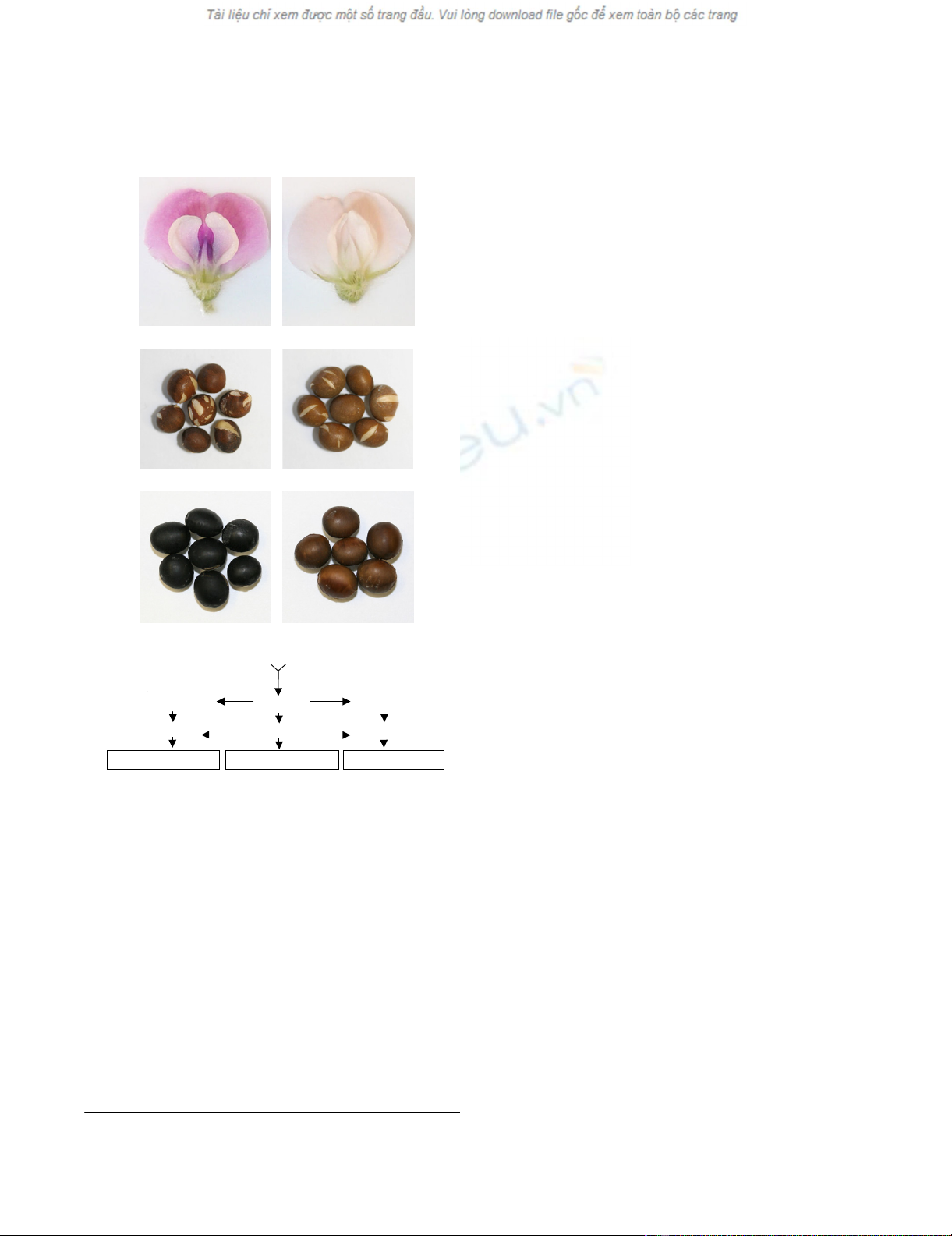
ments [1]. The most visible effect of the wp mutation is
production of pink rather than purple flowers and lighter
color in the seed coats (Figure 1). It has also been associ-
ated with lower oil and higher seed protein content than
the purple flowered Wp isoline [2,3].
The Tgm-Express1 element, like the Pack-MULEs (Mutator-
like elements) of maize, rice and Arabidopsis, retroele-
ments in rice and the Helitrons of maize contains several
Published: 14 July 2007
BMC Plant Biology 2007, 7:38 doi:10.1186/1471-2229-7-38
Received: 26 January 2007
Accepted: 14 July 2007
This article is available from: http://www.biomedcentral.com/1471-2229/7/38
© 2007 Zabala and Vodkin; licensee BioMed Central Ltd.
This is an Open Access article distributed under the terms of the Creative Commons Attribution License (http://creativecommons.org/licenses/by/2.0),
which permits unrestricted use, distribution, and reproduction in any medium, provided the original work is properly cited.
BMC Plant Biology 2007, 7:38 http://www.biomedcentral.com/1471-2229/7/38
Page 2 of 9
(page number not for citation purposes)
host gene fragments. It carries intronic and exonic regions
of five genes: unknown protein (UP), cell division cycle 2
(CDC2), fructose-6-phosphate 2-kinase/fructose-2-6-
biphosphatase (FPK), malate dehydrogenase (M) and
cysteine synthase (CS) [1]. Little is known about how any
of those transposons or retroelements acquired the gene
pieces but there is some evidence that they are transcribed
creating chimeric cDNAs that exist in EST (expressed
sequence tag) collections [4-7]. Of 475 Pack-MULEs iden-
tified on chromosomes 1 and 10 of rice via computer
searches, 5% were transcribed based on exact matches to
full-length cDNAs [4]. Most of the transcripts (91%) were
initiated from promoters at the TIRs (terminal inverted
repeats) or within the element while 9% of the transcripts
initiated outside the element. Three chimeric transcripts
were seen in an RNA blot probed with both a sh2 and a
Helitron insertion fragment probes [8]. A single 2,620 bp
chimeric transcript spanning the entire Helitron including
several gene fragments contained within the element has
also been described [6]. The promoter was predicted to
reside upstream of the Helitron insertion site.
We present here an array of 12 distinct alternatively
spliced chimeric transcripts obtained via RT-PCR that
were derived from the soybean wp mutant allele in which
the second intron of the F3H1 gene is interrupted by the
5.7 kb transposon containing five captured host gene-frag-
ments. The chimeric transcripts analyzed were more abun-
dant in seed coats than in cotyledons and ranged in size
from 3,108 bp to a correctly processed one of 1,422 bp
that was identical to the transcript derived from the wild
type Wp allele. All transcripts isolated initiated at the
F3H1 gene (Wp, wp) promoter that is strongly expressed in
seed coats.
Alternative splicing is a common regulatory mechanism
in higher eukaryotes and the mechanisms governing it
have been studied extensively in mammalian systems but
sparingly in plants [9,10]. In general, the splicing pattern
of a multiexon pre-mRNA can be altered in many ways.
Exons that are always spliced and included in the mature
mRNA are known as constitutive exons. However, mecha-
nistic decisions of the splicing components can result in
exons that are included at times but excluded at others
times from the mature mRNA. These are referred to as cas-
sette exons. There are also occurrences of 5' and 3' alterna-
tive splice sites altering the length of some exons. In
addition, the failure to remove an intron, referred to as
intron retention, is also found. Genes whose pre-mRNAs
have multiple locations of alternative splicing produce a
family of related proteins with different allosteric regula-
tion, protein localization, or enzymatic activity [9].
We show that the exon/intron regions of gene fragments
carried by the Tgm-Express1 of the wp allele are alterna-
Illustration of the effect of wp on flower and seed coat phenotypes
Figure 1
Illustration of the effect of wp on flower and seed coat pheno-
types. (A) Stable purple flower of plants with Wp genotype (left panel)
or stable pink flower of plants with wp genotype (right panel) in lines
LN89-5320-6 (iiRtW1Wp) and LN89-5322-2 (iiRtW1wp) both of which
have yellow seed coats. In soybean I (CHS), R and T (F3'H) are three
independent loci that control pigmentation in seed coats and W1
(F5'3'H) and Wp (F3H) were described as flower color markers, but all
five loci seem to be encoding genes of the anthocyanin and proanthocy-
anidin pathways. Mutant alleles of those loci (i, ii, r, t, w1 and wp) affect
flower, seed coat, hypocotyle or pubescence coloration [1, 28, 30, 31].
(B) Imperfect black color of seed coats of plants with iRtW1Wp geno-
type (left panel) as contrasted with the lighter shaded seed coats of
plants with iRtW1wp genotype (right panel). Effect on the seed coat phe-
notype was revealed by crossing the wp allele into lines having the
recessive i allele that allows spatial pigmentation of the entire seed coat
[24]. The cracks on both seed coat types result from an epistatic effect
of t [31]. (C) Black seed coats of plants with iRTW1Wp genotype where
the T allele drives the synthesis of cyanidins (left panel) contrasted with
the lighter seed coats of plants with iRTW1wp genotype (right panel).
(D) Abbreviated schematic representation of the three branches lead-
ing to the synthesis of the three anthocyanin classes and the genes
encoding the enzymes relevant to the present study.
Naringenin Eriodictyol
5’OH Eriodictyol F3’5’H
F3H
F3H F3H
Delphinidin-3 glycoside
F3’H
Pelargonidin-3-glycoside Cyanidin-3-glycoside
Dihydrokaempferol Dihydroquercetin
Dihydromyricetin F3’5’HF3’H
T
T
Wp Wp Wp
3 malonyl-CoA
4-coumaroyl- CoA
CHS
I
D
iRTW1wp iRTW1Wp
C
B
iRtW1wp iRtW1Wp
i
i
RtW1wp
Wp wp
A
i
i
RtW1Wp
BMC Plant Biology 2007, 7:38 http://www.biomedcentral.com/1471-2229/7/38
Page 3 of 9
(page number not for citation purposes)
tively spliced and assembled with the constitutive exons
of the F3H1 gene to generate an array of chimeric tran-
scripts encoding a variety of open reading frames (orfs).
Analysis of the derived amino acid sequence from the 12
distinct wp chimeric cDNAs predicted putative chimeric
orfs varying in length and frame locations.
The splicing machinery at times eliminates all extraneous
(cassette) exons and introns of the Tgm-Express1 element
to generate a full length transcript identical to that of the
wild type gene and thus likely functional. The number of
F3H molecules may be extensive enough to allow the syn-
thesis of sufficient anthocyanin pigment that could
account for the pink flower and the lighter seed coat phe-
notypes in the wp lines (Figure 1). On the other hand, the
more complex chimeric transcripts containing cassette
exons (UP, CDC2, FPK, M and CS) from the captured gene
fragments in the transposon may upon translation gener-
ate products that could interfere with function of the wild
type host-gene counterparts leading to secondary pheno-
types. Whether any of the novel exon combinations
derived from alternative splicing of the mobile exons of
the Tgm-Express1 element create new phenotypes is
unknown. However, there is growing evidence from both
plant [11,7] and animal [12,13] systems that repeat
sequences derived from mobile elements play a signifi-
cant role in generation and evolution of novel genes and
exons. The wp locus in soybean is a unique example of an
insertional mutation in the act of de novo generation of
fused, multiple chimeric exons through inclusion or
exclusion of cassette exons carried by the element into the
affected gene.
Results
Complex aberrant expression of the flower color mutant
gene wp
We discovered that a pink flower locus (Wp) of soybean
encoded a flavanone 3- hydroxylase gene (F3H1) by dif-
ferential screening of a cDNA soybean microarray using
RNAs from mutant pink (wp) and standard purple (Wp)
flower isolines [1]. We also showed that the Tgm-Express1
transposon insertion impaired expression of the mutated
gene and that the F3H1 gene was strongly expressed in the
seed coats but not in cotyledons [1].
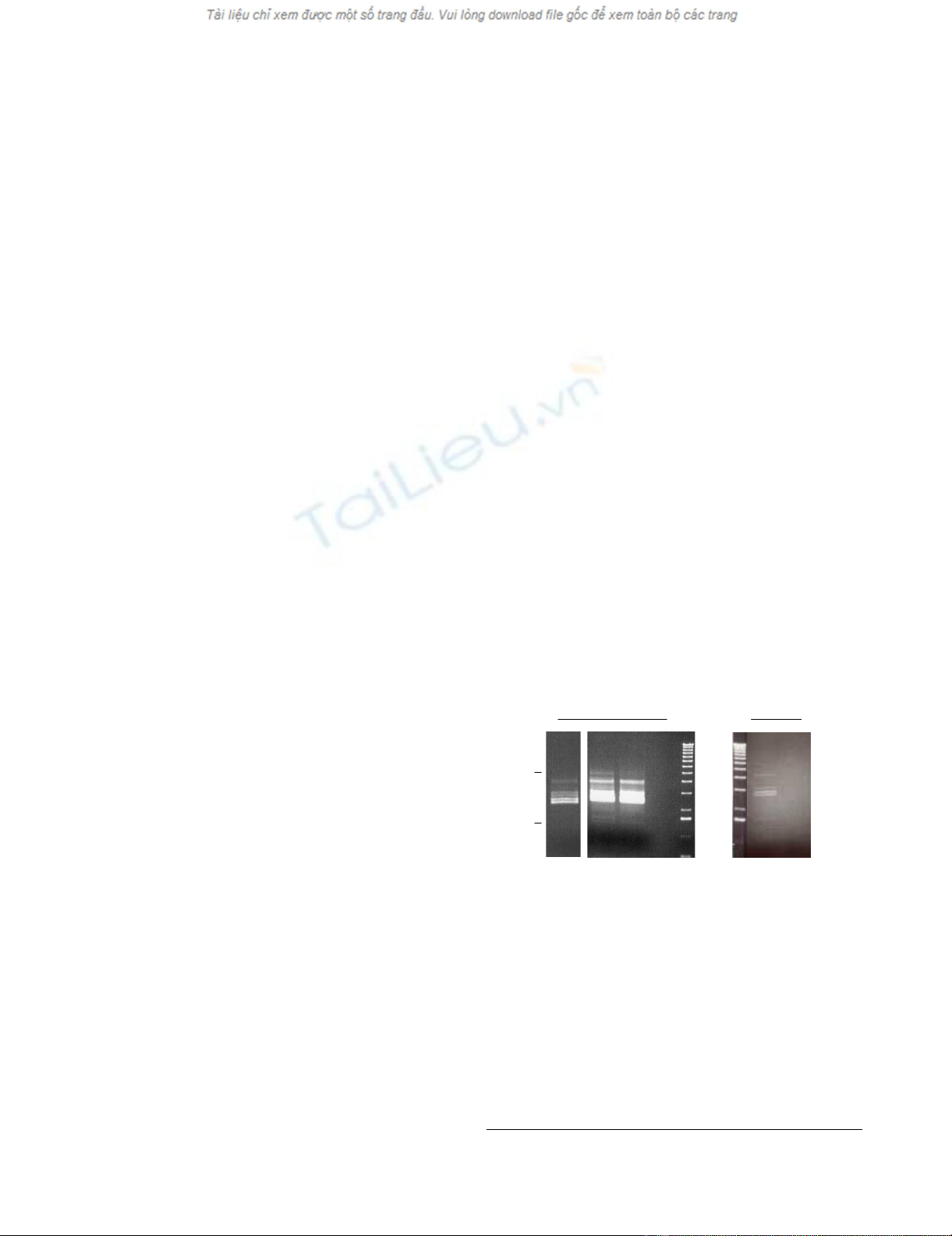
Analysis of the wp allele expression by RT-PCR with a pair
of F3H1 outermost 5' and 3'-primers revealed a bizarre
pattern of amplification resulting in a variety of cDNA
sizes from both seed coat and cotyledon RNAs (Figure 2).
The broad bright band of PCR product obtained with the
seed coat samples (Figure 2A) represents multiple size
bands. Shorter exposure photograph of that same gel
revealed at least 4 distinct bands (left most lane, Figure
2A). The wp transcriptional activity between the two tis-
sues, cotyledons and seed coats, could be deduced from
the difference in the intensity of the PCR products
obtained from the two wp RNA sets (Figure 2A and 2B).
Even though no hybridization to a F3H probe was appar-
ent by RNA blots with cotyledon RNAs of either genotype
(Wp and wp) [1], RT-PCR showed the existence of 1.4 kb
transcripts representing the mature F3H1 gene (data not
shown) and the aberrant larger transcripts from mutant
line RNAs (Figure 2B).
Cloning the larger sized RT-PCR cDNAs from plants
homozygous for the wp allele resulted in a surprising array
of alternatively spliced transcripts. Sequence analysis of
the multiple size cDNAs cloned from both seed coat and
cotyledons revealed multiple transcripts derived from the
wp allele containing the wild type gene (F3H1) exons (1,
2, 3) plus varying portions of exonic and intronic regions
of the gene fragments captured by the Tgm-Express1 ele-
ment that interrupts Intron 2 in the wp allele (Figure 3).
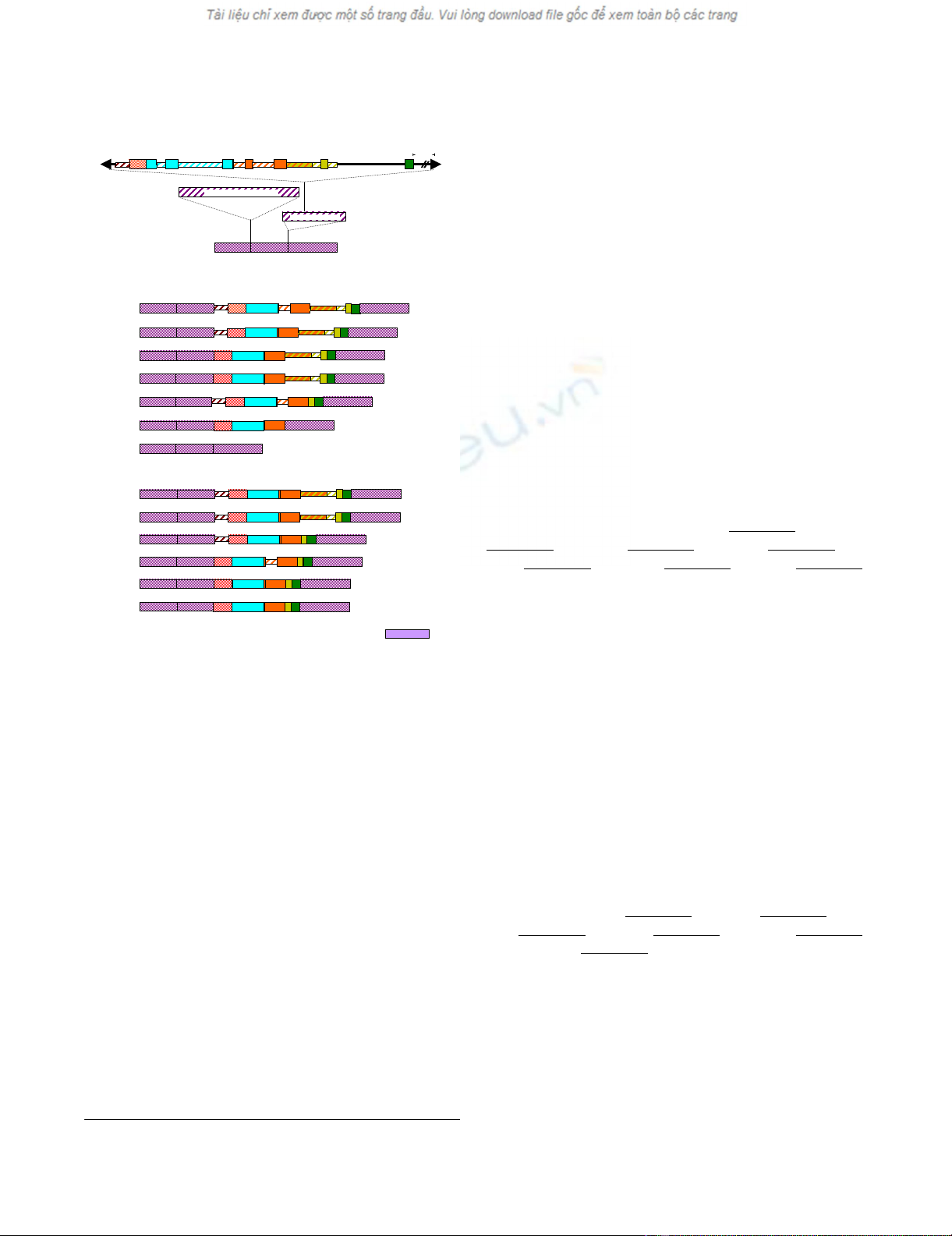
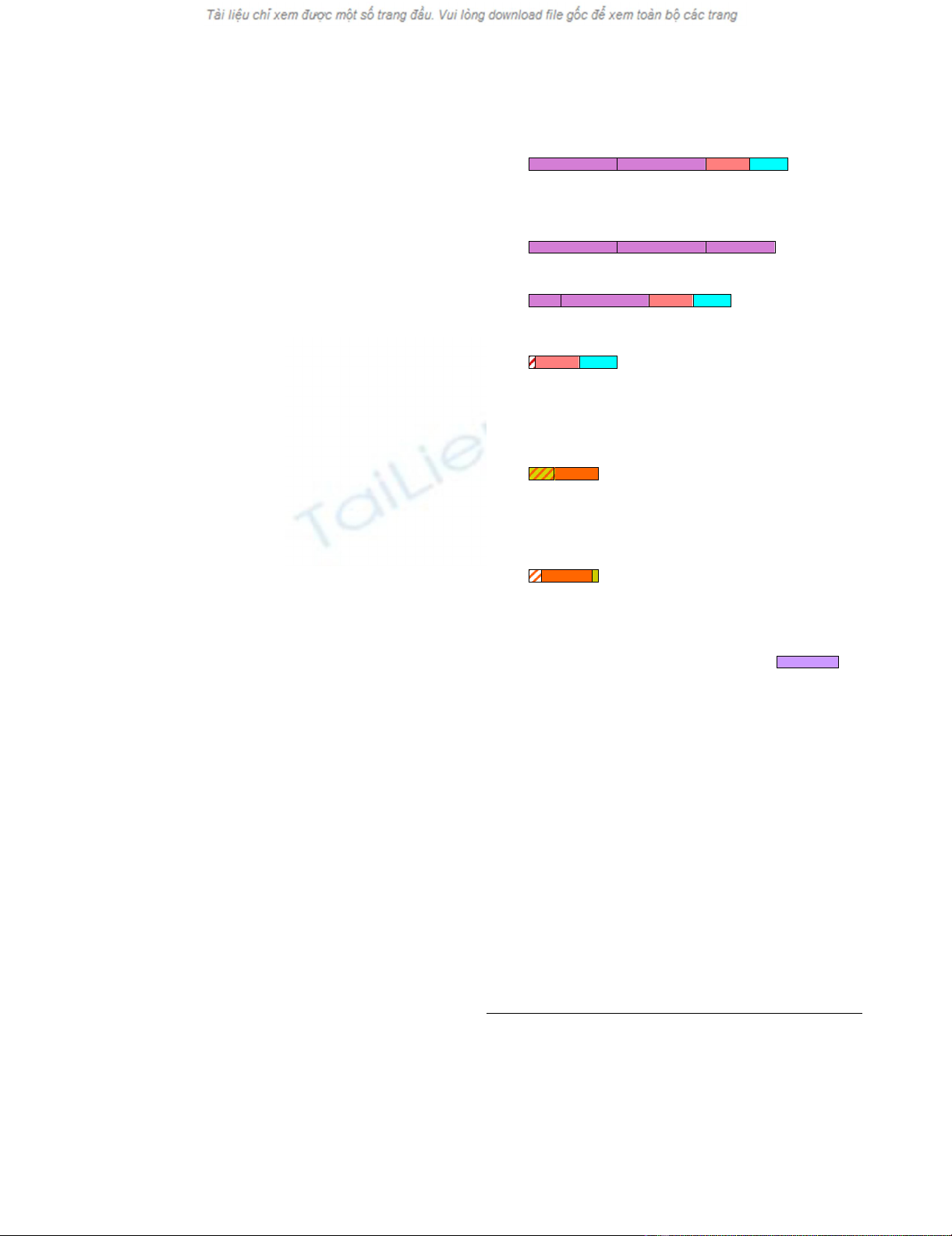
Figure 3A shows the schematic representation of the
genomic sequence of the wp allele with the Tgm-Express1
insertion in Intron 2. The number of gene fragments con-
tained within the element and their exons (solid colored
boxes) and introns (striped boxes) were revealed upon
sequence analysis of the multiple transcripts derived from
wp expression in seed coats (See additional file 1: Seed
coat wp RT-PCR cDNA sequence alignment) and cotyle-
dons (See additional file 2: Cotyledons wp RT-PCR cDNA
Variant flavanone 3-hydroxylase cDNAs from isolines con-taining mutant wp allelesFigure 2
Variant flavanone 3-hydroxylase cDNAs from isolines
containing mutant wp alleles. (A) Ethidium bromide-
stained gel showing an array of cDNA bands between 5 and
1.4 kb in size that were amplified from RNAs of seed coats of
the wp mutant line LN89-5322-2 through RT-PCR reactions.
The (+) and (-) at top indicate reactions with and without
Superscript RTII. The bright broad bands obtained from
mutant RNA samples in the (+) reactions were resolved into
a group of discreet bands with shorter photographic expo-
sure of the same gel (far left lane). (B) Ethidium bromide-
stained gel showing cDNAs amplified via RT-PCR with RNA
from cotyledons of the LN89-5322-2 (wp) mutant line.
kb
1.4
5.0
++-
wp wp
Seed Coats Cotyledons
AB
++-
BMC Plant Biology 2007, 7:38 http://www.biomedcentral.com/1471-2229/7/38
Page 4 of 9
(page number not for citation purposes)
sequence alignment). There were exonic portions of five
distinct genes: unknown protein (UP), cell division cycle
2 (CDC2), fructose-6-phosphate 2-kinase/fructose-2-6-
biphosphatase (FPK), malate dehydrogenase (M) and
cysteine synthase (CS). Some of the intronic regions could
be assigned to specific genes (one color stripes) while oth-
ers (two colors) could not. The solid black line between
the solid arrow heads (inverted repeats) could be introns
or intergenic DNA regions. Including the latter, all marked
intronic regions conform to the canonical 5'GT donor and
3'AG acceptor splice sites.
Figure 3B is a graphic summary of seven distinct RT-PCR
cDNA clones derived from seed coat RNAs. The larger
clones (wp-25s, wp-22s, wp-28s, wp-9s and wp-12s) con-
tain beside the three exons of the F3H1 gene, all cassette
exons of the Tgm-express1 gene fragments and varying
intron pieces. The smaller clones (wp-4s and wp-15s) had
only the F3H exons (wp-15s) or the F3H exons and three
cassette exons (wp-4s). Sequence data from these clones
have been deposited with the EMBL/GenBank Data
Libraries under accession numbers: EF100865 (wp-25s),
EF100866 (wp-22s), EF100867 (wp-28s), EF100868 (w-
p9s), EF100869 (wp-12s), EF100870 (wp-4s), EF100871
(wp-15s).
Likewise, Figure 3C shows six cDNA clones obtained via
RT-PCR from cotyledon RNAs. As in the case of the seed
coat derived cDNA clones, the larger cotyledon cDNA
clones (wp-9c, wp-8c, wp-2c and wp-13c) contained some
intron fragments besides the three F3H exons and cassette
exons from the Tgm-Express1 element. The smaller clones
(wp-12c and wp-6c) contained only exons, the three F3H
exons and the five cassette exons correctly spliced. The lat-
ter two clones diverged only by 61 bp mostly due to two
splicing errors in wp-6c deleting 15 bp at the beginning of
Exon 2 and 47 bp at the CDC2/FPK exons junction (See
additional file 2: Cotyledons wp RT-PCR cDNA sequence
alignment). Of the six cotyledon cDNAs cloned, only one
(wp-8c) was identical to one (wp-22s) of the seed coat
cDNA clones. Sequence data from these clones have been
deposited with the EMBL/GenBank Data Libraries under
accession numbers: EF100872 (wp-9c), EF100873 (wp-
8c), EF100874 (wp-2c), EF100875 (wp-13c), EF100876
(wp-12c), and EF100877 (wp-6c).
Overall, we isolated 12 different transcripts synthesized
from the wp allele. These are a good representation of the
chimeric transcripts generated by the spliceosome
machinery in the tissues examined. We conclude that the
most abundant transcripts shown by the discrete bands in
figure 2A (left lane) have been cloned based on their size.
The four most abundant bands are between 2 and 3 kb in
size as are 11 of the 12 different cloned cDNAs. Our
results also demonstrated that alternative splicing at the
Schematic representation of the wp recessive allele and the novel exon combinations generated in its transcribed RNAs
Figure 3
Schematic representation of the wp recessive allele and the
novel exon combinations generated in its transcribed RNAs. (A)
Represents the genomic sequence of the mutant wp allele obtained from
the line LN89-5322-2 (iiRtW1wp). The introns are indicated and their
length given in bp. The 5,725 bp Tgm-Express insertion in Intron 2 is drawn
at top with the arrow heads representing inverted repeats and the five
captured gene fragments color coded. The full length of the mutant gene is
9,251 bp. The three Exons in purple represent the cDNA of the proper
spliced wild type gene 1,422 bp in size. The 7F and 1428R primers used in
the PCR reactions that generated the chimeric cDNA clones shown in Fig-
ure 3B and C map at the 5' end of Exon 1 (7F) and the 3' end of Exon 3
(1428R) respectively. (B) Graphic representation of six chimeric, multi-
exon cDNA clones (wp-25s, -22s, -28s, -9s, 12s, -4s) derived from seed
coat RNAs of the wp mutant line via RT-PCR. These clones contained
besides the F3H three Exons (1, 2, 3) varying numbers of alternatively
spliced exons (solid color boxes) and introns (dashed narrower boxes)
from 3 or 5 of the Tgm-Express1 captured gene fragments (UP, CDC2, FPK,
M and CS). A seventh cDNA clone, wp-15s, also derived from the mutant
wp line is composed only of the wild type gene (Wp) Exons 1, 2 and 3. (C)
Six chimeric cDNA clones (wp-9c, -8c, -2c, -13c, -12c, -6c) derived from
cotyledon RNAs of the wp mutant line via RT-PCR. All clones contained
the F3H Exons (1, 2,3) with varying numbers of alternatively spliced exonic
and intronic regions from the Tgm-Express1 acquired host-gene fragments
separating the Exon 2-Exon 3 junction. Abbreviations: UP, unknown pro-
tein; CDC2, cell division cycle 2; FPK, fructose-6-phosphate 2-kinase/fruc-
tose-2-6-biphosphatase; M, malate dehydrogenase; CS, cysteine synthase.
Two CDC2 intronic regions captured by the transposon element and
sandwished between the three exonic regions (C, D and C2, Figure 2A)
were spliced out to form the CDC2 exon in the chimeric transcripts (Fig-
ure 2B and C). One FPK intronic fragment captured by the transposon
between two flanking exons (F and PK, Figure 2A) was also spliced out to
form the FPK exon in the chimeric transcripts (Figure 2B and C). A smaller
FPK intron flanked by 15 bp exon fragment (narrow orange block not
named) at the 5'end (Figure 2A) is not always spliced out (Figure 2B and
C).
500 bp = 19 mm
Seed coats wp – RT – PCR cDNA clones
Exon 1 Exon 2 Exon 3
Exon 1
Exon 1
Exon 1
Exon 1
Exon 1
Exon 1
Exon 2
Exon 2
Exon 2
Exon 2
Exon 2
Exon 2
wp-25s
wp-22s
wp-28s
wp-9s
wp-12s
wp-4s
wp-15s
CDC2
CDC2
CDC2
CDC2
CDC2
CDC2
FPK
FPK
FPK
FPK
FPK
FPK
M
M
M
M
M
CS
CS
CS
CS
CS
Exon 3
Exon 3
Exon 3
Exon 3
Exon 3
Exon 3
3,108bp
2,979bp
2,835bp
2,246bp
2,689bp
2,819bp
1,422bp
B
Cotyledons wp – RT – PCR cDNA clones
Exon 1
Exon 1
Exon 1
Exon 1
Exon 1
Exon 1
Exon 2
Exon 2
Exon 2
Exon 2
Exon 2
Exon 2
wp-9c
wp-8c
wp-2c
wp-13c
wp-12c
wp-6c
UP
UP
UP
UP
CDC2
CDC2
CDC2
CDC2
CDC2
CDC2
FPK
FPK
FPK
FPK
FPK
FPK
M
M
M
M
M
CS
CS
CS
CS
CS
Exon 3
Exon 3
Exon 3
Exon 3
Exon 3
Exon 3
2,979bp
2,578bp
2,348bp
2,409bp
2,540bp
2,984bp
MCS
C
UP
UP
UP
UP
UP
UP
UP
UP
UP C D C2 FPK MCS
1947bp
Tgm-Express1
A
wp gene
Intron 2 718 bp
Intron 1 1383 bp
Exon 1 Exon 2 Exon 3
BMC Plant Biology 2007, 7:38 http://www.biomedcentral.com/1471-2229/7/38
Page 5 of 9
(page number not for citation purposes)
wp allele occurs in two tissues, one (the seed coats) in
which the F3H promoter is highly expressed and another
(cotyledons) in which it is not.
Open reading frames of chimeric, multi-exon wp
transcripts
The amino acid sequences derived from the cDNA
sequences of seed coat and cotyledon wp-cDNA clones
shown in Figure 3B and 3C, varied significantly from
clone to clone and consequently the putative open read-
ing frames (orfs) of these chimeric transcripts. A search for
orfs consisting of more than 100 amino acids (aa) found
that many were chimeric (Figure 4 and additional file 3:
Seed coat wp RT-PCR cDNA derived amino acid sequences
and open reading frames, and additional file 4: Cotyledon
wp RT-PCR cDNA derived amino acid sequences and open
reading frames). Of interest were two putative chimeric
orfs present in several of the wp-cDNAs. One was com-
posed of approximately 210 bp (70 aa) of the UP exon
fragment and 192 bp (64 aa) of the CDC2 exon fragment.
It was present in seed coat transcripts wp-25s, -22s, -28s, -
9s, -12s, -4s, and cotyledon transcripts wp-9c, -8c, -2c, -
13c, -12c, -6c, always in a (+) frame. In half the clones this
orf appears as just described (seed coat wp-25s, -22s, -12s
and cotyledon wp-9c, -8c, -2c) (Figure 4-D). In the other
half the orf is part of a larger chimeric orf containing also
the F3H1 Exon 1 and Exon 2 sequences (Figure 4-A and
4C) (seed coat wp-28s, -9s, -4s and cotyledon wp-13c, -6c,
-12c). A second chimeric orf predicted for five of the wp-
cDNAs (seed coat wp-25s, -22s, -9s and cotyledon wp-9c, -
8c) consisted of approximately 103 bp (35 aa) of FPK/M
intronic fragment and 212 bp (70 aa) of FPK exonic
region, always in one of the three (-) frames (Figure 4-E).
A related chimeric orf containing FPK exonic sequence of
approximately 231/199 bp (77/66 aa) appears in seed
coat wp-12s clone and cotyledon wp-13c and wp-6c, all
three in a (+) frame (Figure 4-F).
The products of these chimeric orfs may not serve enzy-
matic functions per se but if translated, they could poten-
tially affect the function of wild type proteins synthesized
from the intact host genes (UP, CDC2 or FPK). In addi-
tion to the chimeric orfs, we also found a cDNA that
reconstituted the F3H1. The seed coat wp-15s cDNA clone
in the (+3) frame contained an orf of 394 amino acids
identical to the orf derived from the functional allele
F3H1 of the purple flower isoline (Wp) (Figure 4-B). The
product of this F3H1orf has the full potential to be trans-
lated into a functional F3H enzyme.
Expression of host genes with homology to the Tgm-
Express1 captured gene fragments
To analyze the expression of the host genes related to the
exons captured by the Tgm-Express1 element, we amplified
the cassette exons from the seed coat derived wp-12 cDNA
clone (Figure 3B) to generate a chimeric radiolabeled
probe that would hybridized to all RNAs with homology
to the probe's exon fragments. These include those tran-
scripts derived from the related host genes as well as the
chimeric transcripts expressed from the wp mutant allele.
Schematic of relevant chimeric and non-chimeric orfs gener-ated by the wp alleleFigure 4
Schematic of relevant chimeric and non-chimeric
orfs generated by the wp allele. In order of decreasing aa
length the chimeric orfs from several of the chimeric mRNAs
isolated were: A (418 aa) containing F3H Exons 1 and 2, the
UP and CDC2 Exons; C (293 aa) with F3H Exon 1, 3'end 16
aa, and Exon 2 plus UP and CDC2 Exons; D (143 aa) had 9 aa
of the UP intron plus the UP and CDC2 Exons. E (105 aa)
with 34 aa of the FPK/MDH Intron plus 71 aa of the FPK
Exon; F (105 aa) had 19 aa of FPK Intron, 77 aa of FPK Exon
and 9 aa of MDH Exon. The non chimeric orf B (394 aa) had
the three F3H Exons identical to the ones translated from
the Wp allele the only cDNA clone with this orf was wp-15s.
The chimeric orfs were generated from several of the
cDNAs sequenced and they are listed underneath each orf
class and also the frame in each one of the clones. * The orf
from the wp-6c clone was 5 aa shorter. ** The orf from the
wp-6c was 2 aa longer.
100 aa = 20 mm
wp-25s Frame -3
wp-22s Frame -3
wp-9s Frame -2
wp-9c Frame -3
wp-8c Frame -2
Exon 2Exon 1 UP CDC2
A
394 aa
Exon 2Exon 1 Exon 3
B
418 aa
E1 Exon 2 UP CDC2 293 aaC
UP CDC2
D143 aa
FPK 105 aaE
MFPK 105 aa
F
wp-15s Frame +3
wp-4s Frame +2
wp-12c Frame +2
wp-25s Frame +1
wp-22s Frame +1
wp-12s Frame +2
wp-9c Frame +2
wp-8c Frame +1
wp-2c Frame +2
wp-28s Frame +3
wp-9s Frame +3
wp-13c Frame +3
wp-6c* Frame +3
wp-12s Frame +3
wp-13c Frame +1
wp-6c** Frame +1