

Open Access
Available online http://ccforum.com/content/10/2/R41
Page 1 of 9
(page number not for citation purposes)
Vol 10 No 2
Research
Exogenous pulmonary surfactant for the treatment of adult
patients with acute respiratory distress syndrome: results of a
meta-analysis
Warren J Davidson1, Del Dorscheid1,2, Roger Spragg3, Michael Schulzer1, Edwin Mak1 and
Najib T Ayas1,2,4
1Department of Medicine University of British Columbia, Vancouver, British Columbia, Canada
2Intensive Care Unit Providence Healthcare, Vancouver, British Columbia, Canada
3University of California at San Diego, California, USA
4Centre for Clinical Epidemiology and Evaluation, Vancouver Coastal Health Research Institute, Vancouver, British Columbia, Canada
Corresponding author: Warren J Davidson, Warren.Davidson@calgaryhealthregion.ca
Received: 2 Dec 2005 Revisions requested: 23 Jan 2006 Revisions received: 9 Feb 2006 Accepted: 13 Feb 2006 Published: 8 Mar 2006
Critical Care 2006, 10:R41 (doi:10.1186/cc4851)
This article is online at: http://ccforum.com/content/10/2/R41
© 2006 Davidson et al.; licensee BioMed Central Ltd.
This is an open access article distributed under the terms of the Creative Commons Attribution License (http://creativecommons.org/licenses/by/2.0),
which permits unrestricted use, distribution, and reproduction in any medium, provided the original work is properly cited.
Abstract
Introduction The purpose of this study was to perform a
systematic review and meta-analysis of exogenous surfactant
administration to assess whether this therapy may be useful in
adult patients with acute respiratory distress syndrome.
Methods We performed a computerized literature search from
1966 to December 2005 to identify randomized clinical trials.
The primary outcome measure was mortality 28–30 days after
randomization. Secondary outcome measures included a
change in oxygenation (PaO2:FiO2 ratio), the number of
ventilation-free days, and the mean duration of ventilation. Meta-
analysis was performed using the inverse variance method.
Results Two hundred and fifty-one articles were identified. Five
studies met our inclusion criteria. Treatment with pulmonary
surfactant was not associated with reduced mortality compared
with the control group (odds ratio 0.97; 95% confidence interval
(CI) 0.73, 1.30). Subgroup analysis revealed no difference
between surfactant containing surface protein or not – the
pooled odds ratio for mortality was 0.87 (95% CI 0.48, 1.58) for
trials using surface protein and the odds ratio was 1.08 (95% CI
0.72, 1.64) for trials without surface protein. The mean
difference in change in the PaO2:FiO2 ratio was not significant
(P = 0.11). There was a trend for improved oxygenation in the
surfactant group (pooled mean change 13.18 mmHg, standard
error 8.23 mmHg; 95% CI -2.95, 29.32). The number of
ventilation-free days and the mean duration of ventilation could
not undergo pooled analysis due to a lack of sufficient data.
Conclusion Exogenous surfactant may improve oxygenation but
has not been shown to improve mortality. Currently, exogenous
surfactant cannot be considered an effective adjunctive therapy
in acute respiratory distress syndrome.
Introduction
Acute respiratory distress syndrome (ARDS) is a common
cause of respiratory failure in the intensive care unit. Patients
with ARDS exhibit an intense inflammatory reaction centered
in the lung parenchyma, resulting in alveolar flooding and col-
lapse, in reduced lung compliance, in increased work of
breathing, and in severe impairments in gas exchange [1-4].
Patients with ARDS have an inhospital mortality rate ranging
from 34% to 60% [5]. Treatment of patients with ARDS is
largely supportive, and includes mechanical ventilation with
low tidal volumes [6], positive end expiratory pressure to open
collapsed alveoli [7], supplemental oxygen, and supportive
care of other organ system failures. Given the high mortality
rate of patients with ARDS, other therapies are clearly needed.
Administration of exogenous pulmonary surfactant is an
adjunctive therapy that may help adult patients with ARDS.
Pulmonary surfactant is produced by type II alveolar cells and
is composed of two major fractions: phospholipids (90%) and
surfactant-specific proteins (10%). Surfactant decreases alve-
ARDS = acute respiratory distress syndrome; CI = confidence interval; FiO2 = fraction of inspired oxygen; OR = odds ratio; PaO2 = partial pressure
of oxygen in arterial blood.

Critical Care Vol 10 No 2 Davidson et al.
Page 2 of 9
(page number not for citation purposes)
olar surface tension, thereby preventing alveolar collapse and
allowing efficient gas exchange at low transpulmonary pres-
sures. Furthermore, surfactant has important roles in host
immune defense, through both specific and nonspecific mech-
anisms [8].
Patients with ARDS show injury to the alveolar epithelial bar-
rier with consequent surfactant dysfunction. Indeed, surfactant
recovered from bronchoalveolar lavage fluid from ARDS
patients has alterations of the phospholipid and fatty acid pro-
file, has decreased levels of surfactant-specific proteins, and
has impaired surface-tension-lowering properties. Causes of
this impairment include the inhibition of surfactant function by
protein-rich edema fluid, by surfactant lipid peroxidation, and
by surfactant protein degradation [1,9]. Given these abnormal-
ities, administration of exogenous pulmonary surfactant has
been considered a possible treatment option in adult patients
with ARDS [8].
The purpose of this study was to perform a systematic review
and meta-analysis of exogenous surfactant administration to
assess whether this therapy, as currently administered, may be
useful in adult patients with ARDS.
Materials and methods
Study identification
We performed a computerized search to identify articles that
compared treatment with exogenous pulmonary surfactant
against the usual therapy for patients diagnosed with ARDS.
For our analysis, we only included studies that were rand-
omized controlled clinical trials, that compared the use of
exogenous pulmonary surfactant to an appropriate control
group (defined as patients receiving standard therapy with or
without a placebo), that evaluated mortality and/or pulmonary
physiological parameters, and that used objective documenta-
tion of ARDS using accepted criteria at the time of the individ-
ual study publication. Abstracts, case reports, editorials,
nonhuman studies, and nonEnglish studies were excluded.
We performed a computerized literature search of MEDLINE
(1966–December 2005), EMBASE (1980–December 2005),
Cochrane Database of Systematic Reviews (1996–December
2005), Cochrane controlled trials register (1996–December
2005), and the Database of Abstracts and Reviews of Effects
(1994–December 2005) to identify clinical studies and sys-
tematic reviews. We conducted the search for human studies
using the following combination of exploded medical subject
headings and text words: ('adult respiratory distress syn-
drome' or 'acute respiratory distress syndrome' or 'ARDS') and
('pulmonary surfactant' or 'lung surfactant') and ('adult'). The
reference lists of all articles selected were then hand-searched
for additional citations missed in the search.
Study selection
Two authors (WJD, NTA) independently reviewed the
abstracts of the references identified to determine suitability
for inclusion. Studies that could potentially be included were
obtained and reviewed in detail. Examiners were not blinded to
authors, to institutions, or to journal name.
Data extraction
Information about relevant outcome measures was extracted
for each study. Our primary outcome measure was mortality
28–30 days after randomization. Secondary outcome meas-
ures included a change in oxygenation (specifically the change
in the ratio between the partial pressure of oxygen and the
fraction of inspired oxygen (PaO2:FiO2 ratio)), the number of
ventilation-free days, and the mean duration of ventilation. Fur-
thermore, the following data were extracted: method of rand-
omization; inclusion and exclusion criteria; details of surfactant
administration, including type of surfactant, dose, duration,
and delivery method; nature of control treatment; mean age or
age range; gender ratio; ARDS scoring system; etiologies of
ARDS; and ventilation strategy.
Methodologic quality was assessed using the Jadad scoring
system, which consists of items describing randomization (0–
2 points), blinding (0–2 points), and dropouts and withdrawals
(0–1 points) in reporting of a randomized controlled trial [10].
A higher score indicates improved reporting. One author
(WJD) extracted the data, which were reviewed by the two
other authors (NTA, DD). If disagreement occurred, all three
authors met to establish consensus. If relevant data were miss-
ing or unclear from a particular trial, we attempted to contact
the primary author of that study.
Statistical analysis
Meta-analysis was performed using the inverse variance
method. Statistical heterogeneity was evaluated using the Q
statistic with P < 0.1. The primary outcome was summarized
as the odds ratio (OR) with the 95% confidence interval (CI).
A fixed-effect model was used unless there was significant
heterogeneity, in which case we applied a random effects
model. We examined the influence of the method of delivery
and the type of surfactant on all trials using predetermined
sensitivity analyses. All statistical analyses were performed
using Stata Version 8.0 (Statacorp LP, College Station, Texas,
USA).
Ethics
Ethics approval and patient consent were not applicable for
this meta-analysis.
Results
Search Results
We initially identified 251 articles. Of these, we excluded 238
because titles or abstracts were not relevant. Thirteen studies
were retrieved for detailed review [11-23]. Four studies were

Available online http://ccforum.com/content/10/2/R41
Page 3 of 9
(page number not for citation purposes)
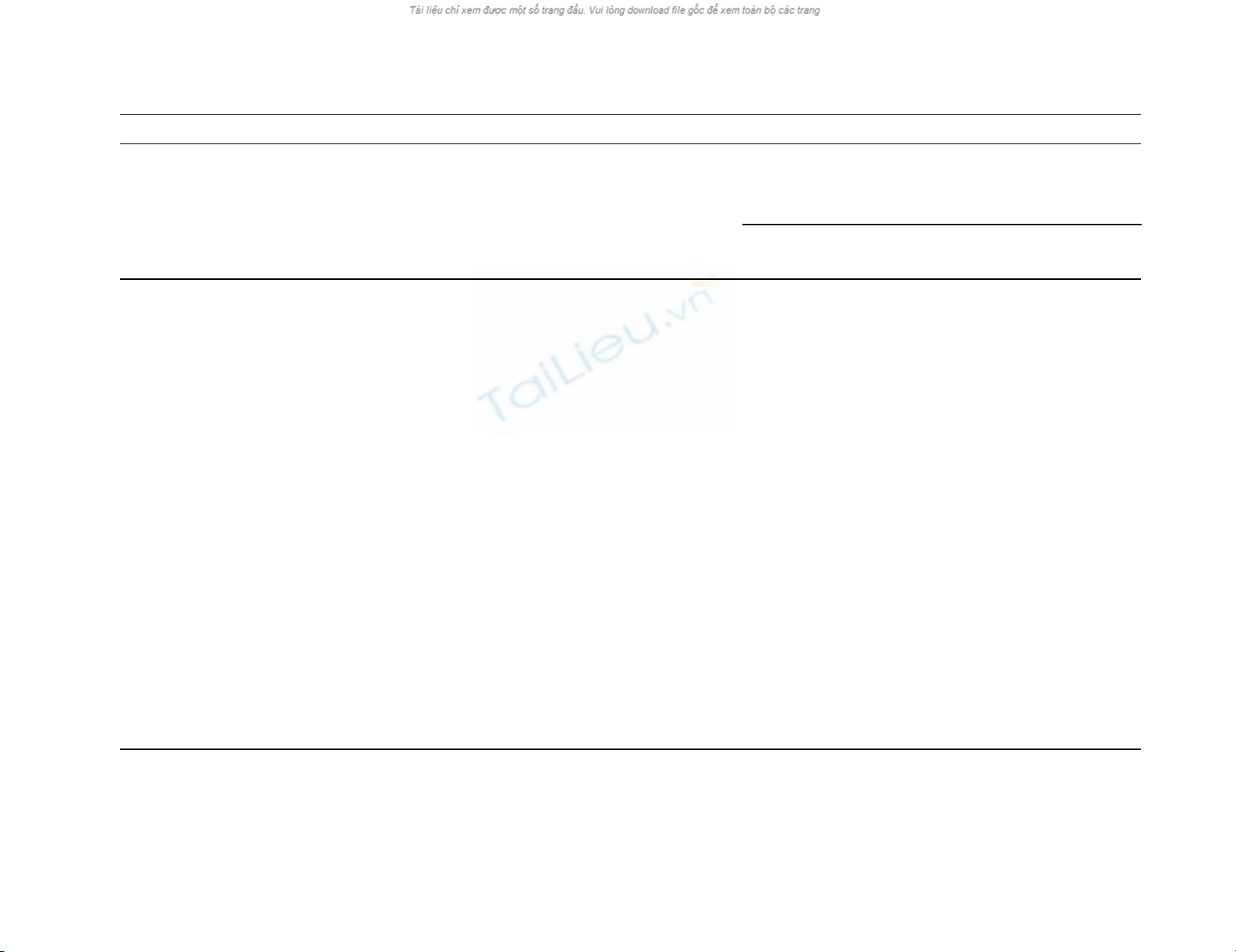
Table 1
Characteristics of the trials not eligible for meta-analysis
Reference Number of
patients
Exclusion criteria Delivery method Type of surfactant Other remarks
Reines and
colleagues, 1992
[27]
49 Abstract only Aerosolized Exosurf (synthetic, no
surfactant protein)
Published as an abstract. Placebo-
controlled. Trend for improvement in
the PaO2:FiO2 ratio and mortality
MacIntyre and
colleagues, 1994
[26]
10 Abstract only. No
control group. No
data on oxygenation
or mortality
Aerosolized Exosurf (synthetic, no
surfactant protein)
Published as an abstract. Only 4.5% of
aerosolized radiolabeled surfactant
reached the lungs
Spragg and
colleagues, 1994
[15]
6 Crossover trial Bronchoscopic Porcine surfactant Trend for improved oxygenation.
Findings of reduced inhibition of
surfactant function in bronchoalveolar
lavage fluid after surfactant
replacement
Walmrath and
colleagues, 1996
[13]
10 No control group Bronchoscopic Alveofact (natural
bovine surfactant)
Trend for improvement in oxygenation
(PaO2:FiO2 ratio)
Pallua and
colleagues, 1998
[12]
4 No control group Bronchoscopic Alveofact (natural
bovine surfactant)
Improved oxygenation (PaO2:FiO2
ratio)
Wiswell and
colleagues, 1999
[11]
12 No control group Bronchoscopic Surfaxin (synthetic
surfactant)
Surfactant administration was safe.
FiO2 and positive end-expiratory
pressure decreased after treatment
initiation
Walmrath and
colleagues, 2000
[25]
41 Abstract only Intratracheal Venticute (rSP-C-
based surfactant)
Published as an abstract. Randomized.
Trend for improvement in PaO2:FiO2
ratio, number of ventilator-free days
and successful weaning at 28 days in
patients receiving surfactant
Kesecioglu and
colleagues, 2001
[22]
36 Abstract only Intratracheal Porcine surfactant Published as an abstract. Randomized.
Surfactant administration was safe.
PaO2:FiO2 ratio and survival were
improved in surfactant group
Spragg and
colleagues, 2001
[24]
40 Abstract only Intratracheal Venticute (rSP-C-
based surfactant)
Published as an abstract. Randomized.
Surfactant treatment may reduce
acute pulmonary inflammation
Walmrath and
colleagues, 2002
[14]
27 No control group Bronchoscopic Alveofact (natural
bovine surfactant)
Surfactant administration was safe.
Improved PaO2:FiO2 ratio
Spragg and
colleagues, 2002
[23]
448 Abstract only Intratracheal Venticute (rSP-C-
based surfactant)
Published as an abstract. Randomized.
Improved PaO2:FiO2 ratio. No
mortality benefit
Gregory and
colleagues, 2003
[21]
22 Abstract only. No
control group
Bronchoscopic Surfaxin (synthetic
surfactant)
Published as an abstract. Procedure
found to be safe and tolerable
rSP-C, recombinant surfactant protein C.
added from a hand search of articles and clinical trials [24-27].
Twelve studies were not eligible for analysis (Table 1): seven
were in abstract form only [21-27], four had no control group
[11-13,27], and one was a crossover trial [15]. Five studies
met our inclusion criteria (Table 2) [16-20]. The study by
Spragg and colleagues [20] included results from both a
North American trial and a European–South African trial. For
the purposes of our analysis, therefore, the data from the two
trials in this manuscript were assessed independently, result-
ing in the final analysis of data from six randomized controlled
trials [16-20].
Study characteristics
The studies were published from November 1994 to August
2004 (Table 2). All were multicenter trials. The number of
patients in each trial ranged from 39 to 725. Different doses of
surfactant were used in three trials [16,18,19].
In an effort to analyze the most comparable data, the surfactant
group in the study by Weg and colleagues [16] with the clos-
est dosing to the surfactant group in the study by Anzueto and
colleagues [17] was chosen for analysis. This resulted in the
exclusion of 17 patients.
Critical Care Vol 10 No 2 Davidson et al.
Page 4 of 9
(page number not for citation purposes)
A similar issue was found in the four trials using surfactant con-
taining surface protein. Specifically, in the trial by Spragg and
colleagues [19] the surfactant group chosen for analysis was
the group who were given the same dose of surfactant as the
two other trials [20] using the same type of surfactant (recom-
binant surface protein C). This resulted in the exclusion of 12
patients. In the trial by Gregory and colleagues [18] the group
that received the higher dose of surfactant was used for anal-
ysis. As a result, 24 patients were excluded from the analysis.
A total of 1,270 patients were analyzed in these six trials: 381
patients were given surfactant containing no surfactant protein
(two trials) [16,17]; 239 patients were given surfactant con-
taining recombinant surfactant protein C (three trials) [19,20];
and 19 patients were given bovine surfactant containing both
surfactant proteins B and C (one trial) [18].
All studies included ARDS resulting from sepsis. Two studies
only included patients with sepsis-related ARDS, both pulmo-
nary and nonpulmonary [16,17]. The remaining studies
included patients with other direct lung injury (aspiration) and
indirect lung injury (trauma or surgery, transfusions, pancreati-
tis, burns, and toxic injury).
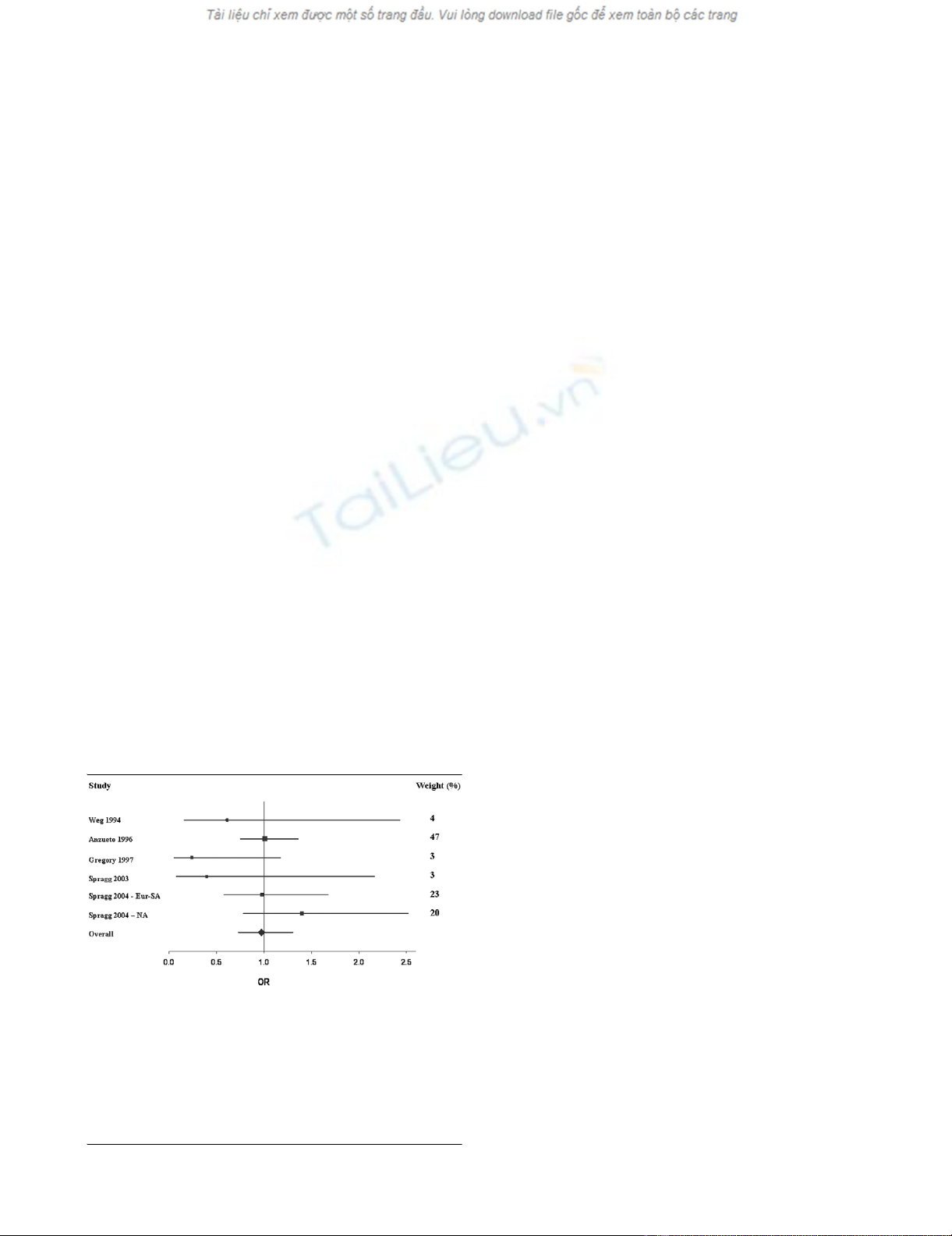
Primary outcome (mortality at 28 or 30 days)
Overall, treatment with exogenous pulmonary surfactant was
not associated with reduced mortality compared with the con-
trol group (Figure 1 and Table 3). That is, compared with the
control group, the OR for mortality after treatment with sur-
factant was 0.97 (95% CI 0.73, 1.30). Subgroup analysis
revealed no difference between the aerosolized and intratra-
cheal instillation methods: OR 0.99 (95% CI 0.74, 1.32) and
0.87 (95% CI 0.48, 1.58), respectively (Table 3).
Furthermore, the OR for mortality was similar regardless of
whether the surfactant contained surface protein or not. That
is, the pooled OR for mortality was 1.08 (95% CI 0.72, 1.64)
for the two trials using surfactant without surface protein
[16,17], and was 0.87 (95% CI 0.48, 1.58) for the four trials
using surfactant containing surface protein B and/or protein C
[18-20] (Table 3).
Secondary outcomes
Due to the constraints of the published data, the mean differ-
ence in change in the PaO2:FiO2 ratio between the surfactant
and control groups could only be assessed at the 24-hour
mark following treatment administration. Three studies had
sufficient information to allow pooling of the PaO2:FiO2 data
[19,20]. These three trials studied a total of 488 patients (251
patients in the surfactant arm and 237 patients in the control
arm). A fixed-effect model was used because the Q test for
heterogeneity was not significant (P = 0.11). There was a
trend for the surfactant group to have improved oxygenation
compared with the controls. This did not achieve statistical
significance, however (pooled mean change 13.18 mmHg,
standard error 8.23 mmHg; 95% CI -2.95, 29.32) (Figure 2).
The number of ventilation-free days and the mean duration of
ventilation could not undergo pooled analysis due to a lack of
sufficient data.
Discussion
Adult patients with ARDS exhibit a reduction in the amount
and function of surface-active material recovered by broncho-
alveolar lavage. In addition, the phospholipid, fatty acid, and
apoprotein profiles of pulmonary surfactant are altered [1]. It
would therefore seem sensible that exogenous pulmonary sur-
factant would be a useful therapy in the treatment of ARDS.
Our meta-analysis of six randomized controlled trials, however,
demonstrated little utility of the therapy [16-20]. There was no
overall improvement in mortality (OR 0.97; 95% CI 0.73,
1.30). Furthermore, subgroup analysis of preparations with
surfactant proteins in addition to phospholipids did not dem-
onstrate improved outcomes (OR 0.87; 95% CI 0.48, 1.58).
In three of the studies we were able to assess the impact of
surfactant on oxygenation (for instance the PaO2:FiO2 ratio 24
hours following surfactant administration). Although there was
a trend to improved oxygenation, this did not reach statistical
significance (mean change 13.18 mmHg, standard error 8.23
mmHg; 95% CI -2.95, 29.32).
Our search for all published randomized controlled trials was
thorough. Each study was assessed for quality and was cho-
sen only if they were similar with respect to study participants
and outcome measure. Mortality was chosen as the primary
outcome given its importance in clinical practice. Unlike the
most recent published meta-analysis [28], we attempted to
assess oxygenation (PaO2:FiO2 ratio), the number of ventila-
tion-free days, and the mean duration of ventilation. Unfortu-
Figure 1
Forest plot of mortalityForest plot of mortality. This Forest plot represents the odds ratio (OR)
(95% confidence interval) for 28-day to 30-day mortality in patients
treated with surfactant compared with controls. OR < 1 indicates that
treatment with surfactant was associated with a reduction in mortality
compared with the control group, while OR > 1 indicates an increase in
mortality with surfactant therapy. Areas of boxes are proportional to the
respective study weight within the corresponding pooled analysis (see
also weight values on the right). Eur-SA, European–South African trial;
NA, North American trial.
Available online http://ccforum.com/content/10/2/R41
Page 5 of 9
(page number not for citation purposes)
Table 2
Characteristics of the trials eligible for meta-analysis
Article (Jadad
score)
Design Number of
patients
Delivery
method
Type of
surfactant
Surfactant dosing (total) Treatment
duration
Number of deaths Ventilation-free daysaDuration of ventilationb
Control Surfactant Control Surfactant Control Surfactant
Weg and
colleagues,
1994 [16]
(score 5)
Multicenter:
USA,
Canada
51 (control = 17,
group 1 = 17,
group 2 = 17)
Aerosolized Exosurf
(synthetic,
no
surfactant
protein)
13.5 mg DPPC/ml (group
1, 21.9 mg DPPC/kg/
day; Group 2, 43.5 mg
DPPC/kg/day)
Maximum 120
hours for all
groups
8Group 1 = 7,
group 2 = 6
NA NA NA NA
Anzueto and
colleagues,
1996 [17]
(score 5)
Multicenter:
USA,
Spain,
France
725 (control =
361, surfactant
= 364)
Aerosolized Exosurf
(synthetic,
no
surfactant
protein)
13.5 mg DPPC/ml (112
mg DPPC/kg/day)
Maximum 5
days
143 145 NA NA 16.4 (0.9) 16.0 (1.0)
Gregory and
colleagues,
1997 [18]
(score 2)
Multicenter:
USA
59 (control = 16,
group 1 = 8,
group 2 = 16,
group 3 = 19)
Intratracheal Survanta
bovine lung
extract
(containing
SP-B and
SP-C)
Group 1, 50 mg/kg LBW
(maximum 8 doses);
group 2, 100 mg/kg
LBW (maximum 4
doses); group 3, 100
mg/kg LBW (maximum
8 doses)
Maximum 96
hours for all
groups
7Group 1 = 4,
group 2 = 3,
group 3 = 3
NA NA 10 Group 1 = 15c,
group 2 = 7c,
group 3 = 10c
Spragg and
colleagues,
2003 [19]
(score 2)
Multicenter:
USA,
Canada
40 (control= 13,
group 1 = 15,
group 2 = 12)
Intratracheal Venticute
(rSP-C-
based
surfactant)
Group 1, 1 mg/kg LBW
(maximum 4 doses);
group 2, 0.5 ml/kg
LBW (maximum 4
doses)
24 hours for
all groups
5Group 1 = 3,
group 2 = 4
6 (0–15) Group 1= 5
(0–18),
group 2 = 4
(0–12)
NA NA
Spragg and
colleagues,
2004 [20]
(score 4)
Multicenter:
Europe,
South
Africa
227 (control =
109, surfactant
= 118)
Intratracheal rSP-C-based
surfactant
1 mg/kg LBW (maximum
4 doses)
24 hours 43 46 0 (0–20) 0 (0–19) NA NA
Spragg and
colleagues,
2004 [20]
(score 4)
Multicenter:
USA,
Canada
221 (control =
115, surfactant
= 106)
Intratracheal rSP-C-based
surfactant
1 mg/kg LBW (maximum
4 doses)
24 hours 29 34 6 (0–21) 3.5 (0–21) NA NA
DPPC, dipalmitoylphosphatidylcholine; LBW, lean body weight; rSP-C, recombinant surfactant protein C; NA, not available.
aValues presented as median (25th–75th percentile).
bValues presented as mean (± standard deviation).
cValues presented as median.



%20--%3e%3cdefs%3e%3cstyle%3e%20.st0%20{%20fill:%20%23fff;%20}%20.st1%20{%20fill:%20%237800fa;%20}%20%3c/style%3e%3c/defs%3e%3cpath%20class='st1'%20d='M117.78,12.18H43.11c2.9,3.47,4.65,7.94,4.65,12.82,0,5.6-2.3,10.66-6.01,14.29h76.02l7.22-13.56-7.22-13.56Z'/%3e%3cg%3e%3cpath%20class='st0'%20d='M53.58,26.17h-.59v-1.46h.59v-4.96h2.83c1.78,0,2.67.94,2.67,2.82v5.76c0,1.87-.89,2.81-2.67,2.81h-2.83v-4.96ZM55.36,21.37v3.34h1.1v1.46h-1.1v3.34h1.01c.61,0,.91-.37.91-1.1v-5.93c0-.74-.3-1.1-.91-1.1h-1.01Z'/%3e%3cpath%20class='st0'%20d='M65.99,31.14h-1.8l-.31-2.07h-2.19l-.31,2.07h-1.64l1.82-11.39h2.62l1.82,11.39ZM65.28,18.04c-.25.46-.51.77-.75.94-.21.15-.47.22-.79.22-.26,0-.57-.07-.92-.22l-.38-.15c-.14-.05-.26-.07-.37-.07-.3,0-.53.18-.71.54l-.91-.68c.25-.46.51-.77.75-.94.21-.14.48-.21.79-.21.26,0,.57.07.92.21l.38.15c.14.05.26.07.37.07.3,0,.53-.18.71-.54l.91.68ZM61.91,27.52h1.73l-.87-5.76-.87,5.76Z'/%3e%3cpath%20class='st0'%20d='M74.53,26.89v1.52c0,1.91-.89,2.86-2.67,2.86s-2.67-.95-2.67-2.86v-5.93c0-1.91.89-2.86,2.67-2.86s2.67.95,2.67,2.86v1.11h-1.69v-1.22c0-.75-.31-1.12-.93-1.12s-.93.37-.93,1.12v6.15c0,.74.31,1.11.93,1.11s.93-.37.93-1.11v-1.63h1.69Z'/%3e%3cpath%20class='st0'%20d='M81.4,31.14h-1.8l-.31-2.07h-2.19l-.31,2.07h-1.64l1.82-11.39h2.62l1.82,11.39ZM75.9,19.2l1.52-1.91h1.71l1.51,1.91h-1.61l-.76-.95-.75.95h-1.61ZM77.32,27.52h1.73l-.87-5.76-.87,5.76ZM83.1,15.99l-1.76,1.91h-1.26l1.17-1.91h1.86Z'/%3e%3cpath%20class='st0'%20d='M84.86,19.75c1.78,0,2.67.94,2.67,2.82v1.48c0,1.87-.89,2.81-2.67,2.81h-.85v4.28h-1.79v-11.39h2.64ZM84.01,21.37v3.86h.85c.58,0,.87-.36.87-1.08v-1.71c0-.71-.29-1.07-.87-1.07h-.85Z'/%3e%3cpath%20class='st0'%20d='M93.51,19.75c1.78,0,2.67.94,2.67,2.82v1.48c0,1.87-.89,2.81-2.67,2.81h-.85v4.28h-1.79v-11.39h2.64ZM92.66,21.37v3.86h.85c.58,0,.87-.36.87-1.08v-1.71c0-.71-.29-1.07-.87-1.07h-.85Z'/%3e%3cpath%20class='st0'%20d='M98.8,31.14h-1.79v-11.39h1.79v4.88h2.03v-4.88h1.83v11.39h-1.83v-4.88h-2.03v4.88Z'/%3e%3cpath%20class='st0'%20d='M105.36,24.55h2.46v1.62h-2.46v3.34h3.09v1.63h-4.88v-11.39h4.88v1.63h-3.09v3.18ZM108.17,17.29l-1.76,1.91h-1.26l1.17-1.91h1.86Z'/%3e%3cpath%20class='st0'%20d='M112.2,19.75c1.78,0,2.67.94,2.67,2.82v1.48c0,1.87-.89,2.81-2.67,2.81h-.85v4.28h-1.79v-11.39h2.64ZM111.35,21.37v3.86h.85c.58,0,.87-.36.87-1.08v-1.71c0-.71-.29-1.07-.87-1.07h-.85Z'/%3e%3c/g%3e%3ccircle%20class='st1'%20cx='25'%20cy='25'%20r='20'/%3e%3cpath%20class='st0'%20d='M32.78,19.27c2.92,0,4.43,2.55,5.28,5.33l.71,2.17c.14.38-.33.75-.71.75h-5.61c.19-.33.24-.71.09-1.08l-.75-2.45c-.43-1.32-.99-2.64-1.79-3.77.75-.57,1.65-.94,2.78-.94h0ZM25,18.38c3.25,0,4.9,2.78,5.89,5.89l.76,2.45c.14.42-.33.8-.8.8h-11.69c-.42,0-.94-.38-.8-.8l.75-2.45c.99-3.11,2.64-5.89,5.89-5.89h0ZM25,11.35c1.74,0,3.11,1.37,3.11,3.11s-1.37,3.11-3.11,3.11-3.11-1.41-3.11-3.11,1.41-3.11,3.11-3.11h0ZM17.27,19.27c1.08,0,1.98.38,2.73.94-.8,1.13-1.37,2.45-1.74,3.77l-.8,2.45c-.14.38-.05.75.09,1.08h-5.56c-.42,0-.9-.38-.75-.75l.71-2.17c.9-2.78,2.41-5.33,5.33-5.33h0ZM17.27,12.91c1.51,0,2.78,1.27,2.78,2.83s-1.27,2.83-2.78,2.83-2.83-1.27-2.83-2.83,1.27-2.83,2.83-2.83h0ZM32.78,12.91c1.56,0,2.78,1.27,2.78,2.83s-1.23,2.83-2.78,2.83-2.83-1.27-2.83-2.83,1.27-2.83,2.83-2.83h0ZM27.07,28.56v.09c0,.57-.24,1.08-.61,1.46h0v.05c-.38.33-.9.57-1.46.57s-1.08-.24-1.46-.61h0c-.38-.38-.61-.9-.61-1.46v-.09h1.41v.09c0,.19.05.38.19.47v.05c.09.09.28.19.47.19s.38-.09.47-.19v-.05c.14-.09.24-.28.24-.47t-.05-.09h1.41ZM30.99,28.56v.09c0,1.65-.66,3.16-1.74,4.24-1.08,1.08-2.59,1.79-4.24,1.79s-3.16-.71-4.24-1.79l-.05-.05c-1.04-1.08-1.7-2.55-1.7-4.2v-.09h1.41v.09c0,1.27.47,2.4,1.27,3.25h.05c.85.85,1.98,1.37,3.25,1.37s2.4-.52,3.25-1.37c.85-.8,1.37-1.98,1.37-3.25v-.09h1.37ZM34.99,28.56v.09c0,2.78-1.13,5.28-2.92,7.07-1.79,1.79-4.29,2.92-7.07,2.92s-5.23-1.13-7.07-2.92c-1.79-1.79-2.92-4.29-2.92-7.07v-.09h1.41v.09c0,2.4.94,4.53,2.5,6.08,1.56,1.56,3.72,2.5,6.08,2.5s4.52-.94,6.08-2.5c1.56-1.56,2.5-3.68,2.5-6.08v-.09h1.41Z'/%3e%3c/svg%3e)