Annals of Mathematics
Cabling and
transverse simplicity
By John B. Etnyre and Ko Honda

Annals of Mathematics,162 (2005), 1305–1333
Cabling and transverse simplicity
By John B. Etnyre and Ko Honda
Abstract
We study Legendrian knots in a cabled knot type. Specifically, given a
topological knot type K, we analyze the Legendrian knots in knot types ob-
tained from Kby cabling, in terms of Legendrian knots in the knot type K.
As a corollary of this analysis, we show that the (2,3)-cable of the (2,3)-torus
knot is not transversely simple and moreover classify the transverse knots in
this knot type. This is the first classification of transverse knots in a non-
transversely-simple knot type. We also classify Legendrian knots in this knot
type and exhibit the first example of a Legendrian knot that does not destabi-
lize, yet its Thurston-Bennequin invariant is not maximal among Legendrian
representatives in its knot type.
1. Introduction
In this paper we continue the investigation of Legendrian knots in tight
contact 3-manifolds using 3-dimensional contact-topological methods. In [EH1],
the authors introduced a general framework for analyzing Legendrian knots in
tight contact 3-manifolds. There we streamlined the proof of the classification
of Legendrian unknots, originally proved by Eliashberg-Fraser in [EF], and
gave a complete classification of Legendrian torus knots and figure eight knots.
In [EH2], we gave the first structure theorem for Legendrian knots, namely
the reduction of the analysis of connected sums of Legendrian knots to that
of the prime summands. This yielded a plethora of non-Legendrian-simple
knot types. (A topological knot type is Legendrian simple if Legendrian knots
in this knot type are determined by their Thurston-Bennequin invariant and
rotation number.) Moreover, we exhibited pairs of Legendrian knots in the
same topological knot type with the same Thurston-Bennequin and rotation
numbers, which required arbitrarily many stabilizations before they became
Legendrian isotopic (see [EH2]).
The goal of the current paper is to extend the results obtained for Leg-
endrian torus knots to Legendrian representatives of cables of knot types we
1306 JOHN B. ETNYRE AND KO HONDA
already understand. On the way to this goal, we encounter the contact width,
a new knot invariant which is related to the maximal Thurston-Bennequin in-
variant. It turns out that the structure theorems for cabled knots types are not
as simple as one might expect, and rely on properties associated to the contact
width of a knot. When these properties are not satisfied, a rather unexpected
and surprising phenomenon occurs for Legendrian cables. This phenomenon
allows us to show, for example, that the (2,3)-cable of the (2,3)-torus knot
is not transversely simple! (A topological knot type is transversely simple if
transverse knots in that knot type are determined by their self-linking number.)
Knots which are not transversely simple were also recently found in the work
of Birman and Menasco [BM]. Using braid-theoretic techniques they showed
that many three-braids are not transversely simple. Our technique should also
provide infinite families of non-transversely-simple knots (essentially certain
cables of positive torus knots), but for simplicity we content ourselves with
the above-mentioned example. Moreover, we give a complete classification of
transverse (and Legendrian) knots for the (2,3)-cable of the (2,3)-torus knot.
This is the first classification of transverse knots in a non-transversely-simple
knot type.
We assume that the reader has familiarity with [EH1]. In this paper, the
ambient 3-manifold is the standard tight contact (S3,ξ
std), and all knots and
knot types are oriented. Let Kbe a topological knot type and L(K) be the set
of Legendrian isotopy classes of K. For each [L]∈L(K) (we often write Lto
mean [L]), there are two so-called classical invariants, the Thurston-Bennequin
invariant tb(L) and the rotation number r(L). To each Kwe may associate an
oriented knot invariant
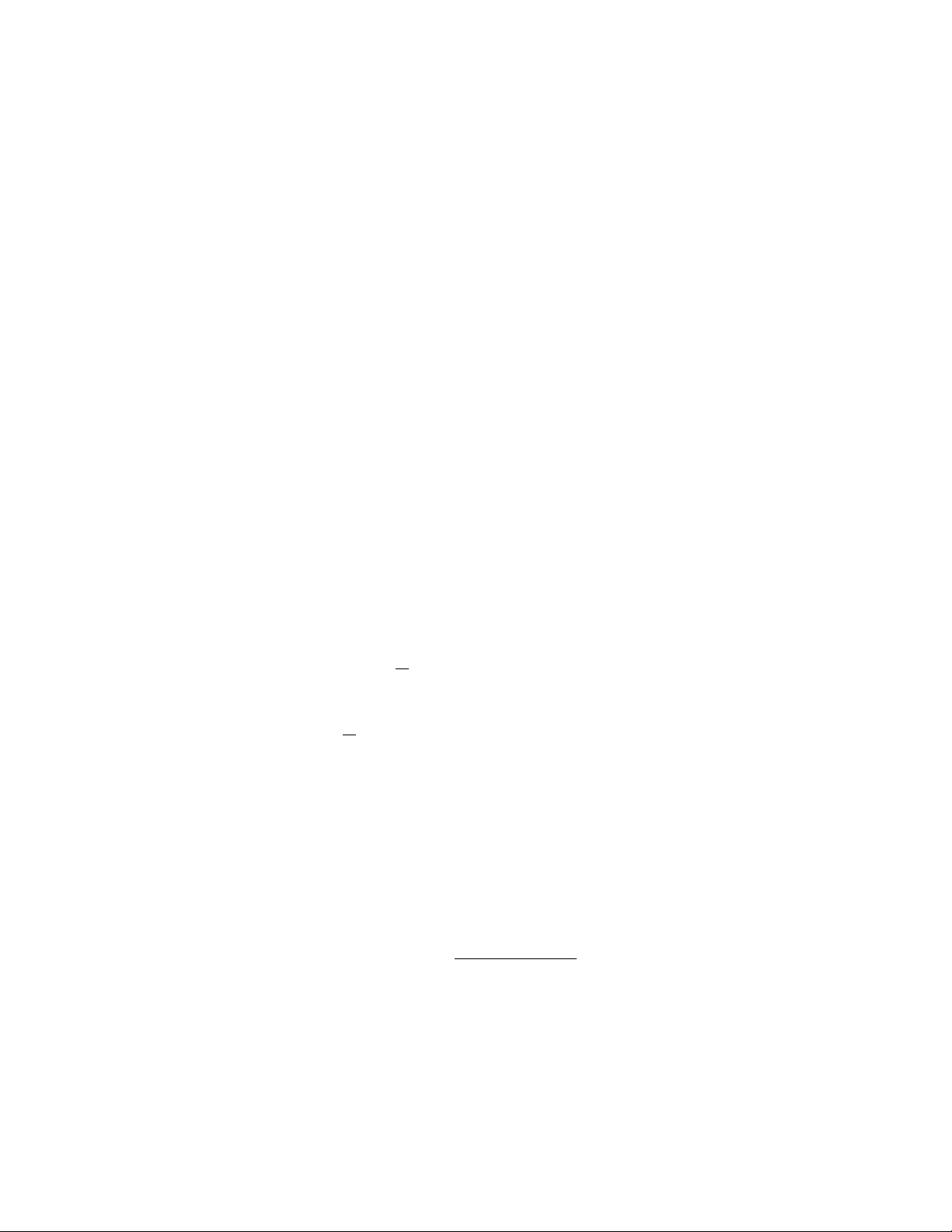
tb(K) = max
L∈L(K)tb(L),
called the maximal Thurston-Bennequin number.
A close cousin of tb(K) is another oriented knot invariant called the contact
width w(K) (or simply the width) defined as follows: First, an embedding
φ:S1×D2֒→S3is said to represent Kif the core curve of φ(S1×D2)is
isotopic to K. (For notational convenience, we will suppress the distinction
between S1×D2and its image under φ.) Next, in order to measure the
slope of homotopically nontrivial curves on ∂(S1×D2), we make a (somewhat
nonstandard) oriented identification ∂(S1×D2)≃R2/Z2, where the meridian
has slope 0 and the longitude (well-defined since Kis inside S3) has slope ∞.
We will call this coordinate system CK. Finally we define
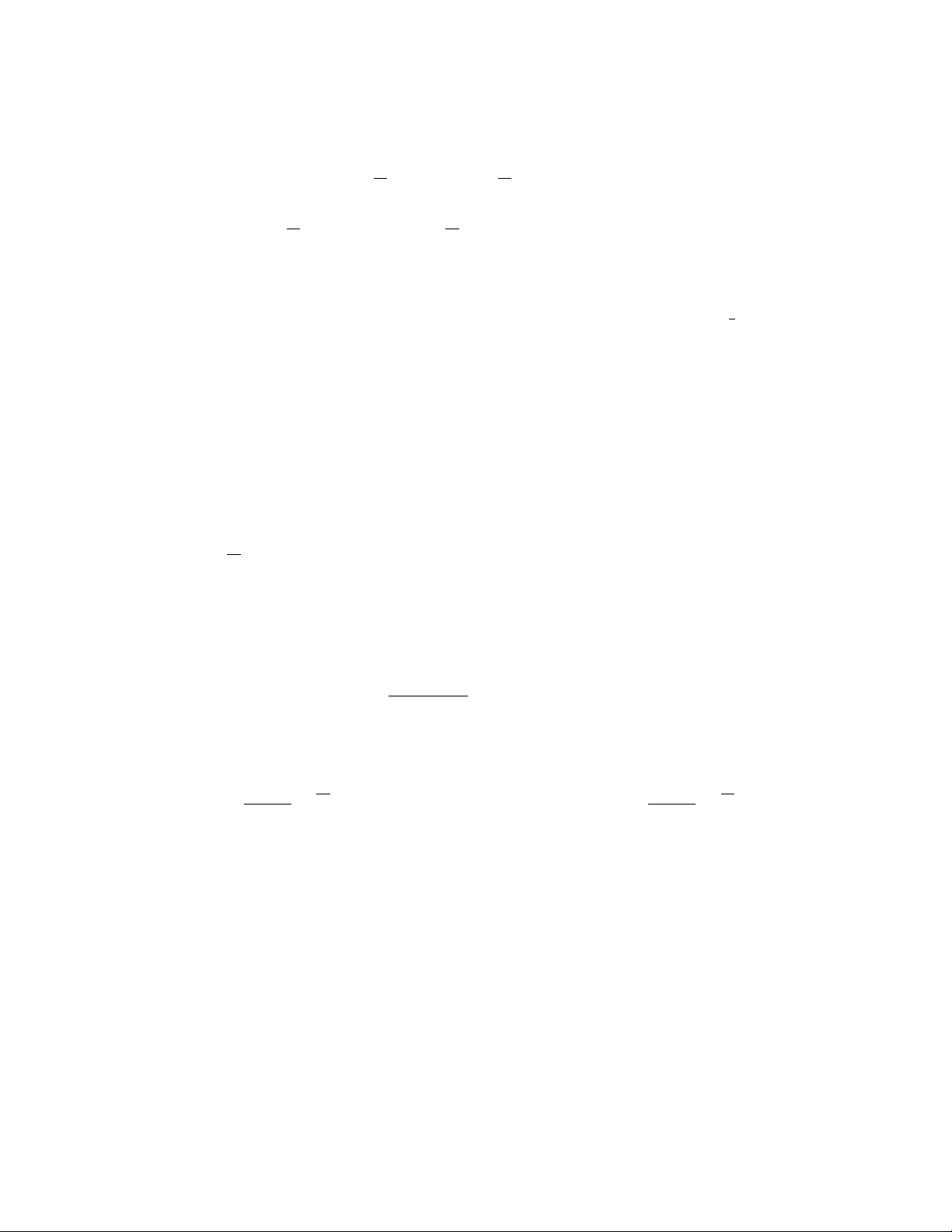
w(K) = sup 1
slope(Γ∂(S1×D2)),
where the supremum is taken over S1×D2֒→S3representing Kwith
∂(S1×D2) convex.
CABLING AND TRANSVERSE SIMPLICITY 1307
Note that there are several notions similar to w(K) — see [Co], [Ga]. The
contact width clearly satisfies the following inequality:
tb(K)≤w(K)≤tb(K)+1.
In general, it requires significantly more effort to determine w(K) than it does
to determine tb(K). Observe that tb(K)=−1 and w(K) = 0 when Kis the
unknot.
1.1. Cablings and the uniform thickness property. Recall that a (p, q)-cable
K(p,q)of a topological knot type Kis the isotopy class of a knot of slope q
pon
the boundary of a solid torus S1×D2which represents K, where the slope is
measured with respect to CK, defined above. In other words, a representative
of K(p,q)winds ptimes around the meridian of Kand qtimes around the
longitude of K.A(p, q)-torus knot is the (p, q)-cable of the unknot.
One would like to classify Legendrian knots in a cabled knot type. This
turns out to be somewhat subtle and relies on the following key notion:
Uniform thickness property (UTP). Let Kbe a topological knot type.
Then Ksatisfies the uniform thickness condition or is uniformly thick if the
following hold:
(1) tb(K)=w(K).
(2) Every embedded solid torus S1×D2֒→S3representing Kcan be thick-
ened to a standard neighborhood of a maximal tb Legendrian knot.
Here, a standard neighborhood N(L) of a Legendrian knot Lis an em-
bedded solid torus with core curve Land convex boundary ∂N(L) so that
#Γ∂N(L)= 2 and tb(L)= 1
slope(Γ∂N(L)). Such a standard neighborhood N(L)
is contact isotopic to any sufficiently small tubular neighborhood Nof Lwith
∂N convex and #Γ∂N = 2. (See [H1].) Note that, strictly speaking, Con-
dition 2 implies Condition 1; it is useful to keep in mind, however, that the
verification of the UTP usually proceeds by outlawing solid tori representing
Kwith 1
slope(Γ) >tb(K) and then showing that solid tori with 1
slope(Γ) <tb(K)
can be thickened properly. We will often say that a solid torus N(with convex
boundary) representing Kdoes not admit a thickening, if there is no thickening
N′⊃Nwhose slope(Γ∂N′)= slope(Γ∂N ).
The reason for introducing the UTP is due (in part) to:
Theorem 1.1. Let Kbe a knot type which is Legendrian simple and sat-
isfies the UTP. Then K(p,q)is Legendrian simple and admits a classification
in terms of the classification of K.
Of course this theorem is of no use if we cannot find knots satisfying the
UTP. The search for such knot types has an inauspicious start as we first
1308 JOHN B. ETNYRE AND KO HONDA
observe that the unknot Kdoes not satisfy the UTP, since tb(K)=−1 and
w(K) = 0. In spite of this we have the following theorems:
Theorem 1.2. Negative torus knots satisfy the UTP.
Theorem 1.3. If a knot type Ksatisfies the UTP, then (p, q)-cables K(p,q)
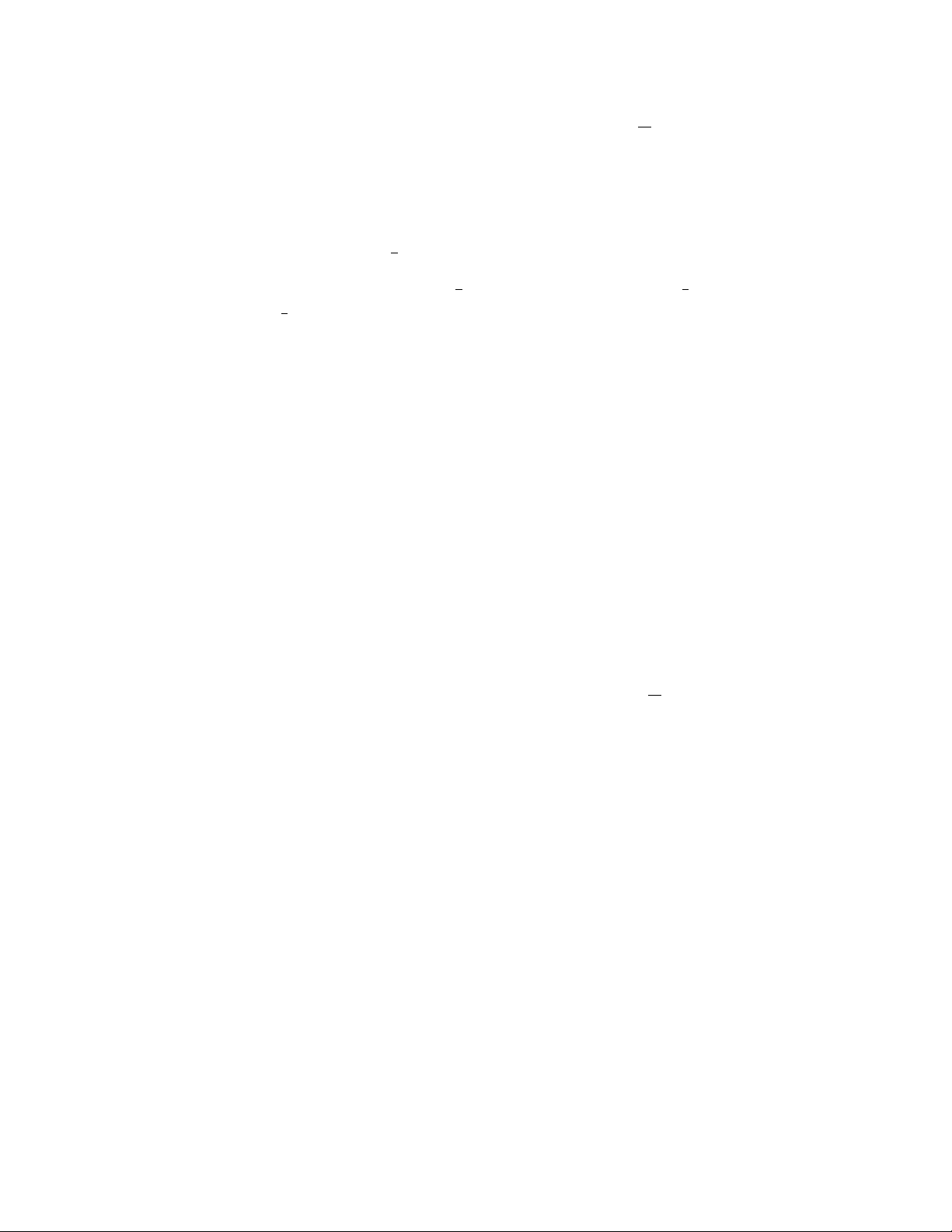
satisfies the UTP, provided p
q<w(K).
We sometimes refer to a slope p
qas “sufficiently negative” if p
q<w(K).
Moreover, if p
q>w(K) then we call the slope “sufficiently positive”.
Theorem 1.4. If two knot types K1and K2satisfy the UTP, then their
connected sum K1#K2satisfies the UTP.
In Section 3 we give a more precise description and a proof of Theorem 1.1
and in Section 4 we prove Theorems 1.2 through 1.4 (the positive results on
the UTP).
1.2. New phenomena. While negative torus knots are well-behaved, posi-
tive torus knots are more unruly:
Theorem 1.5. There are positive torus knots that do not satisfy the UTP.
It is not too surprising that positive torus knots and negative torus knots
have very different behavior — recall that we also had to treat the positive
and negative cases separately in the proof of the classification of Legendrian
torus knots in [EH1]. A slight extension of Theorem 1.5 yields the following:
Theorem 1.6. There exist a knot type Kand a Legendrian knot L∈L(K)
which does not admit any destabilization,yet satisfies tb(L)<tb(K).
Although the phenomenon that appears in Theorem 1.6 is rather common,
we will specifically treat the case when Kis a (2,3)-cable of a (2,3)-torus knot.
The same knot type Kis also the example in the following theorem:
Theorem 1.7. Let Kbe the (2,3)-cable of the (2,3)-torus knot. There
is a unique transverse knot in T(K)for each self -linking number n,where
n≤7is an odd integer =3,and exactly two transverse knots in T(K)with
self-linking number 3. In particular,Kis not transversely simple.
Here T(K) is the set of transverse isotopy classes of K.
Previously, Birman and Menasco [BM] produced non-transversely-simple
knot types by exploiting an interesting connection between transverse knots
and closed braids. It should be noted that our theorem contradicts results of
Menasco in [M1]. However, this discrepancy has led Menasco to find subtle
and interesting properties of cabled braids (see [M2]). The earlier work of