

BioMed Central
Page 1 of 8
(page number not for citation purposes)
Cough
Open Access
Research
Chronic cough and laryngeal dysfunction improve with specific
treatment of cough and paradoxical vocal fold movement
Nicole M Ryan*1,2, Anne E Vertigan1,3 and Peter G Gibson1,2
Address: 1Centre for Asthma and Respiratory Diseases, School of Medicine and Public Health, The University of Newcastle, Newcastle, 2308, NSW,
Australia, 2Department of Respiratory and Sleep Medicine, Hunter Medical Research Institute, John, Hunter Hospital, Newcastle, 2310, NSW,
Australia and 3Department of Speech Pathology, John Hunter Hospital, Newcastle, 2310, NSW, Australia
Email: Nicole M Ryan* - Nicole.Ryan@newcastle.edu.au; Anne E Vertigan - Anne.Vertigan@hnehealth.nsw.gov.au;
Peter G Gibson - Peter.Gibson@hnehealth.nsw.gov.au
* Corresponding author
Abstract
Rationale: Chronic persistent cough can be associated with laryngeal dysfunction that leads to
symptoms such as dysphonia, sensory hyperresponsiveness to capsaicin, and motor dysfunction
with paradoxical vocal fold movement and variable extrathoracic airflow obstruction (reduced
inspiratory airflow). Successful therapy of chronic persistent cough improves symptoms and
sensory hyperresponsiveness. The effects of treatment for chronic cough on laryngeal dysfunction
are not known.
Objective: The aim of this study was to investigate effects of therapy for chronic cough and
paradoxical vocal fold movement.
Methods: Adults with chronic cough (n = 24) were assessed before and after treatment for
chronic persistent cough by measuring quality of life, extrathoracic airway hyperresponsiveness to
hypertonic saline provocation, capsaicin cough reflex hypersensitivity and fibreoptic laryngoscopy
to observe paradoxical vocal fold movement. Subjects with chronic cough were classified into those
with (n = 14) or without (n = 10) paradoxical vocal fold movement based on direct observation at
laryngoscopy.
Results: Following treatment there was a significant improvement in cough related quality of life
and cough reflex sensitivity in both groups. Subjects with chronic cough and paradoxical vocal fold
movement also had additional improvements in extrathoracic airway hyperresponsiveness and
paradoxical vocal fold movement. The degree of improvement in cough reflex sensitivity correlated
with the improvement in extrathoracic airway hyperresponsiveness.
Conclusion: Laryngeal dysfunction is common in chronic persistent cough, where it is manifest as
paradoxical vocal fold movement and extrathoracic airway hyperresponsiveness. Successful
treatment for chronic persistent cough leads to improvements in these features of laryngeal
dysfunction.
Published: 17 March 2009
Cough 2009, 5:4 doi:10.1186/1745-9974-5-4
Received: 18 November 2008
Accepted: 17 March 2009
This article is available from: http://www.coughjournal.com/content/5/1/4
© 2009 Ryan et al; licensee BioMed Central Ltd.
This is an Open Access article distributed under the terms of the Creative Commons Attribution License (http://creativecommons.org/licenses/by/2.0),
which permits unrestricted use, distribution, and reproduction in any medium, provided the original work is properly cited.

Cough 2009, 5:4 http://www.coughjournal.com/content/5/1/4
Page 2 of 8
(page number not for citation purposes)
Background
Chronic persistent cough is responsible for a significant
illness burden in the community [1]. Laryngeal problems
are increasingly recognized as being part of the chronic
cough syndrome, and include voice symptoms such as
dysphonia [2], hyperresponsiveness of the extrathoracic
airway with enhanced glottic stop reflex [3], reduced
inspiratory airflow following a provocation stimulus [4-
6], and paradoxical vocal fold movement (PVFM) where
the vocal folds paradoxically adduct during inspiration
[7,8]. Speech language therapy is effective for laryngeal
dysfunction, and a randomized controlled trial has shown
that speech language therapy treatment based on the
approaches used in vocal cord dysfunction and hyper-
functional voice disorders is also effective in chronic
cough [6]. Speech language therapy has been shown to
improve symptoms [6] and voice abnormalities [9] in
refractory chronic cough, however the effect on other
laryngeal problems in chronic persistent cough is not
known. We hypothesized that treatment of patients with
chronic cough and laryngeal dysfunction would result in
improvement of afferent cough reflex sensitivity and the
laryngeal abnormalities of paradoxical vocal fold move-
ment and extrathoracic airway hyperresponsiveness. The
aim of this study was to investigate effects of therapy for
chronic cough and paradoxical vocal fold movement.
Methods
Subjects
Subjects with chronic persistent cough (n = 24) were
recruited from the Respiratory Ambulatory Care Service at
John Hunter Hospital in Newcastle, New South Wales,
Australia. Subjects were aged between 18 and 80 years
with a persistent cough of more than eight weeks. They
were non-smokers or ex-smokers with less than ten pack
years, had no other active respiratory or cardiac disease,
and were required to have a normal chest radiograph.
They were classified into 2 groups based on the presence
(n = 14; Cough+PVFM) or absence (n = 10; Cough alone)
of PVFM observed at fibreoptic laryngoscopy. All subjects
provided written informed consent for this study, which
was approved by the University of Newcastle's Human
Research Ethics Committee and the Hunter New England
Human Research Ethics Committee.
Study Design
Subjects attended a total of 5 visits over a period of 18
weeks. At visit 1, clinical history, current respiratory symp-
toms, medication use, passive smoking history and an in-
house rhinitis symptoms score were recorded. A number
of questionnaires were also administered and these
included a cough specific quality of life questionnaire
(Leicester Cough Questionnaire, (LCQ)) [10], a gastro-
esophageal reflux symptoms questionnaire [11], a generic
quality of life questionnaire (SF36) [12] and a laryngeal
dysfunction questionnaire (LDQ) [13].
All subjects were non-smokers or ex-smokers with less
than 10 pack years and not exposed to current passive
smoking and this was confirmed by exhaled carbon mon-
oxide measurement [14,15]. Fractional expired nitric
oxide (FENO) was also measured [16]. At visit 2 each sub-
ject underwent capsaicin cough reflex sensitivity testing
(CRS) [17,18] followed by sputum induction using 4.5%
saline [19]. Visit 3 included a fibreoptic laryngoscopy, fol-
lowed by hypertonic saline provocation challenge (HSC)
with inspiratory flow volume curve measurement [20,21]
and then post-challenge laryngoscopy. The chronic cough
subjects were then treated for their cough-related diag-
noses (see below). Subjects returned 8 weeks after treat-
ment to complete post treatment visits. Visit 4 repeated
symptom questionnaires, FENO, CRS and sputum induc-
tion. Laryngoscopy was repeated before and after hyper-
tonic saline provocation challenge at visit 5. Inspiratory/
expiratory flow volume curves were performed before and
during saline challenge, after each dose.
Treatment Programme
A probability based diagnostic assessment approach was
used [22] with the addition of induced sputum analysis to
identify eosinophilic bronchitis [23], fibreoptic laryngos-
copy to identify PVFM [24], and history and polysomnog-
raphy to identify obstructive sleep apnea [25]. Asthma
was established by doctor's diagnosis and current bron-
chial hyperresponsiveness and subjects were treated with
inhaled corticosteroid/long-acting beta agonist combina-
tion (budesonide/eformoterol 200/6 mcg bd via Turbu-
haler, AstraZeneca Sweden). Gastroesophageal reflux was
suggested by a history of heartburn, dysphagia, or acid
regurgitation, or an association between cough and pos-
ture or eating. Antireflux therapy included proton pump
inhibitor (omeprazole 20 mg bid) and antireflux meas-
ures including advice about diet and sleeping posture.
Rhinosinusitis was suggested by symptoms of nasal
obstruction or sneezing, postnasal drip, nasal discharge,
and when clinical or fibreoptic nasendoscopic examina-
tion of the nasopharynx and oropharynx revealed
mucosal inflammation or mucopurulent secretions. In
the absence of these criteria, a sinus computed tomogra-
phy (CT) scan was performed if there was strong clinical
suspicion of rhinosinusitis. Subjects with rhinitis received
oral antihistamine (cetirizine, 10 mg od) and nasal corti-
costeroid spray (budesonide 128 mcg bid). Angiotensin
Converting Enzyme inhibitors (ACE-I) were ceased and
replaced with alternate antihypertensive medication. Sub-
jects with eosinophilic bronchitis (induced sputum eosi-
nophils > 3%) received inhaled corticosteroid/long-acting
beta agonist combination (budesonide/eformoterol 200/

Cough 2009, 5:4 http://www.coughjournal.com/content/5/1/4
Page 3 of 8
(page number not for citation purposes)
6 mcg bd via turbuhaler, AstraZeneca, Sweden). Subjects
with PVFM were treated with speech language therapy that
was administered by a speech pathologist that involved 4
weekly sessions addressing education, vocal hygiene,
cough suppression strategies, relaxed throat breathing
techniques and psychoeducational counseling [6].
Obstructive sleep apnea was suggested by a history of
snoring, sleep disturbance or excessive daytime somno-
lence, confirmed by overnight polysomnography, and
treated by nasal continuous airways pressure (nCPAP).
Clinical Methods
Forced Expired Nitric Oxide
Forced Expired Nitric Oxide (FENO) was measured using
an on-line chemiluminescence analyser (NiOx, Aerocrine
AB, Smidesvägen 12, SE-171 41 Solna, Sweden) according
to published European Respiratory Society/American
Thoracic Society guidelines [16]. Subjects inhaled medi-
cal-grade compressed air that contained < 2 ppb NO and
then exhaled via a high expiratory resistance while target-
ing a mouth pressure of 20 mm Hg. This produces an
expiratory flow rate of 50 mL/s (including analyser sam-
pling rate). Exhalations were repeated until three plateau
FENO values vary by < 5%. The mean of the three replicate
FENO values was used.
Hypertonic Saline Challenge (HSC)[26]
Prior to HSC, subjects withheld bronchodilators for their
duration of action and antihistamines for 48 hours. Sub-
jects were instructed in the correct performance of inspir-
atory and expiratory Flow Volume Loops (FVL). The
manoeuvre consisted of tidal breathing, deep inspiration
to total lung capacity, forced expiration to residual vol-
ume followed by deep inspiration to total lung capacity.
Hypertonic saline (4.5%) was inhaled for doubling time
periods and a inspiratory-expiratory FVL was measured, in
duplicate, 60 seconds after each saline dose using a KoKo
K323200 Spirometer (Technipro, North Parramatta, Aus-
tralia). Forced expiratory time was held constant at subse-
quent manoeuvres in order to ensure consistency. If the
FEV1 fell by more than 15%, 200 μg of salbutamol was
administered via a valved holding chamber (Volumatic,
Allen and Hanburys, GlaxoSmithKline Australia Pty Ltd,
Boronia, Australia).
Capsaicin Cough Reflex Sensitivity testing (CRS) [17,18]
Solutions of capsaicin (Sigma-Aldrich Co., Castle Hill,
Australia) concentrations ranging from 0.98 to 500 μM
were prepared daily. Subjects inhaled single breaths (from
Functional Residual Capacity (FRC) to total lung capacity
(TLC)) of capsaicin aerosol from a compressed air-driven
nebulizer (model 646, Technipro, North Parramatta, Aus-
tralia) controlled by a dosimeter (KoKo Digidoser
323200; Technipro Marketing Pty Ltd., Sydney, New
South Wales, Australia). The inspiratory flow was stand-
ardized at 0.5 L/s with an inspiratory flow regulator valve.
Cough counting was done for 30 s after exposure to each
dose, and the investigation ended when the subject
coughed five or more times in response to one dose, or
received a dose of the highest concentration.
Fibre Optic Laryngoscopy (FOL)
Flexible fibreoptic laryngoscopy (Pentax VNL-1330, Asahi
Optical Co, Tokyo, Japan) was performed at baseline and
immediately after a hypertonic saline challenge [20,21].
Prior to the procedure, the nasal cavity was anesthetised
with lignocaine hydrochloride 5.0% and phenylephrine
0.5% (ENT Technologies, Malvern, Victoria, Australia).
The nasendoscope was then passed into the nares and
positioned above the larynx. The movements of the true
vocal folds were observed during tidal respiration over a
period ≥2 minutes. Adduction of the vocal folds through-
out the inspiratory phase and/or the beginning of expira-
tion was considered as PVFM. These findings
encompassed paradoxical glottic closure during several
respiratory cycles ranging from a partial (> 50%) adduc-
tion of the true vocal folds without cordal contact to a
total closure of the anterior two-third of the vocal folds.
The presence of an open posterior glottic chink was noted
if present. Adduction that occurred only during the sec-
ond part of exhalation is a normal variant and was not
recorded as PVFM.
The gold standard used for the diagnosis of PVFM during
the study was a positive laryngoscopy demonstrating par-
adoxical vocal fold motion at baseline and/or post-HSC
while symptomatic.
Analysis
All analyses were performed using statistical and data
analysis software STATA (Statacorp, Texas, USA). Non par-
ametric quantitative data were compared using the Wil-
coxon rank sum test and for parametric data, ttest for
matched pair data was used. Significance for 2 group com-
parison was set at p < 0.05.
Results
Twenty-four subjects with a chronic persistent cough par-
ticipated in the study. The subjects had a median (IQR)
cough duration of 24 (13–84) months and were predom-
inantly female [Table 1]. There were 14 subjects with
Cough+PVFM and 10 with Cough alone (CC). Subjects
were treated [Table 2] and both groups responded with a
significant improvement in cough-related quality of life
(LCQ, p = 0.001 for Cough+PVFM Group, p = 0.01 for CC
Group), associated diagnosis symptom questionnaire
scores [Table 3] and cough reflex sensitivity (C5, p = 0.008
for Cough +PVFM Group and C5, p = 0.04 for CC Group),
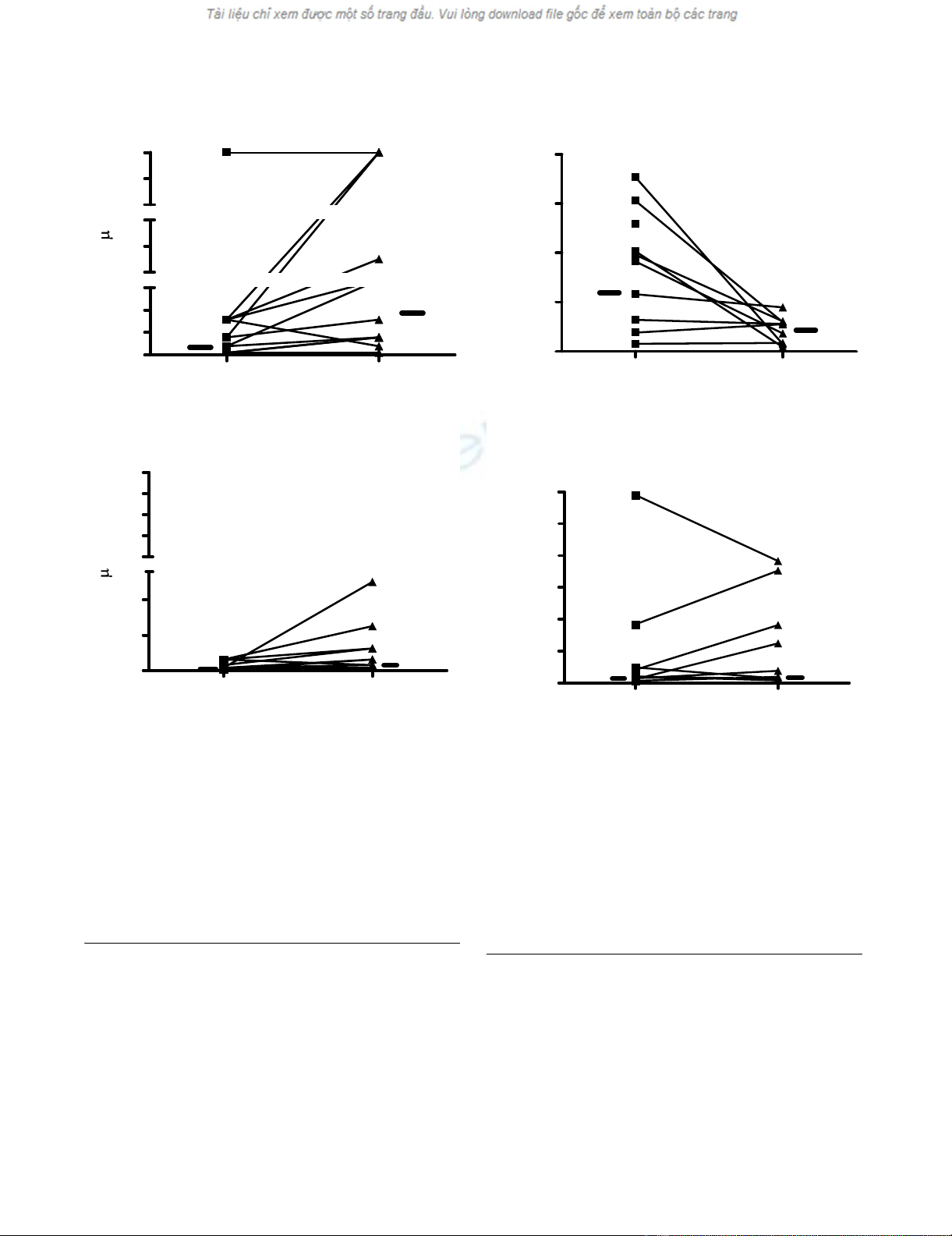
[Figures 1a, 1b]. For the Cough+PVFM subjects, we found
that PVFM and extrathoracic airway hyperresponsiveness
Cough 2009, 5:4 http://www.coughjournal.com/content/5/1/4
Page 4 of 8
(page number not for citation purposes)
responded positively to treatment and was significantly
reduced for the Cough+PVFM group, [Figure 2a] and
unchanged for the CC alone group, [Figure 2b].
Ten of the 14 subjects with PVFM attended speech lan-
guage therapy. After treatment, PVFM had resolved in 8 of
these 10 subjects (p = 0.039 by McNemar's chi square
test). Four of the Cough+PVFM subjects did not attend
speech language therapy before returning for their post-
treatment visits. PVFM did not resolve in 3 of these 4 sub-
jects but did resolve in 1 subject. Interestingly this subject
was the only male in this group of four and had the short-
est cough duration (12 months) and youngest age (22
years).
In the Cough alone (CC) group, extrathoracic airway
responsiveness was not increased and with therapy
remained unchanged from baseline [Figure 2b]. Baseline
spirometry and FENO were not altered by treatment for
both cough groups [Table 4].
a Cough reflex sensitivity (CRS) to capsaicin before (pre) and after (post) treatment in the chronic cough with paradoxical vocal fold movement (CC+PVFM) groupFigure 1
a Cough reflex sensitivity (CRS) to capsaicin before
(pre) and after (post) treatment in the chronic cough
with paradoxical vocal fold movement (CC+PVFM)
group. Solid bars are median values, with median (IQR)
reported on figure, p = 0.005. C5 = capsaicin dose to elicit 5
or more coughs 30 sec after dose administered. b Cough
reflex sensitivity (CRS) to capsaicin before (pre) and after
(post) treatment in the chronic cough alone (CC) group.
Solid bars are median values, with median (IQR) reported on
figure, p = 0.04. C5= capsaicin dose to elicit 5 or more
coughs 30 sec after dose administered.
Pre Post
0
10
20
30
50
75
100
300
400
500
5.88 (11.78)
15.7 (54.86)
CC+PVFM GROUP
C5 CRS ( Mol)
Pre Post
0
25
50
100
200
300
400
500
2.94 (5.88) 7.84 (11.78)
CC GROUP
C5 ( Mol)
a Extrathoracic Airway Hyperresponsiveness (EAHR) repre-sented as FIF50 Dose Response Slope to hypertonic saline provocation before (pre) and after (post) treatment in the chronic cough with paradoxical vocal fold movement (CC+PVFM) groupFigure 2
a Extrathoracic Airway Hyperresponsiveness
(EAHR) represented as FIF50 Dose Response Slope to
hypertonic saline provocation before (pre) and after
(post) treatment in the chronic cough with paradoxi-
cal vocal fold movement (CC+PVFM) group. Solid bars
are median values, with median (IQR) reported on figure, p =
0.02. b Extrathoracic Airway Hyperresponsiveness (EAHR)
represented as FIF50 Dose Response Slope to hypertonic
saline provocation before (pre) and after (post) treatment in
the chronic cough alone (CC) group. Solid bars are median
values, with median (IQR) reported on figure, p = 0.58.
Pre Post
0
5
10
15
20
CC+PVFM GROUP
EAHR-DRS
(%fallFIF
50%
/mL)
5.82 (8.26)
2.76 (2.19)
Pre Rx Post Rx
0
5
10
15
20
25
30
EAHR-DRS
(%fallFIF50%/mL)
CC GROUP
0.98 (1.67) 1.43 (6.11)

Cough 2009, 5:4 http://www.coughjournal.com/content/5/1/4
Page 5 of 8
(page number not for citation purposes)
Discussion
This study has identified that paradoxical vocal fold
movement and extrathoracic airway hyperresponsiveness
are improved by specific treatment for chronic persistent
cough, and that this improvement occurs alongside
improvements in cough specific quality of life and cough
reflex sensitivity. The data provides objective evidence of
laryngeal dysfunction in some patients with chronic
cough, and shows that it responds to therapy for chronic
persistent cough. These results are consistent with Verti-
gan et al [6] who found that a substantial proportion of
their refractory chronic cough participants had extratho-
racic airway hyperresponsiveness, similar to subjects who
had vocal cord dysfunction (VCD), however they extend
these results by showing that PVFM and EAHR can
improve after treatment for chronic persistent cough.
Laryngeal dysfunction is increasingly recognized in
chronic persistent cough. Symptoms such as voice hoarse-
ness, dyspnoea, wheeze and cough may all occur as a
result of laryngeal dysfunction [2]. Prudon et al have also
reported laryngeal dysfunction in chronic cough where
they described an enhanced glottic stop reflex in chronic
cough patients [3]. These patients exhibited enhanced
glottic closure in response to inhaled ammonia. Extratho-
racic airway hyperresponsiveness is another manifestation
of laryngeal dysfunction and has been reported in several
conditions where cough is prominent, such as rhinosi-
nusitis, ACE inhibitor cough, gastroesophageal reflux, and
patients with asthma-like symptoms [4,5,25]. Speech lan-
guage therapy is effective for laryngeal dysfunction, and it
has previously been shown to be effective for refractory
cough [6]. The results of the current study provide a mech-
anistic explanation for these responses by demonstrating
that laryngeal dysfunction is responsive to treatment for
chronic persistent cough, and correlates with an improve-
ment in cough reflex sensitivity.
In this study we used an open design with objective meas-
ures to assess outcome. Although a nonrandomized
design is a limitation, our primary purpose was to deter-
mine if the measures of laryngeal dysfunction that occur
in chronic persistent cough are responsive to effective
therapy. The study achieved these aims by using objective
measures and has provided novel data on how PVFM and
EAHR improve with therapy of chronic persistent cough.
The results extend what is known about how successful
therapy works in chronic persistent cough, and provide
Table 1: Subject Characteristics. Median (IQR) unless otherwise
stated.
Subject Characteristics
CC+PVFM CC P
Number 14 10
Gender, M/F 2/12 3/7 0.62
Age, years 56 (40) 58 (15) 0.88
Age Range, years 22–78 47–69
Exhaled CO, ppm Mean ± SEM 1.69 ± 0.35 1.0 ± 0 0.10
Cough Duration, months 18 (48) 36 (168) 0.11
CC+PVFM = Chronic Cough + Paradoxical vocal fold movement
CC = Chronic Cough alone
Table 2: Subject Diagnosis and Treatment
Diagnosis, n CC+PVFM CC Treatment
Asthma 7 5 Inhaled Corticosteroid
GORD 11 10 Proton Pump Inhibitor
Rhinitis 11
9
7
4
Nasal Steroid
Antihistamine
Eosinophilic Bronchitis 1 3 Inhaled Corticosteroid
Sleep Apnoea 01 nCPAP
PVFM†14* 0 Speech Language Therapy
*4 Subjects did not attend speech language therapy.
PVFM = paradoxical vocal fold movement
CC = chronic cough alone
CC+PVFM = Chronic Cough + Paradoxical vocal fold movement
nCPAp = nasal continuous airways pressure


![PET/CT trong ung thư phổi: Báo cáo [Năm]](https://cdn.tailieu.vn/images/document/thumbnail/2024/20240705/sanhobien01/135x160/8121720150427.jpg)




%20--%3e%3cdefs%3e%3cstyle%3e%20.st0%20{%20fill:%20%23fff;%20}%20.st1%20{%20fill:%20%237800fa;%20}%20%3c/style%3e%3c/defs%3e%3cpath%20class='st1'%20d='M117.78,12.18H43.11c2.9,3.47,4.65,7.94,4.65,12.82,0,5.6-2.3,10.66-6.01,14.29h76.02l7.22-13.56-7.22-13.56Z'/%3e%3cg%3e%3cpath%20class='st0'%20d='M53.58,26.17h-.59v-1.46h.59v-4.96h2.83c1.78,0,2.67.94,2.67,2.82v5.76c0,1.87-.89,2.81-2.67,2.81h-2.83v-4.96ZM55.36,21.37v3.34h1.1v1.46h-1.1v3.34h1.01c.61,0,.91-.37.91-1.1v-5.93c0-.74-.3-1.1-.91-1.1h-1.01Z'/%3e%3cpath%20class='st0'%20d='M65.99,31.14h-1.8l-.31-2.07h-2.19l-.31,2.07h-1.64l1.82-11.39h2.62l1.82,11.39ZM65.28,18.04c-.25.46-.51.77-.75.94-.21.15-.47.22-.79.22-.26,0-.57-.07-.92-.22l-.38-.15c-.14-.05-.26-.07-.37-.07-.3,0-.53.18-.71.54l-.91-.68c.25-.46.51-.77.75-.94.21-.14.48-.21.79-.21.26,0,.57.07.92.21l.38.15c.14.05.26.07.37.07.3,0,.53-.18.71-.54l.91.68ZM61.91,27.52h1.73l-.87-5.76-.87,5.76Z'/%3e%3cpath%20class='st0'%20d='M74.53,26.89v1.52c0,1.91-.89,2.86-2.67,2.86s-2.67-.95-2.67-2.86v-5.93c0-1.91.89-2.86,2.67-2.86s2.67.95,2.67,2.86v1.11h-1.69v-1.22c0-.75-.31-1.12-.93-1.12s-.93.37-.93,1.12v6.15c0,.74.31,1.11.93,1.11s.93-.37.93-1.11v-1.63h1.69Z'/%3e%3cpath%20class='st0'%20d='M81.4,31.14h-1.8l-.31-2.07h-2.19l-.31,2.07h-1.64l1.82-11.39h2.62l1.82,11.39ZM75.9,19.2l1.52-1.91h1.71l1.51,1.91h-1.61l-.76-.95-.75.95h-1.61ZM77.32,27.52h1.73l-.87-5.76-.87,5.76ZM83.1,15.99l-1.76,1.91h-1.26l1.17-1.91h1.86Z'/%3e%3cpath%20class='st0'%20d='M84.86,19.75c1.78,0,2.67.94,2.67,2.82v1.48c0,1.87-.89,2.81-2.67,2.81h-.85v4.28h-1.79v-11.39h2.64ZM84.01,21.37v3.86h.85c.58,0,.87-.36.87-1.08v-1.71c0-.71-.29-1.07-.87-1.07h-.85Z'/%3e%3cpath%20class='st0'%20d='M93.51,19.75c1.78,0,2.67.94,2.67,2.82v1.48c0,1.87-.89,2.81-2.67,2.81h-.85v4.28h-1.79v-11.39h2.64ZM92.66,21.37v3.86h.85c.58,0,.87-.36.87-1.08v-1.71c0-.71-.29-1.07-.87-1.07h-.85Z'/%3e%3cpath%20class='st0'%20d='M98.8,31.14h-1.79v-11.39h1.79v4.88h2.03v-4.88h1.83v11.39h-1.83v-4.88h-2.03v4.88Z'/%3e%3cpath%20class='st0'%20d='M105.36,24.55h2.46v1.62h-2.46v3.34h3.09v1.63h-4.88v-11.39h4.88v1.63h-3.09v3.18ZM108.17,17.29l-1.76,1.91h-1.26l1.17-1.91h1.86Z'/%3e%3cpath%20class='st0'%20d='M112.2,19.75c1.78,0,2.67.94,2.67,2.82v1.48c0,1.87-.89,2.81-2.67,2.81h-.85v4.28h-1.79v-11.39h2.64ZM111.35,21.37v3.86h.85c.58,0,.87-.36.87-1.08v-1.71c0-.71-.29-1.07-.87-1.07h-.85Z'/%3e%3c/g%3e%3ccircle%20class='st1'%20cx='25'%20cy='25'%20r='20'/%3e%3cpath%20class='st0'%20d='M32.78,19.27c2.92,0,4.43,2.55,5.28,5.33l.71,2.17c.14.38-.33.75-.71.75h-5.61c.19-.33.24-.71.09-1.08l-.75-2.45c-.43-1.32-.99-2.64-1.79-3.77.75-.57,1.65-.94,2.78-.94h0ZM25,18.38c3.25,0,4.9,2.78,5.89,5.89l.76,2.45c.14.42-.33.8-.8.8h-11.69c-.42,0-.94-.38-.8-.8l.75-2.45c.99-3.11,2.64-5.89,5.89-5.89h0ZM25,11.35c1.74,0,3.11,1.37,3.11,3.11s-1.37,3.11-3.11,3.11-3.11-1.41-3.11-3.11,1.41-3.11,3.11-3.11h0ZM17.27,19.27c1.08,0,1.98.38,2.73.94-.8,1.13-1.37,2.45-1.74,3.77l-.8,2.45c-.14.38-.05.75.09,1.08h-5.56c-.42,0-.9-.38-.75-.75l.71-2.17c.9-2.78,2.41-5.33,5.33-5.33h0ZM17.27,12.91c1.51,0,2.78,1.27,2.78,2.83s-1.27,2.83-2.78,2.83-2.83-1.27-2.83-2.83,1.27-2.83,2.83-2.83h0ZM32.78,12.91c1.56,0,2.78,1.27,2.78,2.83s-1.23,2.83-2.78,2.83-2.83-1.27-2.83-2.83,1.27-2.83,2.83-2.83h0ZM27.07,28.56v.09c0,.57-.24,1.08-.61,1.46h0v.05c-.38.33-.9.57-1.46.57s-1.08-.24-1.46-.61h0c-.38-.38-.61-.9-.61-1.46v-.09h1.41v.09c0,.19.05.38.19.47v.05c.09.09.28.19.47.19s.38-.09.47-.19v-.05c.14-.09.24-.28.24-.47t-.05-.09h1.41ZM30.99,28.56v.09c0,1.65-.66,3.16-1.74,4.24-1.08,1.08-2.59,1.79-4.24,1.79s-3.16-.71-4.24-1.79l-.05-.05c-1.04-1.08-1.7-2.55-1.7-4.2v-.09h1.41v.09c0,1.27.47,2.4,1.27,3.25h.05c.85.85,1.98,1.37,3.25,1.37s2.4-.52,3.25-1.37c.85-.8,1.37-1.98,1.37-3.25v-.09h1.37ZM34.99,28.56v.09c0,2.78-1.13,5.28-2.92,7.07-1.79,1.79-4.29,2.92-7.07,2.92s-5.23-1.13-7.07-2.92c-1.79-1.79-2.92-4.29-2.92-7.07v-.09h1.41v.09c0,2.4.94,4.53,2.5,6.08,1.56,1.56,3.72,2.5,6.08,2.5s4.52-.94,6.08-2.5c1.56-1.56,2.5-3.68,2.5-6.08v-.09h1.41Z'/%3e%3c/svg%3e)