BioMed Central
Page 1 of 12
(page number not for citation purposes)
Child and Adolescent Psychiatry and
Mental Health
Open Access
Research
Global impression of perceived difficulties in children and
adolescents with attention-deficit/hyperactivity disorder: Reliability
and validity of a new instrument assessing perceived difficulties
from a patient, parent and physician perspective over the day
Peter M Wehmeier*1, Alexander Schacht1, Ralf W Dittmann1,2 and
Manfred Döpfner3
Address: 1Lilly Deutschland, Medical Department, Bad Homburg, Germany, 2Department of Child and Adolescent Psychosomatic Medicine,
University of Hamburg, Germany and 3Department of Child and Adolescent Psychiatry, University of Cologne, Germany
Email: Peter M Wehmeier* - wehmeier_peter@lilly.com; Alexander Schacht - schacht_alexander@lilly.com;
Ralf W Dittmann - dittmann_ralf_w@lilly.com; Manfred Döpfner - manfred.doepfner@uk-koeln.de
* Corresponding author
Abstract
Background: The objective of this analysis was to evaluate the psychometric properties of a brief
scale developed to assess the degree of difficulties in children with Attention-Deficit/Hyperactivity
Disorder (ADHD). The Global Impression of Perceived Difficulties (GIPD) scale reflects overall
impairment, psychosocial functioning and Quality of Life (QoL) as rated by patient, parents and
physician at various times of the day.
Methods: In two open-label studies, ADHD-patients aged 6–17 years were treated with
atomoxetine (target-dose 0.5–1.2 mg/kg/day). ADHD-related difficulties were assessed up to week
24 using the GIPD. Data from both studies were combined to validate the scale.
Results: Overall, 421 patients received atomoxetine. GIPD scores improved over time. All three
GIPD-versions (patient, parent, physician) were internally consistent; all items showed at least
moderate item-total correlation. The scale showed good test-retest reliability over a two-week
period from all three perspectives. Good convergent and discriminant validity was shown.
Conclusion: GIPD is an internally consistent, reliable and valid measure to assess difficulties in
children with ADHD at various times of the day and can be used as indicator for psychosocial
impairment and QoL. The scale is sensitive to treatment-related change.
Background
Attention-deficit/hyperactivity disorder (ADHD) is a dis-
order characterized by inattention, impulsivity and hyper-
activity that affects 3–7% of school-age children [1].
ADHD is associated with significant impairment of cogni-
tive and psychosocial functioning [2,3] and quality of life
(QoL) in patients and their families [4-9]. Psychostimu-
lants and behavior therapy are known to be effective in
the treatment of ADHD, as reported in the MTA study [10]
and other studies (e.g. Döpfner et al. 2004) [11]. Atomox-
Published: 28 May 2008
Child and Adolescent Psychiatry and Mental Health 2008, 2:10 doi:10.1186/1753-2000-2-
10
Received: 23 January 2008
Accepted: 28 May 2008
This article is available from: http://www.capmh.com/content/2/1/10
© 2008 Wehmeier et al; licensee BioMed Central Ltd.
This is an Open Access article distributed under the terms of the Creative Commons Attribution License (http://creativecommons.org/licenses/by/2.0),
which permits unrestricted use, distribution, and reproduction in any medium, provided the original work is properly cited.

Child and Adolescent Psychiatry and Mental Health 2008, 2:10 http://www.capmh.com/content/2/1/10
Page 2 of 12
(page number not for citation purposes)
etine is a non-stimulant treatment option for ADHD
[12,13] for which efficacy and tolerability in children and
adolescents has been demonstrated in a number of rand-
omized, placebo-controlled trials [14-17], supported by a
recent meta-analysis [18]. In addition, several studies have
shown improvement of health-related QoL in children
and adolescents treated with atomoxetine [16,19-25]. In
most of these studies, investigator-rated questionnaires
such as the ADHD-Rating Scale (ADHD-RS) [26,27], the
Clinical Global Impression (CGI) [28,29], or the parent-
rated ADHD-symptom checklists and other question-
naires such as the Child Health Questionnaire (CHQ)
[30] were used. However, when assessing QoL in children
and adolescents with ADHD, both symptom severity and
ADHD-related difficulties may be perceived and rated dif-
ferently by patients, parents and physicians [9,31], poten-
tially resulting in inconsistent findings. Therefore ADHD-
related difficulties (and thus the impairment) as perceived
from various perspectives were assessed in two studies
undertaken in Germany in children and adolescents with
ADHD [25,32]. The aim of these two studies was to com-
pare the various perspectives as reflected by the newly
devised Global Impression of Perceived Difficulties
(GIPD) scale. The GIPD can be taken to reflect the difficul-
ties related to ADHD and common co-morbid disorders
such as oppositional-defiant disorder (ODD) or conduct
disorder (CD) if present. The difficulties captured by the
GIPD obviously relate to the degree of impairment, the
level of psychosocial functioning and QoL in such chil-
dren and adolescents at various times of the day [25,32].
Three versions of this scale were used to assess ADHD-
related difficulties as perceived from three different per-
spectives: the patient, parent, and physician perspective.
The results of this comparison have been published else-
where [25,32]. The primary aim of this secondary analysis
was to assess the psychometric properties of the GIPD
scale in terms of validity and reliability [33]. Using valid
and reliable scales is important when measuring QoL in
pediatric patients [34-37], especially when assessing chil-
dren and adolescents with ADHD [38-41].
Methods
Study design and procedures
This is a secondary analysis of data from two almost iden-
tical multi-center, single-arm, open-label studies in two
different age groups (children and adolescents) that were
designed to investigate the quality of life in patients with
ADHD treated with atomoxetine as reflected by the degree
of difficulties perceived by patients, parents and physi-
cians [25,32]. Patients were recruited from child and ado-
lescent psychiatric and pediatric practices and outpatient
clinics throughout Germany. Patients aged 6–17 years
with ADHD as defined in the Diagnostic and Statistical
Manual of Mental Disorders, Fourth Edition, Text Revi-
sion (DSM-IV-TR) [1] were eligible for the studies. The
diagnosis was confirmed using the "Diagnose-Checkliste
Hyperkinetische Störungen" (Diagnostic Checklist for
Hyperkinetic Disorders), a structured instrument which is
routinely used for the diagnostic assessment of ADHD in
Germany [42]. The items of this instrument correspond to
those of the ADHD-RS. Patients had to have an IQ of ≥ 70
based on the clinical judgment of the investigator. The
exclusion criteria included clinically significant abnormal
laboratory findings, acute or unstable medical conditions,
cardiovascular disorder, history of seizures, pervasive
developmental disorder, psychosis, bipolar disorder, sui-
cidal ideation, any medical condition that might increase
sympathetic nervous system activity, or the need for psy-
chotropic medication other than study drug. Patients
already being treated with atomoxetine were also
excluded. The protocol was approved by an ethics com-
mittee, and the study was conducted in accordance with
the principles of the Declaration of Helsinki.
Following a wash-out period, baseline assessments were
carried out with all the instruments used. During the first
week of treatment, the patients received atomoxetine at a
dose of approximately 0.5 mg/kg body weight (BW) per
day. During the following 7 weeks, the recommended tar-
get dose was 1.2 mg/kg BW per day, but could be adjusted
within a range of 0.5–1.4 mg/kg BW per day, depending
on effectiveness and tolerability. Medication was given
once a day in the morning. Assessments were carried out
weekly during the first two weeks of treatment, and every
two weeks thereafter. After the 8 week treatment period,
the physicians decided in accordance with the patients
and their parents whether the patient was to continue
treatment for additional 16 weeks. Those who partici-
pated in this extension period continued on the same ato-
moxetine dose which again could be adjusted within a
range of 0.5–1.4 mg/kg BW per day as considered appro-
priate by the physician. During the extension period, three
assessments were carried out, after 12, 16, and 24 weeks
after baseline. The following instruments were used: Glo-
bal Impression of Perceived Difficulties (GIPD), Atten-
tion-Deficit/Hyperactivity Disorder Rating Scale (ADHD-
RS), Clinical Global Impression-Severity (CGI-S), and
Weekly Rating of Evening and Morning Behavior –
Revised (WREMB-R). The data from both studies were
combined and analyzed together.
Table 1 shows the items of the GIPD instrument, which is
a five-item rating of ADHD-related difficulties that
assesses difficulties in the morning, during school, during
homework, in the evening, and overall difficulties over
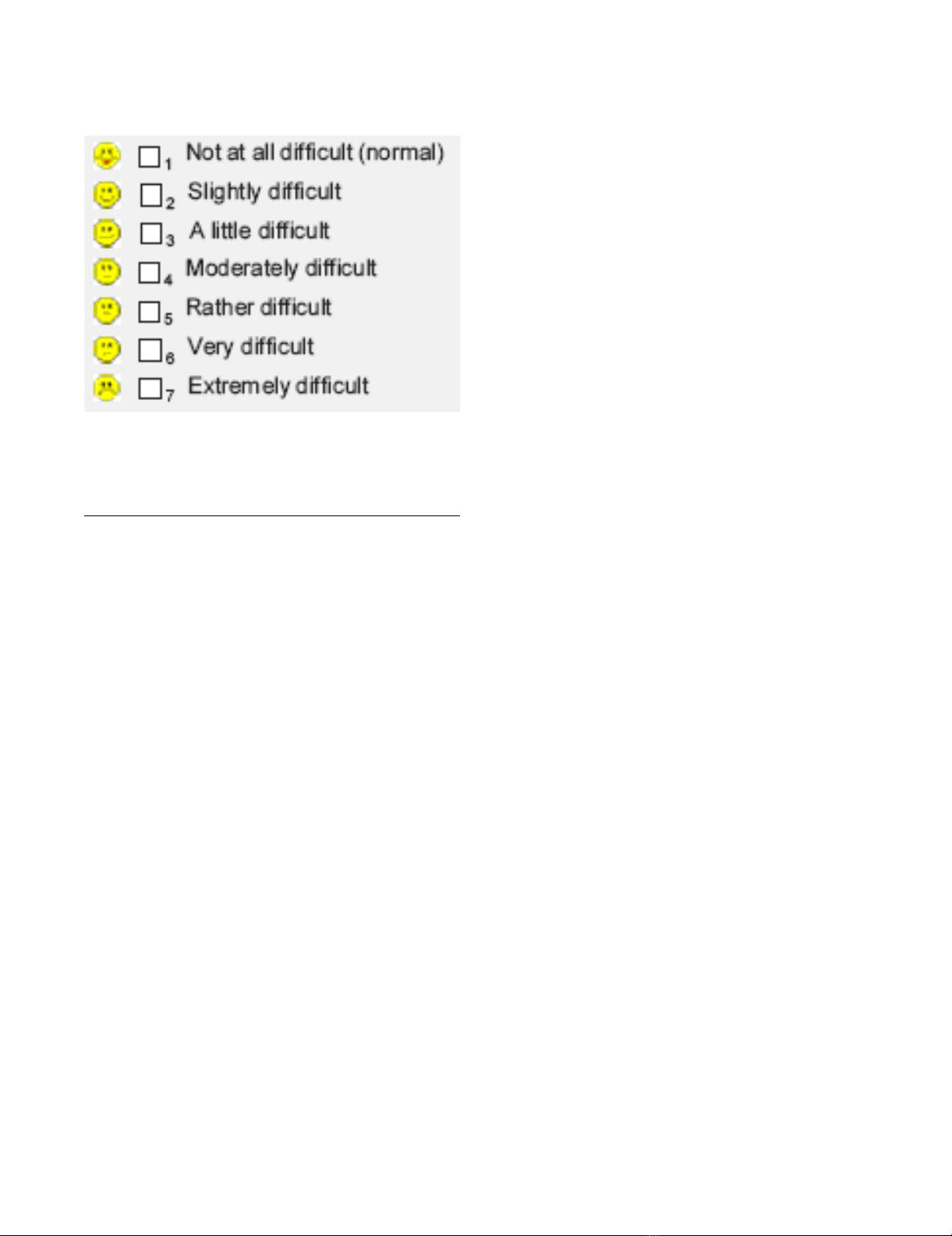
the entire day and night [25]. Each item is rated on a seven
point scale (1 = not at all difficult, 7 = extremely difficult)
and reflects the situation during the past week (see Figure
1). This instrument was newly devised to detect the per-
ception of the patient's ADHD-related difficulties from a
Child and Adolescent Psychiatry and Mental Health 2008, 2:10 http://www.capmh.com/content/2/1/10
Page 3 of 12
(page number not for citation purposes)
patient, parent (or primary caregiver), and physician per-
spective. Accordingly, three different versions of the
instrument were developed: a patient, a parent, and a phy-
sician version, allowing comparison. The GIPD total score
was calculated for each rater as the mean of the item scores
ranging from 1 to 7. If one item was missing, the total
score was also considered to be missing. If the child was
unable to fill in the scale on his/her own an independent
person (e. g. a study nurse) was allowed to give assistance.
The Attention-Deficit/Hyperactivity Disorder Rating
Scale-IV-Parent Version: Investigator-Administered and
Scored (ADHD-RS) is an 18-item scale, with one item for
each of the 18 ADHD symptoms listed in DSM-IV-TR
[26,27]. There are two subscales: the "hyperactivity/
impulsivity" subscale is the sum of the even items, and the
"inattention" subscale is the sum of the odd items. This
scale is scored by an investigator while interviewing the
parent or primary caregiver. Reliability and validity of this
scale has been demonstrated in several European samples
including one from Germany [33]
The Clinical Global Impression-Severity-Attention-Defi-
cit/Hyperactivity Disorder scale (CGI-S ADHD) is a seven
point single-item rating scale of the clinician's assessment
of the severity of ADHD symptoms [28,29].
The WREMB-R-Inv scale is based on the Daily Parent Rat-
ing of Evening and Morning Behavior – Revised
(DPREMB-R) scale [14]. It has been modified to allow a
weekly assessment of behavioral symptoms. In this study,
the investigator-rated version was used. The investigator
rating was based on information provided by the parent.
The DPREMB-R measures 11 specific morning or evening
activities (e.g., getting up and out of bed, doing or com-
pleting homework, sitting through dinner). The possible
score for each item ranges from 0 (no difficulty) to 3 (a lot
of difficulty). The DPREMB-R has been validated for the
assessment of ADHD behaviors [43] and has been used in
several studies to assess behavior in children and adoles-
cents with ADHD [14,15].
Sample size and statistical analysis
Details on the sample size calculation for the two studies
first using the GIPD have been published elsewhere
[25,32]. The data of all patients were evaluated (Full Anal-
ysis Set, FAS) using SAS version 8. The dataset for all anal-
yses of changes from baseline to endpoint consisted of all
patients with a baseline measurement and at least one
post-baseline measurement during the 8 week treatment
phase.
Evaluation was largely descriptive. All tests of statistical
significance were carried out at a nominal level of 5%
using two-tailed test procedures. Two-sided confidence
intervals (CIs) were computed using a 95% confidence
level. All inferences regarding statistical significance were
based on comparisons of the 95% confidence intervals
(CI). This is equivalent to significance tests with p-values
and a two-sided α-level of 5%. To avoid correlations of
imputed values, only observed cases (OC) analyses were
performed. No imputation of missing values like last
observation carried forward (LOCF) was applied.
Percentages of missing values of the GIPD items were cal-
culated for each visit and each perspective. Ceiling and
floor effects for the GIPD total score were calculated by the
percentage of ratings with the lowest and highest achieva-
ble scores for each visit and each perspective. Internal con-
sistency of the GIPD total score was analyzed by using
Cronbach's alpha for each visit and each perspective.
Additionally, part-whole corrected item-total correlations
were provided. Test-retest reliability of the GIPD total
score was checked by comparing weeks 6 and 8 in terms
of Spearman's correlation coefficient for the items and
Pearson's correlation coefficient for the total score for
each perspective. The rank-based Spearman's correlation
coefficient was used for the items as they have an ordinal
structure with only five categories. Pearson's correlation
coefficient, which is based on the original values, was
used for the total scores in order to assess the linear asso-
ciation of the more continuous total scores. Weeks 6 and
8 were chosen because the treatment and the disease
severity was expected to be fairly stable during this period.
95% confidence intervals for the correlation coefficients
were computed based on Fisher's z-transformation. Addi-
The seven possible answers to each of the five items on the Global Impression of Perceived Difficulties (GIPD) scale as they appear on the report form for each rater (patient, par-ent, physician)Figure 1
The seven possible answers to each of the five items on the
Global Impression of Perceived Difficulties (GIPD) scale as
they appear on the report form for each rater (patient, par-
ent, physician).

Child and Adolescent Psychiatry and Mental Health 2008, 2:10 http://www.capmh.com/content/2/1/10
Page 4 of 12
(page number not for citation purposes)
tionally, a weighted version of Cohen's kappa was pro-
vided together with 95% CIs.
The validity of the GIPD total score was evaluated as fol-
lows: 1) Means over time were provided together with
95% CIs for each perspective. 2) The agreement between
the perspectives was described using Cohen's kappa for
each visit and each pair of perspectives. 3) The GIPD total
score was compared with the WREMB-R total score, the
CGI-S score, and the ADHD-RS total score by Pearson's
correlation coefficients with 95% CIs for each perspective,
at each time point, and for all time points pooled. 4) The
GIPD items for morning and evening were compared with
the respective sub-scores of the WREMB-R in the same
way. 5) Mean GIPD total scores were calculated for each
level of the CGI-S with all visits pooled for each perspec-
tive to evaluate the relationship between the severity of
the disease and the GIPD total score.
Results
Patient population and disposition
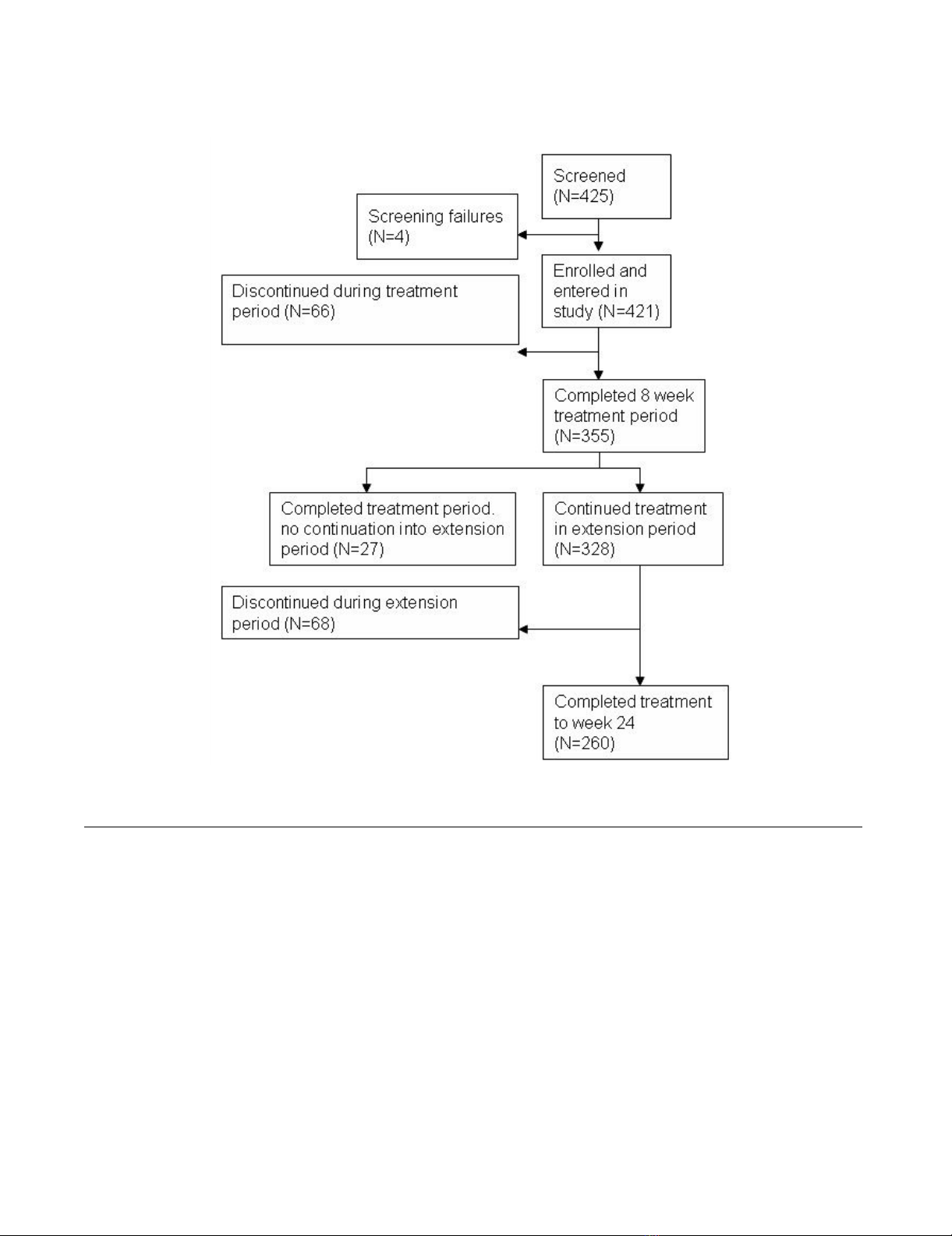
Of the 425 patients screened, 421 patients (100%) were
enrolled in the two studies and treated with atomoxetine
[25,32]. The four patients identified as screening failures
initially seemed to be eligible for the study by the investi-
gator. During the baseline visit, it was discovered that the
patients did not meet all inclusion criteria or met at least
one of the exclusion criteria. The 8-week treatment period
was completed by 355 (84.3%) patients. 27 (6.4%) of
these did not continue into the extension period because
of physician decision. 68 (16.2%) patients discontinued
the study between week 8 and week 24. The extension
period was completed at week 24 by 260 (61.8%)
patients. The reasons for discontinuation were lack of effi-
cacy (12.4%), parent decision (6.9%), adverse event
(4.8%), protocol violation (3.6%), patient decision
(2.4%), entry criteria exclusion (0.7%), physician deci-
sion (0.7%), and patient lost to follow-up (0.5%). The
patient disposition is shown in Figure 2.
Table 1: The five items of the GIPD scale. The wordings of the questions vary slightly, depending on the rater (patient, parent,
physician).
Patient Parent Physician
1. Think about the past seven days. How
difficult have your mornings been?
1. Think about the past seven days. How difficult
have the mornings of your child been? Please
take into account all information you may have
obtained from persons who have also seen your
child in the morning.
1. Considering the past seven days, how difficult
have the mornings of your patient been? Please
include all information provided by the patient
and information you may have been able to
obtain from other persons who have seen your
patient in the morning.
2. Think about the past seven days. How
difficult has your time spent in school been?
2. Think about the past seven days. How difficult
has the time spent in school been for your child?
Please take into account all information you may
have obtained from persons who know your
child (e.g. parents, teachers, nurses, other
caregives).
2. Considering the past seven days, how difficult
has the time spent in school been for your
patient? Please include all information provided
by the patient and information you may have
been able to obtain from other persons who
know your patient (e.g. parents, teachers,
nurses, other caregives).
3. Think about the past seven days. How
difficult has your time spent doing homework
been?
3. Think about the past seven days. How difficult
has the time spent doing homework been for
your child? Please take into account all
information you may also have obtained from
persons who know your child (e.g. parents,
teachers, nurses, other caregives).
3. Considering the past seven days, how difficult
has the time spent doing homework been for
your patient? Please include all information
provided by the patient and information you may
have been able to obtain from other persons
who know your patient (e.g. parents, teachers,
nurses, other caregives).
4. Think about the past seven days. How
difficult have your evenings been?
4. Think about the past seven days. How difficult
have the evenings of your child been? Please take
into account all information you may have
obtained from persons who have also seen your
child in the evening.
4. Considering the past seven days, how difficult
have the evenings of your patient been? Please
include all information provided by the patient
and information you may have been able to
obtain from persons who have seen your patient
in the evening.
5. Think about the past seven days. How
difficult have your days and nights been
generally?
Did anyone help you with the answers? (yes/
no)
5. Think about the past seven days. How difficult
have the days and nights of your child been
generally? Please take into account all
information you may have obtained from other
persons who also know your patient (e.g.
parents, teachers, nurses, other caregives).
5. Considering the past seven days, how difficult
have the days and nights of your patient been
generally? Please include all information provided
by the patient and information you may have
been able to obtain from other persons who
know your patient (e.g. parents, teachers,
nurses, other caregives).
GIPD = Global Impression of Perceived Difficulties.
Child and Adolescent Psychiatry and Mental Health 2008, 2:10 http://www.capmh.com/content/2/1/10
Page 5 of 12
(page number not for citation purposes)
Table 2 shows the patient characteristics. Boys and
patients with combined subtype tended to be younger
and were diagnosed earlier than girls or patients with pre-
dominantly inattentive subtype. 239 (70.7%) of the boys
and 39 (47.0%) of the girls were diagnosed with the com-
bined subtype. The predominantly inattentive subtype
was diagnosed in 86 (25.4%) of the boys and 38 (45.8%)
of the girls. The subgroups "predominantly hyperactive-
impulsive subtype" and "ADHD, not otherwise specified"
were too small for subgroup analysis (6 and 13 individu-
als, respectively).
349 (82.9%) of the 421 patients had previously been
treated for ADHD. The percentage was similar for the pre-
dominantly inattentive subtype (N = 101, 81.5%) and the
combined subtype (N = 231, 83.1%). Medications most
frequently used were short-acting methylphenidate (N =
290, 68.9%), long-acting methylphenidate (N = 196,
46.6%), amphetamines (N = 56, 13.3%), antipsychotic
drugs (N = 12, 2.9%) and herbal/complementary thera-
pies (N = 10, 2.4%). Commonly reported non-drug ther-
apies prior to study were: occupational therapy (N = 48,
11.4%), "other" psychotherapy (N = 31, 7.4%), structured
psychotherapy (N = 42, 10.0%), and remedial education
(N = 10, 2.4%). The most frequent reason for discontinu-
ation of previous therapy in patients with pre-treatment
was inadequate response (N = 216, 61.9%).
The mean dose of atomoxetine given during the first week
of treatment was 0.50 mg/kg BW per day (SD 0.07, range
Patient dispositionFigure 2
Patient disposition.