EURASIP Journal on Applied Signal Processing 2003:5, 449–460
c
2003 Hindawi Publishing Corporation
Multilevel Wavelet Feature Statistics for Efficient
Retrieval, Transmission, and Display of Medical
Images by Hybrid Encoding
Shuyu Yang
Department of Electrical and Computer Engineering, Texas Tech University, Lubbock, TX 79409-3102, USA
Email: shu.yang@ttu.edu
Sunanda Mitra
Department of Electrical and Computer Engineering, Texas Tech University, Lubbock, TX 79409-3102, USA
Email: sunanda.mitra@coe.ttu.edu
Enrique Corona
Department of Electrical and Computer Engineering, Texas Tech University, Lubbock, TX 79409-3102, USA
Email: ecorona@ttacs.ttu.edu
Brian Nutter
Department of Electrical and Computer Engineering, Texas Tech University, Lubbock, TX 79409-3102, USA
Email: brian.nutter@coe.ttu.edu
D. J. Lee
Department of Electrical and Computer Engineering, Brigham Young University, Provo, UT 84602, USA
Email: djlee@ee.byu.edu
Received 31 March 2002 and in revised form 25 October 2002
Many common modalities of medical images acquire high-resolution and multispectral images, which are subsequently processed,
visualized, and transmitted by subsampling. These subsampled images compromise resolution for processing ability, thus risking
loss of significant diagnostic information. A hybrid multiresolution vector quantizer (HMVQ) has been developed exploiting
the statistical characteristics of the features in a multiresolution wavelet-transformed domain. The global codebook generated
by HMVQ, using a combination of multiresolution vector quantization and residual scalar encoding, retains edge information
better and avoids significant blurring observed in reconstructed medical images by other well-known encoding schemes at low bit
rates. Two specific image modalities, namely, X-ray radiographic and magnetic resonance imaging (MRI), have been considered as
examples. The ability of HMVQ in reconstructing high-fidelity images at low bit rates makes it particularly desirable for medical
image encoding and fast transmission of 3D medical images generated from multiview stereo pairs for visual communications.
Keywords and phrases: high fidelity hybrid encoding, global codebook, low bit rate, multilevel wavelet feature statistics, efficient
retrieval of high-resolution medical images.
1. INTRODUCTION
Large volumes of digitized radiographic images accumulated
in hospitals and educational institutes pose a challenge in im-
age database management, requiring high fidelity and image
modality-specific compression approaches. Such level of im-
age management necessitates a system that provides easy ac-
cess and high fidelity reconstruction. The use of image com-
pression for fast medical image retrieval is a debatable subject
since high compression ratios usually introduce critical in-
formation loss that might impede accurate diagnosis. How-
ever, requirements for image quality also differ depending
on applications. It is therefore desirable to construct a flexi-
ble image management system that can cater to the specific
needs of its users. The system should address important is-
sues such as user-preferred image resolution and scale and
transmission time and method (progressive or nonprogres-
sive transmission), as well as possess a user friendly interface.
450 EURASIP Journal on Applied Signal Processing
−Residual Scalar
coder
Lossless
coding Output 1
Encoder
Test
image
Wavelet
transform
Feature
extraction
Tab le
lookup
Codeword
indices
Lossless
coding Output 2
1
2
3
Codebook training
.
.
.
n
Wavelet
transform
Feature
extraction Clustering Codebook
Tab le
lookup
Codeword
indices
Lossless
decoding Output 2
Reconstructed
image
Decoder
Inverse
wavelet
transform
Feature
reconstruction +Residual Scalar
decoder
Lossless
decoding Output 1
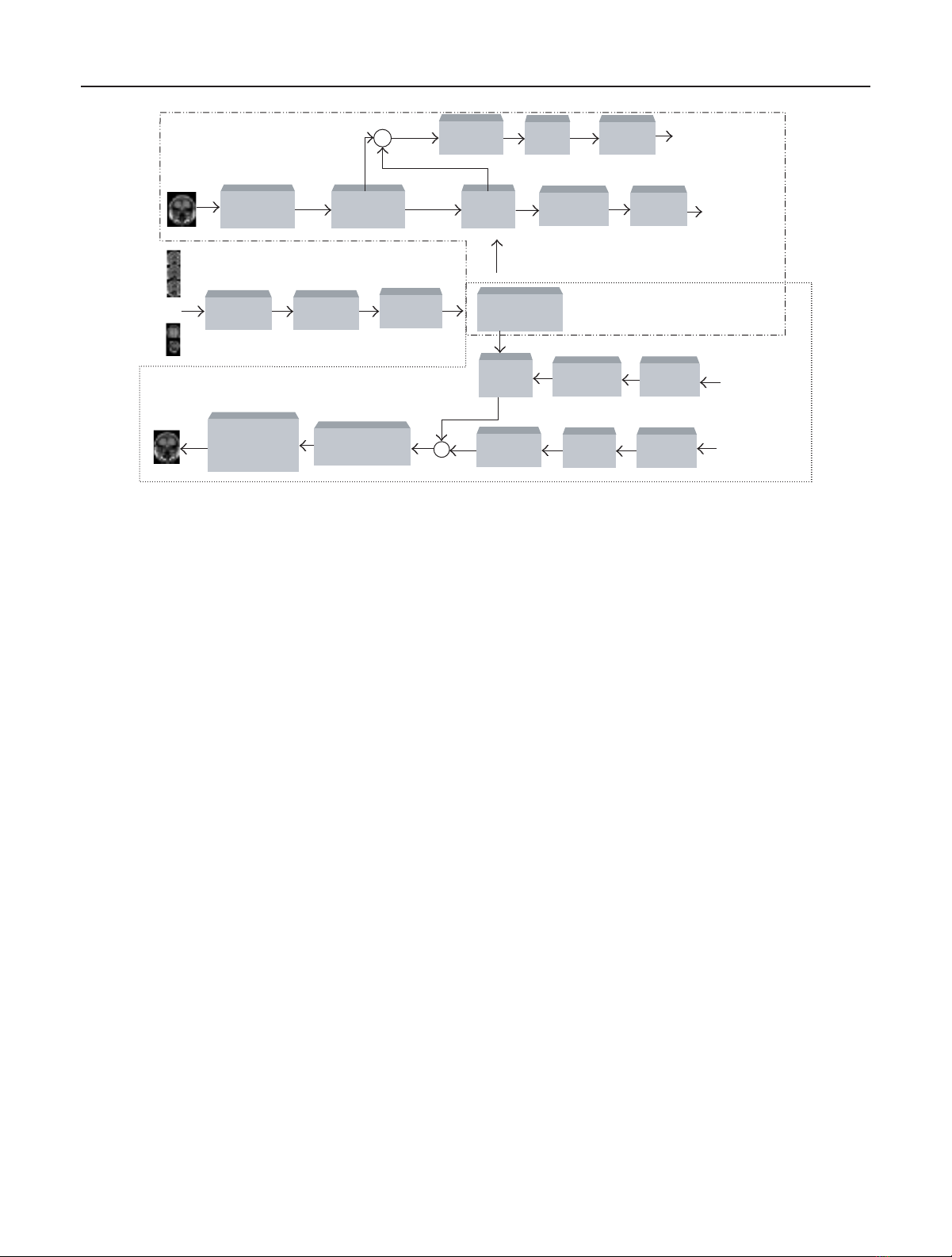
Figure 1: A block diagram of the HMVQ coding scheme.
Such system’s applications are broad in nature and include
telemedicine, video conferencing, and distance education, to
name a few [1,2].
Content-based retrieval of specific images from large im-
age databases is a challenging research area relevant to many
types of image archives encountered in medical, remote sens-
ing, and hyperspectral imagery. In general, image features
must be extracted to facilitate indexing and content-based
retrieval procedures. When multiscale vectors are used for
codebook training using the Euclidean distance as a distor-
tion measure, distortions from each coefficient of the vec-
tor are equally weighed, thus, the contribution to the dis-
tortion depends on the coefficients themselves instead of
their orders. This principle has been proven successful in
scalar coding methods such as the embedded zerotree wavelet
(EZW) coding [3] and the set partitioning in hierarchical
trees (SPIHT) [4]. In EZW and SPIHT, many bits have to
be used in distinguishing significant coefficients and coding
their locations. The use of multiscale vectors [5,6,7,8,9]can
further improve performance by saving valuable bits used in
coding the locations of important coefficients since the loca-
tion information has already been embedded in the vectors
and their order.
Traditionally, vectors are generated by grouping neigh-
boring wavelet coefficients within the same subband and
orientation; square blocks are usually used for this pur-
pose. The size of the block (i.e., vector dimension) is usually
chosen randomly or as a result of bit-allocation optimiza-
tion. The resulting multiresolution codebooks [10]failto
form efficient global codebooks for large medical image data
sets. The hybrid multiscale vector quantization (HMVQ)
scheme described in this paper, on the other hand, gener-
ates multidimensional vectors across multiresolution levels,
thus eliminating the problem of building codebooks for all
subimages at each level. In addition, analysis of the mag-
nitude distribution of the multiscale vectors has led to the
novel scheme of HMVQ, having an embedded residual scalar
quantization within the global codebook. Preliminary results
of HMVQ have been presented in [7,8,9], showing excellent
performance for good quality reconstruction of natural and
medical images. However, a codebook designed for a specific
application is desirable to obtain high fidelity image recon-
struction at low bit rates. This paper presents the analysis
and criteria of designing such codebooks (HMVQ) in detail
with a novel wavelet feature statistics-based hybrid encod-
ing, including vector quantization and residual scalar encod-
ing. Results obtained from three specific 2D medical image
data sets are included with discussions on the advantages of
HMVQ in encoding and fast transmission of 3D medical im-
ages.
We have organized this paper by stating the necessity of
designing low bit rate yet high fidelity encoder/decoder for
efficient archiving and transmission of large medical image
data sets in Section 1.Section 2 presents a detailed descrip-
tion of analysis and design of HMVQ. Section 3 presents the
preliminary results of high fidelity reconstruction of two dif-
ferent image modalities. Section 4 addresses the advantages
of extending HMVQ to encoding 3D images generated from
stereo pairs. Section 5 discusses future research and conclu-
sions.
2. ANALYSES AND DESIGN OF HMVQ
Figure 1 shows the complete block diagram of the HMVQ-
based encoder/decoder system. The image in the spatial do-
main is first transformed into the wavelet domain to remove

Multilevel Wavelet Feature Statistics 451
the statistical redundancy among image pixels. Codebooks
designed in the transform domain are believed to be closer to
optimal than those designed in the spatial domain, because
the transformed coefficients have better defined distributions
than image pixel distributions [10,11].
2.1. Multiscale feature extraction
Traditionally, vectors in the wavelet domain are generated by
grouping neighboring wavelet coefficients within the same
subband and orientation in the same way as in the spatial
domain. Vector dimensions vary and depend on the out-
come of the adopted bit allocation scheme. For example, in
[10,11], bit allocation is obtained based on rate distortion
optimization as a function of subband and orientation. The
total distortion rate function DT(RT)isgivenby
DTRT=1
22MDMSQRMSQ+
M
m=1
1
22m
3
d=1
Dm,dRm,d ,(1)
where DMSQ(RMSQ) represents the subimage of the lowest
resolution, Dm,d(Rm,d ) represents the average distortion re-
sulting from encoding the subimage (m, d)at(Rm,d )bitsper
pixel, Mis the total number of scale, and drepresents three
orientations. The total distortion rate function DT(RT)is
minimized subject to the total rate RT,whereRTis defined
as
RT=1
22MRMSQ +
M
m=1
1
22m
3
d=1
Rm,d.(2)
The optimized rate at a certain scale mand orientation dis
then given by
Rm,dopt
=4MRT−RSQ
M
4M−1
+1
rlog2
Cm,d(k, r)
M
m′=13
d′=1Cm′,d′(k, r)1/4m′4M4M/4M−1
.
(3)
Generally, when Euclidean distance is used as the distortion
measure, r=2. Then the lower bound is defined by the co-
efficient c(k, 2) of vector dimension k, and is given by
c(k, 2) ≥1
(k+2)πΓ1+ k
2,(4)
where Γ(x) is the Gamma function.
As a result, this vector extraction method produces vec-
tors of different dimensions at different scales and orienta-
tions. Consequently, multiresolution codebooks, which con-
sist of subcodebooks of different dimensions and sizes, are
needed. Although the use of subcodebooks makes the vector-
codeword matching process faster, the resulting vector di-
mension and codebook size become image-size dependent.
Therefore, the latter type of vector extraction methods is dif-
ficult to use for training and generating universal codebooks.
On the other hand, motivated by the success of the hi-
erarchical scalar encoding of wavelet transform coefficients,
such as the EZW algorithm and SPIHT, several attempts
have been made to adopt a similar methodology to dis-
card insignificant vectors (or zerotrees) as a preprocessing
step before the actual vector quantization is performed, us-
ing traditional vector extraction methods. In [12], the set-
partitioning approach in SPIHT is used to partially order
the vectors of wavelet coefficients by their vector magnitudes,
followed by a multistage or tree-structured vector quantiza-
tion for successive refinement. In [13], 21-dimensional vec-
tors are generated by cascading vectors from lower scale to
higher scales in the same orientation in a 3-level wavelet
transform. Coefficients 1, 4, and 16 from the 3rd, 2nd, and
1st level bands of the same orientation are sequenced to form
the desired vectors. If the magnitudes of all the elements of
such a vector are less than a threshold, the vector is consid-
ered to be a zerotree and not coded. After all zerotrees are
designated, the remaining coefficients are reorganized into
lower-dimensional vectors, and then vector quantized.
Our approach of vector extraction resembles only the
first stage of generating vectors similar to [13] but quite dif-
ferent in the way it is organized as explained below. Firstly,
instead of using the multiscale vectors just for insignificant
coefficient rejection, we use the entire multiscale vectors as
sample vectors for codebook training. Secondly, the dimen-
sion of the vector is not limited to 21. Depending on the level
of wavelet transform and the complexity of the quantizer, it
can be varied. Our new way of forming sample vectors takes
both dependencies into consideration. Vectors are formed by
stacking blocks of wavelet coefficients at different scales at
the same orientation location. Since the scale size decreases
as the decomposition level goes up, block size at lower level
is twice the size of that of its adjacent higher level. The same
procedure is used to extract feature vectors for all three ori-
entations. The dimension of the vector is fixed once the de-
composition level is chosen.
Inourapproach,multiscalefeaturevectorsareextracted
from the wavelet coefficients such that both interscale and
intrascale redundancy can be exploited in vector quantiza-
tion. Figure 2a illustrates how an 85-dimensional vector is
extracted from a 4-level wavelet transformed image. Coeffi-
cients 1, 4, 16, and 64 from the fourth, third, second, and first
level subbands of the same orientation are sequenced. The
use of multiscale vectors for vector quantization has several
advantages over the use of vectors formed from traditional
rectangular blocks. The new multiscale vectors are image-size
independent, retain image features, and exploit intra- and in-
terscale redundancy, and the resulting codebook is scalable
(i.e., higher-dimensional codebooks contain all codewords
for lower-dimensional ones).
The major advantage of using such multiscale vector gen-
erationschemeisthatweareabletocaptureimagefeatures
from the coarser version to finer version within one vector,
thus making it image-size independent. This common fea-
ture is illustrated in Figure 2b,whereanumberofvectors
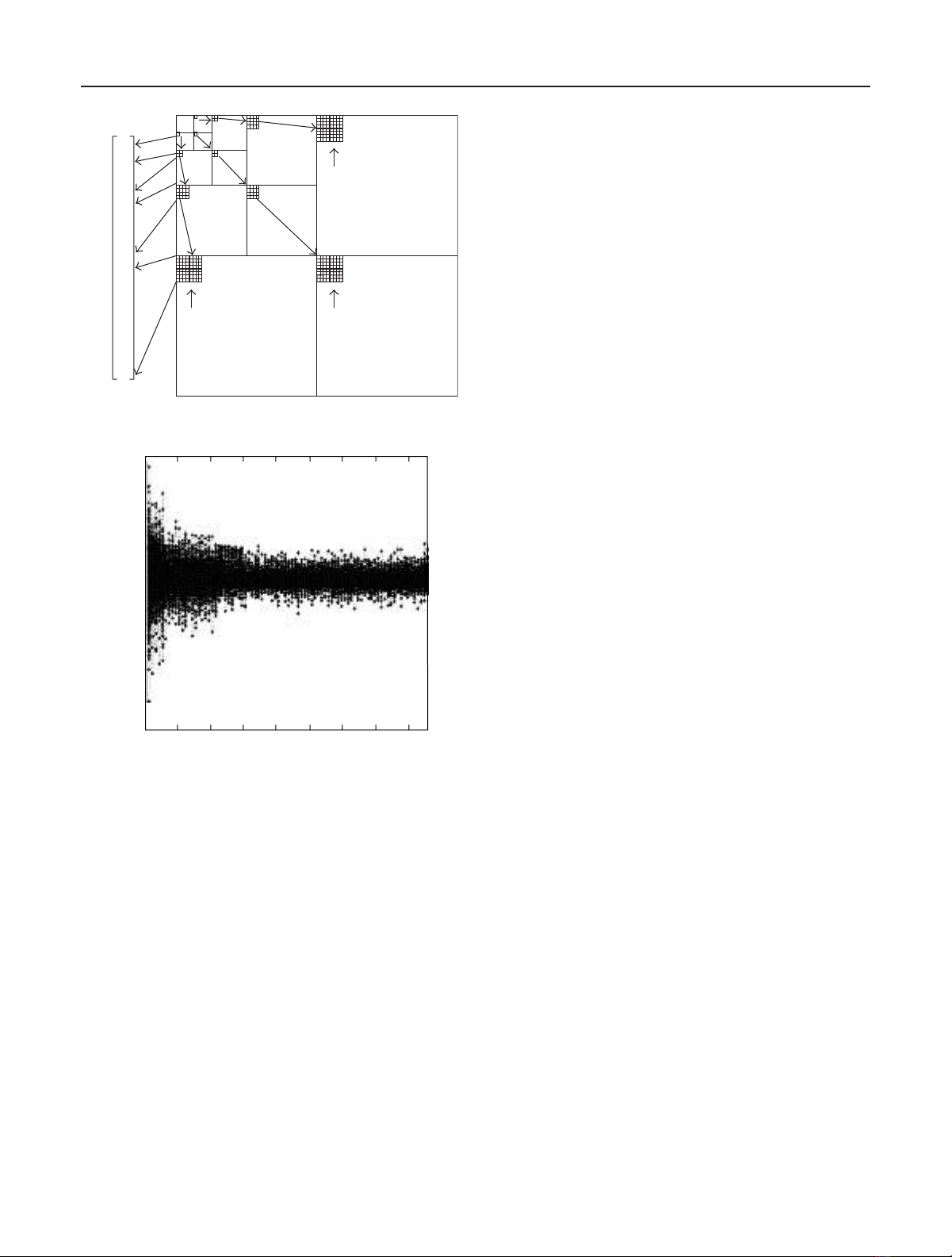
452 EURASIP Journal on Applied Signal Processing
x1
x2
x5
x6
x21
x22
x85
X=
2×2
4×4
8×8
One vector in
vertical orientation
One vector in
diagonal orientation
One vector in
horizontal orientation
(a)
Vector magnitude
400
300
200
100
0
−100
−200
−300
−400
−5000 10203040506070 80
Vector dimension
(b)
Figure 2: (a) An example of multiscale vector extraction. (b) Dis-
tribution of multiscale vector magnitudes.
from different images are plotted together to illustrate the
relationship between vector magnitudes with vector dimen-
sions. Thus, when vectors are trained into a codebook, the
codebook incorporates both image features and wavelet coef-
ficient properties. In addition, both intrascale and interscale
redundancy among wavelet coefficients can be efficiently ex-
ploited since the vector contains coefficients inside the sub-
bands and across the subbands. Based on the same principle,
human perceptual models can be embedded into the opti-
mization process [14].
2.2. HMVQ including residual scalar encoding [8,9]
Residual encoding
All vector quantization schemes result in somewhat blurring
in the reconstructed image, especially when the codebook
size is reduced to meet practical processing speed and storage
requirements. Detail features such as edges can be lost, par-
ticularly, at low bit rates. It is therefore desirable to find an
approach to compensate for the lost details. To accomplish
such a goal, a second-step residual scalar coding is used in
our approach after the vector quantization of the multiscale
vectors. The residual represents the details lost during vector
quantization. Because multiscale vectors preserve the scale
structure of the wavelet coefficients, zerotree-based coding
algorithms such as EZW and SPIHT can be used for resid-
ual coding. When the codebook is well designed, the residual
contains only a small number of large magnitude elements.
Therefore, only a few large magnitude elements have to be
coded, saving a large number of bits.
Possibility of generating universal codebooks
If any image information can be described by a common dis-
tribution and a clustering algorithm that achieves the global
minimum for this type of distribution is used to design a
codebook, such a codebook can be referred to as a univer-
sal codebook [11,15]. When a simple coding scheme, such
as the one described in [16], is used, a universal codebook
for all types of images is difficult to generate. The problem
of generating a universal codebook can be addressed in two
ways. Firstly, regardless of the source characteristics, an effi-
cient codebook generation algorithm must be used to pro-
duce global codebooks with reasonable computational com-
plexity. Roughly speaking, there are two most popular tech-
niques for codebook generation. One way is to use pattern
recognition techniques to generate codebooks with a large
amount of training data and seek a minimum distortion
codebook for the data [17,18]. By using training data sets,
the codebook can be optimized for the data type. Clustering
algorithms are usually used for codebook training. However,
well-structured lattice codebooks have also been designed
[19], in which the centroids are predefined once the type of
lattice is selected. Secondly, the ability to characterize image
information by a common distribution is needed. Since it is
obvious that this cannot be accomplished in the spatial do-
main, image coefficients in the transformed domain should
be considered. However, for vector quantization, we are seek-
ing an approach that can use a limited number of vectors
to represent the vast variety of image features as shown in
Figure 2b.
Vector quantization in the wavelet domain
It has already been demonstrated that image wavelet coeffi-
cients possess the most valuable property of having a distri-
bution similar to a generalized Gaussian distribution [10,11]
for every subband. If the coefficients are adequately decorre-
lated such that the vectors extracted from the coefficients can
be approximated as i.i.d generalized Gaussian distributed,
then the gain in reduction of distortion by vector quantiza-
tion is higher than Gaussian and uniform sources. Because
of such predictable coefficient distributions and theoretically
high distortion reduction, image vector quantization in the
wavelet domain is believed to be able to achieve a better

Multilevel Wavelet Feature Statistics 453
performance than in other domains and can be a starting
ground for building a universal codebook.
However, the choice of clustering algorithm has a sig-
nificant effect on codebook generation by vector quantiza-
tion. The LBG algorithm [20], ever since it came to exis-
tence in 1980, it has been the most popularly used cluster-
ing algorithm for vector quantization codebook training be-
cause of its simplicity and adequate performance. However,
its shortcoming of being easily trapped in local minima is
also well known. The recently developed deterministic an-
nealing (DA) [21] algorithm is believed to reach the global
minimum despite lacking theoretical support. Our investi-
gation of LBG, DA, and AFLC [22] reveals various difficul-
ties and advantages associated with each of them in their
application to vector quantization [7,23]. We came to the
conclusion that when the source distribution is symmet-
ric and rotationally invariant around the origin, DA comes
closer to the global optimum than the other two. Other-
wise, LBG gives the most consistent performance. Fortu-
nately, we can observe that wavelet coefficients are approx-
imately symmetric and rotationally invariant to the origin,
thus, DA is the best choice for accurate codebook training.
However, DA is also computational intensive. Therefore, al-
gorithm selection is a compromise that depends on available
resources.
3. RESULTS
The performance of HMVQ was tested with two different
medical image modalities, MRI and X-ray radiographic data.
Separate codebooks were formed for each modality to have
high fidelity reconstruction at low bit rate by keeping the
codebook size small.
3.1. MRI data
The first set of training data we used is a group of slices
(slice 1 to slice 31) from a 3D simulated MR image of a
human brain http://www.bic.mni.mcgill.ca/brainweb. This
set of images is an MR simulation of T1-weighted, zero
noise level, zero intensity nonuniformity, 1-mm thick, and
8bitsperpixel(bpp)normalhumanbrainwithvoxelsof
181 ×217 ×181 (X×Y×Z) when it is at a 1-mm isotropic
voxel grid in Talairach space. Thus, the training images are
reasonably different because of the span from top of the brain
to the lower part of the brain despite belonging to the same
class.
Figure 3 shows some of the images from the training set.
A few slices inside the group, for example, slice 6, slice 12, and
so forth, are randomly chosen and excluded from the train-
ing set and later used as test images. A codebook of size 256
is used. Reconstructed images comparing the HMVQ and
SPIHT are shown in Figure 4. The results show that HMVQ
preserves more detail information than SPIHT. This is more
evident in Figure 8 where Canny edge detection operation
has been performed on Figure 4b and Figure 4e.Numerical
comparison on peak signal-to-noise ratio (PSNR) versus bit
rate (PSNR(R)) is summarized in Figure 7.
3.2. X-ray radiographic data
When the targeted images belong to the same category, a
special codebook can be generated to improve the perfor-
mance of HMVQ. To obtain a codebook of reasonable size,
a training set must be selected. Two training sets were chosen
from the cervical and lumbar spine X-ray images collected by
NHANES II [24,25].Theoriginalimageswere12bppwith
size of 2487 by 2048. To aid processing, the images are con-
verted to 8 bpp. For experimental purposes, parts of the im-
ages that contained important information were cropped, re-
sulting in training images of size 2048 by 1024. A codebook
containing 256 multiscale codewords is generated for lum-
bar image encoding. Similarly, another codebook is obtained
for the cervical spine images, which are also 8 bpp 1024 by
1024 gray scale images. The test images, which are outside
the training set, are used to demonstrate the quality of the re-
constructed images at different bit rates. Figure 5 presents the
lumbar and cervical spine test images, all displayed at a ratio
of 1 to 256 of their original sizes. Because it is not practical
to show the reconstructed images in their original sizes here,
a region of interest in the spine area is shown in Figure 6,
with an edge detection comparison in Figure 8.Here,bet-
ter edge preservation of HMVQ codec over SPIHT codec can
be clearly observed. The overall PSNR versus bit rate perfor-
mance of the HMVQ codec is compared to that of SPIHT in
Figure 7a for lumbar images and Figure 7b for cervical spine
images.
Quantitative evaluation of HMVQ performance
The effectiveness of HMVQ in terms of quantitative mea-
sures such as the PSNR is demonstrated for medical as well
as standard images in Figure 8. For standard images, 85-
dimensional vectors from a set of 28 images, most of which
are from the USC standard image database and some are
taken from the author’s own database, are generated to de-
sign a codebook for standard images. A codebook size of 256
is used in this experiment. The well-known Lena (8 bpp),
which is outside the training set, is used as the test image
[23]. In Figure 7d, PSNR versus bit rate curves resulting from
HMVQ is compared with that of SPIHT as well as another
well-known multiresolution vector quantizer [10]. HMVQ
outperforms both. In Figure 8, edges detected on sections
of the reconstructed cervical spine and Lena images further
demonstrate better detail retaining capability of HMVQ over
SPIHT even at a very low bit rate.
3.3. HMVQ in management of 3D medical images
Evaluation of deformation in 3D shape may provide signifi-
cant diagnostic aid in early detection and follow-up of a dis-
ease such as glaucoma by changes observed in the optic disc
volume by quantitative measures [26,27].
Figure 9 shows how such quantitative measures can
be obtained from stereoscopic fundus images taken in an
ophthalmology clinic by computing the disparity map [26,
27,28,29]. However, storage of such 3D images in addi-
tion to the stereo pairs of large patient population neces-
sitates the use of a high fidelity encoding scheme. Any 2D
![Mẫu Báo cáo tiến độ thực hiện đề tài [chuẩn nhất]](https://cdn.tailieu.vn/images/document/thumbnail/2025/20250318/tuongmotranh/135x160/1241742262566.jpg)