
TẠP CHÍ KHOA HỌC
TRƯỜNG ĐẠI HỌC SƯ PHẠM TP HỒ CHÍ MINH
Tập 21, Số 8 (2024): 1550-1562
HO CHI MINH CITY UNIVERSITY OF EDUCATION
JOURNAL OF SCIENCE
Vol. 21, No. 8 (2024): 1550-1562
ISSN:
2734-9918
Website: https://journal.hcmue.edu.vn
https://doi.org/10.54607/hcmue.js.21.8.4416(2024)
1550
Research Article1
FEEDBACK TO FEEDFORWARD:
THE GAME CHANGER IN ESL/EFL TEACHING
Le Dinh Tung
Ho Chi Minh City University of Education, Vietnam
Corresponding author: Le Dinh Tung – Email: tungld@hcmue.edu.vn
Received: July 12, 2024; Revised: August 12, 2024; Accepted: August 28, 2024
ABSTRACT
This report focuses on examining how powerful feedforward is when utilized within ESL/EFL
teaching environments. In contrast to feedback, which centers much around past achievements,
feedforward pays attention to what could be done differently and provides the direction toward
realization (Dweck, 2006). According to a recent study, it was suggested that AI could be utilized to
increase student learning motivation and self-monitoring by providing students with clear and
purposeful developmental guidance, which proved to be effective (Carless & Boud, 2018; Nicol &
Macfarlane-Dick, 2006). According to Biggs (2003) and Hyland and Hyland (2006), assessment can
build alignment with teaching practices and customize learning processes, such that it becomes
critical in language training. However, there are still some areas that need further research, such as
learners’ different cultures and new cultural environments. Using technology in delivering feedback
may be promising, though it should be researched further (Wang, 2014). These points need to be
addressed to help understand how impactful feedforward could be turning it into a breakthrough in
English language teaching. The purpose of this review is to provide an in-depth examination and
suggest future research paths for enhancing the advantages of feedforward strategies.
Keywords: ESL; EFL; feedforward; feedback
1. Introduction
Feedback in English as a Second Language (ESL) has been noted as a critical factor
influencing the learning trajectory of students’ English acquisition. As a result,
constructive feedback is fundamental in determining how far one has gone and where else
he/she needs more assistance, therefore becoming an indispensable component of
successful language acquisition.
In ESL, feedback has various educational roles which involve serving as an effective
tool for rectifying pupils’ mistakes and consolidating their accurate utilization of language,
which is the key to developing linguistic competence in learners. When used appropriately,
Cite this article as: Le Dinh Tung (2024). From feedback to feedforward: the game changer in ESL/EFL
teaching. Ho Chi Minh City University of Education Journal of Science, 21(8), 1550-1562.

8HCMUE Journal of Science
Vol. 21, No. 8 (2024): 1550-1562
1551
feedback could substantially increase students’ involvement and enthusiasm resulting in
better academic performance and more active classroom membership.
Hyland and Hyland (2006) underscore the importance of customizing feedback to
cater to the unique needs of each learner, thereby encouraging a more individualized
learning approach. The setting in which feedback is provided, coupled with the distinctive
attributes of the learner, is critical in evaluating the effectiveness of the feedback. For
example, overly general feedback may swamp learners, while feedback that is directed
toward specific areas can assist learners in focusing on distinct areas that require
improvement (Lee, 2019).
In the past few years, the concept of feedforward has been gaining momentum in the
ESL/EFL education sector, with researchers underscoring its transformative impacts. It is
perceived as a strategy to not only augment student learning but also their drive to succeed,
owing to its forward-looking advice. Carless and Boud (2018) propose that merging
feedforward with regular feedback can cultivate a conducive environment for growth,
aiding students in comprehending and utilizing feedback in their subsequent work. Lee
(2017) supports this, noting that precise, practical feedforward can significantly improve
ESL learners’ writing skills as they advance. Wang (2014) found that using technology
tools for feedforward in ESL classes ensures that feedback is not only timely but also
detailed, enabling students to improve their future work. Xu (2020) explored learners’
perceptions of this, finding that feedforward is well-received among Chinese EFL students
for the clarity and encouragement it offers. Butler and Zeng (2014) observed that
feedforward is particularly beneficial for young learners in task-based assessments,
enhancing their engagement and aiding their language skills by providing solid tips for
future tasks. These findings collectively underscore the potential of feedforward as a
powerful tool for continuous improvement and a positive atmosphere in ESL/EFL learning
environments.
2. Research Methodology
The paper methodology section has a structured procedure of the levels of process
found in a literature review survey that moves from providing feedback to feed forward in
ESL/EFL studies. It is specifically for the scheduling of an elaborate and objective process
of the study given the known routine used in systematic reviews.
2.1. Research Design
The current investigation utilizes a Systematic Literature Review (SLR) approach
that is particularly effective in consolidating the existing studies concerning a certain area.
The SLR method comprises a structured search process for identification as well as
evaluation of multiple study conclusions through its synthesis. The study adhered to the
guidelines of the Preferred Reporting Items for Systematic Reviews and Meta-Analyses
(PRISMA), which are aimed at making the review process more transparent and rigorous.

HCMUE Journal of Science
Le Dinh Tung
1552
2.2. Research Question:
How has the transition from feedback to feedforward impacted ESL/EFL teaching
and learning?
2.3. Search Strategy
The researchers utilized an extensive research strategy for collecting relevant
literature about feedforward in ESL/EFL education terms. The search was carried out in
such databases as ERIC, JSTOR, SCOPUS, WEB OF SCIENCES, and GOOGLE
SCHOLAR. The keywords of the search were defined as “feedforward,” feedback,”
“language learning,” “EFL,” “ESL,” “teaching methods,” and “educational strategies”
which were combined by the Boolean operators to make sure that they presented a wide
and comprehensive range of useful findings. The scope of the search was confined to peer-
reviewed articles written in English and published from 2014 to 2024, to guarantee the
timeliness and relevance of the research included.
In addition, the bibliographies were manually checked of selected articles to identify
other relevant research that were not found by the original search. To provide an inclusive
appraisal of the research area, conference proceedings, theses, and dissertations, also
including grey literature have been considered.
2.4. Inclusion and Exclusion Criteria
The review included studies provided they met the criteria to ascertain relevance and
quality. The following were inclusion criteria: (a) Studies must focus on feedforward or
feedback in the context of ESL/EFL education, (b) Studies must be empirical, including
quantitative, qualitative, or mixed-methods research, (c) Articles must be published in
peer-reviewed journals between 2014 and 2024, and (d) Studies must be written in English.
Exclusion criteria were: (a) Reports on corrective feedback in non-ESL/EFL context,
(b) Theoretical papers without empirically based data, (c) Articles published before 2014
and beyond 2024, and (d) Papers in languages other than English.
2.5. Study Selection
In this research paper, the contractual model designed by Dixon-Woods (2016) was
employed, and the steps in the Systematic Quantitative Literature Review (SQLR) method
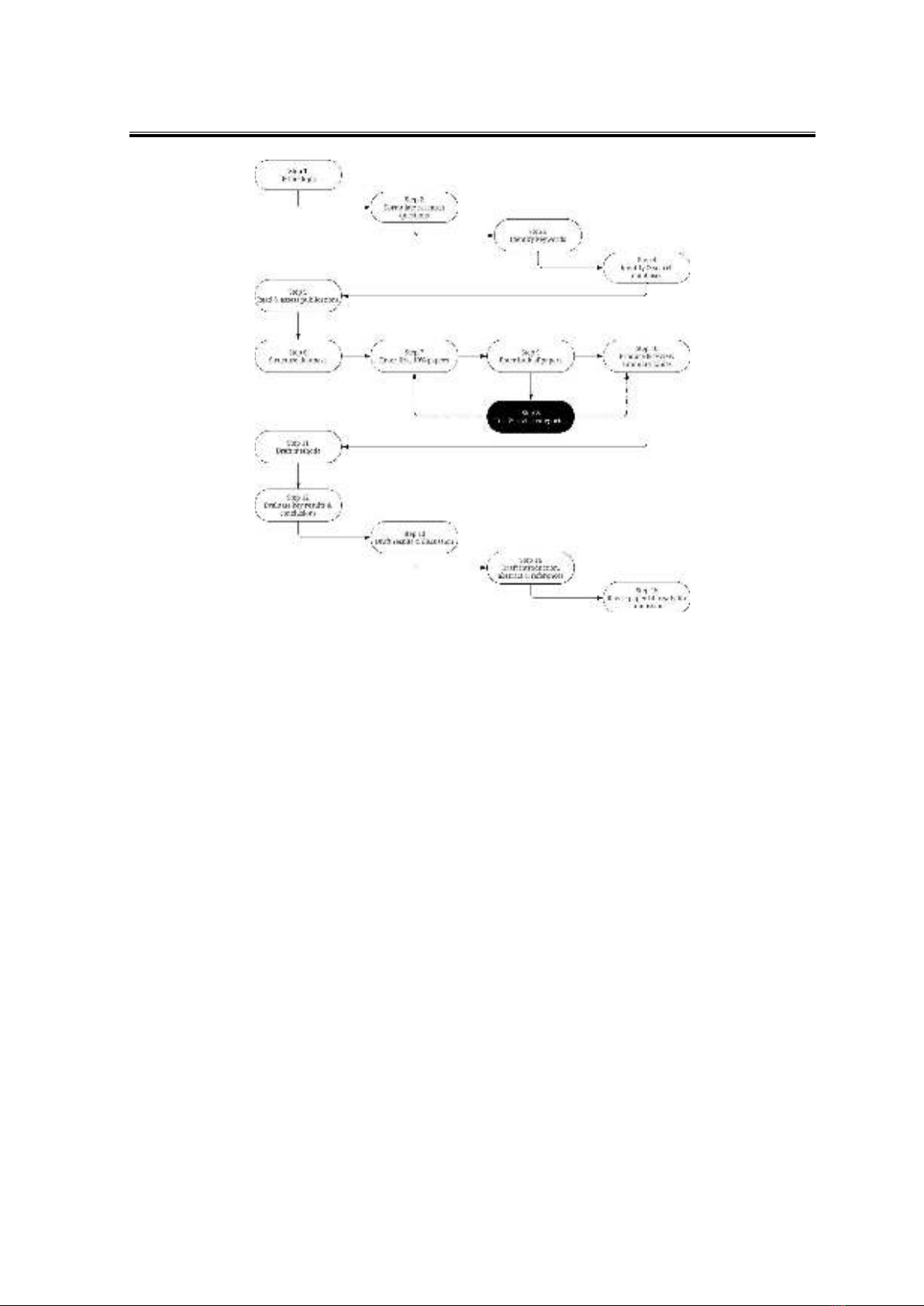
proposed by Pickering and Byrne (2014) were followed (see Figure 1).
8HCMUE Journal of Science
Vol. 21, No. 8 (2024): 1550-1562
1553
Figure 1. Systematic Quantitative Literature Review step process
(Pickering & Byrne, 2014, p. 539)
A total of 532 articles were found at the start but after we got rid of the duplicates,
only 487 were left. Titles and abstracts of these articles were looked at to determine how
relevant they were to the topic of study. A total of 102 articles were screened and found
suitable for this study. Therefore, full versions online were looked for and verified if they
would work for inclusion in this report by reading through each of them meticulously.
Hence, 37 papers were later formed as part of the research review.
2.6. Data Extraction
Information was retrieved from selected research using firms meant for data
extraction in all cases. Data collected consisted of the following: (a) Author(s) and their
publication year(s), (b) Research objectives, (c) Study design and methodology, (d) Sample
size and characteristics, (e) Key findings related to feedforward and feedback in ESL/EFL
education, and (f) Implications for practice and future research.
Two individuals were responsible for the data extraction process to ensure accuracy
and consistency. Any disagreements were discussed and resolved by both parties.
2.7. Data Synthesis
A “thematic analysis" approach (Braun & Clarke 2012) was used to combine data.
This method allows for the inclusion of information from many design samples. This
technique involves assimilating prevailing ideas and connections between instances
examined. Urgent themes in the papers were found so that feedforward effectiveness,

HCMUE Journal of Science
Le Dinh Tung
1554
student views on feedback from feedforward teachers, and the way technologies help in
delivering feedback can be discussed under various headings like these.
In the introduction, research questions were posed, and the narrative synthesis was
structured to address them. Key findings were summarized and discussed in relation to
existing literature and theoretical frameworks. This approach enabled the feedforward in
ESL/EFL education’s current research state to be understood extensively, and gaps
identified for further study.
2.8. Ethical Considerations
There were no direct ethical implications related to human subjects when the study
was done as a review of literature since there was no primary data collection. Nevertheless,
guidelines laid down by a set up of ethics to inform systematic review conduct were
observed in order to guarantee openness, truth, and integrity in the process of this research.
3. Findings and Discussions
3.1. Types and Timing of Feedback
Language learning has a variety of feedback types that serve different purposes. The
British Council argues that feedback can be grouped into ‘closed’ and ‘open-ended’ tasks.
Closed tasks, for example, grammar exercises with definite right answers, require
immediate feedback to give clear unambiguous corrections. On the other hand, open-ended
tasks like writing or speaking exercises need more subtle and nuanced feedback which
takes account of both language use and content.
According to Bitchener (2012), timing is important when it comes to giving
feedback. Instant feedback is usually the best especially for closed tasks as it enables
students to understand and rectify their errors on-the-fly. Nevertheless, delayed feedback
can prove handy in open-ended assignments where pupils require time for assimilating and
contemplating the given critiques.
3.2. Methods of Delivering Feedback
There are different ways in which feedback can be given; these include oral, written,
and visual forms. Oral feedback is good for immediate correction and interaction, whereas
written feedback creates a reference that students can revisit and ponder upon. Younger
learners can be particularly engrossed by visual feedback like making use of videos or
digital annotations.
In the case of online classes on ESL, the feedback architecture should match the
digital settings. Strategies such as using feedback boxes, post-class summaries, and digital
badges or rewards help maintain student engagement as well as provide clear indicators of
their progress (Wang et al., 2019).
3.3. Challenges and Considerations
Though useful, feedback must be given delicately in order not to discourage students. An
unkindly handled negative reaction can destroy a learner's confidence and impede their













![Đề cương Văn học phương Đông [chuẩn nhất]](https://cdn.tailieu.vn/images/document/thumbnail/2025/20251213/quynhanhtranthi1209@gmail.com/135x160/52041765594608.jpg)