Giới thiệu tài liệu
The global imperative for a circular economy, characterized by resource reuse and reduced waste, places significant emphasis on consumer behavior. This paper highlights the critical role of individuals in adopting recycled products to mitigate resource depletion and foster sustainable practices. Drawing from established theories such as the Theory of Planned Behavior and Norm Activation Theory, this study aims to explore the multifaceted factors that shape the purchase intention of consumers towards recycled products. Specifically focusing on the Hanoi area, the research seeks to develop a comprehensive model to understand these influences, thereby providing a foundation for targeted strategies to encourage greater acceptance and consumption of sustainable goods.
Đối tượng sử dụng
Các nhà nghiên cứu, học giả trong lĩnh vực kinh tế tuần hoàn, hành vi tiêu dùng, marketing, chính sách môi trường, và các nhà hoạch định chính sách hoặc quản lý doanh nghiệp quan tâm đến phát triển bền vững và thị trường sản phẩm tái chế.
Nội dung tóm tắt
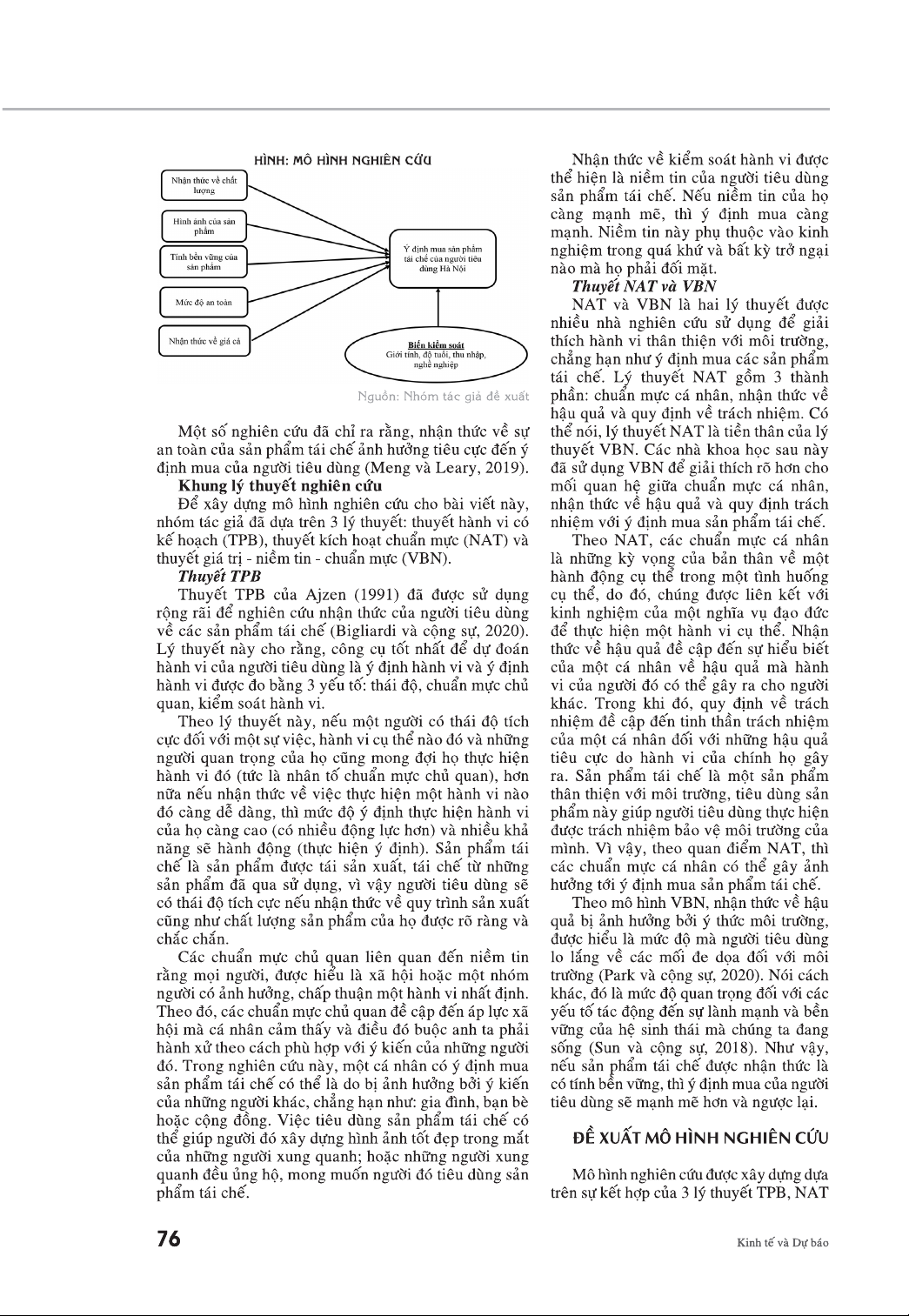
This academic paper comprehensively examines the determinants influencing consumers' purchase intention for recycled products, specifically within the context of Hanoi. It begins by establishing the concept of recycled products and their significance in promoting a circular economy, an increasingly vital global agenda. The study synthesizes various theoretical frameworks, including the Theory of Planned Behavior, Norm Activation Theory, and Value-Belief-Norm theory, to construct a robust research model. This model proposes five key factors: perceived quality, product image, perceived sustainability, perceived safety, and crucially, perceived price—a particularly relevant variable for consumers in a developing economy like Vietnam. The methodology involves reviewing existing literature on consumer behavior towards recycled and sustainable goods, identifying how these factors are conceptualized and measured. The paper discusses how perceived quality can be a double-edged sword, either deterring consumers due to quality concerns or attracting them through environmental benefits. Similarly, a positive product image linked to green initiatives and sustainability strongly influences intention, while safety concerns act as a potential barrier. The inclusion of perceived price acknowledges its practical importance for Hanoi consumers. The implications of this research are substantial, offering a structured approach for policymakers and businesses to understand and strategically promote the adoption of recycled products. By identifying the specific drivers and barriers, future efforts can be tailored to enhance consumer trust, highlight environmental benefits, and address cost considerations, thereby accelerating the transition towards a more sustainable consumption pattern in urban areas like Hanoi.