RESEARCH ARTIC LE Open Access
Ectopic expression of MdSPDS1 in sweet orange
(Citrus sinensis Osbeck) reduces canker
susceptibility: involvement of H
2
O
2
production
and transcriptional alteration
Xing-Zheng Fu
1,2
, Chuan-Wu Chen
1,2
, Yin Wang
1,2
, Ji-Hong Liu
1,2*
and Takaya Moriguchi
3
Abstract
Background: Enormous work has shown that polyamines are involved in a variety of physiological processes, but
information is scarce on the potential of modifying disease response through genetic transformation of a
polyamine biosynthetic gene.
Results: In the present work, an apple spermidine synthase gene (MdSPDS1) was introduced into sweet orange
(Citrus sinensis Osbeck ‘Anliucheng’) via Agrobacterium-mediated transformation of embryogenic calluses. Two
transgenic lines (TG4 and TG9) varied in the transgene expression and cellular endogenous polyamine contents.
Pinprick inoculation demonstrated that the transgenic lines were less susceptible to Xanthomonas axonopodis pv.
citri (Xac), the causal agent of citrus canker, than the wild type plants (WT). In addition, our data showed that upon
Xac attack TG9 had significantly higher free spermine (Spm) and polyamine oxidase (PAO) activity when compared
with the WT, concurrent with an apparent hypersensitive response and the accumulation of more H
2
O
2
.
Pretreatment of TG9 leaves with guazatine acetate, an inhibitor of PAO, repressed PAO activity and reduced H
2
O
2
accumulation, leading to more conspicuous disease symptoms than the controls when both were challenged with
Xac. Moreover, mRNA levels of most of the defense-related genes involved in synthesis of pathogenesis-related
protein and jasmonic acid were upregulated in TG9 than in the WT regardless of Xac infection.
Conclusion: Our results demonstrated that overexpression of the MdSPDS1 gene prominently lowered the
sensitivity of the transgenic plants to canker. This may be, at least partially, correlated with the generation of more
H
2
O
2
due to increased production of polyamines and enhanced PAO-mediated catabolism, triggering
hypersensitive response or activation of defense-related genes.
Background
During the last decade significant progress has been
made in citrus production throughout the world. How-
ever, world citrus industry is frequently confronted with
risk of devastation by a variety of biotic or abiotic stres-
ses. Citrus canker disease, caused by Xanthomonas axo-
nopodis pv. citri (Xac), is one of the most destructive
biotic stresses threatening the citrus production globally
[1,2]. The typical symptoms of canker caused by Xac
include water-soaked eruptions and pustule-like lesions
on leaves, stems and fruits, which can lead to defolia-
tion, dieback and fruit drop, yielding enormous loss of
production and fruit quality. Xac can attack a fairly wide
spectrum of hosts with variable damage, including most
citrus species and some related genera [3]. Although a
considerable effort has been tried, to breed a resistant
cultivar using traditional breeding methods still remains
a big challenge [1,4,5]. Kumquat (Fortunell Spp.) has
been suggested to be resistant to Xac, however, it is not
easy to transfer the resistance from kumquat to citrus
via cross hybridization due to a series of natural barriers
such as male/female sterility, long juvenile period, high
degree of heterozygosity, and polyembryony. At present,
* Correspondence: liujihong@mail.hzau.edu.cn
1
Key Laboratory of Horticultural Plant Biology of Ministry of Education,
College of Horticulture and Forestry Sciences, Huazhong Agricultural
University, Wuhan 430070, China
Full list of author information is available at the end of the article
Fu et al.BMC Plant Biology 2011, 11:55
http://www.biomedcentral.com/1471-2229/11/55
© 2011 Fu et al; licensee BioMed Central Ltd. This is an Open Access article distributed under the terms of the Creative Commons
Attribution License (http://creativecommons.org/licenses/by/2.0), which permits unrestricted use, distribution, and reproduction in
any medium, provided the original work is properly cited.

the primary strategies for controlling canker disease
depend upon an integrated approach including eradica-
tion program and use of antibiotics or bactericides [6].
However, it should be pointed out that these strategies
are not the ultimate solutions considering the cost,
safety to human and animals, consistency and stabiliza-
tion, and impacts on the environment. Breeding a culti-
var resistant to Xac provides the most effective and
economical way to control this disease. Genetic engi-
neering paves the way for creating novel germplasms
that are otherwise impossible via classic breeding strat-
egy, and has been widely employed to produce disease-
resistant materials without greatly altering existing
genetic background [7].
Plants have developed mechanisms of physiological,
biochemical and molecular responses to protect them
against the pathogenic attack, apart from the structural
barriers and pre-formed antimicrobial compounds
[8-10]. Among these, genetically programmed suicide of
the cells at the infection sites, known as hypersensitive
response (HR), constitutes an important line of defense
against pathogen invasion. Previous studies suggested
that presence or accumulation of hydrogen peroxide
(H
2
O
2
) played a central role in the orchestration of HR
[11,12]. Moreover, H
2
O
2
serves as a substrate driving
the cross-linking of cell wall structural proteins to retard
microbial ingress [12]. A great amount of evidences has
shown that H
2
O
2
is also an important molecule to med-
iate signal transduction in the activation of defense-
related genes [12,13]. Therefore, manipulating H
2
O
2
production to a higher but below the cytotoxic level
might be an effective way to battle against the pathogen
invasion, leading to enhanced disease tolerance.
The production of H
2
O
2
in plants undergoing stresses
experiences a two-phase process, the rapid and transient
phase and the late and persistent phase, but more H
2
O
2
isgeneratedinthelatterphasethanintheformerone
[14-16]. Although the precise role of H
2
O
2
in each
phase remains unclear, H
2
O
2
produced in the latter
phase has been suggested to be closely involved in plant
defense response [15]. In addition, in this phase H
2
O
2
was predominantly produced through the polyamine
degradation mediated by either flavine-containing polya-
mine oxidases (PAO, EC 1.5.3.11) or copper-containing
amine oxidases (CuAO, EC 1.4.3.6) [15,17-20]. Polya-
mines, mainly diamine putrescine (Put), triamine sper-
midine (Spd) and tetraamine spermine (Spm), are low-
molecular-weight natural aliphatic polycations that are
ubiquitously distributed in all living organisms. As an
important source of H
2
O
2
production, polyamines have
been suggested to be involved in response to pathogen
attack or to be responsible for enhanced disease resis-
tance in higher plants [21] based on the following lines
of evidence, although the exact mode of action needs to
be explicitly clarified. Firstly, the polyamine levels were
increased after attack by fungus [22,23], virus [19,24-26]
and bacterium [27], implying that polyamine accumula-
tion may be a common event for plant response to var-
ious pathogens. Secondly, augmentation of the
polyamine level in a host plant through exogenous
application of polyamines enhanced resistance to viral
or bacterial pathogens [25,27,28]. It is suggested that the
endogenous polyamines accumulating under these cir-
cumstances may serve as substrates for either PAO or
CuAO, leading to production of sufficient H
2
O
2
that
functions in HR or signaling transduction [19,29,30].
This assumption may be plausible as PAO/CuAO-
mediated polyamine degradation has been reported to
be correlated with the induced tolerance to specific
pathogens. For example, inhibition of CuAO activity by
an irreversible inhibitor reduced accumulation of H
2
O
2
and led to a concurrent development of extended necro-
tic lesions in chickpea when inoculated with Ascochyta
rabiei [20]. In a recent study, tobacco plants overexpres-
sing a PAO gene yielded more H
2
O
2
and exhibited pre-
induced disease tolerance to both bacteria and
oomycetes, whereas repression of the PAO by means of
using an inhibitor, virus-induced gene silencing or anti-
sense technology suppressed H
2
O
2
production and then
lost HR, coupled with an increase of bacterial growth
[30]. All of these findings indicate that accumulation of
polyamines and an ensuing degradation play a pivotal
role in defense against the pathogens, in particular bio-
trophic ones [27].
Polyamine biosynthesis in higher plants has been well
documented, in which five key biosynthetic enzymes are
involved, arginine decarboxylase (EC 4.1.1.19), ornithine
decarboxylase (EC 4.1.1.17), S-adenosylmethionine dec-
arboxylase (EC 4.1.1.50), Spd synthase (SPDS, EC
2.5.1.16) and Spm synthase (EC 2.5.1.22). As cellular
polyamine content can be regulated at the transcrip-
tional level, it is possible to modulate the endogenous
polyamine level via overexpression of the polyamine bio-
synthetic genes, as has been revealed elsewhere [31,32].
It is worth mentioning that although much effort has
been invested to elucidate the role of polyamines in dis-
ease tolerance, the knowledge is still limited as the data
are obtained from only few plant species. The raised
question is whether promotion of polyamine biosynth-
esis/catabolism can be used as an approach to obtain
transgenic plants with improved disease resistance in an
economically important fruit crop like citrus. Toward
understanding this question, we first produced trans-
genic sweet orange (Citrus sinensis)plantsoverexpres-
sing MdSPDS1 isolated from apple [33]. Then we
showed that two transgenic lines (TG) with varying
mRNA levels of the transgene were less susceptible to
Xac than the wild type plants (WT), which might be
Fu et al.BMC Plant Biology 2011, 11:55
http://www.biomedcentral.com/1471-2229/11/55
Page 2 of 15
correlated with production of H
2
O
2
and/or up-regula-
tion of transcription levels of defense-related genes. To
our knowledge, this is the first report on improving dis-
ease resistance in a perennial fruit crop via transforma-
tion of a gene involved in polyamine biosynthesis,
adding new insight into the functions of polyamines for
engineering biotic stress tolerance.
Results
Transformation and regeneration of plants from
embryogenic calluses
To obtain transgenic plants, the embryogenic calluses of
‘Anliucheng’sweet orange were infected with the Agro-
bacterium tumefaciens strain LBA4404 containing
pBI121::MdSPDS1 and a neomycin phosphotransferase
gene (NPTII). On the selection medium containing
kanamycin, most of the infected calluses turned brown
within 1 month, while the kanamycin-resistant calluses
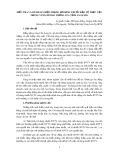
were still white (Figure 1A). The kanamycin-resistant
calluses were then cultured on the fresh selection
medium for further selection and multiplication. At last,
the surviving calluses after several rounds of selection
were transferred to embryoid-inducing medium to
induce embryogenesis (Figure 1B). Thereafter, mature
cotyledonary embryoids were cultured on the shoot-
inducing medium to regenerate shoots (Figure 1C).
When the shoots were 1.5 cm in length, they were
excised and moved to root-inducing medium to get
rooting plantlets. Two months after rooting, the plant-
lets were planted in the soil pots and kept in a growth
chamber for further growth (Figure 1D).
Molecular confirmation of the regenerated plants
PCR using genomic DNA as template was performed to
verify the integration of MdSPDS1 in the regenerated
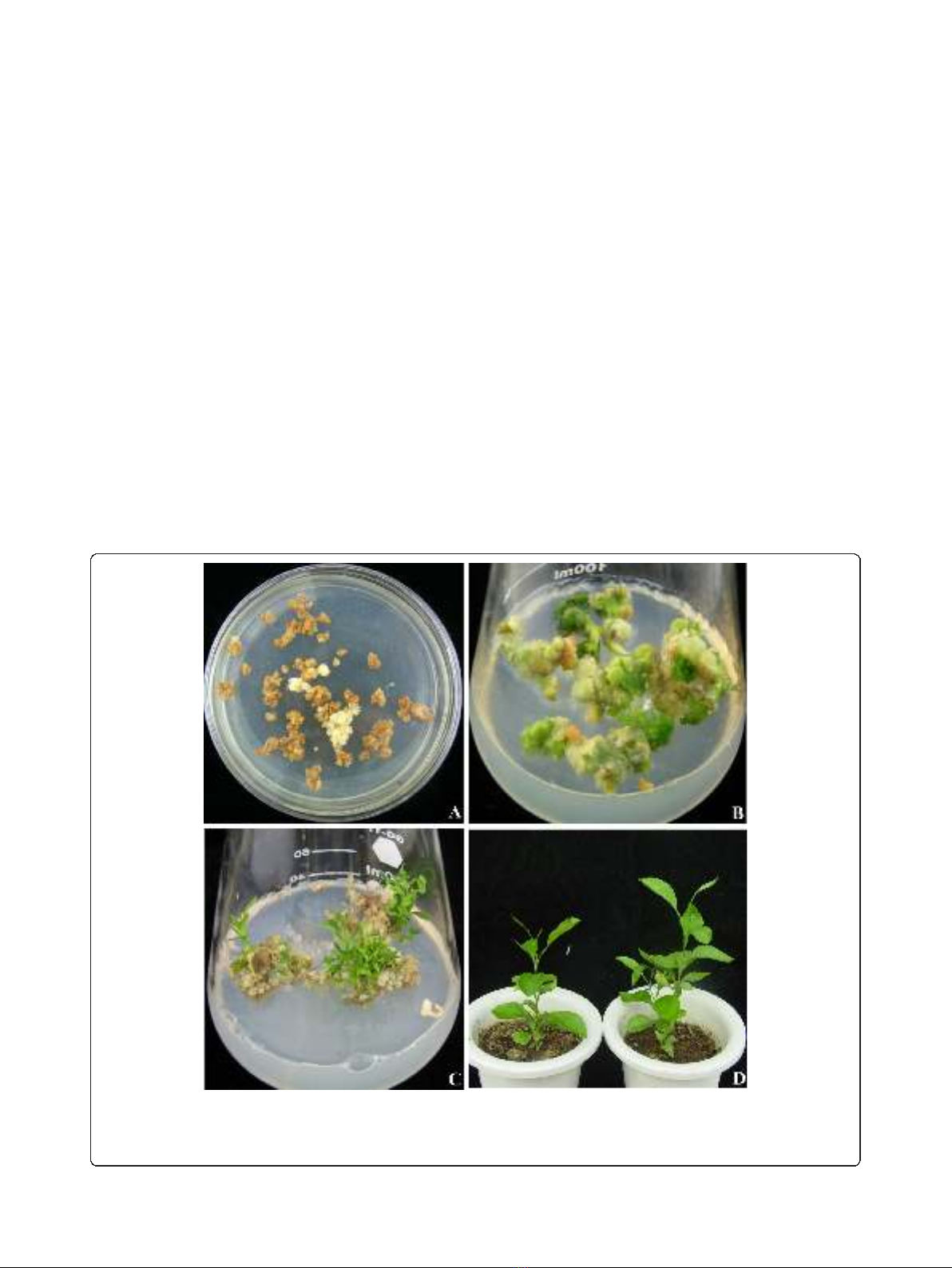
plants. The amplification with specific primers showed
that expected fragments with the same size as that of
the plasmid were produced in all of the ten tested lines,
but not in the WT (Figure 2A-B), indicating that they
were putative transformants. Overexpression of the
Figure 1 Regeneration of transgenic plants from ‘Anliucheng’embryogenic callus infected with Agrobaterium tumefaciens containing
MdSPDS1 gene. (A) Selection of the callus on kanamycin-containing medium. (B) Induction of embryoids from the callus that survived after
several rounds of selection. (C) Regeneration of multiple shoots from cotyledonary embryoids. (D) Wild type (left) and a transgenic line (TG9,
right) grown in a soil pot.
Fu et al.BMC Plant Biology 2011, 11:55
http://www.biomedcentral.com/1471-2229/11/55
Page 3 of 15
MdSPDS1 gene was further analyzed in two lines (TG4
and TG9) by semi-quantitative RT-PCR. mRNA levels
of MdSPDS1 were detected in both TG4 and TG9, but
the level is higher in the latter line (Figure 2C).
Free and conjugated polyamine levels in the transgenic
lines and WT under normal conditions
Free polyamine levels of TG4, TG9 and WT were deter-
mined with HPLC (Figure 2D). As compared with the
WT, TG4 had significantly higher level of Put (538.9 vs.
201.7 nmol/g FW), while Put of TG9 (156.0 nmol/g
FW) was slightly reduced. Spd levels of TG4 (87.4
nmol/g FW) and TG9 (199.2 nmol/g FW) were signifi-
cantly reduced and increased, respectively, in compari-
son to the WT (167.8 nmol/g FW). Spm content in
both lines (268.0 nmol/g FW for TG4, 197.3 nmol/g
FW for TG9) were significantly increased relative to the
WT (136.7 nmol/g FW). Conjugated Put levels of TG4
and TG9 were significantly reduced compared with the
WT, and the largest decrease was detected in TG4 (Fig-
ure 2E). The conjugated Spd of TG4 was slightly but
insignificantly lower than the WT and TG9 that were
close to each other, while the conjugated Spm level of
TG9 was significantly higher than that of WT and TG4.
Xac challenge of the transgenic plants and the WT
The accumulation of Spd and Spm, especially Spm, led
us to test the defense capacity of the transgenic plants
against the Xac pathogen as Spm has been shown to be
an endogenous inducer for defense-related genes
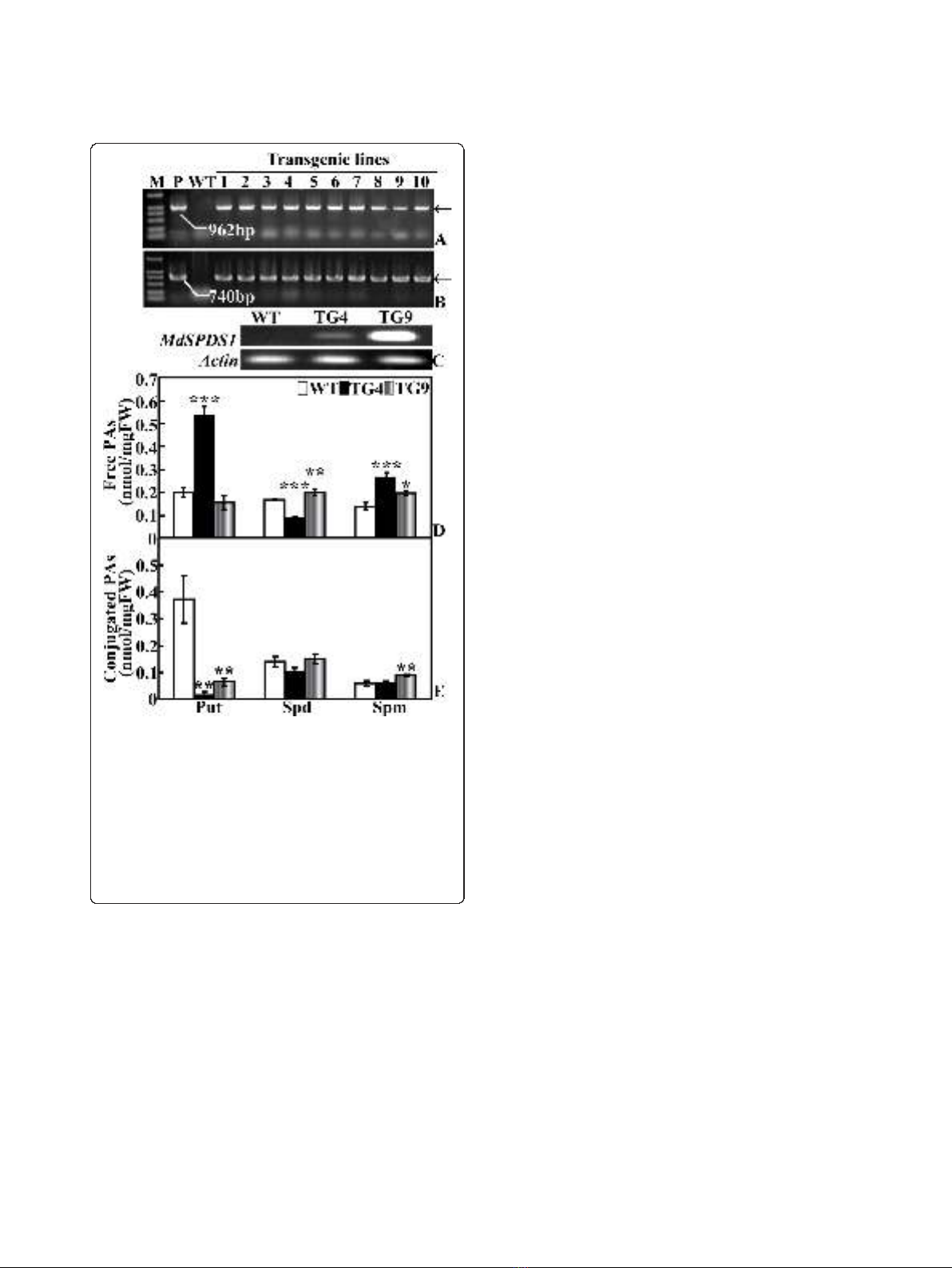
[25,34]. To this end, TG9 and the WT were challenged
with Xac by pinprick inoculation under the same condi-
tions, followed by comparison of timing of canker symp-
tom, disease index (DI) and lesion size between them.
DI of WT at 3, 5 and 7 days post inoculation (DPI) was
13.21, 32.14 and 54.64, about 6.17, 2.43 and 1.91 times
larger than that of TG9, respectively (Figure 3A). On 5
DPI, large white spongy pustules were formed at the
inoculation sites in both abaxial and adaxial sides of the
WT leaves, whereas TG9 showed the symptom only at
fewer inoculation sites of the adaxial side (Figure 3C-D).
Althoughwhitespongypustules could be detected in
both the WT and TG9 at 7 DPI, size of the lesions in
the WT was about 1.5 times bigger than that of TG9 on
the abaxial side (3.15 mm
2
for WT and 2.15 mm
2
for
TG9). Similarly, on the adaxial side, the WT had bigger
lesions (2.65 mm
2
)thanTG9(2.34mm
2
,Figure3B).
Inoculation of TG4 and the WT in a different set of
experiments also showed that TG4 was also less suscep-
tible to citrus canker (Figure 3E-H), although the timing
of canker occurrence varied from that of TG9. These
data indicate that both TG9 and TG4 were more toler-
ant to canker disease than the WT. To dissect the
potential mechanisms underlying the enhanced canker
tolerance, we performed in-depth work using TG9 as it
had higher expression level of MdSPDS1 and Spd and
Spm level.
TG9 accumulated more H
2
O
2
than the WT after Xac
inoculation
It is noted necrosis was observed at the inoculation sites
of TG9 leaves when they were inoculated with Xac, a
sign of HR, which was otherwise absent in the WT
(Figure 4A), implying that the transgenic plant might
experience rapid cell death upon Xac infection. As
H
2
O
2
plays an essential role in the orchestration of HR,
Figure 2 Molecular analysis and polyamine content of the
transgenic plants. PCR amplification of transgenic lines that are
transferred to soil pots via specific primers of CaMV35S-MdSPDS1 (A)
and NPTII (B). (C) Semi-quantitative RT-PCR analysis on the
expression level of MdSPDS1 in the wild type (WT) and two
transgenic lines (TG4 and TG9). (D-E) Analysis of free (D) and
conjugated (E) polyamine content by HPLC in fully expanded leaves
sampled from the WT and transgenic plants grown under the same
conditions. *, ** and *** indicate the values are significantly different
compared with WT at significance level of P< 0.05, P< 0.01 and P
< 0.001, respectively.
Fu et al.BMC Plant Biology 2011, 11:55
http://www.biomedcentral.com/1471-2229/11/55
Page 4 of 15
accumulation of H
2
O
2
at the infection sites and in the
neighboring regions was visually detected by DAB and
H
2
DCF-DA, respectively. At 1 DPI of Xac inoculation,
both TG9 and the WT had brown spots at the infected
sites. However, compared with the WT, TG9 showed
deeper brown color than the WT. Interestingly, a brown
circle was viewed around the infected sites of TG9,
which was not detected in the WT (Figure 4B). A simi-
lar staining pattern was noticed at 2 and 3 DPI, suggest-
ing that TG9 might accumulate higher H
2
O
2
at the
infection sites than the WT.
Since DAB staining was difficult to reveal the H
2
O
2
accumulation in the regions near the inoculation sites,
H
2
DCF-DA staining was used to determine H
2
O
2
therein using the samples collected at 2 DPI. As can be
seen in Figure 4C, TG9 leaves showed more abundant
green fluorescence than the WT, indicating presence of
higher H
2
O
2
level in TG9 than in the WT.
TG9 had higher PAO, SOD and CAT activity than the WT
after Xac attack
PAO-mediated polyamine degradation is an important
pathway for H
2
O
2
production, efforts were thus made to
investigate PAO enzyme activity in the WT and TG9
leaves sampled at 1, 2 and 3 DPI. Measurement showed
that PAO activity of the WT did not vary greatly despite
anegligibleincreaseat2DPI,whilethatofTG9was
enhanced over inoculation time. As a result, PAO activ-
ity of TG9 was significantly higher than that of the WT
at the three time points (Figure 5A).
Antioxidant enzymes have been shown to be impor-
tant for homeostasis of ROS, so we also examined activ-
ities of two enzymes involved in H
2
O
2
production and
scavenging, superoxide dismutase (SOD) and catalase
(CAT), in the WT and TG9 at 1, 2 and 3 DPI. SOD
activity exhibited minor change upon Xac infection, but
it was higher in TG9 compared with the WT, particu-
larlyat1and2DPI(Figure5B).Xacinoculation
induced a progressive increase of the CAT activity in
both TG9 and the WT. However, they were statistically
insignificantly different from each other at any time
point (Figure 5C).
Changes of free polyamines after the Xac infection
Free polyamine levels were also evaluated after the Xac
infection in the present study. Xac attack reduced free
Put level in the WT, whereas TG9 underwent slight
change and the Put content in TG9 was still signifi-
cantly lower than that of the WT at any time point (Fig-
ure 6A). Free Spd in the WT and TG9 was similar and
showed slight alterations during the period (Figure 6B).
At 1 DPI, no differences in free Spm level were observed
between TG9 and the WT. Although WT exhibited no
change at 2 and 3 DPI, the Spm in TG9 presented an
Figure 3 Canker disease tolerance assay of the wild type (WT) and the transgenic lines (TG4 and TG9). Disease index (A, E) and lesion
area (B, F) of WT, TG9 (A-D) and TG4 (E-H) after inoculation with Xac. Comparison between TG9 and WT, TG4 and WT was done in different
inoculation experiment. Asterisks show that the values are significantly different compared with the control (* for P< 0.05, ** for P< 0.01 and
*** for P< 0.001). Representative photographs showing symptoms on the abaxial (C, G) and adaxial (D, H) sides of the leaves from WT/TG9 (C-D)
and WT/TG4 (G-H). Selected inoculation sites of the leaves were zoomed in and shown below the corresponding photos.
Fu et al.BMC Plant Biology 2011, 11:55
http://www.biomedcentral.com/1471-2229/11/55
Page 5 of 15


![Vaccine và ứng dụng: Bài tiểu luận [chuẩn SEO]](https://cdn.tailieu.vn/images/document/thumbnail/2016/20160519/3008140018/135x160/652005293.jpg)