Genome Biology 2008, 9:R67
Open Access
20 0 8Ruotoloet al.Volume 9, Issue 4, Article R67
Research
Membrane transporters and protein traffic networks differentially
affecting metal tolerance: a genomic phenotyping study in yeast
Roberta Ruotolo, Gessica Marchini and Simone Ottonello
Address: Department of Biochem istry and Molecular Biology, Viale G.P. Usberti 23/ A, University of Parma, I-4310 0 Parma, Italy.
Correspondence: Sim one Ottonello. Email: s.ottonello@unipr.it
© 2008 Ruotolo et al.; licensee BioMed Central Ltd.
This is an open access article distributed under the terms of the Creative Commons Attribution License (http://creativecommons.org/licenses/by/2.0), which
permits unrestricted use, distribution, and reproduction in any medium, provided the original work is properly cited.
Metal tolerance in yeast<p>Genomic phenotyping was used to assess the role of all non-essential S. cerevisiae proteins in modulating cell viability after exposure to cadm ium , nickel an d other m etals.</ p>
Abstract
Background: The cellular mechanisms that underlie metal toxicity and detoxification are rather
variegated and incompletely understood. Genomic phenotyping was used to assess the roles played
by all nonessential Saccharomyces cerevisiae proteins in modulating cell viability after exposure to
cadmium, nickel, and other metals.
Results: A number of novel genes and pathways that affect multimetal as well as metal-specific
tolerance were discovered. Although the vacuole emerged as a major hot spot for metal
detoxification, we also identified a number of pathways that play a more general, less direct role in
promoting cell survival under stress conditions (for example, mRNA decay, nucleocytoplasmic
transport, and iron acquisition) as well as proteins that are more proximally related to metal
damage prevention or repair. Most prominent among the latter are various nutrient transporters
previously not associated with metal toxicity. A strikingly differential effect was observed for a large
set of deletions, the majority of which centered on the ESCRT (endosomal sorting complexes
required for transport) and retromer complexes, which - by affecting transporter downregulation
and intracellular protein traffic - cause cadmium sensitivity but nickel resistance.
Conclusion: The data show that a previously underestimated variety of pathways are involved in
cadmium and nickel tolerance in eukaryotic cells. As revealed by comparison with five additional
metals, there is a good correlation between the chemical properties and the cellular toxicity
signatures of various metals. However, many conserved pathways centered on membrane
transporters and protein traffic affect cell viability with a surprisingly high degree of metal
specificity.
Background
Metals, especially the nonessential ones, are a major environ-
mental and hum an health hazard. The m olecular bases of
their toxicity as well as the m echanisms that cells have
evolved to cope with them are rather variegated and incom -
pletely understood. The soft acid cadm ium and the borderline
acid nickel are nonessential transition metals of great envi-
ronmental concern . Although redox inactive, cadmium and
nickel cause oxidative dam age indirectly [1] and they both
have carcinogenic effects [2,3], albeit with reportedly differ-
ent m echanisms [1,4-6].
Published: 7 April 2008
Genome Biology 2008, 9:R67 (doi:10.1186/gb-2008-9-4-r67)
Received: 29 December 2007
Revised: 26 February 2008
Accepted: 7 April 2008
The electronic version of this article is the complete one and can be
found online at http://genomebiology.com/2008/9/4/R67

Genome Biology 2008, 9:R67
http://genomebiology.com/2008/9/4/R67 Genome Biology 2008, Volume 9, Issue 4, Article R67 Ruotolo et al. R67.2
The cellular effects of cadmium are far more studied than
those of nickel. In strum en tal to the elucidation of some of the
basic mechanisms that underlie cadm ium toxicity has been
the model eukaryote Saccharom yces cerevisiae [7]. It was
studies conducted in this organism , for example, that yielded
the first dem onstration of the indirect nature of cadmium's
genotoxic effects, which leads to gen om e instability by inhib-
itin g DNA mism atch repair [8] and other DNA repair systems
[6]. Sim ilarly, lipid peroxidation as a major mechanism of
cadmium toxicity [9] as well as the central roles played by
thioredoxin and reduced glutathion e (GSH ) [7], and vacuolar
tran sport system s such as Ycf1 [10], in cadm ium detoxifica-
tion were first documented in yeast. Som e of the above com-
ponents were sh own to be upregulated at both the mRNA
[11,12] an d protein [12,13] levels in cadm ium-stressed yeast
cells. Predom inant among these expression changes was the
upregulation of the sulfur amino acid biosynthetic pathway
an d the in duction of isozymes with a markedly reduced sulfur
am ino acid con tent as a way to spare sulfur for GSH synthesis
[12]. A num ber of addition al cadmium -responsive gen es
without any obvious relationship to sulfur sparing or cad-
mium stress were also iden tified, however. Curiously, only a
sm all subset of the most cadm ium-responsive genes produce
a m etal-sensitive phen otype when deleted [13], thus reinforc-
ing the notion that transcription al modulation per se is not a
general predictor of the pathways influen cing stress tolerance
[14,15]. For exam ple, deletion of genes coding for two major
organic peroxide-scavengin g en zymes (GPX3 and AHP1; the
latter en coding a cadmium -induced alkyl hydroperoxide
reductase) did not im pair cadmium tolerance [13].
By comparison, only a few studies have dealt with nickel tox-
icity in yeast. Interestingly, they showed that un programm ed
gene silencing, which is a m ajor mechanism of nickel toxicity
an d carcinogenicity in hum ans [16,17], also operates in S. cer-
evisiae. This further em phasizes the high degree of con serva-
tion of various aspects of metal toxicity as well as the
usefulness of S. cerevisiae as a model organism for elucidat-
ing the corresponding pathways in human s. They also sug-
gest, however, that a broad and as yet largely unexplored
range of cellular pathways m ay be involved in alleviating the
toxic effects of metals. What is currently missing, in particu-
lar, is a global view of such pathways at the phen otype level
an d a genome-wide com parison of differen t metals as well as
other stressors.
We have addressed these issues by examining the fitness of a
genome-wide collection of yeast deletion mutant strains
[18 ,19] exposed to two chemically diverse metals, namely
cadmium and nickel, each of which is a known carcinogen
[2,3,20]. This allowed us to assess the role of all nonessential
protein s in m odulating the cellular toxicity (sensitivity or
resistance) of these two metals. The results of this screen were
integrated with interactom e data and com pared with the
genomic phenotyping profiles of other stressors. To gain fur-
ther insight into the cytotoxicity signatures of different met-
als, the entire set of 38 8 mutants exhibitin g an altered
viability after exposure to cadmium and nickel was chal-
lenged with four additional metals (mercury, zin c, cobalt an d
iron) plus the m etalloid AsO2-. Although overall there is good
correlation between the chemical properties and the cellular
toxicity sign atures of various metals, many conserved path-
ways cen tered on (bu t not lim ited to) m em brane transporters
an d protein traffic affect cell viability with a surprisin gly high
degree of metal specificity.
Results and discussion
Genomic phenotyping of cadmium and nickel toxicity
Sublethal concentrations of 50 μmol/ l cadmium an d 2.5
mmol/ l nickel (see 'Materials an d methods', below, for
details) were used for multireplicate screening of the yeast
haploid deletion mutan t collection (five replicates for each
metal), which was perform ed by manually pinning ordered
sets of 38 4 strains onto metal-containing yeast extract-pep-
tone-dextrose (YPD)-agar plates (Additional data file 1 [Fig-
ure S1A]). After culture and colony size inspection, strain s
scored as metal sensitive or resistan t in at least three screens
were individually verified by spotting serial dilutions onto
metal-containing plates. Mutant strains exhibiting various
levels of metal sensitivity (high sen sitivity [H S], medium sen-
sitivity [MS], and low sen sitivity [LS]) and a single class of
metal resistant mutant strains were recognized (Additional
data file 1 [Figures S1B and S1C]).
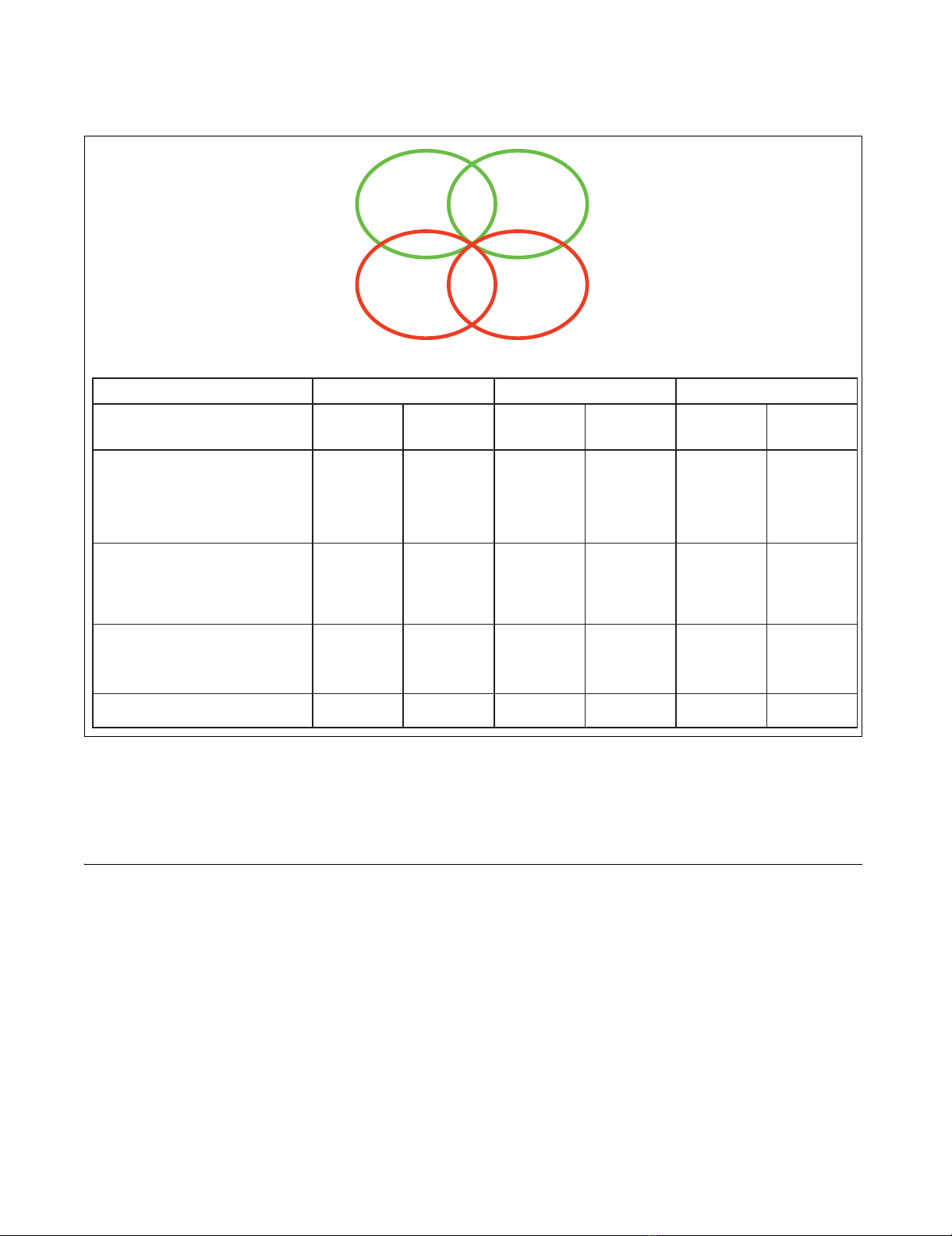
A total of 388 mutan t strains that were sensitive or resistant
to cadmium and/ or nickel were identified. As shown in Figure
1a, some of them were specifically sensitive or resistant to
cadmium or nickel, whereas others exhibited an altered toler-
an ce to both metals. Metal-sensitive mutants exceeded the
resistant ones by more than threefold. The num ber of sensi-
tive m utants was considerably higher for cadmium than for
nickel, which is in accordance with the strikingly different cel-
lular toxicity previously reported for these two metal ion s in
an imal cells [4,21]. Con versely, m utants resistan t to nickel
were significantly more abundant than cadmium-resistant
mutant strain s. More than two-thirds of the nickel-resistant
mutan ts were foun d to be sen sitive to cadmium, as opposed
to on ly one in stance of cadmium resistance/ nickel sensitivity
(sm f1
Δ
). A detailed list of the mutants, in cluding their degree
of sensitivity (Addition al data file 1 [Figures S1B and S1C]),
Gene Ontology (GO) description, and related inform ation, is
provided in Additional data file 2. Hum an orthologs were
iden tified for about 50% of the genes causin g m etal sen sitivity
or resistance, 27 of which correspond to genes previously
found to be involved in human diseases, especially cancer.
Twenty-four mutants are deleted in genes en coding unchar-
acterized open reading frames (ORFs), whereas four metal
toxicity modulating gen es are homologous to un ann otated
hum an ORFs (Additional data file 2). Gen om ic phenotyping
data were also compared with the results of transcriptomic
http://genomebiology.com/2008/9/4/R67 Genome Biology 2008, Volume 9, Issue 4, Article R67 Ruotolo et al. R67.3
Genome Biology 2008, 9:R67
an alyses conducted on cadmium -treated yeast cells [11]. In
keeping with previous comparisons of this kind [14,15], only
a m arginal (about 7%) overlap was detected (Additional data
file 2).
As revealed by the GO analysis summarized in Figure 1b, a
wide range of cellular processes is engaged in the modulation
of cadmium and nickel toxicity. At variance with cadmium
resistant mutants, which are scattered throughout various
GO categories, nickel-resistant as well as cadmium / nickel-
sensitive mutant strains were found to be en riched in specific
functional categories. Som e of the top responsive genes iden-
tified by previous expression profiling studies (for example,
genes in volved in GSH and reduced sulfur metabolism
[11,13]) were foun d to be am on g deletion mutan ts specifically
sensitive to cadmium, especially within the 'response to
stress' category. As expected for cells treated with agents that
are actively internalized by and sequestered into vacuoles, a
num ber of the m ost significant GO categories are related to
'transport', particularly to the vacuole, and to the biogenesis
an d functioning (for example, acidification) of this organ elle.
Several processes not so obviously associated with metal tol-
erance were also identified. For exam ple, 'nucleocytoplasm ic
transport' (including nuclear pore com plex formation, and
function ality) em erged as a process that is specifically
im paired in nickel-sensitive m utants. Other processes cen-
tered on vesicle-mediated transport also profoundly influ-
ence cadmium and nickel tolerance in different, often
contrasting ways. For example, many 'Golgi-to-vacuole trans-
port' mutants appear to be sensitive to both cadmium and
Distribution among different sensitivity/resistance groups and functional classification of metal tolerance affecting mutationsFigure 1
Distribution among different sensitivity/resistance groups and functional classification of metal tolerance affecting mutations. (a) Venn diagram visualization
of mutant strains displaying multimetal or metal-specific sensitivity (green circles) or resistance (red circles); also shown are mutants characterized by an
opposite phenotypic response to the two metals (45 cadmium sensitive/nickel resistant strains and one cadmium resistant/nickel sensitive strain). (b)
Biologic processes associated with metal toxicity-modulating genes identified with the Gene Ontology (GO) Term Finder program [99]. Statistical
significance of GO term/gene group association (P-value < 0.001) and enrichment ratios are reported for each category; parent terms are presented in
bold, and child terms of the parent class 'transport' are presented in italics.
Enrichment ratio P-value Enrichment ratio P-value Enrichment ratio P-value
transport
2.5 1.63E-16 2.7 1.10E-07 3.9 1.91E-12
vacuolar transport
8.1 3.18E-24 6.8 1.70E-05 19.4 4.67E-21
vesicle-mediated transport
4.3 1.31E-19 3.6 0.00068 6.6 6.97E-10
post-Golgi vesicle-mediated transport
6.1 2.05E-06 11.2 4.77E-07
Golgi to vacuole transport
9.7 0.00026 22.3 1.36E-06
vacuole organization and biogenesis
9.8 2.07E-17 23.3 8.28E-26
vacuolar acidification
17.3 3.44E-14 47.7 2.33E-23
cation homeostasis
5.8 2.10E-10 13.2 9.74E-17
telomere organization and biogenesis
5.1 1.94E-24 4.4 9.53E-06
response to chemical stimulus
3.1 2.94E-10 3.5 0.0001
endosome transport
13.4 1.94E-25 34.1 1.05E-20
ubiquitin-dependent protein catabolic process
via the multivesicular bod
y
p
athwa
y
19.5 9.61E-12 77.5 1.67E-17
protein targeting to vacuole
6.8 3.76E-10 18.3 2.63E-11
protein retention in Golgi
9.7 3.83E-05 37.7 2.35E-09
retrograde transport, endosome to Golgi
18.0 5.72E-09 35.0 0.00016
post-translational protein modification
3.0 1.53E-09
covalent chromatin modification
5.2 4.62E-06
Golgi vesicle transport
3.4 9.01E-05
response to stress
2.4 5.75E-06
transcription, DNA-dependent
2.1 1.41E-05
nucleocytoplasmic transport
4.7 6.60E-04
RNA export from nucleus
6.9 5.85E-05
tnatsiser-iNevitis
n
es-iNevit
i
snes
-
dC
GO functional categories
(a)
(b)
79 38179
15
11
45
20
Cd-sensitive
(303)
Ni-sensitive
(118)
Cd-resistant
(36)
Ni-resistant
(71)
1
Genome Biology 2008, 9:R67
http://genomebiology.com/2008/9/4/R67 Genome Biology 2008, Volume 9, Issue 4, Article R67 Ruotolo et al. R67.4
nickel, whereas defects in 'endosome transport' and
'retrograde transport en dosome-to-Golgi' render cells sensi-
tive to cadmium but resistant to nickel (see below).
Im portantly, mutants with metal sen sitivity phenotypes of
varying severity (Additional data files 1 and 2) are present
within differen t mutant classes as well as function al catego-
ries. This discounts the possibility that only highly sensitive
mutant strains or particular classes of genes are relevant to
cadmium / nickel tolerance, an d suggests that a suite of path-
ways, m uch broader than previously thought, modulates
metal tolerance in eukaryotic cells.
Mutations impairing cadmium and nickel tolerance
To gain a m ore detailed understanding of metal toxicity-m od-
ulatin g pathways and the way in which they are in tercon-
nected, we set out to an alyze genom e phenotypin g data in the
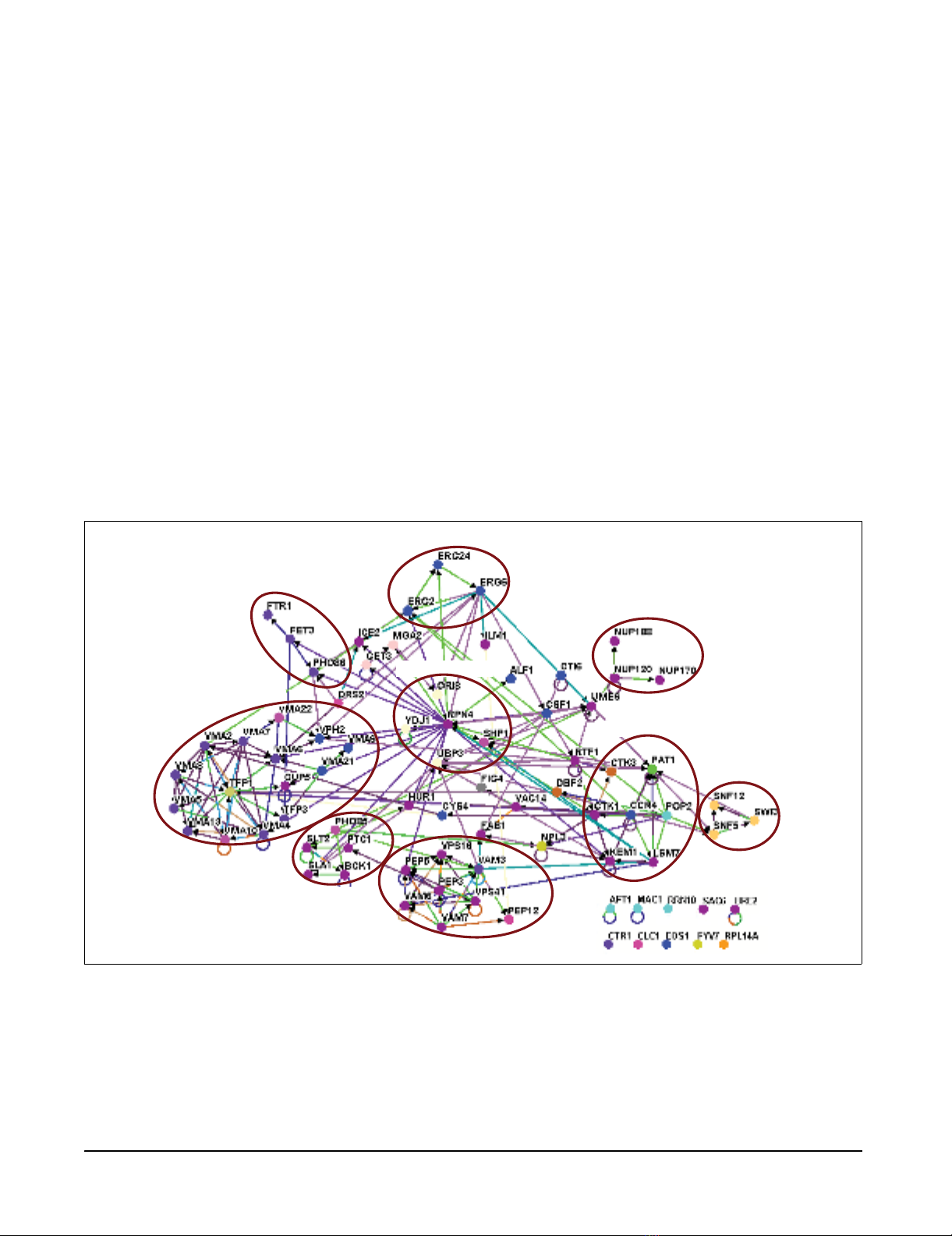
fram ework of the known yeast interactom e [22-24]. The 79
genes that when mutated cause sensitivity to both cadmium
an d nickel were initially addressed. As shown in Figure 2, 52
of these genes were iden tified as part of nine functional sub-
networks (a minim um of three gene products sharing at least
one GO biological process annotation and connected by at
least two physical or genetic interactions; see 'Materials an d
methods', below, for details on this analysis). Seventeen of the
rem aining genes could be traced to a particular subnetwork
but did not pass the above criterion , whereas the other ten
rem ained as 'solitary' entries. Metal sensitivity phen otypes
for at least two deletion mutan ts random ly sampled from
each subnetwork were confirmed by independent serial dilu-
tion assays carried out on untagged strains of the opposite
mating type (data not shown).
In accordance with the tight relationship between metal tol-
erance and vacuole function ality highlighted by GO analysis,
the most populated subnetwork (subnetwork 1; P-value < 1.5
× 10 -18 ) comprises a large set of subunits, assembly factors,
an d regulators of V-ATPase, which is the enzyme responsible
for generating the electrochem ical poten tial that drives the
Interaction subnetworks among gene products whose disruption causes cadmium/nickel sensitivityFigure 2
Interaction subnetworks among gene products whose disruption causes cadmium/nickel sensitivity. Physical (110) and genetic (105) interactions were
identified computationally using the Network Visualization System Osprey [103]. Gene products are represented as nodes, shown as filled circles colored
according to their Gene Ontology (GO) classification; interactions are represented as node-connecting edges, shown as lines, colored according to the
type of experimental approach utilized to document interaction as specified in the BioGRID database [22] and in the Osprey reference manual. The nine
identified subnetworks (a minimum of three interacting gene products sharing at least one GO biologic process annotation and connected by at least two
physical or genetic interactions; see 'Materials and methods') are encircled and associated with a general function descriptor. Thirteen interacting gene
products whose interaction or functional similarity features do not satisfy the above criterion are shown outside encircled subnetworks; genes without any
reported interaction (or linked via essential genes, not addressed in this study) are shown at the bottom. Individual subnetworks were subjected to
independent verification by serial dilution growth assays carried on at least two untagged strains of the opposite mating type (see 'Materials and methods').
sn., subnetwork.
Vacuole fusion (sn. 2)
Proteasome (sn. 3)
Chromatin remodelling (sn. 4)
Nuclear pore complex (sn. 7)
ERG pathway (sn. 8)
Essential ion homeostasis (sn. 9)
CCR4 & other mRNA processing enzymes (sn. 6)
V-ATPase assembly/regulation (sn. 1)
Cell wall integrity pathway (sn. 5)

http://genomebiology.com/2008/9/4/R67 Genome Biology 2008, Volume 9, Issue 4, Article R67 Ruotolo et al. R67.5
Genome Biology 2008, 9:R67
active accum ulation of various ion s within the vacuole [25].
Also related to V-ATPase functionality (although not in cluded
in subnetwork 1) is Cys4, which is the first enzyme of cysteine
biosynthesis, whose disruption in directly interferes with vac-
uolar H+-ATPase activity [26]. An other highly populated sub-
network (subn etwork 2; P-value < 2 × 10 -5) contains eight
additional vacuole-related genes belongin g to either class B or
C 'vacuolar protein sorting' (vps) mutants, whose deletion
respectively causes a fragm en ted vacuole m orphology or lack
of any vacuole-like structure [27,28]. This indicates that
defects in specific aspects of vacuole functionality as well as in
late steps of vesicle transport to, an d fusion with, the vacuole
cause sen sitivity to both m etal ions. In keeping with this view,
three additional proteins (Fab1, Fig4, and Vac14), which also
cause cadmium / nickel sen sitivity when disrupted, con trol
trafficking to the vacuolar lumen [29,30]. The role played by
the vacuole in metal toxicity modulation may entail both
metal sequestration within this organ elle as well as the clear-
an ce of metal-damaged macrom olecules.
Connected with these vacuole-related hot spots, which
include a num ber of genes previously associated with cad-
mium (but not nickel) tolerance [7], are five additional sub-
networks. One of them (subnetwork 3; P-value < 7 × 10 -2)
com prises the master regulator Rpn4, which is required for
proteasom e biogenesis, an d three ubiquitin-related proteaso-
mal components (Qri8 , Shp1, an d Ubp3), thus reinforcing the
notion that abnormal protein degradation plays an im portant
role in toxic metal tolerance [31-33]. Other components pre-
viously associated with tolerance to cadm ium an d to other
stressors include three subunits of the chromatin rem odeling
com plex SWI/ SNF (SWItch/ Sucrose NonFerm enting; sub-
network 4; P-value < 0.1) [34] and a group of regulators of the
cell wall integrity/ m itogen-activated protein kinase signaling
pathway (subn etwork 5; P-value < 3.4 × 10⁻⁶) [35,36]. These
are functionally linked to the secon d largest subnetwork (sub-
network 6; P-value < 9.1 × 10 -5), which is centered on Ccr4
an d its associated proteins. Ccr4 is a multifunctional mRNA
deadenylase that can be part of mRNA decay as well as tran -
scriptional regulatory complexes in association with the NOT
factors [37]. Non e of the NOT deletion mutan ts was identified
as metal sen sitive, whereas a few other transcriptional regu-
lators interacting with Ccr4 (for example, Dbf2 and Rtf1)
cause cadmium / nickel sen sitivity when disrupted. Pop2,
an other major deadenylase in S. cerevisiae [37], along with
three additional RNA processin g enzymes (Kem 1, Lsm7, and
Pat1), were also found am ong cadmium/ nickel sensitive
mutants. Previously known to be involved in the response to
DNA damaging agents [38], these proteins thus appear to
play a role also in metal toleran ce, which might be aim ed at
ensuring proper tran slational/ m etabolic reprogramm ing
under stress condition s. This finding, along with the identifi-
cation of cadmium / nickel-sensitive m utations affecting three
nuclear pore com plex subunits (subnetwork 7; P-value < 7.3
× 10-4) and a mRNA export factor (Npl3), points to mRNA
decay and trafficking (particularly nuclear export) as a novel
hot spot of metal toxicity.
The last two subnetworks pertain to ergosterol biosynthesis
(subnetwork 8; P-value < 9.8 × 10 -4), which critically influ-
ences the structural and function al integrity of the plasma
membran e (Additional data file 1 [Figure S1B] shows a repre-
sentative phen otype), and to essen tial ion hom eostasis (sub-
network 9; P-value < 0 .12). The latter includes the
endoplasmic reticulum exit protein Pho86, which is required
for plasma m em brane translocation of the Pho84 phosphate
transporter, the high-affinity iron transport com plex Ftr1/
Fet3, and a transcription factor (encoded by the solitary gene
AFT1) that positively regulates FTR1/FET3 expression. All
these genes cause cadm ium/ n ickel sensitivity when m utated.
A possible explanation for this finding is that toxic metals can
make iron , an d other essential ions, lim iting for cell growth
(see below). In fact, on e copper transporter (Ctr1) and a
copper uptake-related transcription factor (Mac1) were also
found among the cadmium / nickel-sensitive mutants in our
screen.
Metal-specific sensitive mutants
A similar interactom e analysis was applied to deletion
mutants that proved to be specifically sensitive to nickel or
cadmium . As shown in Table 1 (an d Additional data files 3
an d 4), this led to the identification of seven m etal-specific
subnetworks and to the inclusion of nickel and cadm ium spe-
cific mutants into previously iden tified subnetworks. Espe-
cially noteworthy are the nickel-specific expansion of the
nuclear pore com plex (subnetwork 7; P-value < 1 × 10 -4) and
the many cadmium -specific mutants added to subnetwork 4
(P-value < 1.7 × 10 -3), which includes various com ponents of
the chrom atin modification com plexes SAGA and INO80 ,
plus the histon e deacetylase HDA1. Proteins in volved in his-
tone acetylation may affect metal toleran ce by in fluencing
DNA reactivity as well as DNA accessibility to repair enzymes,
or by influencing the expression of genes needed for recovery.
The selective enrichm en t of cadm ium -sensitive mutants
within this subn etwork (as well as in the cadmium -specific
subnetwork 'DNA repair'; subnetwork 12; see below) is not
too surprising, if on e considers the known gen otoxic effects of
cadmium , caused by in terference with DNA repair [6,8].
Only one of the new subnetworks (subnetwork 10 ; P-value <
1.6 × 10 -3) was foun d to be specifically associated with nickel
sensitivity (Table 1 and Addition al data file 3). This includes
various components of a m ultiprotein complex (Adaptor Pro-
tein com plex AP-3) that is in volved in the alkalin e phos-
phatase (ALP) path way for protein transport from the Golgi
to the vacuole. At variance with the other Golgi-to-vacuole
transport route (the so-called 'carboxypeptidase Y' [CPY]
pathway), which proceeds through an endosom e interm edi-
ate and includes a num ber of compon ents that when dis-
rupted cause cadm ium sensitivity (see subnetwork 15 in Table
1), the ALP pathway directly targets its cargo proteins to the

![Vaccine và ứng dụng: Bài tiểu luận [chuẩn SEO]](https://cdn.tailieu.vn/images/document/thumbnail/2016/20160519/3008140018/135x160/652005293.jpg)