RESEARCH Open Access
The updating of clinical practice guidelines:
insights from an international survey
Pablo Alonso-Coello
1,2
, Laura Martínez García
1*
, José Miguel Carrasco Gimeno
3
, Ivan Solà
1
, Safia Qureshi
4
and
Jako S Burgers
5
, for the Updating Guidelines Working Group
Abstract
Background: Clinical practice guidelines (CPGs) have become increasingly popular, and the methodology to
develop guidelines has evolved enormously. However, little attention has been given to the updating process, in
contrast to the appraisal of the available literature. We conducted an international survey to identify current
practices in CPG updating and explored the need to standardize and improve the methods.
Methods: We developed a questionnaire (28 items) based on a review of the existing literature about guideline
updating and expert comments. We carried out the survey between March and July 2009, and it was sent by email
to 106 institutions: 69 members of the Guidelines International Network who declared that they developed CPGs;
30 institutions included in the U.S. National Guideline Clearinghouse database that published more than 20 CPGs;
and 7 institutions selected by an expert committee.
Results: Forty-four institutions answered the questionnaire (42% response rate). In the final analysis, 39 completed
questionnaires were included. Thirty-six institutions (92%) reported that they update their guidelines. Thirty-one
institutions (86%) have a formal procedure for updating their guidelines, and 19 (53%) have a formal procedure for
deciding when a guideline becomes out of date. Institutions describe the process as moderately rigorous (36%) or
acknowledge that it could certainly be more rigorous (36%). Twenty-two institutions (61%) alert guideline users on
their website when a guideline is older than three to five years or when there is a risk of being outdated. Twenty-
five institutions (64%) support the concept of “living guidelines,”which are continuously monitored and updated.
Eighteen institutions (46%) have plans to design a protocol to improve their guideline-updating process, and 21
(54%) are willing to share resources with other organizations.
Conclusions: Our study is the first to describe the process of updating CPGs among prominent guideline
institutions across the world, providing a comprehensive picture of guideline updating. There is an urgent need to
develop rigorous international standards for this process and to minimize duplication of effort internationally.
Background
Clinical practice guidelines (CPGs) have become increas-
ingly popular over the last two decades. In parallel, the
methodology to develop guidelines has evolved enor-
mously [1,2]. Major attention has been given to the selec-
tion and appraisal of the available literature, becoming
progressively more systematic and comprehensive. The
harmonization of grading systems to classify the quality
of the evidence and the strength of recommendations has
beenahotissueintheguidelinearena[3].Asaresult,
the quality of guidelines has been improved in the last
decade. Nevertheless, there is still important room for
improvement [4].
In guideline programs, the updating of guidelines is
often scheduled irregularly [5]. Although there is no
fixed lifespan for a guideline, an update every three to
five years is generally recommended [6,7]. However,
information about the process and methods for updating
used by guideline organizations is lacking. Only few
published research studies are available on this topic
[6-9]. Few organizations include chapters or information
on guideline updating in their handbooks on guideline
development [1,2].
* Correspondence: laura.martinez.garcia@cochrane.es
1
Iberoamerican Cochrane Centre, Institute of Biomedical Research (IIB Sant
Pau), (C/Sant Antoni Maria Claret 171), Barcelona (08041), Spain
Full list of author information is available at the end of the article
Alonso-Coello et al.Implementation Science 2011, 6:107
http://www.implementationscience.com/content/6/1/107
Implementation
Science
© 2011 Alonso-Coello et al; licensee BioMed Central Ltd. This is an Open Access article distributed under the terms of the Creative
Commons Attribution License (http://creativecommons.org/licenses/by/2.0), which permits unrestricted use, distribution, and
reproduction in any medium, provided the original work is properly cited.

A significant step forward is the synthesis of available
research on updating of CPGs included in the handbook
of the Programme of Clinical Practice Guidelines in the
Spanish National Health System. This programme is
coordinated by GuíaSalud http://www.guiasalud.es, an
organization created in 2002 to promote the develop-
ment and use of evidence-based guidelines and other
tools for improving quality of care in the Spanish Health
System. Following these objectives, a common methodol-
ogy for producing, implementing , and updating CPGs
has been developed [10-12]. Within this context, we con-
ducted an international survey with the aim of identifying
current practices in guideline updating, exploring the
need for standardization, and, ultimately, improving the
guideline-updating process.
Methods
Design
We employed a cross-sectional design for this study.
Study population
Our study population included key informants and
experts affiliated with organizations dedicated to CPG
development.
Study sample
We selected participant institutions in spring 2009 using
the following criteria: (a) members of the Guidelines
International Network http://www.g-i-n.net/ that
declared that they developed CPGs, (b) institutions
included in the U.S. National Guideline Clearinghouse
http://www.guideline.gov/ that had published more than
20 CPGs, and (c) institutions additionally selected by an
expert committee based on relevance. The expert com-
mittee was composed of 12 health professionals and
methodologists with experience in the field of guideline
methodology and information specialists. We sent an
email to each institution through the address identified
via the internet. If the person receiving this email was not
the person responsible for this matter, we requested that
it be forwarded to whoever they considered appropriate
within that institution to answer the survey.
Intervention
We designed a self-administered survey (see Additional
File 1) based on a literature review about guideline
updating (unpublished). For this review, we studied web-
sites of institutions that had published methodological
handbooks and searched for published studies in MED-
LINE (via PubMed) until June 2008 using a combination
of descriptors (Practice Guidelines as Topic; Clinical
Practice Guidelines) and free text terms (clinical guide-
line, practice guideline, updat*, up to date).
The survey comprised 28 items grouped into four
domains. The first domain included characteristics of
the organization (five items), the second was dedicated
to the process of guideline updating (16 items), the
third was aimed at the way users are alerted about
guideline updates (two items), and the last domain
focused on the future perspective on guideline updating
(five items). Nineteen items included a free text area in
order to gather comments or additional information.
Specificsoftwarewasusedtodesignthesurveyandto
collect the responses http://www.surveymonkey.com.
The survey was pilot tested among five institutions (three
national and two international). Their feedback was used
to refine the survey for optimal understanding. Between
March and July 2009, we sent the survey via email to per-
sons of selected institutions. We sent three reminders at
intervals of four weeks to those institutions that had not
responded. Questionnaires with no response on more
than 20% of the items were returned with the request to
complete the questionnaire.
Analysis
Descriptive statistics were used to analyze the data. We
calculated absolute frequencies and proportions for all
items. We evaluated nonresponding institutions and
compared their contact source (Guidelines International
Network, National Guideline Clearinghouse, or expert
committee), country, and number of CPGs produced
with responding institutions using Fisher’s exact test or
Mann-Whitney U test (alpha was set at 0.05). We finally
excluded from the analysis four items (B13-B16, Addi-
tionalFile1),astheyweredeemedtobemorerelatedto
guideline development. We assessed the guideline-updat-
ing process of responding institutions by comparing the
number of years developing CPGs (≤10 years of experi-
ence or > 10 years of experience), contact source, and
number of guidelines published per year using Fisher’s
exact test (alpha was set at 0.05). Data analysis was per-
formed using SPSS statistical software, version 17.0
(SPSS Inc., Chicago, IL, USA). By consensus of the three
first authors, we collected and provide the most relevant
themesbroughtupbytherespondersinthefreetext
area (responses to free text questions available from the
authors on request).
Ethics approval was obtained from the hospital ethics
committee (Clinical Research Ethics Committee, Hospi-
tal de la Santa Creu i Sant Pau, #74/2010).
Results
Characteristics of study sample
One hundred and fourteen institutions met at least one
of the inclusion criteria. We contacted 106 of these
institutions by email. We received a reply from 44
Alonso-Coello et al.Implementation Science 2011, 6:107
http://www.implementationscience.com/content/6/1/107
Page 2 of 8

institutions (42% response rate) after three reminders. In
the final analysis, we included 39 questionnaires. Five
questionnaires were excluded because more than 20% of
the questions were not answered (Figure 1).
Characteristics of the responding institutions are pre-
sented in Table 1. The vast majority reported that they
update their guidelines (n = 36, 92%). Nonresponding
and excluded institutions (n = 67) did not differ from
the responding institutions with regard to their contact
source (Guidelines International Network, National
Guideline Clearinghouse, or expert committee; Fisher’s
exact test p= .671), country of origin (Fisher’s exact test
p= .283), and the number of guidelines produced
(Mann-Whitney U test p= .07).
Characteristics of the guideline-updating process
Sixteen institutions (44%) reported that they check more
than five guidelines for the need for annual updating,
some institutions reported variable figures (n = 10, 28%),
and the remaining 10 (28%) reported that they check five
or less per year (Table 2, Figure 2). Over 60% of the insti-
tutions reported a time frame for considering a guideline
update between three to five years. Thirty-one institu-
tions (86%) indicated that they have a formal procedure
for updating their guidelines, but only 19 (53%) have a
formal procedure for deciding when a guideline becomes
out of date. Nine institutions (25%) piloted the updating
process to evaluate feasibility, inconveniences, or added
value compared to other strategies.
Twenty-six institutions (72%) described the process as
moderately rigorous or acknowledged that it could cer-
tainly be more rigorous. Institutions that have been devel-
oping guidelines for more than 10 years are more likely to
have a formal updating procedure (Fisher’s exact test p=
.047) and a rigorous process for guideline updating (Fish-
er’s exact test p= .039) than are institutions who have
been developing guidelines for 10 or less years (Table 3). In
general, the original guideline group or an expert commit-
tee is responsible for the decision about updating the
guideline (Table 4, Figure 3). The original guideline authors
are most often involved in the updating process (n = 32,
89%), followed by the institution’s staff (n = 30, 83%). In 13
institutions (36%), patients are involved in the process.
Institutions tend to check and review different parts of
the guideline when deciding about the need to update a
guideline. Twenty-nine institutions (81%) said they check
all recommendations and the full guideline text. Less fre-
quently, key questions and recommendations, supple-
mentary annexes, and patient information are checked.
Figure 1 Participation diagram.
Table 1 Organization characteristics (n = 39)
a
n (%)
Contact source
Guidelines International Network 27 (69.2)
U.S. National Guideline Clearinghouse 9 (23.1)
Expert committee 3 (7.7)
Continent
Europe 17 (43.6)
North America 15 (38.5)
Oceania 5 (12.8)
South America 1 (2.6)
Asia 1 (2.6)
Type of organization
Scientific/professional society/association 20 (51.3)
Public institution 14 (35.9)
Other (Federal institute, nonprofit organization) 5 (12.8)
Number of years developing guidelines
> 10 years 24 (61.5)
6-10 years 12 (30.8)
≤5 years 3 (7.7)
Number of guidelines published
b
≤5 per year 24 (61.5)
> 5 per year 14 (35.9)
Updating guidelines
Yes 36 (92.3)
No 3 (7.7)
a
Analysis of included institutions;
b
One institution unknown.
Alonso-Coello et al.Implementation Science 2011, 6:107
http://www.implementationscience.com/content/6/1/107
Page 3 of 8
The institutions use several search strategies (Table 4,
Figure 4). Twenty institutions (56%) ran the original
search strategies and did additional horizon scanning, 14
institutions (40%) use more specific strategies than the
original strategies, and seven (20%) institutions run other
searches. Twenty-two institutions (61%) alert guideline
users on their website when a guideline is older than
three to five years or when there is a risk of being
outdated.
Future plans for updating guidelines
Twenty-five institutions (64%) supported the concept of
“living guidelines”(Table 5, Figure 5), defined as guidelines
that are continuously monitored and updated [13]. The
majority of institutions, however, reported difficulties and
inconvenience in putting this concept in practice. Almost
half of the institutions reported that they have plans to
improve their guideline-updating process (n = 18, 46%).
More than half of the institutions are willing to share
resources with other organizations (n = 21, 54%). How-
ever, only 20% of the organizations reported that they
would rely on other guidelines when updating or develop-
ing a guideline.
Discussion
Our study is the first international survey about the pro-
cess of updating CPGs among guideline institutions across
the world. Although most institutions reported having a
process for updating guidelines, the process is not standar-
dized and could be more rigorous. Many guideline develo-
pers, including those with long-standing experience,
reported that they have plans to improve this process.
Others are waiting for more evidence before modifying
their current system.
Surprisingly, half of the organizations do not have a
formal process for deciding when a guideline becomes
outdated. Guideline developers need to recognize this
limitation when promoting guidelines as support tools
for the practice of evidence-based medicine. Similarly,
guideline users should be cautious when relying on
guidelines of a certain age. This lack of rigor in metho-
dology in general was recently found in a systematic
review about the quality of guidelines in the last two
decades [4,14]. On the other hand, most organizations
in our survey showed awareness about using insufficient
methods for updating guidelines and intended to
improve their processes. Up to 72% think that their
updating process is only moderately rigorous or could
be more rigorous. This is an issue that guideline develo-
pers need to address. This finding is consistent with the
fact that only 20% of organizations in our survey would
rely on other guidelines when updating or developing a
guideline. This is an unfortunate paradox given the
actual scenario, where most institutions would like to be
Table 2 The guideline-updating process (n = 36)
a
n (%)
Number of guidelines checked
> 5 per year 16 (44.4)
Variable 10 (27.8)
3-5 per year 6 (16.7)
< 3 per year 4 (11.1)
Number of guidelines updated
Unknown 14 (38.9)
≤5 per year 11 (30.6)
> 5 per year 7 (19.4)
Variable 4 (11.1)
Time frame to check updating
3-5 years 22 (61.1)
< 3 years 11 (30.6)
Variable 3 (8.3)
Formal procedure to update guidelines
Yes 31 (86.1)
No 5 (13.9)
Formal procedure to inform about guidelines being out
of date
Yes 19 (52.8)
No 17 (47.2)
Formal method to decide update section or full
guideline
No 23 (63.9)
Yes 11 (30.6)
Unknown 2 (5.6)
Pilot testing of updating process
No 24 (66.7)
Yes 9 (25.0)
Unknown 3 (8.3)
Rigor of the updating process
Could certainly be more rigorous 13 (36.1)
Moderately rigorous 13 (36.1)
Very rigorous 10 (27.8)
a
Analysis of institutions updating guidelines.
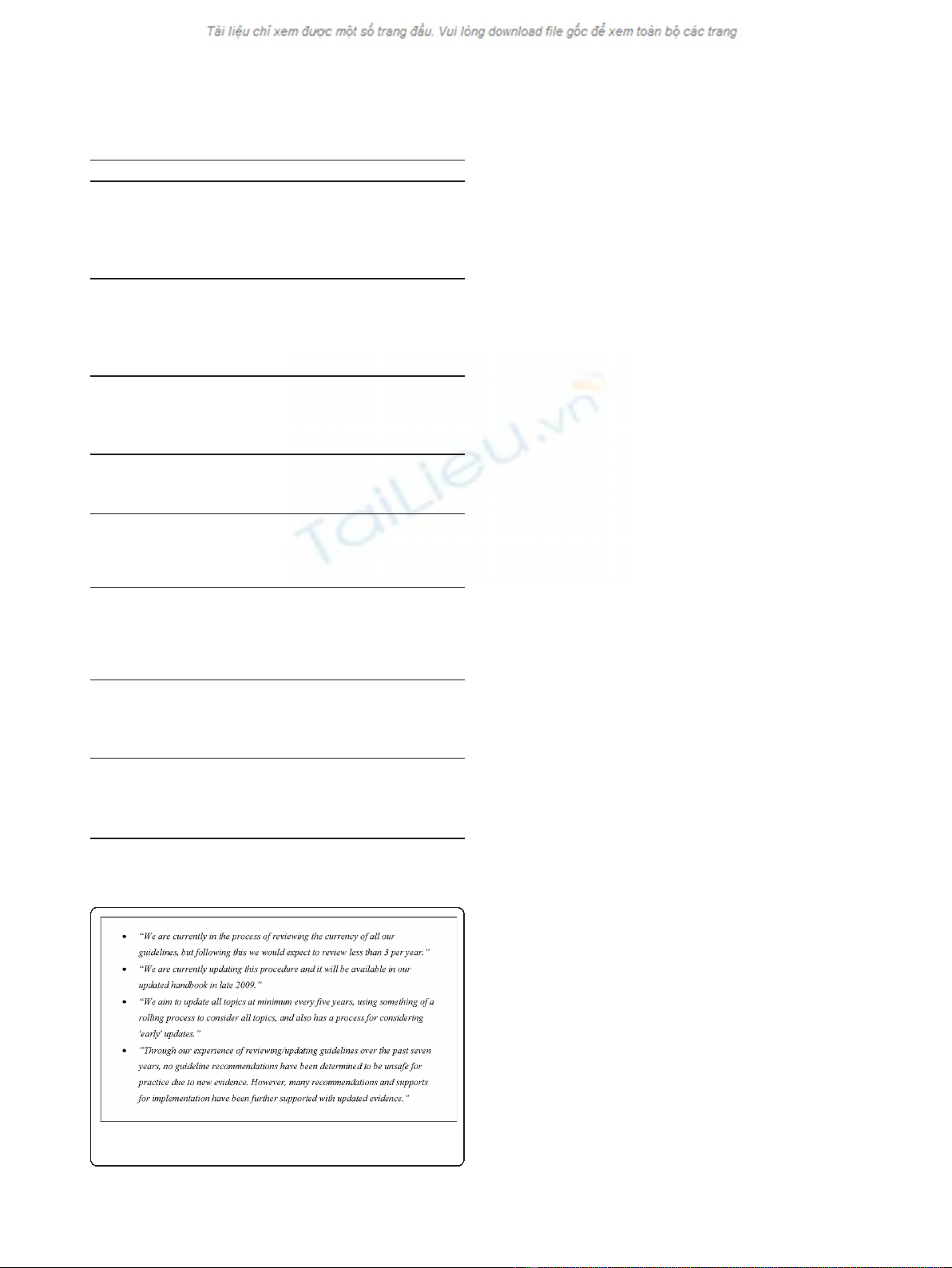
Figure 2 Box of relevant comments about the characteristics
of the guideline-updating process.
Alonso-Coello et al.Implementation Science 2011, 6:107
http://www.implementationscience.com/content/6/1/107
Page 4 of 8

Table 3 The guideline-updating process by numbers of years developing guidelines (n = 36)
a
Numbers of years developing guidelines Total
≤10 years > 10 years
n (%) n (%) n (%) p
b
Formal procedure to update guidelines
Yes 9 (69.2) 22 (95.7) 31 (86.1) .047
No 4 (30.8) 1 (4.3) 5 (13.9)
Time frame to check updating
3-5 years 7 (53.8) 15 (65.2) 22 (61.1) .094
< 3 years 3 (23.1) 8 (34.8) 11 (30.6)
Varies 3 (23.1) –3 (8.3)
Rigor of the updating process
Could certainly be more rigorous 8 (61.5) 5 (21.7) 13 (36.1) .039
Moderately rigorous 4 (30.8) 9 (39.1) 13 (36.1)
Very rigorous 1 (7.7) 9 (39.1) 10 (27.8)
a
Analysis of institutions updating guidelines;
b
Fisher’s exact test.
Table 4 Characteristics of the guideline-updating process (n = 36)
a
Answers
Yes No Unknown
n (%) n (%) n (%)
Who decides the need for updating
b
Guideline group 18 (50.0) 18 (50.0) –
Expert committee 15 (41.7) 21 (58.3) –
Guideline coordinator 9 (25.0) 27 (75.0) –
Other 9 (25.0) 27 (75.0) –
Standing editorial staff 6 (16.7) 30 (83.3) –
Who participates in the updating process
c
Original guideline authors 32 (88.9) –4 (11.1)
Staff of organization 30 (83.3) –6 (16.7)
New group of experts 25 (69.4) 4 (11.1) 7 (19.4)
Original information managers/specialist 21 (58.3) 5 (13.9) 10 (27.8)
Original external reviewers 20 (55.6) 6 (16.7) 10 (27.8)
Patients 13 (36.1) 11 (30.6) 12 (33.3)
Others 7 (19.4) 5 (13.9) 24 (66.7)
Which part of the guidelines get checked
c
Full text 29 (80.6) 2 (5.6) 5 (13.9)
All recommendations 29 (80.6) 1 (2.8) 6 (16.7)
Key questions 25 (69.4) 1 (2.8) 10 (27.8)
Key recommendations 25 (69.4) –11 (30.6)
Annexes 20 (55.6) 3 (8.3) 13 (36.1)
Patient information 19 (52.8) 5 (13.9) 12 (33.3)
Which kind of search run
b
Original search strategies plus some horizon scanning 20 (55.6) 16 (44.4) –
Original searches strategies modified to be specific rather than sensitive 14 (38.9) 22 (61.1) –
Original search strategies 10 (27.8) 26 (72.2) –
Other 7 (19.4) 29 (80.6) –
a
Analysis of institutions updating guidelines;
b
Closed-ended questions yes/no;
c
Aggregation responses yes/partially.
Alonso-Coello et al.Implementation Science 2011, 6:107
http://www.implementationscience.com/content/6/1/107
Page 5 of 8

![PET/CT trong ung thư phổi: Báo cáo [Năm]](https://cdn.tailieu.vn/images/document/thumbnail/2024/20240705/sanhobien01/135x160/8121720150427.jpg)