
BioMed Central
Page 1 of 6
(page number not for citation purposes)
AIDS Research and Therapy
Open Access
Hypothesis
An alternative methodology for the prediction of adherence to anti
HIV treatment
I Richard Thompson1, Penelope Bidgood2, Andrea Petróczi1,
James CW Denholm-Price2, Mark D Fielder*1 and The EuResist Network
Study Group3
Address: 1School of Life Sciences, Kingston University, Penrhyn Road, Kingston-upon-Thames. KT1 2EE, UK, 2Faculty of Computing, Information
Systems and Mathematics, Kingston University, Penrhyn Road, Kingston-upon-Thames. KT1 2EE, UK and 3EuResist, Via del Commercio, 36 -
00154 Rome - Italy http://www.euresist.org
Email: I Richard Thompson - k05437@kingston.ac.uk; Penelope Bidgood - bidgood@kingston.ac.uk;
Andrea Petróczi - a.petroczi@kingston.ac.uk; James CW Denholm-Price - j.Denholm-Price@kingston.ac.uk;
Mark D Fielder* - m.fielder@kingston.ac.uk; The EuResist Network Study Group - f.incardona@informacro.info
* Corresponding author
Abstract
Background: Successful treatment of HIV-positive patients is fundamental to controlling the progression to
AIDS. Causes of treatment failure are either related to drug resistance and/or insufficient drug levels in the blood.
Severe side effects, coupled with the intense nature of many regimens, can lead to treatment fatigue and
consequently to periodic or permanent non-adherence. Although non-adherence is a recognised problem in HIV
treatment, it is still poorly detected in both clinical practice and research and often based on unreliable
information such as self-reports, or in a research setting, Medication Events Monitoring System caps or
prescription refill rates. To meet the need for having objective information on adherence, we propose a method
using viral load and HIV genome sequence data to identify non-adherence amongst patients.
Presentation of the hypothesis: With non-adherence operationally defined as a sharp increase in viral load in
the absence of mutation, it is hypothesised that periods of non-adherence can be identified retrospectively based
on the observed relationship between changes in viral load and mutation.
Testing the hypothesis: Spikes in the viral load (VL) can be identified from time periods over which VL rises
above the undetectable level to a point at which the VL decreases by a threshold amount. The presence of
mutations can be established by comparing each sequence to a reference sequence and by comparing sequences
in pairs taken sequentially in time, in order to identify changes within the sequences at or around 'treatment
change events'. Observed spikes in VL measurements without mutation in the corresponding sequence data then
serve as a proxy indicator of non-adherence.
Implications of the hypothesis: It is envisaged that the validation of the hypothesised approach will serve as
a first step on the road to clinical practice. The information inferred from clinical data on adherence would be a
crucially important feature of treatment prediction tools provided for practitioners to aid daily practice. In
addition, distinct characteristics of biological markers routinely used to assess the state of the disease may be
identified in the adherent and non-adherent groups. This latter approach would directly help clinicians to
differentiate between non-responding and non-adherent patients.
Published: 1 June 2009
AIDS Research and Therapy 2009, 6:9 doi:10.1186/1742-6405-6-9
Received: 10 October 2008
Accepted: 1 June 2009
This article is available from: http://www.aidsrestherapy.com/content/6/1/9
© 2009 Thompson et al; licensee BioMed Central Ltd.
This is an Open Access article distributed under the terms of the Creative Commons Attribution License (http://creativecommons.org/licenses/by/2.0),
which permits unrestricted use, distribution, and reproduction in any medium, provided the original work is properly cited.

AIDS Research and Therapy 2009, 6:9 http://www.aidsrestherapy.com/content/6/1/9
Page 2 of 6
(page number not for citation purposes)
Background
Whilst the first cases of AIDS were identified in the USA
[1,2], and shortly after in Europe [3,4] it is now known
that the disease originated from sub-Saharan Africa [5],
which currently holds two thirds of the world's 33.2 mil-
lion people living with HIV. Recent estimates also suggest
that Africa has 1.7 million of the global 2.5 million indi-
viduals newly infected during 2007 [6]. During 1983,
3,064 people in the US were found to have AIDS, of which
a third died [7]; the number infected had risen to 20,745
by 1987 [8]. The rapid spread of HIV over the early pre-
treatment years is testament to the aggressive nature of the
disease and the importance of using effective drugs to
combat this infection. However, a recent analysis showed
that life expectancy at age 20 years had increased by over
13 years since the introduction of combination antiretro-
viral therapy and currently life expectancy of HIV patients
at age 20 is up to two thirds that of the general non-HIV
population [9].
At present, HIV is treated with a combination of drugs
known as highly active anti-retroviral therapy (HAART) or
combined anti-retroviral therapy, which works on the
principle of using a combination of different classes of
drugs to simultaneously impact a range of viral targets.
The extent to which patients adhere to their therapy
regime is pivotal to treatment success. Although adher-
ence-nonadherence occurs on a continuum, in the case of
HIV treatment exceptionally high levels of adherence (>
95%) to HAART are required to suppress viral replication
[10].
Treatment change decisions for patients with AIDS who
are undergoing HAART are commonly based on clinical
treatment history data, ideally including VL, CD4 and
genotype information with adherence assumed, based on
practical experience or self-declared. Thus designing suc-
cessful treatment regimes requires an accurate under-
standing of factors affecting or affected by patients'
adherence.
The importance of adherence
The side effects from HAART drugs affect most patients
and can be debilitating. Since HIV causes long-term infec-
tion, patients often become fatigued by the constant
necessity to take medication and from their severe side
effects. Whilst these drugs are highly effective when taken
correctly, incorrect use can lead to the development of
resistance. Contrastingly, adherence levels which are too
low to generate resistance do not decrease or delay the
progression to AIDS [11], but a 10% improvement in
adherence can lead to a 28% decrease in the risk of devel-
oping AIDS [12].
Whilst research has shown that 100% adherence is not
necessary for viral suppression, accumulation of drug
resistance increases with adherence where patients have
incomplete viral suppression [10,11]. It has been
observed that adherent patients have longer periods of
successful treatment and lower mortality rates than
patients who are less adherent [11,13], but patients with
lower levels of adherence carry fewer resistant strains
[10,11]. This drug dependent adherence/resistance rela-
tionship is typically stronger for protease inhibitors (PI)
than for other drug classes [11,13,14]. For example within
a population of patients on a single-PI therapy, maximum
drug resistance occurs at around 80% adherence [14]. In
addition, poor adherence in patients with discordant
responses (exhibiting a positive response to treatment in
VL but not CD4, or vice versa) has been associated with
increased mortality, as these patients are thought to be
less able to produce complete responses to treatment [15].
The literature provides a wealth of possible methodolo-
gies to improve patient adherence. Whilst work in Africa
has improved adherence through the instigation of work-
place clinics [16], work elsewhere has suggested that
improving patients knowledge and understanding of their
disease and its treatment, either by nursing staff or com-
munity-led through pharmacies, has a positive impact on
adherence levels. There is evidence to suggest that the
impact upon adherence is minimal when this information
is supplied by clinicians. This effect may be due to the
impact of the patient-'provider' interaction upon a
patient's confidence to adhere. A recent pilot study
showed that mobile phone reminders were effective in
encouraging patients to consistently maintain high levels
of adherence throughout the study period [17]. However,
the researchers found that adherence waned following the
study and that longer monitoring periods may be more
beneficial to improving long-term adherence.
Modelling of patient data suggests that patients who feel
confident in their ability to adhere to their treatments are
more likely to adhere and maintain undetectable VL levels
[18]. This notion has been supported by recent patient
studies [19]. It has been observed that patients' prognosis
is likely to improve [19], through the development of
strong patient to care provider relationships and individ-
ualised treatment. More recently it has been shown that
hospitalisation of patients whilst initialising treatment
significantly improves their levels of long-term adherence
[20]. Johnson et al. suggests that adherence behaviour can
be influenced by a minimal educational effort prior to the
commencement of retroviral therapy [21] although there
is some concern over the long term efficacy when the
information content is low.

AIDS Research and Therapy 2009, 6:9 http://www.aidsrestherapy.com/content/6/1/9
Page 3 of 6
(page number not for citation purposes)
The ability of patients to understand both their disease
and its treatment has a major effect on adherence; by sup-
plying information in a (primarily) pictographic rather
than written form, researchers were able to demonstrate
improved understanding and compliance by patients with
literacy issues [22]. Patients who received didactic inter-
ventions were more likely to report high levels of adher-
ence and to achieve undetectable VL level. Self-reporting
did not inflate the effect of such interventions, yet objec-
tive measures of adherence tend to inflate effect size [23].
For comprehensive reviews of behavioural interventions
in HIV treatment and management there are a number of
published articles available, including Munro et al. [24]
and Strathdee & Patterson [25].
Evidence of adherence or lack of adherence
Given its importance, a plethora of literature focuses on
assessment of adherence, typically using medical variables
(CD4 counts, VL measures, plasma drug levels, biologic
surrogate markers and presence of the antiretroviral med-
ication in the body), inventory-type indicators (pill
counts, pharmacy refills, electronic medication moni-
tors), self-reports (patient diaries) or questionnaires on
behavior or psychological assessments of factors assumed
to predispose the risks for nonadherence [10]. However, a
considerable threat to validity is embedded in each of
these assessments: In real-life situations and observational
studies, medical variables are likely to be confounded by
other unmeasured factors (such as co-infection, nonad-
herence, drug use). The validity and reliability of self-
reported information are questionable.
As yet there is no 'gold standard' for adherence measure-
ment in HIV patients and recent research [26] has sug-
gested that the use of multiple measures will be of greater
benefit than the continued search for a single defining
adherence measure. Current methods can be divided into
two forms: i) subjective, such as various self-report and
interview based methods and ii) semi-objective, such as
the use of MEMS caps and prescription refill rates; how-
ever, their link to actual behaviour is dubious.
It is apparent that the use of plasma drug levels to directly
measure drug concentrations would be the most accurate
and objective way of measuring adherence [27], however
using such a method outside the context of a clinical trial
has logistical and cost implications, even if patients were
to agree to having blood taken regularly for this additional
purpose.
Short-term changes in VL (a single low but detectable VL,
immediately preceded and followed by undetectable VL
measurements) have been shown to be associated with
short term decreases in adherence, associated with the
development of resistance and/or subsequent treatment
failure [28]. In previous work, in order to simplify the
analysis it has often been assumed that adherence is a
'constant' state influenced by a short list of factors, and
therefore patients were assumed to be either adherent or
non-adherent. However Lazo et al. [29] recently showed
that adherence to treatment is dynamic in nature and the
factors affecting increases in adherence are not the same as
those affecting decreases in adherence. Recently it has
been shown that many patients who miss treatments
often do so because they 'simply forgot' [30].
Presentation of the hypothesis
The importance of having accurate information on adher-
ence is underscored by the fact that in order to achieve
successful treatments, physicians must have accurate and
reliable information on the effectiveness and efficacy of
the prescribed treatment regime. To meet the need for
having objective information on adherence, a method is
proposed using VL and HIV genome sequence data to
observe adherence amongst patients.
Previous work has shown that VL is strongly predicted by
patient adherence, whereas drug resistance is a weaker
predictor of VL. Bangsberg et al. [31] have suggested that
the strength of the relationship may vary between clinical
settings, drug regimen and even study population.
Through modelling factors affecting variation in VL, Lla-
bre et al. [32] demonstrated that adherence explains about
half of a patient's VL variability. Previously, Moore et al.
have shown that poor responses to treatments may not be
related to the development of drug resistance mutations
[15].
Many studies have used current data from patients to
establish the relationships between VL and adherence
(examples include [15-17,19,22,23,33-37]). It is therefore
postulated that the strength of the relationship between
adherence and VL is such that where there is no evidence
of mutation, levels of adherence can be estimated through
patterns of change in VL. The challenge in this approach
arises from the need to identify whether the observed
changes in VL are due to developed drug resistance or
non-adherence. Hence the hypothesis is presented that
periods of non-adherence can be retrospectively observed
through changes in VL.
It is suggested that the adherence hypothesis could be val-
idated by analysing the rate of change in VL, in the context
of observed mutations within the HIV genome. It seems
likely that a gradual increase in VL would result from
something other than non-adherence, such as low level or
intermittent adherence. Non-adherence would be likely to
give rise to a sharp increase (high rate of change) in VL,
which would appear as 'spikes' in the VL time series. The
'spikes' could then be classified into the 'likelihood of
AIDS Research and Therapy 2009, 6:9 http://www.aidsrestherapy.com/content/6/1/9
Page 4 of 6
(page number not for citation purposes)
adherence/non-adherence' groupings based upon the rate
of change of VL and the presence of mutation.
Testing the hypothesis
The preliminary work relating to testing this hypothesis
requires longitudinal data that includes VL and sequence
data from patients. VL points should be collated to pro-
duce pairs of VL measurements relating to the start and
end points of an increase in log10 (VL) of greater than 2 log
– In keeping with the clinical practice underlying the
EuResist modelling work, this magnitude of change is sug-
gested as it would give a large enough change to avoid
inclusion of insignificant fluctuations in VL [38]. These
pairs of time points can then be associated with a HIV
sequence collected shortly beforehand, such as within a
few months of the first time point in the VL pair.
The HIV pol sequences should be compared to a reference
pol sequence and if possible to a previously collected
sequence. For information on HIV genomic sequencing
that will be used to test the hypothesis, see the back-
ground documents of the EuResist prediction engine [39].
In order to identify a sequence as being mutated it is nec-
essary to identify changes relative to both the reference
sequence and a prior sequence, this will ensure that muta-
tions in the sequence are not incorrectly associated with
the current treatment. Direct comparison of each
sequence with the reference sequence using tools such as
BLAST [40] and FASTA [41] would facilitate the removal
of mutation sequences occurring outside the time frame
of interest in order to identify mutations present within
each treatment change episode [38].
Once the mutation status has been ascertained, rates of
change in VL can be compared to a threshold value in
order to decide whether the patient is likely to have been
adherent during the period shortly before and during the
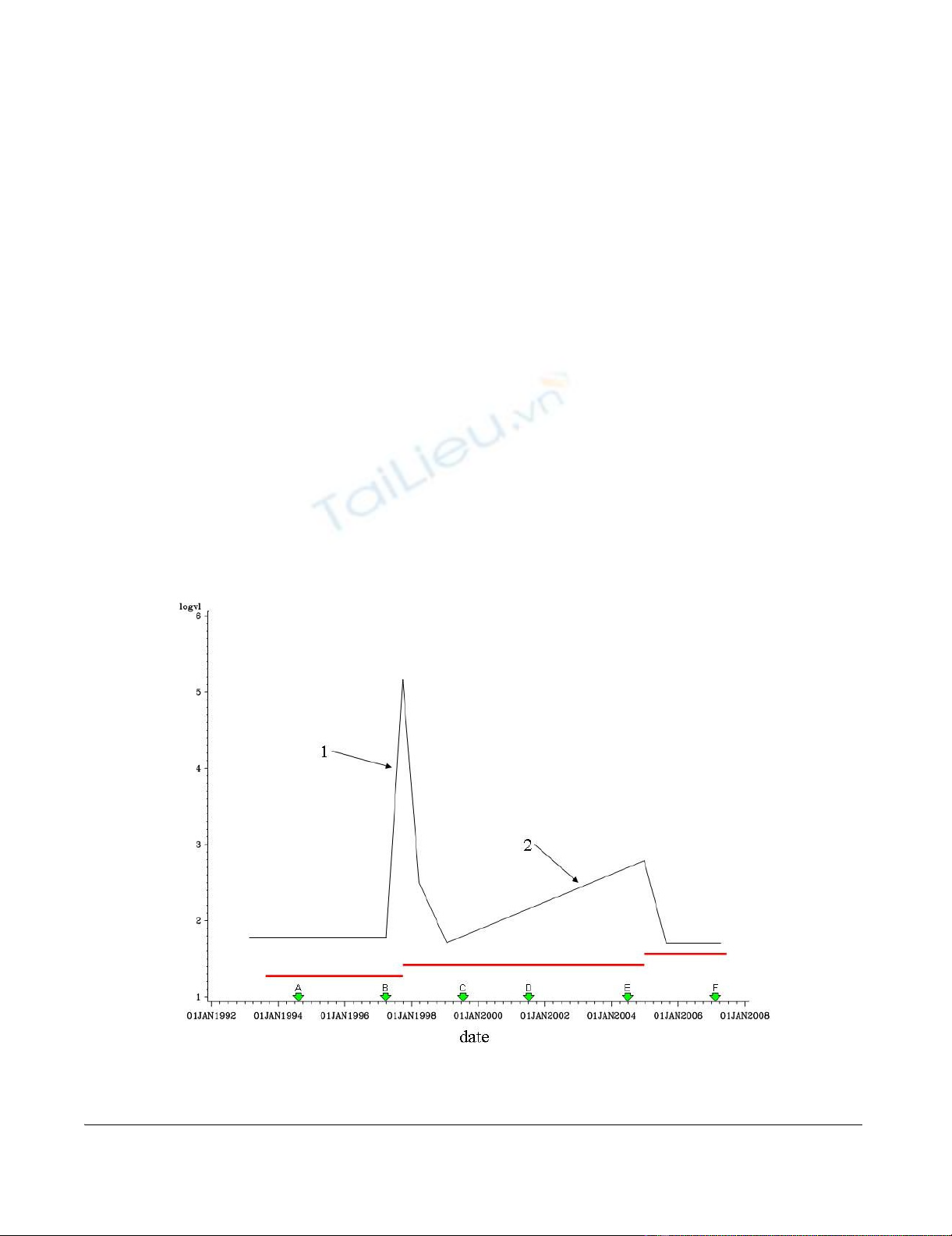
spike. As an example, Fig 1 shows illustrative data for a
hypothetical patient. The mutation status is defined as a
change in the sequence relative to the previous sequence
and to the reference sequence. For instance, in the figure
sequence B would be defined as mutated if it differed from
the reference sequence and also from sequence A.
The rate of change in log10 (VL) is defined as the increase
in log10(VL) divided by the time period over which it
Representative data for a theoretical patientFigure 1
Representative data for a theoretical patient. log10(viral load) is shown in Black, Treatment periods shown in red; HIV
pol gene sequences represented by green arrows.

AIDS Research and Therapy 2009, 6:9 http://www.aidsrestherapy.com/content/6/1/9
Page 5 of 6
(page number not for citation purposes)
occurred. For example, for spike 1 the rate would be (5.2–
1.8) divided by (number of days between 1 June 1998 and
1 Oct 1998). It is clear from the graph in Fig 1 that slope
2 is too shallow to be considered a spike but if sequence B
were found to be unmutated and the slope at spike 1 was
to exceed an as yet undetermined threshold value, the
possibility that this patient had been non-adherent during
the treatment period could be assessed.
Implications of the hypothesis
Whilst clearly preliminary work to validate this hypothe-
sis needs to be undertaken, if validated the information
gained could be used to corroborate and clarify verbal
adherence discussions between patients and care-provid-
ers, enabling care-providers to recognise adherence prob-
lems more accurately and identify opportunities to
provide appropriate (re-) education, assistance or regimen
change, to minimise disease progression.
If established, this approach will clearly allow for the level
of adherence to drug therapy regimes to be monitored.
Additionally, such an analysis would facilitate a more
accurate assessment of the progression of the patient in
terms of their disease status relative to treatment strata-
gem with a known integrity continuum, resulting in
improved treatment and better life expectancy of HIV
infected patients.
In clinical practice, removed from research studies utilis-
ing various methods to detail adherence in patients, clini-
cians routinely rely on verbal discussions to identify
periods of non-adherence. With a clear expectation for
adherence, it is plausible that some (or many) patients are
unwilling to openly admit non-adherence, leading to
inadvertently misleading their treating physicians. The
utilisation of VL data, with knowledge of the presence (or
lack) of drug resistant mutations, should allow clinicians
to form a more accurate picture of the adherence levels of
their patients. This will allow treatment change events and
clinical management alterations to be made that may pre-
vent or reduce the occurrence of patient non-adherence to
the therapeutic regime. It should be noted however, that
the levels of accuracy in this type of analysis are likely to
be dependent on the time periods between VL measure-
ments, which are typically every six months in patients
with HIV. The limitations of this hypothesis as applied to
clinical practice include the access to and costs of sequenc-
ing.
Therefore, it is envisaged that the hypothesised approach
will serve as a first step on the road to clinical practice. The
information on adherence inferred from clinical data is a
crucially important feature of treatment prediction mod-
els provided for practitioners to aid daily practice. In addi-
tion, distinct characteristics of biological markers
routinely used to assess the state of the disease may be
identified in the adherent and non-adherent groups. This
latter approach would directly help clinicians to differen-
tiate between non-responding and non-adherent patients.
Competing interests
The authors declare that they have no competing interests.
Authors' contributions
All authors have contributed to the hypothesis develop-
ment, drafting and critically reviewing the manuscript.
EuResist: the consortium supplied the databases upon
which the hypothesis was formulated. All authors have
read and approved the final manuscript.
Authors' informations
IRT is a PhD student, PB is a Principal Lecturer in Statis-
tics, JDP is a Principal Lecturer in Computing, AP is a
Reader in Public Health, MDF is a Reader in Medical
Microbiology. EuResist is a research consortium funded
under the EC's FP6 IST programme (for member institu-
tions and researchers, see http://www.euresist.org).
Acknowledgements
The authors would like to particularly thank Maurizio Zazzi [ARCA],
Anders Sönnerborg [Karolinska], Rolf Kaiser [Arevir] for their data and
Yardena Peres [IBM, Israel] for the integration of these data; all other part-
ners within the EuResist project for input and discussion at various points
throughout this work, including other members from Informa S.r.I.(Rome,
Italy), Università degli Studi di Siena (University of Siena, Italy), Karolinska
Institutet (Karolinska Medical University, Stockholm, Sweden), Universität
zu Köln (University of Cologne, Cologne, Germany), IBM Israel – Science
and Technology LTD (Haifa, Israel), Max Planck-Institut für Informatik
(Max-Planck-Institute for Informatics, Saarbrücken, Germany), Központi
Fizikai Kutató Intézet – Részecske-és Magfizikai Kutatóintézet (Central
Research Institute for Physics – Research Institute for Particle and Nuclear
Physics, Budapest, Hungary).
References
1. Hymes KB, Cheung T, Greene JB, Prose NS, Marcus A, Ballard H,
William DC, Laubenstein LJ: Kaposi's sarcoma in homosexual
men-a report of eight cases. Lancet 1981, 2:598-600.
2. Centers for Disease Control (CDC): Pneumocystis pneumonia–
Los Angeles. MMWR Morb Mortal Wkly Rep. 1981,
30(21):250-252.
3. Thomsen HK, Jacobsen M, Malchow-Moller A: Kaposi sarcoma
among homosexual men in Europe. Lancet 1981, 2:688.
4. Landesman SH, Ginzburg HM, Weiss SH: The AIDS epidemic. N
Engl J Med 1985, 312:521-525.
5. Gao F, Bailes E, Robertson DL, Chen Y, Rodenburg CM, Michael SF,
Cummins LB, Arthur LO, Peeters M, Shaw GM, Sharp PM, Hahn BH:
Origin of HIV-1 in the chimpanzee Pan troglodytes troglo-
dytes. Nature 1999, 397:436-441.
6. UNAIDS: AIDS epidemic update 07. 2008.
7. Centers for Disease Control (CDC): Acquired Immunodefi-
ciency Syndrome (AIDS) weekly surveillance report- United
States. 1983.
8. Curran JW, Jaffe HW, Hardy AM, Morgan WM, Selik RM, Dondero
TJ: Epidemiology of HIV infection and AIDS in the United
States. Science 1988, 239:610-616.
9. Antiretroviral Therapy Cohort Collaboration: Life expectancy of
individuals on combination antiretroviral therapy in high-
income countries: a collaborative analysis of 14 cohort stud-
ies. Lancet 2008, 372:293-299.