BioMed Central
Page 1 of 9
(page number not for citation purposes)
Chiropractic & Osteopathy
Open Access
Case report
Fostering critical thinking skills: a strategy for enhancing evidence
based wellness care
Jennifer R Jamison*
Address: School of Chiropractic, Murdoch University, South Street, Perth, Western Australia, 6849, Australia
Email: Jennifer R Jamison* - J.Jamison@murdoch.edu.au
* Corresponding author
Chiropracticcritical thinking skillswellness
Abstract
Chiropractic has traditionally regarded itself a wellness profession. As wellness care is postulated to play a central
role in the future growth of chiropractic, the development of a wellness ethos acceptable within conventional
health care is desirable.
This paper describes a unit which prepares chiropractic students for the role of "wellness coaches". Emphasis is
placed on providing students with exercises in critical thinking in an effort to prepare them for the challenge of
interfacing with an increasingly evidence based health care system.
Methods: This case study describes how health may be promoted and disease prevented through development
of personalized wellness programs. As critical thinking is essential to the provision of evidence based wellness
care, diverse learning opportunities for developing and refining critical thinking skills have been created. Three of
the learning opportunities are an intrinsic component of the subject and, taken together, contributed over 50%
of the final grade of the unit. They include a literature review, developing a client wellness contract and peer
evaluation. In addition to these 3 compulsory exercises, students were also given an opportunity to develop their
critical appraisal skills by undertaking voluntary self- and unit evaluation. Several opportunities for informal self-
appraisal were offered in a structured self-study guide, while unit appraisal was undertaken by means of a
questionnaire and group discussion at which the Head of School was present.
Results: Formal assessment showed all students capable of preparing a wellness program consistent with current
thinking in contemporary health care. The small group of students who appraised the unit seemed to value the
diversity of learning experiences provided. Opportunities for voluntary unit and self-appraisal were used to
varying degrees.
Unit evaluation provided useful feedback that led to substantial changes in unit structure.
Conclusion: Students have demonstrated themselves capable of applying critical thinking in construction of
evidence based wellness programs. With respect to unit design, selective use of learning opportunities highlighted
the desirability of using obligatory learning opportunities to ensure exposure to core constructs while student
feedback was found to provide useful information for enriching unit review.
It is hoped inclusion of critical thinking learning opportunities in the undergraduate chiropractic curriculum will
contribute to the development of an evidence based ethos in chiropractic care.
Published: 08 September 2005
Chiropractic & Osteopathy 2005, 13:19 doi:10.1186/1746-1340-13-19
Received: 19 June 2005
Accepted: 08 September 2005
This article is available from: http://www.chiroandosteo.com/content/13/1/19
© 2005 Jamison; licensee BioMed Central Ltd.
This is an Open Access article distributed under the terms of the Creative Commons Attribution License (http://creativecommons.org/licenses/by/2.0),
which permits unrestricted use, distribution, and reproduction in any medium, provided the original work is properly cited.

Chiropractic & Osteopathy 2005, 13:19 http://www.chiroandosteo.com/content/13/1/19
Page 2 of 9
(page number not for citation purposes)
Background
Health care has long been regarded as an art and a science.
In contemporary conventional health care the 'science'
dimension has increasingly come to dominate the 'art' of
health care. At the undergraduate level this has been
expressed as enhanced emphasis in the training of future
physicians on searching and critically evaluating the avail-
able literature utilizing electronic and other databases [1].
At the level of the health care system allopathic disciplines
are encouraging critical and empirical evaluation of alter-
native medical techniques [2,3]. Evidence based medicine
{EBM} has become the new health care mantra and is
largely pursued through critical evaluation of individual
research studies, systematic reviews of studies in a partic-
ular area or practice, evidence-based practice guidelines
outlining standards for the profession, and evidence-
based systems of care focusing on implementation [4]. In
each of these pursuits critical thinking emerges as a requi-
site skill.
Despite chiropractic's philosophy of vitalism contrasting
sharply with the "mechanistic" foundations of orthodox
medicine, there are some in the chiropractic profession
who welcome this development. Not only may the devel-
opment of evidence-based guidelines in chiropractic prac-
tice insulate against malpractice lawsuits, they may also
improve relations between chiropractic and the health
care system and better enable the chiropractic profession
achieve is foremost goal of serving as a portal of entry into
the health care system with chiropractors functioning as
primary contact practitioners.
In addition to chiropractic functioning at the community-
health care system interface [5], the chiropractic profes-
sion considers itself a provider of wellness care and this is
subsumed under the mantel of maintenance care [6].
"Maintenance" or "wellness" care involves regular, ongo-
ing visits that is not correlated directly to symptomatol-
ogy. However George B. McClelland, DC, Chairman ACA
Board of Governors has stated "Philosophically the idea
of regular spinal manipulative therapy opposes the con-
cept of wellness" [7]. Furthermore it has been suggested
that: "...the proposition of chiropractic as a "wellness pro-
fession" is not defensible." [8]. Conventional health care
would concur given that there are those in the chiropractic
profession whose practice of wellness care is limited to
correcting subluxations. While the notion that mechani-
cal and functional disorders of the spine, expressed as sub-
luxations, can degrade health and correction of spinal
disorders by adjustments may restore health is fundamen-
tal to chiropractic thinking, there is no scientifically
acceptable data to support this belief. Furthermore, well-
ness care calls for a holistic approach and the desirability
for the chiropractic profession to explore a more compre-
hensive approach to wellness care is apparent given the
Institute of Alternative Futures report Future of Chiropractic
Revisited: 2005 to 2010, which suggested possible growth
scenarios for chiropractic were as "wellness coaches" or as
"healthy life doctors" with a wellness mindset.
If chiropractic is to evolve as a wellness profession in an
increasingly evidence based health care system, it would
seem necessary that it critically appraise its current well-
ness practices and adopt a schema in which its practition-
ers serve as motivators and educators. One initiative
which may contribute to this end is to include in under-
graduate education units which encourage critical think-
ing in the context of health promotion and disease
prevention. Murdoch university provides their third year
chiropractic students with just such a learning
opportunity.
Critical thinking skills are thoughtfully being incorpo-
rated into the curriculum of nursing [9,10] and medical
programs [11], at both under- and post graduate levels
[12-14].
Critical thinking is regarded as purposeful, self-regulatory
judgment. In addition to evaluating whether arguments
are strong, weak or relevant, critical thinking involves
inferring degrees of truth from given data; recognizing
unstated assumptions underlying assertions; deducing
whether conclusions necessarily follow from given state-
ments and interpreting and weighing evidence to decide if
generalizations are warranted [15]. It is commonly
accepted that critical thinking can be taught. Diverse
learning opportunities have been shown to facilitate the
development and acquisition of this skill ranging from
concept mapping [10], through critical questioning work-
shops [11] and systematic literature reviews [13] to prob-
lem based learning [14]. Problem based learning
programs create scenarios in which prior knowledge is
activated in a meaningful context thereby encouraging
elaboration and organization of knowledge [16]. Students
in problem based curricula demonstrate an enhanced
ability to apply science based concepts to their explana-
tions [17]. While problem based learning appears to be
particularly useful for refining reasoning skills, integra-
tion of critical thinking in all areas of learning has been
found a useful strategy for fostering this ability [18].
This paper describes how a preclinical unit has been struc-
tured to include diverse learning opportunities for apply-
ing critical thinking skills in the context of wellness. It
illustrates how students can be given opportunities to
practice critical thinking as a prelude to practicing evi-
dence based health care.

Chiropractic & Osteopathy 2005, 13:19 http://www.chiroandosteo.com/content/13/1/19
Page 3 of 9
(page number not for citation purposes)
Case Presentation
Unit Design
Health Promotion and Nutritional Management is a sub-
ject taught in the third year of a 5 year chiropractic pro-
gram at Murdoch University. The broad aims of this unit
are to:
1. Provide the student with a strategy for implementing
personal wellness programs in clinical practice.
2. Enable the student to critically explore the contribution
of lifestyle interventions, including the use of nutrients in
therapeutic doses, in health promotion, disease preven-
tion and management.
3. Alert the student to the early signs and symptoms sug-
gestive of some lifestyle modifiable diseases prevalent in
primary practice.
The learning objectives are to:
• Enhance wellness through recruitment of wellness trig-
gers; identification and reduction of lifestyle risk factors;
promotion of fitness; and provide early diagnosis and
management, using lifestyle interventions and nutritional
therapy, of selected diseases prevalent in primary practice.
• Empower patients to take increased personal responsi-
ble for their health care through formulation of wellness
contracts by performing a personal health status
appraisal; screening patients to ascertain their risk of prev-
alent diseases; negotiating health goals through examina-
tion of patient's perceived and professionally assessed
health needs; determining potential barriers, including
cultural, socio-economic factors, to implementation of
health promotion and disease prevention strategies; nego-
tiating a health promotion and disease prevention plan;
implementing a personalized health management pro-
gram; monitoring patient progress and modify the health
contract, as required.
• Analyze the patient's preferred interaction style and
adapt ones mode of clinical care as required.
• Critically appraise relevant literature and apply evi-
dence-based problem solving to promote wellness.
• Implement a self-care wellness program.
The unit provides a classroom learning experience which
runs for 6 weeks, and a structured self-learning guide,
complemented by WebCT, a computer based learning
platform, which runs for 13 weeks of the semester. The
unit has been designed to enhance active and encourage
independent learning and provides 5 distinct opportuni-
ties for developing and refining critical thinking skills. The
5 critical thinking opportunities provided ranged from cli-
ent health assessment, peer evaluation and literature
review, which together contribute almost 60% of the final
grade, to voluntary self-assessment and finally unit
evaluation.
1 – Self-Assessment
The self-assessment learning experiences are embedded in
the structured self-study learning guide. The learning
guide has been structured to provide students with a
opportunity to undertake continuous formative self-
assessment. Figure 1 shows the template used in the struc-
tured self-directed learning guide and depicts the guide-
posts to the self-assessment critical appraisal
opportunities provided by the challenge and review ques-
tions and self-care tasks. The factual content of the unit is
covered in 25 discrete topics each of which contains a
unique learning template. For each topic the student is
provided with self-assessment opportunities to:
• Critically review their learning by completing challenge
and review questions based on the content of that topic.
Acquiring good habitsFigure 1
Acquiring good habits.
ACQUIRING GOOD HABITS
I–Topic
Introduction – brief overview of topic
Learning objectives – intended competency outcomes
Essential Reading/Viewing - prescribed material
Study Questions – Questions to bear in mind to achieve active reading and enhance
learning
Recommended reading - see WebCT
Self Care Task Students are invited to apply the topic content to themselves and
generate a personal wellness program
Key Concepts - Highlight important constructs relevant to the topic
Challenge: see WebCT. Multiple choice questions + answers for self-assessment
Topic Review: See Web CT. Students are provided with questions to check their
retention and understanding of each topic.
TOPIC TITLES:
Exercise, Relaxation, Sleep, Diet, Tobacco, Alcohol, Other Recreational Drugs, Sexual
Behaviour, Accidents, Environmental Risks: water, air, noise; Cardiovascular fitness,
Immunological fitness, Musculoskeletal fitness, Mental fitness, Self-care, Clinical
Communication, Mind-body Medicine, Contract Formulation, Dietary supplements,
Nutrient requirements, Osteoporosis, Diabetes, Atherosclerosis: Hyperlipidaemia and
Hypertension; Cancer, Pain management: Lifestyle & Musculoskeletal Pain; Self-Tests
PRESCRIBED TEXT:
Jamison JR. Maintaining health in primary care. Churchill Livingstone, Edinburgh, 2001
Associated website: www.jamisonhealth.com
SUPPLEMENTARY TEXT
Jamison JR. Clinical guide to nutrition and dietary supplements in disease management.
Churchill Livingstone, Edinburgh, 2003.

Chiropractic & Osteopathy 2005, 13:19 http://www.chiroandosteo.com/content/13/1/19
Page 4 of 9
(page number not for citation purposes)
The student has the opportunity to monitor their grasp
and recall of factual information.
• Apply the information provided in that topic to their
lifestyle and formulate a personal wellness program. The
student is given the opportunity to preview construction
of a wellness program in a non-threatening environment
and simultaneously embrace a self-care system based on a
lifetime of health choices.
2 – A Client Wellness Program
Students who chose to prepare a personal wellness pro-
gram are particularly well prepared when required to for-
mulate the formal client wellness program. Formulating a
wellness program for a client passes through a number of
critical thinking steps. Students are required to undertake
critical appraisal of a client's lifestyle with respect to their
good and bad habits and, given their family history, ascer-
tain the client's health risk. They are then required to iden-
tify health needs and, in negotiation with the client,
develop a list of wellness goals. The next steps are to make
the client aware of diverse strategies for achieving these
goals, help them select and then implement those strate-
gies appropriate to their lifestyle. The student is then
required to monitor the client's wellness program and
adapt the program as needed to meet ongoing client suc-
cesses, failures and changing needs. See Figure 2.
3 – Peer Evaluation
The peer evaluation task is closely linked to the wellness
program. Students are asked to appraise the wellness con-
tract prepared by another student. They are encouraged to
analyze all aspects of the program with a view to making
useful suggestions on how the program may be improved.
See figure 3. Marks are scored for constructive criticisms
that provide feedback which enhances the learning of the
program originator and potentially improves the wellness
outlook of the client.
4 – Literature Appraisal
The ability to assess the scientific validity of information
is increasingly recognized as an essential competence in a
profession which is increasingly embracing the notion of
evidence based practice. It is therefore imperative that stu-
dents are given opportunities to critically evaluate the lit-
erature. For this exercise students are required to rank
evidence according to the system developed by the Cana-
dian Task Force and the US Preventive Services Task Force
[19,20]. The guidelines for the nutritional literature
review included as part of the students' formal in this unit
can be found in Figure 4[21].
Preparation of client wellness programFigure 2
Preparation of client wellness program.
PREPARATION OF A CLIENT WELLNESS PROGRAM
The assignment is to:
'Prepare, implement and monitor a wellness contract using a 'relative' stranger as
the client.'
This assignment provides an opportunity for you to comprehensively work through the
process of preparing a wellness contract. Completion of the self-care tasks in the self-
directed learning packs will have prepared you for this assignment. In order to ensure that
your learning experience simulates clinical practice it is desirable that you chose as your
client a relative stranger. A friend or family member will not provide you with as useful
an opportunity to refine your communication skills.
In completing this contract be sure to:
1. Identify the client's current health status and include an analysis of their health
risks
2. Determine the client's health needs both from your and their perspectives
3. Negotiate health priorities and list agreed upon wellness objectives
4. Develop a personalized wellness program that meets the wellness objectives by
encouraging the client to adopt new healthy habits and change bad habits by:
a} Listing behaviours that will help the client meet their wellness goals
b} Discussing with the client their lifestyle and negotiating a program that is
least
likely to cause disruption and most likely to encourage long term compliance
5. Implement the contract
6. Monitor progress and adapt strategies as necessary to meet the chosen health
goals.
Tips:
It is often helpful to break large wellness goals into more manageable small objectives.
Rewarding successes - and be sure that the reward is also health promoting or neutral.
In developing the program it is important to set deadlines for meeting objectives.
Guidelines for peer assessmentFigure 3
Guidelines for peer assessment.
GUIDELINES FOR PEER ASSESSMENT
Aim: To provide helpful information on how the wellness program can
be improved.
Suggested allocation of marks to various stages of program
development.
1. Baseline data: The client's health status and disease risk
appraisal {7 marks}
2. Statement on client status from: {1 mark}
professional perspective
patient's perspective
3. Evaluation of the client’s behaviour style, locus of control,
coping skills {3 marks}
4. Delineation of potential intervention strategies {5 marks}
5. Compatibility of intervention strategies with patient's life world
{1 mark}
6. Negotiated health contract {5 marks}
specify goals how goals are to be achieved
date by which goals will be achieved
7. Contract implementation and monitoring of the client's progress
{1 mark}
8. Modification of initial contract in response to client feedback
progress {1 mark}
Tips: The grade you obtain for peer assessment will be largely
determined by how helpful
your feedback is on how the program may be improved.
Chiropractic & Osteopathy 2005, 13:19 http://www.chiroandosteo.com/content/13/1/19
Page 5 of 9
(page number not for citation purposes)
Along with the client wellness program and its critique,
the students' literature review contributes over half of the
total grade for the unit.
5 – Unit Appraisal
In contrast to peer-, client- and literature assessment, stu-
dents are given an optional opportunity to critically
appraise the unit. Unit appraisal takes two forms. An
informal questionnaire survey of student opinion initi-
ated by the lecturer, see Figure 5, and a formal group dis-
cussion. All students are invited to participate in the group
discussion which forms part of the formal School's assess-
ment of the unit. The Head of School is present for and
leads these discussions.
Results
Summative student assessment found students could
competently prepare a client wellness program. Analysis
of client wellness programs submitted for formal assess-
ment confirmed that students had mastered the skills
required to achieve this objective. All students demon-
strated the ability to appraise their client's lifestyle, pre-
pare and monitor a wellness program Most students were
demonstrably competent to ascertain their client's indi-
vidual disease risk or health hazard as based on a family
history and lifestyle. All but 2 students commented on the
preferred behaviour style of their client and took this into
consideration when formulating their wellness program.
A few students took their own preferred behaviour style
into consideration and analysed how this may be modi-
fied to best suit the client.
In contrast to their success at developing a wellness pro-
gram, formal assessment of the peer appraisal assignment
suggested they found critiquing a wellness program more
demanding than constructing one. While all students pro-
vided satisfactory comment on the structure and content
of an others wellness program, some students faltered
when required to provide useful information for refining
the initial program.
Critiquing the research literatureFigure 4
Critiquing the research literature.
CRITIQUING THE RESEARCH LITERATURE
I Acceptable data gathering methods:
Three research designs providing adequately strong evidence for ascertaining
effectiveness are:
1. Randomized controlled trials. These experimental studies are ideally:
•Placebo controlled
•Double blinded
•Randomized
•Prospective
2 Cohort studies i.e. analytic observational studies.
Selection bias is a problem.
Cohort studies follow persons:
•exposed to risk factors and controls who have no known exposure
•longitudinally over time ie are prospective
3 Case-control studies ie descriptive observational studies.
Observer, recall and selection bias are a problem.
Case control studies:
•Are retrospective in design
•Involve cases selected on the presence of disease.
II Ranking of evidence{11,12}
Ranking of sources of evidence according to likelihood that the research design or data
gathered is capable of providing acceptable evidence for effectiveness is based upon the
system used by the Canadian and US Preventive Taskforces in which evidence was
categorized as:
Category I: Evidence obtained on at least one properly randomized trial
Category II-1: Evidence obtained from well-designed controlled trial without
randomization
Category II -2: Evidence from well-designed cohort or case-control studies ie analytical
epidemiological
Category II-3: Evidence from multiple time series ie comparisons between times and
places with or without intervention and dramatic results of uncontrolled experiments
Category II - 4: Evidence from animal experiments
Category III - Evidence from:
•opinions of respected authorities based on clinical experience
•descriptive studies or case reports
•reports of expert committees
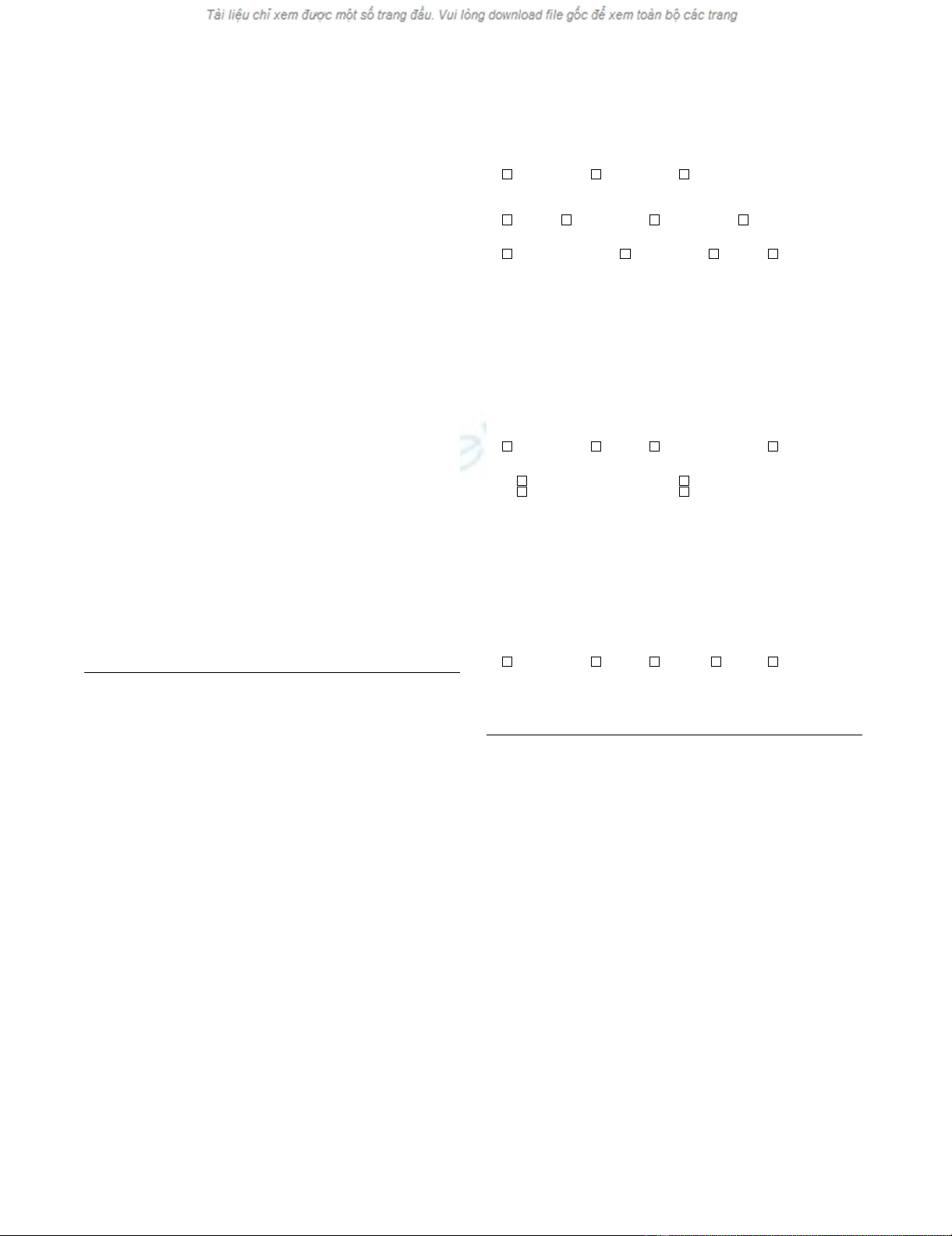
The questionnaireFigure 5
The questionnaire.
THE QUESTIONNAIRE
1 Please rank the following learning option 1-3 (1= preferred). I learn best from:
lectures discussion reading
2 Please select 1 option: The objective of the powerpoint presentations was to
provide an overview of the subject aid understanding of principles. I found them
useful too detailed confusing Other – please state
3 Select 1 option: The powerpoint presentations should be used to emphasize:
factual information principles both Omitted
Please rank each of the following on a scale of 1 to 5.
1 = an excellent learning experience 2= good learning experience
3 = a fair learning experience 4 = a waste of time.
5= Didn’t do/attended less than 50% of the time. Ifoundthe:
Powerpointpresentations: 12345
Studentpresentations 12345
Classdiscussionfollowingpresentations 12345
Unitlearningguide 12345
Essentialreadingprovided 12345
Studyquestions 12345
Keyconcepts 12345
Self-caretask 12345
WebCTChallenge 12345
4 This unit is highly relevant to my future practice as a chiropractor
Strongly agree Agree Strongly disagree Uncertain
5 The distribution of marks for assessment seems:
well balanced toomuchMCQ
too much student presentation excess health contract & critique
7 Please rate the unit: 1- terrible 3 – average 5 – excellent
Myoverallratingoftheunitis:12345
8 After 5 weeks I feel I am able to:
1 - Strongly agree 2 - Agree 3 - Uncertain 4 - Disagree 5 -Strongly disagree
evaluateaclient’sgoodhabits 12345
evaluateaclient’sbadhabits&suggestchanges1 2345
identify major health risks based on
familyhistoryandlifestyle 12345
assess the scientific soundness of information
ifinformedofthestudymethod 12345
9 By the end of the semester I feel I will be able to critique a wellness contract
Strongly agree Agree Uncertain Disagree Strongly disagree