Implementation
Science
Vogt et al. Implementation Science 2010, 5:17
http://www.implementationscience.com/content/5/1/17
Open Access
RESEARCH ARTICLE
© 2010 Vogt et al; licensee BioMed Central Ltd. This is an Open Access article distributed under the terms of the Creative Commons
Attribution License (http://creativecommons.org/licenses/by/2.0), which permits unrestricted use, distribution, and reproduction in
any medium, provided the original work is properly cited.
Research article
General practitioners' perceptions of the
effectiveness of medical interventions: an
exploration of underlying constructs
Florian Vogt*
1
, David Armstrong
2
and Theresa M Marteau
1
Abstract
Background: Many interventions shown to be effective through clinical trials are not readily implemented in clinical
practice. Unfortunately, little is known regarding how clinicians construct their perceptions of the effectiveness of
medical interventions. This study aims to explore general practitioners' perceptions of the nature of 'effectiveness'.
Methods: The design was qualitative in nature using the repertory grid technique to elicit the constructs underlying
the perceived effectiveness of a range of medical interventions. Eight medical interventions were used as stimuli
(diclophenac to reduce acute pain, cognitive behaviour therapy to treat depression, weight loss surgery to achieve
weight loss, diet and exercise to prevent type 2 diabetes, statins to prevent heart disease, stopping smoking to prevent
heart disease, nicotine replacement therapy to stop smoking, and stop smoking groups to stop smoking). The setting
involved face-to-face interviews followed by questionnaires in London Primary Care Trusts. Participants included a
random sample of 13 general practitioners.
Results: Analysis of the ratings showed that the constructs clustered around two dimensions: low patient effort versus
high patient effort (dimension one), and small impact versus large impact (dimension two). Dimension one
represented constructs such as 'success requires little motivation', 'not a lifestyle intervention', and 'health-care
professional led intervention'. Dimension two represented constructs such as 'weak and/or minimal evidence of
effectiveness', 'small treatment effect for users', 'a small proportion of users will benefit' and 'not cost-effective'.
Constructs within each dimension were closely related.
Conclusions: General practitioners judged the effectiveness of medical interventions by considering two broad
dimensions: the extent to which interventions involve patient effort, and the size of their impact. The latter is informed
by trial evidence, but the patient effort required to achieve effectiveness seems to be based on clinical judgement.
Some of the failure of evidence-based medicine to be implemented may be more explicable if both dimensions were
attended to.
Background
Despite the overall success of evidence-based medicine in
building a sound research underpinning for understand-
ing the effectiveness of many medical interventions, its
major failing has been getting those findings into clinical
practice [1,2]. Interventions to increase implementation
of evidence-based guidelines, using a wide-variety of
methods including incentives, prompts, and education
have had mixed results [3]. Critiques of this large litera-
ture highlight that many interventions lack explicit ratio-
nales or theoretical bases and insufficient piloting [2].
A wide variety of perceived barriers towards perform-
ing a clinical behaviour have been reported [4]. Among
others, the perceived effectiveness of an intervention at
achieving desired patient outcomes is considered an
important determinant of behaviour [5-7]. A common
response to this problem has been to increase clinicians'
knowledge of an intervention's effectiveness (as derived
from trial evidence) on the grounds that a rational clini-
cian would want to provide the best treatment for his or
her patients [5,6]. While the importance of the perceived
* Correspondence: florian.vogt@kcl.ac.uk
1 Health Psychology Section, Department of Psychology, Institute of Psychiatry,
King's College London, Bermondsey Wing, 5th Floor, London SE1 9RT, UK

Vogt et al. Implementation Science 2010, 5:17
http://www.implementationscience.com/content/5/1/17
Page 2 of 8
effectiveness of medical interventions is well docu-
mented, little is known about the basis for these percep-
tions. Indeed, it is often assumed that perceived
effectiveness simply reflects the clinician's understanding
of the research evidence, in which case the problem lies in
a failure to communicate the evidence in a way that
makes sense. This may suggest efforts should be
increased to communicate information about the effec-
tiveness of an intervention in a more comprehensible
manner to bridge such a communication gap. For exam-
ple, information about an interventions' benefit is per-
ceived differently depending on whether it is represented
in relative or absolute terms [7].
An alternative explanation is that clinicians and
researchers may not share the same meanings of the
notion of effectiveness with clinicians considering factors
that are not part of the formal evidence base of effective-
ness. Research aimed at identifying the reasons behind
suboptimal implementation may therefore consider in
more detail how clinicians derive their perceptions of the
effectiveness of medical interventions. In short, the com-
munication gap identified in implementation studies may
reflect different underlying constructs of effectiveness;
that is, the problem is a conceptual gap rather than one of
communication and understanding.
A variety of methods for ascertaining perceptions or
constructs exist, including repertory grid and focus group
techniques, in-depth interviews, and survey question-
naires. The repertory grid technique allows individuals to
determine their own personal range of descriptions rele-
vant to the issue without imposing experimenter-deter-
mined constructs on the data set [8-10]. Exploring how a
group of clinicians conceptualise the idea of effectiveness
as applied to medical interventions using this technique
is one way of understanding whether a communication or
a conceptual gap underpins the implementation problem.
Methods
Design
An exploratory study was carried out using repertory
grid, data reduction, and clustering techniques to elicit
and categorise general practitioners' perceptions of the
effectiveness of a range of medical interventions.
Participants
The sample comprised general practitioners (GPs) work-
ing in southeast London. Invitation letters were sent to
200 randomly selected GPs that were registered in three
local Primary Care Trusts (the list was obtained from the
Primary Care Trusts) explaining the nature of the study
and asking for willingness to be interviewed and com-
plete a questionnaire. The inclusion criterion was being a
registered GP; there were no exclusion criteria. Fifteen
GPs replied to the invitation letters, and interviews were
held with 13 (nine were male and four female). Two GPs
were not interviewed because a suitable interview date
and time could not be arranged. Following the interview,
all 13 were sent a questionnaire via email or post, accord-
ing to his or her preference, which 12 completed (eight
were male and four female). One GP did not complete the
questionnaire because of time constraints. Participants
were reimbursed for their time with a €40 ($80, €50) book
token. Data was collected from GPs between September
2007 and February 2008.
Procedure
Eight interventions targeting a variety of medical condi-
tions were selected to be used as stimuli to be shown to
GPs (Table 1). The interventions were chosen in consul-
tation with two GPs to represent a wide range of inter-
ventions and conditions, all of which had evidence of
effectiveness. The names of the eight interventions were
printed on separate laminated cards (20 cm by 10 cm).
Interviews were conducted at the participants' place of
work and audio-taped. These lasted between 20 and 40
minutes. Each participant was shown the intervention
cards in triads, selected at random from the eight inter-
vention cards. Participants were asked to identify two
interventions in each triad that were similar with regards
to their effectiveness and to describe what made them
similar (similarity pole). After this, they were asked to
describe what made the third intervention different (dif-
ference pole). For example, when presented with cards
showing statins, stop smoking groups, and nicotine
replacement therapy (NRT), a respondent might group
the two stop smoking cards together because both
involved a behaviour, thus 'strong cooperation from
patient needed' (the similarity pole), and the third as not
requiring a behaviour, thus 'strong cooperation not
needed' (the difference pole). These two descriptions rep-
resented one bipolar personal construct of the effective-
ness of medical interventions; in this example, whether
cooperation was needed. When participants could elicit
Table 1: Eight interventions used as stimuli
1. Statins to prevent heart disease [27].
2. Diclophenac to reduce acute pain [28].
3. Cognitive behaviour therapy (CBT) to treat depression
[29].
4. Stop smoking groups to stop smoking [20].
5. Weight loss surgery to achieve weight loss [30].
6. Stopping smoking to prevent heart disease [31].
7. Diet and exercise to prevent type 2 diabetes [32].
8. Nicotine replacement therapy (NRT) to stop smoking
[21].
Vogt et al. Implementation Science 2010, 5:17
http://www.implementationscience.com/content/5/1/17
Page 3 of 8
no further personal constructs in a triad, another triad
was presented to them, again selected at random from the
eight intervention cards. This process was continued
until participants could elicit no further constructs.
The personal constructs elicited from all the partici-
pants were then reduced in number by using an inductive
content analysis [11]. Six researchers were asked to group
independently the personal constructs elicited from the
GPs into more general constructs depending on their
similarity; the number of general constructs the research-
ers could create was not restricted. A hierarchical cluster
analysis combined the groupings from the six researchers
using Ward's method and Euclidean distance within SPSS
15.0. The dendrogram and the agglomeration schedule,
two key measures for assessing cluster analysis [12], were
used to identify clusters of similar constructs. The six
researchers then discussed and agreed labels for each of
the clusters of constructs to reflect the underlying theme.
Interviewed GPs were then sent a questionnaire. The
questionnaire asked the GP to rate the study's eight inter-
ventions on the clusters of constructs derived from the
cluster analysis using seven-point scales (Additional file
1).
Ratings were analysed and mapped by generalised pro-
crustes analysis (GPA). This technique is a form of princi-
pal components analysis, which assesses the variability in
the data by identifying patterns that explain the most
variance, thereby highlighting patterns or dimensions
among participants' responses. GPA, unlike principal
components analysis, maps individual level data, and per-
mits the production of maps showing areas of consensus
between individuals, and links between variables. For
clarity of interpretation only the consensus maps are
shown in the results section.
Results
Dimension creation
In total, 108 personal constructs were elicited by the GPs,
ranging from three to 10 elicited personal constructs
(median = 9); examples include: use a psychological
approach to achieve outcome, success is highly depen-
dent on patient motivation, intervention has impact on
ailment, effectiveness has good value for money, existing
statistical evidence of effectiveness, cause ill effects in
more than 30% of subjects, strong cooperation from
patient needed. In the subsequent content analysis, the
six researchers formed groups from the personal con-
structs; groups ranged from 12 to 17 constructs in size
(median = 15.5). A cluster analysis of these groupings
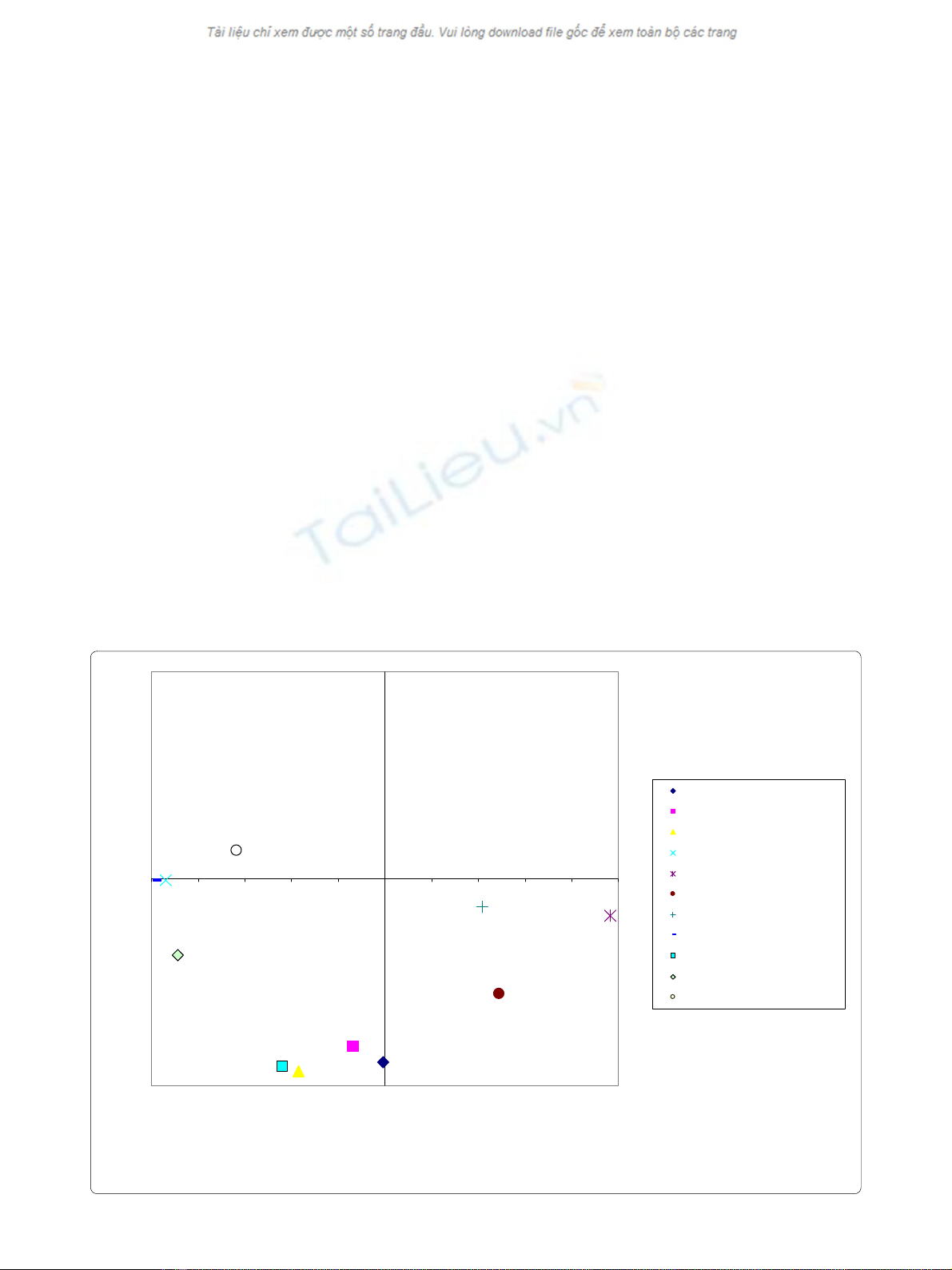
Representation of constructs on dimensions 1 and 2
Figure 1 Representation of constructs on dimensions 1 and 2.
-0.9
-0.7
-0.5
-0.3
-0.1
0.1
0.3
0.5
0.7
0.9
-1.0 -0.8 -0.6 -0.4 -0.2 0.0 0.2 0.4 0.6 0.8 1.0
↔
Dimension one - patient effort (75.9%)
↔
Dimension two - size of impact (9.8%)
weak evidence of effectiveness
small treatment effect
small proportion of users benefit
success requires little motivation
not a biomedical intervention
not appealing to patients
difficult to measure
not a lifestyle intervention
not cost-effective
healthcare professional-led
helps in the short-term
Vogt et al. Implementation Science 2010, 5:17
http://www.implementationscience.com/content/5/1/17
Page 4 of 8
showed that these were best represented in 11 clusters.
Table 2 shows the 11 clusters with their labels.
GPA revealed that the clusters were resolved in three
dimensions with eigenvalues greater than one. GPA can
give results that suggest a consensus between partici-
pants when there is none requiring a comparative test
with random data that reflects the distributional struc-
ture of the data. The clusters were significantly different
from chance as determined by the permutation test (p <
0.05), indicating that a true consensus space was achieved
for each of these. Dimensions one (76%) and two (10%)
accounted for the majority of the variance in the model,
together explaining 86% of the variance. Dimension three
was difficult to interpret because no construct loaded
exclusively on this dimension. The final analyses there-
fore focused on the solution in two dimensions.
The two dimensions are shown in Figure 1 as orthogo-
nal lines. Higher values (positive or negative) represent a
stronger association of the cluster with the dimension. A
number of clusters showed high or low scores on dimen-
sion one. These were whether the intervention was bio-
medical or not, whether it required patient motivation,
whether it was a lifestyle intervention and whether the
intervention was healthcare professional-led. All of these
reflected whether or not the patient was involved in the
treatment, and so dimension one was labelled as 'patient
effort'. Dimension two grouped evidence of effectiveness,
treatment effect, the proportion of users who might ben-
efit, and cost effectiveness. This dimension was therefore
labelled 'size of impact' of the intervention. Using these
dimension labels, for example, the appearance of the con-
struct cluster of whether the intervention appealed to
patients in the bottom-right quadrant of the map sug-
gests that GPs perceived such interventions as character-
ised by high patient effort and small impact.
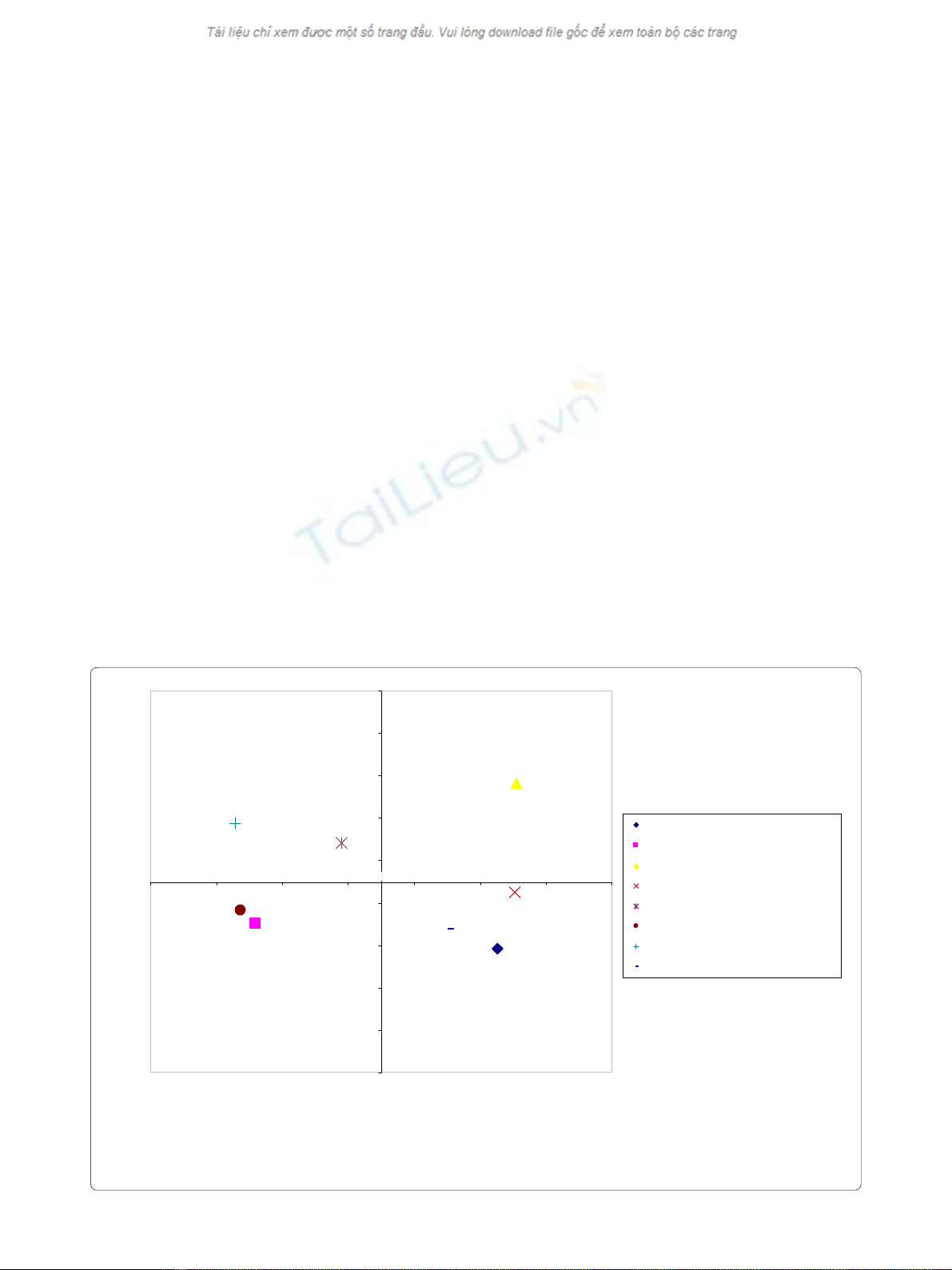
The eight interventions were also mapped along the
two dimensions based on GPs' questionnaire-elicited rat-
ings; the results are presented in Figure 2. Higher values
(positive or negative) represent a stronger association of
the intervention with the dimension. The distance
between interventions reflects their degree of similarity
with respect to the dimensions: the smaller the distance,
the more similar the interventions are to each other. The
top-right quadrant of the map reflecting high patient
effort and large impact contained stopping smoking. The
consensus representations of stop smoking groups, CBT,
and diet and exercise fell within the bottom-right quad-
rant, reflecting high patient effort and small impact. The
bottom-left quadrant of the map also reflects small
impact low but in combination with low patient effort.
Representation of interventions on dimensions 1 and 2
Figure 2 Representation of interventions on dimensions 1 and 2.
-4.5
-3.5
-2.5
-1.5
-0.5
0.5
1.5
2.5
3.5
4.5
-7.0 -5.0 -3.0 -1.0 1.0 3.0 5.0 7.0
↔
Dimension one - patient effort (75.9%)
↔
Dimension two - size of impact (9.8%)
Stop smoking groups to stop smoking
Weight loss surgery to achive weight loss
Stopping smoking to prevent heart disease
Diet & Exercise to prevent type 2 diabetes
NRT to stop smoking
Statins to prevent heart disease
Diclophenac to reduce acute pain
CBT to treat depression

Vogt et al. Implementation Science 2010, 5:17
http://www.implementationscience.com/content/5/1/17
Page 5 of 8
The interventions statins and weight loss surgery appear
in this quadrant. The top-left quadrant of the map
reflects low patient effort and large impact and includes
diclophenac and NRT. Assessment of residuals values for
interventions, a measure of the disagreement between
GPs about the individual interventions, showed little dis-
agreement for most interventions (range: 89.0 and 135.8)
apart from weight loss surgery (residual value = 226.8).
Assessment of the individual plots (plots not shown)
showed that while for some GPs weight loss surgery fell
into the bottom-left quadrant, for others it was repre-
sented in the top-left quadrant; results suggesting a low
consensus about the magnitude of the impact of weight
loss surgery.
Discussion
This paper explored a sample of GPs' views of the notion
of effectiveness, and found this was underpinned by two
dimensions, the 'size of impact' and 'patient effort
needed'. The two dimensions appeared independent of
each other. Semantically, the dimension 'size of impact'
appears closely related to the estimates of effect size
reported by trials, and is captured by constructs such as
'small treatment effect for users', 'a small proportion of
users will benefit', or 'weak/minimal evidence of effec-
tiveness'. The limited differentiation between these three
constructs, as identified by the small separation on the
maps, may be seen as reflecting a communication gap
and the continued need for further education in medical
statistics [13]. GPs in this study, however, also used
another, independent dimension in judging an interven-
tion's effectiveness, 'patient effort needed'. 'Patient effort
needed' relates to the motivation and ability of the indi-
vidual patient to achieve the desired outcome. The study
thus provides evidence consistent with the hypothesis
that a conceptual gap is a potential contributor to subop-
timal implementation of evidence-based medicine.
Evidence based medicine involves integrating individ-
ual clinical expertise withthe best available external clini-
cal evidence from systematicresearch; the gold standard
for this evidence is the randomised clinical trial when it
comes to answering whether an intervention is effective
or not [14]. Trials, however, suffer from two major limita-
tions in terms of their ready translation into clinical prac-
tice. The first is the role of patient behaviour and its
generalisability beyond the trials. Early trials simply
assessed the relative effectiveness of a particular inter-
vention for those who received it. But although an inter-
vention might be effective in vitro, so to speak, it may not
be effective in the real world of clinical practice. This led
to an emphasis on intention-to-treat designs that tried to
capture the overall value of an intervention, recognising
that some patients will not adhere to the intervention
[15]. The influence of patient behaviour, however, in the
form of involvement and motivation also precedes trials
as the evaluation of effectiveness is only based on those
patients who are recruited. Many patients are excluded
(using formal criteria such as co-morbidities), and many
more may decline to take part for a number of reasons,
including the extra effort required, preferences for one
arm of the trial, and refusal to be randomised [15]. The
second major limitation of trials is the translation prob-
lem in moving between trial evidence, which is based on
probabilities derived from populations, and the judge-
ment about what is best for the individual patient [16].
Despite attempts to capture the influence of patient
behaviour in trial design (such as in preference trials) and
subgroup analyses (such as of adherence patterns), the
randomisation underlying trials loses an important
aspect of patient behaviour, and effectiveness is reported
on average; yet there is considerable variability between
patients' outcomes depending on their motivation and
Table 2: Eleven clusters of constructs identified in the
cluster analysis
1. 'This intervention has robust evidence of
effectiveness.' versus 'This intervention has weak
and/or minimal evidence of effectiveness.'
2. 'This intervention has a large treatment effect for
users.' versus 'This intervention has a small
treatment effect for users.'
3. 'A large proportion of users will benefit from this
intervention.' versus 'A small proportion of users
will benefit from this intervention.'
4. 'Success requires a lot of motivation from the patient.'
versus 'Success requires little motivation from the
patient.'
5. 'This is a biomedical intervention (treatment using
drugs, radiation, or surgery).' versus 'This is not a
biomedical intervention.'
6. 'This intervention is appealing to patients.' versus
'This intervention is not appealing to patients.'
7. 'The impact of this intervention can be precisely
measured.' versus 'The impact of this intervention is
difficult to measure.'
8. 'This is a lifestyle intervention (e.g., Diet and exercise
education).' versus 'This is not a lifestyle
intervention.'
9. 'This intervention is cost-effective.' versus 'This
intervention is not cost-effective.'
10. 'This is a patient led intervention.' versus 'This is a
healthcare professional-led intervention.'
11. 'This intervention brings long-term benefits.' versus
'This intervention only helps in the short-term.'
Note: Text highlighted in bold is used in the text and figures to
describe the construct.