BioMed Central
Page 1 of 11
(page number not for citation purposes)
Retrovirology
Open Access
Research
Identification of a novel motif responsible for the distinctive
transforming activity of human T-cell leukemia virus (HTLV) type 1
Tax1 protein from HTLV-2 Tax2
Toshiyuki Shoji†1,2, Masaya Higuchi†1, Rie Kondo1, Masahiko Takahashi1,
Masayasu Oie1, Yuetsu Tanaka3, Yutaka Aoyagi2 and Masahiro Fujii*1
Address: 1Division of Virology, Niigata University Graduate School of Medical and Dental Sciences, 1-757 Asahimachi-Dori, Niigata 951-8510,
Japan, 2Division of Gastroenterology and Hepatology, Niigata University Graduate School of Medical and Dental Sciences, 1-757 Asahimachi-
Dori, Niigata 951-8510, Japan and 3Department of Immunology, Graduate School and Faculty of Medicine, University of the Ryukyus, Uehara
207, Nishihara-cho, Nakagami-gun, Okinawa 903-0215, Japan
Email: Toshiyuki Shoji - shoji-t@med.niigata-u.ac.jp; Masaya Higuchi - mhiguchi@med.niigata-u.ac.jp; Rie Kondo - rierie-j@d6.dion.ne.jp;
Masahiko Takahashi - masahiko@med.niigata-u.ac.jp; Masayasu Oie - moie@med.niigata-u.ac.jp; Yuetsu Tanaka - yuetsu@s4.dion.ne.jp;
Yutaka Aoyagi - aoy@med.niigata-u.ac.jp; Masahiro Fujii* - fujiimas@med.niigata-u.ac.jp
* Corresponding author †Equal contributors
Abstract
Background: Human T-cell leukemia virus type 1 (HTLV-1) is a causative agent of adult T-cell
leukemia (ATL), whereas its relative HTLV-2 is not associated with any malignancies including ATL.
HTLV-1 Tax1 transformed a T-cell line from interleukin (IL)-2-dependent growth to IL-2-
independent growth, with an activity that was much more potent in comparison to HTLV-2 Tax2.
This distinction was mediated by at least two Tax1 specific functions, an interaction with host
cellular factors through the PDZ domain binding motif (PBM) and the activation of NF-kappaB2
(NF-κB2)/p100.
Results: Using a series of Tax1 chimeric proteins with Tax2, we found that amino acids 225-232
of Tax1, the Tax1(225-232) region, was essential for the activation of NF-κB2 as well as for the
high transforming activity. The strict amino acid conservation of Tax1(225-232) among HTLV-1 and
simian T-cell leukemia virus type 1 (STLV-1), but not HTLV-2 and STLV-2, indicates that function(s)
through the Tax1(225-232) region are biologically significant. Interestingly, another HTLV-1
relative, HTLV-3, has a PBM, but does not conserve the Tax1(225-232) motif in Tax3, thus
indicating that these two motifs classify the three HTLVs into the separate groups.
Conclusion: These results suggest that the combinatory functions through Tax1(225-232) and
PBM play crucial roles in the distinct biological properties of the three HTLVs, perhaps also
including their pathogenesis.
Background
Human T-cell leukemia virus type 1 (HTLV-1) and HTLV-
2 are onco-retroviruses, which immortalize human T-cells
in vitro and in vivo [1,2]. These immortalizations establish
life-long persistent infections in the host. However, only
the HTLV-1 infection, but not the HTLV-2 infection, leads
Published: 17 September 2009
Retrovirology 2009, 6:83 doi:10.1186/1742-4690-6-83
Received: 12 May 2009
Accepted: 17 September 2009
This article is available from: http://www.retrovirology.com/content/6/1/83
© 2009 Shoji et al; licensee BioMed Central Ltd.
This is an Open Access article distributed under the terms of the Creative Commons Attribution License (http://creativecommons.org/licenses/by/2.0),
which permits unrestricted use, distribution, and reproduction in any medium, provided the original work is properly cited.

Retrovirology 2009, 6:83 http://www.retrovirology.com/content/6/1/83
Page 2 of 11
(page number not for citation purposes)
to adult T-cell leukemia (ATL), characterized by a massive
clonal expansion of the T-cells infected with HTLV-1 [1-3].
Since only a fraction of HTLV-1 infected individuals
(approximately 5%) suffer ATL after a long latency period
(60 years on average), the genetic and/or epigenetic
changes in the HTLV-1 infected T-cells as well as the dete-
rioration of the host immunity are thought to be prereq-
uisites for ATL development [1,2]. Therefore, HTLV-2
infection cannot promote some step(s) in these late
event(s).
HTLV-1 and HTLV-2 encode the transforming proteins,
Tax1 and Tax2, respectively, whose expression plays a cen-
tral role in the immortalizations of infected T-cells and
their persistent infections [2,4-7]. Tax1 has multiple func-
tions in T cells, including the activation of cellular genes
through the transcription factors NF-κB, AP-1, SRF, and
CREB/ATF, and in the inactivation of several tumor sup-
pressor genes, such as p53 [7-18]. However, these func-
tions do not explain the HTLV-1 specific leukemogenesis,
because Tax2 shares them equivalently.
There is one striking difference between Tax1 and Tax2.
Tax1 transforms a mouse T-cell line (CTLL-2) from inter-
leukin(IL)-2 dependent growth to independent growth,
and the activity was much more potent in comparison to
Tax2 [19]. Such activity requires the Tax1-specific activa-
tion of the non-canonical NF-κB pathway [20]. NF-κB is a
family of transcription factors that share the DNA binding
Rel homology domain. It includes p105/p50, p65, c-Rel,
p100/p52 and RelB. They are generally classified into two
groups, the canonical NF-κB (p105/p50, p65, c-Rel) or
the non-canonical NF-κB (p100/p52, RelB) [21]. The
canonical NF-κB pathway is typically activated by inflam-
matory cytokines such as TNFα and IL-1, thus playing
roles in inflammation as well as in apoptosis. In compar-
ison, the non-canonical NF-κB pathway is activated by
lymphotoxin β, BAFF, and CD40 ligand, thus playing
roles in the development and organogenesis of the lym-
phoid system. Moreover, both pathways are aberrantly
activated in various malignancies, including leukemia and
lymphoma [22,23].
By using a series of Tax1 chimeric proteins with Tax2, we
herein show that the Tax1(225-232) region plays a crucial
role in the increased transforming activity seen with Tax1
relative to Tax2, mostly through the activation of the non-
canonical NF-κB/p100 pathway. Taking into account the
fact that the amino acid sequence of Tax1(225-232) is
strictly conserved between HTLV-1 and simian T-cell
leukemia virus type 1 (STLV-1) but not with HTLV-2 nor
STLV-2, these results suggest that function(s) through
Tax1(225-232) play crucial roles in the pathogenicity of
HTLV-1.
Results
Identification of Tax1 domains responsible for p100
processing
HTLV-1 Tax1, but not HTLV-2 Tax2, through the process-
ing of NF-κB2/p100 into p52, activates the non-canonical
NF-κB pathway [20,24]. In order to delineate the domain
of Tax1 responsible for NF-κB2/p100 activation, lentiviral
vectors expressing a series of Tax1 chimeric proteins with
Tax2 subtype B (Tax2B) were used to infect a human T-cell
line Jurkat (Fig. 1A). After the normalization of the infec-
tions using enhanced green fluorescence protein (EGFP),
which was simultaneously expressed from a bicistronic
transcript encoding the tax1 genes, the amounts of NF-
κB2/p100 and its processed product p52 in the infected
cell lysates were determined by Western blot analysis
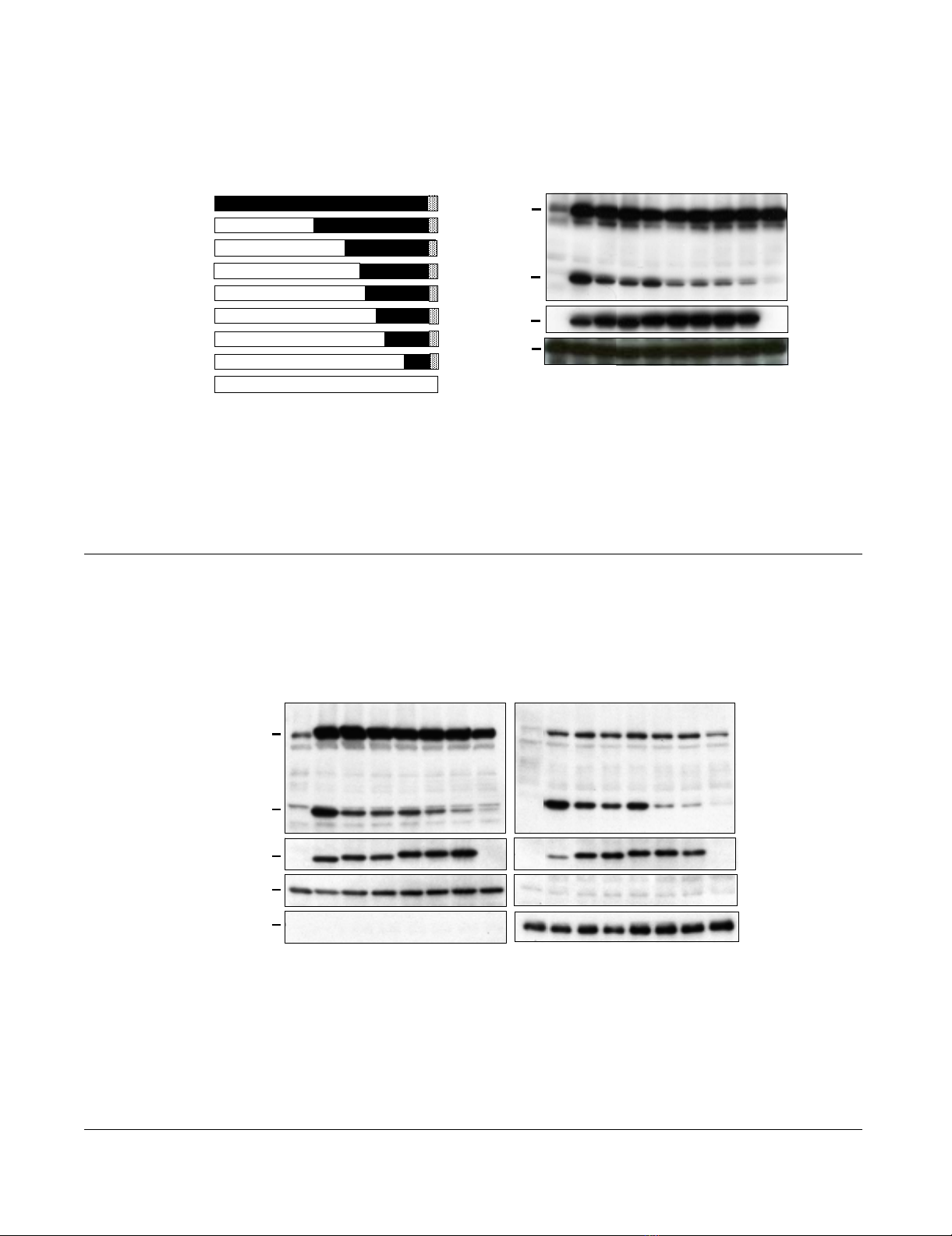
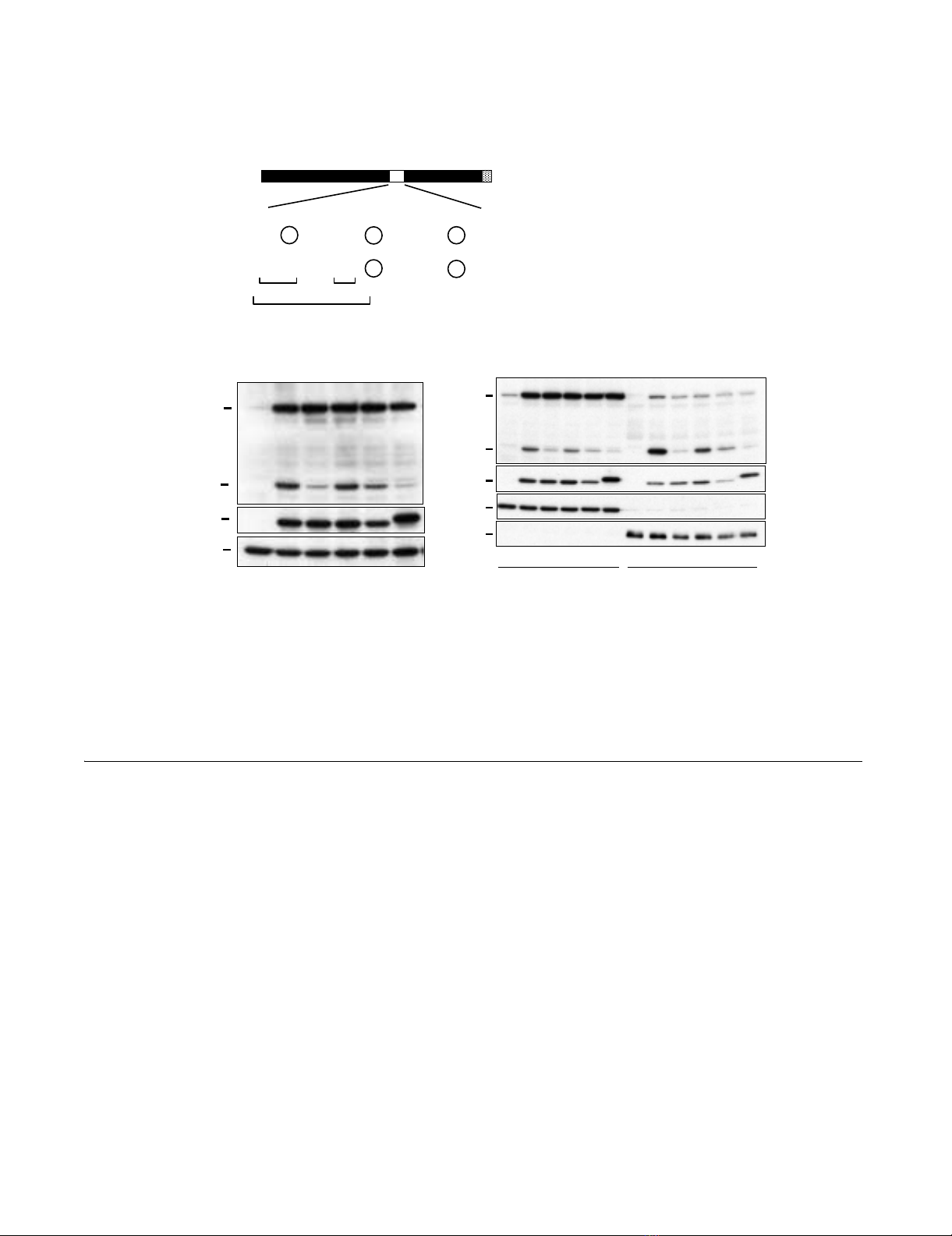
using an anti-p100/p52 antibody (Fig. 1B). Tax1 in the
Jurkat cells efficiently induced p100 as well as p52 expres-
sion relative to the control (EGFP) cells, whereas Tax2
induced only p100 (Fig. 1B, lane 2 and lane 10). It should
be noted that the induction of p100 by Tax1 and Tax2 are
mediated through the canonical NF-κB pathway as dis-
cussed previously, and the activities were equivalent to
each other (lane 2 and lane 10) [20]. The chimeric Tax1
proteins showed different p100 processing activities and
identified two critical regions of Tax1 which are responsi-
ble for p100 processing; the first region is located in the
Tax1 amino acids 1-154, Tax1(1-154) (compare lane 2
and lane 3), and the second region is located in the
Tax1(225-232) region (compare lane 5 and lane 6). All
these chimeric proteins, except for Tax2B, were equiva-
lently detected by an anti-Tax1 antibody in Jurkat cells,
and they exhibited an equivalent p100 induction. In addi-
tion, anti-Tax2B detected the equivalent expression of
Tax2B and Tax300 in Jurkat cells (data not shown) [20].
After processing from p100 into p52, the p52 protein next
translocates from the cytoplasm into the nucleus and then
either activates or represses transcription [21]. We, there-
after, examined whether Tax1 induces the translocation of
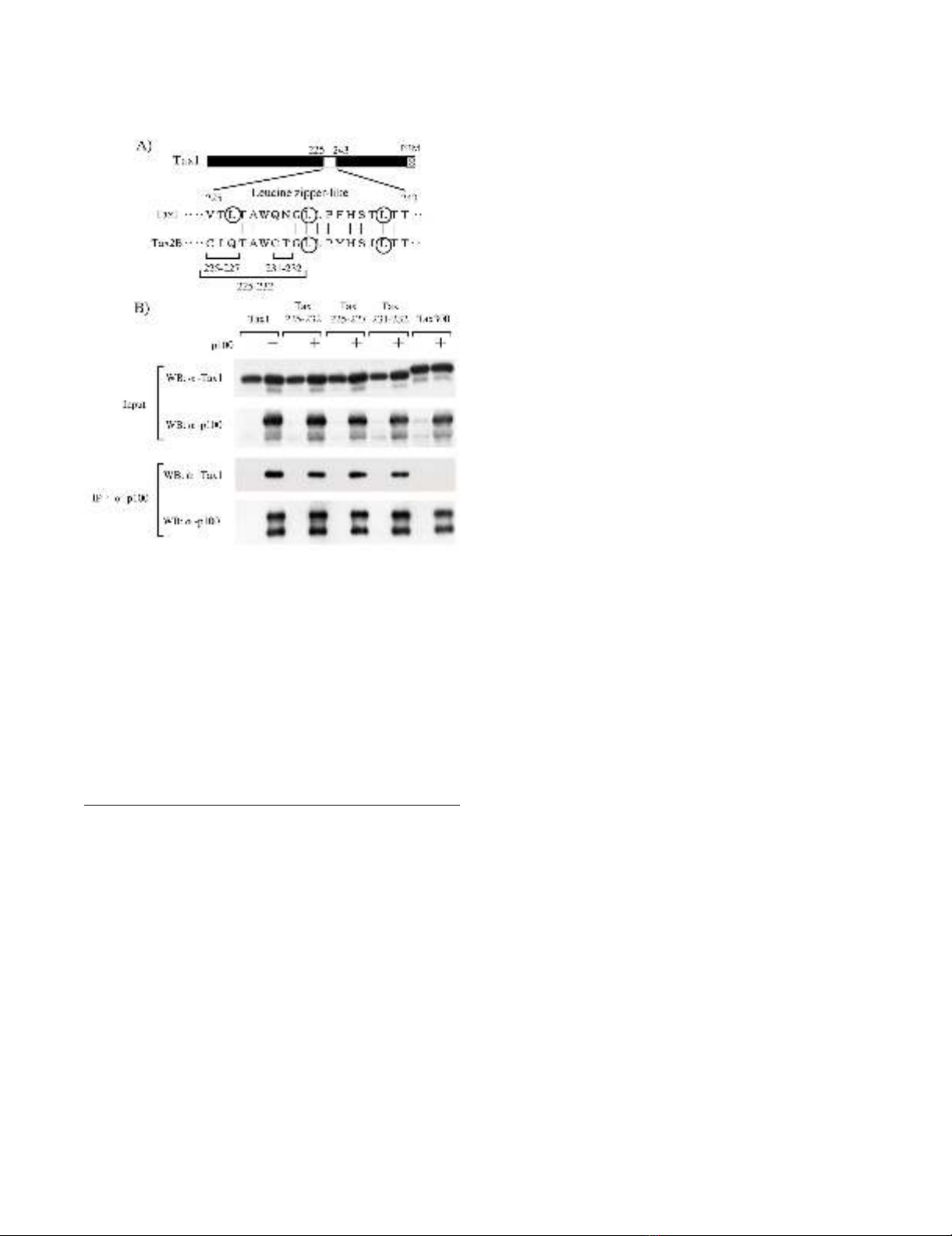
p52 into the nucleus by subcellular fractionation assay
(Fig. 2). Tax1, but not Tax2B, was thus found to induce the
expression of p52 in the nucleus, and the aforementioned
two regions of Tax1, Tax1(1-154) and Tax1(225-232),
played crucial roles in the translocation of p52.
Thereafter, we explored the contribution to p100 process-
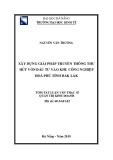
ing by the Tax1(225-232) region. In this region, Tax1 has
five amino acids that are distinct from Tax2B (Fig. 3A).
Therefore, they were entirely or partly exchanged with
those of Tax2B. The substitution of all five amino acids in
Tax1, Tax1225-232, prominently reduced the p100 process-
ing activity, and the level was equivalent to that of Tax300
(Fig. 3B). However, the substitutions of only the first three
or the last two minimally and partially reduced the activi-
ties, respectively, although the amount of Tax1231-232 was
reproducibly less in comparison to those of Tax1 or
Retrovirology 2009, 6:83 http://www.retrovirology.com/content/6/1/83
Page 3 of 11
(page number not for citation purposes)
NF-κB2/p100 processing activities of Tax1 chimeric proteins with Tax2Figure 1
NF-κB2/p100 processing activities of Tax1 chimeric proteins with Tax2. (A) The structure of Tax1, Tax2B, and their
mutants, and the boundary amino acids of the chimeras are indicated. (B) Jurkat cells were infected with lentiviruses encoding
the indicated proteins. The cell lysates were prepared 48 hours after infection, and the amounts of p100, p52, Tax and α-Tubu-
lin in the lysates were measured by Western blotting analysis using anti-p100, anit-Tax1, and anti-α-Tubulin antibodies. EGFP
was translated from a bicistronic transcript encoding the tax gene, and the infection level (%) was normalized by EGFP expres-
sion of the cells infected with the indicated lentiviruses. The anti-Tax1 antibody could not recognize Tax2B protein.
Tax207
Tax224
Tax263
Tax232
Tax250
Tax300
Tax154
Tax1
Tax2B 356
PBM
207
224
263
232
250
300
A)
154
p100
p52
Tax
Tubulin
EGFP
Tax300
Tax263
Tax2B
Tax232
Tax250
Tax154
Tax207
Tax224
Tax1
Infection (%)㧦
63
1
65
2
70
3
66
4
60
5
64
6
70
8
68
7
67
9
68
10
B)
Lanes:
Tax1 and its mutants induce nuclear localization of p52Figure 2
Tax1 and its mutants induce nuclear localization of p52. Jurkat cells were infected with lentiviruses encoding the indi-
cated proteins. The cytoplasmic and nuclear lysates were prepared 48 hours after infection, and the amounts of p100, p52,
Tax, α-Tubulin, and Sp1 in the cytoplamic and nuclear lysates were measured by Western blotting analysis using anti-p100,
anti-Tax1, anti-α-Tubulin, and anti-Sp1 antibodies. EGFP was translated from a bicistronic transcript encoding the tax gene, and
the infection level (%) was normalized by EGFP expression of the cells infected with the indicated lentiviruses. The anti-Tax1
antibody could not recognize Tax2B protein.
p100
p52
Tax
Tubulin
Sp1
Cytoplasmic Nuclear
Control
Tax1
Tax154
Tax207
Tax224
Tax232
Tax300
Tax2B
Control
Tax1
Tax154
Tax207
Tax224
Tax232
Tax300
Tax2B
Infection (%) 68 56 72 59 67 65 65 53
Retrovirology 2009, 6:83 http://www.retrovirology.com/content/6/1/83
Page 4 of 11
(page number not for citation purposes)
Tax1225-227. A subcellular fractionation assay showed that
the substitution of all five amino acids in the Tax1(225-
232) region prominently decreased the nuclear expression
of p52 relative to Tax1. The nuclear expression of p52
induced by Tax1225-227 and Tax1231-232 was also less than
that seen with Tax1, but this was more than that observed
for Tax1225-232 (Fig. 3C). These results suggested that both
Tax1(225-227) and Tax1(231-232) are involved in the
activation of NF-κB2/p100.
Tax1, but not Tax2B, is known to interact with p100 and
to induce p100 processing [20]. Therefore, Tax1 or the
indicated mutant plasmids together with the p100 plas-
mid were co-transfected into an embryonic kidney cell
line 293T. The cell lysates were immunoprecipitated using
an anti-p100 antibody, and the immunoprecipitated pro-
teins were characterized with an anti-Tax1 antibody. Con-
sistent with the previous finding, Tax1 but not Tax300
efficiently interacted with p100 (Fig. 4). Similar to Tax1,
all three Tax1 mutants in the Tax1(225-232) region were
efficiently bound to p100, and the affinities were equiva-
lent to that of Tax1, thus indicating that a function in
Tax1(225-232) is required for p100 processing and p52
nuclear translocation which is distinct from the interac-
tion with p100.
Tax1(225-232) is required for the increased transforming activity of
Tax1 relative to Tax2B
CTLL-2 is a mouse T-cell line that requires interleukin
(IL)-2 for growth. We previously showed that Tax1 trans-
formed CTLL-2 and induced IL-2-independent growth
[25], and that the activity was severely diminished by
reducing the NF-κB2/p100 protein through RNA interfer-
ence [20]. In order to examine the role of the Tax1(225-
232) region in the transforming activity, CTLL-2 cells were
transduced with the lentivirus vectors encoding the Tax1
mutants used above (Fig. 5A), and they were cultured in
the absence of IL-2 for four weeks. Tax1, but not Tax300,
Tax1(225-232) is involved in the p100 processingFigure 3
Tax1(225-232) is involved in the p100 processing. (A) Amino acid sequence of Tax1(225-243) and Tax2B(225-243). The
exchanged amino acids in the respective mutants and leucine residues putatively constituting the leucine zipper (LZ) structure
are indicated. (B) Tax1225-232, Tax1225-227, and Tax1231-232 have amino acid substitutions derived from Tax2B in the indicated
regions in the backbone of Tax1. Jurkat cells were infected with lentiviruses encoding the indicated Tax or the mutant proteins.
The total cell lysate (B), the cytoplasmic and the nuclear lysates (C) were prepared 48 hours after infection, and the amounts
of p100, p52, Tax, α-Tubulin, and Sp1 in the lysates were measured by Western blotting analysis using anti-p100, anti-Tax1,
anti-α-Tubulin or anti-Sp1 antibodies. The infection was normalized by EGFP expression on FACS analysis, and the infection
level (%) was indicated.
225-232
225-227
Tax300
Tax1
231-232
Control
p100
p52
Tax
Tubulin
Infection (%) 75 61 59 57 53 54
B)
225-232
ޓ
ޓޓ
ޓ ޓޓޓޓޓ㨨㨨㨨ޓ
ޓޓޓޓޓ㨨㨨㨨ޓޓޓޓޓޓ㨨㨨㨨ޓ
ޓޓޓޓޓ㨨㨨㨨ޓ 㨨㨨㨨㨨
㨨㨨㨨㨨㨨㨨㨨㨨
㨨㨨㨨㨨 㨨㨨
㨨㨨㨨㨨
㨨㨨 㨨㨨
㨨㨨㨨㨨
㨨㨨㨨
㨨㨨
㨨ޓ
ޓޓ
ޓ
243
225
Tax1
A)
225
㧯㧵㧽㨀㧭㨃㧯㨀㧳㧸㧸㧼
㧯㧵㧽㨀㧭㨃㧯㨀㧳㧸㧸㧼㧯㧵㧽㨀㧭㨃㧯㨀㧳㧸㧸㧼
㧯㧵㧽㨀㧭㨃㧯㨀㧳㧸㧸㧼㨅㧴㧿㧵
㨅㧴㧿㧵㨅㧴㧿㧵
㨅㧴㧿㧵㧸㨀㨀
㧸㨀㨀㧸㨀㨀
㧸㨀㨀
243
Tax1
Tax2B
㨂㨀㧸㨀㧭㨃㧽㧺㧳㧸㧸
㨂㨀㧸㨀㧭㨃㧽㧺㧳㧸㧸㨂㨀㧸㨀㧭㨃㧽㧺㧳㧸㧸
㨂㨀㧸㨀㧭㨃㧽㧺㧳㧸㧸㧼㧲㧴㧿㨀㧸㨀㨀
㧼㧲㧴㧿㨀㧸㨀㨀㧼㧲㧴㧿㨀㧸㨀㨀
㧼㧲㧴㧿㨀㧸㨀㨀
225-227 231-232
Leucine zipper-like
PBM
225-232
225-227
Tax300
Tax1
231-232
Control
225-232
225-227
Tax300
Tax1
231-232
Control
p100
p52
Tax
Tubulin
Sp1
Infection (%) 78 56 48 53 54 71
Cytoplasmic Nuclear
C)
Retrovirology 2009, 6:83 http://www.retrovirology.com/content/6/1/83
Page 5 of 11
(page number not for citation purposes)
induced IL-2-independent growth of CTLL-2, consistent
with the previous findings (Fig. 5C) [20]. On the other
hand, the transforming activities of all three mutants in
the Tax1(225-232) region were much lower in compari-
son to Tax1. The anti-Tax1 antibody showed that Tax1 and
the mutants, except for Tax1231-232, were equivalently
expressed in CTLL-2 cells 48 hours after the infection (Fig.
5B). These results thus suggest that the Tax1(225-232)
region plays a crucial role in cellular transformation, most
likely through NF-κB2/p100 activation.
The cryptic NES region of Tax1 negatively regulates the
transforming activity
Thereafter, we examined the transforming activities of the
Tax1 chimeric proteins characterized in Figure 1. Tax154
and Tax184 showed a much higher transforming activity
in comparison to Tax300. However, the activity was repro-
ducibly lower in comparison to Tax1 (Fig. 6). On the
other hand, Tax207, with an equivalent p100 processing
activity to Tax154 or Tax184, exhibited a deteriorated
transforming activity, thus suggesting that Tax1 amino
acid 185-207 represents another distinction from Tax2B
in the transformation process. To clarify this issue, the
amino acids 185-207 in Tax1 were exchanged with those
of Tax2B, and the transforming activity was examined
(Fig. 7). Unexpectedly, all three Tax1 mutants in this
region exhibited transforming activities that were higher
in comparison to Tax1. These results suggest that the
simultaneous exchange of the Tax1(1-184) and Tax1(185-
207) regions with those of the Tax2B regions, but not the
exchange of either one, reduces the transforming activity,
and that the Tax1(185-207) region by itself has a negative
function for the transforming activity. The amino acid
sequences of Tax1(185-207) resemble the leucine-rich
nuclear export signal (NES). The Tax1 mutants of this
motif did not alter the subcellular localization [26]. How-
ever, they were found to localize exclusively in the cyto-
plasm after the deletion of the C-terminal regions to this
motif [26]. Based on this information, we changed Tax1
amino acid Leu200 to Ala, which abrogated the cryptic
NES function in the previous study (Fig. 8) [26]. Similar
to Tax1185-207 and Tax1198-207, Tax1(Leu200-Ala) also
exhibited greater transforming activity in comparison to
the wild-type protein. Unfortunately, Tax1(L191-195-A) was
unstable in CTLL-2, and was excluded from consideration.
Taken together, these results suggest that the Tax1(185-
227) region negatively regulates the transforming activity
of Tax1, and the activity might be associated with the cryp-
tic NES function.
Discussion
We, herein, show that the 225-232 region of Tax1 is cru-
cial for obtaining a greater transforming activity in com-
parison to Tax2B, measured as IL-2-independent growth
of an originally IL-2-dependent cell line CTLL-2, and that
this function is mostly mediated through the activation of
NF-κB2/p100 (Fig. 3 and 5). Since the amino acid
sequence of Tax1(225-232) is strictly conserved in HTLV-
1 and STLV-1, but not in HTLV-2 and STLV-2 (Fig. 9A), the
present study indicates that the function(s) observed in
the Tax1(225-232) region, such as NF-κB2/p100 activa-
tion play significant roles in the distinct transforming
activity of Tax1 compared to Tax2B, and could thus influ-
ence the pathogenesis of HTLV-1.
We initially expected that Tax1(225-232) was involved in
the interaction with p100. However, this hypothesis was
not supported (Fig. 4). Therefore, it is unclear precisely
what role Tax1(225-232) plays in the activation of NF-
κB2. We believed that further analyses will provide better
insights into the mechanism by which Tax1 activates the
alternative NF-κB pathway.
Tax1 mutants in the Tax1(225-232) region interact with p100Figure 4
Tax1 mutants in the Tax1(225-232) region interact
with p100. (A) Amino acid sequence of Tax1(225-243) and
Tax2B(225-243). The exchanged amino acids in the respec-
tive mutants and leucine residues putatively constituting the
leucine zipper (LZ) structure are indicated. (B) 293T cells
were transfected with the indicated Tax expression plasmids
together with a p100 expression plasmid. At 48 hours fol-
lowing transfection, the cell lysates were prepared and
immunoprecipitated with the anti-p100 antibody. The precip-
itated proteins were characterized by Western blot analysis
with anti-Tax1, or anti-p100 antibodies. An aliquot of the
lysates, removed before immunoprecipitation, was also char-
acterized as an input (Input).

![PET/CT trong ung thư phổi: Báo cáo [Năm]](https://cdn.tailieu.vn/images/document/thumbnail/2024/20240705/sanhobien01/135x160/8121720150427.jpg)