BioMed Central
Page 1 of 5
(page number not for citation purposes)
AIDS Research and Therapy
Open Access
Research
Relationship between Total Lymphocyte count (TLC) and CD4
count among peoples living with HIV, Southern Ethiopia: a
retrospective evaluation
Deresse Daka1 and Eskindir Loha*2
Address: 1Faculty of Medicine, Hawassa University, Hawassa, Ethiopia and 2Faculty of Public Health, Hawassa University, Hawassa, Ethiopia
Email: Deresse Daka - drsdk2000@yahoo.com; Eskindir Loha* - eskindir_loha@yahoo.com
* Corresponding author
Abstract
Background: CD4 count is a standard measure of immunodeficiency in adults infected with HIV
to initiate and monitor highly active antiretroviral therapy; however, it may not be feasible in
resource poor countries. There is a need to have another marker of immunodeficiency that is less
resource demanding.
Objective: The objective of this study was to assess the relationship between total lymphocyte
count and CD4 count in one of the resource poor countries, Ethiopia.
Methods: This was a retrospective evaluation. A total of 2019 cases with total lymphocyte and
CD4 counts from three hospitals (Yirgalem, Hossana and Arba-Minch) were included in the study.
Pearson correlation, linear regression and Receiver Operating Characteristic (ROC) were used.
Result: For adults, the sensitivity, specificity, positive and negative predictive values of TLC < 1200
cells/mm3 to predict CD4 count < 200 cells/mm3 were 41%, 83.5%, 87.9% and 32.5%, respectively.
For subjects aged less than 18 years, these values were 20.2%, 87%, 82% and 27.1%, respectively.
A TLC ≤ 1780 cells/mm3 was found to have maximal sensitivity (61%) and specificity (62%) for
predicting a CD4 cell count of < 200 cells/mm3. Meanwhile, a TLC ≤ 1885 cells/mm3 would identify
only 59% of patients with CD4 count of < 350 cells/mm3(sensitivity, 59%; and specificity, 61%). The
combined sensitivity and specificity for patients above 40 years of age was greater.
Conclusion: Our data revealed low sensitivity and specificity of TLC as a surrogate measure for
CD4 count.
Background
It is estimated that 32.2 million people worldwide were
living with HIV at the end of 2007. Meanwhile, 2.1 mil-
lion lost their lives to AIDS, and 2.5 million became newly
infected with HIV in the same year [1]. The proportion of
people who have become infected with HIV is believed to
have peaked in the late 1990s and stabilized subse-
quently; nonetheless the incidence is still increasing in
several countries [2].
In Sub-Saharan Africa, the estimated number of adults
and children living with the virus at the end of 2007 was
22.5 million, nearly 70% of the global share [1]. Mean-
while this is the region where there is resource limitation
Published: 22 December 2008
AIDS Research and Therapy 2008, 5:26 doi:10.1186/1742-6405-5-26
Received: 31 July 2008
Accepted: 22 December 2008
This article is available from: http://www.aidsrestherapy.com/content/5/1/26
© 2008 Daka and Loha; licensee BioMed Central Ltd.
This is an Open Access article distributed under the terms of the Creative Commons Attribution License (http://creativecommons.org/licenses/by/2.0),
which permits unrestricted use, distribution, and reproduction in any medium, provided the original work is properly cited.

AIDS Research and Therapy 2008, 5:26 http://www.aidsrestherapy.com/content/5/1/26
Page 2 of 5
(page number not for citation purposes)
to address the problem, scarcity of CD4 counter to initiate
highly active antiretroviral therapy (HAART), for instance.
The determination of CD4 count has become a standard
measure of immunodeficiency in adults infected with HIV
in resource rich areas where the burden of the pandemic
is low [3]. Cognizant of this problem, the current guide-
lines from World Health Organization (WHO) acknowl-
edge that total lymphocyte count (TLC) may be used to
make treatment decision in resource poor settings when
CD4 count is not available and patients are mildly symp-
tomatic [4].
The rationale for the WHO's recommendation is that
most studies concluded a decline in TLC was strongly cor-
related with a decline in CD4 count, though there were
some discrepancies [5-10]. On the other hand, there is a
recent report warned that TLC < 1200 cells/mm3 was not
optimal for identifying patients requiring HAART since it
showed low sensitivity and specificity to predict CD4
count below 200 cells/mm3 [10,11]. This necessitates fur-
ther study on the relationship between TLC and CD4.
Therefore, the objective of this research was to assess the
relationship between total lymphocyte count (TLC) and
CD4 count in one of the resource poor countries, Ethio-
pia.
Methods
A retrospective evaluation was carried out in three hospi-
tals (Yirgalem, Arba-Minch and Hossana) in the southern
part of Ethiopia. Collating data was burdensome as we
reviewed 3120 antiretroviral treatment (ART) and pre-
ART cards (Yirgalem); 2180 ART and pre ART cards (Arba-
Minch); and more than 20 000 non-ART, ART and pre-
ART cards (Hossana). The total number of cases with com-
plete data on TLC and CD4 counts was 2019 of which
750, 650 and 619 were from Yirgalem, Arba-Minch and
Hossana hospitals, respectively. The year of the data
extends from 2003 to 2008. All cases were hospital
patients. In all hospitals, TLC and CD4 counts were deter-
mined using Cell Dyne automated machine from
ABBOTT, USA.
SPSS 15 was used to analyze the data. Linear regression
was carried out. As the CD4 and TLC values were log trans-
formed to maintain normality, 100(e
β
ln(1.01) - 1)[12] was
used to interpret the regression coefficient
β
, and
expressed as percentage points. Pearson correlation coeffi-
cient was also reported.
Receiver Operating Characteristic (ROC) was used to
determine the cut-off points with best sensitivity and spe-
cificity combination. Area under the ROC curve (AUC)
was also used to compare the combined sensitivity and
specificity among different categories of the study sub-
jects.
Ethical clearance was obtained from College of Health Sci-
ences, Hawassa University-Institutional Ethical Review
board, and permission was sought from each hospital.
Results
A total of 2019 subjects were included in this study,
among which 1064 (53%) were females. The mean
(standard deviation) age was 32.4 (9.4) years (ranging
from 5–65 years), and the majority, 1707 (85%) were
below the age of 40 years. Three fourth of the study sub-
jects had CD4 count less than 200 cells/mm3, and 97%
had a count of less than 350 cells/mm3. The mean (stand-
ard deviation) of CD4 and TLC counts were 145.1 (94.9)
cells/mm3 and 1734.1 (880.9) cells/mm3 for subjects
aged 18 years and above, and for those under the age of
18 years, the figures were 200.4 (170.6) cells/mm3 and
3700 (942.9) cells/mm3, respectively.
The correlation coefficient r for lnCD4 and lnTLC was
.398 (p < .001). The linear regression coefficient (
β
) was
0.61; that is for each 1% increase in TLC there was 0.61%
increase in CD4 count. However, the model was capable
of explaining only 16% (coefficient of determination-R2
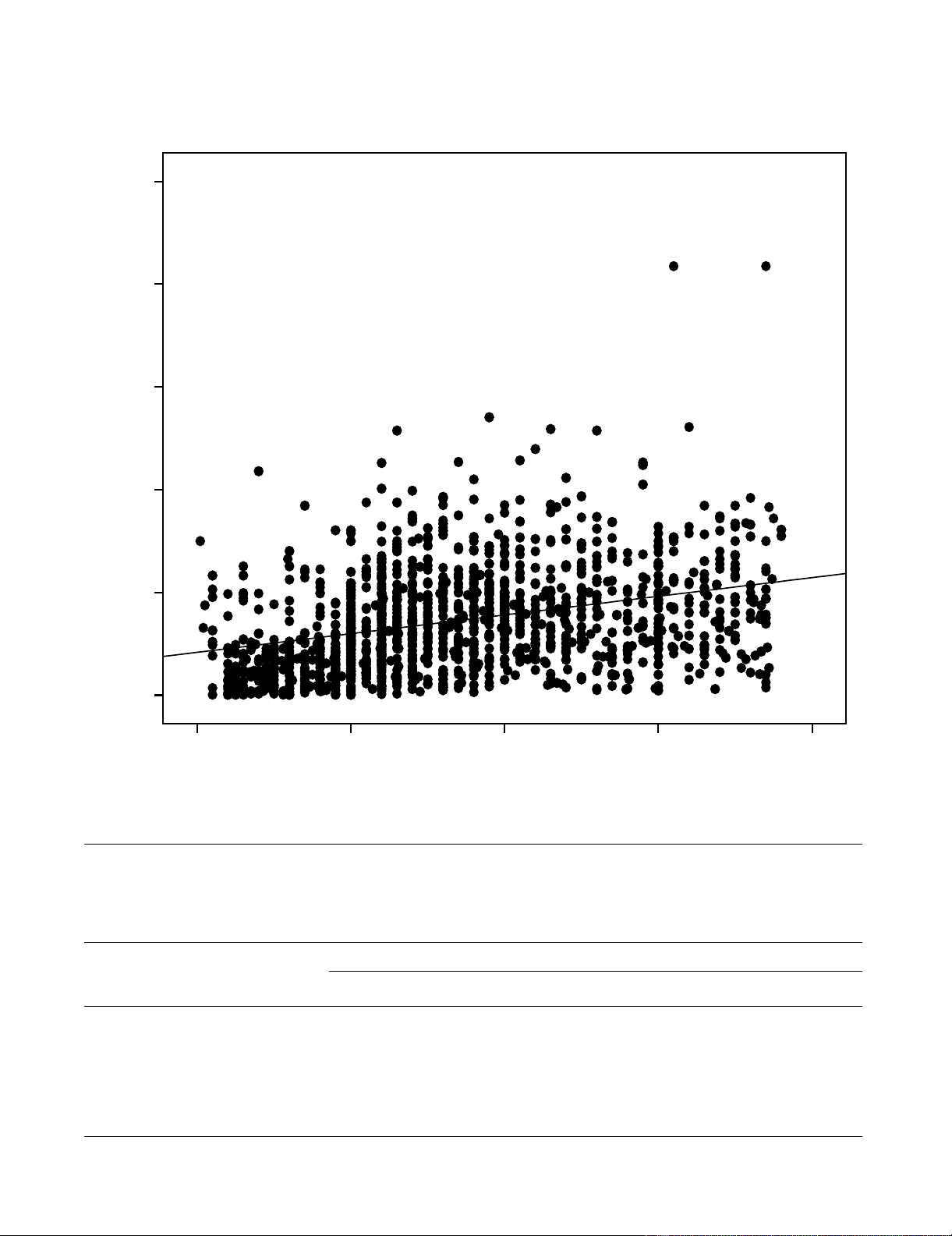
adjusted) of the variation. Figure 1 shows the relationship
between CD4 and TLC counts using the original scales of
measurement (R2 = 0.1, r = 0.33, p < 0.001).
Mean CD4, sensitivity, specificity, positive predictive
value (PPV) and negative predictive value (NPV) for dif-
ferent levels of TLC cut-off values among those who were
less than 18 years of age and adults are depicted in table 1.
Considering the best cut-off values of TLC, that are with
the highest sensitivity and specificity combinations, a TLC
≤ 1780 cells/mm3 was found to have maximal sensitivity
(61%) and specificity (62%) for predicting a CD4 cell
count of < 200 cells/mm3. Meanwhile, a TLC ≤ 1885 cells/
mm3 would identify only 59% of patients with CD4 count
of < 350 cells/mm3 (sensitivity, 59%; and specificity,
61%). The combined sensitivity and specificity for
patients above 40 years of age was greater since their ROC
curve AUC 0.72 was greater as compared to 0.64 of
patients ≤ 40 years; the AUC was also slightly greater for
female sex (0.66 versus 0.65). For subjects aged less than
18 years the best TLC cut-off was 2050 with sensitivity and
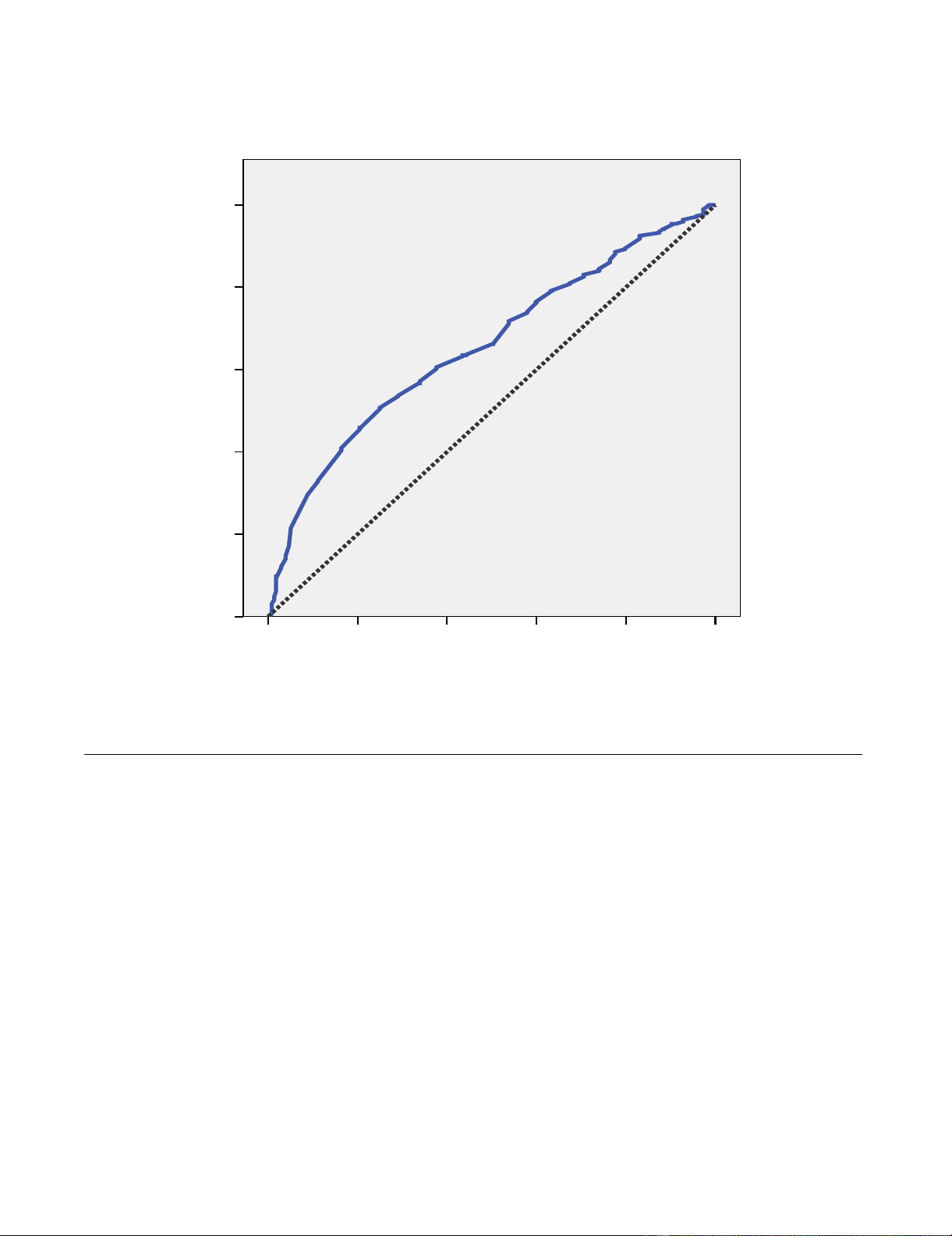
specificity of 53.2% and 52.2%, respectively. The ROC
curve (Figure 2) showed a fairly poor separation between
classes (the diagonal reference line represents random
performance).
Discussion
According to the WHO's general principle to guide deci-
sion making about when to initiate ART in resource poor
setting, a wider availability of CD4 testing is indispensa-
ble. However, the scarcity of this technology shouldn't be
AIDS Research and Therapy 2008, 5:26 http://www.aidsrestherapy.com/content/5/1/26
Page 3 of 5
(page number not for citation purposes)
Relationship between CD4 and TLC countsFigure 1
Relationship between CD4 and TLC counts.
Total Lymphocite Count (cells/mm3)
40003000200010000
CD4 (cells/mm3)
1000
800
600
400
200
0
R Sq Linear = 0.106
Table 1: Different cut-off values of TLC predicting CD4 < 200 cells/mm3 for subjects aged 18 years and above, and less than 18 years.
TLC cut-off values (cells/mm3) Mean CD4 (cells/mm3) Sensitivity Specificity PPV NPV
< 18 ≥ 18 < 18 ≥ 18 < 18 ≥ 18 < 18 ≥ 18 < 18 ≥ 18
1000 154.5 86.6 14.9 21.8 87.0 95.3 77.0 93.2 25.8 29.3
1200 150.1 99.2 20.2 41.0 87.0 83.5 82.0 87.9 27.1 32.5
1400 138.1 112.4 24.5 51.2 87.0 74.5 84.6 85.5 28.2 34.2
1600 144.9 118.8 35.1 57.3 84.8 65.5 87.1 83.0 30.8 34.3
1800 148.9 124.0 40.4 63.9 78.3 55.7 84.5 80.9 30.9 34.5
2000 162.4 130.5 47.9 71.7 56.5 45.9 76.4 79.6 27.0 35.6
2200 190.3 132.9 59.6 74.5 39.1 42.0 74.2 79.1 24.8 36.0
AIDS Research and Therapy 2008, 5:26 http://www.aidsrestherapy.com/content/5/1/26
Page 4 of 5
(page number not for citation purposes)
a cause to deter treatment while the patient's condition
deteriorates if there is access to TLC and knowledge of
clinical staging [4]. Several studies revealed reasonably
adequate sensitivity and specificity to consider TLC as a
surrogate measure for CD4 [5-10].
Nevertheless, this study supports the notion by Gupta and
colleagues (2007), as we observed low sensitivity and spe-
cificity of TLC as an alternate marker to initiate ART. In
our study, the sensitivity and specificity of TLC < 1200 to
predict CD4 count < 200 for adults were 41% and 83.5%,
and these figures were lower than that reported recently
from India, 59% and 94%, respectively [11]. As it was
reported by Jacobson and colleagues (2003), TLC may
still be used in resource limited area with the understand-
ing of its low sensitivity and specificity. Stebbing and col-
leagues also indicated that despite minimally less
reliability of TLC as a surrogate for CD4, TLC is important
tool in the absence of expensive equipment to measure
CD4 [13].
We recommend further exploration of available data to
ameliorate such disparities of sensitivities and specificities
of TLC as proxy for CD4 count or else keep on expansion
of access to CD4 counter.
We also recommend inclusion of white blood cells, red
blood cells, haemoglobin, hematocrit and platelets in
such analyses and also separate analysis for pregnant
women, which we considered as the limitations of this
manuscript.
Competing interests
The authors declare that they have no competing interests.
ROC curve with sensitivity and 1-specificity of TLC cut-off values identifying a CD4 count of < 200 cells/mm3 (AUC = .66)Figure 2
ROC curve with sensitivity and 1-specificity of TLC cut-off values identifying a CD4 count of < 200 cells/mm3
(AUC = .66).
1 - Specificity
1.00.80.60.40.20.0
Sensitivity
1.0
0.8
0.6
0.4
0.2
0.0

Publish with BioMed Central and every
scientist can read your work free of charge
"BioMed Central will be the most significant development for
disseminating the results of biomedical research in our lifetime."
Sir Paul Nurse, Cancer Research UK
Your research papers will be:
available free of charge to the entire biomedical community
peer reviewed and published immediately upon acceptance
cited in PubMed and archived on PubMed Central
yours — you keep the copyright
Submit your manuscript here:
http://www.biomedcentral.com/info/publishing_adv.asp
BioMedcentral
AIDS Research and Therapy 2008, 5:26 http://www.aidsrestherapy.com/content/5/1/26
Page 5 of 5
(page number not for citation purposes)
Authors' contributions
DD wrote the proposal, secured the funding and organ-
ized the data collection. EL analysed and interpreted the
data and developed the manuscript. Both authors read
and approved the final manuscript.
Acknowledgements
We thank Hawassa University Research and Extension Office for the finan-
cial support. We also express our gratitude to Yirgalem, Arba-Minch and
Hossana Hospital staffs for facilitating the data collection.
References
1. UNAIDS, WHO: AIDS epidemic update. Geneva 2007.
2. UNAIDS: Report on The Global AIDS Epidemic: Executive
summary, in A UNAIDS 10th anniversary special edition.
Geneva 2006.
3. Ammann A, Burrowes S: Use of Total Lymphocyte Count vs
CD4 Cell Count as a Marker of Immunity in HIV-Infected
Adults and Children: Women, Children, and HIV; Resources
for Prevention and Treatment. 2006 [http://www.womenchildr
enhiv.org/wchiv?page=tp-02-03]. (accessed on 25 June 2008).
4. WHO: Antiretroviral drugs for the treatment of HIV infec-
tion in adults and adolescents in resource-limited settings.
Recommendations for a Public Health Approach (2005–2006
Revision): Brief Meeting Report. Guidelines Developing Group
2005.
5. Bedell R, Heath K, Hogg R, Wood E, Press N, Yip B, O'Shaughnessy
M, Montaner J: Total lymphocyte count as a possible surrogate
of CD4 cell count to prioritize eligibility for antiretroviral
therapy among HIV-infected individuals in resource-limited
settings. Antivir Ther 2003, 8:379-384.
6. Ledergerber B, Lundgren J, Walker A, Sabin C, Justice A, Reiss P,
Mussini C, Wit F, Monforte AdA, Weber R, et al.: Predictors of
trend in CD4-positive T-cell count and mortality among
HIV-1-infected individuals with virological failure to all three
antiretroviral-drug classes. Lancet 2004, 364:51-62.
7. Anastos K, Shi Q, French A, Levine A, Greenblatt R, Williams C,
DeHovitz J, Delapenha R, Hoover D: Total lymphocyte count,
hemoglobin, and delayed-type hypersensitivity as predictors
of death and AIDS illness in HIV-1-infected women receiving
highly active antiretroviral therapy. J Acquir Immune Defic Syndr
2004, 35:383-392.
8. Anastos k, Barrón Y, Cohen M, Greenblatt R, Minkoff H, Levine A,
Young M, Gange S: The prognostic importance of changes in
CD4+ cell count and HIV-1 RNA level in women after initiat-
ing highly active antiretroviral therapy. Ann Intern Med 2004,
140:256-264.
9. Spacek L, Griswold M, Quinn T, Moore R: Total lymphocyte
count and hemoglobin combined in an algorithm to initiate
the use of highly active antiretroviral therapy in resource-
limited settings. AIDS 2003, 17:1311-1317.
10. Jacobson MA, Liu L, Khayam-Bashi H, Deeks SG, Hecht FM, Kahn J:
Absolute or total lymphocyte count as a marker for the CD4
T lymphocyte criterion for initiating antiretroviral therapy.
AIDS 2003, 17:917-919.
11. Gupta A, Gupte N, Bhosale R, Kakrani A, Kulkarni V: Low sensitiv-
ity of total lymphocyte count as a surrogate marker to iden-
tify antepartum and postpartum Indian women who require
antiretroviral therapy. JAIDS 2007, 46:338-342.
12. Vittinghoff E, V Glidden D, C Shiboski S, E McCulloch C: Regression
Methods in Biostatistics: Linear, Logistic, Survival, and Repeated Measures
Models First edition. Springer; 2005.
13. Stebbing J, Sawleshwarkar S, Michailidis C, Jones R, Bower M, Man-
dalia S, Nelson M, Gazzard B: Assessment of the efficacy of total
lymphocyte counts as predictors of AIDS defining infections
in HIV-1 infected people. Postgraduate Medical Journal 2005,
81:586-588.