Genome Biology 2007, 8:216
Minireview
Topological variation in single-gene phylogenetic trees
Jose Castresana
Address: Department of Physiology and Molecular Biodiversity, Institute of Molecular Biology of Barcelona, CSIC, 08034 Barcelona, Spain.
Email: jcvagr@ibmb.csic.es
Abstract
A recent large-scale phylogenomic study has shown the great degree of topological variation that
can be found among eukaryotic phylogenetic trees constructed from single genes, highlighting the
problems that can be associated with gene sampling in phylogenetic studies.
Published: 13 June 2007
Genome Biology 2007, 8:216 (doi:10.1186/gb-2007-8-6-216)
The electronic version of this article is the complete one and can be
found online at http://genomebiology.com/2007/8/6/216
© 2007 BioMed Central Ltd
In 1982, Penny, Foulds and Hendy [1] made a test of the
theory of evolution by comparing phylogenetic trees con-
structed from different protein-coding genes from the same
set of species. Specifically, they tested whether a unique
evolutionary tree relating these genes existed or not, and
whether it could be recovered. The existence of such a tree
was important, not only to confirm the theory of evolution,
but also to show that this theory allowed quantitative and
falsifiable predictions. At that time, five proteins from 11
mammalian species were available for the study, but each
protein produced different trees. At first sight, this
contradicted the existence of a unique tree. However, the
authors, being aware of the methodological difficulties in
phlyogenetic reconstruction, did not expect the five trees to
be identical. Rather, they expected them to be similar. To
measure topological dissimilarity between trees they made
use of the symmetric difference distance (also know as the
Robinson-Foulds distance), which had just been introduced
[2], and found that the trees obtained from the five genes
were indeed more similar than expected by chance, proving
the existence of a unique tree relating these sequences. This
was a simple but powerful study that opened the way to test
evolutionary hypotheses by means of multi-gene studies or
‘phylogenomics’.
Now, 25 years later, a much larger multi-gene study has
been published by Huerta-Cepas et al. [3], using the
complete human proteome and the homologous genes in the
other complete genome sequences now available. This time,
21,588 trees, each including a different human gene, were
obtained from the genomes of 39 species of eukaryotes.
What can we learn from such a large number of phylogenies?
Nowadays, we take it as read that eukaryotes are related by a
unique phylogenetic tree. Instead, the focus of recent
phylogenetic work has shifted to studying whether we can
determine the exact branching pattern of this tree. The
results have been mixed. Many nodes, or branchpoints, on
the eukaryotic tree were well known before the advent of
molecular sequences, and molecular phylogenies have
simply confirmed them. In other cases, unexpected nodes,
such as the one that splits off a group of mammals of African
origin into the Afrotheria [4,5], or the one that groups the
hemichordates and echinoderms together in the Ambulacraria
[6,7], have found strong and congruent support from
different genes. On the other hand, there is contradictory
support for a large number of nodes or phylogenetic
relationships, and even the analysis of complete genomes
has not helped to resolve some of these. With all the data
accumulated in the past few years, philosophical concerns
about being able to trace the existence of a unique tree have
vanished, at least in eukaryotes (here, only some exceptional
genes, such as those coming from endosymbiotic events,
confuse attempts to trace lineages by the usual rules), but
there are still many methodological problems that can blur
the outlines of the tree.
The human phylome
Huerta-Cepas et al. [3] have based their analysis exclusively
on genes present in humans, and thus produced a set of
phylogenies that all include the lineage leading to humans.
The authors call this collection of trees ‘the human phylome’.
They then focused on three parts of the eukaryotic tree that
have been the subject of some contention. There are not
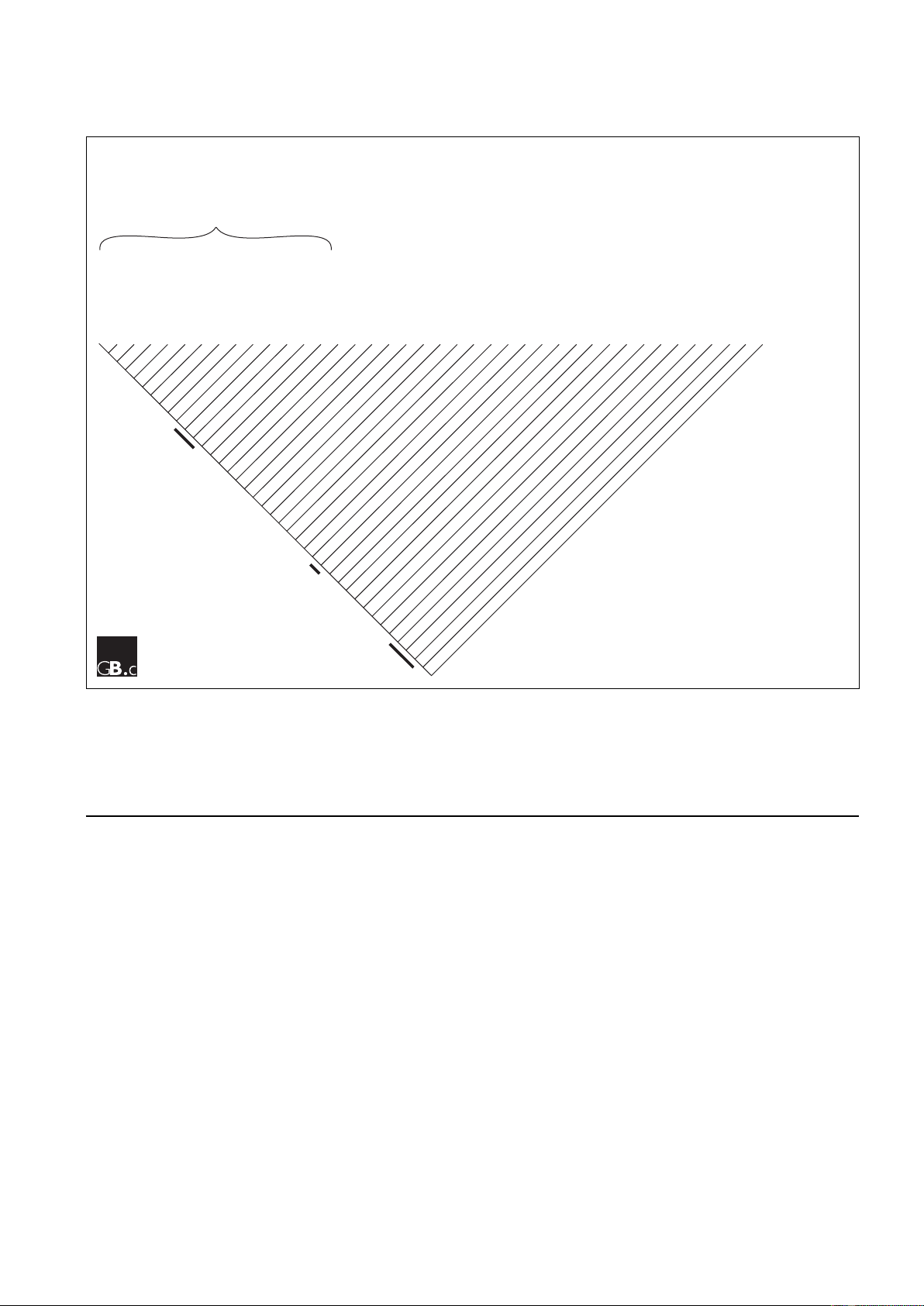
many nodes that can be addressed if you wish to always
include humans in the tree. In his recent book, The
Ancestor’s Tale: A Pilgrimage to the Dawn of Life, Richard
Dawkins [8] noted around 39 ‘splits’ of the tree of life that
contain the human lineage as one of their branches
(Figure 1). This number is provisional of course, and may get
a bit bigger when the basal eukaryotic radiation is better
resolved. It is pure coincidence that the number of fully
sequenced genomes available to Huerta-Cepas et al. was also
39, and there is no close relationship between these 39
genomes and the 39 splits that contain the human lineage:
some of the clades connecting to the human path have
received much attention from sequencing projects (fungi, for
example) whereas others have received none so far (gorillas
or cnidarians, to name just a few). (A clade is a grouping of
species descended from a particular common ancestor that
is not the ancestor of any other species.) In addition, more
than two genomes per node are necessary to study some
relationships of interest (for example, the relationship
between nematodes and arthropods to resolve the proto-
stome node).
With the genome sequences currently available (marked by
asterisks in Figure 1), less than half of the 39 nodes
containing the human lineage can be tackled. Although this
is not a large number compared to the millions of ramifica-
tions in the tree of life, these are precisely the nodes that
have received most scientific scrutiny by phylogenetic
analysis of either genomes or single genes. The most recent
split between the human lineage and an extant lineage has
been thoroughly studied during the past few years, and a
consensus has gradually arisen in which chimpanzees, and
216.2 Genome Biology 2007, Volume 8, Issue 6, Article 216 Castresana http://genomebiology.com/2007/8/6/216
Genome Biology 2007, 8:216
Figure 1
A phylogenetic tree depicting all nodes (branchpoints) on the evolutionary line leading to humans. The species groupings (clades) given here along the
top are those used in [8]. The ‘basal eukaryotes’ are a diverse polyphyletic group (not a single clade) of mainly unicellular organisms such as excavates
and chromalveolates, and this grouping is thus labelled ‘uncertain’. The nodes studied by Huerta-Cepas et al. [3] are indicated by the black bars. The
clades in which at least one complete genome sequence is available are marked with an asterisk. All eukaryotic clades with a genome sequence were
included in the phylogenetic analysis of Huerta-Cepas et al., except for the Ambulacraria, for which a genome sequence (of the echinoderm
Strongylocentrotus purpuratus) has only recently become available.
Human (*)
Chimpanzees (*)
Gorillas
Orangutans
Gibbons
Old World monkeys (*)
New World monkeys
Tarsiers
Strepsirhines
Colugos and tree shews
Rodents and lagomorphs (*)
Laurasiatheres (*)
Xenarthrans
Afrotheres
Marsupials (*)
Monotremes
Sauropsids (reptiles and birds) (*)
Amphibians (*)
Lungfish
Coelacanths
Ray-finned fish (*)
Chondrichthyans
Lampreys and hagfish
Cephalochordates (Lancelets)
Urochordates (Sea squirts) (*)
Ambulacrarians (Echinoderms and Hemichordates) (*)
Protostomes (*)
Acoelomorph flatworms
Cnidarians
Ctenophores
Placozoans
Sponges
Choanoflagellates
Mesomycetozoea
Fungi (*)
Amoebozoans (*)
Plants (*)
Basal eukaryotes (uncertain) (*)
Archaea (*)
Eubacteria (*)
Primates

not gorillas, are our closest relatives [9]. The most ancient
split in Figure 1 separates the Eukaryote-Archaea clade and
the Eubacteria, but this phylogeny is still highly debatable
and other possibilities exist [10]. The nodes selected by
Huerta-Cepas et al. [3] for further study lie between the two
ends of the path that goes from humans to the last common
ancestor of all living species (or “the pilgrimage to the dawn
of life” [8]).
Topological variation
One of the phylogenetic problems analyzed by Huerta-Cepas
et al. [3] is the relationship between primates, rodents, and
laurasiatherians (the latter comprising the Cetartiodactyla,
which include whales and artiodactyles, as well as the
Carnivora, and certain other mammalian orders). By means
of an algorithm that scans topologies in the trees of the
human phylome, the authors quantified the number of trees
supporting different relationships. They found, after
eliminating unstable trees, 4,806 phylogenetic trees suppor-
ting the grouping of primates and laurasiatherians into a
clade with the exclusion of rodents, 3,459 trees supporting a
primates and rodents grouping (a clade known as
Euarchontoglires or Supraprimates, and supported by recent
molecular phylogenies [5]; this is the arrangement depicted
in Figure 1), and 2,258 trees grouping rodents and
laurasiatherians in a single clade. Thus, the topological
variation found was extreme, not far from the maximum
possible, and represents a serious methodological challenge,
especially as all these trees are statistically well supported,
with a Bayesian posterior probability higher than 0.9 in the
node of interest. Given the large numbers of genes
supporting each of the three possible arrangements of these
mammalian lineages, it is not surprising that recent
phylogenomic studies have produced different trees relating
human, mouse and dog [11,12]. Huerta-Cepas et al. [3] did
not calculate a consensus tree (this was not the purpose of
this study), and thus it is not straightforward to determine
the ‘true’ tree topology relating these mammals. Just getting
the best-supported topology is not enough, and even using
all genes in a genome may not help you come to an
unambiguous solution. This is because different genes
produce different biases, and rigorous criteria for selecting
the genes to be used to build a species tree are necessary to
get less ambiguous results, as has been done in other work
(see [13] for a review). The important message from this part
of the study is that, whatever the true tree may be, trees
derived from single genes are more likely than not to point
to a wrong topology.
Huerta-Cepas et al. [3] also looked at the relationship
among chordates, arthropods and nematodes, a tree that has
been the subject of much recent work (see references in [3]).
In this case, 2,431 trees support a grouping of chordates and
arthropods (Coelomata), 1,759 trees support a nematode-
arthropod clade (the Ecdysozoa; in Figure 1, this group is
included in the protostomes) and 1,040 trees support a
grouping of chordates and nematodes. A great diversity of
topologies was also found and we can see again that, even
without knowing the true tree, most trees must be wrong. A
third problem studied by Huerta-Cepas et al. [3] regarding
the position of several basal eukaryotic lineages is more
difficult to interpret, as there are more than three possible
topologies, but the results also point to a high variability
among topologies.
It is true that the three examples discussed above are
inherently difficult phylogenies, but the authors indicate that
they found considerable levels of topological diversity in
trees of other, undisputed, phylogenies. These very instruc-
tive results should make us realize that not all single-gene
trees, even those with high support, must necessarily be
coincident with the real species tree. Thus, the methodo-
logical approach of the pioneering work of Penny et al. [1],
which implied a certain degree of topological variation
among different genes without denying the existence of a
unique tree, is largely supported from this much larger analysis
using the most up-to-date methods of statistical analysis.
What causes this variation?
There are many factors that can cause different genes to
give different topologies, and there are excellent reviews on
this topic [14,15]. Briefly, there are three basic sources of
variation. First, there is an important natural source of
variation between genes due to the stochastic nature of
mutation; short genes are most affected by this
randomness, so that the mutations found in such a gene in
different species may not be enough to truly reflect their
phylogeny. Lineage sorting, which implies the random
retention of ancestral polymorphisms in diverging lineages,
is also an important natural source of variation in the
phylogenies of closely related species. There are also
phylogenetic reconstruction artifacts, such as those due to
base-compositional bias, saturation of substitutions, or the
artificial grouping of the most rapidly evolving lineages
(long-branch attraction). The use of time-consuming
Bayesian phylogenetic methods by Huerta-Cepas et al. [3]
(despite the huge number of trees involved) certainly
helped in reducing these problems. Finally, there are
methodological problems related to the assessment of
homology: this includes determining which genes are true
orthologs and building the multiple alignments on which
phylogenetic reconstructions are based. Orthologous genes
are homologous genes that have been separated by
speciation and not by gene duplication, and only orthologs
should be used for building a species tree. If undetected,
genes related by duplication events (paralogs) can lead to
serious misinterpretations of species trees. These
considerations are particularly problematic for the most
ancient phylogenies, where large numbers of gene duplica-
tions and gene losses have to be recognized and resolved.
http://genomebiology.com/2007/8/6/216 Genome Biology 2007, Volume 8, Issue 6, Article 216 Castresana 216.3
Genome Biology 2007, 8:216

The study of Huerta-Cepas et al. [3] has uncovered a degree
of topological variation among single-gene phylogenies
much greater than previously thought. Their conclusions,
although based on eukaryotes, may be applicable to the
whole tree of life, and may be important to prokaryote
phylogeny. In prokaryotes, besides attempts to determine
the phylogenetic position of species or lineages by means of
an accurate selection of genes [16,17], there are many studies
where the main purpose is to deduce the phylogenetic
history of individual genes. Such lineages that do not
coincide with their expected position in a species tree are
often assigned to lateral gene transfer [18,19], but in many
cases this ignores the fact that similar, rather than identical,
trees should be expected from different genes [1,3]. In
addition, when paralogy problems occur, very dissimilar
trees, even with high support, are also to be expected [3].
Thus, this large study by Huerta-Cepas et al. [3] reinforces
the idea that the details of complex phylogenies (and most of
the interesting nodes are complex) can only be solved by
means of multi-gene studies after a careful selection of
genes. However, in many circumstances a single-gene phylo-
geny may be interesting in itself. In such cases, not only
should we be aware of the problems of orthology assignment
and tree reconstruction artifacts, we should try hard to
identify them to avoid erroneous speculations from such trees.
Acknowledgements
JC is supported by grant number CGL2005-01341/BOS from the Plan
Nacional I+D+I of the MEC (Spain), co-financed with FEDER funds.
References
1. Penny D, Foulds LR, Hendy MD: Testing the theory of evolution
by comparing phylogenetic trees constructed from five dif-
ferent protein sequences. Nature 1982, 297:197-200.
2. Robinson DF, Foulds LR: Comparison of phylogenetic trees.
Math Biosci 1981, 53:131-147.
3. Huerta-Cepas J, Dopazo H, Dopazo J, Gabaldón T: The human
phylome. Genome Biol 2007, 8:R109.
4. Springer MS, Cleven GC, Madsen O, de Jong WW, Waddell VG,
Amrine HM, Stanhope MJ: Endemic African mammals shake
the phylogenetic tree. Nature 1997, 388:61-64.
5. Murphy WJ, Eizirik E, Johnson WE, Zhang YP, Ryder OA, O’Brien SJ:
Molecular phylogenetics and the origins of placental
mammals. Nature 2001, 409:614-618.
6. Turbeville JM, Schulz JR, Raff RA: Deuterostome phylogeny and
the sister group of the chordates: evidence from molecules
and morphology. Mol Biol Evol 1994, 11:648-655.
7. Castresana J, Feldmaier-Fuchs G, Yokobori S, Satoh N, Pääbo S: The
mitochondrial genome of the hemichordate Balanoglossus
carnosus and the evolution of deuterostome mitochondria.
Genetics 1998, 150:1115-1123.
8. Dawkins R: The Ancestor’s Tale: A Pilgrimage to the Dawn of Life.
London: Phoenix; 2005.
9. Ruvolo M: Molecular phylogeny of the hominoids: inferences
from multiple independent DNA sequence data sets. Mol Biol
Evol 1997, 14:248-265.
10. Gribaldo S, Philippe H: Ancient phylogenetic relationships.
Theor Popul Biol 2002, 61:391-408.
11. Cannarozzi G, Schneider A, Gonnet G: A phylogenomic study of
human, dog, and mouse. PLoS Comput Biol 2007, 3:e2.
12. Nikolaev S, Montoya-Burgos JI, Margulies EH, NISC Comparative
Sequencing Program, Rougemont J, Nyffeler B, Antonarakis SE:
Early history of mammals is elucidated with the ENCODE
multiple species sequencing data. PLoS Genet 2007, 3:e2.
13. Delsuc F, Brinkmann H, Philippe H: Phylogenomics and the
reconstruction of the tree of life. Nat Rev Genet 2005, 6:361-
375.
14. Jeffroy O, Brinkmann H, Delsuc F, Philippe H: Phylogenomics: the
beginning of incongruence? Trends Genet 2006, 22:225-231.
15. Rokas A, Carroll SB: Bushes in the tree of life. PLoS Biol 2006,
4:e352.
16. Ciccarelli FD, Doerks T, von Mering C, Creevey CJ, Snel B, Bork P:
Toward automatic reconstruction of a highly resolved tree
of life. Science 2006, 311:1283-1287.
17. Soria-Carrasco V, Valens-Vadell M, Peña A, Antón J, Amann R, Cas-
tresana J, Rosselló-Mora R: Phylogenetic position of Salinibacter
ruber based on concatenated protein alignments. Syst Appl
Microbiol 2007, 30:171-179.
18. Boucher Y, Douady CJ, Papke RT, Walsh DA, Boudreau ME, Nesbo
CL, Case RJ, Doolittle WF: Lateral gene transfer and the
origins of prokaryotic groups. Annu Rev Genet 2003, 37:283-328.
19. Brown JR: Ancient horizontal gene transfer. Nat Rev Genet
2003, 4:121-132.
216.4 Genome Biology 2007, Volume 8, Issue 6, Article 216 Castresana http://genomebiology.com/2007/8/6/216
Genome Biology 2007, 8:216

![PET/CT trong ung thư phổi: Báo cáo [Năm]](https://cdn.tailieu.vn/images/document/thumbnail/2024/20240705/sanhobien01/135x160/8121720150427.jpg)