RESEARC H Open Access
Gender differences in health related quality of life
of young heroin users
Antònia Domingo-Salvany
1,2*
, M Teresa Brugal
2,3
, Gregorio Barrio
2,4
, Francisco González-Saiz
5
, M José Bravo
2,6
,
Luís de la Fuente
2,6
, the ITINERE Investigators
1
Abstract
Background: Health Related Quality of Life (HRQL) of opiate users has been studied in treatment settings, where
assistance for drug use was sought. In this study we ascertain factors related to HRQL of young opiate users
recruited outside treatment facilities, considering both genders separately.
Methods: Current opiate users (18-30 y) were recruited in outdoor settings in three Spanish cities (Barcelona,
Madrid, Sevilla). Standardised laptop interviews included socio-demographic data, drug use patterns, health related
issues, the Severity of Dependence Scale (SDS) and the Nottingham Health Profile (NHP).
Results: A total of 991 subjects (73% males), mean age = 25.7 years were interviewed. The mean global NHP score
differed by gender (women: 41.2 (sd:23.8); men:34.1(sd:23.6);p < 0.05). Multivariate analysis was implemented
separately by gender, variables independently related with global NHP score, both for males and females, were
heroin and cocaine SDS scores. For women, only other drug related variables (alcohol intake and length of cocaine
use) were independently associated with their HRQL. HIV+ males who suffered an opiate overdose or had
psychiatric care in the last 12 months perceived their health as poorer, while those who had ever been in
methadone treatment in the last 12 months perceived it as better. The model with both genders showed all
factors for males plus quantity of alcohol and an interaction between gender and HIV status.
Conclusions: Heroin users were found to be at a considerable risk of impaired HRQL, even in these young ages. A
score approaching severity of dependence was the factor with the strongest relation with it.
Background
Although some changes seem to be taking place in the
incidence trends of specific illegal drugs, heroin use is
still an important health concern in Europe. In most
countries heroin remains the principal drug involved in
treatment episodes[1] and heroin users are at a greater
risk of dying from different causes, particularly over-
doses but also infectious diseases related to injection
[2-4].
Health Related Quality of Life (HRQL) has progres-
sively been applied in the evaluation of health status of
patients, including substance users[5,6]. Poor HRQL has
been reported among heroin users starting treatment,
being comparable to other chronic disease patients[7-9].
As a patient centred outcome variable, HRQL has also
been used to assess treatment effectiveness and in
randomised trials providing evidence of HRQL improve-
ment with opioid substitution therapies [10-13]. Vari-
ables that have been related to poorer HRQL in opiate
users vary in different studies. The more consistent find-
ing is poorer HRQL associated with poly-drug use,
HRQL has also been related to socio-demographic
variables such as age, educational level or employment
status, and the presence of chronic medical conditions,
including HIV infection[8,14]. Although gender has
been associated with differences in HRQL in many
different population studies, being poorer in women
[15,16], no clear differences have been reported in
studies on opiate users [8,17,18]. The influence of psy-
chiatric diagnoses other than substance use disorders on
HRQL has been explored, results being inconsistent
though mainly showing impaired HRQL in subjects with
dual diagnosis[18-20]. It is difficult to compare the var-
ious studies as they have explored different variables
* Correspondence: adomingo@imim.es
1
Drug Abuse Epidemiology Research Group. IMIM-Hospital del Mar. Dr.
Aiguader, 88. E-08003 Barcelona, Spain
Full list of author information is available at the end of the article
Domingo-Salvany et al.Health and Quality of Life Outcomes 2010, 8:145
http://www.hqlo.com/content/8/1/145
© 2010 Domingo-Salvany et al; licensee BioMed Central Ltd. This is an Open Access article distributed under the terms of the Creative
Commons Attribution License (http://creativecommons.org/licenses/by/2.0), which permits unrestricted use, distribution, and
reproduction in any medium, provided the original work is properly cited.

and used different HRQL measures. The generic HRQL
measures most frequently used have been the SF-36 and
the Nottingham Health Profile (NHP). The German
adaptation of the Lancashire Quality of Life Profile, a
questionnaire designed specifically for the mental health
field, has also been used in studies with drug users
[13,21]. Few HRQL instruments specific to the drug
dependence field are available[22].
Episodes of drug overdose are frequent among heroin
injectors[23,24] and it has been suggested that poor
health may be an important overdose risk factor[25,26],
yet we don’t know of any previous study exploring the
possible relation between perceived HRQL and overdose
experiences which could be of interest for specific pre-
vention. It is possible that HRQL is being affected in
early phases of opiate use, however as far as we know
there is little information on HRQL in young opiate
users, early in their drug career. Most studies have been
done after entry to treatment.
The objective of the present study was to ascertain
what factors were related with HRQL among young opi-
ate users, including previous drug treatment and over-
dose episodes, taking gender into account.
Methods
The ITINERE project cohort of current regular users
of heroin aged between 18 and 30 years was
assembled in outdoor settings of three Spanish cities
(Barcelona, Madrid, Sevilla). Details of the methodol-
ogy have been described previously [24,27]. To be
included, subjects had to be residents in the above
mentioned cities, to have used heroin within the 90
days prior to the interview, and at least 12 days over
the 12 months prior to the interview; they also had to
be willing to participate in and facilitate the follow-
up. Exclusion criteria were language barriers and diffi-
culties in follow-up. For recruitment, targeted sam-
pling and nomination techniques, with different
starting points mainly in outdoor locations, was used
[28]. After a brief selection questionnaire, to assess
fulfilment of inclusion criteria, candidates were
informed about the objectives and procedures of the
study, including incentives for participation (18 Euro
per interview completed) and signed an informed
consent. Field work was done between April 2001 and
December 2003. The inception cohort baseline ques-
tionnaire was administered through a laptop assisted
interview in socio-sanitary premises and included,
among other variables, socio-demographic data, drug
use patterns, health problems data, severity of heroin
and cocaine dependence measured through the Span-
ish version of the Severity of Dependence Scale (SDS)
[29,30], and a generic health related quality of
life questionnaire, the Nottingham Health Profile
(NHP) [31]. Interviewers were trained social science
professionals (i.e.: anthropologists, sociologists,...).
A non-fatal opiate overdose was defined as an episode
occurring after heroin or opiate use characterized by
extreme difficulty in breathing, loss of consciousness
and problems waking up or recovering consciousness,
and possibly bluish skin or lips. Other variables studied
were having been confined to bed due to discomfort,
disease or injury, on any day during the last 12 months
and to have been in hospital as an inpatient during the
same period. The use of two or more illegal substances
during the last 12 months with a frequency of once
weekly or higher was considered a proxy of poly-drug
use. Alcohol consumption was measured as intake in
grams/day and categorized in 4 risk categories (no use,
moderate, at-risk and heavy) with different cut-points by
gender (male 40 and 60 g/day, female 20 and 40 g/day).
Serological tests (HIV, HBV, HCV) were done through a
dried blood spot test. The ITINERE project has been
approved by the ethical committee of the Instituto de
Salud Carlos III.
The SDS is a short, easily administered scale which
can be used to measure the degree of dependence
experienced by users of different types of drugs. The
SDS contains five items, all of which are explicitly con-
cerned with impaired control over drug taking and with
worries and anxieties about drug use. It satisfies a num-
ber of criteria indicating its suitability as a measure of
dependence[29]. It was applied to assess dependence
severity (range 0, none - 15, most) for heroin (SDS-H)
and for cocaine (SDS-C).
The Nottingham Health Profile (NHP) is a multidi-
mensional health status questionnaire that has been pre-
viously used in drug users[10,11] and found to be easy
to administer in this population. It contains 38 items
divided into 6 dimensions of health (energy, pain, sleep,
social isolation, emotional reactions, physical mobility)
each one scored from 0, best to 100, worst health state.
A global NHP score was calculated taking the mean of
the six dimension scores. To compare the study results
to the general population we used NHP Spanish norms
for ages 41 to 49. There is no normative data available
for younger ages but as from HRQL studies we know
that generic HRQL scores are better for younger age
groups[31], if appropriate age specific reference values
were to have been used, differences potentially found
would have been even larger.
Differences by gender were tested using chi-square
test or t-test. To compare possible differences in NHP
scores, non parametric tests (Mann-Witney U or Krus-
kal-Wallis test-with correction for ties, if necessary)
were used. As large samples were analysed, for multi-
variate analysis the NHP global score was considered as
normally distributed[32] and a multiple linear regression
Domingo-Salvany et al.Health and Quality of Life Outcomes 2010, 8:145
http://www.hqlo.com/content/8/1/145
Page 2 of 10

applied. All variables significant or marginally significant
(p < 0.10) in bivariate analysis were included in three
models, one for the total and one per gender, and the
selection of final variables was done with a backward
procedure. All analyses were done with SPSS 12.0.
Results
A total of 991 young heroin users were recruited, 722
were male (73%) and 269 female. Men and women dif-
fered in all socio-demographic variables explored, but
also in some general health (confined to bed at least one
day in the last 12 months, HIV positive: more frequent
in women) and drug use variables (a higher proportion
of heavy alcohol use, and a shorter length of heroin and
cocaine use among women)(table 1). No gender differ-
ences were observed in the proportion of those who had
a previous overdose experience or had experienced an
opiate overdose in the last 12 months. However, the
proportion of those who had recently (12 months)
experienced a non-fatal overdose (n = 80) was higher in
Barcelona, among those more educated, squatters or
homeless, unemployed, those who had been in hospital
in the last 12 months, were anti-HCV positives, had
injected in the last 12 months, or had not been in
methadone treatment at any time in the last 12 months.
A valid NHP questionnaire was obtained for 963 sub-
jects, 97% of the sample. The mean global NHP score
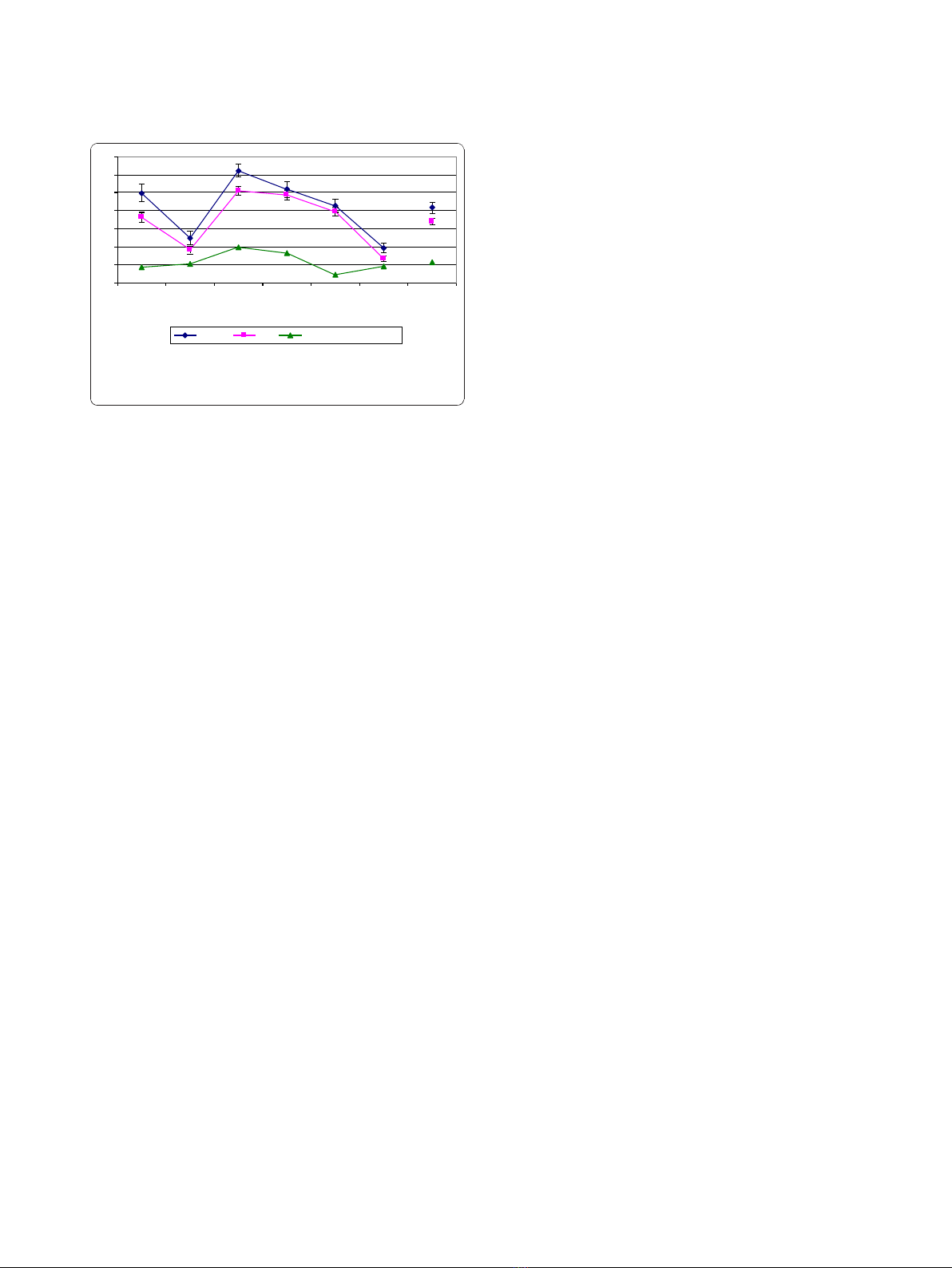
was 36.0 (sd: 23.8). Women perceived their health as
worse than men in all dimensions (global score: 41.2
(23.8) vs 34.1 (23.6)) (Figure 1), though not statistically
significant for sleep and social isolation. In all dimen-
sions NHP scores were higher for both genders than
those of the general population (NHP global score in
general adult population 41-49 years old: 11.0 (sd:13.6)).
NHP global score was higher in older ages with a signif-
icant positive correlation in both genders. The NHP glo-
bal score showed statistically significant differences in
both genders according to current employment (better),
living arrangements (better among squatters) and prison
experience (worse). It was also worse with longer dura-
tion of heroin use and with higher scores for SDS-H
and SDS-C. Among males it was poorer in lower educa-
tionallevels,thosewhowereeverconfinedtobedor
visited a psychiatrist during the previous 12 months,
were HIV positive, had core antibodies of hepatitis B, or
had ever had an overdose. Among women it was poorer
with increased length of cocaine use (table 2). NHP glo-
bal score showed statistically significant differences for
poly-drug use and hospital inpatient admission in the
last 12 months (worse in affirmative categories), only
when considering both genders simultaneously.
Having had an opiate overdose in the last 12 months,
though it was not significant in bivariate analysis was
included in the multivariate analysis instead of overdose
ever, statistically significant in males but too remote
from HRQL assessment. In males, the final multiple lin-
ear regression model, adjusted for age, showed that
NHP global score was associated with socio-demo-
graphic variables (level of education, living arrange-
ments, current employment), was impaired with some
medical (ever confined to bed in the previous 12
months, HIV positive) and drug use related variables:
higher scores on severity of heroin and cocaine depen-
dence (SDS-H and SDS-C) and having experienced an
opiate overdose in the last 12 months; and while it was
worse in those men that had visited a psychiatrist in the
previous 12 months, for those ever on methadone treat-
ment in previous 12 months it was better (Table 3).
Variables included in the regression explained 22.7% of
the NHP global score variance. The severity of heroin
dependence, as a continuous variable, showed the high-
est standardized beta coefficient (0.26). An increase of
one point in the score of SDS-H was associated with an
increase of 1.8 points in the NHP global score, while
having an overdose during the previous 12 months
increased it by 7 points. For females, only drug use
related variables (daily alcohol intake, length of cocaine
use and SDS-H and SDS-C) were independently related
to global NHP score, explaining also 22.7% of the NHP
global score variance. An increase of one point in SDS-
H was associated with an increase of 2.1 points in the
NHP global score (Table 3). When analysing the overall
sample, all variables significant for males were included
in the model plus daily alcohol intake, significant for
females; however the regression involved an interaction
term between gender and HIV status showing that
womenhadworseNHPscorewhichwasnotmodified
by their HIV status, whereas among men NHP score
was impaired when HIV positive (Table 3).
Discussion
HRQL was found to be impaired in young heroin users
recruited outside the healthcare context, and severities
of heroin and cocaine dependence were the variables
that accounted for most of its explained variability in
both genders. Women reported worse HRQL, but con-
trary to males having had an opiate overdose, contact
with a psychiatrist or having ever been on methadone
treatment during the preceding 12 months were not
found to be associated with it.
A large sample was assembled that allowed to study a
wide set of variables and to explore characteristics
among women separately. It was planned to include
young users to study the course of heroin use, trying to
recruit users in early phases of their drug career and, in
fact, they were younger than heroin users when request-
ing first treatment in Spain (mean age in 2002: 31.8
years)[33], however, the final sample included young
Domingo-Salvany et al.Health and Quality of Life Outcomes 2010, 8:145
http://www.hqlo.com/content/8/1/145
Page 3 of 10

Table 1 Socio-demographic variables and drug use patterns, in the overall sample and by gender
Women
269 (27%)
n (%)
Men
722 (73%)
n (%)
Total
991
n (%)
p
Age (mean; [s.d.]) 25.00 [3.6] 25.9 [3.2] 25.7 [3.3] < 0.0001
Educational level 0.008
Primary or < 104 (38.8) 348 (48.2) 450 (45.7)
> = Secondary 164 (61.2) 370 (51.8) 530 (54.3)
Living arrangements
†
0.007
Flats 187 (69.5) 507 (70.2) 694 (70.0)
Squats 56 (20.8) 103 (14.3) 159 (16.0)
Homeless or institution 26 (9.7) 112 (15.5) 138 (13.9)
Work
Did not work
†
(with/without contract)
203 (75.5) 475 (65.8) 678 (68.4) 0.004
Ever in prison 71 (26.4) 347 (48.1) 418 (42.2) < 0.0001
Ever confined to bed
†
143 (54.0) 272 (38.0) 415 (42.3) < 0.0001
Inpatient in a hospital
†
65 (24.5) 142 (19.8) 207 (21.1) 0.107
Infections (n = 971)
Ab* HIV + 61 (22.9) 116 (16.5) 177 (18.2) 0.020
Ab HCV + 132 (49.6) 375 (53.3) 507 (52.3) 0.311
Ab HBV core + 41 (15.4) 124 (17.6) 165 (17.0) 0.421
Alcohol use severity‡0.004
No alcohol use 64 (23.9) 113 (15.8) 177 (18.0)
Moderate 95 (35.4) 317 (44.3) 412 (41.9)
At risk 41 (15.3) 133 (18.6) 174 (17.7)
Heavy use 68 (25.4) 152 (21.3) 220 (22.4)
N of years drug use (mean; [s.d.])
Cocaine 8.2 [4.0] 9.6 [3.9] 9.2 [4.0] < 0.0001
Heroin 7.4 [4.6] 8.9 [4.3] 8.5 [4.5] < 0.0001
Poly-drug use
†
255 (94.8) 686 (95.0) 941 (95.0) 0.889
Ever injecting 164 (61.0) 473 (65.5) 637 (64.3) 0.184
Age first heroin use (mean; [s.d.]) 17.6 [3.4] 17.0 [3.1] 17.1 [3.2] 0.001
Age first injecting (mean; [s.d.]) 19.6 [3.7] 19.3 [3.9] 19.4 [3.8] 0.392
Intravenous use
†
135 (50.6) 381 (52.9) 516 (52.3) 0.511
Drug use treatment 0.291
Never 84 (31.7) 213 (29.7) 297 (30.2)
Before last year 40 (15.1) 141 (19.7) 181 (18.4)
Methadone last year 108 (40.8) 262 (36.5) 370 (37.7)
Other last year 33 (12.5) 101 (14.1) 134 (13.6)
Psychiatric treatment
†
25 (9.3) 51 (7.1) 76 (7.7) 0.241
Opiate Overdoses
Ever in lifetime 71 (26.5) 173 (24.0) 244 (24.6) 0.412
Last 12 months 22 (8.2) 58 (8.0) 80 (8.1) 0.928
SDS * score (mean; [s.d.])
Cocaine 5.3 [4.3] 4.8 [4.1] 4.9 [4.2] 0.089
Heroin 8.2 [3.3] 8.0 [3.4] 8.1 [3.4] 0.497
* Ab: antibodies; SDS: Severity Dependence Scale.
†
Refers to last 12 months.
‡
different cut-points used for both genders: men: 40-60 g/day; women: 20-40 g/day
Domingo-Salvany et al.Health and Quality of Life Outcomes 2010, 8:145
http://www.hqlo.com/content/8/1/145
Page 4 of 10
heroin users already very much involved in heroin use.
As elsewhere, it is difficult to ascertain the degree of
representativeness of the population of young heroin
users in the three cities where the study was conducted.
Even though strategies to include users from different
surroundings in the cities were implemented the final
sample was somewhat biased towards heavy use. Another
limitation of the present study could be related to the
assumption of normality of the NHP global score. How-
ever, according to Lumley et al [32] the fact of being a
large sample minimizes this problem. Furthermore, only
2.5% of participants presented a score of 0, suggestive of
a floor effect, which can be considered as negligible. Also,
when interpreting results it is necessary to remember
that the cross-sectional nature of the study precludes
making causal inferences in most of the variables.
The variables that explained most of the global NHP
score variability were the same in both genders: the
SDS-H and SDS-C accounted for 55.9% of the explained
variance in women and for 52.9% in the model for men.
These findings are in accordance with results observed
in an equivalent sample of young cocaine users with the
same instruments[34] and in contrast with some pre-
vious results where HRQL was not clearly related to
some determinants of dependence, like amount and fre-
quency of drug use[7]. Measuring severity of depen-
dence directly with a validated instrument probably
helped us to detect this relationship. Also the sample
included a considerable heterogeneity of drug careers
which can facilitate finding a significant result. In fact,
7% of the subjects had an SDS-H score of two or less,
and for 50% it was higher than 8, also for SDS-C the
corresponding figures were 35.6% and 24.4%.
Women showed worse HRQL, which is in accordance
with studies in many different populations indepen-
dently of the instrument used. In previous opiate-user
groups gender differences in generic HRQL didn’t
achieve statistical significance[8,18] or only for some
aspects of the SF-36[7]. Probably the sample size of the
present study has helped to underline this difference.
Furthermore, the large number of women included
allowed a stratified analysis to be performed and con-
struction of a multivariate model exclusively for them in
which the set of variables found to be statistically signif-
icant differs from that of men. Besides SDS-H and SDS-
C, only two other drug-related variables were retained
in the female’s model, daily alcohol intake and length of
cocaine use. When doing the analysis with the total
sample an interaction between gender and HIV infection
was found, indicating that positive HIV serology only
had an impact on HRQL of men. Some studies have
found a slower progression to AIDS among HIV positive
women, and Jarrin et al say that “in settings with small
gaps in gender inequality and universal access to care,
HIV-infected women fare better than their male coun-
terparts in the era of HAART”[35].
Contrary to previous studies[14,34] poly-drug use was
not confirmed as an independent factor for HRQL, not
even when considering as a continuous variable the
number of illegal substances used with a frequency of
weekly or higher. Even though our variable was a proxy
of DSM-IV poly-drug use, thus not directly comparable
with other studies, it is worth signalling that it was not
found to be related in a model in which the severity of
cocaine dependence was an important independent
HRQL predictor, thus somewhat accounting for another
substance used and where, for the total sample and for
women, daily alcohol intake was an independent factor
positively associated with impaired HRQL. For males,
recent overdoses, another factor related to poly-drug
use, was also included in the model[36].
Poor health has been suggested, among other factors,
as predisposing to heroin overdose[25]. In the present
study subjects, especially males, who suffered an opiate
overdose in the previous 12 months had an impaired
HRQL. But, as this is a cross-sectional study it is not
possible to know the direction of this association. Some
authors consider specific systemic diseases like HIV,
liver and lung disease as predisposing factors for over-
dose[26]. Those systemic diseases would by themselves
affect HRQL, thus it would be difficult to unravel the
precise causal path in the association between opiate
overdose and HRQL. However, in the present study
HIV and overdose were independently associated with
HRQL. As some studies have also shown that, after an
overdose, drug users have subsequent episodes of
impaired health[37] the opposite sense of the association
between poor HRQL and overdose has to be considered
and its directionality elucidated in further studies. Pre-
vious findings reported higher frequency of overdose
episodes among subjects with longer heroin use and
higher severity of dependence[23]. The present study
0
10
20
30
40
50
60
7
0
energy pain emotional
reactions
sleep social
isolation
physical
mobility
global
score
Women Me n Gral Population 41-49 y
*
*
*
*
*
* p < 0.05
Figure 1 Dimensions of the Nottingham Health Profile (NHP)
and global NHP score by gender, compared to the general
population profile[31].
Domingo-Salvany et al.Health and Quality of Life Outcomes 2010, 8:145
http://www.hqlo.com/content/8/1/145
Page 5 of 10

![PET/CT trong ung thư phổi: Báo cáo [Năm]](https://cdn.tailieu.vn/images/document/thumbnail/2024/20240705/sanhobien01/135x160/8121720150427.jpg)