EURASIP Journal on Applied Signal Processing 2004:14, 2201–2213
c
2004 Hindawi Publishing Corporation
MPEG-4 IPMP Extension for Interoperable
Protection of Multimedia Content
Ming Ji,1S. M. Shen,1Wenjun Zeng,2Taka Senoh,3Takafumi Ueno,3
Terumasa Aoki,4Yasuda Hiroshi,4Takuyo Kogure4
1Panasonic Singapore Laboratories Pte Ltd., Block 1022 Tai Seng Avenue #04-3530, Tai Seng Industrial Estate, Singapore 534415
Emails: mji@psl.com.sg,shen@psl.com.sg
2Department of Computer Science, University of Missouri-Columbia, MO 65211, USA
Email: zengw@missouri.edu
3Matsushita Electric Industrial Co., Ltd., Osaka 571-8501, Japan
Emails: senoh.taka@jp.panasonic.com,ueno.takafumi@jp.panasonic.com
4Center for Collaborative Research (CCR), Research Center for Advanced Sciences and Technology, University of Tokyo,
4-6-1 Komaba Meguroku, Tokyo 153-8904, Japan
Emails: aoki@mpeg.rcast.u-tokyo.ac.jp,yasuda@mpeg.rcast.u-tokyo.ac.jp,kogurent@attglobal.net
Received 29 March 2003; Revised 7 October 2003
To ensure secure content delivery, the Motion Picture Experts Group (MPEG) has dedicated significant effort to the digital rights
management (DRM) issues. MPEG is now moving from defining only hooks to proprietary systems (e.g., in MPEG-2, MPEG-
4 Version 1) to specifying a more encompassing standard in intellectual property management and protection (IPMP). MPEG
feels that this is necessary in order to achieve MPEG’s most important goal: interoperability. The design of the IPMP Extension
framework also considers the complexity of the MPEG-4 standard and the diversity of its applications. This architecture leaves the
details of the design of IPMP tools in the hands of applications developers, while ensuring the maximum flexibility and security.
This paper first briefly describes the background of the development of the MPEG-4 IPMP Extension. It then presents an overview
of the MPEG-4 IPMP Extension, including its architecture, the flexible protection signaling, and the secure messaging framework
for the communication between the terminal and the tools. Two sample usage scenarios are also provided to illustrate how an
MPEG-4 IPMP Extension compliant system works.
Keywords and phrases: digital rights management, multimedia content protection, MPEG4 IPMP Extension, encryption, authen-
tication, interoperable protection.
1. BACKGROUND AND INTRODUCTION
1.1. Problems in the existing DRM market
With the advent of digital technologies, many new market
opportunities have emerged for content owners, content dis-
tributors, and consumer electronics/information technology
industries. An essential requirement for developing a thriv-
ing marketplace is the protection of copyrighted content in
digital form. Digital rights management (DRM) is a tech-
nology that has been developed to protect against the ille-
gal distribution of copyrighted digital content such as music,
video, or documents. However, there are some problems that
remain to be solved in the existing DRM market.
The first problem is the lack of interoperability. Differ-
ent content providers tend to use different protection mech-
anisms (hence different DRM systems) to protect and dis-
tribute the content. For example, content provider A may
prefer to use the Advanced Encryption Standard (AES)1for
encryption, while content provider B may prefer to use his
own proprietary encryption tool. This results in the lack of
interoperability as illustrated in Figure 1, where terminal A
cannot play back the content distributed by content provider
B, and vice versa.
The second problem of the existing DRM market is the
lack of renewability. Many existing DRM systems are likely to
be broken due to the rapidly growing computer technology.
This is one of the serious problems encountered in digital
content delivery business. It is therefore desirable to estab-
lish a robust and flexible DRM system, where one can easily
renewabrokenDRMsystem.
1NIST US FIPS PUB 197, http://csrc.nist.gov/encryption/aes/.

2202 EURASIP Journal on Applied Signal Processing
Content owner
Content provider A
User authentication A
Terminal A with
IPMP tool A
Content provider B
User authentication B
Terminal B with
IPMP tool B
Content provider C
User authentication C
Terminal C with
IPMP tool C
Figure 1: Existing DRM market.
1.2. MPEG-4 IPMP Extension, the answer
to the problems
The lack of interoperability problem demands an interna-
tional standardization effort so that contents can be delivered
anytime and to anywhere in the world. Being able to expect
different vendors’ content to play on a single player is an im-
portant matter. Not having to reengineer a given player to
work with every other IPMP system is an even more impor-
tant matter.
With the above considerations, the Motion Picture Ex-
perts Group (MPEG), has been pushing for the goal of estab-
lishing a DRM standard enabling the functionalities of re-
newability and interoperability. The MPEG specific term for
DRM is intellectual property management and protection,
(IPMP). The latest IPMP standard for MPEG-4 system is the
MPEG-4 IPMP Extension (IPMPX) [1].
During the development of the IPMP Extension, a real-
world scenario that has been discussed intensively, in order to
understand more about the scope and the problems that the
IPMP Extension should resolve, is the Gobi desert scenario.
Gobi desert scenario. Living in a rather rainy place, Mr.
MPEG loves to go to arid places. The Gobi desert is his
favorite. Before leaving, imagine that he loads some pro-
tected songs on his Panasonic MIEP (MPEG IPMP Exten-
sion Player). His wife does the same on her Philips MIEP,
butwithdifferent songs. When they are in their tent in the
middle of the Gobi desert, Mr. MPEG starts listening to his
MIEP. He finds a new hit that he feels is great and would
like to share it by transferring that song to his wife’s MIEP
(and, being a rule-abiding guy, he has acquired the rights to
do so). Unfortunately, this song has been protected with tools
that are new to his wife’s MIEP. To make his life harder, there
is no Internet connection available in the desert that would
allow the required tool to be downloaded to Mrs. MPEG’s
MIEP. Luckily, being the dictator of MPEG, Mr. MPEG has
the power to demand that IPMP Extension support trans-
ferring IPMP tools intended for one device to a device of a
different make. This would save the trip because otherwise
his wife will start asking why he has spent all those years in
MPEG if such a simple thing like moving a song from one
MIEP to another is not possible and the discussion is likely to
degenerate. This demand, however, would make the lives of
the MPEG-4 IPMP committee members miserable, but that
isnotwhatMr.MPEGcaresaboutanyway....
The Gobi desert scenario, explicitly or implicitly, suggests
that several factors be considered in the standardization of
the MPEG-4 IPMP.
(a) There should be a way to signal to the terminal what
IPMP tools are required to consume the contents.
(b) If the required IPMP tools are not available in the ter-
minal, there should be a way to acquire the missing
tools from a remote location.
(c) There should be a way to securely transfer the content
and the IPMP tools from one device to another.
(d) To ensure interoperability, there should be a way to
allow different IPMP tools (potentially from different
vendors) to be plugged into the terminal and to inter-
act with each other in a normative manner.
(e) There should be a way to renew the potentially com-
promised tools.
(f) There should be a way to specify where and to which
MPEG-4 content streams the required IPMP tools
should be applied and in what order.
(g) There should be a way for the terminal to securely com-
municate with the tools (potentially a plug-in) and to
enable tools to communicate securely with each other.
(h) There should be a way to convey the IPMP informa-
tion such as key and rights information to the terminal
and to the IPMP tools.
(i) The terminal should comply to the usage rights asso-
ciated with the user.
(j) Should MPEG-4 IPMP standardize the tools?
(k) Should MPEG-4 IPMP standardize the key manage-
ment systems?
(l) Should MPEG-4 IPMP standardize the rights manage-
ment systems?
These issues need to be addressed carefully and in an elegant
way to avoid problems experienced in some previous stan-
dardization efforts, for example, some technologies chosen
by the DVD Forum2and the Secure Digital Music Initiative
2http://www.dvdforum.com/forum.shtml.

MPEG-4 IPMP Extension for Interoperable Content Protection 2203
(SDMI),3an industry forum that intended to develop open
technology specifications that protect playing, storing, and
distributing of digital music, have been claimed to be hacked.
We will show how these considerations have been addressed
in MPEG-4 IPMP Extension in the following sections.
1.3. History of the MPEG-4 IPMP Extension
MPEG started its IPMP effort in the development of MPEG-
4. The first attempt is often referred to as the “hooks” ap-
proach, where normative syntax is defined in MPEG-4 sys-
tem to allow the bitstream to carry information that in-
forms the terminal which (of possibly multiple) IPMP sys-
tems should be used to process the governed objects in
compliance with the rules declared by the content provider.
The respective IPMP systems themselves were not specified
within MPEG-4 [2]. MPEG-4 integrates the hooks tightly
with the MPEG-4 systems layer, which makes it possible to
build secure MPEG-4 delivery chains in very smart and effi-
cient ways.
This hooks model, however, appears to have many signif-
icant problems. For example, IPMP systems can be hooked
into the MPEG-4 terminal, but it can only be done on a pro-
prietary basis. Since the protection is normally required to
be associated with some elements of the MPEG-4 terminal,
and its behavior cannot be independent of other parts of the
MPEG-4 terminal, if the IPMP system is not interoperable,
an MPEG-4 terminal with IPMP protection would also be-
come non-interoperable.
As a simple example, if the encryption used to protect the
video content is different from one IPMP system to another,
the consumer electronics (CE) manufacturers would have
to build multiple versions of the MPEG-4 terminal to deal
with different protection systems used by different content
providers. This would significantly increase the cost of build-
ing a terminal and, as a result, the consumers would have to
bear the high cost. Therefore, the question the MPEG-4 com-
mittee faced was whether MPEG can define and standardize
an IPMP framework for both the content providers and the
CE manufactures to follow so that IPMP systems can become
interoperable.
In the year 2000, a new call for proposal (CfP) [3]wasis-
sued. Particularly, it aimed to address the interoperability be-
tween different products, often for similar services, as devel-
oped within the IPMP framework of the MPEG-4 standard.
In addition, with convergence becoming a reality, for exam-
ple, through the deployment of broadband Internet access
and the start of new services on mobile channels, interwork-
ing between different types of devices and services becomes
a more important requirement. The new call requests sub-
mission of proposals that would allow interworking between
different devices and services designed to play secure digital
MPEG-4 content from multiple sources in a simple way, for
example, without the need to change the devices.
One issue that particularly needs to be considered when
standardizing an IPMP framework in MPEG is the balance
3http://www.sdmi.org/.
between interoperability and security, since these two factors
usually contradict each other. Can we standardize every piece
of the IPMP system, including a single encryption tool, a sin-
gle watermarking tool, a single user authentication tool, as
well as the key management?
Depending on the scale of the industrial domain and the
preference of simplicity or security, one might have differ-
ent answers to the above question. However, from an inter-
national standard (MPEG) point of view, our answer to the
above question is no. The first reason is that it will introduce
the security issue. For example, sometimes the security of the
video watermarking tool depends on the secrecy of the water-
marking algorithm, so standardizing a single watermarking
tool is not practical. Furthermore, many DRM systems prefer
a black-box key management too. Besides the security issue,
the second reason is that we have to take care of flexibility
as well as renewability. In the current business environment,
there are various contents with different importance levels,
which are usually protected using different algorithms, such
as AES, Data Encryption Standard (DES),4and triple DES,
e.g., with different security levels. If we would like the same
terminal to be able to consume different contents protected
with different algorithms, the IPMP framework to be defined
has to be flexible. Once the IPMP framework can deal with
the flexibility issue, it will be able to support renewability,
which is required for IPMP systems for security reason, since
an algorithm typically cannot survive many years of attack.
After all, MPEG is targeting a large number of industrial do-
mains with different requirements. MPEG4 IPMP should fo-
cus on standardizing the most common framework/base for
various target applications.
The CfP on the IPMP Extension resulted in numerous
submissions from various industries, including many from
the authors of this paper. MPEG’s systems group has been
working with the proponents and started an extension to the
MPEG-4 systems standard in the form of an amendment and
a new part of MPEG-4 standard. It has reached the Final
Draft of International Standard (FDIS) stage in October 2002
[1]. A significant part of the standard was contributed by the
authors of this paper.
This paper is organized as follows. Section 2 presents an
overview of the architecture of the MPEG-4 IPMP Extension.
Sections 3and 4detail the core components of the MPEG-
4 IPMP Extension. In Section 5, two sample-usage scenarios
are presented for an MPEG-4 IPMP Extension compliant sys-
tem. Section 6 concludes the paper.
2. MPEG-4 IPMP EXTENSION ARCHITECTURE
2.1. Key concepts
It is important to achieve robustness and flexibility in the in-
teroperable framework of a standard. To achieve the robust-
ness, MPEG-4 IPMP Extension provides the tool renewabil-
ity, which protects against security breakdown. The flexibility
4Data Encryption Standard (DES), FIPS PUB 46-3 was reaffirmed in Oc-
tober 1999; http://csrc.nist.gov/publications/fips.

2204 EURASIP Journal on Applied Signal Processing
allows the use of various cipher tools as well as decoding
tools. The interoperable framework enables the distribution
and consumption of content all over the world. MPEG-4
IPMP Extension defines 5 key elements as described below.
(1) IPMP tools
IPMP tools are modules that perform (one or more) IPMP
functions such as authentication, decryption, watermarking,
etc. A given IPMP tool may coordinate other IPMP tools.
Each IPMP tool has a unique IPMP tool ID that identifies
a tool in an unambiguous way, at the presentation level or at
a universal level.
During the standardization of the IPMP Extension, the
MPEG-4 IPMP committee realized that it is not possible to
standardize all IPMP tools due to two main reasons. The
first is that different content providers have different pref-
erences of the IPMP tools as explained in Section 1.1.The
second reason is that there are some tools that are difficult
to standardize, for example, it is not possible to standard-
ize a video watermarking tool, as there is no proven robust
watermarking algorithm yet. With the above considerations,
MPEG-4 IPMP Extension is designed to differ from many
prior approaches in that it intelligently provides an open se-
cure framework allowing tools from different vendors to co-
operatewitheachother.
(2) IPMP descriptors
This is a part of the MPEG-4 object descriptors (OD) that
describe how an object can be accessed and decoded. These
IPMP descriptors are used to denote the IPMP tool that was
used to protect the object. An independent registration au-
thority (RA) is used so any party can register its own IPMP
tool and identify this without collisions.
(3) IPMP elementary stream
IPMP specific data such as key data and rights data are car-
ried by the IPMP elementary stream (ES). All MPEG objects
are represented by ES, which can reference each other. These
special ES can be used to convey IPMP specific data. Their
syntax and semantics are further specified in MPEG-4 IPMP
Extension [1].
(4) IPMP tool list
IPMP tool list carries the information of the tools required by
the terminal to consume the content. It is carried in the initial
object descriptor (IOD) of the MPEG-4 system stream. This
mechanism enables the terminal to select, manage the tools,
or retrieve them when they are missing, and so forth [4].
(5) Secure messaging framework
The MPEG-4 IPMP Extension framework did not choose the
approach of defining functional interfaces. Instead, it is based
on secure message communication [1]. This is one of the
most important concepts in MPEG-4 IPMP Extension. In-
teraction between the terminal and the IPMP tools are re-
alized through the messages via a conceptual entity called
message router (MR). Syntax and semantics of the messages
are clearly defined to facilitate full interoperability. Mutual
authentication and secure messages are also introduced to
achieve a secure framework. Note that the normal functional
interfaces are unlikely to cover various kinds of interfaces for
different algorithms, even for the same encryption function.
Furthermore, the normal functional interfaces are highly de-
pendent on the operating system and the implementation.
The message-based architecture has three advantages
over functional interface-based architectures. The first is that
security can be more easily maintained, as messages are eas-
ier to protect in an open framework than the parameters in
a function parameter list. The second is that the only enti-
ties that need to be concerned with a given message’s defi-
nition are those that need to generate or act upon a given
message; so additional functionality can be created and sup-
ported simply through the addition of the required messages.
The third is that full interoperability with IPMP tools can be
easily achieved by registering the messaging API to a RA and
carrying the registered API ID in the IPMP ToolAPI Config
information in the IPMP descriptor, or by defining a single
messaging API by a third-party forum which adopts MPEG-
4 IPMP Extension. Note that MPEG is not taking the role
of defining a single messaging API since MPEG is targeting
a large number of industrial domains. Individual industrial
domains should take MPEG-4 IPMP Extension as a base, and
fill in the gap in order to make IPMP Extension truly inter-
operable.
Note that in the hooks approach [2], MPEG-4 IPMP de-
fines how an object is treated and how the IPMP specific data
are carried. In other words, (2) and (3) discussed above are
included in the hooks approach. In the IPMP Extension, (4)
and (5) are added while (2) and (3) are further improved,
and the concept of IPMP system in IPMP hooks is changed
to that of IPMP tool as discussed in (1). IPMP Extension en-
hances the original hooks approach so that tool renewability
and flexibility can be achieved.
Considering the diverse applications (e.g., real-time
communications, Internet streaming, surveillance, broad-
band, wireless, studio, DVD, set-top box, etc.) that MPEG-
4 intends to address [5], it is very difficult to have a com-
plete “one-fits-all” solution. For example, as discussed above,
it would be very difficult to standardize tools in MPEG, a
standardization body whose main mission is to standard-
ize core technologies, rather than metadata or making busi-
ness decision. Instead, MPEG-4 chose to standardize a flexi-
ble architecture that would allow individual industries to ex-
tend the framework and further define their own complete
standards to achieve full interoperability, based on the re-
quirements of the individual industry and business consid-
eration. For example, key management and user registra-
tion/authentication are not defined in MPEG-4 IPMP Ex-
tension. Their implementations are up to the IPMP tools on
top of MPEG-4 IPMP Extension. This enables using differ-
ent IPMP tools for different applications while providing a
common framework to facilitate the support of full interop-
erability.
MPEG-4 IPMP Extension for Interoperable Content Protection 2205
Content
stream
MPEG-4
content
stream(s)
IPMP
content
stream(s)
To o l E S
IOD
To o l l i s t
To o l I D
Alternate
tool(s)
Parametric
description(s)
To o l E S D
Content
request
Content
delivery
DMIF
DEMUX
Audio
DB
Video
DB
OD
DB
BIFS
DB
IPMP
DB
IPMP tool
DB
IPMP data
Audio
decode
Video
decode
OD
decode
BIFS
decode
IPMP tool
DESC
Audio
CB
Video
CB
BIFS
CB
IPMP message router / tool manager
Compositor
Renderer
BIFS tree/scene
graph
Tool manager interface
Obtain missing
tools Missing
tools
Message router interface
IPMP tool
messages
IPMP
tool A
IPMP
tool B
IPMP
tool C
Figure 2: The MPEG-4 IPMP terminal architecture.
2.2. Architecture
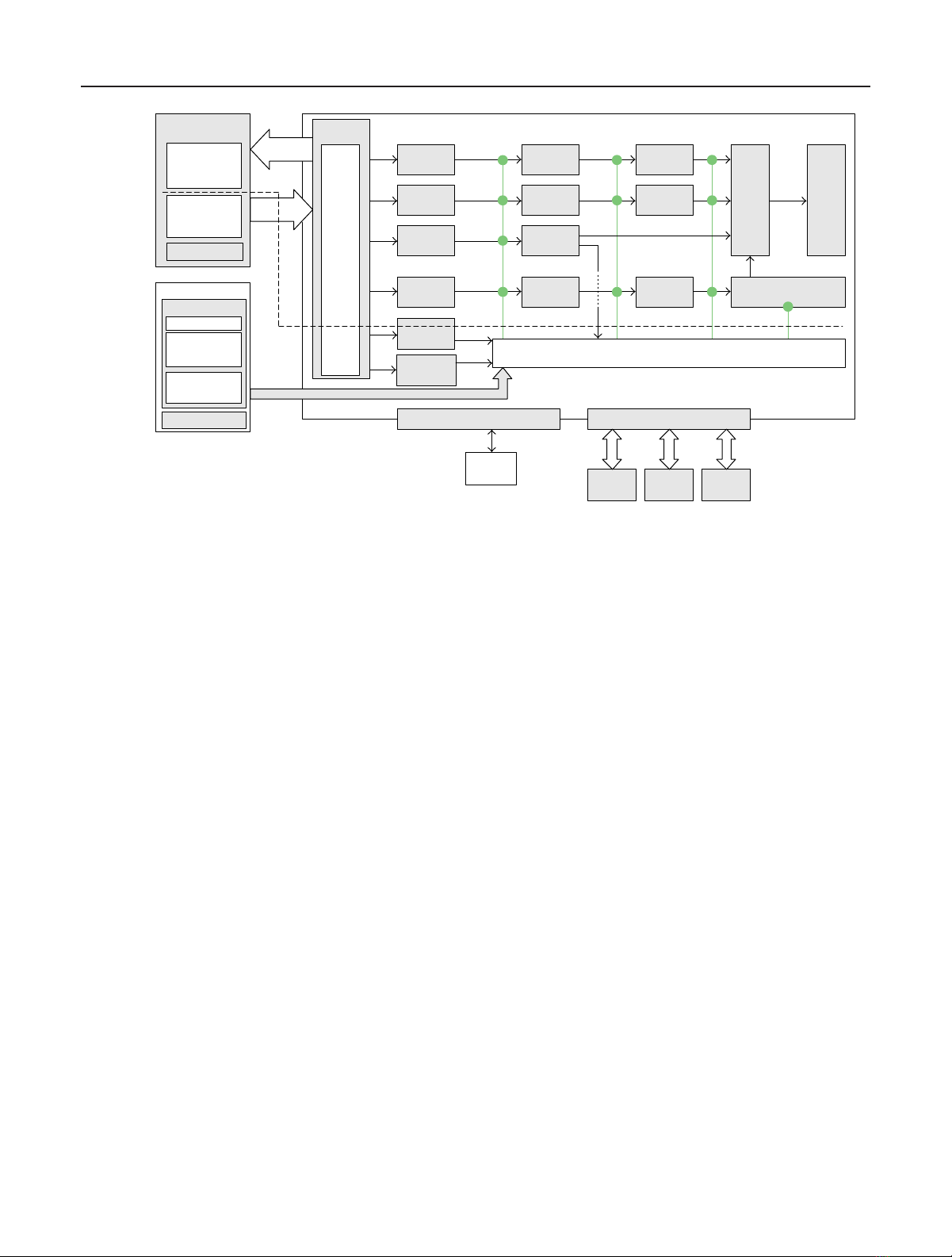
Figure 2 shows the terminal architecture under the MPEG-
4 IPMP Extension framework. The original MPEG-4 system
without IPMP protection is shown in the upper half of the di-
agram (above the dotted line). The incoming MPEG-4 con-
tent stream is demultiplexed in the delivery multimedia in-
tegration framework (DMIF). Audio, video, OD, and binary
format for scenes (BIFS) bitstreams are supplied to the de-
coding buffers (DB) and then decoded. The decoded audio
and video data are fed to the audio composition buffer (CB)
and the video CB, respectively, and then are composed in the
compositor together with the decoded ODs and the decoded
BIFS tree or scene graph.
The lower half of the figure (below the dotted line) shows
the modules provided by the IPMP Extension. The tool list is
included in the IOD of the MPEG-4 system stream to identify
the IPMP tools required to consume the protected content.
IPMP stream arrives as an ES multiplexed in the MPEG-4
system stream. Note that the tool list and the IPMP stream
are constructed during the content authoring process (see
Section 5.1.1 for an example). The tool manager (a concep-
tual entity) manages IPMP tools within the terminal (e.g.,
downloading a missing tool from a remote location) while
MR routes messages among the terminal and the IPMP tools
using a secure messaging framework (to be introduced in
Section 4) to ensure that different IPMP tools from differ-
ent vendors can work together. IPMP tools can act on several
control points, which are positions along the dataflow where
the IPMP tool functions by taking over the protected con-
tent bitstream, processing it, and returning it to the control
point for subsequent processing of the content by the MPEG-
4 terminal. The supported control points are dictated by the
gray circles in the architecture diagram. For example, an en-
crypted MPEG-4 video stream needs to be decrypted by an
IPMP tool (decrypter) at the control point right before the
video decoder, and a watermark reader may need to be ap-
plied to the watermarked audio stream at the control point
right after the audio decoder. If necessary, an IPMP tool can
be applied to the control points right before the compositor
to control the rendering process. Details about how to signal
the protection scope (which objects or ESs) and the control
points of the IPMP tools when authoring the MPEG-4 con-
tent stream are presented in Section 3.2.
2.3. Advantages of the IPMP extension architecture
The IPMP Extension architecture achieves several important
functionalities.
Interoperability
MPEG-4 IPMP Extension standardizes the IPMP messages
and the process of message routing. By using a common set of
IPMP messages, together with industry defined (not MPEG-4
IPMP defined) messaging API and messages extension, dif-
ferent IPMP tools can be easily plugged into the terminal and
interact with each other.
Renewability
Through the usage of the tool list and IPMP descriptor, one
can easily renew a tool for better IPMP protection by, for ex-
ample, indicating to the terminal that a new tool is needed,
carrying the new tool in the tool ES in the content stream, or
downloading the new tool from somewhere. Note that tool
downloading is not mandatory in IPMP. IPMP provides the
architecture to facilitate tool downloading.